

Note: This article contains affiliate links. If you click on these links and make a purchase, I may earn a small commission at no extra cost to you. This helps support my research and content. Read my full affiliate disclosure here.
If you own a Dodge Challenger and are considering a turbocharger, choosing the right unit matters for drivability, durability, and engine health. The wrong choice can lead to poor throttle response, fitment headaches, or premature component wear, while the right turbocharger can restore or increase performance without sacrificing reliability.This guide covers our seven shortlisted turbochargers for the Dodge Challenger, chosen for their fitment, build quality, and expected boost behavior. We evaluated each option across installation considerations and expected reliability to help you narrow the field. Read on for practical guidance before you review the individual picks.
Looking for other parts? See all Dodge Challenger parts & accessories.
Top Picks at a Glance
| Best Overall The best all-around choice for most situations | INGKAN GT45 Twin-Scroll T4 V-Band Turbocharger (1.05 A/R, 98mm) |  |
| Best Value The sweet spot between price and what you get | FIWARY GT45 T4 Universal Turbocharger Kit (V-Band, 1.05 A/R, 98mm) |  |
| Best Budget The cheapest option that still gets the job done reliably | maXpeedingrods T70 Turbocharger for 2.0L–3.0L Engines, T3 Flange |  |
| Highest Rated A top-rated pick with lots of positive feedback | maXpeedingrods GT45 T4 Turbocharger (VL Series) |  |
| Most Popular A crowd favorite that many people choose with confidence | maXpeedingrods GT45 Billet-Wheel Turbocharger | 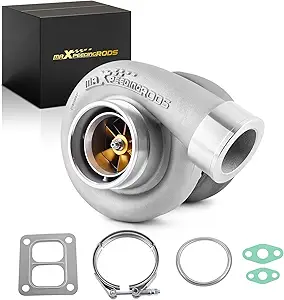 |
| Best Seller A high-volume bestseller chosen again and again | labwork GT3582 Turbine Turbocharger (GT35) |  |
1. INGKAN GT45 Twin-Scroll T4 V-Band Turbocharger (1.05 A/R, 98mm)

| Manufacturer | INGKAN |
|---|---|
| Model | QMP-I13J0027 GT45 |
| Compressor Exducer Diameter | 98 mm |
| Turbine A/R | 1.05 |
| Horsepower | Up to 600+HP |
The INGKAN GT45 is a high-flow twin-scroll turbo built as a direct-replacement performance upgrade for 4.0L–6.0L engines found in many Dodge Challenger builds. It uses a T4 exhaust inlet and V-band outlet for secure connections and an anti-surge compressor design to keep airflow stable under heavy boost. The large 98mm compressor and 1.05 A/R turbine let the unit support very high power levels while the twin-scroll layout helps reduce lag compared with single-scroll turbos of similar size. It is oil-cooled with a wet float bearing and ships with a gasket for installation. Practical benefits include strong top-end power potential for racing or high-boost street builds and compatibility with common aftermarket headers using a T4 flange. Important limitations are its size and flow capacity, which mean it will spool later on stock or small-displacement engines and will require supporting mods such as upgraded fueling, intercooling, and tuning to safely reach the 600+ hp range.
Best for: Balanced builders looking for a single turbo that delivers big mid-to-top-end power for track or high-boost street Challenger projects and who plan upgrades to fueling, cooling, and engine management.
Less Ideal for: Owners wanting quick spool and strong low-end response on a largely stock Challenger or those who do not want to invest in upgraded fuel, intercooling, and tuning to support a large turbo.
- High flow capability supports 600–800 hp builds.
- Twin-scroll and anti-surge design improves spool stability and reduces compressor surge.
- T4 inlet and V-band outlet provide a secure, widely compatible exhaust connection.
- Direct-replacement fitment for 4.0L–6.0L engines simplifies installation in common performance projects.
- Large compressor and A/R result in slower spool on smaller or stock engines.
- No internal wastegate so external wastegate plumbing and control are required.
- Reaching full power requires significant supporting modifications and tuning.
Verdict: A GT45 twin-scroll turbo built to deliver large horsepower gains for high-boost Dodge Challenger builds that have supporting fueling and tuning in place.
2. FIWARY GT45 T4 Universal Turbocharger Kit (V-Band, 1.05 A/R, 98mm)

| Model | GT45 T4 Universal Turbocharger Kit |
|---|---|
| Inlet Flange | T4 Flange |
| Outlet Flange | V-Band (ID 82mm, OD 111mm) |
| Bearing Type | Wet Float |
| Cooling Type | Oil Cooled |
This FIWARY GT45 T4 universal turbocharger is a large, performance-oriented unit intended for high-horsepower swaps and turbo upgrades on appropriately modified Dodge Challenger engines. It uses a T4 inlet flange and V-band outlet, a wet float bearing and oil cooling to handle sustained boost, and a 98mm compressor exducer sized for builds targeting roughly 600+ hp. In practical use it suits heavily modified Challengers with supporting fueling, tuning, and exhaust work where high mid-to-top-end power is the goal. Notable features include the large compressor/turbine dimensions that reduce surge risk on big-displacement setups and the V-band outlet for easier exhaust housing swaps. Expect stronger top-end torque and wide power capability but plan for necessary supporting changes such as ECU tuning, upgraded fuel system components, and thermal management; the unit will run hot on the turbine housing under heavy loads. Installation requires experienced fabrication or an installer familiar with universal T4 turbos on Challenger platforms because flange fitment and plumbing are not vehicle-specific.
Best for: Practical optimizers who want maximum power per dollar on a Challenger and are willing to modify fueling, tuning, and exhaust to extract reliable high-end performance.
Less Ideal for: Owners seeking a direct, bolt-in replacement or a mild street upgrade without fabrication or supporting system upgrades should look at vehicle-specific, lower-flow turbos instead.
- Large 98mm compressor exducer suited for builds targeting 600+ hp
- T4 inlet and V-band outlet allow flexible exhaust and manifold choices
- Wet float bearing with oil cooling designed for sustained high-boost operation
- Universal T4 design requires custom manifolding and professional fitment for Challenger installations
- High-flow capability demands upgraded fueling, tuning, and thermal management to be reliable
Verdict: A cost-effective, high-flow universal GT45 T4 turbocharger built to deliver strong top-end power for heavily modified Dodge Challenger builds.
3. maXpeedingrods T70 Turbocharger for 2.0L–3.0L Engines, T3 Flange

| Compatible engine size | 2.0L-3.0L |
|---|---|
| Exhaust inlet flange | T3 twin-scroll |
| Exhaust outlet flange | 2.5" V-band |
| Cooling type | Oil cooled |
| Maximum claimed horsepower | Up to 500HP |
This maXpeedingrods T70 turbocharger is a budget turbo sized for 2.0L–3.0L engines and designed with a T3 twin-scroll inlet and 2.5" v-band outlet. It installs in place of larger aftermarket turbos on older Challengers and similar Hondas/Acuras with custom exhaust plumbing and supports claimed power up to 500 hp. Notable features include a forged aluminum compressor wheel for improved flow, a ductile iron turbine housing rated for high temperatures, and a journal bearing made from copper alloy for simpler maintenance. Because it ships without an internal wastegate, external wastegate plumbing and tuning are required for safe boost control. As a cost-focused option it offers solid thermal durability and high-flow hardware at a lower price than premium units, but buyers should expect basic bearing technology and the need for fabrication, ECU tuning, and supporting upgrades to make reliable high-power use. Overall this is a pragmatic budget choice for experienced builders who need high flow on a tight budget and can handle installation and calibration themselves.
Best for: Budget-conscious builders who prioritize high flow and low upfront cost over turnkey fitment and are comfortable with custom plumbing, tuning, and supporting upgrades for a Dodge Challenger project.
Less Ideal for: Buyers seeking a plug-and-play, factory-like replacement or those unwilling to perform custom installation and ECU tuning should consider purpose-built, turnkey turbo systems instead.
- Supports up to 500 hp on compatible 2.0L–3.0L setups according to listing
- Twin-scroll T3 inlet and 2.5" v-band outlet for high exhaust flow and compact connection
- Ductile iron turbine housing rated for high temperatures improves heat resistance
- Forged aluminum compressor wheel for improved airflow and boost response
- Ships without an internal wastegate requiring an external wastegate and additional plumbing
- Uses journal bearing design which is less robust than modern ball-bearing turbos for sustained high-boost use
Verdict: An affordable high-flow T70 turbo that delivers strong potential power for budget Challenger builds if you can handle custom installation and tuning.
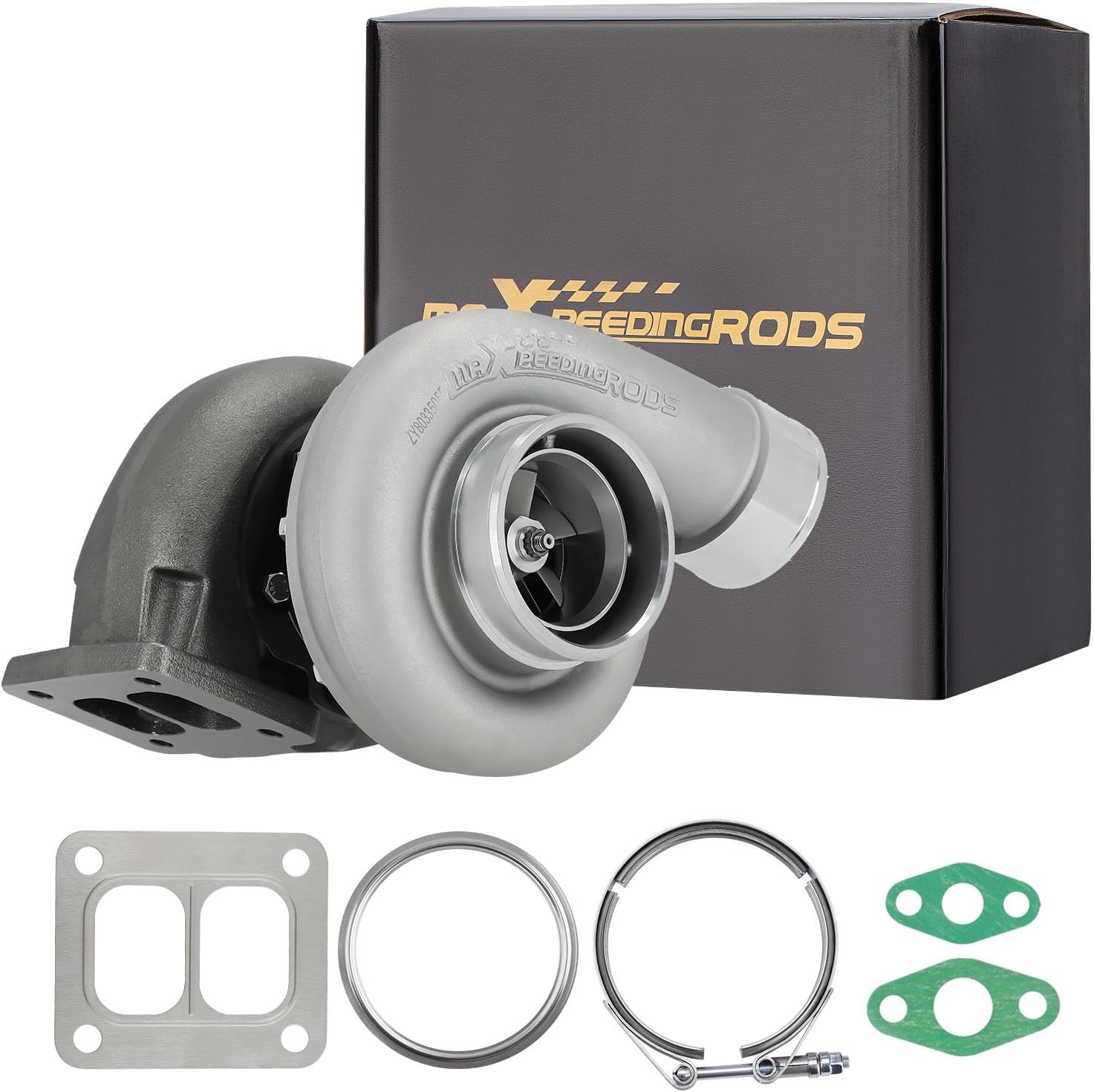
4. maXpeedingrods GT45 T4 Turbocharger (VL Series)
| Application | Fit for 4.0L-6.0L engines |
|---|---|
| Horsepower | Up to 600HP |
| Cooling Type | Oil Cooled |
| Bearing Type | Journal Bearing/Floating Bearing |
| Turbine Housing Flange | T4 flange |
The maXpeedingrods GT45 T4 turbocharger is a bolt-on style performance turbo intended for 4.0L–6.0L engines and advertised to support up to roughly 600 hp. It is typically used to replace or upgrade a factory turbo on high-displacement V8s, and in this article is evaluated for Dodge Challenger applications within the stated model years. Notable features include a ductile iron turbine housing rated for high exhaust temperatures, a forged aluminum compressor wheel for improved airflow, and a copper-alloy journal bearing that simplifies maintenance versus more complex bearing systems. The turbo ships assembled with a T4 manifold flange and 3.25 inch exhaust outlet; it does not include an internal wastegate. Practical benefits are strong mid-to-high RPM power capability and a rugged construction aimed at durability under high-heat conditions. Limitations to consider are the journal bearing design which may require careful oiling and break-in compared with ball-bearing units, and the lack of a wastegate means an external wastegate setup or compatible exhaust plumbing will be necessary for boost control and installation on many Challengers.
Best for: Reliability-focused builders who prioritize a robust, high-temperature-capable turbo for street or weekend track Challengers and value a durable, serviceable unit over marginal gains in spool from premium bearings.
Less Ideal for: Owners who want a drop-in turbo with an internal wastegate or those who prioritize the fastest possible spool and lowest friction from a ball-bearing compressor may prefer alternative units.
- Built with a high-temperature ductile iron turbine housing for better heat resistance.
- Forged aluminum compressor wheel that improves airflow and boost response.
- Assembled unit with T4 flange and 3.25" exhaust outlet simplifies manifold installation on compatible headers.
- Journal bearing constructed from copper alloy for straightforward serviceability and durability.
- Rated to support up to about 600 horsepower for high-output builds.
- Uses a journal bearing instead of a ball bearing which can increase oiling and warm-up requirements.
- Ships without an internal wastegate so a separate external wastegate or plumbing is needed for proper boost control.
- Detailed data sheet with precise trim and A/R numbers is not provided in the package.
Verdict: A heavy-duty GT45-style turbo built for high-heat, high-horsepower Dodge Challenger builds but requires external boost control and careful oiling practice.
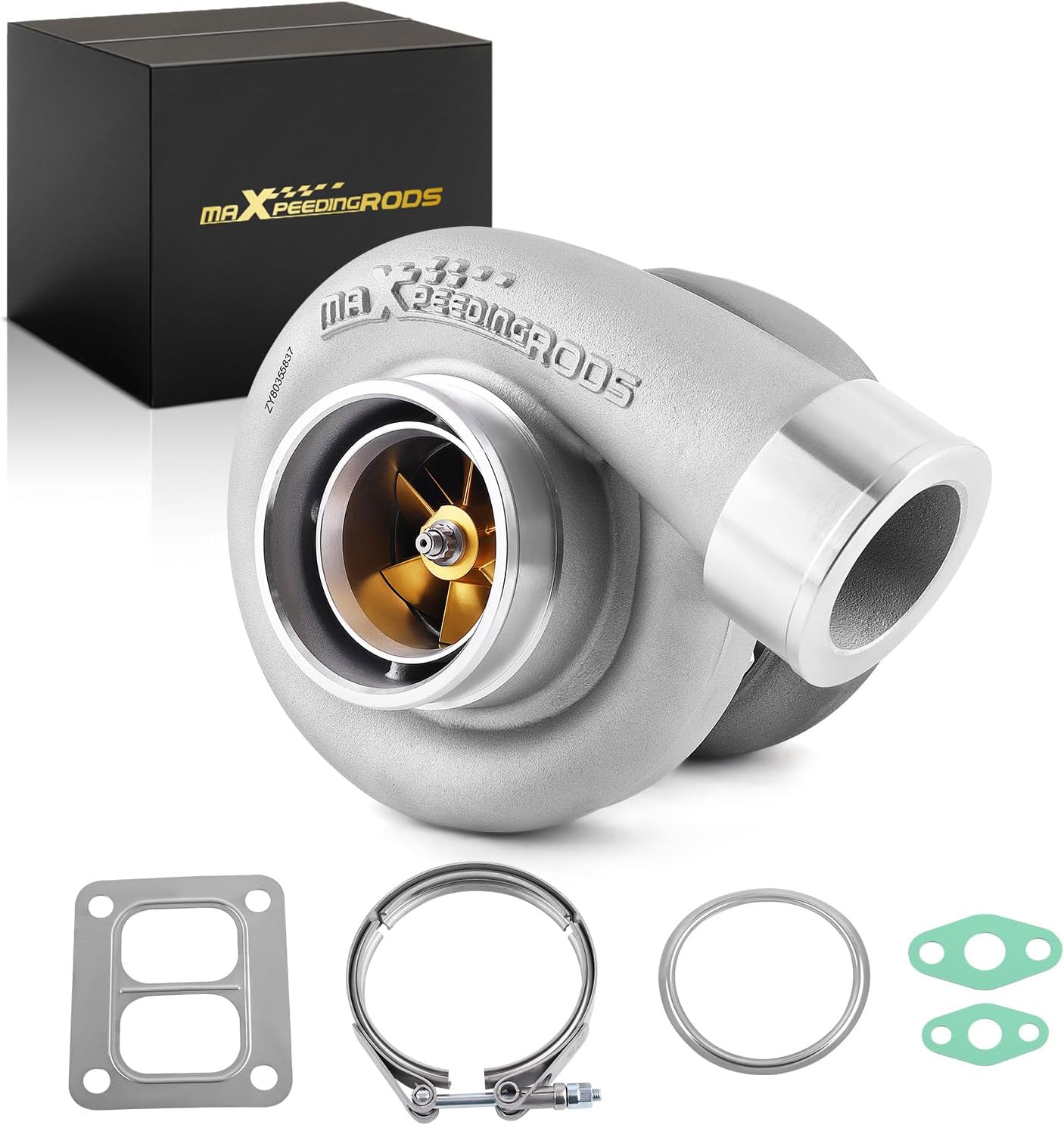
5. maXpeedingrods GT45 Billet-Wheel Turbocharger
| Compatible engine displacement | 4.0L-6.0L |
|---|---|
| Peak power potential | Up to 600+HP |
| Exhaust flange | T4 flange |
| Exhaust outlet | 3.25" |
The maXpeedingrods GT45 is a performance-focused turbocharger built around a forged billet compressor wheel and a high-temperature silicon-molybdenum turbine housing. It is typically used as an upgrade for high-displacement V6 and V8 engines and is sold for street and racing tuning projects; the listing targets 4.0L–6.0L engines and claims up to 600+ hp potential. Notable features include a forged billet compressor for improved airflow and response, an upgraded alloy turbine wheel rated for very high exhaust temperatures, and a copper-alloy journal bearing intended for durability and simpler maintenance than some journal designs. Practical benefits for a Dodge Challenger install include strong mid-to-high-end power capability for big-inch builds and a robust housing material that tolerates aggressive exhaust temperatures. Important limitations are that this is a single turbo unit specified with a T4 turbine flange and a 3.25 inch outlet, so it will require matching manifolds, piping, and likely tuning; the bearing is a journal type rather than a modern dual-ball cartridge, which can affect lubrication requirements and spool behavior. Proper fitment checks and exhaust/piping adapters are likely needed for a clean installation.
Best for: Convenience-driven Challenger builders who want a high-capacity turbo that arrives ready to install into a performance project and prioritizes straightforward upgradeability over sourcing multiple small parts.
Less Ideal for: Owners seeking a drop-in, bolt-on turbo with direct factory fitment and minimal tuning work should consider purpose-built Challenger-specific kits or smaller cartridge turbos instead.
- Forged billet compressor wheel improves airflow and boost response compared with cast wheels
- Silicon-molybdenum turbine housing and upgraded alloy turbine wheel designed for high exhaust temperatures
- Rated to support high output builds up to around 600+ horsepower on 4.0L–6.0L engines
- Supplied assembled with heavy cast housing that suggests durability for street and track use
- Uses a journal bearing design that needs careful oiling and may not spool as quickly as a ball-bearing cartridge
- Requires matching T4 flange exhaust manifold, 3.25 inch downpipe outlet, and appropriate piping and tuning for safe operation
Verdict: A heavy-duty GT45 turbo that offers billet-wheel efficiency and high-temperature hardware for high-output Dodge Challenger builds that will be tuned and adapted to fit.
6. labwork GT3582 Turbine Turbocharger (GT35)

| Compatible engine size | 3.0L-6.0L |
|---|---|
| Compressor trim | 57 |
| Compressor inducer | 61.5 mm |
| Turbine cooling | Water + Oil |
| Turbo model | GT3582/GT35 |
This GT3582 (GT35) turbo from labwork is a direct-replacement style turbo intended for higher-power 3.0L–6.0L 4- and 6-cylinder applications. It uses a water plus oil cooling arrangement and a floating bearing to support spool stability, and the compressor and turbine dimensions are sized to support large horsepower gains up to the seller-stated 600HP range. In practice this unit is used to replace a worn or smaller turbo when you need more mid- to high-end flow; expect stronger top-end power once matched to appropriate fueling and boost control. Notable features include a 12-curved impeller design, ductile-iron turbine housing rated for high temperatures, and a turbine A/R and compressor trim that favor higher flow. Important limitations are variability in included hardware and fittings noted by users, and some reports of oil sealing and break-in issues, so professional installation, correct oiling and system checks are advisable for reliable service. This is best treated as a performance-capable replacement rather than a plug-and-play OEM upgrade for stock engines.
Best for: Risk-averse mainstream buyers who want a reliable performance upgrade for a daily-driven Challenger replacement but prioritize cautious, conservative installation and professional fitment to avoid reliability surprises.
Less Ideal for: Not the best choice for buyers seeking a guaranteed drop-in, factory-identical turbo or those unwilling to fit or source additional hardware and plumbing; custom tuning and system checks are recommended.
- Designed for high-flow performance with compressor and turbine sizing suitable for elevated horsepower targets
- Water and oil cooling plus a floating bearing for improved thermal management and spool stability
- Ductile-iron turbine housing rated for high temperatures increases durability at elevated exhaust temperatures
- Some buyers report missing fittings or hardware on delivery requiring extra parts before install
- Mixed reports on oil sealing and initial break-in behavior that can affect early reliability
Verdict: A high-flow GT3582 replacement turbo that delivers performance potential for 3.0L–6.0L applications while requiring careful professional installation and support.
Choosing the Right Dodge Challenger Turbocharger: Key Factors to Consider
Fitment and Mounting
Correct fitment is the foundation of a trouble-free turbocharger installation. A unit designed for the specific engine layout and exhaust manifold arrangement minimizes the need for custom flanges, extended plumbing, or intercooler rework.
Mismatch in mounting points or clearance can lead to exhaust leaks, heat soak in nearby components, or stress on mounting hardware. Confirming bolt pattern, wastegate actuator clearance, and oil/coolant feed routing helps avoid post-installation headaches and preserves engine bay packaging.
Compressor and Turbine Sizing
Compressor and turbine wheel dimensions directly influence boost range and spool characteristics. Smaller compressors and turbines generally spool faster and improve low-end response, while larger wheels can support higher peak power at the cost of slower spool.
Selecting the right size depends on whether you prioritize daily drivability and quick throttle response or higher top-end power. Consider your typical driving style, engine displacement, and whether supporting modifications such as fueling or exhaust upgrades are planned.
Bearing Type and Durability
The bearing system affects friction, response, and longevity. Journal bearings are common and robust when oiled properly, while ball-bearing designs often reduce friction and improve spool but can be more sensitive to lubrication and contamination.
Materials and machining tolerances also matter under high exhaust temperatures common in turbocharged applications. Look for housings and internal components specified for thermal cycling, and verify recommended oil change intervals and oil feed requirements to maximize service life.
Boost Control and Wastegate Design
How boost is controlled determines reliability and drivability. Integrated internal wastegates simplify plumbing but can be limited in boost ceiling or tuning flexibility. External wastegates offer finer control and higher potential boost levels but require additional hardware and routing.
Actuator response and calibration impact how consistently boost is maintained under varying loads. Proper boost control prevents overboost events that stress the engine and turbocharger components, so consider the wastegate design relative to your intended boost targets.
Serviceability and Repair Options
Turbochargers are subject to wear and occasional bearing or seal failure. Ease of servicing and availability of rebuild kits or replacement cartridges affects long-term ownership costs and downtime.
Choosing a unit with documented rebuild procedures, accessible spare parts, or a commonly available cartridge can make repairs faster and less expensive. Consider whether local shops can service the chosen turbocharger and what parts are stocked for timely maintenance.
Installation Complexity and Support
Installation effort ranges from straightforward bolt-on swaps to complex setups requiring custom piping or ECU changes. Assess the extent of modifications needed for oil and coolant lines, intercooler routing, and exhaust integration before committing.
Manufacturer documentation, included hardware, and technical support availability can significantly reduce installation risk. If specialized tuning or ECU adjustments are required, factor in access to qualified tuners and the potential impact on drivability during setup.
How We Chose the Best Dodge Challenger Turbocharger
We focused on components specifically designed for the Dodge Challenger and evaluated candidates across multiple, category-relevant dimensions. Key criteria included mechanical fitment and mounting points to ensure direct installation without major modifications; compressor and turbine sizing to match typical Challenger engine characteristics; materials and bearing type for durability and heat resistance; expected boost delivery and spool characteristics to assess drivability; and long-term serviceability factors such as availability of repair parts or rebuild kits.We excluded universal or generic turbochargers that require extensive fabrication or do not list clear vehicle-specific fitment. We also filtered out units with unclear technical specifications or limited documentation on tolerances. The resulting shortlist prioritizes correct fit, predictable boost behavior, and reasonable serviceability for owners focused on reliable performance improvements.
Our full evaluation process is outlined in our review methodology.
FAQ
How do I know if a Dodge Challenger needs a turbocharger replacement?
Signs that often indicate a turbocharger issue include reduced boost pressure, excessive smoke from the exhaust, unusual whining noises, or a noticeable loss of power. Routine diagnostic checks such as boost tests, inspection for oil leaks, and visual checks of the turbocharger housing help confirm failure.
Can I install a replacement turbocharger myself?
Installation depends on mechanical skill and the specific Challenger setup. Basic bolt-on replacements with matching oil and coolant lines can be done by experienced home mechanics, but tasks involving tuning, custom plumbing, or wastegate adjustments usually require professional help to ensure reliability.
What maintenance helps extend turbocharger life?
Regular oil changes with the manufacturer-recommended oil, allowing proper warm-up and cool-down cycles, and keeping the intake and oil feeds clean all reduce turbo wear. Addressing engine oil or coolant leaks promptly and following recommended service intervals also helps prevent premature failure.
Are rebuild kits a viable option for a failing turbocharger?
Rebuild kits can restore a turbocharger by replacing worn bearings, seals, and other internal parts. They are often a cost-effective alternative to full replacement when the housing and wheelsets are serviceable, but success depends on the extent of damage and availability of quality parts.
Will a turbocharger upgrade affect drivability?
An upgrade can improve power and throttle response but may change spool characteristics and low-end behavior. Choosing a unit sized for your driving priorities helps balance performance and everyday drivability. Minor tuning adjustments are sometimes necessary to preserve smooth operation.
What should I expect regarding turbocharger install cost?
Installation cost varies based on labor rates, the complexity of plumbing and tuning needs, and whether additional supporting parts are required. More involved installs that require ECU calibration or custom fabrication will typically cost more than straightforward bolt-on replacements.
Conclusion
When choosing a turbocharger for a Dodge Challenger, prioritize correct fitment, appropriate compressor and turbine sizing, and a bearing design that matches your durability expectations. Consider serviceability, wastegate control, and the installation complexity relative to your mechanical capabilities.Balancing spool behavior with peak power needs, and ensuring good documentation and parts availability, will reduce long-term headaches. Focus on the criteria discussed here to match the turbocharger to how you drive and the level of modification you are willing to support.
Explore More:
- Check out all Dodge Challenger parts & accessories
- Explore Turbochargers Maintenance & Repair Guides
- Explore Engine
- Browse all Auto Parts
