

Note: This article contains affiliate links. If you click on these links and make a purchase, I may earn a small commission at no extra cost to you. This helps support my research and content. Read my full affiliate disclaimer here.
If your Chevrolet Impala hesitates to start or only turns over intermittently, choosing the right starter motor matters. A properly selected starter improves cold-start reliability and reduces the chance of being stranded. This guide presents seven shortlisted starter motors for the Chevrolet Impala. Each pick was selected for fitment accuracy, build quality, and torque output. We evaluated ease of installation, electrical compatibility, and durability to help you pick a replacement that brings dependable starting back to your vehicle.
Looking for other parts? See all Chevrolet Impala parts & accessories.
Top Picks at a Glance
| Best Reviewed A top-rated pick with lots of positive feedback | Autoround Starter Motor 17986 for 3.0L and 3.6L V6 Chevrolet |  |
| Most Popular A crowd favorite that many people choose with confidence | TYC Starter Motor 1-06785 for 2006–2011 Chevrolet Impala |  |
| Best Quality Built to a higher standard if you want something more solid | SZKAIDAG 1.3 kW Starter Motor (fits Chevy Impala 3.6L) |  |
| Best Budget The cheapest option that still gets the job done reliably | Suride 6484N 12V 1.4kW Starter Motor (11-Tooth CW) |  |
| Most Sold A high-volume bestseller chosen again and again | Tutor Auto 17986N Replacement Starter Motor |  |
| Best Value for Money The sweet spot between price and what you get | FIREGOLD Starter Motor compatible with Chevrolet Impala 3.6L V6 (model 17986) |  |
| Best Overall The best all-around choice for most situations | A-Premium Starter Motor Compatible with Chevrolet Impala (3.6L) — 12V 1.4KW, 12 Teeth, Clockwise |  |
1. Autoround Starter Motor 17986 for 3.0L and 3.6L V6 Chevrolet

| Volts | 12 V |
|---|---|
| Power Rating | 1.4 KW |
| Rotation | CW (Clockwise) |
| Number of Teeth | 12 |
This Autoround starter is a direct-fit replacement built for 3.0L and 3.6L V6 GM applications including the Chevrolet Impala and delivers the core job of cranking the engine reliably. It installs like a typical starter and is used to replace a worn unit so the engine will start consistently. Notable features include a 1.4 kW power rating, clockwise rotation, 12 V electrical design, and a 12-tooth pinion, plus a reinforced housing intended to protect brushes and extend life. The unit claims factory-quality manufacturing and ISO-level testing, which translates into dependable starts for daily driving and restoration projects. Practical benefits are straightforward: compatible fitment for specified Impala model years, improved brush protection for longer service life, and a high power output that handles cold starts and repeated cranking. Limitations are that fitment is limited to the listed V6 configurations only and buyers should verify vehicle engine code and mounting before purchase; this is a replacement part without vehicle-specific installation hardware or electrical upgrades.
Best for: A reliability-focused buyer who needs a straightforward, factory-quality replacement starter for a Chevrolet Impala V6 and prioritizes proven manufacturing and durability over aftermarket performance modifications.
Less Ideal for: Drivers seeking a high-performance starter for racing or heavily modified engines or those who need a universal or multi-engine solution should look elsewhere.
- Built to factory-spec guidance and ISO quality standards for dependable manufacturing
- 1.4 kW power rating provides strong cranking performance for V6 engines
- Upgraded, stronger housing improves protection for carbon brushes and durability
- Factory-tested for reliability and durability before shipping
- Fitment limited to specific 3.0L and 3.6L V6 GM engines so it will not suit other powertrains
- Does not include vehicle-specific installation hardware or adaptors
Verdict A factory-quality, reliability-focused replacement starter for Impala V6 owners who want strong cranking performance and improved brush protection.
2. TYC Starter Motor 1-06785 for 2006–2011 Chevrolet Impala

| Manufacturer | TYC |
|---|---|
| Model | Starter Motor |
| Manufacturer Part Number | 1-06785 |
| OEM Part Number | 89017845 |
This TYC starter motor is a brand-new aftermarket replacement designed to drop into 2006–2011 Chevrolet Impala applications with minimal fuss. It functions as the vehicle's starter assembly, engaging the engine flywheel to crank the motor when you turn the key or press start. Key features called out by the maker include new internal components such as field coils, sealed bearings, brushes and bushings plus computerized load testing to check performance before shipping. In practice that translates to smooth, quick cranking and a straightforward swap for anyone replacing a failed unit. The unit is built to match factory mounting points so installation is typically a bolt-in job for a DIYer or independent shop. Limitations to note are the mixed long-term reliability reports from some users and that warranty service can be difficult to access through the manufacturer, so factor that into ownership plans. For convenience-focused buyers the appeal is a ready-to-install new starter that gets the Impala back on the road fast, but those who prioritize guaranteed long-life support may want to consider service-backed options.
Best for: Convenience-driven buyers who want a ready-to-install, factory-quality replacement to get a 2006–2011 Chevrolet Impala back on the road quickly with minimal shop time.
Less Ideal for: Buyers who need extended, easily accessible manufacturer-backed support or who prefer parts with long-term professional service plans should consider alternatives.
- Direct replacement designed to match factory mounting points for easy installation
- Comes as a brand-new unit with new field coils, bearings, brushes and bushings rather than a rebuild
- Manufacturer reports computerized load and power testing for each unit before shipping
- Compact, lightweight design that simplifies handling and installation
- Some users report failures after roughly a year or more indicating variable long-term durability
- Manufacturer warranty support has been reported as difficult to access in customer experiences
Verdict A practical, ready-to-install starter built to fit Chevrolet Impala models quickly, but expect mixed long-term reliability and limited warranty support.
3. SZKAIDAG 1.3 kW Starter Motor (fits Chevy Impala 3.6L)

| Power Rating | 1.3KW |
|---|---|
| Volts | 12V |
| Number of Teeth | 12 |
| Rotation | CCW |
This SZKAIDAG starter motor is a direct-fit replacement intended for the Chevy Impala 3.6L and installs like a factory-style unit. It delivers a 1.3 kW power rating, 12V operation, 12-tooth drive, and counterclockwise rotation, so it behaves like the original starter during engine cranking. In everyday use it bolts into place and engages cleanly, producing near-silent operation thanks to the manufacturer’s noise-reduction design. The listing emphasizes manufacturing quality control and lists multiple compatible OEM numbers to help confirm fit. Practical benefits include straightforward installation for routine replacement, strong cranking power for cold starts, and a quieter cabin while starting. Limitations are that compatibility must be verified against your vehicle VIN or OE part number before buying and that long-term durability claims rest on the seller’s quality-control statements rather than independent test data. Expect a cost-effective alternative to dealer units, but be sure to match fitment carefully to avoid returns.
Best for: Performance-minded owners who want a high-cranking replacement that restores strong, quiet starting behavior and prioritize getting a factory-style fit without paying dealer prices.
Less Ideal for: Buyers who prefer parts with long independent durability records or extended manufacturer-backed warranty programs should consider alternatives from established OEM suppliers.
- Designed as a direct-fit replacement for Chevy Impala 3.6L to simplify installation
- 1.3 kW/12V specification provides strong cranking power for reliable starts
- Quiet operation reduces starter noise in the cabin during crank
- Manufacturer lists multiple compatible OEM part numbers to aid fitment verification
- Compatibility depends on matching OE numbers or VIN so extra verification is required
- Durability claims are manufacturer-backed without independent longevity testing
Verdict A cost-effective, performance-oriented direct-fit starter for the Impala 3.6L that delivers strong, quiet cranking when fitment is confirmed.
4. Suride 6484N 12V 1.4kW Starter Motor (11-Tooth CW)

| Power | 1.4 kW |
|---|---|
| Voltage | 12 V |
| Rotation | Clockwise (CW) |
| Pinion teeth | 11 |
This Suride starter is a direct replacement-style unit intended for 3.8L Chevrolet Impala models and similar GM 3.8L applications. It supplies 1.4 kW of starting power, a clockwise rotation and an 11-tooth pinion to match Delco PG260G-style starters. Typical use is as a plug-and-play replacement when the original starter fails; the listing and user reports indicate straightforward installation without drilling or modification. The practical benefit is cost savings: you get a replacement that fits common 3.8L Impala setups and gets the car started reliably. Limitations are typical for budget aftermarket starters — long-term durability and exact OEM-level fitment can vary between vehicles, so confirm the pinion tooth count and rotation before ordering. The unit includes basic customer support and a one-year replacement promise, but buyers seeking the longest service life or dealer-level warranty may prefer higher-end remanufactured or factory-quality options.
Best for: Budget-conscious owners looking for an inexpensive, serviceable replacement starter for a Chevrolet Impala 3.8L who prioritize low cost and straightforward installation.
Less Ideal for: Drivers who want the longest-term reliability or extended dealer warranty should consider remanufactured or factory-quality starters instead.
- Designed to match Delco PG260G starter specifications for 3.8L GM engines
- Plug-and-play installation with no drilling or modification reported
- Compact 1.4 kW power rating suitable for starting 3.8L Impala engines
- Includes one-year free replacement support from the seller
- Aftermarket durability may not match higher-cost remanufactured or factory-quality starters
- Fitment can vary by production run so buyers must confirm pinion teeth and rotation before purchase
Verdict An economical, plug-and-play replacement for 3.8L Chevrolet Impala starters that saves money up front but may not match factory-level longevity.
5. Tutor Auto 17986N Replacement Starter Motor

| Voltage | 12V |
|---|---|
| Power Rating | 1.4KW |
| Number of Teeth | 12 |
| Rotation | Clockwise |
This Tutor Auto 17986N starter motor is a direct-replacement unit intended to get a Chevrolet Impala back to reliable starting without major modifications. It installs the same way as a factory-style starter and is typically used when the original starter fails or shows intermittent cranking. The unit is rated 12V with a 1.4 kW power output, 12 teeth and clockwise rotation, and the aluminum-alloy base and corrosion-resistant design improve moisture protection compared with basic aftermarket cores. In practice that means fewer issues from road splash or light exposure to the elements while parked. Several buyers report straightforward installation and good fitment in Impala applications. Expect the practical benefit of lower cost than dealer parts and a warranty from the seller. Limits include variable quality control across aftermarket batches and occasional connection or orientation differences that can make installation fiddlier than a factory part. If long-term durability is critical, some buyers may prefer higher-priced premium replacements or remanufactured units.
Best for: A risk-averse mainstream buyer looking to replace a failed Impala starter economically while prioritizing dependable day-to-day starting and straightforward installation.
Less Ideal for: Drivers seeking a long-term premium or performance rebuild should consider higher-end remanufactured or OEM-style starters instead of this budget aftermarket option.
- Built to match common GM starter specifications for direct fit on compatible Impala engines.
- Aluminum alloy base and corrosion-resistant components improve moisture and debris resistance.
- 12V 1.4 kW rating provides adequate cranking power for V6 applications.
- Multiple customer reports of easy installation and proper alignment with factory mounting points.
- Aftermarket quality can be inconsistent and some units have had loose internal connections reported.
- Terminal orientation may differ from the factory part, requiring extra effort during install.
Verdict A budget-friendly, factory-compatible replacement that restores reliable starting for Chevrolet Impala owners but may show occasional aftermarket quality variability.
6. FIREGOLD Starter Motor compatible with Chevrolet Impala 3.6L V6 (model 17986)

| Compatible engines | 3.0L and 3.6L V6 (GM) |
|---|---|
| Manufacturer | FIREGOLD |
| Model number | 17986 |
| After-sales service | One-year free replacement |
This FIREGOLD starter motor is a direct-replacement style unit intended to restore cranking to a Chevrolet Impala with a compatible 3.6L V6 engine. It is packaged as a compact, factory-style starter that mounts in the stock location and uses the same basic electrical connections, so installation is typical of a standard starter swap and can be done by a competent DIYer or a shop. The listing emphasizes precision molding and factory-spec fitment, which helps reduce clearance and alignment hassles during installation. FIREGOLD also states the unit is endurance-tested and backs it with a one-year replacement service, which gives some buyer protection. On the downside fitment reports are mixed and a few users reported early failures and one incorrect fitment, so confirming exact engine and year compatibility before purchase is important. Expect this as a cost-conscious replacement rather than a long-life premium overhaul; for daily drivers on a budget it can get the car back on the road quickly, but those seeking maximum longevity may prefer a higher-end remanufactured or OEM-quality unit.
Best for: Practical optimizers who want an affordable, factory-style replacement to get a Chevrolet Impala back on the road without paying for a premium reman unit.
Less Ideal for: Drivers who prioritize maximum longevity or need guaranteed OEM-level durability should consider a higher-grade remanufactured starter or dealer-sourced replacement instead.
- Designed to match factory mounting and electrical connections for straightforward installation on compatible Impala engines
- Compact, precision-molded construction reduces clearance and alignment issues during swap
- Backed by a one-year replacement service for basic after-sales protection
- Budget-friendly option that can quickly restore vehicle operation
- Some buyers reported early failures indicating variable long-term reliability
- There are mixed fitment reports so compatibility must be double-checked for year and engine variants
Verdict A budget-friendly, factory-style starter that can reliably revive an Impala when compatibility is confirmed, but expect variable long-term durability.
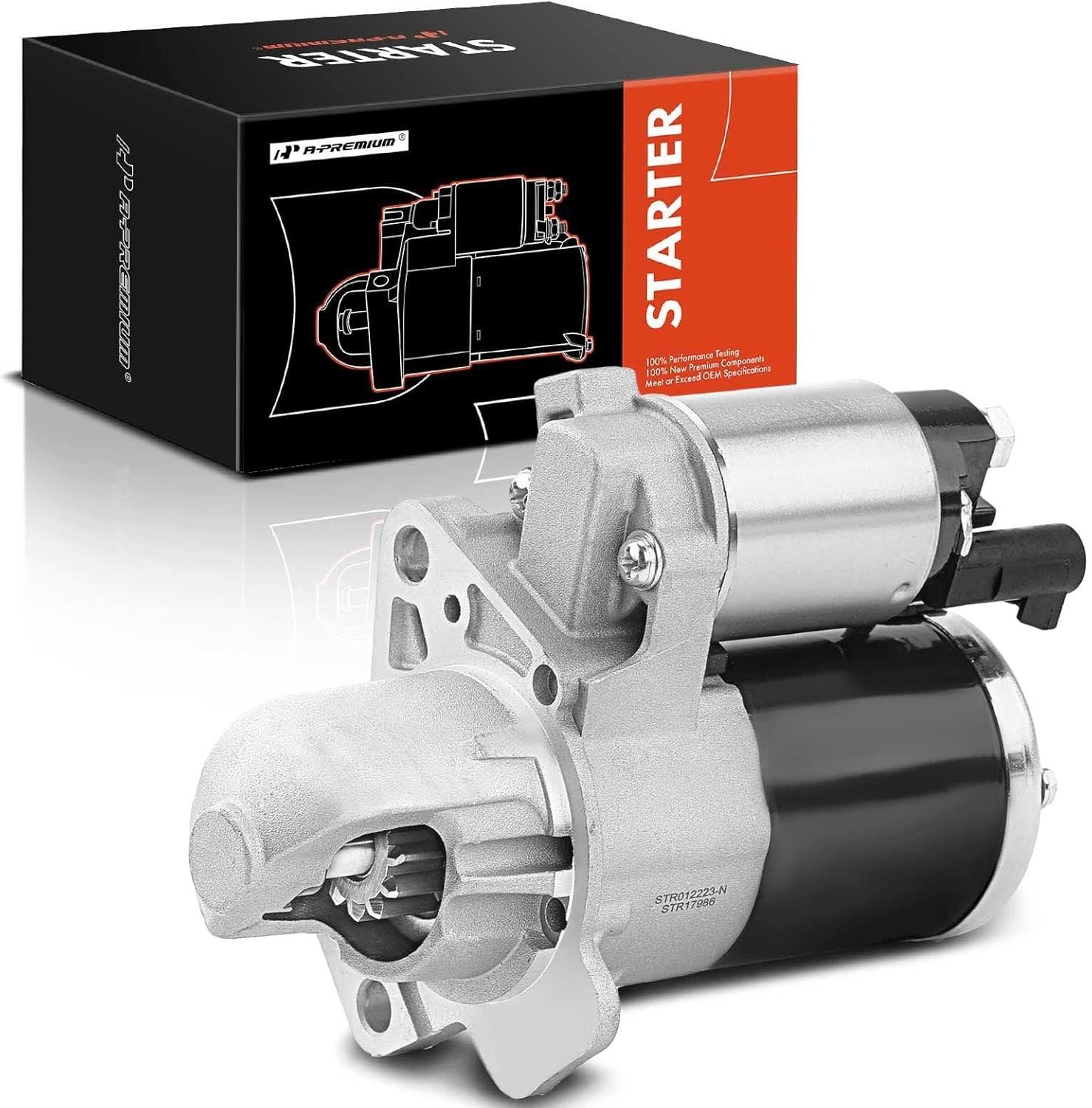
7. A-Premium Starter Motor Compatible with Chevrolet Impala (3.6L) — 12V 1.4KW, 12 Teeth, Clockwise
| Voltage | 12V |
|---|---|
| Power Rating | 1.4KW |
| Number of Teeth | 12 |
| Rotation | CW (Clockwise) |
This A-Premium starter motor is a direct-replacement style unit intended to replace the factory starter on compatible GM V6 engines such as the Chevrolet Impala 3.6L. It is used the same way as a factory starter: mounts to the bellhousing, engages the flywheel to crank the engine, and runs from the vehicle battery and starter solenoid. Notable features called out by the manufacturer include a 12V electrical rating, 1.4 kW power output, 12-tooth pinion and clockwise rotation, which translate to adequate cranking force for the 3.6L V6 in the Impala. Buyers report straightforward installation and consistent starting performance, and the unit is tested before shipping. Limitations to be aware of are occasional fitment variance between aftermarket housings and specific engine bay clearances, which can require minor modification or careful fit verification before installation. Replacement buyers who want a budget-friendly, tested alternative to a dealer unit will find this starter practical, but expect to verify physical fit for your year and engine before committing to installation.
Best for: Balanced buyers who want a cost-conscious factory-style replacement for a Chevrolet Impala 3.6L that performs like a typical OEM starter without paying dealer prices.
Less Ideal for: If you need a guaranteed bolt-in, no-modification swap for nonstandard engine variants or prefer extended commercial-duty life, consider higher-end remanufactured or dealer-sourced options.
- Designed for GM V6 3.6L fitment including Chevrolet Impala, matching rotation and pinion tooth count
- 1.4 kW power rating provides sufficient cranking for V6 engines
- Tested units out of the factory for consistent starting performance
- Many buyers report straightforward installation and reliable operation
- Some reported units require minor clearance work or trimming for a perfect fit in tight engine bays
- Plastic components noted to be fragile by a small number of users
Verdict A practical, budget-friendly replacement starter for the Chevrolet Impala 3.6L that delivers reliable starting but verify physical fitment before installation.
Choosing the Right Chevrolet Impala Starter Motor: Key Factors to Consider
Fitment and Compatibility
Correct mechanical fit is essential because starter housings, mounting bolt patterns, and pinion alignment must match the Chevrolet Impala’s engine and bellhousing. A unit that does not seat properly can cause gear misalignment, premature wear, or damage to the flywheel.
Electrical compatibility matters too. Terminal layouts, solenoid orientation, and mounting position determine whether the starter will connect cleanly to existing wiring and grounding points. Always verify year and engine specifications to avoid units that require adapter plates or wiring changes.
Torque Output and Gear Type
Starter torque influences how quickly and reliably the engine cranks, especially in cold weather or with higher-compression engines. Reduction-gear starters deliver higher torque for a given current draw, while direct-drive designs can be simpler and lighter.
Consider the engine’s cranking requirements and whether a higher torque unit is warranted for cold climates or worn engines. Adequate torque reduces strain on the starter and battery, improving starting consistency.
Solenoid and Electrical Design
The solenoid is the electrical switch that engages the starter. A reliably designed solenoid ensures positive engagement and clean current flow to the motor. Poor solenoid design can cause intermittent engagement, clicking noises, or voltage drop that prevents full cranking.
Look for starters with robust terminal connections, corrosion-resistant contacts, and proven solenoid actuation to minimize electrical-related starting issues.
Durability and Internal Components
Internal build quality—brushes, armature, bushings or bearings, and drive clutch—determines how long a starter will function without service. Higher-quality components resist wear from repeated start cycles and heat exposure.
Pay attention to features that extend service life, such as sealed housings to keep out contaminants, heavy-duty bearings, and durable brush materials. These attributes reduce the likelihood of premature failure and costly repeat replacements.
Ease of Installation and Serviceability
Some starter replacements are straightforward while others require engine support or removal of ancillary components. A design that allows installation with common hand tools reduces labor time and complexity.
Also consider access to replacement parts like brush kits or solenoids. Starters that can be serviced or rebuilt instead of fully replaced may offer lower long-term ownership costs and faster repairs in the future.
Warranty and Support Documentation
Warranty coverage and clear documentation indicate a manufacturer’s confidence and provide protection if a unit fails. Warranties vary in length and coverage scope, and clear fitment instructions reduce installation errors.
Choose parts backed by accessible support channels and straightforward return or replacement procedures to reduce downtime and uncertainty if issues arise after installation.
FAQ
What are common starter motor symptoms on a Chevrolet Impala?
Common symptoms include a single click or repeated clicking when turning the key, slow cranking, or no response at all. You may also notice intermittent starting, where the engine starts sometimes but not other times. These signs often point to electrical issues, a worn starter, or weak battery connections.
How can I test a starter before replacing it?
You can perform basic checks by verifying battery voltage and clean, tight battery and chassis ground connections. Try a starter draw test or have a technician use a multimeter to measure voltage drop while cranking. Bench testing the starter on a workbench can confirm motor spin and solenoid engagement, but ensure correct safety precautions.
Is a clicking noise always a sign of a bad starter?
A clicking sound often indicates insufficient current reaching the starter or a failing solenoid, but it is not always a failed starter. Corroded terminals, weak batteries, or poor ground connections can cause similar clicking. Diagnose the electrical system to isolate the root cause before assuming the starter must be replaced.
What should I know about starter motor installation?
Installation typically requires disconnecting the battery, unbolting the starter, and transferring electrical connections to the replacement. Accessibility varies by engine and model year, which can affect labor time. Follow torque specs for mounting bolts and ensure terminals are clean and tightened to avoid electrical issues after installation.
When might a starter motor be repairable instead of replaced?
Starters with worn brushes, a faulty solenoid, or serviceable bearings can sometimes be rebuilt or repaired, particularly if the housing and armature are in good condition. Availability of replacement parts and labor considerations influence whether a repair is practical. Assessment by a qualified technician can determine if repair is cost-effective.
Does the starter motor affect fuel economy or engine performance?
The starter mainly affects engine start behavior rather than ongoing fuel economy or performance. However, repeated poor starts can stress the battery and related electrical components. Ensuring reliable starting prevents excessive wear on the battery and starter system, which supports overall vehicle reliability.
How We Chose the Best Chevrolet Impala Starter Motor
We focused on parts made for the Chevrolet Impala and prioritized fitment accuracy to the engine and year range, ensuring the unit mates correctly with the flywheel and mounting points. Electrical compatibility was next, with attention to correct solenoid wiring, terminal layout, and proper reduction or direct-drive gearing for the engine’s needs. Durability and materials were assessed by checking build features that affect long-term service life, such as housing strength, bearing quality, and brush/armature construction. Torque output and starter engagement characteristics were considered because adequate cranking power affects cold starts and engine turnover under higher compression. Ease of installation and access to replacement parts were factored in so owners and technicians can complete the job with common tools. We excluded units with unclear fitment information, non-standard electrical terminals, or missing warranty/support documentation. The final list balances mechanical suitability, electrical match, and practical serviceability for the vehicle.
Our full evaluation process is outlined in our review methodology.
Conclusion
Selecting the right starter for a Chevrolet Impala means balancing correct mechanical and electrical fitment with adequate torque and durable internal components. Prioritize units that match the engine’s mounting and terminal layout, offer sufficient cranking power, and have serviceable components where possible. Consider installation complexity and warranty support as part of the decision. A well-matched, robust starter reduces the chance of repeat troubleshooting and restores dependable starting for daily use.
Explore More:
- Check out all Chevrolet Impala parts & accessories
- Explore Electrical System
- Browse all Auto Parts
