

Note: This article contains affiliate links. If you click on these links and make a purchase, I may earn a small commission at no extra cost to you. This helps support my research and content. Read my full affiliate disclosure here.
Choosing the right Chevrolet Impala car battery matters because it directly affects starting reliability, accessory performance, and long-term ownership costs. Whether you drive daily or leave the vehicle idle for periods, the correct battery size and capacity help avoid no-start situations and support onboard electronics.This guide highlights the top five shortlisted options for the Chevrolet Impala and explains the evaluation criteria used, including cold-cranking amps, reserve capacity, and fitment specifics. Read on to find batteries that match your driving pattern and maintenance preferences.
Looking for other parts? See all Chevrolet Impala parts & accessories.
Top Picks at a Glance
| Best Reviewed A top-rated pick with lots of positive feedback | 1AUTODEPOT Group 47 (H5) 12V AGM Car Battery, 60Ah, 680 CCA |  |
| Best Quality Built to a higher standard if you want something more solid | UPLUS Group 94R AGM Start-Stop Car Battery (12V, 80Ah) |  |
| Best Budget The cheapest option that still gets the job done reliably | MARXON Group 47 (H5/L2) 12V 60Ah 660CCA AGM Start-Stop Car Battery |  |
| Most Sold A high-volume bestseller chosen again and again | Mighty Max Battery MM-H6 12V 70Ah AGM Car Battery (Group 48) |  |
| Best Overall The best all-around choice for most situations | OPTIMA YellowTop D34/78 Dual-Purpose AGM Battery (750 CCA) |  |
1. 1AUTODEPOT Group 47 (H5) 12V AGM Car Battery, 60Ah, 680 CCA

| BCI Group Size | 47 (H5) |
|---|---|
| Voltage | 12V |
| Rated capacity | 60Ah |
| Cold Cranking Amps | 680 CCA |
| Reserve Capacity | 100 min |
This 1AUTODEPOT Group 47 (H5) AGM battery is a maintenance-free replacement that provides strong starting power and greater durability than a standard flooded battery. It is typically used as a direct-fit replacement where Group 47/H5 batteries are specified, supplying 12 volts, 680 cold cranking amps, and a 100-minute reserve capacity for reliable starts and short-term accessory use. Notable features include absorbed glass mat construction for lower self-discharge, improved vibration resistance, and a non-spillable design that makes handling and installation safer. For an Impala, the battery's high CCA helps cold starts and supports modern electrical loads from infotainment and safety systems. Important limitations are that fitment must match the Impala's tray and terminal orientation and that AGM batteries require a compatible charging profile to avoid reduced life; installers should confirm charging voltage settings. The battery is heavier and more expensive than basic flooded replacements, but it offers up to double the cycle life and better heat and cold tolerance for owners prioritizing long-term reliability.
Best for: Reliability-focused buyers who prioritize a long-lasting, maintenance-free replacement battery for daily driving and vehicles that see infrequent use or harsher climates.
Less Ideal for: Drivers looking for the lowest upfront cost or those whose Impala has a charging system not set up for AGM batteries should consider alternative flooded batteries or have charging checked before fitting.
- AGM construction for lower self-discharge and improved vibration resistance
- 680 CCA rating for dependable cold starts
- 100 minute reserve capacity to support accessories during short engine-off periods
- Maintenance-free, non-spillable design simplifies handling and installation
- Requires a vehicle charging system or charger compatible with AGM charging profiles
- Heavier than flooded batteries which can make handling and installation more cumbersome
Verdict A durable, higher‑performance AGM Group 47 battery that gives Impala owners stronger starts and longer life if their charging system is AGM-compatible.
2. UPLUS Group 94R AGM Start-Stop Car Battery (12V, 80Ah)

| BCI Group Size | 94R (H7/L4) |
|---|---|
| Voltage | 12 Volts |
| Nominal Capacity (20HR) | 80 Ah |
| Cold Cranking Amps | 850 CCA |
| Reserve Capacity | 140 min |
This UPLUS Group 94R AGM battery is a sealed, maintenance-free start-stop unit built to replace factory 94R/H7/L4 batteries. It is typically used as a direct-fit replacement in cars that require a Group 94R battery and offers 80 Ah capacity, 850 CCA cold cranking amps and AGM construction for better deep-cycle performance and resistance to sulfation. Practical benefits include strong starting power in cold weather, longer cycling life for frequent stop-and-go driving and a reserve capacity suited for vehicles with multiple electronics or that sit unused for periods. The SAE terminal layout with left negative and right positive matches common factory placements for this group size, simplifying installation. Important limitations are the battery weight and size typical of high-capacity AGM units which can make handling and fitment trickier in tight trays, and the user should confirm exact Impala tray and hold-down compatibility before purchase. The product also recommends fully charging before use to maximize lifespan.
Best for: Performance-oriented buyers who prioritize reliable cold starts and robust electrical reserve for vehicles with many accessories and frequent stop-start driving.
Less Ideal for: Buyers seeking the lightest or most compact replacement or those unwilling to verify physical tray and hold-down compatibility should consider smaller group sizes or alternative battery types.
- AGM technology provides improved deep-cycle durability and lower self-discharge compared with flooded batteries
- High cold cranking amps (850 CCA) for confident starts in cold conditions
- 80 Ah capacity and 140 minute reserve capacity support vehicles with heavier electrical loads
- Designed in standard BCI Group 94R size for straightforward replacement where that group is specified
- Sealed, maintenance-free design reduces the need for routine topping up
- Heavier and bulkier than lower-capacity batteries, which can complicate handling and some tray fits
- Handles appear lightweight relative to battery mass so extra care is needed when lifting
Verdict A high-performance AGM Group 94R battery that delivers strong starting power and extra cycle life for accessory-heavy or stop-start Chevrolet Impala setups, but requires attention to weight and tray fitment.
3. MARXON Group 47 (H5/L2) 12V 60Ah 660CCA AGM Start-Stop Car Battery

| Voltage | 12V |
|---|---|
| Capacity | 60Ah |
| Cold Cranking Amps | 660 CCA |
| Battery Type | AGM (maintenance-free) |
This MARXON Group 47 AGM battery is a maintenance-free replacement designed for cars that require a BCI Group 47 / H5 L2 size and start-stop functionality. It installs like a standard lead-acid replacement and delivers 660 cold cranking amps for reliable starts while supporting the vehicle start-stop system and faster recharge acceptance compared with conventional flooded batteries. The AGM construction reduces leakage risk and tolerates deeper discharge cycles, which helps if the Impala has electronics that draw small amounts of current while parked. Practical benefits include strong cold-start performance for everyday driving, compatibility with start-stop systems, and a maintenance-free design that avoids topping off acid. Limitations are that the CCA is lower than some higher-end factory batteries, so extremely cold climates or heavily accessory-loaded vehicles may get better longevity from a higher-capacity OEM-equivalent battery; also long-term durability depends on charging system behavior and proper fitment in the Impala battery tray.
Best for: Budget-conscious buyers who want a maintenance-free AGM replacement that restores start-stop function and reliable daily starts without paying for premium OEM batteries.
Less Ideal for: Drivers who regularly operate in extreme cold, run heavy electrical accessories, or want exact OEM-spec capacity and longevity should consider higher-capacity factory-quality alternatives.
- AGM design reduces leakage and allows deeper discharge tolerance compared with flooded batteries
- 660 CCA provides strong cranking for typical gasoline engines
- Maintenance-free construction eliminates the need to add water or acid
- Faster charge acceptance than conventional SLA batteries, helping recovery after repeated starts
- Lower CCA than some higher-end factory replacement batteries, which may matter in very cold climates
- Fitment requires confirming the Impala uses Group 47 battery size before purchase
Verdict A cost-conscious AGM option that restores start-stop functionality and dependable starts for compatible Impala models, but check fitment and consider higher-capacity choices for extreme conditions.
4. Mighty Max Battery MM-H6 12V 70Ah AGM Car Battery (Group 48)
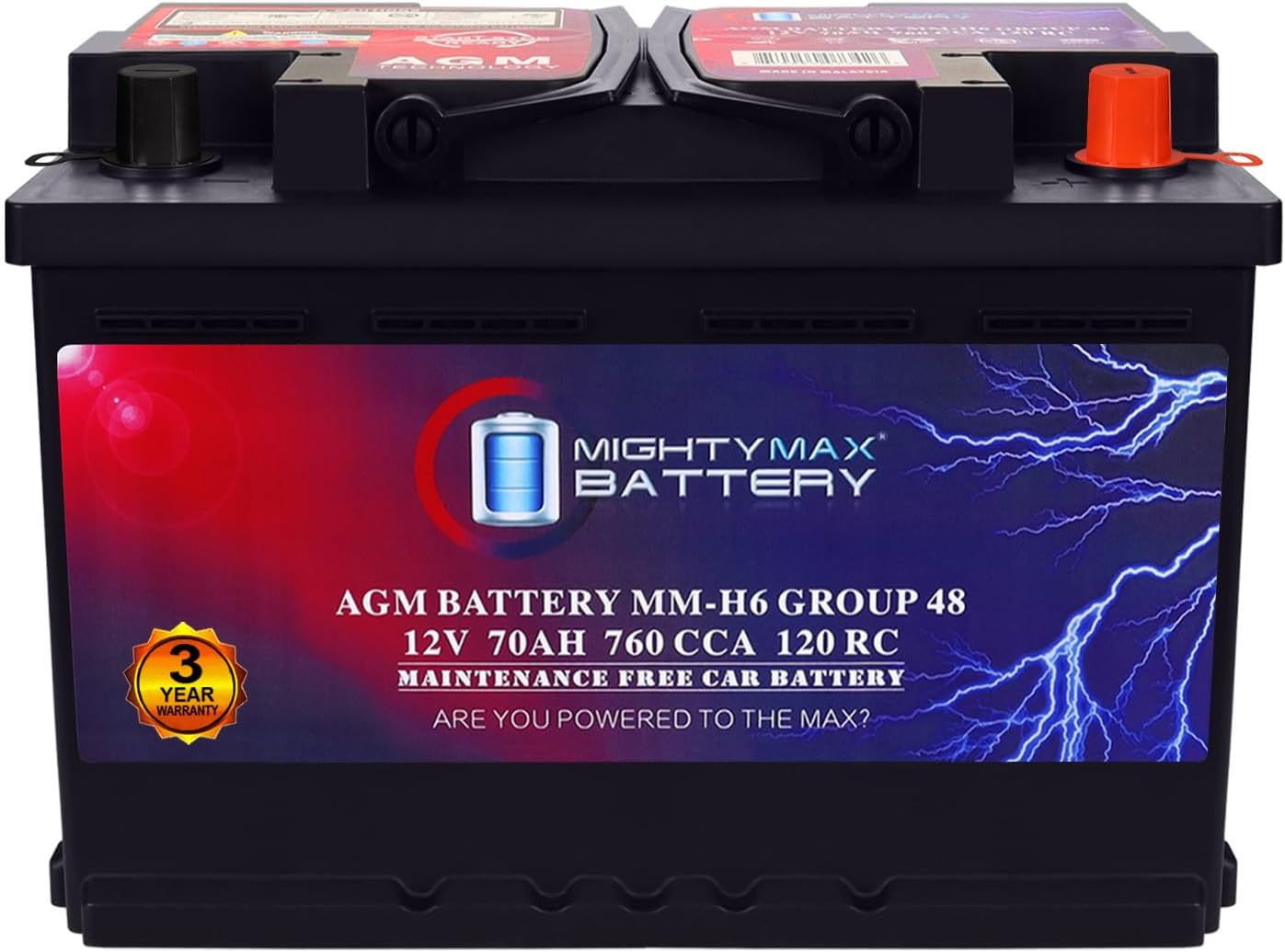
| Voltage | 12V |
|---|---|
| Battery Capacity | 70 Amp Hours |
| Cold Cranking Amps | 760 CCA |
| Reserve Capacity | 120 minutes |
| Terminal | Stud Terminal |
The Mighty Max MM-H6 is a sealed AGM replacement battery built to provide dependable starting power and a maintenance-free fit for a Chevrolet Impala that accepts a Group 48 battery. It supplies 760 cold cranking amps for strong cold-weather starts and a 120-minute reserve capacity to help electronics run if the alternator is offline. The sealed AGM design means no fluid top-offs and flexible mounting positions except upside down, and the stud terminals are straightforward to connect in many factory trays. Construction is described as vibration resistant and tested to common safety standards, which suits daily driving and occasional long idles. Practical limitations include variable long-term reliability reported by some owners and the need to confirm terminal orientation and physical clearance in your Impala’s battery tray before ordering. This battery is a good factory-quality replacement when you want spill-proof, higher-C C A starting performance, but expect to follow manufacturer return procedures if warranty service is needed.
Best for: Risk-averse mainstream buyers who prioritize a maintenance-free, sealed replacement with strong starting power and safe handling for everyday Chevrolet Impala use.
Less Ideal for: Drivers seeking a top-tier OEM branded battery with a long validated service record from dealership channels or those who need a battery with a different group size or terminal layout than Group 48.
- Sealed AGM design eliminates maintenance and prevents acid leaks.
- High 760 CCA rating supports reliable cold starts.
- 120-minute reserve capacity provides longer runtime for accessories if charging is lost.
- Stud terminals and included mounting screws simplify installation in compatible trays.
- Some customer reports indicate inconsistent longevity and potentially difficult warranty service.
- May require checking fit and cover clearance due to height compared with some factory batteries.
Verdict A maintenance-free AGM Group 48 battery that delivers strong starting power and spill-proof installation for Impala owners, but check fitment and be aware of mixed long-term reliability reports.
5. OPTIMA YellowTop D34/78 Dual-Purpose AGM Battery (750 CCA)

| Cold Cranking Amps | 750 CCA |
|---|---|
| Battery Type | 12-Volt AGM, dual-purpose |
| Capacity (C20) | 55 AH |
| Reserve Capacity | 120 minutes |
| Terminals | Dual SAE & GM terminals |
The OPTIMA YellowTop D34/78 is a sealed AGM car battery built to combine high cranking power with deep-cycle capability for vehicles that run more electronics than a standard starter battery. It installs like a conventional battery and offers dual SAE and GM-style terminals for flexible connections. Notable features include SpiralCell construction for consistent starting performance, a long reserve capacity intended to support accessories when the engine is off, and strong vibration resistance for durability. In practical use the YellowTop is well suited to Impalas that have upgraded audio, additional lighting, or winch and inverter setups because it can handle repeated discharge and recharge cycles without the rapid voltage sag typical of flooded batteries. Expect maintenance-free operation and faster recharge than older lead-acid designs. Limitations to consider are the higher weight and price compared with basic replacement batteries and occasional reports of early failures that mean buyers should keep documentation for warranty support.
Best for: Buyers seeking a balanced, all-round upgrade for a Chevrolet Impala who want reliable starting plus the ability to run high-draw accessories without switching to a dedicated deep-cycle battery.
Less Ideal for: Drivers who only need a low-cost, occasional-use replacement or who prioritize the absolute lightest weight and lowest purchase cost should consider standard replacement batteries or lithium alternatives.
- Dual-purpose AGM design provides both strong starting amps and usable deep-cycle reserve for accessory loads.
- SpiralCell construction promotes consistent starting performance and faster recharge.
- Sealed, maintenance-free construction reduces upkeep and risk of acid spills.
- Multiple terminal options simplify installation in vehicles with different battery post layouts.
- Heavier and more expensive than basic flooded replacement batteries.
- Some user reports of premature failure on a minority of units, so warranty handling may be needed.
Verdict A durable dual-purpose AGM that is a strong choice for Impalas with heavy electrical loads, but it costs more and a small percentage of units have reported early failures.
Choosing the Right Chevrolet Impala Car Battery: Key Factors to Consider
Cold-Cranking Amps (CCA)
Cold-cranking amps measure the battery's ability to start the engine in cold temperatures and are crucial because starting demand rises as temperature falls. For an Impala, adequate CCA ensures the starter motor gets enough current on first turn, reducing wear on the starter and limiting failed-start situations.
When comparing batteries, choose a CCA rating that meets or exceeds the vehicle manufacturer's recommendation. Higher CCA provides more reliable cold-weather starting, but balance this against physical size and cost considerations.
Reserve Capacity
Reserve capacity indicates how long the battery can supply a minimum voltage if the charging system fails, which matters if you run accessories with the engine off or face alternator issues. A higher reserve capacity gives you time to restart the vehicle or drive to a safe location without an immediate recharge.
Prioritize reserve capacity if you frequently use electronics while idling or expect to encounter long traffic delays. It is also a useful indicator of overall stored energy and can correlate with better longevity under repeated deep-draw events.
Size and Terminal Layout
Physical fitment is nonnegotiable. The correct group size ensures the battery fits the tray, secures properly, and aligns terminals with factory cables to avoid stretching or hard-to-reach connections. Terminal orientation also affects ease of installation and the risk of accidental shorting during maintenance.
Confirm the vehicle's required battery dimensions and terminal positions before selecting a unit. Even a battery with excellent electrical specs can be impractical if it requires modifications to fit safely in the battery compartment.
Battery Chemistry and Construction
Different chemistries and internal designs influence performance, maintenance, and lifespan. Flooded lead-acid, AGM, and other designs each have tradeoffs in terms of charge acceptance, vibration resistance, and sensitivity to deep discharges.
Choose a construction that matches your expectations for maintenance and durability. For drivers who prioritize low maintenance and better vibration tolerance, certain construction types may be preferable. Also consider how the chemistry interacts with the vehicle's charging system.
Warranty and Expected Service Life
Warranty terms and stated expected service life offer insight into how long you can reasonably expect the battery to perform. Longer warranty periods can indicate manufacturer confidence and may reduce ownership risk, but read the terms for prorated periods and required maintenance.
Factor warranty coverage into your decision alongside build quality and local climate. Batteries in harsher environments typically experience shorter lifespans, so warranty length and support policies are practical considerations when estimating total ownership value.
Maintenance Requirements and Ease of Installation
Some batteries require periodic water topping or specific charging procedures, while others are maintenance free. Maintenance needs affect long-term convenience and may influence whether you can keep the battery at peak performance between professional service visits.
Also consider how easily the battery can be installed or removed. Clear terminal access, standard clamp compatibility, and straightforward mounting reduce the chance of installation errors and simplify routine checks or replacement in the future.
FAQ
How do I know which battery size fits my Chevrolet Impala?
Check the vehicle's owner's manual or the battery tray for the recommended group size and terminal orientation. Matching these dimensions ensures the battery secures properly and the cables reach without strain. If in doubt, verify fitment with a trusted service manual or a qualified technician to avoid modifications.
How often should a car battery for an Impala be tested?
It is common to test a car battery annually, and more frequently if you notice slow starts, dimming lights, or after extreme temperature cycles. Regular testing helps identify weak batteries before they fail and can guide maintenance or replacement timing. Tests can include voltage checks and load or conductance tests for a clearer assessment.
Can I replace the battery myself or should I get professional installation?
Many owners can replace a battery with basic tools if they follow safety precautions and the replacement matches the correct size and terminal layout. However, professional installation can ensure proper torque, secure mounting, and correct handling of memory-sensitive electronics. Choose based on your comfort level with vehicle maintenance.
What affects car battery life in a Chevrolet Impala?
Battery life depends on factors such as driving patterns, ambient temperature, charging-system health, and depth of discharge during use. Frequent short trips, extreme heat or cold, and parasitic drains can shorten service life. Regular maintenance and addressing charging issues promptly usually extend usable life.
Is it important to match battery specs to the vehicle's charging system?
Yes. Matching key specs like cold-cranking amps and recommended capacity ensures the charging system can maintain the battery without overworking it. An incompatible battery may see reduced life or require different charging behavior. Follow manufacturer guidance for specs to maintain reliable operation.
How We Chose the Best Chevrolet Impala Car Battery
We focused on attributes that directly affect real-world performance in a Chevrolet Impala and narrowed the field to products that meet typical factory fitment and power demands. Key evaluation criteria included cold-cranking amps to ensure dependable starting in varied temperatures, reserve capacity to support electronics during short alternator interruptions, and physical dimensions and terminal layout to confirm proper fitment without modification.We also considered battery chemistry and construction for expected service life and vibration resistance, plus manufacturer guidance on maintenance needs and warranty coverage. Units that failed to meet common fitment sizes or lacked clear cold-cranking and reserve ratings were excluded. We excluded batteries intended solely for commercial or marine use, as well as any options that require nonstandard installation procedures for this vehicle. The result is a concise list focused on practical compatibility, reliable starting power, longevity, and straightforward maintenance for Chevrolet Impala owners.
Our full evaluation process is outlined in our review methodology.
Conclusion
When choosing a Chevrolet Impala car battery, prioritize proper fitment, sufficient cold-cranking amps, and adequate reserve capacity for your driving conditions. Balance battery chemistry and construction preferences against maintenance needs and expected service life.Consider warranty coverage and how often you drive in extreme temperatures when weighing tradeoffs. Selecting a battery that aligns with the vehicle's physical requirements and electrical demands will deliver the most reliable starting performance and the best long-term value.
Explore More:
- Check out all Chevrolet Impala parts & accessories
- Explore Car Batteries Maintenance & Repair Guides
- Explore Electrical System
- Browse all Auto Parts
