

Note: This article contains affiliate links. If you click on these links and make a purchase, I may earn a small commission at no extra cost to you. This helps support my research and content. Read my full affiliate disclosure here.
Repair Snapshot
Use a mechanic if your engine uses complex timing components, torque-to-yield fasteners, or if the cylinder head may need machine shop work. A pro is also the safer choice if the engine overheated badly or coolant contaminated the oil for long enough to damage bearings.
This article is part of our Engine Maintenance & Repair Guides.
Replacing a head gasket is one of the biggest driveway repairs a DIY owner can attempt, because it involves major engine disassembly, strict torque procedures, and careful inspection before anything goes back together.
A blown head gasket can cause overheating, white exhaust smoke, coolant loss, oil contamination, misfires, or compression leaking between cylinders. While the basic idea sounds simple—remove the cylinder head, replace the gasket, and reinstall everything—the real challenge is keeping timing components indexed, checking the head and block for warpage, and following the exact tightening method your engine requires.
This guide covers the typical replacement process on many gasoline engines. Always compare these steps to a factory service manual for your exact vehicle, because head bolt sequences, timing alignment, sealant locations, and reuse limits vary widely by engine family.
Before You Start
Do not begin this job on a hot engine. Let it cool completely, disconnect the negative battery cable, and plan enough downtime that you will not feel rushed during reassembly. A clean workspace matters here more than on many other repairs, because dirt left on gasket surfaces or in bolt holes can cause sealing failure.
You also need to confirm that a head gasket is actually the problem. Similar symptoms can come from a cracked head, a warped block deck, a leaking intake manifold gasket on some engines, or an oil cooler failure. Common confirmation methods include a combustion-gas block test, compression test, leak-down test, cooling-system pressure test, and inspection for coolant in the oil or oil in the coolant.
- Take photos before removing hoses, brackets, wiring connectors, and vacuum lines.
- Label connectors and fasteners in bags so reassembly does not become a guessing game.
- Plan on replacing one-time-use torque-to-yield head bolts if your engine requires them.
- Expect to change the oil and filter after reassembly, especially if coolant entered the crankcase.
What Usually Gets Replaced Along With the Head Gasket
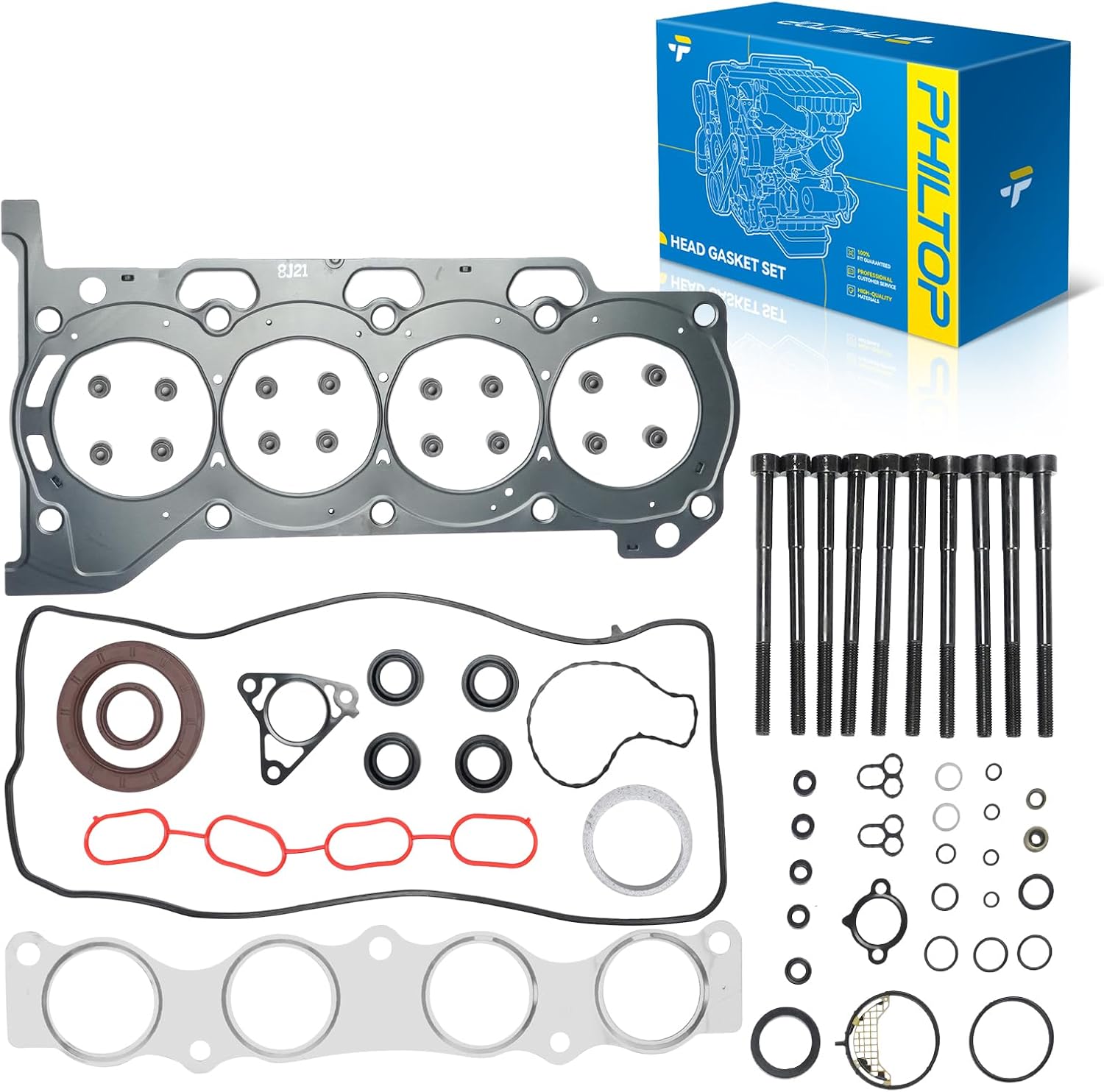
Most head gasket jobs involve much more than a single gasket. A full head gasket set usually includes intake and exhaust manifold gaskets, valve cover gasket, valve stem seals on some kits, throttle body gaskets, and other upper-engine seals. Reusing old top-end gaskets usually creates leaks that force you to tear the engine down again.
Depending on mileage and engine design, this is also the right time to inspect or replace timing components, water pump, thermostat, spark plugs, radiator hoses, and accessory drive belts. If the engine overheated enough to blow the gasket, it is smart to correct the root cause rather than only replacing the failed seal.
Preparation and Engine Draining
Drain Fluids and Create Access
Start by draining the cooling system into a large drain pan. If the oil looks milky or contaminated, drain that as well. Remove any engine covers, intake ducting, air box pieces, and upper components that block access. On many transverse front-wheel-drive vehicles, tight packaging means removing additional brackets, the upper engine mount, or even lowering part of the powertrain for room.
Relieve fuel system pressure if fuel rail removal is required. Tag electrical connectors, ignition coils, injector plugs, and vacuum hoses. If your engine uses coil-on-plug ignition, remove the coils and spark plugs early so the head is lighter and easier to handle later.
Set the Engine to a Known Timing Position
Before removing timing components, rotate the engine by hand to top dead center on the correct cylinder if your service information calls for it. Align timing marks exactly and mark chain or belt positions if appropriate. This is critical on interference engines, where incorrect cam timing can bend valves during startup or even while turning the engine by hand.
Remove Intake, Exhaust, and Timing Components
Remove the intake manifold or upper intake components according to your engine layout. Disconnect coolant hoses, throttle body connections, vacuum lines, emissions lines, sensors, and the fuel rail if needed. Keep bolts grouped by component, since lengths often vary.
Next, disconnect the exhaust manifold from the cylinder head or separate the exhaust at the flange if that gives you better access. Rusted fasteners are common here, so use penetrant and patience. Broken manifold studs can turn a long job into a very long one.
Remove the valve cover, then the timing cover as needed. Release timing belt tension or remove timing chain tensioners, guides, and cam phasers only by the method specified for your engine. Some engines require locking tools to hold camshafts and the crankshaft in position. If you skip this step, you can easily lose timing reference.
- Do not rotate the crankshaft or camshafts independently unless the service manual says it is safe.
- Keep chain guides, tensioners, and cam caps in order if they are position-specific.
- Inspect timing parts closely; this is often the best time to replace worn components.
Tools That Make This Job Easier


Remove the Cylinder Head
Loosen Head Bolts in the Correct Sequence
Head bolts should usually be loosened in the reverse of the tightening sequence and in several passes, starting from the outer fasteners and working inward if that matches your engine’s service pattern. This helps reduce the chance of twisting or distorting the head during removal.
Once the bolts are out, lift the cylinder head straight up. Some heads can be handled alone, but many are heavy enough that a helper is the safer choice. If the head is stuck, do not pry aggressively between mating surfaces. Use designated lift points, gentle soft-face taps where allowed, or the service-manual method to break the seal without gouging the deck.
Inspect What You Find
After removal, inspect the old gasket for obvious failure points such as a burned fire ring between cylinders, coolant passage breaches, or oil passage leaks. Also inspect the piston tops, combustion chambers, and cylinder walls. A very clean piston in one cylinder can indicate coolant washing, while rusty plugs can point to prolonged coolant entry.
Check the Head and Block Before Reassembly
This is the point where many DIY repairs succeed or fail. Do not assume a new gasket alone will fix the engine. Overheating often warps the cylinder head, and sometimes the block deck as well. Clean both surfaces carefully enough to inspect them, but avoid aggressive sanding discs that can remove metal or leave abrasive material behind.
Clean Gasket Surfaces Properly
Use a plastic or dedicated gasket scraper, solvent, and lint-free rags. Keep debris out of oil and coolant passages. Stuff clean rags into exposed openings while scraping, then remove them and vacuum or wipe the area clean. Finish with brake cleaner only after all loose debris is removed.
Measure Warpage
Lay a machinist straightedge across the cylinder head surface in several directions—lengthwise, crosswise, and diagonally—and use feeler gauges to check for gaps. Compare your measurements to the maximum allowable warpage in the factory spec. If the head is beyond spec, cracked, or pitted badly around sealing surfaces, it needs machine shop attention or replacement.
Check the engine block deck the same way if accessible. If the block is warped beyond spec, the repair may not be practical in the vehicle. Also inspect head bolt holes. Coolant or oil trapped in blind holes can hydraulic-lock a bolt during tightening and crack the block or distort torque readings. Clean threads with the correct chaser and blow out holes carefully with eye protection.
Install the New Head Gasket and Cylinder Head
Position the Gasket Correctly
Install the new head gasket dry unless the manufacturer specifically calls for sealant. Most modern multi-layer steel head gaskets should not be coated with copper spray or RTV. Make sure the gasket is oriented correctly using the front mark, up mark, or locating dowels. Installing it backward can block oil or coolant passages.
Set the Head in Place
Lower the cleaned, inspected cylinder head straight onto the dowels without sliding it across the gasket. Install new head bolts if required. Some engines require lightly oiled bolt threads and washer faces, while others require dry installation or thread sealant on specific bolts. Follow the exact lubrication instruction for your engine, because torque values depend on that friction condition.
Tighten in Sequence and by Stages
Use the exact bolt sequence and step values from the service manual. Many engines use an initial torque stage followed by one or more angle-tightening stages. Others use several torque passes only. If your engine uses torque-to-yield bolts, do not reuse old ones. A typical pattern starts from the center and works outward, but the number of steps and angles varies widely, so generic values are not safe here.
After the head is secured, reinstall camshafts, lifters, rockers, or followers only in their original positions if they are not new. Apply assembly lube where specified and verify that cam caps are tightened in the correct order and to the correct torque.
Recommended Tools for This Job


Reinstall Timing Components and Top-End Parts
Reinstall the timing chain or belt, guides, tensioners, and sprockets according to the engine’s timing marks and locking procedure. Before closing everything up, rotate the engine by hand the prescribed number of turns and recheck all timing marks. If they do not return to the correct positions, stop and correct the issue before proceeding.
Reinstall the valve cover with the proper gasket and any small RTV dabs only where the service information calls for them, such as timing cover corners. Then reinstall the exhaust manifold, intake manifold, fuel system parts, ignition components, coolant hoses, brackets, and accessory drive components. Use the correct torque values for manifolds and covers to avoid creating vacuum leaks or cracking housings.
- Replace brittle hoses and damaged vacuum lines now while access is easy.
- Reconnect every ground strap; missing grounds can create no-start or sensor faults.
- Double-check connector routing so wiring does not rest against exhaust parts.
Refill Fluids, Bleed the Cooling System, and Start the Engine
Install a new oil filter and refill the engine with fresh oil. Refill the cooling system with the correct coolant mixture. If your vehicle has a specific bleeding procedure, follow it exactly. Some engines trap air easily and will overheat again if the system is not bled through dedicated bleed screws, vacuum-fill equipment, or a heater-on warmup routine.
First-start Checklist
- Crank the engine as instructed for your vehicle if oil priming or fuel disable is recommended.
- Start the engine and watch the oil pressure light, coolant temperature, and any immediate leaks.
- Listen for timing noise, valvetrain noise, intake leaks, or exhaust leaks.
- Allow the engine to reach operating temperature while monitoring coolant level and heater performance.
- Shut it down, let it cool, and recheck all fluid levels.
Some smoke or odor from spilled fluids is normal for a short time, but persistent white exhaust, bubbling in the radiator or overflow tank, repeated overheating, or oil contamination after the repair means the problem is not fully resolved. At that point, further diagnosis is needed before driving the vehicle much.
Final Checks and Common Mistakes to Avoid
After a successful warmup and cooldown cycle, inspect around the head gasket area, valve cover, intake manifold, exhaust manifold, and coolant fittings for leaks. Scan for trouble codes if the check engine light appears. A road test should be short at first, with close attention to engine temperature and heater output.
One of the most common mistakes is skipping machine shop inspection after an overheating event. Another is using the wrong torque method, especially guessing on angle-tightening stages. Others include dirty bolt holes, mis-timed cams, overusing RTV, or failing to bleed the cooling system completely.
If coolant was in the oil, consider changing the oil again after a short run period to remove any remaining contamination. Also keep an eye on coolant level over the next several heat cycles. A slight drop as trapped air purges can be normal, but repeated loss is not.
When This Job May Not Be Worth Doing at Home
A head gasket replacement can be reasonable for an experienced DIY owner with strong tools, space, time, and factory repair information. But some vehicles make the job especially difficult, including V engines with cramped engine bays, turbocharged setups, dual overhead cam designs with complex timing systems, and engines known for cracked heads or warped blocks.
If you discover bearing noise, low oil pressure, severe sludge, cracked castings, or excessive cylinder wall damage during teardown, a full engine replacement may be more cost-effective than completing the gasket repair. The gasket itself may only be part of a bigger engine failure.
Key Takeaways
- Do not replace a head gasket until you confirm the cylinder head and block sealing surfaces are still within spec.
- Follow your engine’s exact torque sequence, torque values, and angle-tightening stages, especially with torque-to-yield bolts.
- Keep timing marks aligned and rotate the engine by hand before startup to catch cam timing mistakes early.
- Clean gasket surfaces and head bolt holes carefully, because debris or trapped fluid can ruin the new seal.
- Bleed the cooling system completely and monitor temperature, coolant level, and oil condition after the first heat cycles.
FAQ
Can I Replace a Head Gasket Without Removing the Engine?
Yes, on many vehicles the job is done with the engine in the car. However, access can be very tight on some transverse V engines or vehicles with crowded engine bays, making the job much harder.
Do I Always Need New Head Bolts?
Not always, but many modern engines use torque-to-yield head bolts that must be replaced. Check the service manual for your engine before reassembly.
Should I Use Sealant on a New Head Gasket?
Usually no. Most modern head gaskets are installed dry unless the manufacturer specifically calls for a sealant or coating. Using the wrong product can cause sealing failure.
What if the Cylinder Head Is Warped?
If warpage exceeds factory limits, the head should be resurfaced by a machine shop or replaced. Installing a new gasket on a warped head usually leads to another failure.
How Do I Know if the Repair Worked?
The engine should start, warm up normally, hold stable temperature, produce normal heater output, and show no oil-coolant cross-contamination, white smoke, external leaks, or combustion bubbles in the cooling system.
Can a Blown Head Gasket Damage the Engine Further?
Yes. Coolant in the oil can damage bearings, overheating can warp metal parts, and coolant entering a cylinder can foul plugs or even cause hydrolock in severe cases.
Is It Smart to Replace the Timing Belt or Water Pump During This Job?
Often yes. If those parts are due soon or already accessible during teardown, replacing them now can save major labor later.
Need Parts for This Repair?
The right parts and supplies vary by vehicle.
Select your make and model to find compatible parts and accessories for your car.
Exact Fit
Parts that fit your make and model
Quality You Can Trust
Top brands and OEM quality options
Fast Shipping
Get the parts you need, delivered fast