

Note: This article contains affiliate links. If you click on these links and make a purchase, I may earn a small commission at no extra cost to you. This helps support my research and content. Read my full affiliate disclosure here.
Repair Snapshot
Use a mechanic if fuel is leaking externally, the vehicle will not start after basic checks, or fuel pressure and injector testing point to internal component failure. Professional help is also smart if you are working around high-pressure fuel systems or suspect PCM wiring issues.
This article is part of our Engine Maintenance & Repair Guides.
If your car cranks, smells strongly of gas, and refuses to start, you may be dealing with an engine that keeps flooding. Flooding happens when too much fuel enters the cylinders and there is not enough spark, air, or heat to burn it cleanly.
On older carbureted engines, flooding often comes from a stuck float, choke problem, or bad starting technique. On modern fuel-injected vehicles, common causes include leaking injectors, a bad coolant temperature sensor, weak ignition parts, low battery voltage, or a restricted air supply. The fix is usually a careful diagnosis, not random parts swapping.
This guide walks through the safest way to clear a flooded engine, identify why it keeps happening, and repair the most likely causes at home. The exact steps vary by vehicle, but the troubleshooting logic is the same: verify spark, fuel delivery, air flow, and sensor inputs.
What Engine Flooding Looks Like
A flooded engine usually has one or more obvious symptoms. The engine may crank normally but not start, stumble briefly and die, or start only with the accelerator pressed to the floor. You may notice a raw fuel smell from the tailpipe, black smoke on startup, wet spark plugs, or repeated hard starts after short trips.
Flooding means the cylinders are getting more fuel than the engine can burn. That can be caused by excessive fuel pressure, injectors that drip after shutdown, a carburetor choke that stays closed, a sensor that falsely tells the computer the engine is ice cold, or weak spark that leaves the fuel unburned.
- Strong gasoline smell after repeated cranking
- Spark plugs that come out wet or heavily carboned
- Black exhaust smoke when the engine finally starts
- Starts better with the accelerator held wide open
- Problem is worse on cold starts or after sitting overnight
Safety Before You Start
Fuel and ignition work can be dangerous. Work in a well-ventilated area away from open flames, cigarettes, heaters, and trouble lights with hot bulbs. Wear safety glasses and keep a fire extinguisher rated for flammable liquids nearby.
If you see fuel dripping from a rail, injector, carburetor, or line, stop and fix that leak before doing any more cranking. An external fuel leak is not a normal flooding issue and can quickly become a fire hazard.
- Disconnect the negative battery cable before unplugging major fuel system connectors if your service manual recommends it.
- Relieve fuel pressure before opening any fuel line on an injected engine.
- Let a hot engine cool before removing spark plugs or spraying cleaners near the intake.
Clear the Flooded Engine First
For Most Fuel-injected Vehicles
Many modern vehicles have a clear-flood mode. Press the accelerator pedal fully to the floor, then crank the engine for up to 5 to 10 seconds. On many systems, wide-open throttle during cranking tells the computer to reduce or stop injector pulse so the extra fuel can clear out. Do not pump the pedal on a fuel-injected engine.
For Carbureted Vehicles
Hold the throttle partially or fully open while cranking so more air enters the engine. If the choke is stuck closed, open it manually while you crank. Avoid repeated pumping, which can add even more fuel through the accelerator pump.
If It Still Will Not Start
Remove the spark plugs and inspect them. If they are wet with fuel, let them dry or replace them if they are fouled. Disable fuel delivery if possible by pulling the fuel pump relay or injector fuse, then crank the engine briefly to help clear the cylinders. Reinstall dry plugs, reconnect the system, and try again.
If the engine starts after this but floods again later, the root cause is still present and needs diagnosis.
Check the Battery and Ignition System
Weak spark is a major reason engines seem flooded. If the ignition system cannot ignite the mixture, raw fuel builds up in the cylinders and on the plugs. Start with battery condition, because low cranking voltage can hurt both spark output and injector control.
Battery and Cranking Speed
Measure battery voltage with a multimeter. A fully charged battery should read about 12.6 volts with the engine off. During cranking, voltage should not collapse excessively. If the starter sounds slow, charge the battery and clean the cable connections before doing deeper diagnosis.
Spark Plugs, Wires, and Coils
Pull the plugs and inspect them carefully. Wet plugs confirm excess fuel or no ignition. Heavy black soot points to a rich condition over time. Replace worn, oil-fouled, fuel-fouled, or incorrectly gapped plugs. On engines with plug wires, check for cracks, high resistance, or corrosion. On coil-on-plug systems, inspect the boots for carbon tracking and moisture.
- Replace spark plugs if electrodes are rounded, fouled, or fuel-soaked.
- Check ignition coils for cracks and signs of arcing.
- Inspect plug wells for oil or coolant contamination.
- Use dielectric grease inside coil boots if appropriate for your application.
If you have a spark tester, verify strong spark on the affected cylinders. An engine that floods repeatedly but has weak spark may need plugs, coils, wires, or a battery before any fuel-system parts.
Tools That Make This Job Easier


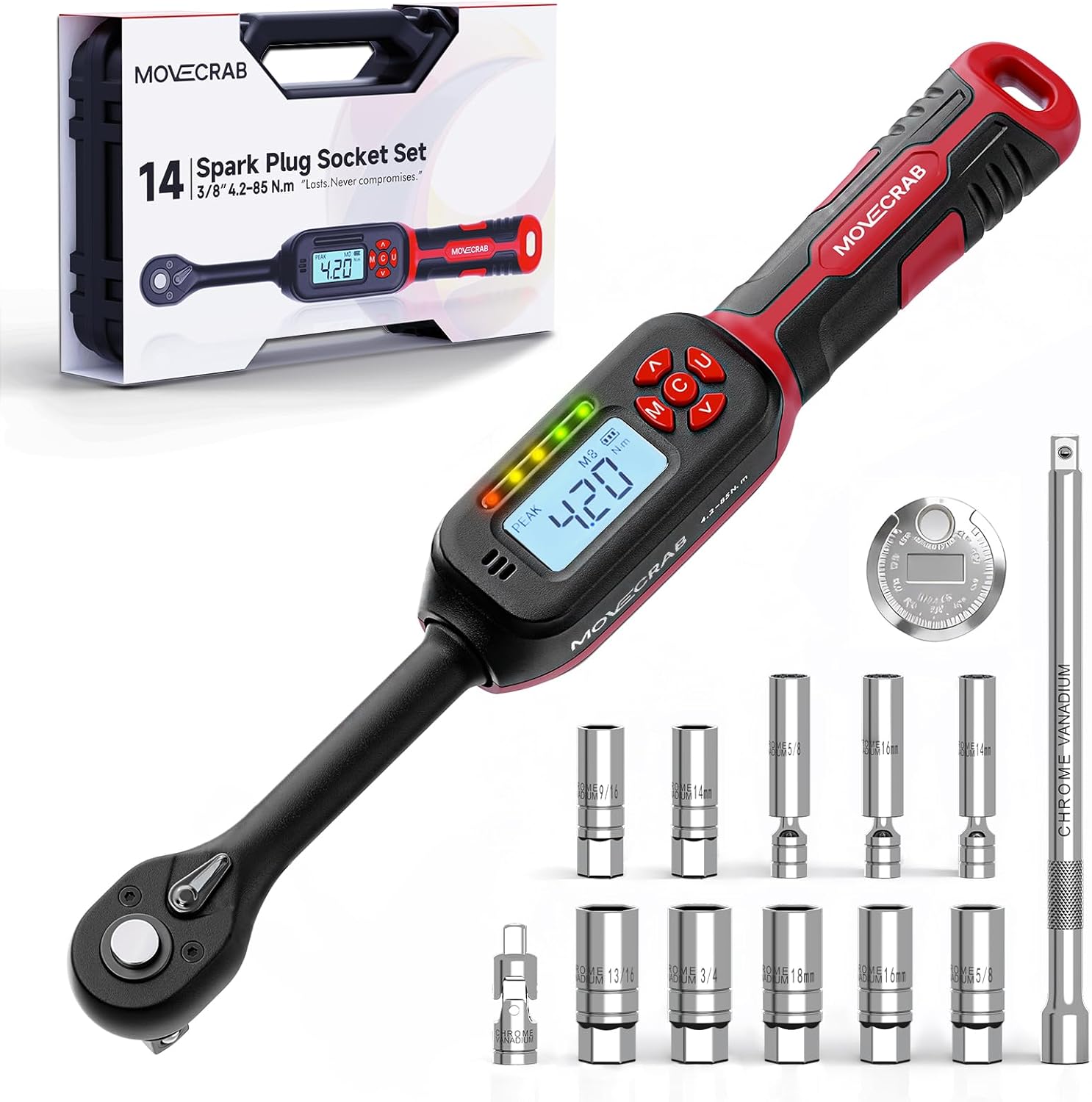
Scan for Trouble Codes and Live Data
On any 1996-and-newer U.S. vehicle, connect an OBD2 scanner before replacing parts. Even if the check engine light is off, pending codes and live data can point you toward the problem. Focus on coolant temperature, intake air temperature, fuel trims, manifold pressure or MAF readings, and misfire data.
What to Look For
- A coolant temperature reading that is far colder than actual engine temperature
- Very negative fuel trims, suggesting the computer is trying to pull fuel away
- Misfire codes that point to ignition problems
- MAF or MAP sensor codes that may affect fuel calculations
- Injector circuit or fuel pressure-related codes on some vehicles
A bad engine coolant temperature sensor is a classic flooding cause on fuel-injected engines. If the sensor falsely reports a very cold engine, the computer enriches the mixture like a choke on an old carburetor. Compare scanner data to ambient temperature before a cold start. If it is wildly off, test the sensor and wiring.
Inspect the Air Intake and Throttle Body
An engine needs enough air to burn fuel properly. A badly clogged air filter, blocked intake tract, or carboned-up throttle body can contribute to rich starting and stalling. This is a quick check that many DIYers overlook.
- Open the air box and inspect the air filter for heavy dirt, moisture, or rodent debris.
- Check the intake duct for collapse, splits, or obstructions.
- Inspect the throttle plate for sticky carbon buildup.
- Clean the throttle body using throttle body cleaner and a lint-free rag if the design allows it.
If your vehicle uses a mass airflow sensor, make sure the sensor is connected and the intake tube after the sensor is sealed. Unmetered air leaks usually create lean issues, but a contaminated MAF can still distort load calculations and cause hard starts or rich running.
Test for Too Much Fuel Pressure or Leaking Injectors
If spark is good and the engine still floods, check whether the fuel system is delivering too much fuel. A failing fuel pressure regulator, restricted return line on older systems, or one or more leaking injectors can dump excess fuel into the intake or cylinders.
Fuel Pressure Test
Attach a fuel pressure gauge according to the service manual and compare key-on and running pressure to specifications. Pressure that is too high can enrich the mixture across all cylinders. Pressure that bleeds down rapidly after shutdown may indicate a leaking injector, regulator, or pump check valve.
Signs of Leaking Injectors
- Hard start after the car sits for several hours
- One or two spark plugs repeatedly wetter than the others
- Fuel pressure drops quickly after the pump turns off
- Raw fuel smell from the exhaust on startup
- Engine oil level rising or smelling like gasoline
A leaking injector can wash oil off the cylinder wall and dilute the engine oil. If the dipstick smells like gas or the oil level has risen, change the oil after the repair. Continuing to drive with fuel-contaminated oil can damage bearings and cylinder walls.
Diagnose Carburetor-Specific Flooding Problems
If your vehicle has a carburetor, the most common flooding causes are a stuck float, worn needle and seat, too-high float level, failed choke pull-off, misadjusted choke, or dirt inside the carburetor. Heat soak after shutdown can also contribute to hot-start flooding on older vehicles.
Choke Inspection
With the engine cold, the choke should close appropriately, then open as the engine warms. If it stays fully shut after startup, the engine will run excessively rich and may flood. Check the choke linkage, electric choke power supply if equipped, and vacuum pull-off diaphragm.
Float and Needle Issues
A saturated float or worn needle and seat can let fuel continue rising in the bowl until it spills into the intake. If fuel dribbles from the carburetor boosters with the engine off or during cranking when it should not, rebuild or service the carburetor.
Carburetor work can be very DIY-friendly if you are organized, but it requires clean work habits and careful adjustment. Take photos during disassembly and use the float height spec for your exact carburetor model.
Recommended Tools for This Job


Check the Sensors That Enrich the Mixture
Modern engines depend on sensor data to determine how much fuel to add during cranking and warm-up. If one key sensor lies to the computer, the engine can act like the choke is stuck on.
- Engine coolant temperature sensor: A false cold reading can command too much fuel.
- Intake air temperature sensor: Wrong readings can slightly alter mixture, especially on cold starts.
- MAP or MAF sensor: Bad load readings can cause rich fueling and poor starting.
- Throttle position sensor: On some vehicles, incorrect throttle angle data can affect cranking fuel strategy.
The easiest DIY method is to compare scanner data to reality. Before a cold start, coolant and intake air readings should be close to ambient temperature. If one sensor is clearly wrong, inspect the connector for corrosion, test the wiring, and replace the sensor if needed.
Step-by-Step Repair Plan
Use this sequence to fix the problem without wasting money on guesswork.
- Charge the battery fully and confirm the engine cranks at normal speed.
- Clear the flooded condition using wide-open-throttle cranking or by drying and reinstalling the spark plugs.
- Inspect and replace fouled spark plugs if needed.
- Scan for trouble codes and compare coolant and intake air readings to actual temperature.
- Inspect the air filter, intake ducting, and throttle body for restriction or buildup.
- Check for strong spark and inspect coils, boots, or plug wires.
- Test fuel pressure and pressure bleed-down if tools are available.
- If one cylinder keeps wetting its plug, suspect a leaking injector or carburetor fault on that cylinder bank.
- Repair the failed component, then recheck starting behavior over several cold starts.
This order catches the most common and cheapest fixes first. Many repeated flooding complaints end up being simple plug fouling, low cranking voltage, a bad temperature sensor, or a dirty throttle body rather than a major fuel-system failure.
After the Repair: What to Recheck
Once the engine starts and idles normally, do not stop at ‘it runs now.’ You want to confirm the flooding issue is actually gone. Let the engine reach full operating temperature, shut it off, and restart it after a few minutes. Then test it again after it sits overnight.
- Verify there is no raw fuel smell after shutdown.
- Make sure no spark plugs are wet or blackening rapidly.
- Confirm fuel trims move toward normal if you have a scanner.
- Check for fuel dilution in the engine oil and change the oil if needed.
- Re-scan for returning trouble codes after a short drive cycle.
If the flooding only happens in one temperature range, note that pattern. Cold-only flooding points more toward sensors, choke, or cold-start enrichment. Hot-only flooding can suggest leaking injectors, fuel percolation on carbureted engines, or a failing sensor that changes value when warm.
Common Mistakes to Avoid
- Do not keep cranking endlessly; it can foul the plugs further and overheat the starter.
- Do not pump the accelerator repeatedly on a fuel-injected engine.
- Do not replace injectors, sensors, and coils at random without basic tests.
- Do not ignore gasoline-contaminated oil after a flooding event.
- Do not overlook a weak battery or poor cable connections.
Flooding symptoms often tempt DIYers to focus only on the fuel side, but spark and sensor problems are just as common. A methodical diagnosis is almost always faster than guessing.
Key Takeaways
- Clear the flooded engine first, then diagnose why excess fuel is entering or failing to ignite.
- Start with battery voltage, spark plugs, and ignition strength before replacing fuel-system parts.
- Use an OBD2 scanner to compare coolant temperature and other live data to real conditions.
- Test fuel pressure and watch for pressure bleed-down if flooding keeps returning after shutdown.
- Change the engine oil if it smells like gas or the level has risen after repeated flooding.
FAQ
Can I Start a Flooded Fuel-injected Engine by Pressing the Gas Pedal?
Yes, on many vehicles holding the accelerator fully to the floor during cranking activates a clear-flood mode that reduces injector pulse. Do not pump the pedal repeatedly, because that does not help on most fuel-injected systems.
What Is the Most Common Cause of an Engine That Keeps Flooding?
Common causes include fouled spark plugs, weak ignition coils, a bad coolant temperature sensor, leaking injectors, excessive fuel pressure, and carburetor choke or float problems on older vehicles.
How Do I Know if My Spark Plugs Are Flooded?
Remove and inspect them. Flooded plugs are usually wet with gasoline and may smell strongly of fuel. They may also be black and sooty if the engine has been running rich for a while.
Can Bad Spark Plugs Cause Flooding Symptoms?
Yes. Weak or fouled plugs may fail to ignite the air-fuel mixture, so raw fuel builds up in the cylinders. That can look exactly like a fuel-system flooding problem.
Will a Bad Coolant Temperature Sensor Make a Car Flood?
Yes. If the sensor falsely tells the computer the engine is much colder than it really is, the PCM may command too much fuel during startup and warm-up, causing flooding and rich running.
Should I Change the Oil After an Engine Floods?
If the oil smells like gasoline, the level has risen, or the engine has been repeatedly flooded, yes. Fuel dilution reduces lubrication and can damage internal engine parts.
Can a Clogged Air Filter Make an Engine Flood?
A severely restricted air filter can contribute to an overly rich condition, especially during startup, although it is usually not the only cause. It is still an easy and worthwhile item to inspect.
When Should I Stop and Call a Mechanic?
Stop if you find an external fuel leak, suspect a high-pressure fuel system fault, cannot verify spark safely, or the engine still floods after checking plugs, battery voltage, scanner data, and basic fuel pressure. Persistent injector, wiring, or PCM issues often need professional testing.
Need Parts for This Repair?
The right parts and supplies vary by vehicle.
Select your make and model to find compatible parts and accessories for your car.
Exact Fit
Parts that fit your make and model
Quality You Can Trust
Top brands and OEM quality options
Fast Shipping
Get the parts you need, delivered fast