

Note: This article contains affiliate links. If you click on these links and make a purchase, I may earn a small commission at no extra cost to you. This helps support my research and content. Read my full affiliate disclosure here.
What You’ll Need
A quick look at the tools and supplies commonly used for this job.
Tools
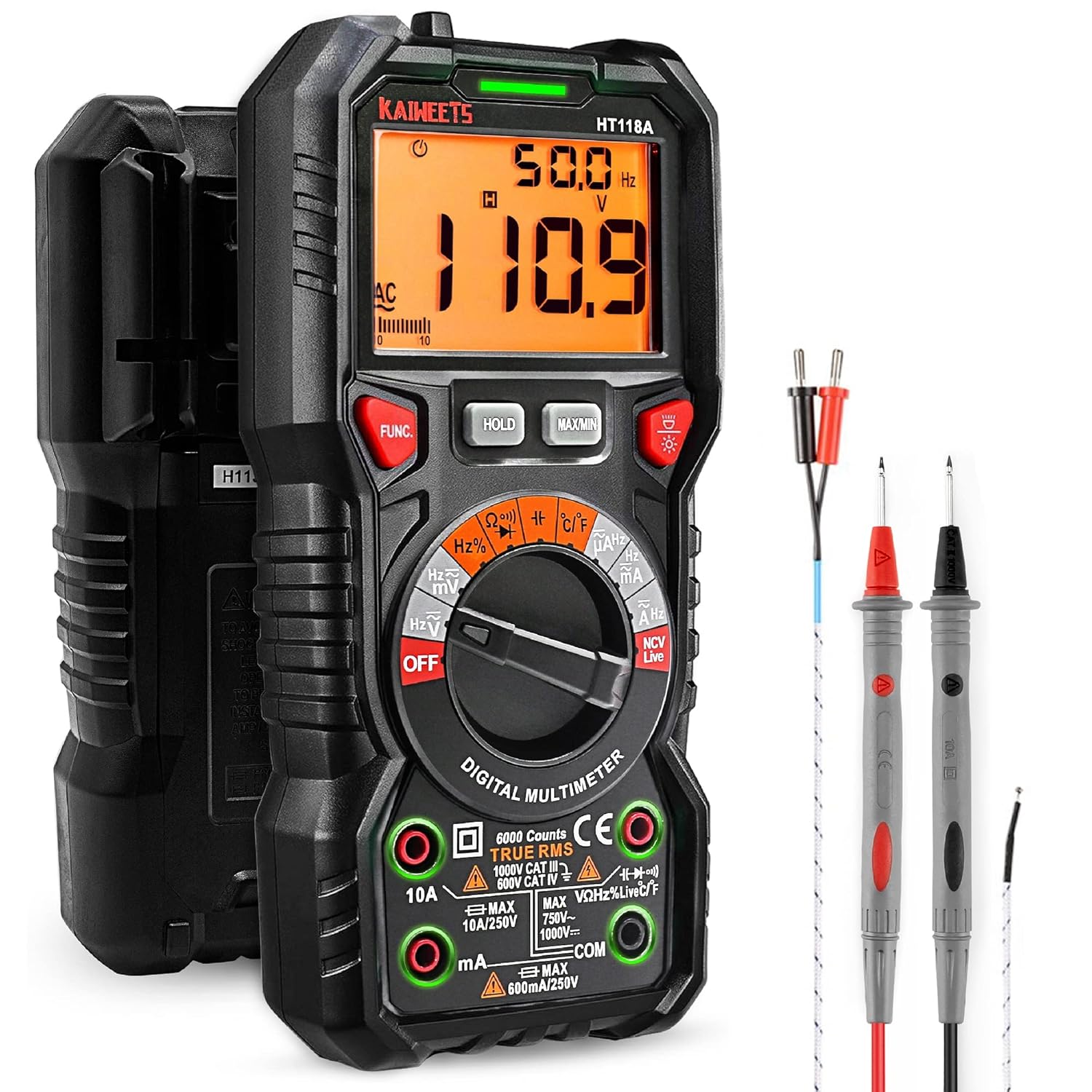
- Digital multimeter
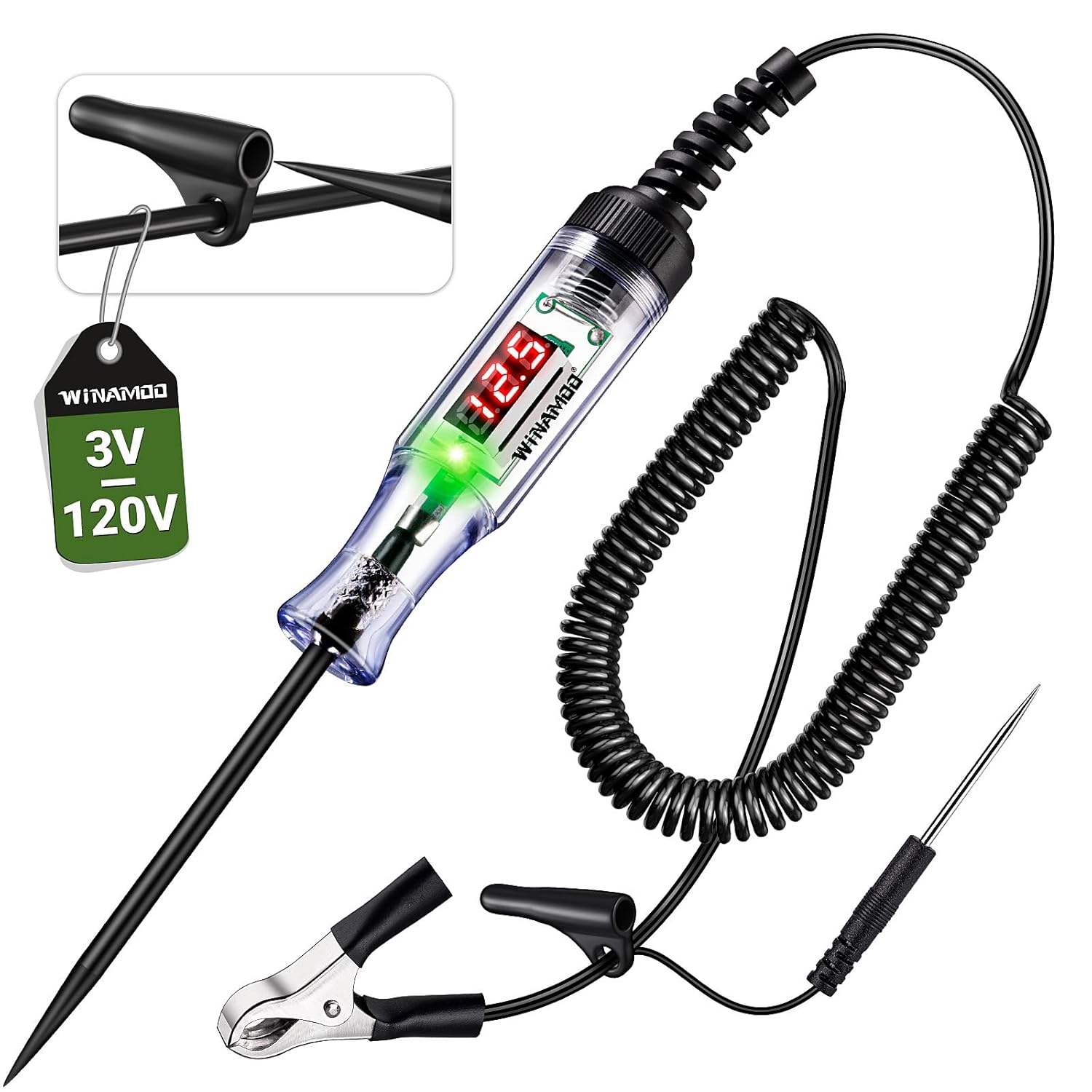
- 12-volt test light
- OBD-II scan tool
- Trim removal tools
- Flashlight or inspection light
- Wiring diagram or factory service information
- Back-probe pins or probe leads
- Fused jumper wire
- Battery terminal wrench
Parts & Supplies
- Replacement fuses
- Electrical contact cleaner
- Heat-shrink tubing
- Automotive-grade wire
- Crimp connectors or solder repair supplies
- Split wire loom
- Electrical tape
- Dielectric grease
This article is part of our Electrical System Maintenance & Repair Guides.
Automotive wiring problems can look like bad sensors, failed modules, weak batteries, or random electrical gremlins, but the root cause is often a simple loss of power, ground, or continuity.
The key to diagnosing wiring faults is to stop guessing and follow a repeatable process. If you confirm the symptom, check the fuse path, verify power and ground at the affected component, and inspect the harness where it commonly rubs, heats up, or gets wet, most wiring issues become much easier to isolate.
This guide walks through the common symptoms, the tools that matter, the safest ways to test a circuit, and how to tell whether you have an open circuit, a short to ground, high resistance, or a bad connection.
Common Signs of Wiring Problems
Wiring faults often create symptoms that seem inconsistent. A component may work sometimes, fail when the car hits a bump, or stop working only in wet weather or extreme heat. That inconsistency is a strong clue that you should inspect the circuit before replacing parts.
- Blown fuses that return immediately or after repeated use of one function.
- Lights, windows, locks, fans, pumps, or sensors that work intermittently.
- Voltage-related trouble codes, communication codes, or multiple unrelated electrical issues.
- Burnt electrical smell, melted insulation, or visible corrosion in connectors.
- A battery that goes dead because a circuit stays powered when it should shut off.
When several components fail at once, do not assume they all broke separately. They may share a fuse, splice, ground point, power feed, or body control module circuit. Wiring diagrams become especially important in those cases.
Safety Before You Start
Modern vehicles contain sensitive control modules, airbags, and multiplexed communication networks. Safe testing matters just as much as accurate testing. A wrong probe location or an unfused jumper can turn a simple diagnosis into an expensive repair.
- Disconnect the negative battery cable before opening major harnesses or unplugging airbag-related connectors.
- Never replace a fuse with a larger one to “see if it holds.”
- Use a fused jumper wire when bypass testing a power circuit.
- Avoid piercing insulation unless absolutely necessary, because it can create future corrosion.
- Do not apply battery voltage directly to low-voltage sensor or module signal wires.
If the problem involves airbag wiring, hybrid high-voltage systems, or a network communication circuit you cannot confidently identify, stop and use factory information or professional help.
Understand the Circuit Before Testing
The fastest way to diagnose a wiring problem is to understand what the circuit is supposed to do. Most automotive circuits need a power source, overcurrent protection, a load, a control path if applicable, and a good ground. Some are simple switched circuits, while others are module-controlled and only activate under specific conditions.
What to Identify on the Wiring Diagram
- Which fuse or relay feeds the circuit.
- What wire color and connector pin carry power and ground.
- Whether the module switches the power side or the ground side.
- Any shared grounds, splices, connectors, or junction blocks.
- Conditions required for the circuit to operate, such as ignition on, engine running, gear position, or module command.
This matters because a missing voltage reading does not always mean broken wiring. Some circuits are intentionally inactive until the right command is present. Always compare your readings to how the circuit is designed to operate.
Start With the Basics
Before chasing the harness, confirm that the vehicle has a healthy battery and that the complaint is real and repeatable. Low system voltage can cause false codes, weak actuator operation, and misleading test results.
Basic Checks to Perform First
- Measure battery voltage with the engine off. A fully charged battery should typically be around 12.6 volts.
- Check battery terminals for looseness, corrosion, or broken terminal ends.
- Inspect the related fuse or fuses, and verify they have power where appropriate.
- Scan for diagnostic trouble codes and note freeze-frame or body module data if available.
- Confirm whether the problem happens all the time, only while driving, only when hot, or only when wet.
A corroded battery terminal, failing main ground, or partially blown fuse can affect several systems at once. Never skip the obvious checks because the symptom seems complicated.
Tools That Make This Job Easier


Visual Inspection: Find Damage Before You Test
Many wiring problems are visible once you know where to look. Harnesses fail most often where they move, rub, bend sharply, sit near heat, pass through sheet metal, or collect water.
High-probability Trouble Spots
- Door jamb boots where wires flex every time the door opens.
- Trunk and liftgate harnesses near the hinge area.
- Engine bay harnesses near exhaust components, serpentine belts, and brackets.
- Ground eyelets on the body, engine block, frame, or radiator support.
- Trailer wiring splices, aftermarket alarm or audio wiring, and remote start installations.
- Connectors exposed to road spray, coolant, oil, or windshield leaks.
Look for green corrosion, white residue, melted plastic, swollen insulation, stretched wires, broken locking tabs, and previous repairs wrapped in cheap tape. A harness that looks slightly rubbed through can be the entire problem.
How to Check for Power
A power-side test tells you whether voltage is reaching the component. Use a wiring diagram to find the correct terminal and determine when that terminal should be live.
Testing with a Multimeter
Set the meter to DC volts. Connect the black lead to a known good ground and probe the power terminal with the red lead. If the circuit should be active, you should see near battery voltage on most standard 12-volt circuits.
Testing with a Test Light
A test light is useful because it puts a small load on the circuit. If the test light glows strongly, the circuit may be capable of carrying current. If voltage looks normal on a meter but the test light is dim or dead, you may have high resistance in the wire, fuse connection, or connector.
If there is no power at the component, move upstream step by step: component connector, nearby connector, output side of fuse, input side of fuse, relay output, relay feed, and then the battery or power distribution point. The point where voltage disappears usually narrows the fault.
How to Check for Ground Problems
Bad grounds are one of the most common causes of dim lights, slow motors, erratic sensors, and components that behave differently depending on load. A ground can look connected and still have enough resistance to cause trouble.
Quick Ground Test
Connect the test light clip to battery positive and probe the suspected ground terminal. If the light shines brightly when the circuit should be grounded, the ground path may be good. If it is weak or absent, inspect that ground circuit closely.
Voltage Drop Test for Grounds
Voltage drop testing is more reliable than simple continuity checks on loaded circuits. With the component operating, place the red meter lead on the component ground terminal and the black lead on the battery negative post. A good ground path should usually show very low voltage drop. On many 12-volt circuits, anything approaching a few tenths of a volt can justify closer inspection, especially on high-current circuits.
If voltage drop is high, clean and tighten the ground eyelet, inspect for rust or paint under the connection, and check for broken strands inside the wire near the terminal.
How to Identify Opens, Shorts, and High Resistance
Most wiring problems fall into a few categories. Knowing the pattern helps you choose the right test instead of replacing random parts.
Open Circuit
An open means the electrical path is broken. The component gets no power or no ground, or a signal wire is interrupted. Opens are common in broken door harness wires, corroded connectors, and partially pulled-out terminals.
Short to Ground
A short to ground happens when a power wire contacts the body or chassis before the load. This often blows a fuse immediately. If a replacement fuse blows right away, unplug downstream components one at a time or isolate sections of the harness until the short disappears.
Short to Power
A short to power means a circuit is receiving voltage from the wrong source. This can cause a component to stay on constantly, backfeed another circuit, or create strange module behavior.
High Resistance
High resistance can be caused by corrosion, loose terminals, damaged wire strands, overheated connectors, or poor repairs. This may allow a meter to show voltage while the component still fails under load. Dim lights, slow motors, and intermittent operation often point to this condition.
Recommended Tools for This Job


Use Continuity and Resistance Tests Carefully
Continuity and resistance checks are useful, but only when the circuit is de-energized and isolated. Disconnect the battery if needed, unplug the component and the module side where appropriate, and make sure no voltage is present before checking ohms.
A continuity test can confirm that a wire is broken, but it does not always reveal a high-resistance problem that only appears under load. That is why voltage drop testing is usually a better real-world test for power and ground circuits.
- Use resistance testing to confirm an open wire or failed switch contact.
- Use continuity testing to trace a suspect wire end to end after the circuit is isolated.
- Use voltage drop testing when the circuit can be operated and you need to find resistance in a loaded path.
- Do not measure resistance on a live circuit.
Diagnosing Intermittent Wiring Faults
Intermittent faults are some of the most frustrating because the circuit may test fine when parked. Movement, heat, moisture, and vibration often trigger them.
Ways to Reproduce the Fault
- Wiggle the harness gently while monitoring voltage, ground, or scan data.
- Open and close doors, trunk lids, or liftgates while the affected circuit is operating.
- Check the circuit hot and cold if the problem appears after driving.
- Inspect after rain or car washes if moisture seems to trigger the issue.
If a circuit cuts in and out when you move a harness section, narrow the area further by separating connectors and testing each side. Do not yank the harness aggressively; light movement is enough to expose many internal breaks.
When the Problem May Not Be the Wiring
Not every electrical symptom comes from damaged wiring. Once you verify the circuit has proper power, ground, and signal integrity, the fault may be the switch, relay, actuator, sensor, or control module itself.
- A fuel pump with correct power and ground but no operation may simply be failed internally.
- A blower motor with full power and ground but slow speed may have worn brushes or a failing motor.
- A sensor circuit may test correctly electrically but still produce incorrect data if the sensor itself is bad.
- A module may not command a circuit because another input condition is missing, not because the wire failed.
That is why wiring diagnosis should always be tied to circuit operation and service information, not just one voltage reading.
Repairing the Fault Correctly
Once you find the problem, repair it in a way that will survive heat, vibration, and moisture. Twisting wires together and wrapping them in household tape is not a real automotive repair.
Good Repair Practices
- Cut back damaged wire until you reach clean, solid copper.
- Use automotive-grade wire of the same gauge when adding a section.
- Use quality crimp repairs or properly executed solder repairs with heat-shrink protection.
- Seal connectors and exposed areas against moisture when needed.
- Support and reroute the harness so it will not rub through again.
After the repair, repeat the same tests that originally failed. Confirm the fuse no longer blows, the voltage drop is acceptable, and the component works in all normal operating conditions.
When to Stop DIY Diagnosis
Some electrical problems are still reasonable for a DIY owner, especially a broken power wire, a bad ground, or visible connector corrosion. Others require specialized information and tools.
- Seek professional help for airbag circuits, hybrid or EV high-voltage systems, and advanced network communication faults.
- Stop if you cannot obtain a reliable wiring diagram for the exact vehicle.
- Get help if testing points are buried behind dashboards and you risk damaging trim, modules, or connectors.
- Consider a professional if multiple control modules are setting communication codes without an obvious power or ground issue.
Paying for one hour of skilled electrical diagnosis can be cheaper than replacing several unnecessary parts.
Key Takeaways
- Start every wiring diagnosis by confirming the symptom, battery condition, fuse status, and circuit operation on a wiring diagram.
- Check power and ground under load, because a wire can show voltage on a meter and still fail when the component draws current.
- Focus visual inspection on flex points, hot areas, wet connectors, grounds, and any aftermarket wiring splices.
- Use voltage drop testing to find high resistance, and isolate shorts by moving upstream and downstream through the circuit logically.
- Repair damaged wiring with automotive-grade materials and re-test the circuit so the problem does not return.
FAQ
What Is the Most Common Automotive Wiring Problem?
Bad grounds, broken wires at flex points, corroded connectors, and chafed power wires are among the most common. Door jambs, trunk hinges, and engine bay harnesses are frequent failure locations.
Can I Diagnose Wiring Problems with Just a Multimeter?
You can do a lot with a digital multimeter, especially voltage, continuity, and voltage drop tests. A test light, wiring diagram, and scan tool make the job faster and more accurate.
Why Does a Fuse Keep Blowing Even After I Replace It?
A fuse that blows again usually means there is a short to ground, an internally shorted component, or damaged wiring downstream of the fuse. Replacing the fuse without isolating the fault will not solve the problem.
Is Continuity Testing Enough to Prove a Wire Is Good?
No. A wire can pass a continuity test and still have high resistance that causes failure under load. Voltage drop testing is better for judging real-world performance on active circuits.
How Do I Know if the Problem Is a Bad Ground?
Common clues include dim lights, slow motors, erratic readings, and components that improve when you add a temporary ground. A voltage drop test on the ground side is the best way to confirm it.
Should I Disconnect the Battery Before Testing Wiring?
Disconnect the battery before opening harnesses, checking resistance, or working near sensitive systems like airbags. For live voltage tests, the battery must remain connected, but you should probe carefully and follow the wiring diagram.
Can Aftermarket Accessories Cause Wiring Problems?
Yes. Alarm systems, stereos, remote starts, trailer wiring, and lighting modifications often create poor splices, overloaded circuits, or backfeeding issues. Always inspect aftermarket work early in the diagnosis.
Need Parts for This Repair?
The right parts and supplies vary by vehicle.
Select your make and model to find compatible parts and accessories for your car.
Exact Fit
Parts that fit your make and model
Quality You Can Trust
Top brands and OEM quality options
Fast Shipping
Get the parts you need, delivered fast