

Note: This article contains affiliate links. If you click on these links and make a purchase, I may earn a small commission at no extra cost to you. This helps support my research and content. Read my full affiliate disclosure here.
What You’ll Need
A quick look at the tools and supplies commonly used for this job.
Tools
- Digital multimeter
- Battery charger
- Battery load tester or conductance tester
- Safety glasses
- Nitrile or mechanic’s gloves
- Battery terminal brush or cleaning tool
Parts & Supplies
- Battery terminal cleaner
- Baking soda and water solution
- Shop towels or rags
- Dielectric grease or battery terminal protectant
- Distilled water for serviceable batteries
This article is part of our Electrical System Maintenance & Repair Guides.
Checking battery state of charge tells you how much usable energy is left in your car battery right now, which is different from whether the battery is still healthy overall. A battery can be fully charged and still be weak, or it can be healthy but simply discharged from sitting, cold weather, or repeated short trips.
For most DIY car owners, the easiest way to check state of charge is with a digital multimeter after the battery has been at rest. A charger, built-in hydrometer on some batteries, or a professional conductance test can add more confidence if the voltage reading is borderline.
This guide walks through what to inspect first, how to get an accurate reading, common voltage ranges, and how to tell whether your next step should be charging, deeper testing, or replacement.
What Battery State of Charge Actually Means
State of charge refers to how full the battery is, usually expressed as a percentage. On a typical 12-volt lead-acid automotive battery, that percentage can be estimated by measuring open-circuit voltage after the battery has rested with the engine off and no major electrical loads applied.
This is not the same as battery condition or capacity. A battery may show a normal state of charge after charging, but still fail to hold that charge or deliver enough current for cranking. That is why voltage is a useful first inspection step, but not always the final answer if starting problems continue.
- State of charge = how full the battery is right now.
- State of health = how well the battery can still perform compared with when it was new.
- Charging system condition = whether the alternator and voltage regulator can recharge the battery properly while driving.
Safety and Preparation Before You Test
Car batteries contain acid and can release explosive gas, especially while charging. Always work in a well-ventilated area, keep sparks and flames away, and wear eye protection. If the battery case is swollen, cracked, leaking, or smells strongly of sulfur, stop and replace it instead of testing further at home.
Set Up the Vehicle for an Accurate Reading
To check state of charge accurately, turn the engine off and let the vehicle sit long enough for surface charge to settle. Ideally, wait several hours or overnight after driving or charging. If you cannot wait that long, you can reduce surface charge by turning the headlights on for about 30 seconds, then turning them off and waiting a few minutes before testing.
- Park on a level surface and switch the ignition fully off.
- Turn off lights, HVAC blower, radio, chargers, and any accessories.
- Make sure the battery posts and terminals are accessible and reasonably clean.
- If corrosion is heavy, clean the terminals before relying on your voltage reading.
Start With a Visual Inspection
Before touching a meter, inspect the battery and cables. Many charging and starting complaints come from poor connections rather than a truly discharged battery. Corroded terminals can create voltage drop, slow cranking, and low charging performance.
What to Look For
- White, green, or bluish corrosion around the battery posts or cable ends.
- Loose terminal clamps that can be rotated by hand.
- Frayed, damaged, or oil-soaked battery cables.
- A cracked, bulged, or leaking battery case.
- A missing or loose hold-down bracket that allows vibration damage.
- Low electrolyte level in a serviceable battery with removable caps.
If terminals are dirty, clean them before testing. Corrosion between the post and clamp can distort readings and cause no-start symptoms even when the battery is reasonably charged. Tighten connections properly after cleaning, but do not overtighten and damage the terminals.
Check Electrolyte Level Only on Serviceable Batteries
Some older batteries have removable caps. If yours does, electrolyte should cover the plates inside each cell. If low, top off with distilled water only, then charge the battery before judging its state of charge. Sealed maintenance-free batteries should not be opened.
Tools That Make This Job Easier


How to Check State of Charge With a Multimeter
A digital multimeter is the most practical tool for DIY state-of-charge checks. Set the meter to DC volts, usually on the 20-volt range if it is not auto-ranging. Touch the red probe to the positive battery post and the black probe to the negative post. Measure on the posts themselves when possible, not just the cable clamps, to avoid hiding a bad connection.
Open-circuit Voltage Guide for a 12-Volt Lead-acid Battery
- 12.6 to 12.7 volts: approximately 100% charged
- 12.4 volts: approximately 75% charged
- 12.2 volts: approximately 50% charged
- 12.0 volts: approximately 25% charged
- 11.9 volts or lower: discharged or very low
Temperature affects voltage somewhat, but these ranges are close enough for most driveway inspections. If the battery is below about 12.4 volts, recharge it before doing any deeper battery condition test. Testing a partially discharged battery can make a good battery look weak.
When the Reading May Be Misleading
If you just shut the engine off, just disconnected a charger, or just drove a long distance, the battery can show an artificially high reading from surface charge. If the reading is unexpectedly high but the battery cranks poorly the next morning, retest after the vehicle sits overnight.
Also remember that a severely sulfated or damaged battery can sometimes show a decent resting voltage yet still fail under load. That is why voltage is best treated as a state-of-charge estimate, not a complete health certificate.
Using a Battery Charger to Confirm Charge Level
Many modern battery chargers display battery voltage, charging stage, or estimated charge percentage. This is useful when your multimeter reading shows the battery is low and you want to bring it back to a known full-charge condition before deciding whether replacement is necessary.
Best Practice when Charging
- Connect the charger according to the charger’s instructions and battery type.
- Use the proper mode for flooded, AGM, gel, or enhanced flooded batteries if your charger offers options.
- Charge fully rather than stopping after a quick voltage bump.
- Let the battery rest after charging, then retest with the multimeter.
A battery that quickly accepts a surface charge but drops back below about 12.4 volts after sitting may be worn out, have an internal defect, or be experiencing a parasitic drain from the vehicle. If it repeatedly loses charge after a full charge and rest period, further diagnosis is needed.
How to Check State of Charge on Batteries With a Built-In Indicator
Some maintenance-free batteries have a built-in indicator eye or hydrometer window. It may show green, dark, or clear depending on the battery’s internal condition. This can be a quick reference, but it only samples one cell and should not be trusted over a direct voltage test.
- Green usually suggests adequate charge in that sampled cell.
- Dark often suggests the battery needs charging.
- Clear or yellow may indicate low electrolyte or battery replacement is needed, depending on brand.
Because the indicator does not represent all six cells equally, treat it as a rough clue only. If the window says the battery is okay but the car starts poorly or the multimeter shows a low voltage, trust the broader test results and inspect further.
Pass or Fail Clues After the Voltage Check
Once you know the battery’s resting voltage, the next question is whether low state of charge is the whole problem or just one symptom. A good inspection combines the voltage reading with how the battery behaves during charging, sitting, and cranking.
Signs the Battery May Simply Need Charging
- Resting voltage is low, but the battery is fairly new and has no case damage.
- The vehicle sat for days or weeks without being driven.
- You mainly make short trips that may not fully recharge the battery.
- Lights or accessories were left on recently.
Signs the Battery May Be Failing
- Voltage remains low or drops quickly again after a full charge.
- The engine still cranks slowly with a fully charged battery.
- The battery is several years old and has a history of needing jump starts.
- The case is swollen, leaking, cracked, or heavily corroded at the posts.
- A load test or conductance test shows low reserve capacity or poor cold-cranking performance.
Signs the Problem May Be Elsewhere
If the battery tests fully charged after resting but still goes dead overnight or after a day or two, suspect a parasitic draw, poor cable connection, or charging system problem. If the engine starts but the battery warning light stays on, check alternator output next. A healthy battery cannot stay charged if the vehicle is not recharging it.
Recommended Tools for This Job


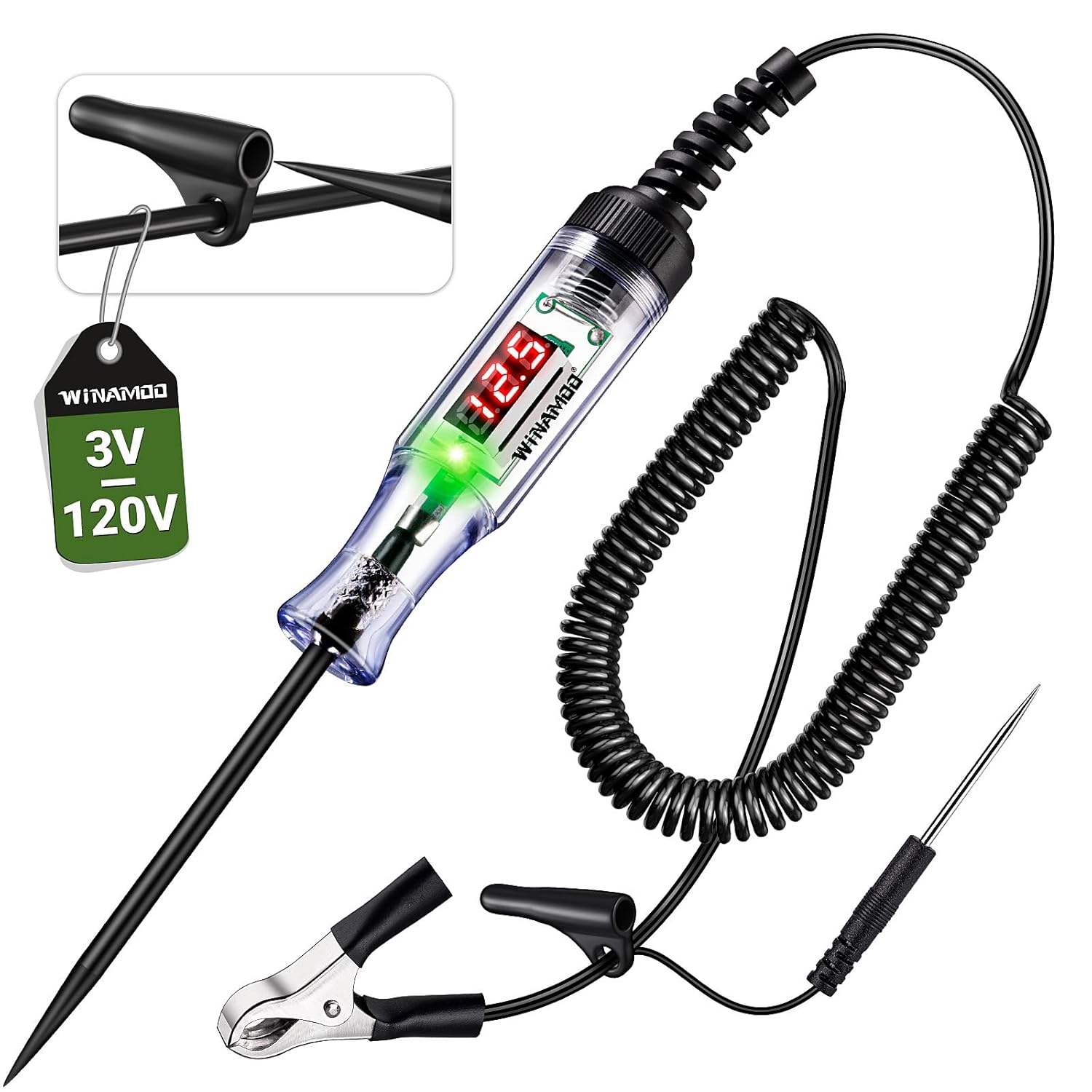
When to Use a Load Test or Conductance Test
State of charge only answers whether the battery is full enough right now. If you want to know whether the battery can still deliver proper starting power, use a load tester or have a parts store or shop run a conductance test. These tests are much better at identifying a battery that looks charged but has lost actual capacity.
For the most accurate results, charge the battery first. Many testers require the battery to be near full charge before declaring it good or bad. If a fully charged battery fails a load or conductance test, replacement is usually the right move.
When You Should Recharge, Replace, or Inspect Further
Recharge the Battery When
- Resting voltage is below about 12.4 volts.
- The battery was drained by lights, accessories, or long storage.
- The battery is otherwise in good physical condition.
Replace the Battery When
- The battery case is damaged, leaking, or swollen.
- It will not hold charge after proper charging.
- It repeatedly tests weak under load despite being fully charged.
- It is old enough that recurring no-start issues no longer justify more troubleshooting.
Inspect the Charging System or Parasitic Draw When
- The battery goes dead again soon after charging.
- You measure normal state of charge after charging, but it declines rapidly while parked.
- The battery warning light is on or charging voltage seems abnormal.
- You have repeated dead battery complaints even after battery replacement.
As a rule, do not replace a battery based on one low-voltage reading alone. Charge it fully, let it rest, retest it, and then evaluate whether it holds that charge and performs properly under load.
Common Mistakes That Lead to Wrong Results
- Testing immediately after driving or charging without removing surface charge.
- Measuring through dirty or corroded clamps instead of on the battery posts.
- Judging battery health from voltage alone.
- Ignoring a loose terminal or bad ground cable.
- Assuming a new battery cannot be discharged or defective.
- Overlooking short-trip driving habits that prevent full recharging.
Avoiding these mistakes makes your state-of-charge check much more useful. The goal is not just to record a number, but to understand whether that number fits the battery’s recent use, age, and the symptoms you are seeing.
Key Takeaways
- Use a digital multimeter on a rested battery, and treat about 12.6 volts as fully charged and about 12.2 volts as roughly half charged.
- Clean and tighten battery connections before trusting any reading, because corrosion and loose clamps can mimic a weak battery.
- Recharge a low battery before load testing it, since partial discharge can make a good battery appear bad.
- If the battery will not hold charge after charging or repeatedly tests weak, replacement is more likely than another recharge.
- If charge keeps dropping after the battery tests good, inspect for alternator problems or a parasitic draw instead of blaming the battery alone.
FAQ
What Voltage Should a Fully Charged Car Battery Show?
A fully charged 12-volt lead-acid car battery typically reads about 12.6 to 12.7 volts at rest. Slight variation is normal based on temperature and battery design.
Can I Check Battery State of Charge with the Engine Running?
Not accurately for state of charge. With the engine running, you are mostly checking charging-system voltage, which is usually around 13.5 to 14.8 volts. To estimate state of charge, check the battery with the engine off after it has rested.
How Long Should the Car Sit Before I Test Battery Voltage?
Several hours is best, and overnight is ideal. If you need a quicker reading, remove surface charge by turning the headlights on for about 30 seconds, then off, and wait a few minutes before testing.
Is 12.2 Volts Bad for a Car Battery?
Not automatically, but it usually means the battery is only about half charged. Recharge it first, then retest after it rests. If it keeps falling back to that level, the battery may be weak or the vehicle may have a charging or draw problem.
Does a Good Voltage Reading Mean the Battery Is Healthy?
No. A battery can show normal resting voltage and still fail under load because it has lost cranking capacity. If starting problems continue, use a load tester or get a professional conductance test.
Why Does My Battery Test Okay After Charging but Die Again Later?
That usually points to one of three issues: the battery is no longer holding charge, the alternator is not recharging it properly, or the vehicle has a parasitic draw while parked.
Can Cold Weather Affect Battery State-of-charge Readings?
Yes. Cold temperatures can lower voltage slightly and reduce available cranking power. A battery that barely starts the engine in warm weather may struggle much more in winter, even if the voltage looks only a little low.
Should I Replace a Battery Just Because It Needed One Jump Start?
Usually no. One jump start after leaving lights on or after long storage does not automatically mean the battery is bad. Fully recharge it, let it rest, and then test whether it holds charge and passes a load or conductance test.
Need Parts for This Repair?
The right parts and supplies vary by vehicle.
Select your make and model to find compatible parts and accessories for your car.
Exact Fit
Parts that fit your make and model
Quality You Can Trust
Top brands and OEM quality options
Fast Shipping
Get the parts you need, delivered fast