

Note: This article contains affiliate links. If you click on these links and make a purchase, I may earn a small commission at no extra cost to you. This helps support my research and content. Read my full affiliate disclosure here.
If you own a 2012-2015 Honda Civic and are thinking about wheel spacers, you want parts that give the right look and clearances without introducing vibration or safety risks. Properly chosen spacers can push wheels outward for a more aggressive stance, correct minor fitment issues with aftermarket wheels, or create the clearance needed for calipers and control arms.This guide covers the top shortlisted wheel spacers specifically for the 2012-2015 Civic (FB and FG), explaining why each made the list and what to watch for. We evaluated fitment, material and machining quality, and real-world installation requirements so you can pick the right spacer for your intended use. Read on to understand sizing, installation basics, and the tradeoffs to expect before you buy.
Looking for other parts? See all Honda Civic parts & accessories.
Top Picks at a Glance
| Best Quality Built to a higher standard if you want something more solid | KSP Performance 1" 5×114.3mm Hubcentric Forged Wheel Spacers (64.1mm Bore) — 25mm (4pcs) |  |
| Best Value The sweet spot between price and what you get | YHTAUTO 15mm Hub-Centric 5×114.3 Wheel Spacers with M12x1.5 Studs (2 pcs) |  |
| Best Budget The cheapest option that still gets the job done reliably | ECCPP 20mm Hubcentric 5×4.5 (5×114.3) Wheel Spacers, 5-Lug (2 pcs) |  |
| Highest Rated A top-rated pick with lots of positive feedback | MZS 1" Wheel Spacers 5×114.3 (5×4.5) Hubcentric 64.1mm with M12x1.5 Studs (4pc) |  |
| Most Popular A crowd favorite that many people choose with confidence | Orion Motor Tech 1" Hub-Centric Wheel Spacers (5×4.5) with M12x1.5 Studs, 4pc |  |
| Best Seller A high-volume bestseller chosen again and again | dynofit 25mm 5×4.5 Hub-Centric Wheel Spacers, Set of 4 |  |
1. KSP Performance 1" 5×114.3mm Hubcentric Forged Wheel Spacers (64.1mm Bore) — 25mm (4pcs)

| Bolt Pattern | 5×114.3mm |
|---|---|
| Hub Bore | 64.1mm |
| Thickness | 25 Millimeters |
| Stud Thread | M12x1.5 |
These KSP Performance spacers are forged, hubcentric adapters that push wheels outward by 25 mm to improve stance and clearance on compatible Honda and Acura 5-lug hubs. They install between the hub and wheel using the included M12x1.5 studs and are anodized for corrosion resistance. For a 2012–2015 Civic, 25 mm spacers are a practical size to correct minor offset mismatches, fit wider tires, or achieve a flush look without major suspension changes. Users report straightforward installation and no vibration when torqued to spec, and the forged construction feels robust for street use. Limitations are the bolt-through spacer design and the supplied stud length, which may not suit very heavy torque applications or motorsport use; enthusiasts who want maximum security usually prefer longer hub studs or stud conversion kits. Also these are vehicle-specific fitment items so confirming hub bore and bolt pattern is essential before buying.
Best for: Drivers wanting a performance-oriented, street-focused way to widen track, correct offset, or fit wider wheels on late-model Hondas while keeping installation simple and reversible.
Less Ideal for: People building high-horsepower or track cars who need maximum stud strength and fatigue resistance should consider extended hub studs or wheel-specific adapters instead.
- Forged aluminum construction offers strength while keeping weight down
- Hubcentric 64.1mm bore centers the spacer for reduced vibration
- Anodized finish improves corrosion resistance and fits visually with black wheels
- 25 mm thickness provides a noticeable stance and extra clearance without major geometry changes
- Bolt-through design with its own studs may be less secure than using extended factory studs for high-stress or track use
Verdict: A strong, hubcentric 25 mm forged spacer that gives 2012–2015 Civics a wider, more planted stance with straightforward street-friendly installation.
2. YHTAUTO 15mm Hub-Centric 5×114.3 Wheel Spacers with M12x1.5 Studs (2 pcs)

| Bolt pattern | 5×114.3mm (5×4.5) |
|---|---|
| Thickness | 15mm |
| Hub bore | 64.1mm |
| Stud size | M12x1.5 |
| Stud grade | 12.9 |
These YHTAUTO spacers are a straightforward bolt-on solution for widening the track on compatible 5×114.3 Honda and Acura 5-lug vehicles. Each kit includes two 15mm aluminum spacers with a 64.1mm hub bore and M12x1.5 studs and lug nuts, so installation simply replaces wheel studs and mounts the spacer between hub and wheel. The hub-centric lip returns load to the hub for a more secure fit than lug-centric alternatives, and the included high-strength thread locker and 12.9-grade studs emphasize durability and shear resistance. In practice the 15mm thickness gives modest additional clearance for larger tires or brake calipers and a slightly wider stance without major suspension changes. Important considerations are following the recommended 70–80 ft·lb torque, rechecking fasteners after initial miles, and accepting that spacers alter scrub radius and load paths compared with stock fitment. For a practical owner wanting a simple, reversible way to gain a bit of clearance and a tougher look, these deliver; for heavy-duty towing or extreme offsets a different solution may be needed.
Best for: Buyers looking for a practical, low-cost way to gain a modest amount of wheel clearance and a wider stance on compatible Honda 5-lug vehicles while keeping installation simple and reversible.
Less Ideal for: Drivers who require large offsets, heavy towing capacity, or those wanting a permanent suspension modification should consider wheel/axle-specific solutions instead.
- Hub-centric design centers on the hub to transfer load back to the hub for improved fit and security.
- Includes M12x1.5 studs and 12.9-grade hardware for high shear strength.
- 15mm thickness offers useful clearance for slightly larger tires or brake clearance without major modifications.
- Comes with high-strength thread locker and installation instructions to aid secure installation.
- Adds lateral offset that changes wheel geometry and may slightly affect handling and tire wear.
Verdict: A practical, hub-centric 15mm spacer kit that gives Civic owners a simple, durable way to add small clearance and a wider stance with factory-style hardware.
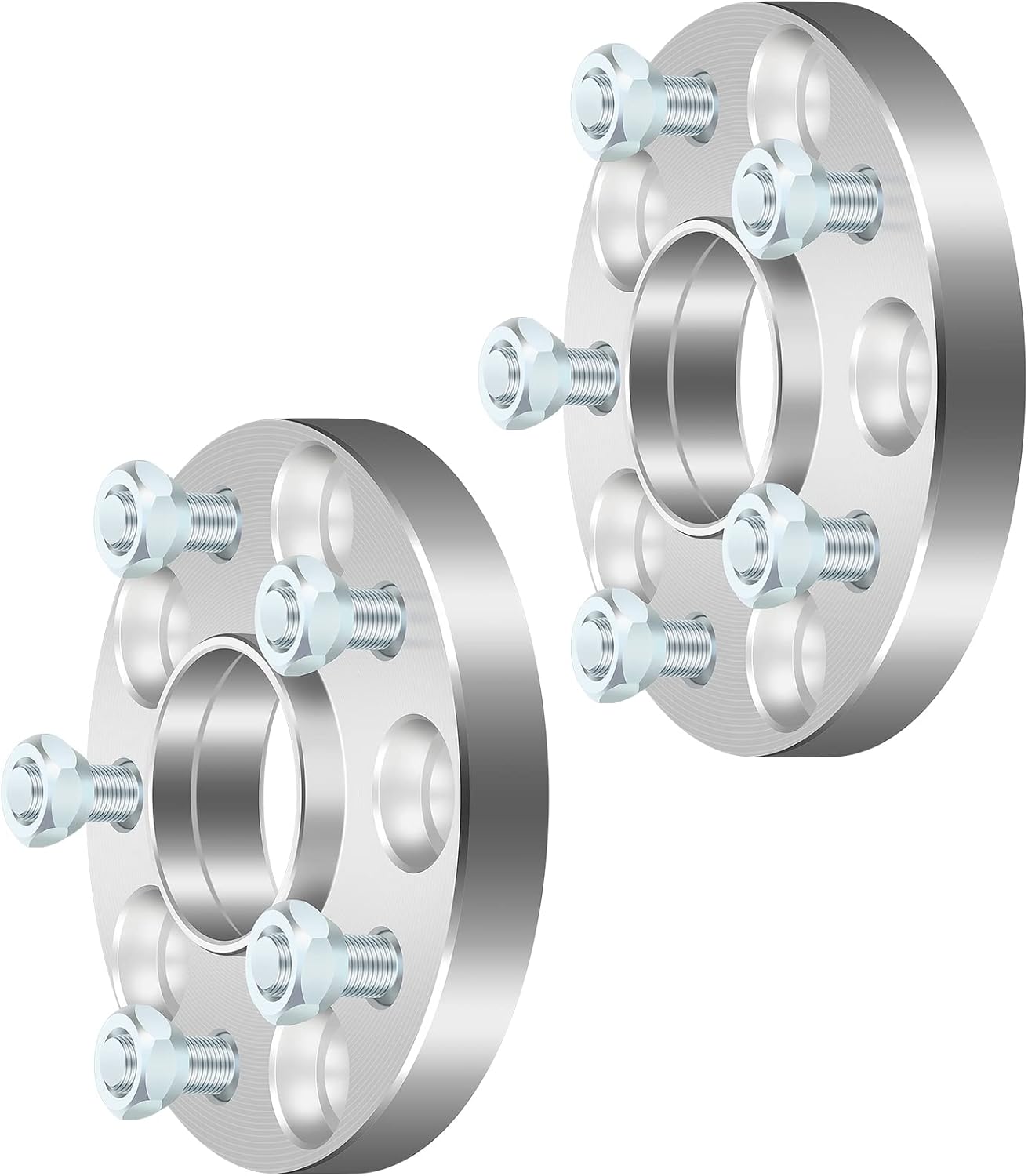
3. ECCPP 20mm Hubcentric 5×4.5 (5×114.3) Wheel Spacers, 5-Lug (2 pcs)
| Thickness | 20mm |
|---|---|
| Bolt pattern | 5×4.5 / 5×114.3 |
| Center bore | 64.1mm |
| Thread pitch | 12×1.5 |
| Stud grade | 10.9 |
These ECCPP 20mm wheel spacers push wheels outward to correct fitment and improve stance on cars with a 5×4.5/5×114.3 bolt pattern. They are hubcentric with a 64.1mm bore and made with CNC machining to keep the wheel centered and reduce vibration when installed correctly. In everyday use they are typically bolted to the hub, then the wheel is mounted over the spacer using the vehicle studs or supplied studs and nuts. The 12×1.5 studs are rated 10.9 tensile strength for stronger clamping and the package notes common fit checks like fender gap and stud length. Practical benefits include a straightforward way to clear calipers or push factory wheels flush with the fenders and a simple bolt-on installation for most DIYers. Limitations to note are the need to verify stud thread size and clearance beforehand, possible need to trim studs on some vehicles, and a few reports of softer supplied nuts that can strip if over-torqued, so quality hardware and correct torque are important for long-term reliability.
Best for: Buyers seeking an affordable, bolt-on way to push factory wheels flush or clear brake hardware on a 2012–2015 Civic while prioritizing straightforward installation and a solid fit.
Less Ideal for: Drivers looking for a permanent suspension or body modification solution or those unwilling to check stud length and fender clearance before fitting should look elsewhere.
- Hubcentric 64.1mm bore centers the wheel to reduce vibration when matched to the hub
- CNC-machined construction for consistent fit and stable mounting
- Uses 12×1.5 10.9-grade studs for high tensile strength and secure clamping
- 20mm thickness is a common size for correcting poke or clearing calipers without heavy modifications
- Some customers reported supplied nuts are soft and can strip if over-torqued
- May require grinding or trimming of vehicle studs on certain cars if studs extend past spacer face
Verdict: A budget-friendly, hubcentric 20mm spacer that reliably pushes 5×114.3 wheels outward to improve fitment and stance on 2012–2015 Civics.
4. MZS 1" Wheel Spacers 5×114.3 (5×4.5) Hubcentric 64.1mm with M12x1.5 Studs (4pc)

| Bolt Pattern (PCD) | 5×4.5 / 5×114.3 |
|---|---|
| Thickness | 1.0" (25 mm) |
| Hub Bore | 64.1 mm |
| Thread Pitch | M12x1.5 |
| Material | CNC Aluminum |
These MZS 1-inch wheel spacers are a practical, reliability-minded option for owners who need extra clearance for wider wheels or brake components. Machined from T6061-style aluminum and delivered with hardened 12.9-grade bolts, the spacers are hubcentric with a 64.1mm lip and use M12x1.5 studs to match common Honda patterns. Typical installation replaces the factory wheel mounting by stacking the spacer between hub and wheel, then torquing hardware to the recommended spec. In real use they give a wider stance and reduce rubbing on larger rims while keeping added weight low. The package includes a textured finish that resists corrosion and the precision machining helps avoid vibration when fitment is correct. Important limitations: the spacer adds 25mm of offset so bolt length and hub locking systems must be checked, and professional installation and re-torque after 25-50 miles are advised. If your wheels require a different center bore or your vehicle has locking hubs these exact spacers will not fit.
Best for: Buyers who prioritize a dependable, factory-quality spacer to safely clear larger wheels or brake upgrades on compatible Hondas and want a machined, hubcentric solution.
Less Ideal for: Drivers who need a different hub bore size, have locking hubs, or prefer thinner/ thicker spacers should look for a model matching those specific fitment needs.
- CNC machined from aviation-grade aluminum for consistent fit and low added weight
- Hubcentric 64.1mm lip reduces chance of wheel vibration without extra rings
- Hardened 12.9-grade bolts and M12x1.5 studs for strong clamping
- 1-inch thickness (25mm) provides noticeable clearance and a wider track
- Requires correct factory bolt length and will not fit vehicles with locking hubs
Verdict: A reliably machined, hubcentric 1-inch spacer built for safe clearance and improved track width on compatible 2012–2015 Civic setups.
5. Orion Motor Tech 1" Hub-Centric Wheel Spacers (5×4.5) with M12x1.5 Studs, 4pc

| Bolt pattern | 5×4.5 (5×114.3) |
|---|---|
| Stud thread | M12x1.5 |
| Material | T6 aircraft-grade aluminum |
| Center bore | 64.1mm |
These Orion Motor Tech spacers push each wheel out by one inch to widen the track for improved cornering feel and a more flush wheel fitment. Made from T6 aircraft-grade aluminum, the four-piece kit is lightweight yet rigid and uses a hub-centric design to keep the wheel centered on the hub, which helps minimize vibration when fitted correctly. The kit includes Dacromet-coated M12x1.5 studs and thread locker for corrosion resistance and secure fastening, and the spacer rear face has removal slots to make future disassembly easier. Installation is straightforward for anyone comfortable removing wheels and torquing hardware to spec, and reviewers report solid fitment on Honda and Acura hubs with no need to modify factory studs. Limitations to note are the 1-inch thickness only addresses small clearance and stance changes and the kit is vehicle-specific so you must confirm hub bore and bolt pattern before buying. For a 2012–2015 Civic seeking a modest, safe track-width increase backed by positive user feedback, this is a practical option.
Best for: Buyers who prioritize proven fitment and predictable handling changes and who want a conservative, factory-friendly way to bring wheels flush with the fenders on Honda Civics from the target years.
Less Ideal for: Drivers seeking large positive offset changes, major clearance for aggressive wheels or heavy-duty off-road use should look at thicker spacers or different suspension modifications instead.
- Hub-centric design reduces vibration risk and centers the wheel on the hub for safer road use.
- T6 aircraft-grade aluminum construction offers a good strength-to-weight balance for road driving.
- Includes Dacromet-coated M12x1.5 studs which improve corrosion resistance versus plain hardware.
- Rear-face slots simplify removal and reduce the chance of spacer damage during servicing.
- Clear, vehicle-focused fitment for many Honda and Acura models simplifies selection for compatible cars.
- Only 1 inch of offset change so it suits modest stance adjustments rather than large visual or clearance needs.
Verdict: A well-built, hub-centric 1-inch spacer that gives 2012–2015 Civics a subtle, vibration-free track-width improvement with reliable user-proven fitment.
6. dynofit 25mm 5×4.5 Hub-Centric Wheel Spacers, Set of 4

| Bolt pattern | 5×4.5 (5×114.3mm) |
|---|---|
| Thickness | 1" (25.4mm) |
| Hub bore | 64.1mm |
| Stud thread pitch | M12x1.5 |
| Material | 6061-T6 Aluminum |
These dynofit wheel spacers move each wheel out by 1 inch to correct clearance issues, allow slightly wider tires, and give the car a more aggressive stance. They are forged from 6061-T6 aluminum, CNC machined, and anodized for corrosion resistance, and use a hub-centric lip to keep the spacer centered against the hub during high-speed driving. The kit includes M12x1.5 studs with treated bolts and is supplied as four pieces for all four corners. Typical use is to fix brake caliper or fender clearance, correct backspacing on aftermarket wheels, or achieve a flush fitment after lowering the suspension. Buyers report straightforward installation and improved appearance and stability, while some note the black finish can fade over time and a small number of users experienced drivetrain stress after installation. Because these are studs-on spacers, confirm lug nut thread engagement and follow torque specs; professional installation is recommended if you are unsure. They work well for daily-driven Civics needing modest stance or clearance changes but add unsprung mass and alter suspension geometry slightly so consider alignment after fitting.
Best for: Buyers who prioritize a reliable, factory-quality wheel spacer to fix minor rubbing or achieve a flush look on a daily-driven 2012–2015 Civic and who prefer a tested aftermarket part with clear fitment.
Less Ideal for: Drivers seeking major stance changes, extreme wheel offsets, or who want a no-impact solution; also not recommended if you plan frequent heavy towing or high-performance track use.
- Forged 6061-T6 aluminum and CNC machining for strong, precise construction
- Hub-centric design with a lip ring for centered fitment and reduced vibration
- Included M12x1.5 studs and treated bolts intended to resist corrosion
- 25mm thickness provides a clear 1 inch offset gain to solve caliper or rubbing issues
- Positive user reports of easy installation and improved wheel appearance
- Black anodized finish may discolor over time with heat and road exposure
- Adds unsprung mass and changes wheel offset which can affect steering feel and drivetrain loads
Verdict: A strong, hub-centric 25mm spacer that reliably fixes clearance and flush-fit issues on 2012–2015 Civics while keeping installation and centering straightforward.
Choosing the Right 2012-2015 Honda Civic Wheel Spacers: Key Factors to Consider
Bolt Pattern and Hub Diameter
Confirming the correct bolt pattern is the single most important step. The 2012-2015 Civic uses a 5×114.3 lug pattern, so any spacer must match that pattern exactly to ensure the studs or replacement bolts line up. Mismatched hole spacing creates dangerous stress concentrations and prevents proper wheel installation.
Hub diameter matters for centering the wheel. Hub-centric spacers that match the Civic's hub diameter reduce the reliance on lug nuts to center the wheel, lowering the chance of runout or vibration. When a spacer does not match the hub bore, it is more likely to be lug-centric and may require careful torqueing and rechecking after the first few miles.
Spacer Thickness and Offset Change
Spacer thickness controls how far the wheel moves outward from the hub and directly alters effective offset. Small thicknesses, like 3 to 8 millimeters, can resolve minor rubbing or give a flush look without large handling impacts. Thicker spacers, such as 15 to 25 millimeters, produce a pronounced stance but can increase scrub radius and place extra load on wheel bearings and suspension components.
Consider the intended purpose: clearance for brake calipers or suspension requires precise measurement, while purely aesthetic spacing can usually get by with more conservative thicknesses. Also factor in how much backspacing and fender clearance you have before choosing thicker spacers.
Material Quality and Machining
High-quality wheel spacers are typically made from forged or billet aluminum for a balance of strength and light weight. The machining process—especially face flatness and hub bore concentricity—affects how well the spacer seats against the hub and wheel. Poorly machined spacers can introduce runout and vibration even when the bolt pattern is correct.
Look for spacers with consistent face finish and chamfering on bolt holes to avoid stress risers. Corrosion-resistant coatings or anodizing extend life in wet climates; uncoated aluminum can corrode at the steel interface without proper protection.
Studs, Bolts, and Retention Method
Spacers may use extended studs, replacement lug bolts, or pass-through stud designs. Each method changes installation steps and affects long-term reliability. Extended studs that press or thread into the spacer can simplify wheel installation but must be rated for the vehicle's load and torque specifications.
Replacement bolts are common on vehicles with lug bolts rather than studs. Ensure any included hardware matches the Civic's thread pitch and length requirements. For pass-through designs, wheel studs on the hub must be long enough to accept the wheel and spacer; otherwise additional stud replacements will be necessary.
Vibration Risk and Balancing
Adding spacers changes the relationship between the hub and wheel, which can introduce vibration if not executed correctly. Hub-centric spacers and tight machining tolerances reduce that risk by keeping the wheel concentric with the axle. Even with well-made spacers, it is important to have wheels rebalanced after installation since changing offset affects dynamic balance.
After installing spacers, perform an initial test drive and re-torque lug hardware at the recommended intervals. Persistent vibration often traces back to poor hub fit, uneven torque, or excessive spacer thickness relative to the wheel's hub engagement.
Legal, Clearance, and Suspension Considerations
Local regulations and inspection standards sometimes restrict how far wheels can protrude from the fender or require specific fastener types. Check local vehicle rules before choosing an aggressive spacer thickness. Clearance is not just about fenders; wider track widths change scrub radius and can affect steering feel and tire wear patterns.
Consider whether aftermarket wheel offsets paired with spacers will place extra load on wheel bearings or require roll or pull work on the fender. If you frequently carry heavy loads or track the car, factor in the additional stresses when selecting materials and thickness.
Understanding 2012-2015 Civic (FB and FG) Fitment Details
The 2012-2015 Honda Civic in the FB and FG generation typically uses a 5×114.3 lug pattern and specific hub bore dimensions that influence spacer selection. Confirming these factory dimensions before ordering spacers avoids fitment surprises and ensures a hub-centric option will seat correctly.
When measuring for spacers, take clear measurements of current wheel backspacing, brake clearance, and fender gap. That information helps determine whether you need a thin spacer for minor adjustments or a thicker spacer to clear larger brakes or different wheel offsets.
- Verify the Civic's hub bore and measure wheel backspacing.
- Record current wheel offset and desired final offset to calculate spacer thickness.
- Check stud thread pitch and length if replacement hardware may be required.
Hub-Centric Vs Lug-Centric: Which Matters for the Civic
Hub-centric spacers that align with the vehicle hub bore are generally the safer choice for minimizing vibration on the Civic. They center the wheel mechanically rather than relying on lug nut torque alone.
Lug-centric spacers can work if the fit is good and the wheel is properly torqued and balanced, but they demand closer attention during installation and after the first miles are driven.
- Prefer hub-centric spacers for daily-driven Civics to reduce vibration risk.
- If using lug-centric spacers, plan for careful torque checks and balancing.
Common Spacer Thicknesses and Their Effects
Thin spacers (3 to 10 mm) are effective for minor clearance fixes and cosmetic flushness. They change handling minimally and rarely require stud length changes. Medium spacers (10 to 20 mm) provide a noticeable stance change but begin to affect scrub radius and wheel bearing loads. Thick spacers (20 mm and up) create dramatic visual changes but increase mechanical stresses and may necessitate longer studs or different hardware.
When selecting thickness, also check whether the chosen wheel still retains sufficient stud engagement past the lug nut. Insufficient thread engagement is a safety hazard and should be avoided by selecting appropriate hardware.
- 3-10 mm: subtle change, lowest risk to suspension geometry.
- 10-20 mm: visible stance and potential need for longer studs.
- 20+ mm: significant offset change, re-evaluate load and hardware.
Installation Essentials and Tools
A correct installation requires a calibrated torque wrench, thread locker where specified, anti-seize for certain interfaces, and wheel balancing equipment or access to a shop for balancing. Many Civic owners find a spacer installation kit that includes the right studs and hardware simplifies the process.
Follow torque specifications and re-torque intervals closely. After the first 50 to 100 miles, recheck lug torque to account for settling. Inspect for any signs of movement, unusual noises, or vibration and address them immediately.
- Essential tools: torque wrench, jack stands, and a lug socket set.
- Consider a spacer installation kit matched to the Civic's thread pitch.
- Have wheels balanced after spacer installation to prevent vibration.
Maintaining Safety and Longevity
Regular inspections are important after fitting spacers. Check the torque on all fasteners and visually inspect spacers for corrosion, cracking, or deformation. Aluminum spacers with quality finishes resist environmental wear better than untreated interfaces.
If you change wheel/tire combinations frequently, verify fit each time. Road salt, curbing, or impact events can accelerate wear; when in doubt, replace suspect spacers rather than risk failure.
- Re-torque after initial miles and periodically thereafter.
- Inspect for corrosion or cracking at least every service interval.
- Replace hardware if thread damage or elongation is observed.
Still looking for the perfect fit?
Select your Honda Civic configuration to see the most relevant Wheel Spacers recommendations
How We Chose the Best 2012-2015 Honda Civic Wheel Spacers
We narrowed candidates by focusing on attributes that matter most for the 2012-2015 Honda Civic (FB and FG) owners. Key evaluation criteria included precise bolt pattern and hub-centric fit to match the Civic's 5×114.3 lug layout, machining tolerance and concentricity to minimize vibration risk, and material strength and corrosion resistance for sustained road use. We also assessed spacer thickness options and stud/bolt retention methods because thickness dictates wheel offset changes and can affect suspension geometry. Ease of installation and the availability of compatible installation kits and torque specification guidance were considered to ensure safe fitment. Fitment testing information and documented compatibility with the Civic's hub diameter were prioritized over marketing claims. We excluded any spacer offerings that lacked clear specification data, did not provide hub-centric options for 5×114.3 applications, or used unknown metallurgy without third-party verification. The resulting list emphasizes real-world reliability, correct fit, and installation practicality for Civic owners.
Our full evaluation process is outlined in our review methodology.
FAQ
Will wheel spacers cause vibration on my 2012-2015 Civic?
They can if the spacer is not hub-centric or if machining tolerances are poor. Using hub-centric spacers, confirming concentricity, and rebalancing wheels after installation greatly reduce vibration risk.
How do I know what spacer thickness I need?
Measure current wheel backspacing and the clearance you need for brakes or suspension. Calculate the desired offset change and convert that to millimeters of spacer thickness. Start conservative and account for stud engagement.
Do I need longer studs or bolts for thicker spacers?
Often yes. If the spacer plus wheel leaves insufficient thread engagement on the original studs, you should use longer studs or replacement bolts specified for your spacer thickness to maintain safe engagement.
Are hub-centric spacers necessary for daily driving?
Hub-centric spacers are recommended for daily-driven Civics because they center the wheel on the hub and reduce the chance of runout and vibration compared with purely lug-centric designs.
Can wheel spacers affect steering feel or tire wear?
Yes. Increasing track width changes scrub radius and can alter steering feedback and front tire wear patterns. Moderate thicknesses have minor effects, but large offsets may require alignment and closer monitoring of tire wear.
What torque specs should I use when installing spacers?
Follow the vehicle manufacturer's lug torque for the wheel and hardware type and any torque guidance supplied with the spacer kit. Re-torque after initial use and adhere to recommended intervals to maintain safety.
Final Verdict
Choosing wheel spacers for a 2012-2015 Honda Civic (FB and FG) is about balancing desired appearance or clearance with long-term safety and drivability. Prioritize correct bolt pattern and hub-centric fit, pick an appropriate thickness that preserves adequate stud engagement, and choose materials and machining quality that minimize vibration risk. Plan for wheel balancing, periodic torque checks, and inspections after installation.If you focus on fitment, conservative thickness, and proper installation practices, spacers can deliver the stance or clearance you want without compromising safety. Use the decision factors above to match a spacer to your intended use and maintain routine checks to ensure ongoing reliability.
Explore More:
- Check out all Honda Civic parts & accessories
- Explore Wheel Spacers Maintenance & Repair Guides
- Explore Wheels & Tires
- Browse all Auto Parts
