

Note: This article contains affiliate links. If you click on these links and make a purchase, I may earn a small commission at no extra cost to you. This helps support my research and content. Read my full affiliate disclosure here.
If your Chevrolet S-10 is showing fuel odors or throwing EVAP-related codes, the vapor canister is a common source of trouble. Choosing the right vapor canister matters because fitment, charcoal capacity, and overall durability determine whether the EVAP system vents and purges correctly, which affects emissions and drivability.This guide groups five top vapor canisters we shortlisted for the S-10 and explains the practical differences buyers should weigh. We focus on fit, materials, venting ports, and long-term resistance to fuel contamination to help you pick the best replacement for routine maintenance or repair.
Top Picks at a Glance
| Best Overall The best all-around choice for most situations | Dorman 911-271 Vapor Canister |  |
| Best Value The sweet spot between price and what you get | Roneeson Fuel Tank Vapor Canister (17113682) |  |
| Best Budget The cheapest option that still gets the job done reliably | TomGoo Vapor Canister 911-267 Replacement Evap Charcoal Canister |  |
| Highest Rated A top-rated pick with lots of positive feedback | KEYALL Vapor Canister Replacement for 1997–2001 Chevrolet S10 and 1997–2002 Blazer (3-Port) |  |
| Most Popular A crowd favorite that many people choose with confidence | Arokzn Vapor Canister Replacement for 2001–2005 Chevy S10 and Compatible Vehicles |  |
1. Dorman 911-271 Vapor Canister

| Model | 911-271 |
|---|---|
| Manufacturer | Dorman Products |
| OEM Part Number | 4B1011; CP445; CP535; VC121; 17113328 |
The Dorman 911-271 vapor canister is a replacement evaporative emissions canister designed to match the function of the original unit on specified late 1990s and early 2000s Chevrolet S-10 and similar vehicles. It is used to capture fuel vapors and route them back into the engine for combustion, restoring proper evap system operation and helping clear related check engine lights. The canister is application specific and reverse engineered from the original design so it installs in the factory location without major modification. Notable features include machined exterior construction and compatibility with the vehicle years and trims listed in the fitment notes. In real-world use this part returns evap control functionality, supports emissions inspections, and reduces fuel vapor venting. Limitations are that correct fitment depends on selecting the exact model year and trim, and buyers should confirm fitment before ordering since multiple similar canisters exist for related vehicles.
Best for: Buyers who want a reliable, factory-replacement style canister to restore emissions system function on qualifying late 1990s to early 2000s S-10 and similar vehicles and prefer parts engineered for direct fit.
Less Ideal for: People needing a universal or multi-vehicle solution, or those who have extensively modified fuel or evap systems and require custom components.
- Made to match original evap canister function for specified vehicle years
- Application specific design for direct installation in factory location
- Machined exterior construction for durable fit and finish
- Backed by engineering and quality control from an established aftermarket supplier
- Requires careful fitment checking by year and trim before purchase
- Compatibility limited to listed Chevrolet, GMC, and Oldsmobile model years
Verdict: Choose this Dorman canister if you need a direct-fit, factory-style replacement to reliably restore evap system function on the listed S-10 model years.
2. Roneeson Fuel Tank Vapor Canister (17113682)

| Fit Type | Vehicle Specific |
|---|---|
| Compatible with Vehicle Type | Car, Truck, SUV |
| Fuel Type | Diesel, Gasoline |
| Material Type | Alloy Steel, Plastic |
This Roneeson vapor canister is a direct-fit replacement designed to restore proper fuel tank vapor capture and purge operation on supported GM and Isuzu models. It installs where the factory canister sits and connects to the existing lines and purge valve to prevent fuel vapors from escaping and to keep the evap system functioning. The listing specifies vehicle- and engine-specific fitment for Chevrolet S10, Blazer, Trailblazer and several GMC, Buick, Pontiac, Oldsmobile and Isuzu applications, and the unit is made from alloy steel and plastic components. For a practical buyer this part simplifies repair by matching the original mounting and hose connections so a routine swap can clear evap codes and stop fuel odor. It is a basic, no-frills replacement so expect OEM-like fitment but not branded factory packaging or enhanced internals for performance beyond stock. Verify the exact year and engine listed in the fitment notes before ordering to ensure compatibility.
Best for: Buyers who want a straightforward, practical replacement to restore evap system function on supported S-10 and related GM vehicles and prefer a part that matches factory mounting and connections.
Less Ideal for: Customers seeking an upgraded or performance-oriented evap solution or those who need documented manufacturer warranty coverage should look elsewhere.
- Vehicle-specific fitment for many GM and Isuzu models so it aligns with factory mounting and hose locations
- Constructed from alloy steel and plastic for standard durability in underbody environments
- Included as a single complete canister unit ready to replace a failed part
- Supports both gasoline and diesel fuel types per the product info
- No warranty information or manufacturer-backed guarantee listed in the product details
Verdict: Choose this Roneeson canister if you need a direct-fit, no-frills replacement to restore evap system operation on supported Chevrolet S-10 and related models.
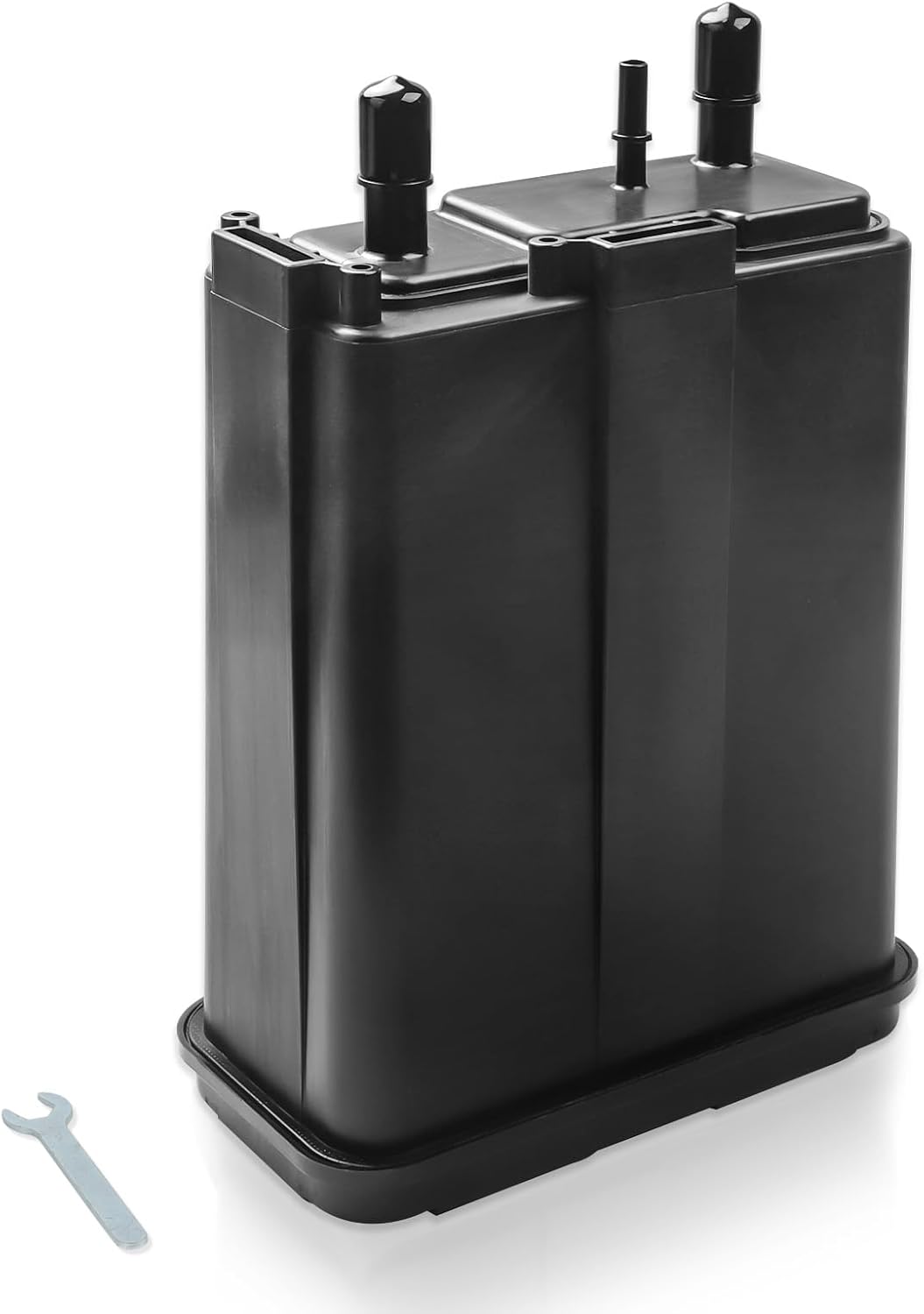
3. TomGoo Vapor Canister 911-267 Replacement Evap Charcoal Canister
| Manufacturer | TomGoo |
|---|---|
| Model | Vapor Canisters |
| Item model number | TMG911-197 |
| Manufacturer Part Number | TMGGMC911197 |
| OEM Part Number | 911-267, 17113682, CP1243 |
This TomGoo vapor canister is a replacement evap charcoal canister intended to restore the vehicle's evaporative emissions control function. It installs in place of the original unit on compatible 1998–2005 models and works by trapping fuel vapors and releasing them to the engine for combustion, which reduces emissions and prevents fuel smell. The listing highlights durable construction and precision engineering aimed at leak-resistant performance, and the canister ships with the common replacement part numbers for easier verification. For everyday drivers this is a practical parts-level repair: installation is straightforward for anyone comfortable with basic underbody or engine-bay work, and it returns proper evap system operation without needing more expensive dealer parts. Limitations include the usual fitment checks before purchase and that durability claims are manufacturer provided rather than independently verified, so expect typical lifespan variation compared with factory parts.
Best for: Buyers looking for an affordable, functional replacement part to get an older S-10 or similar vehicle back to proper evaporative emissions performance without paying dealer prices.
Less Ideal for: Drivers seeking OEM-branded parts with manufacturer-backed warranty coverage or those who prefer professional shop-installed factory replacements.
- Direct replacement for multiple GM and related vehicle part numbers to simplify fit verification
- Built to resist heat, corrosion, and fuel vapors according to the product description
- Restores evaporative emissions function to reduce fuel vapor release and cabin odor
- Durability and long-term leak resistance are manufacturer claimed and not independently confirmed
Verdict: A budget-friendly replacement that restores evap system function for older S-10 and related GM vehicles without the premium of dealer parts.
4. KEYALL Vapor Canister Replacement for 1997–2001 Chevrolet S10 and 1997–2002 Blazer (3-Port)

| Fitment years/models | 1997–2002 Blazer; 1997–2001 S10; 1997–2002 GMC Jimmy; 1997–2001 GMC Sonoma; 1997–2000 Oldsmobile Bravada; 1998–1999 Cadillac DeVille |
|---|---|
| Replacement part number | 17113328 |
| Ports | 3-Port design |
| Quantity | 1 Vapor Canister |
This KEYALL vapor canister is a factory-replacement style charcoal canister intended to fix EVAP system faults like slow fill, fuel smell, rough idle, or check-engine codes P0440/P0442 by capturing and purging fuel vapors. It installs as a one-piece unit in the EVAP line and is sold as a single canister with a three-port design and internal charcoal filter element. The seller notes corrosion- and heat-resistant plastic construction and claims performance to meet or exceed factory standards, which matters for long-term durability under engine-bay exposure. Typical use is a direct swap for the original part on compatible Chevrolet S10, Blazer and related GM models when diagnostics point to a saturated or failed canister. Practical benefits include straightforward DIY replacement and restoring proper evaporative emissions control and fuel-filling behavior. Limitations are that fitment is vehicle-specific so you must confirm exact year and trim before ordering and the listing does not include additional hoses or clips, so plan to reuse or source mounting hardware if needed.
Best for: Buyers who prioritize a dependable, factory-style replacement to eliminate EVAP codes and restore normal fuel-fill and idle behavior on late 1990s to early 2000s Chevrolet/GMC vehicles.
Less Ideal for: People looking for a universal or multi-vehicle canister or a kit that includes new hoses and mounting hardware should consider a more complete aftermarket solution.
- Direct-replacement three-port design matched to factory EVAP plumbing for listed GM models
- Plastic housing advertised as corrosion, heat and impact resistant for longer service life
- Includes internal charcoal filter element to restore vapor capture and purge function
- Easy to install as a single-piece unit for DIY removal and replacement
- Compatibility limited to specific years and GM models so incorrect selection will not fit
- Does not include hoses, clamps, or mounting hardware which may need to be reused or purchased separately
Verdict: If you need a straightforward, durable factory-style replacement to clear EVAP faults on the S-10 and related GM trucks, this canister is a reliable DIY fix.
5. Arokzn Vapor Canister Replacement for 2001–2005 Chevy S10 and Compatible Vehicles

| Compatible with Vehicle Type | Car |
|---|---|
| Fuel Type | Gasoline |
| Product Grade | Replacement Part |
| Material Type | Plastic |
This vapor canister replaces the factory charcoal canister in EVAP systems to capture and hold gasoline vapors until they can be purged and burned, helping the vehicle meet emissions function and avoid check-engine codes. It is typically installed in the vehicle EVAP assembly location and connects to the existing hoses and valves; the listing cites direct-fit part numbers it replaces to simplify matching. The canister uses activated carbon media inside a plastic housing and is intended as a vehicle replacement part that matches original function. For day-to-day use it restores vapor storage and reduces fuel odor from the tank area while supporting emissions control. Practical benefits include a factory-style replacement fit when the part number matches and a lightweight plastic housing for easy handling during install. Limitations are that fitment must be verified against exact part numbers and vehicle years, and the product listing does not include installation hardware or step-by-step instructions, so some mechanical experience or a shop visit may be required.
Best for: Buyers who want a direct replacement canister that restores EVAP function and prefer parts that cite specific OEM cross-reference numbers and social-proof via customer reviews.
Less Ideal for: Buyers seeking a universal plug-and-play part without verifying part numbers or those who need included installation hardware or professional installation guidance should look elsewhere.
- Matches several OEM part numbers listed for direct replacement, simplifying fit checks
- Activated carbon media for effective vapor adsorption and emissions control
- Lightweight plastic housing that is easy to handle during installation
- Factory-tested claim suggests consistency with original function and performance
- Fitment depends on matching exact part numbers and years so it may not be a straight swap for every S-10 without verification
Verdict: Choose this canister when you need a charcoal EVAP replacement that matches listed GM part numbers to restore emissions function on supported S-10 model years.
Choosing the Right Chevrolet S-10 Vapor Canister: Key Factors to Consider
Fitment And Port Layout
Correct fitment is essential because the S-10's EVAP plumbing uses specific mounting points and hose orientations. A canister that does not match the factory mounting or has ports arranged differently will complicate installation and can create kinks or stretched hoses that lead to leaks.
Check that the replacement has the same number and position of inlet, outlet, and purge ports and includes any required grommets or brackets. Even small differences in port diameter or angle may require extra adapters that reduce reliability over time.
Charcoal Media Quality
The charcoal inside the vapor canister adsorbs fuel vapors until they are purged into the intake. Higher-quality activated carbon with consistent granule size and secure containment maintains adsorption capacity longer and resists channeling that reduces effectiveness.
Poorly contained or low-grade media can break down and clog purge lines or vent screens. Inspect specifications or descriptions for sealed chambers and media containment features to reduce the risk of internal degradation and downstream component contamination.
Seals, Fittings, And Material Durability
Vapor canisters sit in a corrosive underbody environment exposed to road debris, salt, and temperature swings. Durable plastic housings, molded bosses, and resilient rubber seals extend service life and lower the chance of a vapor canister leak developing.
Pay attention to molded mounting ears, integrated fittings rather than glued-in adapters, and materials rated for hydrocarbon exposure. Reinforced attachment points reduce vibration stress that can lead to cracks or loose fittings over time.
Compatibility With Purge And Vent Components
The vapor canister works together with the purge valve and venting lines. Ensure the replacement interfaces properly with the S-10's purge valve location and any electrical or vacuum connections. Misalignment or mismatched port sizes can prevent correct purging, cause intermittent check engine light evap code events, or trigger drivability concerns.
Consider whether the canister accepts the factory purge valve or requires transfer of the old valve. Also confirm vent filtering or valve accommodations when the vehicle uses a specific vent arrangement or valve assembly.
Serviceability And Installation Ease
A canister that allows straightforward installation saves time and reduces errors. Features that improve serviceability include clearly marked ports, included mounting hardware or grommets, and designs that let you reuse existing hoses without modification.
If the replacement requires cutting or splicing, installation risk increases. Choose canisters that match the S-10's original layout to minimize rework and ensure a secure, leak-free fit.
Resistance To Fuel Contamination
Fuel blow-by or liquid fuel can saturate the charcoal and shorten canister life. Materials and internal design that resist channeling and allow trapped liquid to drain away from the media help maintain function.
Some canisters incorporate baffles, screens, or drain paths to prevent media saturation. These design details reduce the likelihood of repeated failures after fuel system issues and keep the evap purge cycle operating as intended.
Common Symptoms Of A Failing Vapor Canister
Recognizing typical signs helps you decide whether the vapor canister is the likely culprit. Common symptoms on the S-10 include persistent fuel odors around the rear of the truck, intermittent check engine light evap code entries, and a strong smell after refueling.
You may also experience rough idle or reduced fuel economy if the purge system is allowing vapors into the intake at incorrect times. Diagnosing should begin with a smoke test or pressure test of the EVAP system to confirm leaks before replacing other components.
- Fuel smell near fuel tank or under the rear of the truck
- Check engine light with EVAP-related codes
- Hissing sounds from the vent area during venting
- Poor idle or drivability when purge timing is off
How To Inspect The EVAP System Before Replacing The Canister
A quick pre-replacement check can save time. Start with a visual inspection of hoses, clamps, and the canister body for obvious cracks, brittle fittings, or disconnected lines. Look for signs of liquid fuel or excessive soot around purge ports that indicate media saturation or a failed purge valve.
Performing an EVAP smoke test or pressure check helps locate leaks in hoses, fittings, or the canister itself. If the canister housing holds pressure poorly or smoke exits through seams, replacement is warranted. Also confirm the purge valve and related vacuum lines are functioning to avoid replacing the canister when another component is at fault.
- Visual check for cracks, broken fittings, or soaked charcoal
- Smoke test to locate leaks in hoses or canister seams
- Check purge valve operation before replacing the canister
Installation Tips For The S-10
When installing a replacement, ensure the truck is supported safely and the fuel system is cool to prevent fumes from accumulating. Transfer any reusable brackets or grommets from the old canister if the new unit does not include them. Align ports to avoid hose kinks and confirm clamps are snug but not over-tightened.
After installation, clear any EVAP-related codes and cycle the ignition to allow the EVAP system to run its self-test. A brief road test and re-scan for codes will confirm correct operation. If codes persist, revisit hose routing and purge valve function before assuming the canister is defective.
- Use original mounting points and grommets when possible
- Avoid overtightening plastic fittings
- Clear codes and perform a system test post-install
When To Replace The Charcoal Media Versus The Entire Canister
Most replacement scenarios for the S-10 involve swapping the entire canister because the charcoal media is often permanently sealed. If a canister design allows media replacement, consider whether the media containment and sealing meet durability expectations before opting for a partial repair.
Replacing only the media may be cost-effective short term but risks recurring problems if the housing or fittings are compromised. For long-term reliability, replacing the full canister is usually the preferred approach unless a proven service kit matches the S-10's original specifications.
- Full canister replacement ensures new seals and fittings
- Media-only solutions may be less durable in harsh underbody conditions
- Confirm service kit compatibility with S-10 port layout
Understanding EVAP Codes And Diagnostic Steps
EVAP system faults commonly report codes related to leaks, purge flow, or vent valve operation. Use a diagnostic scanner to read codes and follow manufacturer-recommended test procedures for the S-10. Many EVAP codes point to leaks that can originate from hoses, the canister, purge valve, or fuel cap.
Start with simple checks such as a loose fuel cap and visible hose conditions before moving to pressure or smoke testing. Document findings and test results to avoid unnecessary part swaps and to ensure the replacement addresses the true failure mode.
- Scan for EVAP codes and note freeze-frame data when available
- Perform visual and smoke tests before part replacement
- Confirm purge valve function during diagnostics
How We Chose the Best Chevrolet S-10 Vapor Canister
We filtered candidates based on vehicle-specific fitment and functional durability to identify components that restore proper EVAP operation on the Chevrolet S-10. Primary evaluation criteria included correct mounting and hose port layout, charcoal media quality and containment, and compatibility with the S-10 purge and vent plumbing. We also assessed materials and seals for resistance to fuel vapors and road contaminants, plus manufacturing tolerances that affect leak risk.Longevity factors such as reinforced housings, corrosion-resistant fittings, and quality control indicators were weighed because vapor canisters operate in a harsh underbody environment. Ease of installation and clear OEM-equivalent port labeling were included since improper hookup can lead to lingering check-engine codes. We excluded units without explicit S-10 fitment data, those lacking durable inlet/outlet fittings, or canisters that relied on nonreplaceable or poorly contained charcoal media.The result is a selection focused on fit, build quality, and EVAP serviceability rather than marketing claims or price alone.
Our full evaluation process is outlined in our review methodology.
FAQ
How long does a vapor canister typically last on an S-10?
Lifespan varies based on conditions, but vapor canisters often last many years under normal use. Exposure to liquid fuel contamination or heavy road salt can shorten service life, so inspect the canister if EVAP faults or fuel odors appear.
Can I drive the S-10 with a bad vapor canister?
You can usually drive, but a failing canister may trigger EVAP codes and fuel odors, and could affect emissions testing. If the issue causes drivability problems or strong fuel smells, address it promptly.
Will replacing the vapor canister clear EVAP codes automatically?
Replacing the canister can resolve codes caused by canister leaks or saturated media, but codes may persist if hoses, the purge valve, or connectors are still faulty. Clear codes and retest after installation to confirm the repair.
Is a smoke test necessary to diagnose a vapor canister leak?
A smoke test is a reliable diagnostic for detecting EVAP leaks and is often recommended when visual inspection is inconclusive. It helps pinpoint leaks in hoses, fittings, or the canister body itself.
Should I transfer the old purge valve when installing a new canister?
It depends on the replacement design. If the new canister accepts the factory purge valve and the valve is known to be functional, transferring it can save effort. However, inspect the purge valve for wear since a failing valve can cause repeated EVAP issues.
What are signs the charcoal inside the canister is saturated?
Signs include persistent fuel smell after refueling, visible liquid or fuel residue around purge ports, and repeated EVAP codes even after other components are tested. Saturated media cannot adsorb vapors effectively and usually warrants canister replacement.
Final Verdict
Prioritize fitment and build quality when selecting a vapor canister for your Chevrolet S-10. Matching port layout and mounting points reduces installation issues, while durable housings and well-contained charcoal minimize the chance of leaks and media breakdown. Remember to verify purge valve and hose condition during diagnosis to avoid replacing a canister for a problem elsewhere.Focus on a replacement that restores correct EVAP function and resists underbody wear. That approach balances longevity and emissions compliance, letting you choose confidently based on the tradeoffs between ease of installation and long-term durability.
