

Note: This article contains affiliate links. If you click on these links and make a purchase, I may earn a small commission at no extra cost to you. This helps support my research and content. Read my full affiliate disclosure here.
Upgrading or replacing the turbocharger on your Subaru Legacy can restore lost power and improve throttle response, or deliver a smoother boost curve if you want more performance. Choosing the right Subaru Legacy turbocharger matters because fitment, boost characteristics, and long-term reliability all affect drivability, engine health, and maintenance needs.This guide shortlists six top turbocharger options compatible with the Legacy, selected for how they balance fitment, durability, and tuning potential. We evaluate each against real owner concerns like boost response, installation requirements, and longevity, so you can quickly find the option that matches your goals. Read on for focused guidance that leads into our recommended picks.
Looking for other parts? See all Subaru Legacy parts & accessories.
Top Picks at a Glance
| Best Overall The best all-around choice for most situations | JDMSPEED RHF5H Turbocharger Replacement (fits Subaru Legacy GT / Outback XT 2005–2009) |  |
| Best Quality Built to a higher standard if you want something more solid | Bode-man Turbocharger MGT2259S Replacement for Subaru 2.0L FA20 |  |
| Best Value The sweet spot between price and what you get | A-Premium Complete Turbocharger Kit with Wastegate Actuator and Gasket |  |
| Best Budget The cheapest option that still gets the job done reliably | TOM Turbocharger Replacement (14411-AA800) for Subaru 2.5L H4 |  |
| Highest Rated A top-rated pick with lots of positive feedback | BuyAutoParts Remanufactured Turbocharger for Subaru Outback XT & Legacy GT (2005–2006) |  |
| Most Popular A crowd favorite that many people choose with confidence | A-Premium Turbocharger Kit with Wastegate Actuator and Gasket (RHF55) |  |
1. JDMSPEED RHF5H Turbocharger Replacement (fits Subaru Legacy GT / Outback XT 2005–2009)
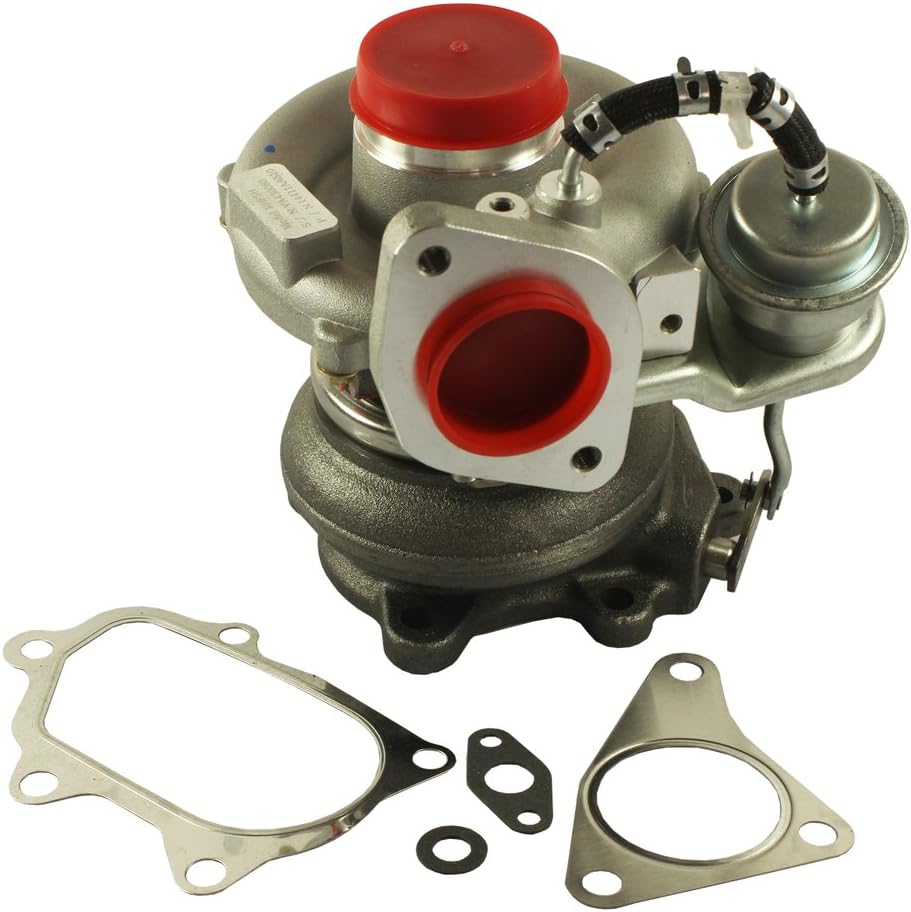
| Manufacturer Part Number | RHF5H |
|---|---|
| OEM Part Number | 14411A511, 14411AA510, 14411AA51A, VA430083 VB430083 VC430083 |
| Brand | JDMSPEED |
This JDMSPEED RHF5H turbocharger is a brand-new aftermarket replacement engineered to match the VF40 turbo found on certain Subaru Legacy GT and Outback XT models from 2005 to 2009. It arrives with manifold and outlet gaskets and claims a guaranteed exact fit to simplify swap-in installation. The unit is promoted as meeting or exceeding factory specifications and built under quality standards intended for durability. In real-world use it restores boost response and drivability for a worn or failed turbo without the cost of a remanufactured or OEM unit. Installation benefits from the included gaskets but still requires standard turbo plumbing, oil and coolant lines, and careful break-in procedures. Buyers should expect an aftermarket fit and finish that can vary from factory parts and be prepared to verify part numbers and clearances before purchase. The product is a practical choice for owners seeking a full replacement turbo that balances cost and function, though it may not match the long-term assurance of a factory reman unit.
Best for: Buyers who want a cost-effective full turbo replacement that restores performance and is intended for a straightforward swap on the specified Subaru VF40 applications.
Less Ideal for: Those seeking a factory remanufactured unit with OEM provenance or a performance-upgraded turbo for higher boost and power should consider other options.
- Sold as a complete new turbocharger with manifold and outlet gaskets included
- Designed to directly replace RHF5H/VF40 turbo part numbers for simpler fitment checks
- Built to aftermarket quality standards with claimed testing to meet or exceed factory specs
- Restores boost and drivability comparable to an original turbo when installed correctly
- Aftermarket units can show variation in fit, finish, and longevity compared with factory remanufactured turbochargers
Verdict: If you need an affordable, ready-to-install replacement turbo for the VF40-equipped Legacy/Outback, this RHF5H unit gives a practical balance of cost and restored performance.
2. Bode-man Turbocharger MGT2259S Replacement for Subaru 2.0L FA20

| Manufacturer | Bode-man |
|---|---|
| Manufacturer Part Number | DBTC127 |
| OEM Part Number | 14411AA881, 14411-AA881, 8143060007, 814306-0007, APTBC127, MGT2259S |
This Bode-man turbocharger is built as an OEM-style replacement for the MGT2259S used on Subaru 2.0L FA20 turbo engines and is intended to restore factory boost, throttle response, and acceleration after a worn or failing unit. Installation replaces the original turbo and is typically done during an engine service or turbo rebuild; the unit is supplied with a precision-balanced rotating assembly and heat-resistant housings to withstand elevated exhaust temperatures. In practice the turbo returns factory-like drivability and helps eliminate turbo lag and smoke associated with damaged chargers, while matching OE fitment claims to simplify installation. The main practical benefits are restored performance and durability without needing a full performance upgrade. Limitations are that it is a direct replacement rather than a performance-upgraded turbo, so it will not provide meaningful power gains over the factory MGT2259S and any installation should be verified against the OE part number before purchase.
Best for: Buyers wanting to return a Subaru 2.0L FA20 engine to factory-level performance and reliability after turbo failure, prioritizing correct fit and dependable drivability over added power.
Less Ideal for: Drivers seeking a bolt-on performance turbo to increase peak horsepower or someone building a tuned engine for higher boost levels should look at aftermarket performance turbos instead.
- Engineered to match factory fit and function for the MGT2259S application
- Precision-balanced rotating assembly for smoother operation and reduced vibration
- Heat-resistant housings built for turbocharged exhaust temperatures
- Restores factory boost, throttle response, and drivability when replacing a failed unit
- Not a performance upgrade so it does not increase peak power over the original turbo
- Requires verification of OE part number and proper installation for correct fitment
Verdict: Choose this unit if you need a factory-style replacement to reliably restore boost and drivability on a Subaru 2.0L FA20 engine without changing power output.
3. A-Premium Complete Turbocharger Kit with Wastegate Actuator and Gasket

| Turbo model | RHF5H |
|---|---|
| Engine code | EJ255 |
| Wastegate actuator | Included |
| Gasket | Included |
| Material | Alloy |
This A-Premium complete turbocharger kit replaces the RHF5H turbo for Subaru Legacy and Outback 2005–2006 2.5L (EJ255) engines. It arrives as a ready-to-install unit with the wastegate actuator and necessary turbo gaskets included, which simplifies swapping a failed turbo without sourcing separate parts. The compressor and turbine housings are alloy, which the manufacturer says helps dissipate heat during high-speed operation and can support long service life under normal driving. Practical buyers will appreciate the one-year unlimited-mileage guarantee and that the kit targets a direct replacement fitment for the specified models. Expect the same basic function as the original turbocharger, restoring boost and engine response when installed correctly. Be aware that this is an aftermarket assembly rather than a factory part, so installation should follow proper torque and oiling procedures and professional installation is recommended if you lack turbo experience.
Best for: Buyers who want a practical, ready-to-install replacement turbo that gets a 2005–2006 Legacy or Outback 2.5L back on the road with minimal parts hunting and acceptable reliability.
Less Ideal for: Do not pick this if you need an exact factory-sourced turbo for concours restoration or if you plan heavy performance tuning beyond stock power levels.
- Complete kit with wastegate actuator and gaskets included for straightforward replacement
- Alloy compressor and turbine housings aimed at improved heat dissipation
- Targets direct fitment for Subaru Legacy/Outback 2005–2006 2.5L EJ255 to simplify sourcing
- One-year unlimited-mileage guarantee provided by the brand
- Aftermarket unit rather than factory replacement which may differ subtly in fit or performance
- Limited customer feedback available to confirm long-term durability
Verdict: A practical, all-in-one aftermarket turbo kit that simplifies replacing a failed turbo on 2005–2006 Subaru Legacy and Outback 2.5L vehicles.
4. TOM Turbocharger Replacement (14411-AA800) for Subaru 2.5L H4

| Fits for | Subaru Impreza 2008-2014, Legacy 2005-2009, Outback 2005-2009, WRX 2013-2014 H4 2.5L |
|---|---|
| Manufacturer part number | 14411-AA800 |
| Model | Turbocharger |
| Brand | TOM |
This TOM turbocharger is a direct-fit replacement for Subaru 2.5L H4 models and is intended to restore boosted performance after a failed unit. It installs in place of the factory turbo on compatible Impreza, Legacy, Outback, and WRX model years listed, so installers can expect a vehicle-specific fit that minimizes adaptation work. The unit is described as polished and built with materials intended to improve durability compared with worn originals, and the listing highlights OEM-matching dimensions for straightforward installation. For day-to-day driving it should return boost response and power to factory levels, making it a practical repair for owners who want a working turbo without an expensive rebuild or OEM purchase. Important limitations are standard for economy aftermarket turbos: polishing and advertised materials do not guarantee long-term factory-equivalent lifespan, and professional installation and proper oiling are required to avoid premature failure.
Best for: A buyer needing an affordable, drop-in turbo replacement for an older Subaru 2.5L H4 who prioritizes restoring reliable boost and minimizing installation complexity.
Less Ideal for: Drivers seeking a performance upgrade, precision-matched remanufactured unit, or guaranteed OEM-level longevity should consider higher-end or factory-sourced alternatives.
- Vehicle-specific fit for Subaru 2.5L H4 models reduces modification and installation time
- Designed to match factory dimensions for straightforward replacement
- Marketed construction and polish aimed at improved durability over a worn turbo
- Includes commonly referenced Subaru part number (14411-AA800) for easier cross-referencing
- Aftermarket unit may not match long-term durability or precise calibration of a factory replacement
Verdict: A cost-conscious, vehicle-specific replacement turbo for Subaru 2.5L H4 cars that gets a worn or failed turbo back to working boost with minimal fuss.
5. BuyAutoParts Remanufactured Turbocharger for Subaru Outback XT & Legacy GT (2005–2006)

| Fits vehicles | 2005–2006 Subaru Outback XT and Legacy GT |
|---|---|
| Manufacturer | BuyAutoParts |
| Item model number | 40-30098INVC |
| Exterior | Painted |
This remanufactured turbocharger is intended as a direct replacement for the factory unit on 2005–2006 Subaru Outback XT and Legacy GT vehicles. It arrives fully rebuilt with new bearings and seals, cleaned housings, and a balance and bench test performed to restore reliable operation. Typical installation replaces a worn or failing turbo and returns engine boost and throttle response to factory-like levels without modifying the engine. Key benefits are the factory-fit design that simplifies installation and the remanufacturing process that replaces wear items likely to cause future failures. The unit is sold renewed and includes short-term warranty support from the seller. Buyers should expect a remanufactured part rather than a brand-new assembly, which means performance and longevity depend on the quality of the remanufacture and correct installation; professional installation and fresh related parts like gaskets and oil feed lines are recommended to avoid repeat issues.
Best for: A buyer who needs a dependable, factory-fit replacement turbo to restore original boost and driveability on an older Subaru without modifying the engine and prioritizes returning the car to reliable daily use.
Less Ideal for: Not the best choice for performance builds or tuned engines where an upgraded or higher-flow turbo is required.
- Direct-fit remanufactured replacement for 2005–2006 Subaru Outback XT and Legacy GT for straightforward installation
- All bearings and seals replaced and housings machine-cleaned to address common wear points
- Balanced and bench-tested to reduce vibration and improve reliability compared with unrepaired units
- Remanufactured unit rather than new, so long-term life can vary with remanufacturing quality
Verdict: Choose this remanufactured turbocharger to restore factory-style boost and reliable daily driving on a 2005–2006 Subaru Outback XT or Legacy GT.
6. A-Premium Turbocharger Kit with Wastegate Actuator and Gasket (RHF55)

| Compatible engines | Subaru H4 2.5L (listed models) |
|---|---|
| Turbo model | RHF55 |
| Includes | Wastegate actuator and gaskets |
| Material | Alloy housings |
| Manufacturer part number | APTBC044 |
This A-Premium turbocharger kit replaces the VF52-style unit on specific Subaru 2.5L models and ships as a complete assembly with a wastegate actuator and installation gaskets. It is typically used as a direct replacement for a worn or failed turbo to restore boost and engine performance without major modification. Notable features include alloy compressor and turbine housings intended to shed heat at high rotational speeds and the included actuator and gaskets that reduce parts sourcing during installation. The practical benefits are a straightforward swap for compatible Legacy and Impreza engines and a one-year unlimited-mileage guarantee that offers some post-install protection. Limitations to consider are that the unit is an aftermarket component rather than factory replacement, so fitment can require careful verification and professional installation to ensure actuator calibration and oil/coolant connections are correct. Buyers seeking long-term durability or exact factory match may prefer a higher-tier or OEM option, while this kit is a solid value for restoring turbo function on the specified Subaru models.
Best for: Buyers who want a ready-to-install turbo replacement to restore boost on specified Subaru 2.5L models and who value included hardware and a short-term guarantee when choosing an aftermarket option.
Less Ideal for: Drivers wanting an exact factory-match or highest-tier performance rebuild should look to OEM or premium remanufactured turbochargers instead.
- Complete kit includes wastegate actuator and gaskets for simpler installation
- Alloy compressor and turbine housings designed to dissipate heat at high rpm
- Fits the specified Subaru 2.5L turbo applications for a direct replacement swap
- One-year unlimited-mileage guarantee provides added post-purchase reassurance
- Aftermarket part may not match factory tolerances exactly and can require professional tuning or adjustments
Verdict: A-Premium’s RHF55 kit is a cost-conscious, ready-to-install turbo replacement for restoring boost on the specified Subaru 2.5L models with the convenience of included actuator and gaskets.
Choosing the Right Subaru Legacy Turbocharger: Key Factors to Consider
Fitment and Engine Compatibility
Ensuring the turbocharger physically and functionally fits your Subaru Legacy is the first priority. Fitment covers the exhaust and intake flange patterns, actuator connections, oil and coolant feed and return lines, and clearances within the engine bay. Incorrect fitment can lead to oil leaks, restricted flow, or interference with adjacent components.
Engine compatibility goes beyond physical mounting. Compressor and turbine sizing must match the engine displacement and typical operating RPM to deliver usable boost without excessive spool delay. Consider whether the turbo is intended as a direct-replacement for stock characteristics or as an upgraded unit that may require supporting modifications such as intercooling, fueling, or ECU tuning to operate safely.
Boost Response and Spool Characteristics
Boost response determines how quickly the turbo delivers pressure after you apply throttle, which affects daily drivability and perceived torque. Smaller, more conservatively sized turbochargers typically spool faster and give stronger low-end response, while larger units provide higher top-end power but may exhibit lag.
When choosing for a Legacy, think about your driving style. If you need immediate throttle response for commuting and mountain roads, prioritize a unit with quick spool and good low-RPM torque. For performance-focused builds where peak power matters, accept slower spool and plan for throttle modulation and possible transmission or drivetrain upgrades to handle increased torque.
Durability and Bearing Type
Turbocharger internals and bearing systems greatly influence reliability and maintenance cycles. Journal-bearing turbos are common and robust when oil supply and warm-up/warm-down procedures are followed. Ball-bearing designs reduce friction and improve spool but can be more sensitive to oil contamination and may be costlier to service.
Assess how you use the vehicle. For mixed daily driving and occasional spirited use, a well-built journal-bearing unit with proper oiling is often the most durable choice. For aggressive driving or competitive use, a ball-bearing design can offer performance benefits but requires stricter maintenance and filtration practices to achieve long service life.
Supporting Modifications and Tuning Needs
A turbocharger rarely works in isolation. Changes in boost levels or airflow often require upgrades to the intake, intercooler, exhaust, and engine management. Fuel delivery may need addressing to prevent lean conditions, and ECU tuning is commonly required to optimize air-fuel ratios, timing, and boost control.
Plan for the total package: if you opt for a substantially larger turbo, budget for a compatible intercooler, stronger fueling components, and a professional tune. Conversely, if you prefer a like-for-like replacement, choose a unit designed to operate with the stock supporting systems to minimize additional work and cost.
Serviceability and Parts Availability
Consider how easy it will be to maintain or rebuild the turbo over time. Availability of serviceable cartridges, rebuild kits, and replacement actuators affects long-term ownership costs and downtime. Units that allow cartridge removal or have widely available rebuild kits tend to be more cost-effective to keep on the road.
Also evaluate local support. If you have access to experienced turbo technicians or shops that stock parts and perform rebuilds, choosing a rebuildable design makes sense. If parts are scarce, a simpler direct-replacement unit with a strong warranty and support network will reduce hassle.
Thermal Management and Cooling
Turbos run at high temperatures, so how heat is managed impacts performance and longevity. Look at options for oil and coolant cooling passages, heat shielding, and wastegate routing. Poor thermal management can accelerate wear, cause oil coking, and reduce efficiency.
Upgraded intercooling and improved oil cooling can extend turbo life, especially if you plan to increase boost. Consider whether the turbo design integrates well with your Legacy's cooling system and whether additional heat protection measures, such as shields or upgraded hoses, will be necessary.
Identifying Turbocharger Symptoms on a Subaru Legacy
Recognizing early signs of turbocharger distress helps prevent more extensive engine damage. Common symptoms include a loss of boost pressure, reduced acceleration, abnormal smoking from the exhaust, and audible whining or grinding noises under boost. These signals can point to leaks, bearing wear, or internal damage.
Intermittent boost can result from intake or intercooler leaks, but persistent reduction often indicates internal turbo wear or wastegate issues. Blue or gray exhaust smoke under boost usually means oil is passing through the turbo seals, while black smoke suggests a rich running condition often tied to fueling rather than the turbo itself.
- Loss of power or increased turbo lag
- Unusual noises such as siren-like whine or metallic grinding
- Smoke during acceleration—note color and when it appears
- Oil in the intercooler or intake tract on inspection
Planning a Turbocharger Replacement or Rebuild
Decide early whether you want a complete replacement unit or a rebuildable cartridge approach. A rebuild focuses on replacing worn internals and can be cost-effective if the turbine housing and mounting surfaces are in good condition. Full replacement may be simpler when housings are cracked or mating surfaces are compromised.
When planning, inspect oil feed and return lines, intercooler piping, and the exhaust manifold for related issues. Replacing the turbo without addressing contaminated oil feeds, clogged drains, or intake leaks risks repeating failures. Also budget time for post-installation checks and a proper break-in period if recommended by the builder.
- Inspect supporting components before ordering parts
- Clean or replace oil feed and return lines as needed
- Check intercooler and intake plumbing for oil and leaks
- Verify exhaust manifold and flange condition
Installation Considerations and Typical Labor Steps
Turbo installation on the Legacy requires careful attention to oiling and cooling connections, torque sequences on exhaust hardware, and routing of the wastegate and boost control lines. Proper torque on manifold and turbine housing bolts prevents leaks and gasket failure.
Post-install checks include verifying oil pressure at the turbo, ensuring no boost leaks, and confirming correct actuator operation. Many installers recommend priming the turbo with oil before initial start and allowing a cool-down idle period after the first runs to protect bearings.
- Prime turbo with engine oil before first start
- Torque exhaust and turbo mounting bolts to spec
- Check for oil and coolant leaks after warm-up
- Validate boost levels and actuator function under controlled conditions
When to Consider an Upgrade Versus Direct Replacement
Choose a direct-replacement turbocharger when you want to restore factory performance with minimal extra work. This route minimizes the need for additional tuning or supporting modifications and keeps drivability close to stock behavior.
An upgrade makes sense if you want more power or different spool characteristics, but be prepared for extra work on fueling, intercooling, and engine management. Evaluate whether your transmission, drivetrain, and other engine components can handle increased torque before committing to a higher-output unit.
- Direct replacements maintain factory behavior and require minimal tuning
- Upgrades need supporting mods, fueling, and tuning
- Assess drivetrain limits before increasing boost
- Consider progressive upgrades to manage cost and reliability
Maintenance Tips to Extend Turbo Life
Regular oil changes with a high-quality oil and proper filtration are critical to turbo longevity. Contaminants in the oil accelerate bearing wear, and neglected service intervals are a leading cause of turbo failures. Use correct oil viscosity and change intervals aligned with your driving conditions.
Allow the engine to warm up before heavy load and cool down after spirited driving. Short trips and frequent cold starts stress the turbo more than steady-state driving. Also periodically inspect intake and oil return lines for blockages, and replace worn hoses and clamps to prevent leaks.
- Follow recommended oil change intervals and use quality oil
- Warm up the engine before heavy throttle use
- Allow cool-down idle periods after hard driving
- Inspect hoses and fittings for oil or boost leaks regularly
How We Chose the Best Subaru Legacy Turbocharger
We applied practical, vehicle-specific filters to identify turbochargers that suit Subaru Legacy owners seeking replacement or upgrade options. First, fitment and compatibility with Legacy engine variants were mandatory; we excluded any unit that required extensive engine modification beyond commonly accepted tuning practices. Second, turbine and compressor sizing was evaluated for real-world drivability, prioritizing units that preserve low-end response for daily driving while offering headroom for increased boost.Third, build quality and materials matter for longevity, so we favored designs with robust journal or ball-bearing options, balanced rotors, and corrosion-resistant housings. Fourth, serviceability and parts availability were considered, including whether cartridge rebuilds or rebuild kits are widely supported. Fifth, we checked reported longevity and failure modes to judge reliability under typical use and moderate tuning.We excluded experimental or highly custom one-off units and any options that require invasive engine changes. The final list reflects a balance of fitment, boost behavior, durability, and ease of installation for Subaru Legacy owners.
Our full evaluation process is outlined in our review methodology.
FAQ
How do I know if my Legacy needs a turbocharger replacement or a rebuild?
Often the difference depends on the extent of damage. If seals or bearings are worn but housings and flanges are intact, a rebuild can restore function. If there are cracks, warped flanges, or severe rotor damage, a full replacement is usually required. Inspect oil contamination and perform a boost pressure test to help decide.
Will a larger turbocharger hurt everyday drivability in my Subaru Legacy?
It depends. Larger turbos typically increase top-end power but can reduce low-end response and introduce more turbo lag. For daily-driven Legacy models, modestly upsized units that balance spool and power are preferable to maintain usable street manners.
Do I always need an ECU tune after installing a different turbocharger?
Usually yes when the turbo changes airflow or boost levels significantly. A professional tune adjusts fueling, ignition, and boost control to maintain safe air-fuel ratios and optimize performance. For near-stock replacements that match factory airflow, tuning may not be strictly necessary but is still recommended to validate safe operation.
What maintenance practices reduce the risk of turbocharger failure?
Regular oil and filter changes with proper oil viscosity, ensuring clean oil feeding the turbo, and avoiding immediate shutdown after heavy use all reduce failure risk. Also inspect and maintain intercooler and intake plumbing to prevent debris and ensure proper airflow.
Can I rebuild the turbo myself or should I use a specialist?
Rebuilding a turbo requires precision balancing and knowledge of clearances and tolerances. Unless you have the right tools and experience, using a specialist with turbo balancing equipment is safer and usually more cost-effective in the long run.
How much extra supporting work is typically needed for a turbo upgrade?
Supporting work varies but often includes upgraded intercooling, stronger fueling components, and an ECU tune. You may also need new oil feed and return plumbing or heat shielding. The extent depends on how much the new turbo changes airflow and boost compared with the original.
Are rebuild kits a reliable option for older Legacy turbos?
Rebuild kits can be a reliable and economical option if the turbine and compressor housings are sound and the damage is limited to internals. Availability of quality kits and access to a competent rebuilder are key factors in whether a rebuild is worthwhile.
Final Verdict
When selecting a turbocharger for your Subaru Legacy, prioritize proper fitment, appropriate compressor and turbine sizing for your driving goals, and build quality that matches your maintenance habits. Balance spool characteristics against peak power needs and plan supporting upgrades like intercooling and fueling if you increase boost.Ultimately, choose the option that aligns with how you use the car: a like-for-like unit for reliable daily performance, or a carefully matched upgrade combined with tuning and cooling improvements for more power. Prioritize durability and serviceability to keep long-term ownership costs and downtime manageable.
Explore More:
- Check out all Subaru Legacy parts & accessories
- Explore Turbochargers Maintenance & Repair Guides
- Explore Engine
- Browse all Auto Parts
