

Note: This article contains affiliate links. If you click on these links and make a purchase, I may earn a small commission at no extra cost to you. This helps support my research and content. Read my full affiliate disclosure here.
If your Mercedes-Benz GLC is showing slower acceleration or reduced boost, choosing the right turbocharger matters for daily driving and long-term reliability. The wrong choice can lead to fitment headaches, poor drivability, or repeated service visits. This guide highlights five shortlisted turbochargers selected for their relevance to the GLC and practical ownership factors. We evaluated each option on fitment accuracy, boost consistency, and durability under typical driving conditions. Read on to see which options matched our editorial criteria and why those factors matter when replacing or upgrading your turbocharger.
Looking for other parts? See all Mercedes-Benz GLC parts & accessories.
Top Picks at a Glance
| Best overall The best all-around choice for most situations | NEWZQ Turbocharger replacement for Mercedes 2.0L (fits C300/GLC300/SLC300/E300) |  |
| Best quality Built to a higher standard if you want something more solid | FILTERUP Turbocharger Compatible with Mercedes‑Benz 2.0L (2740903280) |  |
| Best budget The cheapest option that still gets the job done reliably | QUSKLISU Turbocharger Direct Replacement for 2015-2020 Mercedes-Benz C300 C350e E300 GLC300 SLC300 |  |
| Highest Rated A top-rated pick with lots of positive feedback | Cilipnsi Turbocharger 2740903280 for Mercedes-Benz 2.0L |  |
| Best Seller A high-volume bestseller chosen again and again | SHTLYH Turbocharger Turbo 2740903280 for Mercedes-Benz C300 / GLC300 / E300 / SLC300 |  |
1. NEWZQ Turbocharger replacement for Mercedes 2.0L (fits C300/GLC300/SLC300/E300)

| Manufacturer | NEWZQ |
|---|---|
| Manufacturer Part Number | 2740903280 2740902580 |
| OEM Part Number | 2740902580, 2740904280, 2740902480, 2740903280, 2740904380, 2740903300, 2740900780, 2740903580, 2740903180 |
| Fits Models | Mercedes C300, GLC300, SLC300, E300 2.0L L4 (selected years) |
This NEWZQ turbocharger is a bolt-on replacement intended to restore factory-like boost on Mercedes 2.0L four-cylinder models listed for 2015–2020. It installs in place of the failed unit and is used to recover lost power, reduce turbo lag, and clear related drivability issues. The listing includes multiple OEM part numbers for cross-reference so installers can confirm fitment to the vehicle. Practical benefits include a direct-fit mounting pattern for most connections and reports from owners that acceleration and engine response return to normal after installation. Several buyers note a small exhaust bracket under the turbo does not line up with this design, requiring a workaround or bracket modification during installation. That is the main limitation to expect: while the turbo functions, some factory-supporting hardware may not be reusable which can affect vibration isolation unless addressed. This unit suits owners wanting a complete replacement that gets their GLC back on the road quickly, but plan for a competent installation and minor bracket work if needed.
Best for: A balanced all-round buyer who wants a practical, ready-to-install turbo replacement to restore normal performance on their Mercedes GLC without chasing upgrade parts.
Less Ideal for: Drivers seeking a performance upgrade or a factory-exact plug-and-play swap with every original bracket retained should consider alternatives or source parts that explicitly include the factory support bracket.
- Direct-replacement turbocharger with multiple OEM part numbers for easier fit confirmation
- Reported bolt-on fit for intake and exhaust connections that restores acceleration and boost
- Available as a complete unit so it replaces the failed turbocharger in one step
- Bracket under the turbo may not align with the factory mounting bracket and can require modification or alternate mounting
- No warranty information presented in the product details
Verdict: A practical, multi‑part-number turbo replacement that restores boost on Mercedes 2.0L models but may require minor bracket work during installation.
2. FILTERUP Turbocharger Compatible with Mercedes‑Benz 2.0L (2740903280)
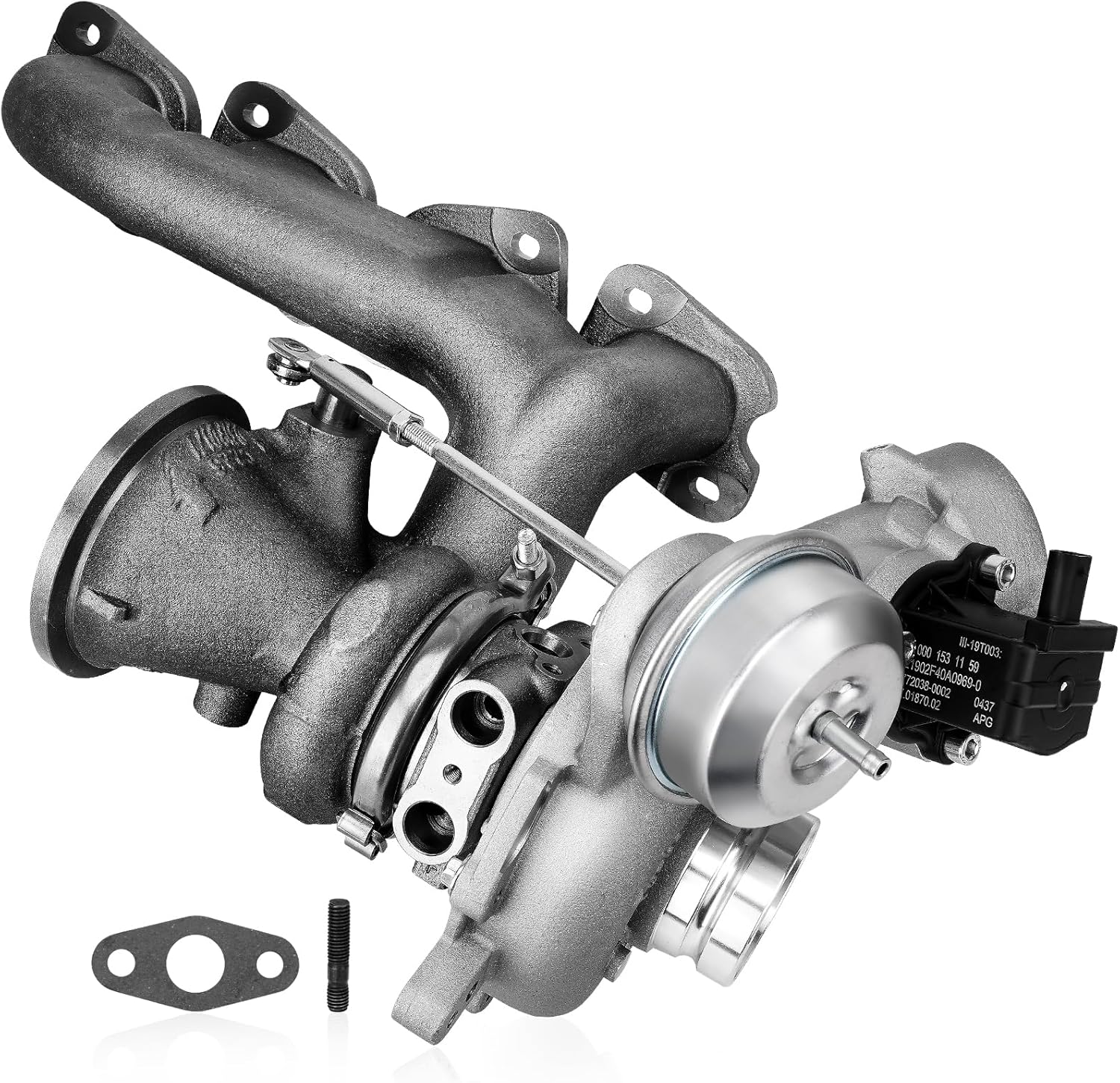
| Manufacturer | FILTERUP |
|---|---|
| Model | Turbocharger |
| Manufacturer Part Number | 2740903280 |
| OEM Part Number | 2740903180, 2740903280, 2740903300, 2740903580, 2740904380 |
This FILTERUP turbocharger is sold as a replacement for the factory unit used on Mercedes‑Benz 2.0L four‑cylinder models and is intended to recover lost power and drivability from a failing turbo. It installs in place of the original turbo and is typically used when symptoms like reduced boost, increased oil consumption, or turbo noise appear. The unit claims precision‑machined housings, aluminum and iron construction for durability, and includes a wastegate actuator that may require professional adjustment to match OEM behavior. In practice the component offers an immediate improvement in throttle response and fuel economy versus a worn turbo, and the sealed compressor and turbine interfaces reduce the likelihood of leaks. Important limitations are that fitment must be verified against the listed OEM part numbers and the included actuator geometry may differ from factory settings, so a calibrated install by a competent technician is recommended. The one‑year coverage provides short‑term assurance but does not replace careful fitment checks and proper installation.
Best for: Performance-oriented buyers who prioritize restoring or improving boost and throttle response on Mercedes‑Benz 2.0L models and expect a close replacement for factory turbo performance.
Less Ideal for: Buyers who want plug‑and‑play, guaranteed factory calibration without any installation adjustment or professional setup should consider alternatives with confirmed actuator matching or dealer parts.
- Direct replacement for multiple Mercedes 2.0L OEM part numbers, simplifying parts matching
- Precision‑machined housing and mixed metal construction aimed at improved sealing and longevity
- Includes wastegate actuator and hardware to allow a complete turbo swap
- Designed to restore boost and improve throttle response and fuel economy compared with a worn unit
- Included wastegate actuator may require adjustment or calibration to match factory settings
- Coverage is limited to a one‑year guarantee rather than a longer-term warranty
Verdict: A solid performance‑focused replacement turbo for Mercedes‑Benz 2.0L engines that restores boost and response but may need actuator adjustment during installation.
3. QUSKLISU Turbocharger Direct Replacement for 2015-2020 Mercedes-Benz C300 C350e E300 GLC300 SLC300

| Applicable Models | 2015-2020 Mercedes-Benz C300 C350e E300 GLC300 SLC300 |
|---|---|
| Manufacturer Part Number | 27409032808 |
| Material | Cast Iron |
| Fitment Type | Direct Replacement |
This turbocharger is a cast-iron, direct-replacement unit built to fit 2015–2020 Mercedes-Benz GLC300 and related models. It is supplied pre-assembled and designed to drop into the factory turbo location, so it is used to restore lost boost and engine performance after a failed or worn original turbo. The sandblasted cast-iron construction indicates durability for a budget-oriented replacement, and the listing calls out straightforward installation when performed by a technician. In practice this means you can expect recovered throttle response and usable power without the expense of an upgraded or OEM turbo. Limitations are that the unit is a basic replacement: there is no mention of balanced rotating assembly certification, performance enhancements, or long-term testing data, and the seller recommends professional installation. For owners prioritizing affordability and a quick return to service on a GLC300, this turbocharger is a practical option, but those who want verified performance gains or extended durability validation should consider higher-end or factory-quality alternatives.
Best for: Budget-conscious owners seeking an affordable, ready-to-install replacement turbo to restore boost and drivability on a Mercedes‑Benz GLC300 rather than pursue performance upgrades.
Less Ideal for: Drivers wanting verified performance gains, extended durability validation, or a factory-quality replacement should consider higher-tier or OEM-sourced turbochargers instead.
- Direct-replacement fitment for 2015–2020 Mercedes-Benz GLC300 family to simplify installation
- Cast-iron, sandblasted construction aimed at durability for a budget unit
- Delivered pre-assembled so minimal assembly time is required before installation
- Includes packaging and basic protective foam for shipping
- No documented balancing or performance testing provided for long-term reliability assurance
- Limited specification details about internals and warranty information
Verdict: A cost-focused, cast-iron direct-replacement turbo that restores boost on 2015–2020 GLC300-series cars but lacks documented performance or longevity testing.
4. Cilipnsi Turbocharger 2740903280 for Mercedes-Benz 2.0L

| Manufacturer | Cilipnsi |
|---|---|
| Manufacturer Part Number | 2740903280 |
| OEM Part Number | AL0072, 2740900780, A2740900780, 2740902480, A2740902480, 2740902580, A2740902580, 2740903180, A2740903180, 2740903280, A2740903280, 2740903300, A2740903300, 2740903580, A2740903580, 2740904280, A2740904280, 2740904380, A2740904380, 274090328080 |
| Compatible Engines | 2.0L L4 Mercedes-Benz |
This Cilipnsi turbocharger is a direct-replacement unit built to fit 2.0L Mercedes-Benz applications including the GLC300 and other compatible models. It is intended for professional, bolt-in installation and is presented as plug-and-play to restore boost and drivability after a turbo failure. Notable attributes include claimed OEM-grade build and testing, a compatibility list that targets specific Mercedes 2.0L engines, and a manufacturer service commitment for post-purchase support. In practical use the part should return lost power and throttle response and is useful for repairing a worn or failed turbo without modifying other systems. Limitations are that installation requires mechanical skill or a shop, and buyers should verify exact fitment against their vehicle VIN because multiple part references are listed. The product is focused on reliability and replacement performance rather than performance upgrades or tuning.
Best for: Reliability-focused buyers who prioritize restoring factory-like performance on a Mercedes 2.0L and want a tested direct-replacement part rather than an upgrade.
Less Ideal for: Drivers looking for a performance or upgraded turbo for increased power, or DIY beginners who cannot arrange professional installation should consider alternatives.
- Designed as a direct replacement for specific Mercedes-Benz 2.0L turbo applications
- Manufacturer states OEM-grade construction and testing for dependable operation
- Compatibility list includes common Mercedes models such as GLC300 to simplify selection
- Seller offers a 2 year contact window for after-sale support
- Requires professional installation and associated labor cost
- Multiple reference numbers listed so buyers must confirm correct part for their VIN
Verdict: A practical, reliability-focused direct-replacement turbo for Mercedes 2.0L models that restores factory performance when professionally installed.
5. SHTLYH Turbocharger Turbo 2740903280 for Mercedes-Benz C300 / GLC300 / E300 / SLC300

| Manufacturer | SHTLYH |
|---|---|
| Model | Turbocharger Turbo |
| Exterior | Machined |
| Manufacturer Part Number | 2740903280 |
This SHTLYH turbocharger is marketed as a direct replacement for a range of Mercedes-Benz 2.0L turbo applications including the C300 and GLC300; it is designed to restore lost boost and the engine's responsiveness after a failed or worn unit. Typical use is as a swap-in replacement during engine repair or performance refresh, with machined aluminum and iron components intended to resist abrasion and last under normal driving conditions. The listing highlights compatibility with multiple factory part numbers and says the unit improves efficiency and fuel economy while maintaining power. Installation is expected to be performed by a professional since the product does not include instructions. Practical benefits include simpler sourcing of a matched turbo and materials aimed at durability. Important limitations are that there is no explicit information on internal balancing, compressor/turbine specifications, or warranty details, so buyers should confirm compatibility with their vehicle and accept some risk compared with a factory-sourced or fully documented remanufactured unit.
Best for: Risk-averse mainstream buyers seeking a straightforward replacement to get a Mercedes-Benz GLC300 or similar back on the road with minimal sourcing hassle, prioritizing a like-for-like fit over aftermarket performance upgrades.
Less Ideal for: Enthusiasts wanting verified performance figures, dyno-backed upgrades, or full remanufacture documentation should consider branded remanufactured or performance turbo options instead.
- Lists direct fitment for multiple Mercedes-Benz 2.0L turbo models including C300 and GLC300
- Machined exterior with aluminum and iron construction for abrasion resistance
- Offers replacement for several OEM part numbers to simplify part matching
- No technical compressor or turbine specifications provided to verify performance
- Product listing does not include installation instructions or documented warranty
Verdict: A practical direct-replacement turbocharger option for Mercedes-Benz 2.0L models when you need to restore boost with a like-for-like fit.
Choosing the Right Mercedes-Benz GLC Turbocharger: Key Factors to Consider
Fitment and Compatibility
Proper fitment ensures the turbocharger mounts cleanly to the GLC engine and interfaces correctly with oil, coolant, intake, and exhaust connections. If mounting points or flange dimensions do not match, installation can require custom brackets, pipework, or adapter flanges, increasing complexity and risk.
Compatibility extends to electronic actuators and sensor locations. A turbo that does not communicate correctly with the vehicle control systems can trigger fault codes or restrict performance. Verifying part numbers, mounting geometry, and actuator type reduces the chance of surprises at installation.
Boost Performance and Response
How the turbo delivers boost affects drivability and perceived power. Some units prioritize low-end response for quicker throttle reaction, while others focus on peak boost for higher top-end power. Consider the intended use: daily driving benefits from responsive spool characteristics, whereas performance-focused builds may accept a bit more lag for higher peak pressure.
Assessing compressor and turbine sizing charts or stated boost maps helps predict how a unit will feel on the road. Matching boost behavior to the engine's airflow and fuel strategy is key to avoiding detonation, fueling issues, or an unpleasant powerband.
Durability and Materials
Turbochargers operate under high temperature and rotational stress, so metallurgy and build quality matter. Look for durable turbine housings, balanced rotors, and bearings designed for the GLC's oil supply and operating temperatures. Components with better thermal resistance and corrosion protection tend to last longer, especially under repeated high-load driving.
Service life also depends on manufacturing tolerances and balancing. Well-balanced assemblies produce less vibration and bearing wear, reducing the chance of early failure. Consider whether parts are rated for extended duty cycles if you plan on towing, frequent highway driving, or spirited use.
Serviceability and Support
Easy access to replacement parts, documentation, and installation guidance reduces downtime and long-term ownership costs. Turbochargers that come with clear installation instructions, torque specifications, and recommended oil procedures make it easier for technicians to complete work correctly.
Availability of replacement cartridges or rebuild kits can be important for owners planning long service lives. Consider whether the manufacturer or supplier offers technical support and warranty terms that match your tolerance for maintenance and potential repairs.
Thermal Management and Lubrication
Effective cooling and oil flow keep the turbocharger within safe operating temperatures and extend bearing life. Evaluate whether the unit supports the GLC's oil feed and return arrangements and whether any additional cooling features, such as enhanced housings or improved oil galleries, are present.
Proper lubrication reduces wear on journal or ball bearings and prevents coking in oil passages. Confirm recommended oil change intervals and ensure installation practices include priming the oil system to avoid dry starts that can damage the turbo.
Installation Complexity
Installation difficulty affects labor time and the likelihood of installation-related issues. Direct-replacement turbos that match factory connections typically reduce labor and the need for custom fabrication. More complex installations that require intercooler piping changes, actuator recalibration, or ECU adjustments will increase time and expertise required.
Consider whether you or your technician have the tools and experience to handle the job. If additional tuning or actuator programming is necessary, factor that into the total effort and potential troubleshooting during initial break-in and testing.
How We Chose the Best Mercedes-Benz GLC Turbocharger
We focused on components that meet the mechanical and operational demands of the Mercedes-Benz GLC engine and driving profile. Key evaluation criteria included precision fitment to factory mounting points, measured boost stability under load, and materials quality for turbine and compressor components. We also considered thermal management features such as bearing lubrication and heat shielding, overall durability ratings or manufacturer test protocols, and the availability of installation resources and technical documentation. We excluded items with unclear fitment information, missing compatibility data for the GLC, or products lacking any durability testing details. We also omitted options that required extensive engine modification or bespoke fabrication, since most owners seek direct-replacement or bolt-in upgrades. The resulting shortlist reflects components that balance reliable fitment, sustained boost performance, and realistic serviceability for the Mercedes-Benz GLC.
Our full evaluation process is outlined in our review methodology.
FAQ
What are common turbocharger symptoms on a Mercedes-Benz GLC?
Common signs often include reduced acceleration, a noticeable loss of boost, unusual whining noises from the engine bay, or increased smoke from the exhaust under boost. These symptoms usually indicate issues with boost delivery, bearing wear, or leaks in intake or exhaust connections.
Can I replace a turbocharger myself or should I use a technician?
It depends on your mechanical experience and tools. Direct-replacement jobs that match factory connections can be manageable for experienced DIYers. However, tasks involving actuator calibration, oil line routing, or ECU adjustments are best handled by a technician to ensure correct installation and avoid engine damage.
How long does a turbocharger typically last on a vehicle like the GLC?
Turbo life varies widely based on driving habits, maintenance, and operating conditions. Regular oil changes with the correct specification and avoiding prolonged high-load driving without proper cooling-down can extend service life. It is common to see many tens of thousands of miles from a well-maintained turbo, while neglected systems may fail much sooner.
Is a turbocharger rebuild kit a viable option for the GLC?
A rebuild kit can be a cost-effective choice if the core housing and turbine are in good condition and damage is limited to bearings or seals. Rebuilding requires precise balancing and adherence to torque and clearance specifications, so it is usually performed by specialists or experienced shops to ensure reliability.
Will upgrading the turbocharger affect engine longevity?
Upgrading to a higher-performance unit can change boost characteristics and thermal load, which may increase stress on the engine if not matched with proper fueling, cooling, and management. To reduce risk, ensure upgrades are compatible with the engine's capabilities and consider supporting modifications and calibration to maintain safe operating conditions.
Conclusion
Prioritize fitment accuracy, boost behavior, and durability when choosing a turbocharger for the Mercedes-Benz GLC. These factors determine how the car feels day to day, how long the component lasts, and how straightforward the installation will be. Balance desired performance outcomes against installation complexity and serviceability to choose an option that meets your driving needs and maintenance expectations.
Explore More:
- Check out all Mercedes-Benz GLC parts & accessories
- Explore Turbochargers Maintenance & Repair Guides
- Explore Engine
- Browse all Auto Parts
