

Note: This article contains affiliate links. If you click on these links and make a purchase, I may earn a small commission at no extra cost to you. This helps support my research and content. Read my full affiliate disclosure here.
If your Kia Sportage is showing less power or increased turbo lag, choosing the right turbocharger matters for drivability and engine longevity. The wrong unit can cause poor fitment, mismatch boost characteristics, or premature wear. This guide covers the top shortlisted turbochargers selected for the Kia Sportage and explains the factors that matter when replacing or upgrading the turbo.Below you will find our top picks and the evaluation criteria we used to narrow the field, from fitment and boost behavior to durability and installation considerations.
Looking for other parts? See all Kia Sportage parts & accessories.
Top Picks at a Glance
| Best overall The best all-around choice for most situations | maXpeedingrods TD04HL4S-04H Turbocharger for Kia Sportage (Theta II 2.0L) |  |
| Best quality Built to a higher standard if you want something more solid | A-Premium TD04HL4S Complete Turbocharger Kit with Gasket for Kia Sportage 2.0L |  |
| Best Value The sweet spot between price and what you get | tycardor HT Turbocharger compatible with Kia/Hyundai Theta II 2.0L |  |
| Best Budget The cheapest option that still gets the job done reliably | Woosphy Turbocharger Replacement for 1.6L Hyundai/Kia G4FJ Engines |  |
| Highest Rated A top-rated pick with lots of positive feedback | GELUOXI Turbocharger Replacement (28231-2GTA1) |  |
| Most Popular A crowd favorite that many people choose with confidence | NEWZQ Turbocharger Compatible with Hyundai/Kia 2.0L (28231-2G410) |  |
| Best Seller A high-volume bestseller chosen again and again | Haturbo TD04L Turbocharger (28231-2GTA1) for 2016–2020 Kia Sportage Theta II |  |
1. maXpeedingrods TD04HL4S-04H Turbocharger for Kia Sportage (Theta II 2.0L)

| Turbo Model | TD04HL4S-04H |
|---|---|
| Cooling Type | Water+Oil Cooling |
| Actuator Type | Electronic Actuator |
| Fuel Type | Gasoline |
This maXpeedingrods TD04HL4S-04H is a complete turbocharger assembly designed as a direct factory-quality replacement for the Theta II 2.0L turbo on Kia Sportage models. It ships with gaskets and mounting hardware so it is used to reinstall the turbo after removal or replacement and aims to recover factory boost, responsiveness, and drivability. Notable features include a ductile iron turbine housing rated for high exhaust temperatures, a K418 alloy turbine wheel for oxidation resistance at extreme temperatures, and a forged aluminum compressor wheel shaped for improved airflow. The unit is water and oil cooled and uses an electronic actuator compatible with the original control systems. Practical benefits are straightforward installation with OEM-style fitment and robust temperature tolerance for normal road use. Limitations are that this is an aftermarket unit so long-term durability versus factory-brand parts can vary and professional installation and proper oiling are required to avoid premature wear.
Best for: A balanced all-round buyer who wants a straightforward, factory-compatible turbo swap to restore performance on a Kia Sportage 2.0L without chasing OEM dealer parts.
Less Ideal for: Those seeking a performance-upgrade turbo for higher boost or racing use should look for specialized performance units rather than a direct replacement.
- Direct factory-style replacement simplifies installation and fitment for the Sportage Theta II 2.0L.
- High-temperature ductile iron turbine housing improves resistance to exhaust heat.
- K418 alloy turbine wheel and forged aluminum compressor wheel boost durability and airflow efficiency.
- Includes gaskets and mounting hardware so fewer additional parts are needed at install.
- Aftermarket build quality can vary compared with original manufacturer turbos, so longevity may differ.
- Requires professional installation and correct oiling to ensure proper life and performance.
Verdict: A ready-to-install, factory-style replacement turbo for the Kia Sportage Theta II 2.0L that prioritizes fitment and thermal durability over aftermarket performance gains.
2. A-Premium TD04HL4S Complete Turbocharger Kit with Gasket for Kia Sportage 2.0L

| Compatibility | Kia Sportage 2011-2016 L4 2.0L Turbocharged |
|---|---|
| Turbo Model | TD04HL4S |
| Gasket Included | Yes |
| Material | Alloy |
This turbocharger kit replaces the factory turbo on Kia Sportage 2.0L turbocharged engines and includes the turbo assembly and gaskets to simplify installation. In typical use it drops into the turbocharged Sportage line with TD04HL4S fitment, restoring boost and engine responsiveness after a failed or worn unit. The alloy construction and included gaskets help protect the compressor and oil passages during initial startup, while the kit lists compatibility with the factory part numbers used on the Sportage. Practical benefits include a full assembly to cut down on parts sourcing and a wastegate actuator listed as included in some product notes to control boost. Important limitations are that fitment is strictly for the turbocharged 2.0L Sportage model and installation may still require professional labor and calibration for optimal performance; some product descriptions give inconsistent notes about the actuator being included, so confirm contents before install.
Best for: Performance-oriented buyers seeking a high-quality replacement turbo to restore or maintain the Sportage's boost and throttle response, prioritizing a full assembly over piecemeal repairs.
Less Ideal for: Drivers who do not want to use aftermarket turbochargers or who prefer reconditioning the original unit should consider other repair routes or professional remanufactured options.
- Complete turbo assembly provided to replace a failed unit without sourcing separate core parts
- Includes gaskets to protect compressor and oil passages during installation
- Alloy construction intended for durability under boost
- Lists factory part numbers for direct-fit identification
- Product descriptions contain inconsistent statements about whether the wastegate actuator is included
- Intended only for the turbocharged 2.0L Sportage, so not suitable for non-turbo variants
Verdict: A solid full-replacement turbo option for turbocharged Kia Sportage 2.0L owners who want a ready-to-install unit to restore boost and responsiveness.
3. tycardor HT Turbocharger compatible with Kia/Hyundai Theta II 2.0L

| Manufacturer | tycardor HT |
|---|---|
| Model | Turbo Charger |
| Manufacturer Part Number | 28231-2GTA1 |
| Item model number | 28231-2GTA1 |
This turbocharger is a factory-replacement style unit intended for Theta II 2.0L engines used in select Hyundai and Kia models. It supplies the core turbo assembly so you can replace a failed or worn turbo without machining or rebuilding the original unit. Typical installation uses include restoring boost and drivability after turbo failure or upgrading a worn OEM unit; the listing includes two oil hole gaskets to assist installation. The listing highlights an alloy construction for improved heat dissipation and gives installation reminders such as cleaning oil lines, changing oil and filters, and using gaskets rather than sealant. Important limitations are that this is a single turbo core assembly so expect to reuse or separately source compatible mounting hardware and any required actuators or lines if not included, and professional installation is recommended to avoid oil starvation or leaks. Fitment notes are specific to Theta II 2.0L engines only, so confirm engine code compatibility before purchase.
Best for: Practical optimizers who want a cost-effective, ready-to-install turbo to restore boost and drivability on Theta II 2.0L Kia or Hyundai engines without buying a rebuilt or OEM unit.
Less Ideal for: Drivers seeking a performance upgrade with increased boost or an engineered high-performance unit should consider purpose-built aftermarket turbos instead.
- Direct-replacement turbo for Theta II 2.0L engines, simplifying fitment for compatible cars
- Alloy construction intended to improve heat dissipation and service life under boost
- Includes oil hole gaskets to help ensure a proper oil seal during installation
- Clear installation guidance provided to reduce common installation mistakes
- Does not list included mounting hardware or electronic components, so additional parts may be required
- Fitment is limited to vehicles with the Theta II 2.0L engine family; not suitable for other engines
Verdict: A budget-conscious, direct-replacement turbocharger for Theta II 2.0L engines that restores factory-like function but may require sourcing additional installation parts.
4. Woosphy Turbocharger Replacement for 1.6L Hyundai/Kia G4FJ Engines
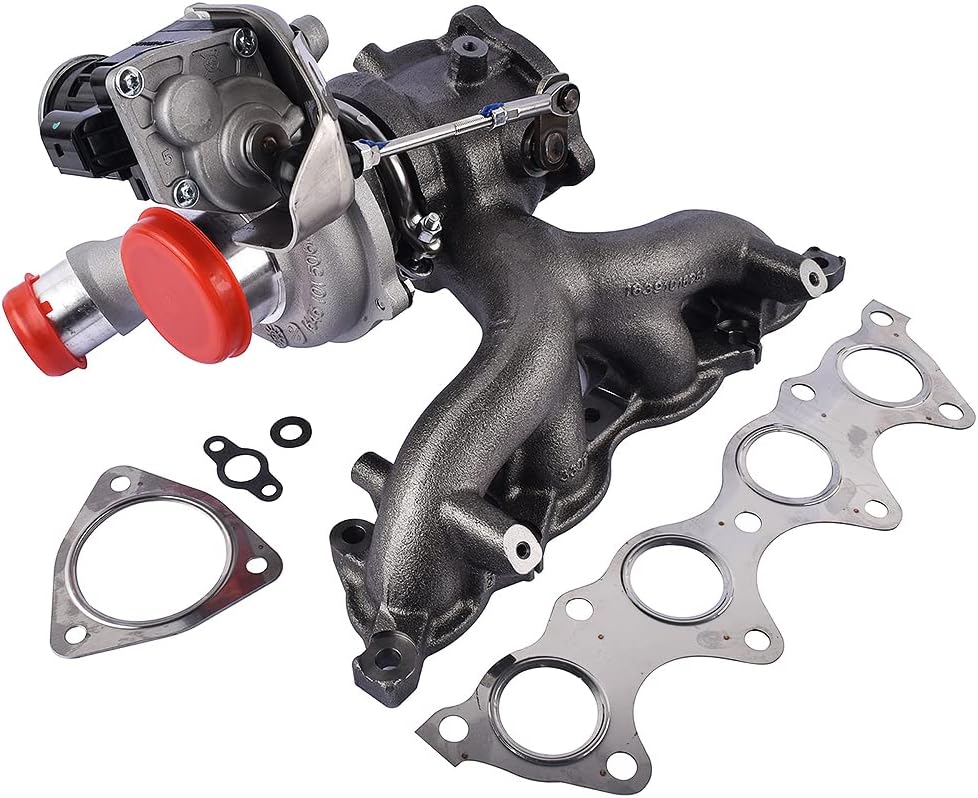
| Manufacturer | Woosphy |
|---|---|
| Manufacturer Part Number | 282312B760 16399880016 |
| OEM Part Number | 28231-2B760, 282312B760, 16399880016 |
| Compatible Engine | 1.6L DOHC VVT G4FJ |
This turbocharger assembly is offered as a budget replacement for vehicles with the 1.6L G4FJ engine used in several Hyundai and Kia models. It installs like a factory turbo and is typically used to restore boost after an original unit fails. The listing includes multiple OEM reference numbers and a compatibility list covering Veloster, Elantra, Tucson, Kona, i30 and Kia Sportage variants with the 1.6L G4FJ engine. Practical benefits are immediate: it can get a disabled car back on the road without the premium cost of a factory unit, and several buyers reported a straightforward fit and good initial fitment. Important limitations are inconsistent reliability across reviews and a number of reports describing early failures, internal damage, and secondary engine or catalytic converter damage when the unit fails. That makes this a riskier budget choice for long-term ownership and suggests professional installation and close post-install inspection are prudent.
Best for: Budget-conscious owners seeking the lowest-cost way to replace a failed turbo on a 1.6L G4FJ-equipped Kia Sportage who prioritize short-term repair savings over long-term durability.
Less Ideal for: Owners who plan to keep their vehicle long-term or who need a highly reliable, factory-quality turbo should consider a factory-quality replacement or remanufactured unit instead.
- Direct-replacement design referencing factory part numbers for straightforward fitment to 1.6L G4FJ engines
- Lower-cost alternative to factory turbochargers that can reduce immediate repair expense
- Multiple photos and seller listing indicate a complete assembly intended to simplify installation
- Mixed user reliability with several reports of early failure and internal damage
- Some buyers reported components like the wastegate solenoid failing shortly after install
Verdict: A low-cost, direct-replacement turbo aimed at getting G4FJ 1.6L Kia Sportage vehicles back on the road quickly for a lower upfront outlay.
5. GELUOXI Turbocharger Replacement (28231-2GTA1)

| Model | Turbocharger |
|---|---|
| Manufacturer Part Number | 28231-2GTA1 |
| OEM Part Number | 28231-2GTA1, 28231 2GTA1, 282312GTA1 |
| Compatible Engines | Theta 2 2.0L applications |
This GELUOXI turbocharger is offered as a direct replacement for vehicles with the Theta II 2.0L engine family and installs in place of the factory turbo to restore boost and drivability. Typical use is as a repair part when an original turbo has failed or developed wastegate or shaft-play issues. The unit includes the listed part numbers to match factory fitment and appears machined for mating surfaces, which helps with sealing and straightforward installation when paired with the original exhaust manifold and gaskets. For reliability-focused buyers the primary benefit is getting a like-for-like replacement that brings back engine torque and throttle response without needing aftermarket tuning. Expect normal installation work and a professional alignment of oil and coolant lines. Limitations are that long-term durability versus higher-tier remanufactured or OEM turbos is not documented and there is no explicit warranty information provided on the product page, so buyers should plan for professional installation and monitoring after fitment.
Best for: A reliability-focused buyer who wants a like-for-like replacement to restore factory performance without modifying the engine; ideal for drivers prioritizing prompt, practical repair over upgrades.
Less Ideal for: Drivers seeking lifetime-backed OEM remanufactured turbos or performance upgrades with guaranteed longevity should consider dealer or specialty reman options instead.
- Direct-replacement fitment for Theta II 2.0L applications matching multiple OEM part numbers
- Machined exterior surfaces improve sealing and fit with existing exhaust components
- Supplied as a complete turbo assembly ready to install with standard connections
- Multiple listings and user reviews report straightforward installation and restored performance
- No explicit warranty or long-term durability data published on the product page
- Not marketed as a remanufactured OEM unit so longevity may vary compared with factory replacement turbos
Verdict: A practical direct-replacement turbocharger for Theta II 2.0L Kia Sportage owners who need a reliable, like-for-like repair to restore original boost and drivability.
6. NEWZQ Turbocharger Compatible with Hyundai/Kia 2.0L (28231-2G410)

| Manufacturer | NEWZQ |
|---|---|
| Manufacturer Part Number | 28231-2G410 28231-2G420 28231-2G400 |
| OEM Part Number | 28231-2G410,28231-2G420,28231-2G400, 90142-01030,90142-01031 |
| Compatible Models | Santa Fe Sport, Sonata, Optima, Sportage (listed years) |
This NEWZQ turbocharger is sold as a direct replacement for 2.0L turbocharged Hyundai and Kia engines and is intended for owners who need a quick turbo swap. It installs in the same location as the original unit and lists multiple OEM part numbers for compatibility with Santa Fe Sport, Sonata, Optima, and Sportage model years in the 2011–2016 range. The unit arrives as a complete turbo assembly so installers can bolt it in without sourcing many additional major components. Practical benefits include straightforward compatibility checking via the listed part numbers and lower-cost replacement compared with buying a dealer unit. Important limitations are mixed user reports about build quality and reliability, and at least one installer note about needing turbo studs not included with the kit. Given those reports it is best fitted by a competent mechanic who can verify balance and fasteners at installation.
Best for: Convenience-driven buyers who want a ready-made replacement turbo that lets a mechanic complete a repair quickly without sourcing multiple parts.
Less Ideal for: Owners seeking a guaranteed long-term OEM-level turbo or those who prefer factory-sourced parts and extended reliability assurances.
- Sold as a complete turbo assembly compatible with multiple OEM part numbers for easier fit verification
- Lower-cost alternative to dealer turbochargers
- Arrives ready to install so routine replacement requires fewer separate parts
- Mixed customer reports of defective units and inconsistent quality
- Some installers noted missing hardware such as turbo studs
Verdict: A budget-minded, ready-to-install replacement turbo for 2.0L Hyundai and Kia engines that speeds up repairs when you need a quick swap.
7. Haturbo TD04L Turbocharger (28231-2GTA1) for 2016–2020 Kia Sportage Theta II

| Item model number | TD04L6 |
|---|---|
| Manufacturer Part Number | 28231-2GTA1 |
| Fits | 2016-2020 Kia Sportage with Theta 2 Engine |
This Haturbo TD04L turbocharger is a replacement unit designed to restore turbo boost on Kia Sportage models with the Theta II engine (2016–2020). It installs in place of the factory turbo to return lost performance caused by a failed core, and the listing highlights matching part numbers to help ensure fitment. Typical use is as a like-for-like repair during an engine or turbo rebuild; the seller notes pre-installation steps such as flushing oil lines and replacing filters to protect the new unit. The turbo appears built to match the original turbine geometry and includes manufacturer part references for compatibility. Practical benefits are straightforward: it can get a disabled Sportage back on the road without the complexity of performance modifications and saves the time of sourcing a remanufactured factory turbo. Important limitations are that this is an aftermarket replacement rather than a factory-branded unit and correct installation is critical since oil-feed cleanliness and proper sealing affect longevity. Expect to follow professional installation procedures to avoid premature failure.
Best for: Risk-averse mainstream buyers seeking a practical, like-for-like repair to return a 2016–2020 Kia Sportage to factory driveability without pursuing performance upgrades.
Less Ideal for: Buyers looking for increased power, upgraded turbine performance, or a factory-branded OEM turbo should consider alternative parts or remanufactured factory replacements.
- Matches OEM part numbers listed for Theta II engines to simplify fitment verification
- Sold as a complete turbocharger to replace a failed unit and restore engine boost
- Manufacturer instructions emphasize cleaning oil feed and drain lines to protect the turbo
- Designed as a direct replacement so no performance recalibration is required for stock use
- Aftermarket unit rather than factory-branded turbo which may differ in long-term durability
- Requires careful pre-installation oil-line cleaning and professional fitting to avoid damage
Verdict: A practical aftermarket TD04L replacement that restores turbo function on Theta II Kia Sportage models when installed correctly by a competent technician.
Choosing the Right Kia Sportage Turbocharger: Key Factors to Consider
Fitment and Mounting Compatibility
Correct fitment is the foundation of a successful turbocharger swap for a Kia Sportage. Confirming flange types, inlet and outlet diameters, and oil and coolant port locations reduces the risk of fabrication, adapter use, or unexpected leaks. A turbo that matches the vehicle's mounting points shortens installation time and avoids stress on manifolds and brackets.
Beyond physical mounting, compatibility with the Sportage's exhaust routing and wastegate or actuator linkage affects boost control and emissions systems. Ensuring the turbo aligns with factory sensors and hoses preserves engine management function and minimizes ECU relearns or tuning needs.
Boost Characteristics and Response
How quickly the turbo builds boost and the shape of the torque curve determine everyday drivability. A turbocharger designed to provide strong low-end boost will make the Sportage feel more responsive in city driving, while a unit optimized for top-end performance may suit towing or highway passing.
Consider the compressor map or manufacturer guidance to estimate spool behavior and peak boost. Matching the turbo's intended operating range to your typical driving reduces turbo lag and prevents pushing the unit outside its efficient range, which can increase stress and fuel consumption.
Internal Design and Durability
Materials, bearing type, and shaft balance all influence longevity. Journal bearings, ball bearings, and hybrid designs offer different friction and wear characteristics that affect spool time and service intervals. High-quality turbine and compressor wheel materials resist erosion and fatigue from heat cycles and particulate exposure.
Durable construction also matters for owners planning higher-mileage use or boost increases. Look for clear manufacturing tolerances and balanced rotating assemblies to reduce vibration and prolong bearing life.
Oil and Cooling Requirements
Turbochargers rely on engine oil for lubrication and, in many cases, coolant for temperature control. Ensuring the turbo's oil feed and drain clearances match the Sportage's capabilities prevents oil starvation or leaks. Proper oil return slope and unrestricted flow are essential for bearing life.
If a turbo requires coolant lines, confirm coolant port placement and hose routing to avoid interference with nearby components. Incorrect plumbing can cause overheating or oil coking, which shortens turbo life and may lead to more costly repairs.
Serviceability and Parts Availability
Access to replacement cartridges, rebuild kits, and common wear items makes long-term ownership less stressful. If a turbo has documented rebuild procedures and available parts, you can avoid full-unit replacement when wear occurs. This also benefits independent shops that perform repairs rather than source entire assemblies.
Consider how easy it is to obtain seals, bearings, and actuator components, and whether vendors provide clear part numbers and support documentation. Serviceability reduces downtime and can lower total lifecycle cost.
Installation Complexity and Support
Installation difficulty affects labor time and the likelihood of installation errors. A turbo that fits without extensive modifications to plumbing, manifolds, or intercooling reduces shop hours and potential leak points. Clear instructions, correct gaskets, and appropriate hardware improve the odds of a smooth install.
Also consider technical support and documented torque specs or break-in procedures. Good vendor guidance helps ensure the turbo operates correctly from first startup and that necessary steps like pre-oiling and initial boost management are followed.
How We Chose the Best Kia Sportage Turbocharger
We focused on options that specifically suit the Kia Sportage platform and that meet real-world expectations for fitment and performance. Key evaluation criteria included correct physical and ECU fitment for Sportage engines, boost delivery consistency under typical driving loads, turbine and compressor materials for durability, and manufacturing tolerances that affect sealing and shaft play. We also considered longevity indicators such as bearing design and oil/coolant port compatibility, plus availability of replacement components or rebuild kits.We excluded units that lacked clear Sportage fitment data, components intended only for racing without usable driveability on the road, and any listings that did not document inlet/outlet dimensions or mounting flange specifications. The resulting shortlist prioritizes options that balance reliable boost response, straightforward installation, and serviceability for owners and independent shops.
Our full evaluation process is outlined in our review methodology.
FAQ
What are common turbocharger symptoms on a Kia Sportage?
Common signs often include reduced acceleration, increased turbo lag, unusual whining noises, or excess smoke from the exhaust. You may also notice oil leaks around the turbo or a drop in fuel economy. These symptoms usually indicate issues with boost delivery, seals, or bearing wear and should be diagnosed promptly to avoid further engine stress.
Can I replace a Kia Sportage turbocharger myself?
Many mechanically skilled owners can perform a turbocharger replacement, but it typically requires removal of intake and exhaust components, careful oil line work, and correct torqueing of fasteners. Proper pre-oiling and ensuring correct oil return slope are important. If you are not confident with these tasks, a professional installation reduces the risk of installation-related failures.
Is it better to rebuild a turbocharger or install a new one?
Rebuilding can be cost-effective if the turbine housing and compressor cover are in good condition and parts are available, particularly when rebuild kits are offered for the specific unit. A new unit can be preferable when internal damage is extensive or when long-term reliability is a priority. The right choice depends on the turbo's condition, parts availability, and your tolerance for downtime.
How does a turbocharger upgrade affect everyday driving?
An upgrade aimed at quicker spool can make the Sportage feel more responsive in lower gears, while a unit designed for higher peak boost may enhance passing power at higher RPMs. However, changes to boost behavior can also require adjustments to fueling or engine management to maintain reliability. Consider how you use the vehicle when choosing an upgrade so performance gains match real driving needs.
What should I check after installing a turbocharger?
After installation, check for oil and coolant leaks, confirm all intake and exhaust connections are sealed, and verify actuator and wastegate operation. It is also wise to monitor boost pressure during a test drive and look for any abnormal noises. Following a proper break-in procedure and rechecking fasteners after initial heat cycles can help ensure long-term reliability.
Conclusion
Choosing the right turbocharger for a Kia Sportage comes down to balancing fitment, boost behavior, and durability. Prioritize units that match the Sportage's mounting and plumbing, provide the spool characteristics you need for daily driving, and use robust internal designs to minimize maintenance.Weigh installation complexity and parts availability against performance goals. Focusing on these core factors helps you select a turbo that delivers reliable power and a predictable driving experience over the long term.
Explore More:
- Check out all Kia Sportage parts & accessories
- Explore Turbochargers Maintenance & Repair Guides
- Explore Engine
- Browse all Auto Parts
