

Note: This article contains affiliate links. If you click on these links and make a purchase, I may earn a small commission at no extra cost to you. This helps support my research and content. Read my full affiliate disclosure here.
If you are facing slipping gears, rough shifts, or persistent leaks on your Hyundai Elantra, choosing the right transmission rebuild kit can make the repair more durable and predictable. The correct kit ensures you replace worn seals, gaskets, and internal components with parts matched to your vehicle, which helps restore proper hydraulic function and shift quality.This guide covers our five shortlisted transmission rebuild kits for the Hyundai Elantra. We evaluated fitment accuracy, component completeness, and build-quality indicators to identify kits that address common failure points. Read on to understand what matters when rebuilding your transmission and which features to prioritize.
Looking for other parts? See all Hyundai Elantra parts & accessories.
Top Picks at a Glance
| Best overall The best all-around choice for most situations | ZDKK A6GF1 Transmission Master Rebuild Kit (Replace B212820A/B212880A/W212881A) |  |
| Best Quality Built to a higher standard if you want something more solid | LEKEYINS A6MF1 Transmission Rebuild Kit for Hyundai Elantra/Sonata/Tucson/Santa Fe |  |
| Best budget The cheapest option that still gets the job done reliably | NEWZQ A6GF1 Automatic Transmission Rebuild Kit (2011–2014) |  |
| Highest Rated A top-rated pick with lots of positive feedback | COPACHI Transmission Master Overhaul Rebuild Kit A4CF1/A4CF2 | 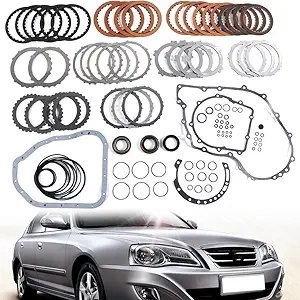 |
| Best Seller A high-volume bestseller chosen again and again | INGKAN A6GF1 Transmission Master Rebuild Kit with Filter |  |
1. ZDKK A6GF1 Transmission Master Rebuild Kit (Replace B212820A/B212880A/W212881A)

| Brand | ZDKK |
|---|---|
| Manufacturer | ZDKK |
| Manufacturer Part Number | QMP-I12J0066 |
| Compatible Replace Parts | B212820A, B212880A, W212881A, A6GF1 |
| Customer Reviews | 4.9 out of 5 stars |
This ZDKK A6GF1 master rebuild kit supplies the gaskets, friction plates, steel plates, filter and associated seals needed when rebuilding an A6GF1 transmission found in certain Hyundai models. It is intended for a full overhaul job and is used by DIY mechanics or professional shops to restore shifting performance and stop leaks. Notable features include multiple friction and steel plates, a replacement filter, and manufacturer's pre-shipment testing. In practice the kit streamlines a rebuild by collecting most wear items in one package and using materials ZDKK says are more durable than basic aftermarket parts. The practical benefits are fewer parts to source separately and a judged fit to the listed part numbers. Limitations are that fitment is specific to the A6GF1/B2128xx family so careful part-number matching is required and the listing does not include detailed material grades or an installation guide, so installers should rely on service manuals and torque specs when assembling the transmission.
Best for: Balanced, do-it-yourself or shop buyers who want a single, tested kit to perform a complete A6GF1 transmission rebuild on a Hyundai without piecing parts together.
Less Ideal for: Buyers seeking universal or multi-transmission coverage or those who need manufacturer-certified components and full documentation should consider other options.
- Comprehensive kit includes gaskets, friction plates, steel plates and filter for a full master rebuild
- Pre-shipment testing claimed by manufacturer reduces risk of obvious defects on arrival
- Designed to replace specific factory part numbers (B212820A, B212880A, W212881A) for straightforward matching
- Consolidates multiple wear items into one purchase to simplify parts sourcing for a rebuild
- Fitment is limited to A6GF1-series transmissions so incorrect part matching can result in wasted time
- No detailed material specifications or step-by-step installation instructions are provided in the listing
Verdict: A well-rounded, pre-tested master rebuild kit that bundles the common wear parts needed to rebuild Hyundai A6GF1 transmissions, provided you confirm exact part fitment first.
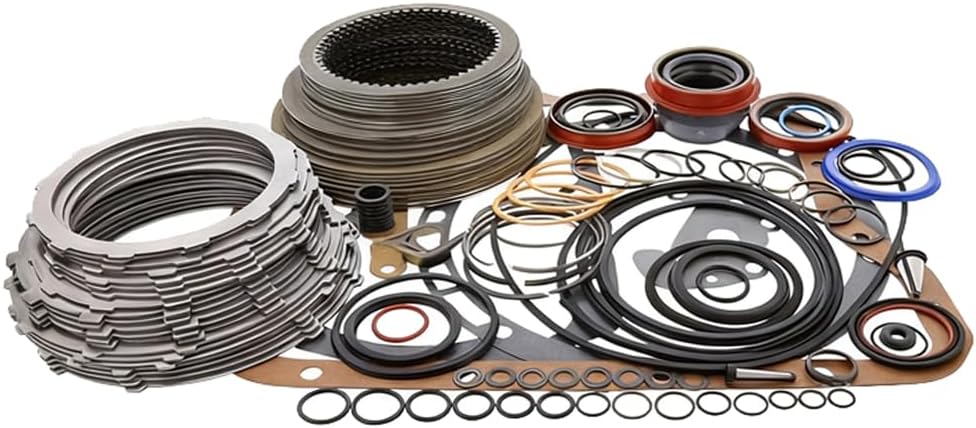
2. LEKEYINS A6MF1 Transmission Rebuild Kit for Hyundai Elantra/Sonata/Tucson/Santa Fe
| Transmission Models | A6MF1 |
|---|---|
| Applicable Models | Hyundai Elantra/Sonata/Tucson/Santa Fe (specified years) |
| Package Includes | Overhaul gasket and seal kit, friction plates kit, steel plates kit |
This LEKEYINS A6MF1 transmission rebuild kit is a comprehensive pack intended to restore shifting performance on affected Hyundai models. It is used during a transmission overhaul to replace worn friction and steel plates plus seals and gaskets that cause slipping, hard shifts, or leaks. The kit includes an overhaul gasket and seal kit, a friction plate set, and steel plates so technicians can replace the most commonly worn internal components in one service. Made from premium-grade materials, the parts are designed for improved wear resistance which helps return smoother gear changes and steadier load handling compared with continued use of degraded components. The practical benefit is a one-source parts set that reduces sourcing time and ensures matched components during rebuilds. Limitations are that it is specific to the A6MF1 transmission family and requires correct VIN/fitment confirmation and professional installation to realize full reliability and shift quality.
Best for: Performance-oriented owners and independent shops who prioritize restoring precise shift feel and long-term durability when rebuilding A6MF1 transmissions on Hyundai Elantra and related models.
Less Ideal for: Casual DIYers without transmission rebuild experience or buyers needing a complete overhaul with bearings, drums, or electronic components not included in this kit.
- Complete kit includes gaskets, seals, friction plates, and steel plates for a single rebuild
- Parts specified for the A6MF1 transmission family used in Hyundai Elantra, Sonata, Tucson, and Santa Fe
- Components made from premium-grade materials for improved wear resistance
- Reduces parts sourcing time by supplying commonly replaced internal components together
- Fitment limited to A6MF1 transmissions so it is not universal across other transmission types
- Requires professional installation and VIN verification to ensure correct application
Verdict: A single-source rebuild kit that supplies the core friction, steel, and sealing components needed to revive A6MF1 transmission shift quality on select Hyundai models.
3. NEWZQ A6GF1 Automatic Transmission Rebuild Kit (2011–2014)

| Model | A6GF1 2011-2014 |
|---|---|
| Manufacturer | NEWZQ |
| Compatible vehicles | Hyundai Elantra 2011-2014 |
This NEWZQ A6GF1 transmission rebuild assembly is presented as a direct replacement for the 2011–2014 Hyundai Elantra and installs where the original A6GF1 unit is required. It is intended for owners who need a whole transmission assembly rather than individual parts, simplifying a rebuild or swap by providing a ready unit labeled for compatibility. The listing highlights factory-replacement intent and polished exterior finish, which can make installation and visual fitment straightforward for a shop following factory procedures. For budget-focused buyers this kit can reduce time sourcing multiple parts and offers a lower-cost route back to a driveline that shifts and functions like the original. Keep in mind this is a replacement aftermarket assembly from a third-party brand, so fitment verification, installation by a qualified technician, and inspection for any necessary tuning or fluid changes are recommended. It may not include dealer-level testing or the documentation that comes with higher-end remanufactured units.
Best for: Budget-conscious Elantra owners looking for an affordable route to restore a nonworking transmission who prioritize cost savings and straightforward replacement over premium remanufacturing assurances.
Less Ideal for: Owners seeking a fully remanufactured, dealer-validated transmissions with documented testing and warranty support should consider other options.
- Sold as a complete replacement assembly to simplify rebuilds or swaps
- Listed compatibility specifically includes 2011–2014 Hyundai Elantra
- Lower-cost option compared with remanufactured dealer units
- Polished exterior finish may ease visual inspection and fitment
- Aftermarket third-party product that may lack the testing and paperwork of remanufactured factory-quality units
- Limited customer review count available to judge long-term reliability
Verdict: A cost-focused complete replacement assembly for 2011–2014 Elantras that simplifies a rebuild but lacks the documented testing of premium remanufactured units.
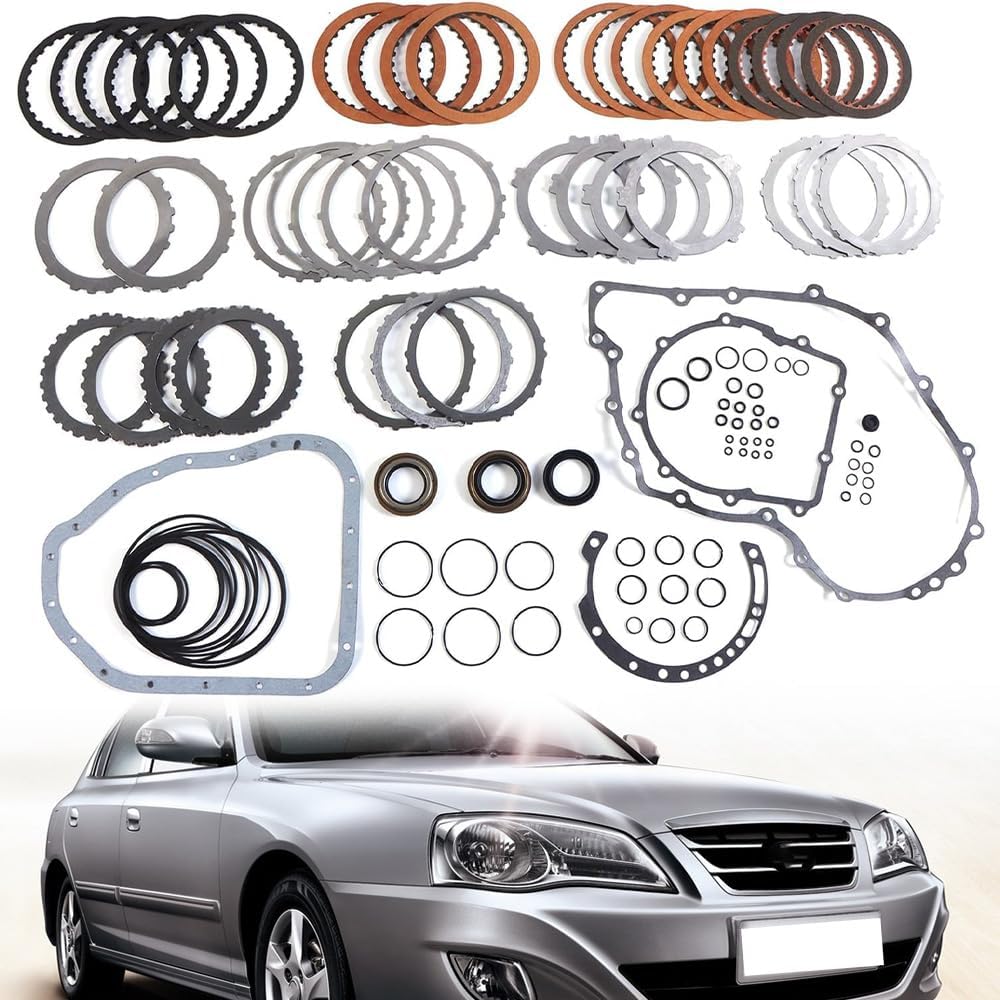
4. COPACHI Transmission Master Overhaul Rebuild Kit A4CF1/A4CF2
| Compatible transmission codes | A4CF1, A4CF2 |
|---|---|
| Vehicle application | Hyundai Elantra (models using A4CF1/A4CF2 4-speed) |
| Package includes | Rings, seals, gaskets, clutch plates |
| Brand | COPACHI |
This COPACHI rebuild kit groups the seals, gaskets, rings and clutch plates needed to overhaul A4CF1/A4CF2 four-speed transmissions used in Hyundai Elantra and related models. It is supplied as a master kit for a full teardown and rebuild, so a mechanic can replace internal wear items in one service rather than sourcing parts individually. The product description and included parts list point to factory-replacement fit and materials chosen for durability, and multiple buyer reviews report good quality. Practical benefits include reducing driveline leaks, restoring clutch pack engagement feel and extending the service life of an aging transmission. Expect to use this kit as part of a professional rebuild or a well-equipped DIY job; correct identification of the A4CF1/A4CF2 part number and careful reassembly are essential. The kit does not include labor, machining, or diagnostic services, and individual results depend on the condition of the case, torque converter and valve body which may require additional parts or machining.
Best for: A reliability-focused buyer who wants to restore a Hyundai Elantra’s aging 4-speed transmission with a single parts kit and prefers sourcing a complete, factory-replacement style solution for a thorough rebuild.
Less Ideal for: If you want a quick, low-effort fix or suspect major internal damage to the case, valve body or torque converter, this kit alone is not a sufficient solution and a remanufactured transmission or professional shop service may be a better choice.
- Comprehensive set of internal seals, gaskets and clutch plates for a full A4CF1/A4CF2 rebuild
- Marketed as factory-quality direct replacement components to restore transmission function
- Single kit simplifies parts sourcing for a complete rebuild job
- Positive owner feedback indicating good fit and part quality
- Does not include machining, valve body overhaul, or torque converter replacement that may be required for a full reliable rebuild
- Requires correct identification of A4CF1/A4CF2 to ensure compatibility with the vehicle
- Installation expects mechanical skill and appropriate tools, not a plug-and-play service
Verdict: A practical, all-in-one rebuild kit for restoring A4CF1/A4CF2 transmissions in Hyundai Elantras, but plan for additional work if the torque converter, valve body, or case need attention.
5. INGKAN A6GF1 Transmission Master Rebuild Kit with Filter

| Manufacturer | INGKAN |
|---|---|
| Item model number | AHM-QMP-I12D0479 A6GF1 |
| Compatible transmission | A6GF1 |
| Compatible vehicles | Hyundai Accent/Elantra, Kia Optima/Soul/Sportage (2011–2014 ranges listed) |
This INGKAN A6GF1 Master Rebuild Kit supplies the parts needed to repair an A6GF1 transmission without sourcing individual components. It is packaged as a single kit with gaskets, seals, clutch plates and a replacement transmission filter so a technician can perform an overhaul in one job. The product is intended for the Hyundai Elantra (2011–2014 1.8/2.0L) and related A6GF1-equipped models and is promoted as high-temperature resistant and easy to install. In practice the kit simplifies repair logistics, reduces downtime and typically costs much less than replacing the entire transmission. Important limitations are typical of rebuild kits: success depends on correct diagnosis and the condition of hard parts such as drums and bearings that are not replaced by this kit, and a careful rebuild is required to avoid leaks or premature wear. For a risk-averse buyer seeking to restore transmission function without major expense, this kit covers common service items in one package.
Best for: A risk-averse mainstream buyer looking to restore a Hyundai Elantra transmission to reliable operation without the expense of a full replacement and who prefers a single, ready-made parts package for a professional repair.
Less Ideal for: People planning a full performance rebuild or those whose transmission has severe internal damage will need a more extensive parts list or a remanufactured unit.
- Comprehensive kit includes filter, gaskets, seals and clutch components so you do not need to source parts separately
- Designed to match A6GF1 transmission covered on 2011–2014 Elantra models, simplifying fitment decisions
- Parts described as high-temperature resistant for longer service life under typical operating conditions
- One-package approach reduces repair time and overall cost compared with buying individual parts or a replacement transmission
- Kit does not replace worn metal components such as drums, bushings or bearings that may require additional parts or machining
- Effectiveness depends on correct diagnosis and competent installation by a trained mechanic
Verdict: A cost-effective, all-in-one rebuild kit for A6GF1 transmissions that streamlines repairs on 2011–2014 Elantra models but will not replace worn metal hardware.
Choosing the Right Hyundai Elantra Transmission Rebuild Kit: Key Factors to Consider
Fitment and Model-Year Specificity
Transmission designs and internal layouts can vary by engine, transmission code, and model year. Choosing a kit that explicitly matches your Elantra's transmission code or model-year range reduces the risk of missing or mismatched parts. A kit labeled for the correct transmission family helps ensure bolt patterns, sensor openings, and valve body interfaces line up.
If a kit is ambiguous about fitment, you may need to verify part numbers or contact the supplier. Correct fitment saves time during reassembly and reduces the chance of leaks or malfunction caused by incorrect gaskets or seals.
Component Completeness
A complete rebuild kit should include all wear items needed for a thorough job, such as seals, gaskets, O-rings, filter elements, and any recommended friction components. Kits that leave out commonly replaced items force you to source additional parts and can extend downtime.
Review the parts list carefully to confirm that the kit covers both sealing surfaces and hydraulic components. Comprehensive kits make the rebuild process more efficient and help ensure the transmission is returned to service without overlooked failure points.
Seal and Material Quality
Seals and gaskets are critical to maintaining hydraulic pressure and preventing fluid loss. High-quality elastomers resist swelling, hardening, and cracking when exposed to transmission fluid and temperature cycles. Pay attention to materials and manufacturing methods if available.
Low-quality seals can lead to recurring leaks and pressure loss, negating the benefit of other replacement parts. Durable materials extend service life and reduce the likelihood of follow-up repairs.
Included Friction and Wear Components
Friction plates, bands, and other wear components determine shift feel and long-term durability. Kits that include fresh friction materials or clutch components help restore proper engagement and reduce slippage. Verify whether the kit supplies the specific friction items your transmission design requires.
If friction parts are omitted, the transmission may continue to slip or shift poorly despite new seals and gaskets. Including these items in the kit supports a more complete mechanical restoration.
Documentation and Installation Support
Clear parts lists, installation diagrams, and torque specifications streamline the rebuild process and reduce errors. Kits that include step-by-step guidance or reference documentation are especially helpful for DIYers and shops unfamiliar with specific Elantra transmissions.
Good documentation shortens labor time, helps ensure correct assembly order, and lowers the chance of misinstalled components that can cause leaks or shifting faults.
Warranty and Return Policies
A reasonable warranty signals confidence in parts quality and provides recourse if a component fails prematurely. Check what the warranty covers and whether it requires professional installation or specific service records.
Return policies matter if a kit is discovered to be incomplete or incorrect for your transmission. Flexible return terms reduce the risk of being stuck with unusable parts after verifying fitment.
How We Chose the Best Hyundai Elantra Transmission Rebuild Kit
We focused on kits specifically built to match Hyundai Elantra transmission specifications and prioritized items that address typical failure modes. Key evaluation criteria included: fitment accuracy to ensure components match the Elantra's transmission layout; completeness of included parts such as seals, gaskets, and friction components; material quality for seals and friction materials; clarity of documentation and included instructions; and the extent of coverage for wear items versus optional upgrades.We excluded generic or universal kits that do not list explicit compatibility with Hyundai Elantra transmissions and any kits that only replace a single component without addressing related wear items. We also filtered out kits lacking clear parts lists or those with limited sealing or friction components, since incomplete kits often require additional purchases. The final list favors kits that help restore hydraulic integrity and mechanical function while minimizing the need for supplemental parts.
Our full evaluation process is outlined in our review methodology.
FAQ
What parts are typically included in a transmission rebuild kit for a Hyundai Elantra?
A typical kit includes seals, gaskets, O-rings, filter elements, and sometimes friction components like clutch plates or bands. The exact contents depend on the kit's scope. Always review the parts list to confirm coverage of common wear items and sealing surfaces before purchasing.
Can I rebuild a Hyundai Elantra transmission myself with a rebuild kit?
Many experienced DIYers can perform a rebuild if they have the proper tools, space, and a service manual. Rebuilding a transmission requires careful attention to clearances, torque specs, and hydraulic circuits. If you are uncertain, consulting a professional can help avoid costly mistakes.
How do I confirm the kit fits my Elantra's transmission?
Confirm fitment by matching the transmission code, model year range, and engine pairing listed for the kit to your vehicle's specifications. Cross-reference part numbers and inspect the parts list for items that align with your transmission's layout. When in doubt, seek clarification from the supplier or a qualified technician.
Is it necessary to replace friction components when doing a rebuild?
Replacing friction components is often recommended if there is evidence of wear or slippage. Seals and gaskets address leaks and pressure loss, but worn friction materials can continue to cause poor engagement. Assess clutch and band wear during teardown to decide if replacement is necessary.
What should I do if a rebuild kit is missing parts or the parts do not match?
Document the discrepancy and consult the supplier's support or return process. Avoid installing mismatched components. If you cannot obtain missing items promptly, consider sourcing correct parts separately or pausing the rebuild until you have the complete, correct kit.
Conclusion
A successful transmission rebuild for a Hyundai Elantra depends on selecting a kit that matches your transmission's fitment while providing complete, high-quality sealing and wear components. Prioritize kits that include necessary seals, gaskets, filters, and any worn friction parts to restore hydraulic integrity and shift quality.Weigh tradeoffs between completeness and material quality, and confirm documentation and warranty coverage before starting the job. Taking time to match the kit to your transmission code and inspect the parts list reduces the chance of follow-up repairs and helps achieve a longer-lasting rebuild.
Explore More:
- Check out all Hyundai Elantra parts & accessories
- Explore Transmission Rebuild Kits Maintenance & Repair Guides
- Explore Transmission & Drivetrain
- Browse all Auto Parts
