

Note: This article contains affiliate links. If you click on these links and make a purchase, I may earn a small commission at no extra cost to you. This helps support my research and content. Read my full affiliate disclosure here.
If you own a 1998-2002 Subaru Forester, choosing the right transmission fluid matters for shift quality, longevity, and avoiding costly repairs. Older Foresters have specific fluid requirements and tolerance for heat, so using a product formulated to match the vehicle's transmission type—automatic, manual, or clutch-driven transfer components—can preserve performance and reduce wear.This guide presents five shortlisted transmission fluids that suit the 1998-2002 Forester. We evaluated candidates for compatibility with Subaru specifications, friction characteristics, and long-term protection. Read on to see the criteria we used and practical advice for fluid selection and maintenance.
Looking for other parts? See all Subaru Forester parts & accessories.
Top Picks at a Glance
| Best Overall Transmission Fluid A balanced choice that meets shift quality and longevity needs | Subaru Automatic Transmission Fluid SOA427V1500 (Pack of 6) | 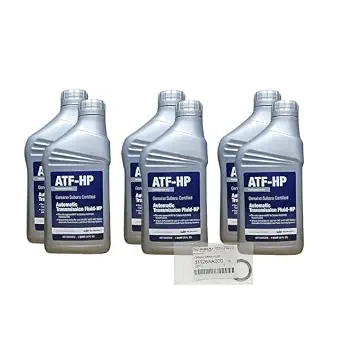 |
| Best Budget Transmission Fluid Low-cost, reliable fluid for routine service and basic maintenance | Valvoline MaxLife Multi-Vehicle Full Synthetic ATF 1 QT |  |
| Best Manual Transmission Gear Oil 75W‑90 GL‑4 manual trans fluid for stick-shift gearboxes | Subaru 75W-90 High Performance Gear & Transmission Fluid, 1 Quart |  |
| Best Full‑Synthetic ATF Premium full‑synthetic automatic fluid for improved thermal and wear resistance | Mobil 1 Synthetic Automatic Transmission Fluid, 1 Quart (Pack of 6) |  |
| Best Bulk / Gallon & Case Option Larger containers or multi‑quart cases for multiple services or shop use | Valvoline Import Multi-Vehicle Full Synthetic ATF, 1 Gallon |  |
1. Subaru Automatic Transmission Fluid SOA427V1500 (Pack of 6)
Best Overall Transmission Fluid

| Model Number | SOA427V1500 |
|---|---|
| Unit Count | 192 Fluid Ounces |
| Item Form | Liquid |
| Number of Items | 12 |
This factory Subaru ATF is a direct-fit fluid for non-CVT 4- and 5-speed Subaru automatic transmissions and can also be used in Subaru power steering systems. It is supplied as genuine Subaru HP fluid (SOA427V1500) in multiple bottles, making it convenient for routine fluid changes and top-offs. Using the specified fluid helps maintain the transmission's intended shift feel and protects internal components by delivering the manufacturer-recommended friction characteristics and oxidation resistance. For DIYers working on 1998–2002 Foresters this fluid simplifies maintenance because it avoids compatibility guesswork and matches the factory spec. The primary limitation is that it is only for non-CVT Subaru automatics and not suitable for CVT gearboxes, so confirm your vehicle's transmission type before buying. Also the product is sold in multiple bottles which may be more fluid than a single planned service requires, but it is useful for multiple jobs or long drain intervals.
Best for: DIY owners of 1998–2002 Subaru Forester who prioritize using the factory-recommended fluid to preserve shift quality and reduce maintenance uncertainty.
Less Ideal for: Those working on CVT-equipped Subarus or buyers who need a universal multi-vehicle fluid for different makes and transmission types.
- Genuine Subaru fluid formulated to match factory friction and shift characteristics
- Suitable for non-CVT 4- and 5-speed Subaru automatic transmissions and power steering systems
- Pack quantity provides enough fluid for multiple services or full transmission fills
- Manufacturer formulation helps resist oxidation and support longer service life
- Not compatible with CVT transmissions
Verdict: For DIYers who want the safest, all-around transmission fluid that balances smooth shifting, oxidation resistance, and long service life.
2. Valvoline MaxLife Multi-Vehicle Full Synthetic ATF 1 QT
Best Budget Transmission Fluid

| Material | Synthetic |
|---|---|
| Liquid Volume | 1 Quarts |
| Flash Point | 394 Degrees Fahrenheit |
| Recommended Uses | Automatic Transmission Fluid Replacement, CVT Transmissions, Preventing Leaks |
Valvoline MaxLife Multi-Vehicle ATF is a full synthetic automatic transmission fluid designed as a broad-fit option for light-duty vehicles. It is used like any ATF: drain and refill or top off during routine service to help maintain smooth gear engagement and protect internal components. The formula includes anti-wear and seal-conditioning additives intended to reduce leaks and slow wear, plus thermal and viscosity stability that help the fluid hold up under varied temperatures. For a cost-conscious DIY mechanic, it provides dependable performance in vehicles that accept a multi-vehicle ATF and can help restore firmer shifting in older transmissions. Limitations: it is a generic multi-vehicle product rather than a transmission-specific fluid tuned to a particular factory spec, so when a Subaru Forester explicitly requires a specific ATF or a Subaru-approved fluid, verify compatibility first; also advanced race or heavy-duty towing applications may need a specialized fluid.
Best for: DIY mechanics prioritizing an affordable, factory-quality replacement that improves shifting and protects aging transmissions in light-duty vehicles.
Less Ideal for: Owners seeking a Subaru-specific certified fluid, drivers who do frequent heavy towing, or those needing fluids for performance or race engines should consider a vehicle-specific or heavy-duty product instead.
- Full synthetic base offers improved thermal and viscosity stability over conventional ATF
- Seal conditioning additives help reduce and prevent minor leaks in aging transmissions
- Anti-wear chemistry supports longer transmission life and smoother shifting
- Formulated for use in a wide range of light-duty automatic and many CVT applications
- Not tailored to a single manufacturer specification so you must confirm compatibility with Subaru requirements
Verdict: For cost-conscious DIY mechanics needing an affordable, dependable fluid that restores shifting and protects gears without premium additives.
3. Subaru 75W-90 High Performance Gear & Transmission Fluid, 1 Quart
Best Manual Transmission Gear Oil
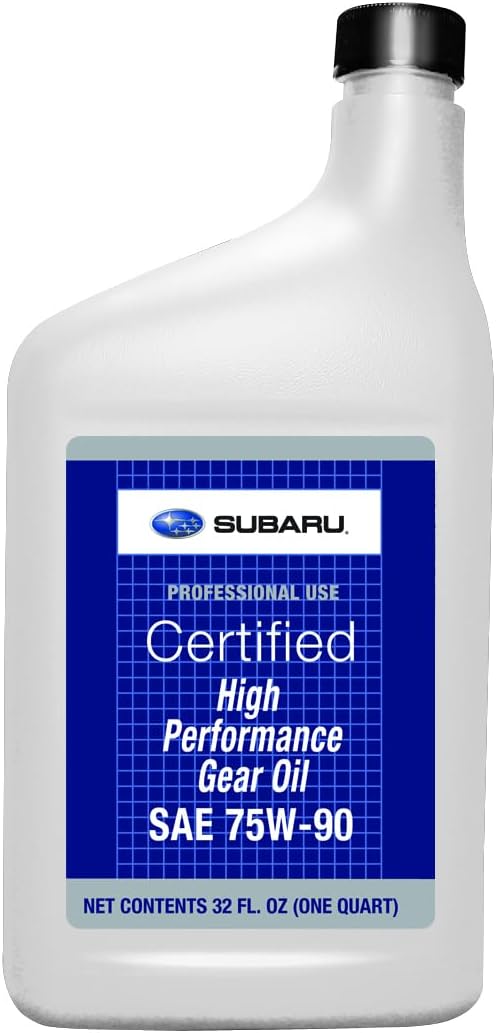
| Viscosity | 75W-90 |
|---|---|
| Material | Synthetic |
| Liquid Volume | 1 Quarts |
| SAE J300 Viscosity Grade | 75W-90 |
This Subaru 75W-90 High Performance gear and transmission fluid is the factory-formulated synthetic oil intended for manual transmissions and differentials that call for 75W-90 viscosity. It is commonly used during routine gearbox service or when refreshing the fluid in higher-mileage manual transmissions to improve shift feel and reduce the 3-4 shift grind reported in some Subaru five-speed gearboxes. The formula includes the additive characteristics Subaru specifies, so it provides reliable gear protection, consistent viscosity across temperature ranges, and smoother shift engagement compared with worn or generic fluids. Packaged in a 1-quart bottle it is convenient for topping off or full flushes on smaller gearboxes. The main limitation is the single-quart packaging if you need larger service volumes, and you should confirm compatibility with the specific 1998-2002 Forester gearbox spec before use.
Best for: Technically minded owners and independent mechanics servicing manual gearboxes who prioritize using the factory-recommended viscosity and additive profile to restore smooth shifting and protect gears.
Less Ideal for: Shoppers who need bulk quantities for multiple services or fleet maintenance should choose larger drum sizes or shop for economy volumes.
- Factory-formulated for Subaru manual transmissions and differentials
- Synthetic 75W-90 viscosity for stable performance across temperatures
- Reported to reduce common 3-4 shift grind in higher-mileage five-speed gearboxes
- Available in a convenient 1-quart bottle for topping off or small services
- Single-quart size may be impractical for complete services that require larger volumes
Verdict: For anyone servicing a manual gearbox who needs the correct gear oil viscosity and additive package for smooth shifting and gear protection.
4. Mobil 1 Synthetic Automatic Transmission Fluid, 1 Quart (Pack of 6)
Best Full‑Synthetic ATF

| Material | Synthetic |
|---|---|
| Unit Count | 192.0 Fluid Ounces |
| SAE J300 Viscosity Grade | 0W-16 |
| Manufacturer | Mobil 1 |
Mobil 1 Synthetic ATF is a full‑synthetic transmission fluid designed to resist thermal breakdown and keep gear trains clean. It is typically used as a factory‑quality replacement during scheduled transmission service or when refreshing fluid that has been stressed by towing, heavy city traffic, or spirited driving. Key features include high viscosity index for stable film at high temperatures, detergent action to limit deposits, and low‑temperature flow down to very cold ambient conditions. In practice that means smoother shifting, reduced wear on clutch packs and bands, and more consistent hydraulic control under load. The product comes in quart bottles sold as a multi‑pack making it convenient to service a transmission without mixing different fluids. Limitations: compatibility with Subaru transmissions depends on the vehicle manufacturer specification and required fluid type, so confirm that the Subaru Forester 1998–2002 service manual or dealer recommends a full‑synthetic ATF with the same spec before use.
Best for: A mechanic who prioritizes long‑term transmission durability and needs a synthetic ATF that maintains film strength under heat and heavy use in a 1998–2002 Subaru Forester.
Less Ideal for: Drivers who must use a specific factory‑specified fluid type that is not synthetic or who prefer dealer‑recommended branded fluids without cross‑reference; not intended for users unwilling to verify spec compatibility.
- Full synthetic formulation for high thermal and oxidative stability
- Detergent and deposit control to help maintain transmission cleanliness
- Designed to provide wear protection for clutch packs and bands
- Good low‑temperature flow for reliable lubrication in cold starts
- Must be matched to Subaru Forester 1998–2002 manufacturer fluid specification before use
Verdict: For mechanics who want a synthetic ATF that resists breakdown under heat and provides superior wear protection for automatic transmissions.
5. Valvoline Import Multi-Vehicle Full Synthetic ATF, 1 Gallon
Best Bulk / Gallon & Case Option
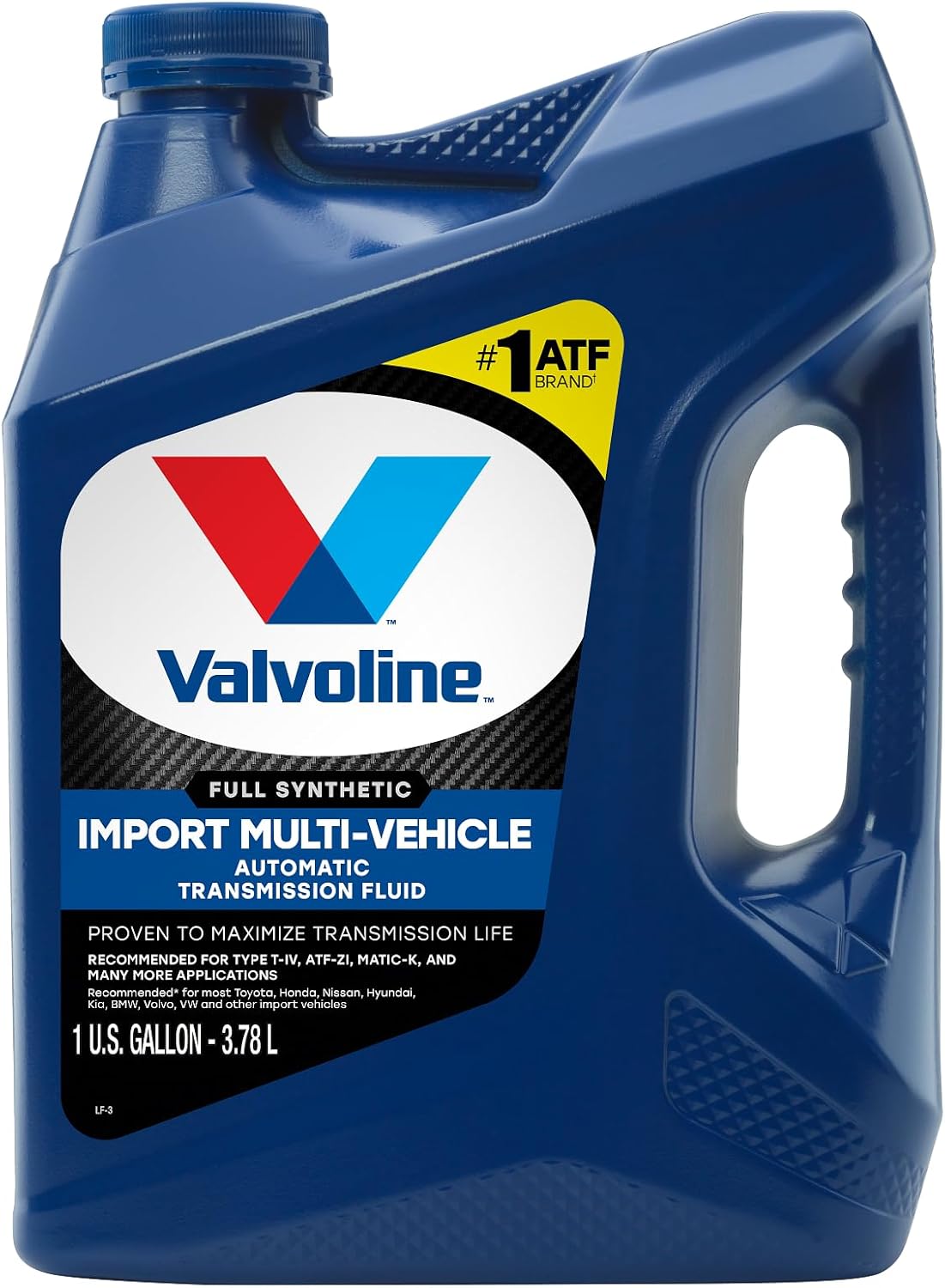
| Unit Count | 128 Fluid Ounces |
|---|---|
| Item Type Name | Automatic Transmission Fluid |
| Flash Point | 390 Degrees Fahrenheit |
| Material | Polytetrafluoroethylene |
Valvoline Import Multi-Vehicle ATF is a full-synthetic gallon designed for frequent fluid changes in DIY and home-shop settings. It is formulated with advanced additives for anti-shudder protection, improved viscosity stability, and anti-wear performance, which helps smoother shifts and longer fluid life compared with conventional ATF. Typical use is topping or replacing transmission fluid during routine maintenance or an ATF service; buying a gallon keeps per-service cost down versus single-quart bottles. Notable features include compatibility with many import transmission specifications and a high flash point for better thermal resistance. Practical benefits for a 1998–2002 Subaru Forester include more stable flow at low temperatures and protection against heat-related breakdown during spirited driving or towing. Limitations: the label covers many vehicle types rather than Subaru-specific formulations, so always confirm your Forester’s owner manual specification before use; this product lists suitability for a broad range of import applications but does not explicitly name Subaru specifications for those model years. For frequent fluid changes the gallon format is economical, but confirm compatibility for your Forester’s transmission type before committing to a full-gallon service.
Best for: DIYers or small home shops that perform regular transmission fluid changes and prioritize the lowest per-service cost and ready on‑hand supply.
Less Ideal for: Owners who prefer a transmission fluid specified explicitly by Subaru for those model years or who need a fluid verified for an unusual or modified transmission should choose a model-specific fluid.
- Full-synthetic formulation for better thermal stability and longer fluid life
- Gallon container reduces cost per service for frequent DIY changes
- Formulated with anti-shudder and anti-wear additives to support smoother shifting
- High flash point for improved resistance to heat-related breakdown
- Not explicitly labeled to Subaru transmission specifications for 1998–2002 Forester models
Verdict: For DIYers or home shops that change fluid often and want the best per‑service price by buying gallons or multi‑quart cases.
Choosing the Right 1998-2002 Subaru Forester Transmission Fluid: Key Factors to Consider
Compatibility With Subaru Specifications
Matching the fluid to Subaru's specified type and performance requirements is the first priority when working on a 1998-2002 Forester. Using the wrong class of fluid can change shift feel, accelerate wear, or cause hydraulic control problems. Always verify the transmission type in your vehicle—automatic, manual, or transfer case—and select a fluid that lists compatibility with Subaru or meets equivalent specification levels.
Compatibility also matters because Subaru used different recommended fluids across production years and gearbox variants. A fluid that explicitly lists suitability for older Subaru gearboxes or cites the correct spec helps avoid surprises during service and ensures the fluid's friction characteristics align with factory clutch materials.
Friction Characteristics And Shift Quality
Friction modifiers and additive balance determine how smoothly gears and clutch packs engage and disengage. For automatic transmissions, the right friction profile yields consistent shift timing and prevents hunting or slippage. For manual gearboxes and synchronizers, proper friction control helps avoid grinding and extends synchronizer life.
When assessing fluids for a Forester from 1998 to 2002, consider products that document stable friction performance across temperature ranges. Fluids that maintain their friction character as they age will keep shift quality predictable between services.
Viscosity And Shear Stability
Viscosity affects hydraulic pressure, lubrication film thickness, and gear protection. Older Subaru transmissions rely on fluids that maintain target viscosity under shear to prevent pressure loss and premature wear. Shear stability indicates a fluid's resistance to mechanical breakdown when exposed to repeated gear and pump shear forces.
Choose a fluid with proven viscosity retention and shear resistance so the Forester's transmission preserves correct clearances and hydraulic operation over time. This is especially important for owners who tow, drive in hilly terrain, or operate in warmer climates where fluid breakdown risk increases.
Thermal And Oxidation Resistance
Heat accelerates chemical breakdown of transmission fluids, which reduces protective additives and can form harmful deposits. For the 1998-2002 Forester, fluids with strong thermal stability and oxidation inhibitors will resist varnish and sludge formation that impair valve bodies and clutch surfaces.
A fluid engineered for oxidative stability extends useful service life and protects internal parts from deposit-induced wear. This benefit is valuable in older vehicles where deposit buildup can exacerbate existing clearances and wear patterns.
Seal Compatibility And Corrosion Protection
Older seals, gaskets, and couplings in a late 1990s to early 2000s Forester can be sensitive to aggressive chemistries. Fluid formulations that include seal conditioners help maintain pliability and reduce the likelihood of leaks developing after a change.
Additionally, corrosion inhibitors protect internal metal surfaces and clutch hardware from rust and pitting. When evaluating fluids for this vehicle, favor formulations that explicitly address seal and corrosion protection to support longevity and reduce maintenance risks.
Service Life And Change Interval Guidance
Understanding a fluid's recommended service interval and how its protective properties hold up over time affects maintenance planning. Some formulations are designed for longer drain intervals while others are optimized for frequent refresh when aiming for maximum protection.
For a 1998-2002 Forester, match the fluid's service guidance to your driving habits. If the vehicle sees severe use, shorter intervals with a robust fluid may be preferable. If you prefer extended intervals, prioritize fluids with documented stability and published performance under extended-service testing.
Automatic Versus Manual Transmission Considerations
Identify whether your Forester has an automatic or manual transmission before selecting a fluid. Automatics require fluids balanced for clutch pack operation and hydraulic control, while manuals and synchronizer systems depend on different friction properties and often thicker base oils.
- Confirm your transmission type by checking the owner's manual or service sticker.
- For automatic transmissions, prioritize fluids specifying automatic transmission use and friction stability.
- For manual gearboxes, look for products formulated for gear oil or manual transmission service with synchronizer-friendly additives.
How Climate And Driving Style Affect Fluid Choice
Ambient temperature and driving demands influence which transmission fluid will serve your Forester best. In cold climates, fluids that flow readily at low temperature improve cold-start lubrication and shift responsiveness. In hot climates or heavy-use scenarios, fluids with higher thermal stability and shear resistance are important to retain viscosity and protect components.
- Cold regions benefit from lower pour point and rapid circulation characteristics.
- Hot or towing-heavy use favors fluids with strong oxidation and thermal resistance.
- Frequent city driving with stop-and-go traffic increases thermal cycling and makes stability a priority.
When To Perform A Transmission Fluid Change
Regular fluid changes are one of the most effective ways to protect an aging Forester transmission. The right interval depends on the fluid chosen and your driving habits. For typical driving, follow the vehicle manufacturer's interval guidance when available; for severe or heavy-duty use, shorten the interval to protect internal parts.
- Inspect fluid for darkening, strong odor, or metal particles as signs it's time to change.
- Perform a fluid and filter change if you notice slipping, delayed shifts, or unusual noises.
- Document service dates and fluid types so future maintenance remains consistent.
DIY Servicing Tips For Forester Owners
If you plan to change the transmission fluid yourself, prepare by confirming the correct fluid type and gathering the required tools and filter parts. Work on a level surface and warm the vehicle slightly to improve fluid flow during a drain. Collect the old fluid for proper disposal according to local regulations.
- Use the factory-recommended fill and check procedure to avoid overfilling.
- Replace the transmission filter or drain plug crush washer if applicable.
- After service, cycle the transmission through gears and check for leaks and correct fluid level at operating temperature.
Signs Of Transmission Fluid Problems To Watch For
Early detection of fluid-related issues can prevent more extensive transmission damage. Watch for symptoms such as inconsistent shift timing, slipping under load, whining or grinding noises in manual transmissions, or visible fluid leakage under the vehicle. These signs often point to fluid contamination, breakdown, or insufficient level.
- Delayed or harsh shifts may indicate degraded friction properties.
- Grinding in a manual gearbox can signal synchronizer or lubricant issues.
- Burnt smell or very dark fluid color often indicates thermal breakdown.]
Still looking for the perfect fit?
Select your Subaru Forester configuration to see the most relevant Transmission Fluids recommendations
How We Chose the Best 1998-2002 Subaru Forester Transmission Fluid
We focused on fluids that meet or exceed the specifications relevant to 1998-2002 Subaru Forester transmissions and that offer practical benefits for owners of older vehicles. Evaluation prioritized compatibility with Subaru transmission requirements, friction and shear stability for consistent shift feel, and additive chemistry that protects gear surfaces and synchronizers over extended service intervals.Other criteria included thermal stability to resist breakdown under load and aging, and viscosity retention to maintain proper fluid pressure and lubrication. We also considered corrosion and seal-conditioning properties to help prevent leaks in older seals, plus manufacturer or industry approvals that indicate the fluid was formulated for similar transmissions.Products lacking clear compatibility information with the Forester's transmission type, fluids designed exclusively for modern CVT systems incompatible with older gearsets, or formulations without documented performance data were excluded. The result is a focused list reflecting compatibility, protection, and real-world durability for the 1998-2002 Subaru Forester.
Our full evaluation process is outlined in our review methodology.
FAQ
How often should I change transmission fluid in a 1998-2002 Subaru Forester?
It depends on driving conditions and the fluid used. For normal driving, following Subaru's maintenance schedule is appropriate. For severe use, shorter intervals are recommended. Also inspect fluid condition periodically for signs of breakdown.
Can I use an ATF specified for newer vehicles in my 1998-2002 Forester?
Sometimes newer ATF formulations are compatible, but you must confirm they meet the Forester's required specifications and friction characteristics. Using a fluid without documented compatibility can change shift feel or harm components.
Is automatic transmission fluid different from manual transmission fluid for my Forester?
Yes. Automatic transmission fluids are formulated for clutch packs and hydraulic control, while manual gearbox fluids focus on gear lubrication and synchronizer performance. Use the type specified for your transmission.
Will switching to a longer-life fluid harm my older Forester transmission?
Not usually, if the fluid meets the vehicle's compatibility and friction requirements. The key is verifying the formulation is suitable for your transmission type and that seals and materials in an older vehicle tolerate the chemistry.
Can I top up transmission fluid instead of doing a full change?
Topping up can address low level quickly, but it does not restore degraded additives or remove contaminants. A full drain and refill or flush is preferable if the fluid is dark, smells burnt, or the vehicle shows shifting issues.
Final Verdict
Prioritize fluids that match Subaru specifications, provide stable friction characteristics, and offer strong thermal and shear stability when choosing transmission fluid for a 1998-2002 Forester. Consider your climate and driving demands, and plan service intervals that reflect how you use the vehicle. With the right fluid and consistent maintenance you can keep shifting smooth and reduce the risk of larger transmission problems, helping you maintain reliable operation in an older Forester.
Explore More:
- Check out all Subaru Forester parts & accessories
- Explore Fluids & Chemicals
- Browse all Accessories
