

Note: This article contains affiliate links. If you click on these links and make a purchase, I may earn a small commission at no extra cost to you. This helps support my research and content. Read my full affiliate disclosure here.
Maintaining the manual transmission in your Nissan Frontier matters for smooth shifts, long-lasting gears, and predictable drivability. Choosing the right transmission fluid affects clutch feel, synchronizer performance, and internal wear more than most owners realize. This guide rounds up the top manual transmission fluids suited to the Nissan Frontier Manual configuration and explains the practical tradeoffs you should consider.Each product here was shortlisted for compatibility with manual gearboxes and for delivering measurable benefits in friction control and thermal stability. Below we outline the testing and selection criteria, then cover what to look for so you can pick the right fluid for your driving style and service schedule.
Looking for other parts? See all Nissan Frontier parts & accessories.
Top Picks at a Glance
| Best Overall Transmission Fluid The best all-around transmission fluid for most manual-transmission needs | Nissan Genuine 75W-85 Manual Transmission Fluid (1 qt) |  |
| Best Budget Transmission Fluid A reliable low-cost fluid that covers basic protection and shifting | Valvoline Synchromesh Manual Transmission Fluid, 1 Quart |  |
| Best Premium Transmission Fluid Higher-end formulations offering superior protection and extended service life | Red Line MT-85 75W-85 GL-4 Manual Transmission Gear Oil, 1 Quart |  |
| Best Synthetic Transmission Fluid Full-synthetic formula for improved temperature performance and durability | Motul Gear 75W85 Technosynthese Manual Transmission Fluid, 1 L |  |
| Best GL-4 Transmission Fluid A fluid formulated to the GL-4 gear oil specification for manuals | Red Line MT-90 75W-90 GL-4 Manual Transmission and Transaxle Lubricant – 1 Quart (4 Pack) |  |
1. Nissan Genuine 75W-85 Manual Transmission Fluid (1 qt)
Best Overall Transmission Fluid

| Material | Mineral Oil |
|---|---|
| Liquid Volume | 1 Quarts |
| Item Form | Liquid |
| GL Rating | GL-4 |
This genuine Nissan 75W-85 manual transmission fluid is a mineral-oil based, factory-specified lubricant intended for manual gearboxes that require a GL-4 friction rating. It is typically used for drain-and-fill service or top-ups during routine maintenance and is the same formulation Nissan engineered for its manual transmissions. The fluid's GL-4 rating helps protect gear teeth and synchromesh components by providing appropriate frictional properties, and its stable formulation supports corrosion resistance and smooth shifting under everyday driving conditions. Because it is a direct-match, factory-quality fluid there is little guesswork about compatibility with Nissan gearboxes that specify 75W-85. The primary limitation is that it is a single-quart retail packaging and mineral-based, so technicians doing full-capacity services may need multiple bottles and those seeking synthetic-based fluids for extended drain intervals should look elsewhere.
Best for: Buyers who want a factory-quality, no-guesswork fluid for routine manual-transmission maintenance on Nissan vehicles and prioritize compatibility and consistent shifting feel.
Less Ideal for: Drivers seeking synthetic fluids for extended drain intervals or technicians who prefer bulk packaging for frequent shop service should consider alternative formats or formulations.
- Factory-formulated to match Nissan manual transmission requirements
- GL-4 rating suitable for protecting gears and synchronizers
- Stable mineral-oil formula for dependable everyday shifting
- Sold in a convenient 1-quart bottle for easy drain-and-fill service
- Mineral-oil based rather than synthetic, so it may have shorter recommended drain intervals
Verdict: The best all-around transmission fluid balances friction performance, corrosion protection, thermal stability, and longevity to suit most everyday manual-transmission use.
2. Valvoline Synchromesh Manual Transmission Fluid, 1 Quart
Best Budget Transmission Fluid

| Material | Synthetic |
|---|---|
| Item Type Name | Manual Transmission Fluid |
| Liquid Volume | 1 Quarts |
| Flash Point | 390 Degrees Celsius |
Valvoline Synchromesh Manual Transmission Fluid is a synthetic MTF designed to keep manual gearboxes shifting smoothly while protecting gears under load. It is typically used as a top-up or service fill for manual transmissions that require API GL-4 level fluids and is formulated to maintain synchronizer performance, resist foaming, and offer thermal stability in a range of temperatures. In practical terms this means easier, more consistent shifting and better protection against pitting and wear during everyday driving and towing. The 1 quart bottle is convenient for DIY maintenance and the formula cites compatibility with several GM and Chrysler part numbers while meeting GL-4 standards that are commonly acceptable for many manual transmissions. Limitations: it is a single-quart retail package so you may need multiple bottles for a full drain and fill, and the product literature references specific OEM part numbers rather than vehicle-specific approvals for every make.
Best for: Cost-conscious DIYers who need a reliable GL-4 synthetic fluid for routine manual transmission maintenance on a Nissan Frontier and prioritize smooth shifting and wear protection over brand-specific approvals.
Less Ideal for: Owners seeking a factory-specified Nissan-branded fluid or those who prefer bulk quantities for multiple services should consider other options.
- Full synthetic formula provides improved thermal stability and cold-flow properties
- Formulated to protect synchronizers for smoother shifting
- Meets API GL-4 and references common OEM part numbers for compatibility
- Sold in a 1 quart bottle that is convenient for DIY top-ups
- One-quart size may require multiple bottles for a full transmission service
- Compatibility is described via part numbers rather than an explicit Nissan Frontier listing
Verdict: The best budget transmission fluid gives dependable wear protection and smooth shifting at a low price, ideal for cost-conscious DIYers or routine maintenance.
3. Red Line MT-85 75W-85 GL-4 Manual Transmission Gear Oil, 1 Quart
Best Premium Transmission Fluid

| Viscosity | 5w-30 |
|---|---|
| Unit Count | 32 Fluid Ounces |
| Material | Polyol Ester |
| Specific Uses For Product | Manual transmission, differential, transfer case |
Red Line MT-85 is a polyol ester synthetic gear oil designed for manual transmissions, final drives, and transfer cases that call for GL-4 lubrication. It is typically used where smooth, positive shifts and long synchro life matter, such as performance or enthusiast-driven manual gearboxes. The formula avoids the reactive sulfurs found in many GL-5 formulations, making it safe for brass synchros and compatible with vehicles specified for GL-1, GL-3, and GL-4 fluids. Benefits include strong anti-wear protection, stable friction characteristics that help quicker shifts even in cold conditions, and thermal resistance that supports longer drain intervals under demanding use. Practical limits are that its 75W-85 viscosity and GL-4 chemistry target manual transmissions specifically, so it is not a universal fluid replacement for GL-5 differentials or some modern factory-specified gear lubes; always check your Frontier manual requirements. Packaged in a quart bottle, it suits DIY top-offs and individual service needs rather than bulk shop fills.
Best for: Buyers who prioritize long-term transmission protection and smoother shifts and are willing to pay for a premium synthetic gear oil for performance-oriented manual gearboxes.
Less Ideal for: Those seeking a universal gear oil for hypoid differentials or anyone who must use a specified GL-5 factory lubricant should consider a different product.
- Synthetic polyol ester base for high thermal stability and shear resistance
- Formulated GL-4 chemistry that is safe for brass synchros and synchronizer systems
- Balanced friction properties that promote smoother, quicker shifts even at low temperatures
- Suitable for multiple manual transmission and transfer case applications listed by manufacturers
- Not intended as a drop-in replacement for GL-5 differentials or applications that explicitly require GL-5 chemistry
Verdict: The best premium transmission fluid is for buyers willing to pay more for enhanced thermal stability, superior anti-wear additives, and longer change intervals.
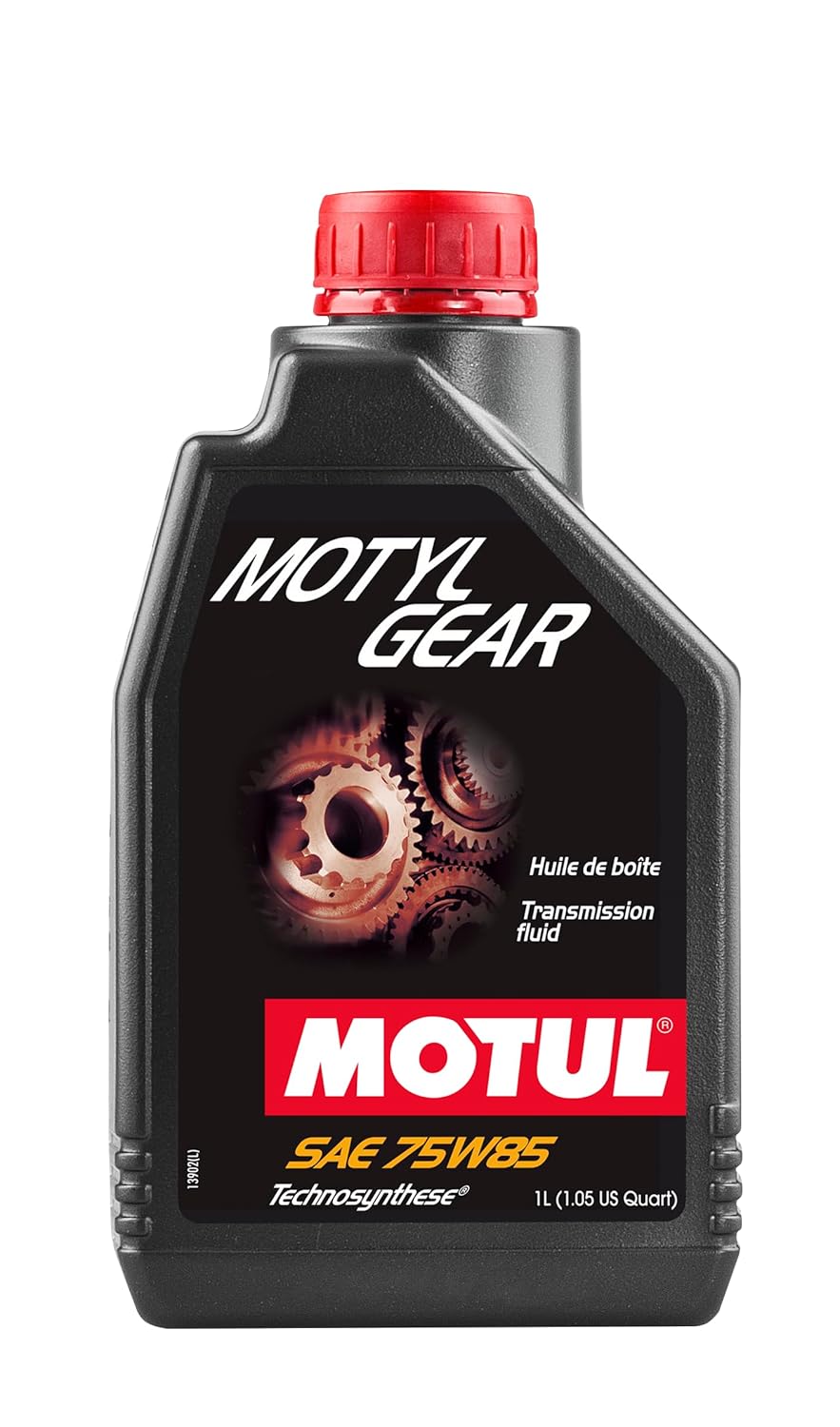
4. Motul Gear 75W85 Technosynthese Manual Transmission Fluid, 1 L
Best Synthetic Transmission Fluid
| Viscosity | 75w-85 |
|---|---|
| Unit Count | 33.81 Fluid Ounces |
| Item Form | Oil |
Motul Gear 75W85 is a technosynthese synthetic gear oil aimed at manual transmissions that require GL-4 performance. It is used as a fill or service fluid in synchronized manual gearboxes to improve shift feel and protect gears, bearings, and synchronizers. The formula emphasizes smoother, more precise gear engagement and stable viscosity across a wide temperature range, which helps cold starts and high-heat operation. Motul also claims enhanced resistance to oxidation, foaming, and corrosion, supporting cleaner internals and longer service intervals. For drivers who want a synthetic-level upgrade over conventional oils, it delivers reduced friction and solid wear protection without changing shift characteristics dramatically. Limitations are that it is specified as a GL-4 product, so it should be chosen only where GL-4 compatibility is required, and a 1 liter bottle means you may need multiple bottles for a full drain and fill on many transmissions.
Best for: Drivers seeking a synthetic-level manual transmission fluid that improves shift feel and extends component life in synchronized gearboxes while prioritizing temperature stability and wear protection.
Less Ideal for: Anyone needing a GL-5 or limited-slip specific fluid or those who prefer bulk quantities for frequent fluid changes should look elsewhere.
- Technosynthese base delivers better high- and low-temperature stability than conventional mineral oils
- Formulated to improve synchronizer performance for smoother, more precise shifting
- Meets API GL-4 specification suitable for synchronized manual gearboxes
- Resists oxidation, foaming, and corrosion to help keep internals clean
- GL-4 formulation may not be appropriate where GL-5 or different friction characteristics are specified
Verdict: The best synthetic transmission fluid uses synthetic base stocks and advanced additives to deliver better high- and low-temperature performance, reduced wear, and longer fluid life.
5. Red Line MT-90 75W-90 GL-4 Manual Transmission and Transaxle Lubricant – 1 Quart (4 Pack)
Best GL-4 Transmission Fluid

| Viscosity | 75W-90 |
|---|---|
| SAE Grade | 75W-90 |
| Material | Synthetic |
| Unit Count | 128 Fluid Ounces |
| Number of Items | 4 |
Red Line MT-90 is a full-synthetic 75W-90 GL-4 gear oil designed for manual transmissions and transaxles that need GL-4 friction characteristics. It is typically used when a gearbox calls for GL-1, GL-3, or GL-4 fluids or when a factory-style synchromesh oil is recommended. The formulation protects gears from wear, is safe for brass synchronizers because it avoids the reactive sulfurs found in many GL-5 oils, and promotes smoother, less notchy shifts even in cold conditions thanks to its synchronizer-friendly friction properties. Packaged as four 1-quart bottles, it suits DIY maintenance or multi-service needs. Limitations include that this product is targeted at transmissions specifying GL-4 chemistry and is not intended where GL-5 or limited-slip formulations are required. Also, buyers should confirm viscosity and manufacturer recommendations for their specific vehicle before switching fluids.
Best for: Drivers and DIY mechanics who need a synchromesh-friendly GL-4 fluid for manual transmissions and prioritize smooth shifting and long synchro life.
Less Ideal for: Drivers whose vehicle or aftermarket differential specifies GL-5, limited-slip additives, or a different viscosity grade should choose a fluid matched to those requirements.
- Full-synthetic 75W-90 formulation for stable protection across temperatures
- GL-4 chemistry safe for brass synchronizers and designed to preserve synchro life
- Improves shift quality and reduces notchy shifting, including when cold
- Sold as a 4-pack of 1-quart bottles, convenient for multiple services
- Not suitable where GL-5 or specific limited-slip gear oils are required
Verdict: The best GL-4 transmission fluid is targeted at manual gearboxes that require GL-4 friction and EP characteristics to protect gears and synchronizers without causing clutch slip.
Choosing the Right Nissan Frontier Manual Transmission Fluid: Key Factors to Consider
Viscosity And Temperature Performance
Viscosity determines how the fluid flows at different temperatures and directly influences shift feel and component lubrication.
A fluid that is too thick when cold can result in stiff shifts and reduced clutch responsiveness, while a fluid that thins excessively at high temperatures may provide inadequate film strength and increase wear. For the Nissan Frontier Manual, consider fluids rated to hold viscosity across both cold starts and heavy-load, high-heat conditions such as towing. Look for published viscosity grades and information on shear stability so the fluid maintains protective thickness over time.
Friction Characteristics And Synchronizer Compatibility
Friction modifiers and the base friction profile affect how synchronizers match gear speeds and how the clutch feels during engagement.
If a fluid has inappropriate friction properties it can cause grinding, vague shifts, or accelerated synchronizer wear. Fluids formulated for manual transmissions often aim for a balance that enables crisp, positive shifts without becoming grabby. When selecting fluid for a Nissan Frontier Manual, prioritize products that list manual transmission or synchronizer compatibility and describe their friction behavior.
Wear Protection And Additive Package
Wear-reducing additives such as anti-wear agents and extreme-pressure components protect gear teeth and bearings under load.
Transmissions experience high contact pressures, so the additive chemistry should provide a durable protective film to resist metal-to-metal contact. A robust additive package also helps reduce micro-pitting and scoring over long service intervals. For a Nissan Frontier used for hauling or frequent towing, prioritize fluids with proven anti-wear and EP properties to preserve gear life.
Seal Compatibility And Corrosion Resistance
Chemical compatibility with seals and internal components prevents leaks and premature seal degradation.
Some fluids contain detergents or alcohol-based additives that can harden or swell certain elastomers. Choosing a fluid formulated for manual transmissions helps ensure compatibility with common seal materials in the Nissan Frontier Manual. Additionally, corrosion inhibitors protect internal bearings and synchronizers from moisture-related damage during infrequent use or seasonal storage.
Service Life And Oxidation Stability
Oxidation stability influences how long a fluid retains its protective properties under heat and oxygen exposure.
Fluids that oxidize quickly will form varnish or sludge, increasing friction variability and accelerating component wear. Consider manufacturer-recommended change intervals and look for fluids that claim extended life or demonstrate resistance to thermal breakdown. For owners who prefer longer drain intervals or who subject their Frontier to hard use, better oxidation stability translates to more consistent protection between services.
OEM Specifications And Fitment
Matching the vehicle maker's specifications ensures proper performance and reduces risk of compatibility issues.
Even within manual transmissions, recommendations may list specific fluid characteristics or specification numbers. Confirm that any fluid you consider either meets Nissan's manual transmission requirements for the Frontier Manual configuration or lists compatibility cues used by Nissan. Using a fluid aligned with OEM guidance helps maintain intended shift quality and service intervals.
When To Change Manual Transmission Fluid
Planned fluid changes are a key part of transmission care. For many manual transmissions, change intervals vary with use. Severe duty such as frequent towing, heavy off-road use, or consistent stop-and-go commuting tends to accelerate contamination and additive depletion.
Watch for practical signs that a change is due: noisier gear engagement, inconsistent shift feel, or a gritty drain plug metal reading during service. If you perform routine inspections, sampling the fluid for color and odor provides an early indicator; dark or burnt-smelling fluid signals degraded oil that should be replaced.
- Normal driving: follow factory-recommended intervals or inspect fluid condition periodically
- Towing/heavy duty: shorten intervals and check for overheating signs
- High-mileage vehicles: consider more frequent changes and inspections
DIY Fluid Change Tips For The Frontier Manual
A drain-and-fill for the manual gearbox is often straightforward but requires the right tools and clean procedures. Park on level ground, support the vehicle safely, and let the transmission reach operating temperature for easier draining. Use a proper drain pan and avoid mixing fluids by thoroughly cleaning the fill area before refilling.
Record the fluid quantity removed and replace with the correct volume and specification. Use fresh gaskets or crush washers where applicable, and torque drain and fill plugs to factory specs. After refilling, cycle the gearbox through the gears to distribute fluid, then recheck the level per the service manual procedure.
- Warm up the vehicle to thin the fluid for easier draining
- Use a funnel or pump to avoid spills when refilling
- Always verify final fluid level with the gearbox at the correct temperature
How Driving Style Affects Fluid Choice
If you frequently launch aggressively, tow, or drive in mountainous terrain, the thermal and shear demands on the fluid increase. Those conditions favor a formulation with higher thermal stability and strong anti-wear properties to resist breakdown under load.
Conversely, for primarily city commuting with gentle shifting, fluids that prioritize smooth friction behavior and easy cold shifting may be more desirable. Match the fluid to the typical stress levels your Frontier experiences to maximize protection and shift quality.
- Aggressive driving: prioritize shear stability and EP protection
- Towing: focus on thermal resistance and durability
- Daily commuting: prioritize cold-flow and shift feel
Signs Of Fluid-Related Problems
Fluid condition often reveals itself through drivability changes. Persistent gear crunching, slow or notchy shifts, or a sudden change in clutch engagement often point to fluid-related issues rather than mechanical failures. Addressing fluid condition early can prevent more extensive repairs.
Other indicators include visible metal particles in the drained oil, unusually dark or burnt fluid, and fluid leaks near seals or plugs. If you notice these signs, stop normal operation and inspect the transmission to determine whether a fluid change or further mechanical service is necessary.
- Notchy or grinding shifts
- Dark, contaminated, or burnt-smelling fluid
- Metal flakes or excessive debris during drain
Compatibility With Clutch Systems
Manual transmission fluids can interact with the clutch and synchronizer materials, affecting engagement feel and wear. Wet-clutch designs or close-tolerance synchronizers are particularly sensitive to friction characteristics. Choosing a fluid with appropriate friction behavior helps maintain predictable clutch release and engagement.
Avoid fluids designed specifically for automatic transmissions unless they explicitly state manual gearbox compatibility. For the Nissan Frontier Manual configuration, select products that reference manual transmission applications or describe synchronizer-friendly formulations.
- Confirm friction compatibility for crisp engagement
- Avoid automatic-focused formulations unless labeled for manual use
- Consider fluids tested with synchronizer materials similar to Nissan's
Still looking for the perfect fit?
Select your Nissan Frontier configuration to see the most relevant Transmission Fluids recommendations
How We Chose the Best Nissan Frontier Manual Transmission Fluid
We prioritized fluids that match the mechanical and friction demands of manual gearboxes used in the Nissan Frontier Manual configuration. Evaluation focused on real-world performance factors such as frictional properties that affect shift quality and clutch engagement, viscosity stability across a wide temperature range, and resistance to shear thinning under load. Lubricity and wear protection were assessed to estimate potential effects on gear and synchronizer life, while thermal and oxidation stability helped indicate how long a fluid will retain protective qualities under highway towing or stop-and-go city driving.We also considered material compatibility with seals and synchronizer materials typical to manual transmissions to reduce leak risk and avoid shift degradation. Fluids with poor viscosity control, inadequate friction modifiers, or known fitment mismatches were excluded. Editorial selection emphasized fluids that balance smooth shifting, mechanical protection, and service life for the Nissan Frontier Manual, with an eye toward common owner priorities like longevity and predictable shift feel.
Our full evaluation process is outlined in our review methodology.
FAQ
How often should I change the manual transmission fluid in my Nissan Frontier?
Change intervals vary with use, but many owners find checking condition every 30,000 miles is prudent. For towing or heavy-duty use, shorten intervals and inspect the fluid more frequently.
Can I use automatic transmission fluid in a Nissan Frontier manual gearbox?
Automatic transmission fluid is formulated differently and may not provide the right friction or seal compatibility. Use a fluid specified for manual transmissions or one that explicitly lists manual gearbox compatibility.
What are signs that my manual transmission fluid needs service?
Look for notchy or grinding shifts, dark or burnt-smelling fluid, and metal particles in the drained oil. Any sudden change in shift feel warrants an inspection and likely a fluid change.
Is there a difference between fluids for cold and hot climates?
Yes. Fluids with better cold-flow properties improve shift feel at low temperatures, while fluids with high thermal stability resist breakdown in hot or heavy-load conditions. Choose based on your typical climate and driving demands.
Will a higher-performance fluid make my shifts faster?
A fluid with optimized friction characteristics can make shifts feel crisper but will not change internal gear ratios. Expect improved shift quality and consistency rather than faster gear changes.
Final Verdict
Selecting the right transmission fluid for the Nissan Frontier Manual boils down to matching fluid properties to your driving conditions and maintenance preferences. Prioritize viscosity stability, synchronizer-friendly friction behavior, and robust anti-wear additives if you tow or drive aggressively. If your use is primarily commuting, a fluid that improves cold shifting and offers predictable engagement may be preferable.Balance service interval expectations with the fluid's oxidation resistance and compatibility with seals. With those tradeoffs in mind, you can choose a fluid that preserves shifting feel and extends gearbox life for your Frontier Manual.
Explore More:
- Check out all Nissan Frontier parts & accessories
- Explore Fluids & Chemicals
- Browse all Accessories
