

Note: This article contains affiliate links. If you click on these links and make a purchase, I may earn a small commission at no extra cost to you. This helps support my research and content. Read my full affiliate disclosure here.
If you tow, drive in hot climates, or frequently encounter stop-and-go traffic, managing transmission temperature can extend the lifespan of your Highlander and reduce the risk of overheating. Choosing the right Toyota Highlander transmission cooler helps keep fluid temperatures lower under load, reducing wear and preserving shifting performance. This guide covers our six shortlisted transmission coolers selected for this vehicle. We evaluated cooling capacity, installation complexity, build quality, and compatibility with Highlander transmission plumbing to help you narrow the field. Read on for practical considerations before the product list.
Looking for other parts? See all Toyota Highlander parts & accessories.
Top Picks at a Glance
| Best Reviewed A top-rated pick with lots of positive feedback | A-Premium Transmission Oil Cooler for Toyota Highlander 3.5L (2017–2019) |  |
| Best Quality Built to a higher standard if you want something more solid | KarParts360 Transmission Oil Cooler for Toyota Highlander (OEM 32920-48062) |  |
| Best Budget The cheapest option that still gets the job done reliably | Readair Engine Coolant Radiator Assembly with Transmission Oil Cooler for Toyota Highlander (2001–2007) |  |
| Most Sold A high-volume bestseller chosen again and again | A-Premium Transmission Oil Cooler for Toyota Highlander 2011–2013 V6 3.5L |  |
| Best Value for Money The sweet spot between price and what you get | Cooling Direct Transmission Oil Cooler Compatible with 2020–2022 Toyota Highlander (329100E090) |  |
| Best Overall The best all-around choice for most situations | TYC External Transmission Oil Cooler for Toyota Highlander |  |
1. A-Premium Transmission Oil Cooler for Toyota Highlander 3.5L (2017–2019)

| Compatible Models | Toyota Highlander 2017-2019 V6 3.5L GAS |
|---|---|
| Type | Transmission Oil Cooler |
| Flow Configuration | Crossflow |
| Inlet Diameter | 0.39 in |
This transmission oil cooler is a direct-fit replacement intended for Toyota Highlander V6 3.5L models from 2017 through 2019. It installs in the factory location and uses hose-clamp inlet fittings with a crossflow core to move transmission fluid through a compact aluminum cooler. In everyday use the cooler helps lower transmission fluid temperature under normal driving and towing conditions, which protects internal components and supports consistent shift performance. Notable features include a compact crossflow core and factory-reference part numbers for straightforward compatibility checks. Practical benefits are easier installation compared with universal coolers and improved cooling versus a degraded original cooler. Limitations are its small core size relative to high-capacity aftermarket coolers, so drivers who tow heavily or frequently run demanding loads may see less temperature reduction than with a larger dedicated external cooler. The unit appears well suited for routine driving and light towing but is not a high-capacity performance upgrade.
Best for: Reliability-focused buyers who prioritize a straightforward, factory-quality replacement to restore transmission cooling performance and reduce long-term wear on their Highlander.
Less Ideal for: Drivers who regularly tow heavy loads or run continuous high-stress driving should consider a higher-capacity aftermarket cooler designed for heavy-duty cooling.
- Direct-fit compatibility with 2017–2019 Toyota Highlander V6 3.5L for straightforward replacement
- Aluminum construction and crossflow core promote efficient heat transfer compared with a worn cooler
- Uses hose-clamp inlet fittings for simple connection to existing lines
- Factory part reference numbers included for easy verification of fitment
- Core size is relatively small so cooling capacity is limited compared with larger aftermarket external coolers
Verdict A practical, factory-style replacement that restores transmission cooling for routine Highlander use but is not a high-capacity solution for heavy towing.
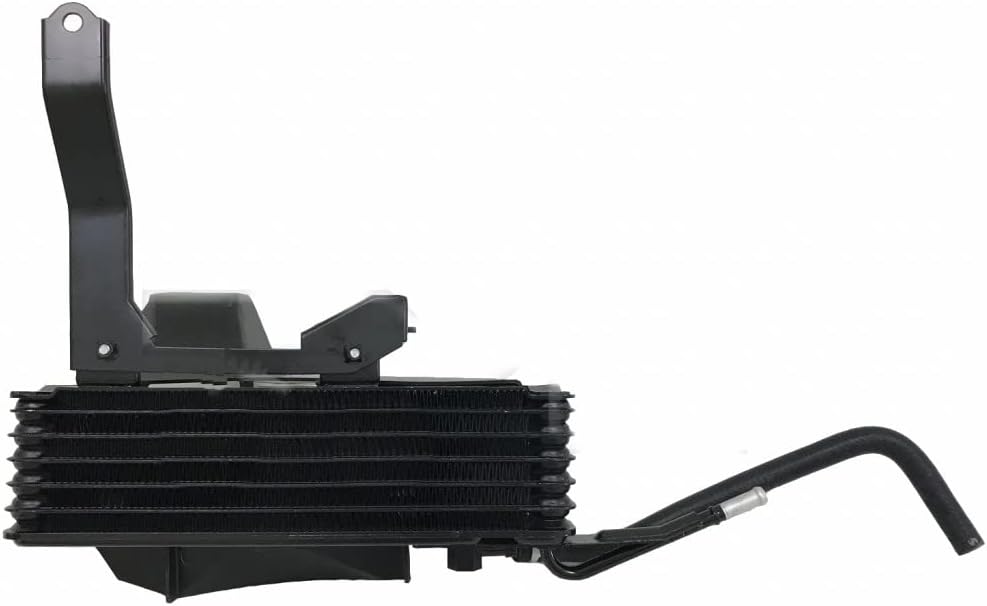
2. KarParts360 Transmission Oil Cooler for Toyota Highlander (OEM 32920-48062)
| OEM Part Number | 32920-48062 |
|---|---|
| Partslink Number | TO4050109 |
| Inlet/Outlet Fitting | Hose Clamp |
| Flow Configuration | Crossflow |
This KarParts360 transmission oil cooler is an aftermarket replacement intended to match the factory transmission cooler for Toyota Highlander applications that use OEM number 32920-48062. It installs in the front position and uses hose-clamp inlet and outlet fittings with a crossflow core designed to improve heat transfer over a cramped or aging original cooler. Typical use is direct replacement during a transmission service or when the original cooler is leaking or underperforming; the cooler’s crossflow core and stated core dimensions indicate it provides increased surface area for better cooling under towing or spirited driving. The unit is DOT certified and marketed as inspected for quality, but it is not manufactured by Toyota so fit confirmation against the OEM or partslink number is essential before purchase. Buyers should expect a straightforward swap if the part numbers match, though installation may require basic hose, clamp, and mounting checks. This cooler prioritizes improved temperature control and durability but is an aftermarket option rather than a factory-made part.
Best for: Performance-oriented buyers who want better transmission temperature control for towing, spirited driving, or prolonged highway use and are willing to fit a high-quality aftermarket replacement.
Less Ideal for: Buyers seeking a factory-manufactured Toyota part or those unwilling to confirm part number compatibility should consider dealer-sourced alternatives instead.
- Direct replacement for Toyota Highlander part number 32920-48062 when part numbers match
- Crossflow core design increases heat dissipation compared with older or clogged coolers
- DOT certified and presented as inspected for quality and durability
- Hose-clamp inlet and outlet fittings simplify plumbing for common service repairs
- Aftermarket unit rather than factory-manufactured, so exact fitment verification is required
- Limited manufacturer-specific support compared with dealer-sourced parts
Verdict A quality aftermarket cooler that boosts transmission cooling for Toyota Highlander drivers who want improved temperature control, provided you verify the OEM/partslink numbers before buying.
3. Readair Engine Coolant Radiator Assembly with Transmission Oil Cooler for Toyota Highlander (2001–2007)

| Fitment | Toyota Highlander 2001–2007 V6 3.0L/3.3L |
|---|---|
| Transmission Oil Cooler | Included |
| Core Thickness | 1 inch |
| Inlet/Outlet Diameter | 1-3/8 inch |
This Readair radiator is a budget-focused replacement made to bolt into Toyota Highlander 2001–2003 3.0L and 2004–2007 3.3L V6 models and includes an integrated brass transmission oil cooler. Intended as a direct-fit swap, the aluminum core with TIG-welded joints and reinforced plastic tanks aims to match factory fitment so installation follows standard radiator replacement procedures for the Highlander. The integrated transmission cooler simplifies plumbing compared with separate aftermarket coolers and reduces parts needed for a correct reassembly. Practical benefits include leak testing at the factory and a treated coating for corrosion resistance. Expect a straightforward replacement for owners who need a low-cost restore of cooling and transmission cooling function. Limitations are variable long-term durability reported by some users and the product may require minor adjustments at the transmission line connections during install. For buyers prioritizing lowest upfront cost, this provides a functional, Highlander-specific cooling assembly, but those seeking the longest-lasting commercial-grade option may prefer a higher-end alternative.
Best for: Budget-conscious Highlander owners who want an affordable, vehicle-specific radiator and transmission cooler replacement to get their cooling system restored without buying premium parts.
Less Ideal for: Owners focused on maximum longevity or heavy-duty towing who should consider a higher-grade or professionally refurbished cooling assembly instead.
- Direct-fit design for Toyota Highlander 2001–2007 V6 so installation follows factory replacement steps
- Integrated brass transmission oil cooler removes need for a separate cooler when restoring transmission cooling
- Aluminum core with TIG-welded joints and treated coating for basic corrosion resistance
- Factory leak testing reported and includes molded inlet/outlet tanks for correct hose connections
- Some reports of early tank cracks and inconsistent quality control affecting long-term durability
- May require removing or replacing adapters and O-rings on transmission ports during installation
Verdict A low-cost, direct-fit radiator assembly with an integrated transmission cooler that gets Highlander cooling back to service quickly but may not match premium units for long-term durability.
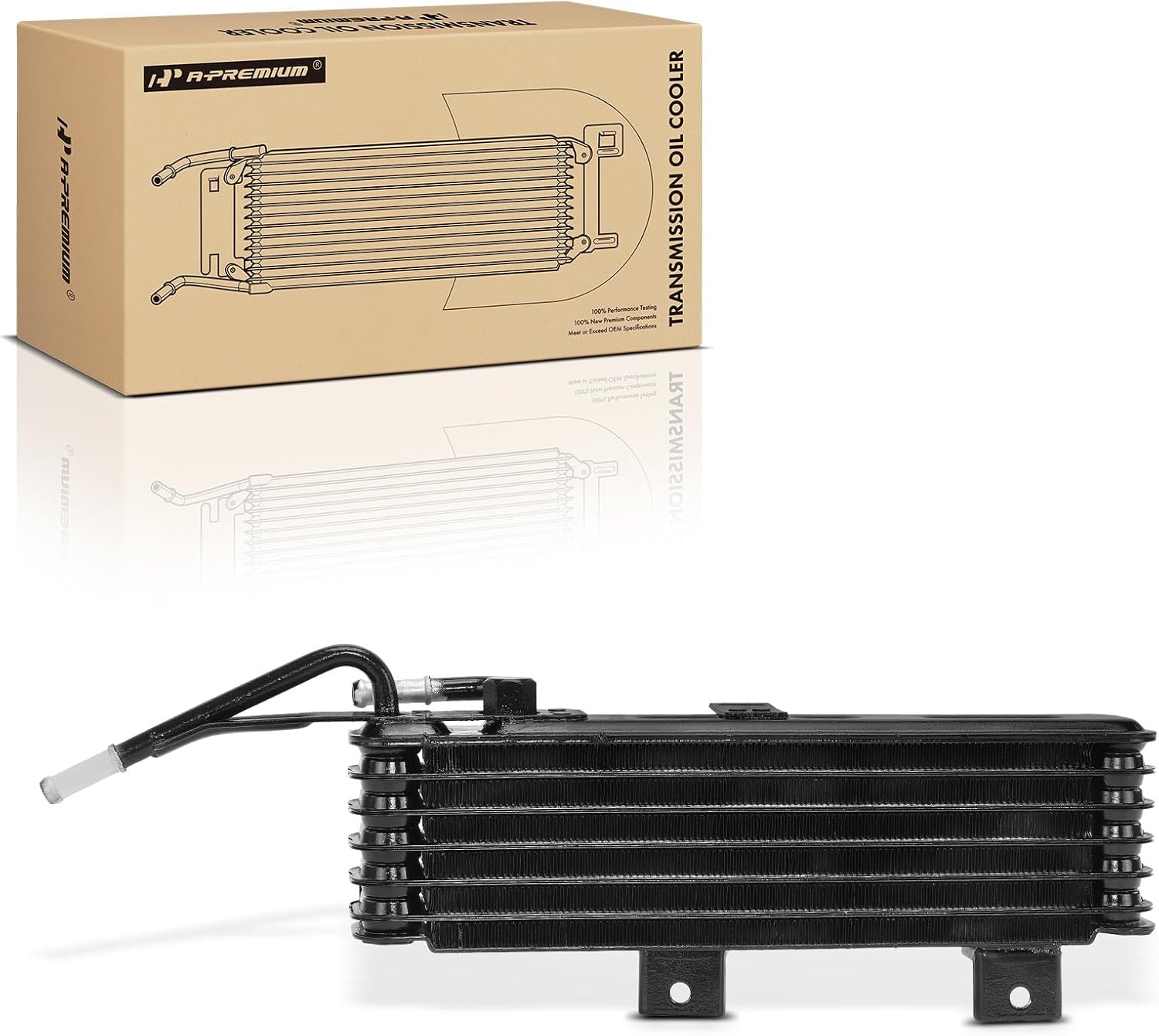
4. A-Premium Transmission Oil Cooler for Toyota Highlander 2011–2013 V6 3.5L
| Compatible models | Toyota Highlander 2011-2013 V6 3.5L |
|---|---|
| OEM part numbers | TO4050116, 329200E040 |
| Manufacturer | PremiumpartsWhosale |
| Manufacturer part number | APOC384 |
This A-Premium transmission oil cooler is built as a direct-fit replacement for 2011–2013 Toyota Highlander V6 3.5L models and is intended to reduce transmission fluid temperature to protect internal components. It installs in the factory cooling path and is used when replacing a damaged cooler or upgrading an aging factory unit; the listing notes it does not include the PLA cover or stack-up so buyers should transfer those parts from the original or source them separately. The unit is described as corrosion-resistant and constructed to meet or exceed factory specifications, which helps ensure leak-free operation and longer service life. Practical benefits include restoring proper cooling to prevent premature wear and preserving transmission performance under load or towing. Limitations are that it is specific to Highlanders built in the USA for the listed years and that some mounting pieces are not supplied, which can add installation time or require extra parts purchases.
Best for: A risk-averse mainstream buyer who prioritizes maintaining factory-like reliability and wants a straightforward replacement to restore proper transmission cooling on a 2011–2013 Highlander.
Less Ideal for: Buyers looking for a universal cooler, a full upgrade kit with mounting hardware, or fitment for Highlanders built outside the USA should consider other options.
- Direct-fit designed for 2011–2013 Toyota Highlander V6 3.5L which simplifies installation
- Corrosion-resistant construction for longer service life and leak resistance
- Meets or exceeds factory specifications for performance and reliability
- Does not include PLA cover or stack-up hardware, requiring reuse of original parts or extra purchases
- Fitment limited to Highlanders built in the USA for the listed years, so verification is required
Verdict A practical, factory-style replacement cooler for 2011–2013 Highlander V6 owners who want reliable, OEM-like cooling but may need to source a few mounting pieces separately.
5. Cooling Direct Transmission Oil Cooler Compatible with 2020–2022 Toyota Highlander (329100E090)

| Manufacturer Part Number | CDOC827 |
|---|---|
| OEM Part Number | 329100E090 |
| Core Dimensions | 9.81 x 4.65 x 1.26 inches |
| Brand | Cooling Direct |
This Cooling Direct transmission oil cooler is a direct-replacement unit made to match the factory fit for 2020–2022 Toyota Highlander vehicles. It installs in place of the original cooler and circulates transmission fluid through an aluminum core and tank to shed heat before the fluid returns to the transmission. Typical use is improved temperature control during highway driving, heavy loads, or light towing where the factory cooler can run hot. The product emphasizes a drop-in fit and factory-quality design to simplify installation and reduce the need for modifications. The aluminum core offers good thermal conductivity and corrosion resistance for long-term service. Limitations are that fitment verification requires providing a VIN to the seller and the listing does not include hoses or mounting hardware details, so budget installers should confirm what else is needed before starting a swap. A one-year manufacturer warranty covers defects but service and installation costs are not included.
Best for: A practical optimizer who wants a cost-conscious, factory-style transmission cooler for a 2020–2022 Toyota Highlander to improve temperature control without major modifications or upgrades.
Less Ideal for: Drivers planning heavy-duty towing or high-performance cooling upgrades should consider a larger aftermarket cooler or a kit with dedicated plumbing and fittings.
- Direct-fit replacement for 2020–2022 Toyota Highlander for straightforward installation
- Aluminum core and tank for efficient heat dissipation and corrosion resistance
- Designed to factory standards for fitment and performance
- One-year manufacturer warranty provides short-term protection against defects
- Seller requests VIN for fitment confirmation rather than listing explicit vehicle applications
- Does not specify included hoses or mounting hardware which may require extra parts or labor
Verdict A budget-friendly, factory-style drop-in cooler for 2020–2022 Highlanders that improves transmission temperature control with minimal installation complexity.
6. TYC External Transmission Oil Cooler for Toyota Highlander

| Manufacturer | TYC |
|---|---|
| OEM Part Number | 32920-48011 |
| Item form | Oil |
| Exterior | Machined |
This TYC external transmission oil cooler is built to be a drop-in replacement for 2001–2007 Toyota Highlander models, providing extra cooling capacity for the transmission system. It installs in place using factory-style mounting provisions and is intended for owners who need to restore or upgrade cooling performance beyond the vehicle's built-in cooler. The unit uses a machined exterior and core dimensions matched to deliver adequate surface area for heat dissipation, and TYC notes accelerated cycling tests aimed at durability. In practice you can expect straightforward installation and measurable benefit when towing, climbing hills, or driving in hot conditions where transmission temperatures tend to rise. The package appears to include a hose and clamp in at least some listings, which helps during replacement. Limitations are typical for bolt-in aftermarket coolers: it only addresses external cooling and does not change internal transmission components, and fit and included hardware should be confirmed before purchase for a seamless install.
Best for: Balanced buyers who want a reliable, factory-quality replacement to lower transmission temps during towing, hill driving, or hot-climate use without complex modifications.
Less Ideal for: Drivers seeking heavy-duty racing or extreme towing upgrades that require larger multi-pass coolers or custom plumbing should look at performance-focused alternatives.
- Designed for direct fitment to 2001–2007 Toyota Highlander using factory-style mounting points
- Core dimensions matched to provide additional cooling surface area for better heat dissipation
- Machined exterior and manufacturing tests aimed at durability and cycling reliability
- Often packaged with hose and clamp which can simplify installation
- Only provides external cooling and does not address internal transmission repairs or upgrades
- Compatibility and included installation hardware vary so verification is needed before install
Verdict A factory-style, drop-in external cooler for 2001–2007 Highlander owners who want dependable extra transmission cooling without major modifications.
Choosing the Right Toyota Highlander Transmission Cooler: Key Factors to Consider
Cooling Capacity
Cooling capacity determines how effectively a transmission cooler reduces fluid temperature under sustained loads. Higher capacity units dissipate more heat, which is important if you tow regularly, carry heavy loads, or drive in hot climates.
Consider how the cooler performs at typical highway speeds and during low-speed towing. Note that oversized coolers may require different mounting locations and could affect airflow, while undersized units may offer little benefit under demanding conditions.
Compatibility And Fitment
Confirm that the cooler works with the Highlander transmission cooler lines, fittings, and available mounting space. Fitment matters because incorrect size or incompatible fittings can lead to leaks, poor routing, or the need for additional adapters.
Check the cooler's inlet and outlet thread types and the clearance for mounting near the radiator or condenser. Proper fitment reduces installation time and minimizes the chance of rubbing or line stress that could cause premature failure.
Installation Complexity
Installation complexity affects whether you can fit the cooler yourself or need professional help. Some systems use a sandwich adapter at the transmission cooler line, while others require routing new lines to a remote heat exchanger behind the bumper or in front of the radiator.
Consider whether the kit includes necessary hardware, hose, clamps, and detailed instructions. If a unit requires trimming or drilling of body panels, that increases time and tools needed. Simpler bolt-on or clamp-on designs are easier for DIY installers.
Material And Corrosion Resistance
Materials and protective finishes influence longevity, especially in wet or salty environments. Aluminum cores are common for efficient heat transfer, but brazed or welded joints and quality end tanks matter for durability.
Look for corrosion-resistant coatings and robust hose fittings. Poor materials can lead to leaks or degraded performance over time, so prioritize coolers and lines built to withstand road debris and environmental exposure.
Mounting Options And Airflow
Where and how a cooler mounts affects its performance. Front-mounted coolers in the airflow path will reject heat more effectively than units hidden behind other components. Some designs offer multiple mounting brackets for flexible positioning.
Consider available space on the Highlander and whether the cooler will obstruct other systems. Proper positioning also reduces the risk of damage from road debris and helps ensure consistent cooling across varied driving conditions.
Hose Quality And Connections
Lines and fittings form a critical part of the system. High-quality hoses and secure connections reduce the risk of leaks and handle higher fluid pressures and temperatures. Look for reinforced hoses, proper crimps, and fittings that match Highlander line sizes.
Weak or underspecified hoses may expand under pressure, reducing flow and cooling efficiency. Secure, correctly routed lines also prevent rubbing against chassis parts and simplify future maintenance.
FAQ
Do I really need an auxiliary transmission cooler for a Toyota Highlander?
It depends on your usage. If you tow often, carry heavy loads, or regularly drive in hot conditions, an auxiliary cooler often helps reduce fluid temperatures and can extend transmission life. For mostly light, everyday driving, the factory cooling may be adequate.
Can I install a transmission cooler myself?
Many installers can fit a cooler with basic mechanical skills and tools. Kits that include hoses, fittings, and clear instructions are the simplest for DIY. If the job requires cutting trim, modifying mounts, or complex line routing, professional installation may be safer.
Where should a transmission cooler be mounted on the Highlander?
Ideal mounting places are where the cooler gets consistent airflow, typically in front of the radiator or AC condenser or behind a grille opening. Avoid locations that expose the cooler to frequent debris impact or that interfere with other vehicle systems.
How will I know if my current transmission cooler is failing?
Common signs include rising transmission temperatures, frequent gear slipping, or fluid leaks near cooler lines. Also watch for discolored or burnt-smelling fluid during inspection. These symptoms often indicate reduced cooling efficiency or a compromised line.
Does an external transmission cooler affect transmission fluid change intervals?
An external cooler can help stabilize fluid temperatures, which may reduce thermal breakdown rates. However, it does not eliminate the need for regular fluid and filter maintenance according to manufacturer recommendations. Continue following service intervals and inspect fluid condition periodically.
Are universal coolers acceptable for the Highlander?
Universal coolers can work if you verify fitment and use proper adapters or lines. They require careful selection of fittings and mounting hardware to match the Highlander’s plumbing and available space. Ensure the unit offers the necessary cooling capacity for your intended use.
How We Chose the Best Toyota Highlander Transmission Cooler
We focused on performance and fitment specific to the Toyota Highlander transmission cooler needs. Primary evaluation criteria included cooling capacity under sustained load, construction quality and materials, compatibility with Highlander transmission cooler lines and fittings, and the complexity of installation for typical owners. We also assessed long-term durability factors such as corrosion resistance and hose/crimp quality, plus whether a unit supports mounting options commonly available on the Highlander. Items were excluded if they lacked clear installation guidance for the Highlander, used questionable materials, or required extensive vehicle modification beyond standard mounts and lines. We prioritized units that balance effective heat rejection with straightforward installation, and we favored designs that work with stock fluid routing and mounting locations. The result is a list filtered for practical, Highlander-focused functionality rather than experimental or one-off solutions.
Our full evaluation process is outlined in our review methodology.
Conclusion
When choosing a Toyota Highlander transmission cooler, prioritize cooling capacity, correct fitment, and installation complexity based on how you use the vehicle. Towing, hot-climate driving, and heavy loads increase the value of higher-capacity, front-mounted coolers with robust lines. Balance performance with practicality by selecting a cooler that fits easily into available mounting points and offers durable materials and secure connections. Regular inspections and proper maintenance will help preserve the transmission and get the most value from any cooler you install.
Explore More:
- Check out all Toyota Highlander parts & accessories
- Explore Transmission Coolers Maintenance & Repair Guides
- Explore Transmission & Drivetrain
- Browse all Auto Parts
