

Note: This article contains affiliate links. If you click on these links and make a purchase, I may earn a small commission at no extra cost to you. This helps support my research and content. Read my full affiliate disclosure here.
If you tow frequently or haul heavy loads with a 2017-2022 Ford F-350, managing transmission temperature is one of the easiest ways to protect driveline components and preserve service life. A properly sized transmission cooler reduces operating temperatures under load, decreases fluid breakdown, and helps prevent overheating events that lead to costly repairs.This guide presents our shortlist of the top transmission coolers for the 2017-2022 F-350 across common towing use cases. Each option was evaluated for cooling performance, fitment and mounting options, installation complexity, and long-term durability. Read on to see the pros and cons of each approach and which features matter most for your truck and towing routine.
Top Picks at a Glance
| Best Overall The best all-around choice for most situations | GXARTS Transmission Oil Cooler for Ford F-250/F-350 Super Duty (2017–2022) |  |
| Best Value The sweet spot between price and what you get | LDCRE Transmission Oil Cooler for Ford F-250/F-350 Super Duty 6.2L & 6.7L (2017–2022) |  |
| Best Budget The cheapest option that still gets the job done reliably | LINLINS Transmission Oil Cooler for 2017–2022 F-250/F-350 Super Duty |  |
| Highest Rated A top-rated pick with lots of positive feedback | Mishimoto Transmission Cooler for Ford 6.7L Powerstroke (2020–2022) |  |
| Most Popular A crowd favorite that many people choose with confidence | Mishimoto MMTC-F2D-17SL Transmission Cooler for Ford 6.7L Powerstroke (2017–2019) |  |
1. GXARTS Transmission Oil Cooler for Ford F-250/F-350 Super Duty (2017–2022)

| Compatible vehicles | Ford F-250/F-350 Super Duty 2017-2022 |
|---|---|
| Engines | 6.7L Power Stroke Turbo Diesel V8 or 6.2L Boss V8 |
| Replaces part | HC3Z7A095B / HC3Z-7A095-B |
| Core material | Aluminum brazed core |
This GXARTS transmission oil cooler is a bolt-in replacement intended to restore factory-quality ATF cooling on 2017–2022 F-250 and F-350 Super Duty trucks with the 6.7L Power Stroke or 6.2L Boss V8. It uses a full-aluminum brazed core with a high-density fin layout to increase heat dissipation compared with worn or clogged coolers, and it matches original mounting points and port positions so installation takes about 45–60 minutes with basic tools. The kit includes mounting hardware and directly replaces Ford part HC3Z7A095B, which makes it straightforward for service or towing-focused owners who need to control transmission temperatures under heavy loads. Because it is a single-purpose replacement cooler, buyers get improved ATF temperature control and a lower risk of shift problems or transmission overheat warnings, but you should verify part number or VIN fitment before ordering and expect professional-level longevity to depend on installation quality and operating conditions.
Best for: Buyers looking for a reliable, factory-style replacement to restore transmission cooling on 2017–2022 Super Duty trucks used for towing or heavy hauling and who want a straightforward bolt-in repair.
Less Ideal for: Anyone seeking a universal or aftermarket performance cooler with increased fluid capacity or additional sandwich-plate features should consider specialized upgrade options instead.
- Direct-fit design matches original mounting points and port locations for bolt-on installation
- Full-aluminum brazed core and high-density fins improve ATF heat dissipation compared with worn coolers
- Includes necessary mounting hardware for a complete replacement
- Direct replacement for Ford part number HC3Z7A095B so identification is straightforward
- No explicit durability or corrosion-resistance coating information provided
- Fitment limited to specified Ford Super Duty years and engines so not universal
Verdict: A direct-fit, full-aluminum replacement that restores proper transmission cooling for 2017–2022 F-250 and F-350 Super Duty trucks used for towing and heavy-duty driving.
2. LDCRE Transmission Oil Cooler for Ford F-250/F-350 Super Duty 6.2L & 6.7L (2017–2022)

| Vehicle fitment | Ford F-250/F-350 6.2L & 6.7L V8 2017–2022 |
|---|---|
| Replaces part numbers | HC3Z-7A095-B, HC3Z7A095B |
| Included components | Oil Cooler |
| Connector type | Coupling |
This LDCRE transmission oil cooler is a plug-and-play replacement for Ford Super Duty trucks with 6.2L and 6.7L V8 engines from 2017–2022, built to match the OEM fit and function. Installed in the factory location, it routes transmission fluid through its machined aluminum core to dissipate heat during towing, hauling, and heavy-duty operation, which helps reduce transmission temperature, wear, and potential overheating. The unit is offered as a one-piece assembly that replaces part numbers HC3Z-7A095-B and HC3Z7A095B, so no modification should be needed for a correct fit. Its corrosion-resistant construction and factory-style connector make it a practical choice for owners who need reliable cooling without custom plumbing. Buyers should note this is a direct replacement cooler rather than an auxiliary or high-capacity add-on, so extreme thermal performance improvements over the factory unit will be limited by the cooler's original design envelope.
Best for: Buyers who want a reliable, factory-fit replacement to restore proper transmission cooling for regular towing and heavy-duty use without custom work or upgrades.
Less Ideal for: If you need maximum extra cooling for severe towing or motorsport use, consider a dedicated high-capacity or auxiliary cooler instead.
- Direct replacement for OEM part numbers HC3Z-7A095-B and HC3Z7A095B for easy, no-mod install
- Designed for heavy-duty use in 2017–2022 F-250 and F-350 6.2L/6.7L V8 trucks to help manage transmission temperatures under load
- Machined finish and corrosion-resistant construction for durability in road and towing conditions
- Not an upgraded high-capacity or auxiliary cooler, so cooling gains over the factory unit are modest
Verdict: A straightforward, factory-fit replacement cooler that restores reliable transmission temperature control for 2017–2022 Super Duty trucks without modifications.
3. LINLINS Transmission Oil Cooler for 2017–2022 F-250/F-350 Super Duty
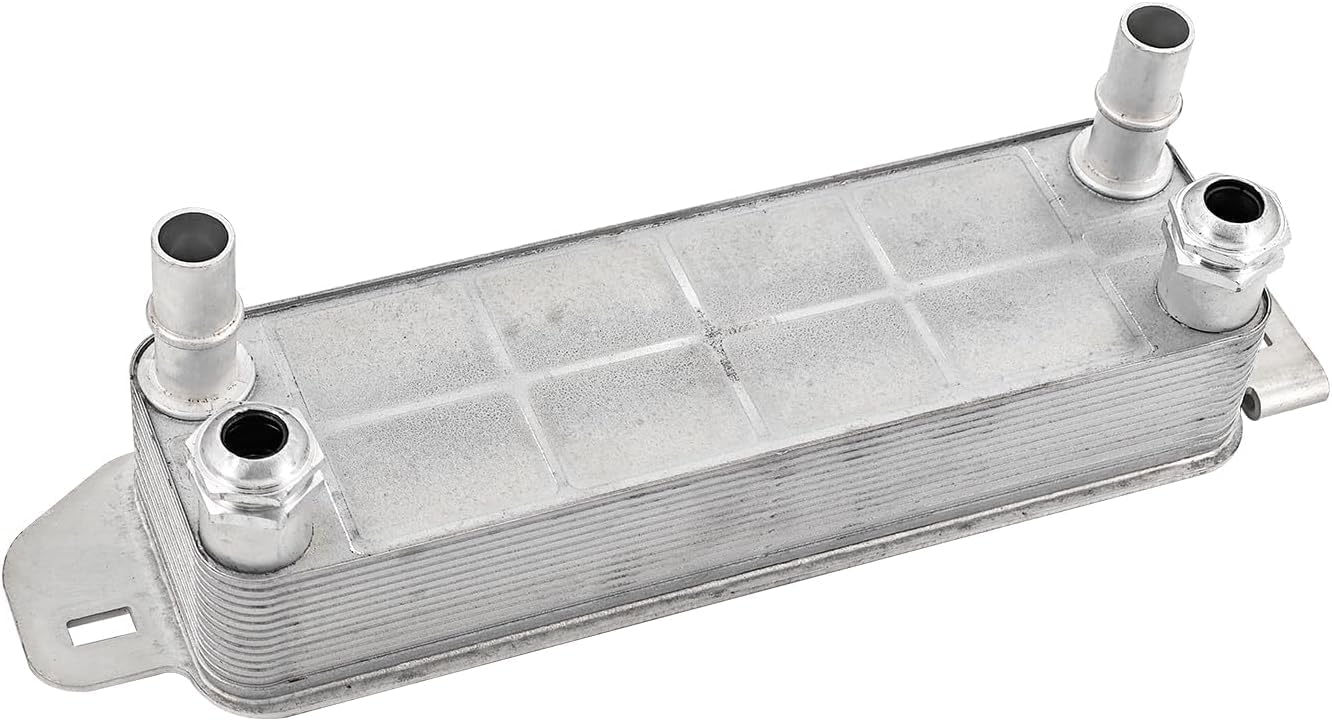
| Fitment | 2017-2022 F-250 F-350 Super Duty 6.2L 6.7L |
|---|---|
| Manufacturer | LINLINS |
| Manufacturer Part Number | HC3Z-7A095-B, HC3Z7A095B |
| Package Contents | 1x Cooling Trans Oil Cooler-trans Cooler |
This LINLINS transmission oil cooler is a single-piece replacement intended to fit 2017–2022 Ford F-250 and F-350 Super Duty trucks with 6.2L or 6.7L engines. It mounts in place of the factory cooler and is used to reduce transmission fluid temperatures during towing, hauling, or heavy-duty driving. The listing highlights factory-style fitment (manufacturer part numbers HC3Z-7A095-B / HC3Z7A095B) and an easy-install claim, which should let a competent DIYer swap the unit without major modifications. As an aftermarket unit it provides a budget-friendly path to restoring cooling capacity after damage or age-related decline, and the single-piece design keeps plumbing straightforward. Limitations include minimal specification detail about core construction or cooling capacity, so you should confirm part number match and visually compare the cooler before purchase; professionals seeking measured performance gains over the stock cooler may prefer a larger performance-specific unit.
Best for: Buyers who need a straightforward, cost-conscious replacement cooler that fits 2017–2022 Super Duty trucks and prefer a quick DIY swap to restore normal transmission cooling.
Less Ideal for: Those who want documented aftermarket performance upgrades, measured cooling improvements, or a high-capacity cooler for extreme towing should consider larger performance-specific coolers instead.
- Direct-fit replacement for 2017–2022 F-250 and F-350 6.2L/6.7L models using listed part numbers
- Simple single-piece design simplifies installation and plumbing
- Affordable aftermarket option to restore or replace a damaged factory cooler
- Manufacturer does not publish core type or rated cooling capacity so exact performance vs factory is unclear
Verdict: A budget-friendly, direct-fit replacement for restoring transmission cooling on 2017–2022 F-250/F-350 Super Duty trucks.
4. Mishimoto Transmission Cooler for Ford 6.7L Powerstroke (2020–2022)

| Fitment | 2020–2022 Ford 6.7L Powerstroke |
|---|---|
| Material Type | Alloy Steel, Aluminum |
| Included Components | Transmission Cooler |
| Manufacturer Warranty Description | Mishimoto Lifetime Warranty |
This Mishimoto transmission cooler is a vehicle-specific upgrade for the 2020–2022 Ford 6.7L Powerstroke that integrates with the factory cooling circuit to reduce transmission temperatures during towing and heavy use. It installs as a direct-fit kit and includes powder-coated steel mounting brackets, CNC-machined isolation clamps, and heat-shielded rubber-isolated hardlines so routing stays secure and protected from vibration. The tube-and-fin core plus an extra 1.7 quarts of fluid over stock provide greater heat capacity and longer cooling under load, while the kit retains the factory thermostatic cooler to maintain proper operating temperatures. Practical benefits include more consistent transmission temps when towing, reduced thermal stress on internal components, and a fully inclusive kit that avoids sourcing additional parts. The main limitations are that it is built for a specific engine and year range so it is not a universal solution, and installation may require moderate mechanical skill or shop time if you are not comfortable working around transmission lines.
Best for: Buyers who prioritize long-term drivetrain reliability when towing and want a ready-to-install, vehicle-specific transmission cooling upgrade that reduces thermal wear.
Less Ideal for: Drivers looking for a universal or multi-vehicle cooler solution or those who do not tow or haul regularly and have no transmission cooling issues.
- Direct-fit design that integrates with the factory thermostatic cooler for proper temperature control
- Tube-and-fin core plus 1.7 quarts extra fluid increases heat capacity during heavy towing
- Complete kit with mounting brackets, CNC isolation clamps, and routed hardlines for a tidy install
- Corrosion-resistant powder-coated steel brackets and heat-shielded hardlines for durability
- Fitment limited to 2020–2022 Ford 6.7L Powerstroke trucks so not applicable for other models
Verdict: Choose this Mishimoto kit if you want a vehicle-specific, plug-and-play cooler that lowers transmission temperatures and improves reliability under towing loads.
5. Mishimoto MMTC-F2D-17SL Transmission Cooler for Ford 6.7L Powerstroke (2017–2019)

| Compatible engine | 6.7L Powerstroke |
|---|---|
| Model years | 2017–2019 |
| Rows | 19 |
| Core type | Tube-and-fin with turbulated fins |
This Mishimoto transmission cooler is a vehicle-specific upgrade for 2017–2019 Ford 6.7L Powerstroke trucks that adds 19 rows of tube-and-fin cooling with turbulated internal fins to significantly reduce transmission fluid temperatures under heavy load. It installs using application-specific hard lines, adapters, and steel mounting brackets designed to give a secure, leak-resistant fit; the kit notes minor trimming of the grille support is sometimes required and includes installation guidance. The powder-coated housing and stacked plate construction prioritize corrosion resistance and durability for towing or off-road use. In real-world use this cooler helps protect the 6R140 TorqShift transmission during prolonged towing by slowing fluid degradation and can improve shift feel when operating at high loads. The main compromises are the large physical size, which requires some front-end modification for fitment, and that it is limited to 2017–2019 6.7L Powerstroke applications rather than broader vehicle coverage.
Best for: Buyers focused on protecting transmission longevity while towing or hauling who prefer a tested, brand-name cooling upgrade with documented fitment and installation guidance.
Less Ideal for: Drivers who need a universal or multi-year cooler solution or who want a no-modification plug-and-play installation are better served by alternate options.
- Vehicle-specific design for 2017–2019 Ford 6.7L Powerstroke for a close, OEM-style fit
- 19 rows of tube-and-fin core with turbulated fins for substantially increased cooling capacity
- Includes application-specific hard lines, adapters, and steel brackets for secure, leak-resistant installation
- Powder-coated housing and stacked plate construction resist corrosion and vibration in heavy-duty use
- Large cooler size can require trimming of the grille support and clearance work during installation
- Fitment is limited to 2017–2019 6.7L Powerstroke applications and will not suit other model years
Verdict: Choose this Mishimoto cooler if you tow or haul with a 2017–2019 6.7L Powerstroke and want a robust, vehicle-specific upgrade to lower transmission fluid temperatures and protect the 6R140 transmission.
Choosing the Right 2017-2022 Ford F-350 Transmission Cooler: Key Factors to Consider
Cooling Capacity and Heat Rejection
Cooling capacity determines how effectively a cooler reduces transmission fluid temperature during sustained towing and heavy-duty use. Higher-capacity heat exchangers remove more Btu per hour and keep fluid temperatures within safer ranges, lowering the risk of fluid oxidation and internal wear.
When evaluating coolers for the 2017-2022 F-350, consider manufacturers' published temperature drop under controlled load or the cooler's surface area and core thickness. Larger cores or multi-row designs typically provide better heat rejection but may require more front-end space. Match capacity to your towing demands: light towing may only need modest reduction, while heavy or repeated towing benefits from a higher-capacity unit.
Fitment and Mounting Options
Fitment is critical on the F-350 due to its heavy-duty front-end components and variable bumper, grille, and intercooler layouts across trims. A cooler that fits the core support or bumper bracket without obstructing airflow, sensors, or factory lines simplifies installation and reduces risk of damage.
Look for coolers that offer multiple mounting brackets, adjustable width, or purpose-built vehicle fitment notes for the 2017-2022 F-350. Consider whether the cooler can be mounted in front of the radiator, in front of the condenser, or behind the bumper depending on your truck's configuration. Ease of access for future maintenance is another fitment concern.
Construction Quality and Corrosion Resistance
Heavy-duty duty-cycle hauling exposes coolers to road debris, salt, and moisture. Construction quality affects both heat transfer and service life. Look for brazed or welded seams, sturdy inlet/outlet fittings, and full-coverage fins that resist bending.
Materials matter: aluminum cores and brass or steel fittings are common, but protective coatings and thicker fin stock help prevent corrosion. Robust end tanks and reinforced mounting points reduce the chance of failure from vibration and impacts common on F-350 work trucks.
Installation Complexity and Included Hardware
Installation complexity affects time, cost, and the likelihood of a professional install. Some coolers come in kits with pre-bent lines, fittings, and step-by-step instructions tailored to the F-350, while others are universal and require cutting or fabricating mounting brackets and routing lines.
Assess whether the kit includes transmission cooler lines or hose adapters compatible with Ford fittings, mounting brackets sized for the F-350 chassis, and clear instructions. If you plan to install it yourself, check for the need to remove the bumper or other components and whether tools beyond basic hand tools are required.
Flow Characteristics and Pressure Drop
A cooler must remove heat without unduly restricting fluid flow. Excessive pressure drop reduces circulation and can starve the transmission of cooling flow in marginal pump conditions. Core design, tube diameter, and internal baffling influence flow characteristics.
For the 2017-2022 F-350, choose a cooler that balances core density and flow capacity. Manufacturers sometimes publish flow rates and pressure drop at specific gallons-per-minute values; use those specs to ensure compatibility with the vehicle's transmission pump characteristics and your towing demands.
Serviceability and Warranty Support
Consider ease of service and what coverage the manufacturer provides. A cooler that allows cleaning from debris, or has replaceable fittings and nipples, reduces long-term ownership costs. Warranty length and terms signal confidence in build quality and can cover premature failure due to manufacturing defects.
Also check availability of replacement parts such as hoses, fittings, and mounting brackets for the F-350. For trucks that see heavy seasonal use, having service parts readily available avoids lengthy downtime.
Transmission Cooler Types and How They Differ
Transmission coolers come in several heat exchanger types that influence performance and packaging. Tube-and-fin cores are common, providing a good balance of heat rejection and airflow, while stacked-plate or louvered designs offer higher heat transfer in a more compact footprint. Each design trades off surface area, airflow resistance, and susceptibility to debris.
For the F-350, consider where the cooler will be sited when choosing type. A large tube-and-fin core performs well when mounted in unobstructed airflow, whereas a compact stacked-plate cooler can be useful where space is limited but cooling demand remains high.
- Tube-and-fin: wide surface area, cost-effective, can be vulnerable to bent fins.
- Stacked-plate: compact, high heat transfer, often more robust against damage.
- Bar-and-plate: heavy-duty, commonly used in extreme-duty applications with high flow.
Matching Cooler Size to Your Towing Profile
Estimate your typical towing loads and frequency before selecting a cooler. Occasional light towing requires less capacity than daily heavy towing or frequent mountain grades. Matching cooler size to use prevents unnecessary weight and complexity while ensuring adequate thermal control.
If you tow heavy trailers or routinely operate at higher ambient temperatures, choose a larger core or a dual-core configuration. For mostly local, light towing, a single well-built core with good airflow may suffice.
- Light duty towing: smaller single-core cooler often adequate.
- Moderate towing: mid-size cores with thicker fins provide margin.
- Heavy or repeated towing: larger or dual-core units recommended.
Routing Lines and Protecting Against Damage
Proper routing of transmission cooler lines on the F-350 prevents leaks and physical damage. Keep lines clear of sharp edges, moving suspension parts, and hot exhaust components. Use protective loom or braided lines where they run through tight areas or across the frame.
Secure hoses with clamps and routing brackets to minimize vibration and chafe. If your kit does not include pre-shaped lines for the 2017-2022 F-350, plan for custom bends or routing paths that avoid suspension and steering linkages.
- Avoid routing near exhaust or hot engine components.
- Use OEM-style fittings or high-quality adapters to prevent leaks.
- Inspect lines periodically for rubbing or abrasion.
Installation Tips for 2017-2022 F-350 Owners
Plan your installation location based on bumper, grille, and intercooler layouts found on F-350 trims. In many cases, mounting in front of the radiator support offers the best airflow but may require temporary bumper removal. An installation kit that includes vehicle-specific brackets can save hours and reduce trimming.
Drain and capture transmission fluid properly when cutting lines or fitting adapters. Use quality torque specifications on flare fittings and check for leaks under load after a short test drive. Recheck fluid level once the truck returns to operating temperature and make adjustments per the transmission service procedure.
- Confirm clearance for grille and sensors before final mounting.
- Use new hose clamps and fittings during reassembly.
- Bleed air from the system following manufacturer guidance to ensure consistent fluid circulation.
Monitoring Transmission Temperatures Effectively
Adding a temperature gauge or OBD-II monitor that reads transmission fluid temperature helps validate cooler performance. Monitor temps during a representative towing run to confirm the cooler maintains acceptable operating ranges under expected loads.
Look for steady-state temperatures as well as peak spikes during climbs or long downhill braking events. Continuous monitoring can also alert you to cooling degradation, blockages from debris, or piping leaks before they become severe.
- Install a reliable temperature sensor in the fluid circuit or use an in-line tee sensor.
- Record temperatures under typical towing conditions to set a baseline.
- Watch for rising baseline temps over months as a sign of clogging or reduced efficiency.
Still looking for the perfect fit?
Select your Ford F-350 configuration to see the most relevant Transmission Coolers recommendations
How We Chose the Best 2017-2022 Ford F-350 Transmission Cooler
We focused on criteria that directly affect transmission cooling performance and day-to-day ownership for 2017-2022 Ford F-350 owners. Core evaluation factors included cooling capacity under sustained tow, measured or specified temperature reduction, and heat exchanger construction including tube-and-fin versus stacked-plate designs. We also assessed fitment and mounting flexibility for F-350 front-end layouts, checking whether units can be mounted in the factory radiator support area or require auxiliary brackets. Installation complexity and included hardware were weighed, since many owners prefer kits that minimize fabrication and use existing cooler lines.Durability and corrosion resistance were important filters: we prioritized coolers with robust brazing, corrosion-resistant fins, and quality fittings suited for heavy-duty use. Flow rate and pressure drop were considered to ensure the cooler does not impede transmission fluid circulation. Finally, warranty coverage and the availability of replacement lines or service parts played a role. Excluded items included purely universal listings without vehicle-specific mounting options or products lacking any stated performance data or heavy-duty construction notes.
Our full evaluation process is outlined in our review methodology.
FAQ
How much temperature drop should I expect from adding a transmission cooler to my F-350?
Temperature drop varies by cooler size and towing conditions, but many quality add-on coolers reduce transmission temperature by 15 to 40 degrees Fahrenheit under sustained tow. Exact results depend on core area, airflow, and installation location.
Can I install a transmission cooler kit myself on a 2017-2022 F-350?
Many owners can complete the installation with basic tools if the kit includes vehicle-specific brackets and lines. However, if the install requires bumper removal, fabrication, or custom line bending, professional help can ensure a leak-free, reliable job.
Where is the best place to mount an external transmission cooler on the F-350?
The most effective location is where it receives unobstructed airflow, typically in front of the radiator or condenser. Fitment can vary by trim, so choose a spot that avoids sensors, intercooler paths, and does not interfere with grille or bumper components.
Will adding a transmission cooler affect fluid flow or pressure?
A properly designed cooler balances heat transfer and flow; however, very dense cores or undersized line diameters can increase pressure drop. Choose a cooler with documented flow characteristics or one sized for heavy-duty applications to avoid flow restriction.
How often should transmission cooler lines and fittings be inspected?
Inspect lines and fittings at least twice a year and after any off-road use or heavy towing. Check for chafing, hose swelling, loose clamps, and signs of fluid seepage, and replace any compromised components promptly.
What are common signs of transmission cooler failure or clogging?
Common symptoms include rising transmission temperatures under similar loads, fluid leaks at fittings, accelerated transmission shifting issues, or visible debris clogging the cooler fins. Monitoring temperature trends helps detect reduced performance early.
Final Verdict
When choosing a transmission cooler for a 2017-2022 Ford F-350, prioritize a balance of cooling capacity and proper fitment for your truck's front-end layout. Consider how often and how hard you tow, and select construction and mounting options that withstand road debris and vibration.A well-matched cooler that is correctly routed and installed will lower operating temperatures, extend transmission fluid life, and reduce the likelihood of overheating during heavy-duty use. Focus on capacity, durable construction, and serviceability to make a confident, long-term choice.
