

Note: This article contains affiliate links. If you click on these links and make a purchase, I may earn a small commission at no extra cost to you. This helps support my research and content. Read my full affiliate disclosure here.
If you tow, drive in stop-and-go traffic, or want to protect the Rogue's gearbox from heat-related wear, adding a dedicated transmission cooler can help. The right 2014-2020 Nissan Rogue transmission cooler reduces fluid temperatures, lowers thermal stress, and can extend clutch and seal life when installed and sized correctly.This guide shortlists the top options for this model range and explains the practical tradeoffs you should consider. We evaluate cooling capacity, fitment and mounting, plumbing and hose quality, and installation complexity to help you pick the best solution for your driving needs.
Looking for other parts? See all Nissan Rogue parts & accessories.
Top Picks at a Glance
| Best Overall The best all-around choice for most situations | Roneeson CVT Transmission Oil Cooler with O-Rings |  |
| Best Quality Built to a higher standard if you want something more solid | Readair Radiator Assembly with Transmission Oil Cooler for Nissan Rogue (2014–2020) |  |
| Best Value The sweet spot between price and what you get | AIVWUMOT CVT Transmission Oil Cooler 21606-28X0B |  |
| Best Budget The cheapest option that still gets the job done reliably | 3mirrors CVT Transmission Oil Cooler with O-rings |  |
| Highest Rated A top-rated pick with lots of positive feedback | Auto Shack Radiator for Nissan Rogue 2014–2020 (L4 2.0L / 2.5L) |  |
| Most Popular A crowd favorite that many people choose with confidence | TRQ Radiator Assembly with Integrated Transmission Oil Cooler for 2014-2020 Nissan Rogue |  |
1. Roneeson CVT Transmission Oil Cooler with O-Rings

| Brand | Roneeson |
|---|---|
| Model | 2160628X0B |
| Manufacturer | Roneeson |
| Fitment | Nissan Maxima 2016-2023; Murano 2015-2024; Quest 2015-2017; Rogue 2.5 2014-2020 |
This Roneeson CVT transmission oil cooler is a direct-fit replacement intended for Nissan models including the Rogue 2.5 (2014–2020). It installs in place of the factory cooler and comes with O-rings to help seal connections during replacement. In everyday use it helps lower transmission fluid temperatures by restoring a proper cooling path when the original cooler has failed or degraded, which can protect the CVT from overheating during highway driving and light towing. The unit is compact and appears engineered for straightforward swapping with factory lines, so most DIYers or professional shops can fit it without vehicle modifications. Limitations include lack of detailed performance specs such as cooling capacity or flow rate, and the product listing does not include vehicle-specific hardware beyond O-rings, so additional small parts may be needed for some installations.
Best for: Buyers wanting a balanced, reliable replacement cooler to restore proper CVT cooling on a 2014–2020 Rogue without extensive modification or performance upgrades.
Less Ideal for: Drivers seeking an upgraded high-capacity aftermarket cooler for heavy towing or racing should consider purpose-built performance coolers instead.
- Direct-fit replacement designed for specified Nissan models including Rogue 2.5 (2014–2020)
- Includes O-rings to simplify sealing during installation
- Compact unit shaped for straightforward swap with factory cooling lines
- No published cooling capacity, flow rate, or test data provided in the listing
Verdict: A straightforward direct-fit CVT cooler that restores factory-style transmission cooling on a 2014–2020 Nissan Rogue without complex installation.
2. Readair Radiator Assembly with Transmission Oil Cooler for Nissan Rogue (2014–2020)

| Compatibility | Nissan Rogue 2014–2020 2.0L/2.5L Automatic |
|---|---|
| Transmission Oil Cooler | Included (brass) |
| Core Thickness | 5/8 inch |
| Inlet/Outlet Diameter | 1-3/8 inch |
This Readair radiator assembly replaces the factory unit on 2014–2020 Nissan Rogue 2.0L and 2.5L models and adds a brass transmission oil cooler built into the core. It installs where the factory radiator sits and is intended as a like-for-like replacement while restoring engine and transmission cooling capacity. The aluminum core with TIG-welded seams and reinforced PA66 GF30 tanks aims to resist leaks and provide longer service life than cheaper repairs. For performance-minded drivers the integrated brass cooler helps reduce transmission fluid temperatures under towing, hill climbing, or spirited driving compared with radiators that lack a dedicated cooler. Expect standard replacement installation steps and moderate handling because the unit uses factory-style inlet and outlet diameters. Trade-offs are that this is a direct replacement rather than a high-capacity aftermarket performance radiator, so extreme track or heavy towing useers seeking significantly higher cooling capacity should consider purpose-built performance coolers instead.
Best for: Drivers who push their Rogue harder than stock—occasional spirited driving, hill climbing, or light towing—and want a robust, factory-fit radiator that adds an integrated transmission cooler to help keep transmission temperatures in check.
Less Ideal for: Owners looking for a dedicated high-capacity performance radiator or heavy-duty transmission cooler for sustained track sessions or heavy towing should look at purpose-built aftermarket options.
- Integrated brass transmission oil cooler reduces transmission fluid temps compared with radiators without a cooler
- Aluminum core with TIG-welded joints and reinforced PA66 GF30 tanks designed for leak resistance
- Direct-fit replacement for 2014–2020 Nissan Rogue 2.0L and 2.5L automatic transmissions for straightforward installation
- Treated coating on core for added corrosion protection
- Not a high-capacity performance radiator so cooling margin is limited for extreme track use or heavy towing
Verdict: A direct-fit radiator that adds a built-in brass transmission cooler to give performance-minded Rogue drivers better transmission temperature control without changing installation complexity.
3. AIVWUMOT CVT Transmission Oil Cooler 21606-28X0B

| Manufacturer | AIVWUMOT |
|---|---|
| Model | 21606-28X0B |
| Compatible models | Nissan Rogue/Altima/Maxima/Murano/Pathfinder/Quest (listed years) |
| Item Weight | 1.32 pounds |
This AIVWUMOT CVT transmission oil cooler is marketed as a direct-fit replacement for a range of Nissan vehicles and is intended to reduce transmission fluid temperatures during normal and heavy use. Installation follows the factory routing and mounting locations for compatible Rogue, Altima, Maxima, Murano, Pathfinder, and Quest model years listed, so it is typically used as a like-for-like swap when a stock cooler is damaged or when extra cooling is desired. The unit appears to be a compact, brushed-finish cooler that mounts in front of the radiator or condenser and provides more surface area than a failed original. Practical benefits include easier replacement without major modification and potential improvement in CVT longevity under towing or spirited driving. Limits to expect are that this is an aftermarket direct-fit part rather than a performance add-on, so cooling gains will be moderate compared with larger supplemental coolers, and fitment must match the specific model years listed to avoid installation issues.
Best for: Buyers who want a practical, factory-style replacement to restore or modestly improve CVT cooling on compatible Nissan models without modifying the vehicle.
Less Ideal for: Drivers seeking heavy-duty or high-capacity cooling for frequent towing, track use, or extreme conditions should consider dedicated performance coolers instead.
- Listed as direct-fit for multiple Nissan models in the 2014–2022 range for straightforward replacement
- Brushed exterior finish that resists minor corrosion and integrates with front-end components
- Compact design fits original mounting points so installation does not require major modifications
- Provides additional heat-exchange area over a failed cooler to help reduce CVT fluid temperature
- Not marketed as a high-capacity performance cooler so cooling improvement is modest compared with aftermarket oversized units
Verdict: A straightforward, direct-fit replacement cooler for Nissan CVT applications that restores factory-style cooling with minimal fuss.
4. 3mirrors CVT Transmission Oil Cooler with O-rings

| Brand | 3mirrors |
|---|---|
| Manufacturer Part Number | 14003NS06 |
| OEM Part Number | 21606-28X0B |
| Compatible Engines | 2.5L & 3.5L 4/6 cylinder |
This 3mirrors CVT transmission oil cooler is a budget-focused, direct-replacement unit that cools transmission fluid to help maintain proper operating temperatures and protect internal components. Built from machined aluminum and supplied with two O-rings, it aims to provide a reliable seal and straightforward fit to the listed Nissan applications. Typical use is a like-for-like repair or preventive replacement when the factory cooler shows signs of wear or leakage. The included O-rings reduce the chance of immediate leaks at installation, and the aluminum construction transfers heat efficiently compared with plastic alternatives. Expect a basic, no-frills part that installs in place of the factory cooler without modification on compatible vehicles. Limitations are typical for aftermarket economy parts: you should verify fitment carefully for your Rogue year and engine, and this unit does not advertise enhanced cooling capacity beyond restoring factory performance, so it may not be the choice for heavy towing or extended high-load driving where an upgraded cooler would be better suited.
Best for: Buyers looking for an affordable, straightforward replacement cooler to restore factory cooling performance on a compatible Nissan CVT vehicle and avoid more costly dealer parts.
Less Ideal for: Drivers who frequently tow, haul heavily, or run extended high-load driving should consider a heavy-duty or performance cooler instead.
- Direct replacement design for listed Nissan CVT applications
- Aluminum construction for effective heat transfer
- Includes two O-rings for improved sealing at installation
- Machined finish aimed at good fit and ease of installation
- No advertised increased cooling capacity for heavy-duty or high-load use
Verdict: A cost-conscious, factory-fit aluminum replacement cooler that restores proper CVT fluid temperature for compatible 2013–2019 Nissan models.
5. Auto Shack Radiator for Nissan Rogue 2014–2020 (L4 2.0L / 2.5L)
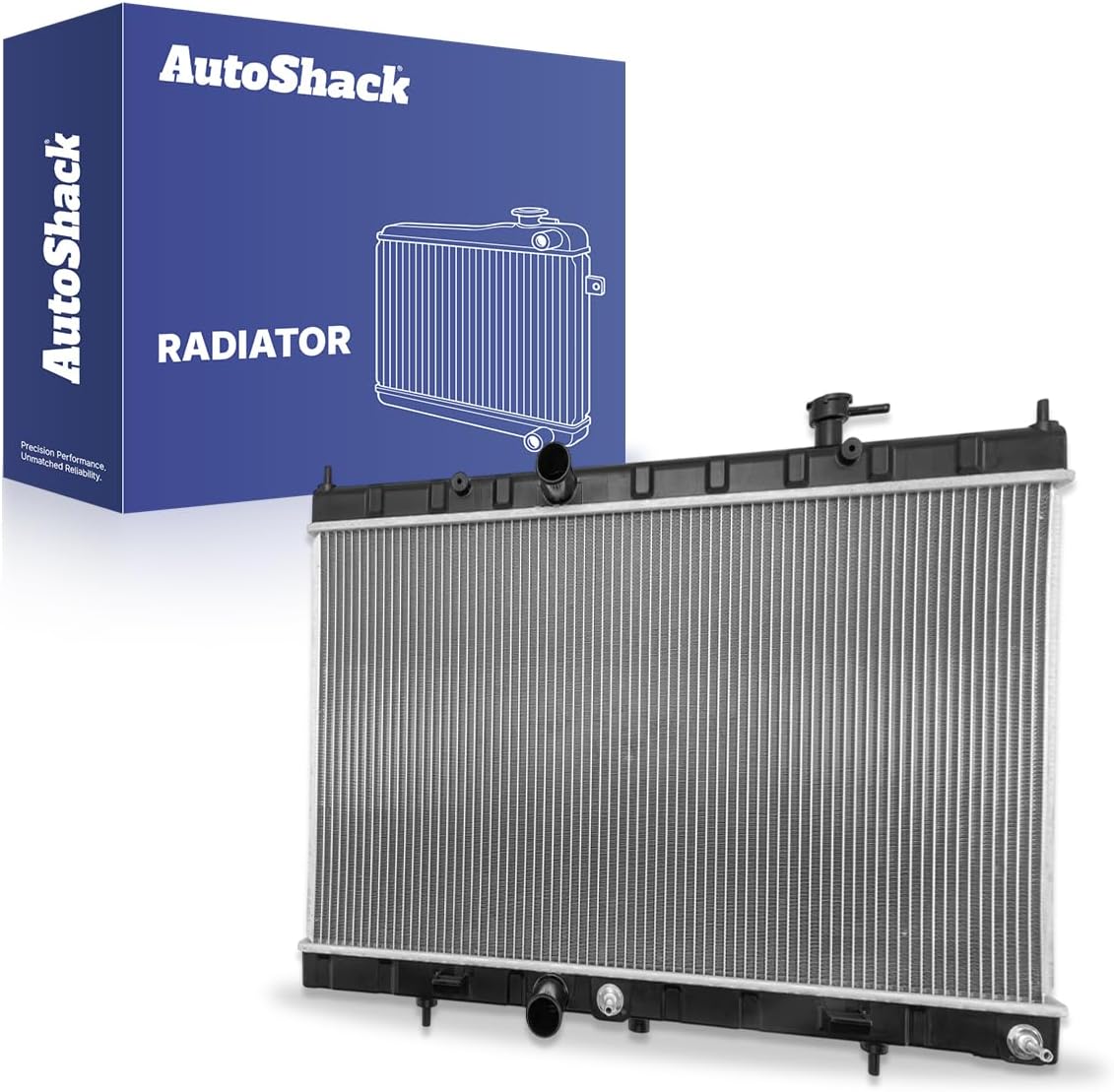
| Fitment | Nissan Rogue 2014-2020 L4 2.0L/2.5L |
|---|---|
| Core Rows | 1 |
| Transmission Oil Cooler | Yes |
| Engine Oil Cooler | No |
| Exterior | Aluminum, Plastic |
This Auto Shack radiator replaces the factory unit for Nissan Rogue 2014–2020 L4 2.0L and 2.5L models and includes a built-in transmission oil cooler for automatic transmissions. It is a single-core aluminum/plastic assembly intended for straightforward swap-in replacement by a professional or a competent DIYer. The construction and cooling capacity are sized to maintain steady coolant temperatures during daily driving and light towing, while the integrated transmission cooler helps protect transmission fluid under load. Important limits are that the radiator cap is not included and the unit omits an engine oil cooler, so verify your vehicle's cooling-package and transmission configuration before buying. Fitment notes stress confirming engine and transmission details because correct matching is essential. Expect a reliable factory-style replacement that focuses on maintaining stock cooling performance rather than offering performance upgrades or additional features.
Best for: Buyers who prioritize a dependable, factory-style replacement to restore proper cooling and protect the transmission in a 2014–2020 Nissan Rogue with an automatic transmission.
Less Ideal for: Drivers seeking upgraded high-performance cooling, multi-row cores, or aftermarket solutions for heavy-duty towing should consider purpose-built performance radiators instead.
- Direct-fit replacement engineered for 2014–2020 Nissan Rogue L4 2.0L and 2.5L applications
- Aluminum core with plastic end tanks for factory-style cooling performance
- Includes integrated transmission oil cooler for automatics to help protect transmission fluid
- Designed to support steady coolant temperatures during everyday driving
- Radiator cap not included so additional purchase or reuse of existing cap may be required
- No engine oil cooler integrated, so not compatible with applications that require one
Verdict: A straightforward, factory-style replacement radiator with an integrated transmission cooler for owners who want reliable, stock-equivalent cooling for a 2014–2020 Nissan Rogue.
6. TRQ Radiator Assembly with Integrated Transmission Oil Cooler for 2014-2020 Nissan Rogue

| Fitment | 2014-2020 Nissan Rogue L4 2.5L CVT |
|---|---|
| Core Material | Aluminum |
| Core Row Quantity | 1 |
| Transmission Oil Cooler | Integrated, plated, 5 plates |
| Core Thickness | 0.63 in |
This TRQ radiator replaces the factory unit and includes an integrated transmission oil cooler, making it a one-piece swap for 2014–2020 Nissan Rogue 2.5L CVT vehicles. It uses an aluminum core with plastic tanks and a down-flow design; the integrated plated transmission cooler has five plates to help manage CVT fluid temperatures during towing or heavy driving. The unit arrives pre-assembled and mounts using the same upper and lower points as the original, which speeds installation and reduces the need for modifications. Practical benefits include improved cooling surface area from the aluminum core and the convenience of a combined radiator and transmission cooler in one part. Limitations to note are the plastic tanks, which can be less durable than full-metal options, and the radiator cap and engine oil cooler are not included, so some related service items may need sourcing separately. This is a solid, straightforward replacement for buyers wanting a fitted, OEM-style repair with an integrated transmission cooler for the Rogue platform.
Best for: Buyers who want a straightforward, factory-style replacement that combines engine cooling and a transmission cooler into one pre-assembled unit and value installation ease and proven compatibility.
Less Ideal for: Drivers seeking a heavy-duty all-metal radiator or an aftermarket performance cooler for extreme towing or racing should consider specialized units instead.
- Direct-fit design for 2014–2020 Nissan Rogue 2.5L CVT so no modifications are required
- Aluminum core improves heat transfer compared with many older-style cores
- Integrated plated transmission oil cooler simplifies plumbing and saves space
- Pre-assembled unit and factory-style mounting points make installation quicker
- Plastic tank construction may be less durable than all-metal radiators
Verdict: Choose this TRQ assembly if you want a ready-to-install, factory-style radiator that also includes a built-in transmission cooler for the 2014–2020 Nissan Rogue.
Choosing the Right 2014-2020 Nissan Rogue Transmission Cooler: Key Factors to Consider
Cooling Capacity and Core Design
Cooling capacity determines how effectively a transmission cooler reduces operating temperatures during sustained loads like towing or city traffic. Larger cores, multi-row designs, and multi-pass heat exchangers provide greater surface area and longer coolant paths, which increase heat rejection. For the 2014-2020 Nissan Rogue, prioritize a cooler that can drop transmission fluid temperatures by a meaningful margin under the vehicle's expected load profile.
Core design also affects airflow resistance and mounting options under the front bumper. Thicker, multi-row cores will cool better but may require careful placement to avoid contact with road debris or obstructing factory sensors. A balance between core size and physical fitment is essential to ensure the cooler performs without complicating installation or risking damage from road hazards.
Fitment and Mounting Options
The physical layout and available space in the Rogue's front end influence which coolers will install cleanly. Look for units with multiple mounting brackets, clearances for the radiator and AC condenser, and options for mounting behind the bumper, in front of the radiator, or dedicated bracket kits that adapt to the Rogue's structure.
Mounting position affects airflow and protection: an exposed location maximizes cooling but increases exposure to debris; a tucked mount reduces damage risk but may limit cooling performance. Confirm that mounting hardware is compatible with the Rogue's bumper structure and that you can access hose routing paths without removing major components.
Plumbing Compatibility and Hose Quality
A good transmission cooler installation depends on reliable hose connections and appropriate fittings. Check whether the kit includes transmission-grade hoses, clamps, and adapter fittings that match Nissan transmission line sizes. Inferior hoses can soften or swell under heat and pressure, causing leaks or premature failure.
Consider routing: hoses should avoid sharp bends, high-heat zones, and chafing points near suspension or steering components. If the product is a universal transmission cooler, verify whether adapter fittings or replacement cooler lines are necessary for a clean connection to the Rogue's transmission outlet and inlet.
Materials and Corrosion Resistance
Transmission coolers are exposed to road salt, water, and debris, so corrosion-resistant materials extend service life. Brazed aluminum cores with corrosion-resistant end tanks are common for effective heat transfer and durability. Protective coatings or powder-coated mounting brackets reduce surface corrosion risk.
Plastic end tanks may be lighter but are more susceptible to heat cycling damage. For a vehicle like the Rogue that might see varied climates, prefer metal end tanks and finishes designed to resist oxidation and pitting to avoid leaks and performance loss over time.
Installation Complexity and Kit Completeness
Installation time and required tools are important for owners choosing between DIY and professional installs. A complete transmission cooler kit that includes hoses, fittings, clamps, mounting brackets, and instructions reduces the time and uncertainty of an install on the 2014-2020 Nissan Rogue.
Complicated installs that require bumper removal, cutting, or custom bracket fabrication will add labor costs and increase risk for DIYers. Assess whether your skill level and workspace allow for the chosen cooler, and whether adapter parts are needed to avoid repeated trips to the parts store.
Serviceability and Long-Term Maintenance
Think ahead about how easy it will be to service the cooler and its connections. Accessible hose routing, quick-disconnect fittings, and replaceable mounting hardware simplify future repairs and inspections. Regular checks for leaks, hose wear, and core damage are part of routine maintenance, so choosing a cooler that is easy to inspect matters.
Also factor in the ability to flush or replace the cooler without disassembling major front-end components. Units that can be isolated with adapter fittings or that use standard hose sizes make future maintenance simpler and less time-consuming.
Why Transmission Cooling Matters for the 2014-2020 Rogue
The Rogue's transmission operates within a specific thermal window for optimal clutch and hydraulic performance. Excessive heat accelerates fluid breakdown, hardens seals, and can increase wear on internal components. Owners who tow light loads, commute in heavy traffic, or drive frequently in hot climates can see higher fluid temperatures that reduce transmission life.
Adding an auxiliary transmission fluid cooler improves heat dissipation and reduces thermal cycling under stress. For the 2014-2020 Rogue, this can translate into longer service intervals and fewer heat-related problems when the system is sized and installed correctly.
- Reduces transmission fluid temperature under sustained loads
- Lowers thermal stress on seals and clutch packs
- Can extend service intervals when paired with proper maintenance
Choosing Between Inline and Air-to-Oil Coolers
Inline plate-style coolers are compact and route into an existing fluid circuit; they can be effective for moderate cooling needs and are often less exposed. Air-to-oil or fin-and-tube heat exchangers offer larger surface area and greater cooling when mounted in a high-airflow location. For the Rogue, the choice depends on available mounting space and the level of cooling required.
If you plan to tow regularly or drive aggressively, an air-to-oil style with a multi-row core usually delivers better temperature drops. For occasional heavy use, a well-built inline cooler or a smaller external unit may offer an easier installation with meaningful gains.
- Inline coolers: compact, easier to hide, suitable for light to moderate duty
- Air-to-oil coolers: larger cores, better for sustained heavy loads or towing
- Consider mounting space and protection from road debris
Installation Tips for the Rogue
Plan hose routing before starting. Identify a path that keeps hoses away from steering components, hot exhaust sections, and sharp edges. Use factory mounting points when possible and secure hoses with zip ties or clamps to prevent chafing. When installing a transmission cooler kit, verify that included fittings match the Rogue's transmission line diameters or plan for adapters.
If mounting the cooler in front of the radiator or behind the bumper, check that the position does not interfere with the condenser or factory airflow. Test for clearance with steering travel and suspension compression. After installation, run the vehicle and check for leaks and proper fluid level. Road test under normal load and recheck fittings after a short drive.
- Route hoses away from heat sources and moving parts
- Secure lines to prevent chafing and vibration wear
- Verify clearances with radiator and AC components before finalizing mount
When a Full Transmission Cooler Kit Makes Sense
A complete transmission cooler kit can save time and reduce the chance of missing components during installation. Kits typically include the cooler core, hoses, adapter fittings, clamps, and mounting hardware. For Rogue owners without easy access to replacement fittings, a full kit simplifies the process and ensures compatible hose lengths and attachments.
Kits also often include instructions tailored to common installs. Choosing a kit that matches the expected cooling duty and includes proper fittings reduces the likelihood of leaks and ensures a cleaner, more reliable installation.
- Kits minimize trips to parts stores and reduce installation time
- Ensure the kit includes correct adapter fittings for the Rogue
- Prefer kits with robust hose materials and clear routing guidance
Signs Your Rogue Needs an Auxiliary Cooler
Watch for elevated transmission operating temperatures during towing or prolonged idling. Frequent transmission fluid changes due to darkened or burnt-smelling fluid can signal heat stress. Also be aware of slipping or delayed engagement under warm conditions, which often suggests reduced hydraulic performance from overheated fluid.
Regular inspection of fluid condition and monitoring operating temperatures after heavy use can help determine whether an auxiliary cooler is warranted. For many Rogue owners, adding an external cooler addresses symptoms before they become expensive repairs.
- Repeatedly high transmission temps during towing or heavy traffic
- Dark or burnt-smelling transmission fluid
- Slipping, harsh shifts, or delayed engagement under warm conditions
Still looking for the perfect fit?
Select your Nissan Rogue configuration to see the most relevant Transmission Coolers recommendations
How We Chose the Best 2014-2020 Nissan Rogue Transmission Cooler
We focused on criteria that matter specifically for 2014-2020 Nissan Rogue owners and for transmission cooling systems in general. Cooling performance was assessed by rated heat rejection or core size equivalence and the presence of multi-row or multi-pass cores that improve temperature drop under load. Fitment and mounting flexibility were evaluated to ensure the cooler can be placed without interfering with the Rogue's front-end components, bumper structure, or airflow paths. Plumbing and connections were considered, including hose quality, line routing options, and whether the kit includes fittings and clamps that match Nissan transmission fittings or require adapter hoses.Build quality and corrosion resistance were key factors; units with brazed aluminum cores, protective coatings, or reinforced end tanks score higher for long-term service. Installation complexity and parts completeness were measured by whether a product arrives as a full transmission cooler kit with hoses, fittings, mounts, and clear instructions, which affects labor time for typical DIYers. We also considered thermal testing data where available and user-reported longevity under similar driving conditions. Exclusions: we excluded products that rely solely on vague claims without specifications, units lacking adequate mounting options for compact crossover front-ends, and systems incompatible with the Rogue's factory cooler routing. The result is a list focused on effective cooling, durable construction, and realistic installability for the 2014-2020 Nissan Rogue.
Our full evaluation process is outlined in our review methodology.
FAQ
Will installing an auxiliary cooler on my Rogue change how often I need to change the transmission fluid?
An auxiliary cooler can lower operating temperatures, which often helps fluid last longer under heavy use. Maintenance intervals depend on driving conditions and manufacturer recommendations, but cooler operation can reduce thermal degradation and may allow you to follow or slightly extend service intervals when combined with regular inspections.
Can I install a transmission cooler myself or should I have a shop do it?
Many owners with basic mechanical skills can install a cooler kit, especially if it includes hoses, fittings, and clear instructions. However, installs that require bumper removal, custom brackets, or transmission-line adapters may be better handled by a shop to ensure leak-free connections and correct routing.
Does a bigger core always mean better cooling for the Rogue?
Bigger cores generally increase cooling capacity, but they also need appropriate airflow and fitment. Oversized units can be difficult to mount or expose to road damage. Choose a core size that matches your driving demands and available mounting space in the Rogue's front end.
Will an external transmission cooler affect the Rogue's fuel economy?
An auxiliary cooler itself has minimal direct effect on fuel economy. Any impact is usually indirect, such as aerodynamic changes if the cooler is mounted in a way that alters airflow. Properly mounted units that do not obstruct major airflow paths typically have negligible effect on fuel consumption.
How do I check for leaks after installing a cooler?
After installation, run the engine to operating temperature and cycle through gears with the vehicle safely secured. Inspect all fittings, hose connections, and the cooler core for wetness. Recheck after a short road test and again after a few hundred miles to confirm no slow leaks have developed.
Final Verdict
For 2014-2020 Nissan Rogue owners, the right transmission cooler balances cooling capacity, fitment, and installation practicality. Prioritize a unit with sufficient core area for your towing or heavy-use profile, corrosion-resistant construction suited to your climate, and hoses or fittings that match the Rogue's line sizes.If you tow frequently or experience high transmission temperatures, choose a cooler and mounting approach that maximizes airflow while protecting the core from debris. For those with lighter duty, a compact or kit solution can offer meaningful benefits with simpler installation. Focus on long-term serviceability and secure connections to get the most from the upgrade.
Explore More:
- Check out all Nissan Rogue parts & accessories
- Explore Transmission Coolers Maintenance & Repair Guides
- Explore Transmission & Drivetrain
- Browse all Auto Parts
