

Note: This article contains affiliate links. If you click on these links and make a purchase, I may earn a small commission at no extra cost to you. This helps support my research and content. Read my full affiliate disclosure here.
If you tow frequently or drive in hot climates with a 2004-2015 Nissan Titan, an upgraded transmission cooler can reduce fluid temperatures and extend transmission life. Choosing the right 2004-2015 Nissan Titan transmission cooler matters because stock coolers can be overwhelmed by sustained tow loads, steep grades, or stop-and-go traffic.This guide presents the top shortlisted transmission coolers for this Nissan Titan range, explaining the performance and fitment considerations we used to evaluate them. We focus on cooling capacity, installation and line routing, and long-term durability to help you pick the right option for your towing needs.
Looking for other parts? See all Nissan Titan parts & accessories.
Top Picks at a Glance
| Best Value The sweet spot between price and what you get | Torchbeam Aluminum Replacement Radiator with Transmission Oil Cooler (CU2691) |  |
| Best Budget The cheapest option that still gets the job done reliably | Sawyer Auto Replacement Transmission Oil Cooler for Nissan Titan (2004–2015, 2017–2021) |  |
| Highest Rated A top-rated pick with lots of positive feedback | UIU Engine Coolant Radiator with Integrated Transmission Oil Cooler for Nissan 5.6L (2004–2015) |  |
| Most Popular A crowd favorite that many people choose with confidence | TRQ Aluminum Core Radiator, 1-Row, Direct Fit |  |
| Best Seller A high-volume bestseller chosen again and again | YITAMOTOR Radiator for 5.6L V8 Nissan Titan/Pathfinder/Armada/QX56 (2004–2015) |  |
1. Torchbeam Aluminum Replacement Radiator with Transmission Oil Cooler (CU2691)

| Model | CU2691 |
|---|---|
| Manufacturer | Torchbeam |
| Manufacturer Part Number | 7847RDT048SUS |
| OEM Part Numbers | 21460ZC00A, 21460ZQ00A, 21460ZZ90A |
| Item Weight | 16.72 pounds |
This Torchbeam radiator is built as a full replacement to restore cooling performance on 2004–2015 Nissan Titan platforms and compatible Nissan/Infiniti models. It pairs a high-density aluminum core and multi-layer fins with a built-in transmission oil cooler, so it handles engine and transmission heat in a single unit. Typical use is as a factory-style swap during radiator failure or as a preventative upgrade to avoid overheating and transmission overheating under towing loads. The unit ships with protective foam in the corners and is 100 percent leak tested, which helps reduce installation damage and post-install leaks. Practical benefits include improved thermal stability under load and the convenience of an integrated transmission cooler instead of adding a separate aftermarket cooler. Limitations are that this is a direct-fit replacement sized for the listed models only and installation may require standard radiator removal steps and coolant system bleeding; no vehicle-specific hoses or mounting hardware beyond the radiator are listed, so expect to reuse factory fittings where applicable.
Best for: A practical buyer who wants a straightforward, factory-style radiator replacement that restores cooling and adds a built-in transmission cooler for towing or heavy use on the specified Titan platform.
Less Ideal for: Drivers looking for a universal heavy-duty aftermarket cooler package with separate mounting accessories or users needing fitment outside the specified model range.
- Integrated transmission oil cooler reduces need for a separate cooler when towing.
- High-density aluminum core with multi-layer fins for efficient heat dissipation.
- 100% leak tested and shipped with corner foam to minimize damage in transit.
- Designed as a direct-fit replacement for specified 2004–2015 Nissan Titan and related models.
- Does not list additional mounting hardware or vehicle-specific hoses, so some factory parts may need to be reused or transferred.
Verdict: Choose this radiator if you want a direct-fit, leak-tested aluminum replacement that restores cooling and includes a built-in transmission oil cooler for the 2004–2015 Titan platform.
2. Sawyer Auto Replacement Transmission Oil Cooler for Nissan Titan (2004–2015, 2017–2021)
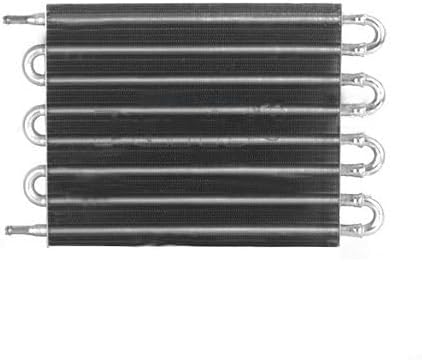
| Manufacturer Part Number | PG-2601245 |
|---|---|
| OEM Part Number | 13105, 17506, 750404, 911405, YO6 |
| Item Weight | 5 pounds |
| Date First Available | April 21, 2025 |
This Sawyer Auto transmission oil cooler is a direct replacement designed to match factory mounting and hose terminations for Nissan Titan model years listed. It uses a tube-and-fin core with metal tubes and fins to circulate transmission fluid and help maintain normal operating temperatures. Installation is straightforward: mount to the factory brackets, hook up the transmission lines, and check for proper sealing. The unit is quality-checked for fit and sealing and is intended primarily to replace coolers that have corroded, been punctured, or developed leaks. As a budget-focused replacement it provides a simple, serviceable fix without performance upgrades like stacked-plate cores or auxiliary mounting brackets. That means it restores cooling function and fitment at a lower cost, but it is not targeted at heavy towing or extended high-load use where a high-capacity cooler would be preferable.
Best for: Buyers who need an affordable, direct-fit replacement to restore stock cooling performance on a Nissan Titan and prioritize easy installation and correct fitment over upgraded cooling capacity.
Less Ideal for: Drivers who frequently tow heavy loads, run extended high-temperature duty cycles, or want a performance upgrade should consider a higher-capacity aftermarket cooler instead.
- Direct-fit design to match factory mounting and hose termination points for the specified Nissan Titan years
- Tube-and-fin metal construction offers basic, reliable heat dissipation for normal driving and standard towing
- Quality-checked for fit and sealing to simplify installation and reduce modification needs
- Replaces common failure modes like corrosion, punctures, and leaks
- Tube-and-fin core provides less cooling capacity than stacked-plate or high-capacity aftermarket coolers
Verdict: A cost-conscious, direct-fit replacement that restores factory-style transmission cooling and fitment for the specified Nissan Titan years.
3. UIU Engine Coolant Radiator with Integrated Transmission Oil Cooler for Nissan 5.6L (2004–2015)

| Compatible engines/models | Nissan Titan/Armada/Pathfinder/Infiniti QX56 5.6L 2004–2015 (model-specific listed) |
|---|---|
| Core material | Aluminum |
| Transmission cooler | Brass integrated cooler |
| Tanks | PA66 GF30 inlet/outlet tanks |
This UIU radiator replaces the factory unit and adds a built-in transmission oil cooler to handle both engine and transmission heat on 5.6L Nissan applications. It installs as a direct fit for the specified 2004–2015 Titan and related vehicles and is built with an aluminum core, TIG-welded joints, and PA66 GF30 inlet/outlet tanks. The high-density multi-louvered fins and brass transmission cooler improve cooling efficiency, which helps maintain lower operating temperatures under towing or heavy-load driving. UIU reports leak testing and a treated coating for corrosion resistance, so the assembly is aimed at lasting through seasonal cycles. Expect professional-level installation: it mirrors factory mounting points but will require standard radiator replacement procedures and careful handling of coolant and transmission lines. The product carries a two-year unlimited-mileage guarantee from the brand, but buyers should verify hose and sensor compatibility during fit confirmation and consider professional installation if they lack cooling-system experience.
Best for: Buyers who prioritize long-term reliability and thermal performance for towing or heavy-use driving and want a single, factory-style replacement that restores both engine and transmission cooling.
Less Ideal for: Someone looking for a budget temporary fix, a universal aftermarket cooler, or a DIYer who prefers plug-and-play bolt-on upgrades without radiator removal.
- Direct-fit design for Nissan Titan and related 5.6L models which simplifies replacement.
- Aluminum core with TIG-welded joints and high-density fins for efficient heat transfer.
- Integrated brass transmission oil cooler reduces the number of separate components and improves transmission cooling while towing.
- Leak-tested construction and treated coating for better corrosion resistance in varied climates.
- Requires proper matching of hoses and sensors; may need additional fittings or minor adjustments for exact vehicle variants.
- Installation of a full radiator assembly can be labor intensive and may be best handled by a professional.
Verdict: A durable, direct-fit replacement radiator with an integrated transmission cooler built to restore factory-level cooling reliability for 5.6L Nissan Titan applications.
4. TRQ Aluminum Core Radiator, 1-Row, Direct Fit

| Core Row Quantity | 1 |
|---|---|
| Core Thickness | 1.25 in |
| Core Material | Aluminum |
| Transmission Oil Cooler | Concentric, included |
| Outlet Diameter | 1.38 in |
This TRQ radiator is a one-row aluminum core direct replacement built to swap into compatible 2004–2015 Nissan and Infiniti vehicles without modification. It combines a down-flow aluminum core and plastic tanks with a concentric internal transmission oil cooler, so it cools engine coolant and transmission fluid in one installed unit. Typical use is as a like-for-like factory replacement during radiator or transmission-cooling service; preassembled mounting points and standard inlet/outlet locations simplify bolt-in installation for DIYers or professional shops. Notable features include a 1.25-inch core thickness, built-in transmission cooler fittings, and factory-style inlet and outlet placement. In practice this gives reliable cooling capacity for everyday driving and towing loads within the vehicle's original design, and it reduces the parts count versus installing a separate cooler. Trade-offs are the single-row core may not match the higher heat rejection of multi-row or aftermarket performance radiators under heavy-duty towing or extreme ambient conditions, and the plastic tanks are less robust than full-metal constructions for very high-mileage, heavy-use fleets.
Best for: Buyers who prioritize a proven, bolt-in replacement that restores factory cooling and simplifies installation, especially DIYers and technicians who value documented fit and social-proof from other owners.
Less Ideal for: Drivers who regularly tow heavy loads in hot climates or need maximum transmission cooling should consider multi-row or performance-specific coolers instead.
- Direct-fit design with preassembled mounting points for straightforward installation
- Integrated concentric transmission oil cooler eliminates need for a separate cooler
- Aluminum core with 1.25-inch thickness balances cooling and airflow resistance
- Factory-style inlet and outlet placements match original routing
- Designed specifically for listed Nissan and Infiniti fitments to reduce compatibility guesswork
- Single-row core offers less peak heat rejection than multi-row performance radiators
Verdict: A straightforward, direct-fit aluminum radiator with a built-in transmission cooler that restores factory cooling and simplifies replacement for compatible Nissan and Infiniti trucks and SUVs.
5. YITAMOTOR Radiator for 5.6L V8 Nissan Titan/Pathfinder/Armada/QX56 (2004–2015)

| Core Size | 26.69" x 23.5" |
|---|---|
| Compatible Engines | 5.6L V8 |
| Fitment Years | 2004-2015 |
| Exterior | Machined |
This YITAMOTOR radiator replaces the factory cooling core on 5.6L V8 Nissan Titan, Pathfinder, Armada and Infiniti QX56 applications from 2004–2015. It uses a high-density aluminum tube-and-fin core plus an integrated aluminum oil cooler to increase heat dissipation and help keep engine and transmission temperatures in check during towing or heavy use. The tanks are molded from glass fiber reinforced nylon for better heat resistance and the seams are welded to reduce the chance of leaks or cracks. It ships well packaged and is intended as a like-for-like swap with OEM mounting points and an included installation guide, though the radiator cap is not provided. Expect solid cooling performance and durability for lower-risk replacement projects, but plan on professional installation if you are not comfortable with draining and refilling both coolant and the oil cooler circuits. This unit is practical for owners who want a durable, factory-style radiator without modifying cooling system plumbing.
Best for: Buyers who prioritize low risk and factory-style replacements for cooling system repairs, especially those wanting improved cooling for towing or heavy-duty driving without altering the vehicle.
Less Ideal for: People looking to upgrade to a dedicated aftermarket high-capacity transmission cooler or custom cooling setup should consider purpose-built transmission coolers instead.
- High-density aluminum core and fins increase heat dissipation for improved cooling under load
- Integrated aluminum oil cooler for better temperature control of engine and transmission fluids
- Glass fiber reinforced PA66 tanks and welded seams reduce leak and crack risk
- Designed to match OEM fitment for a straightforward replacement
- Secure packaging to protect the radiator during shipping
- Radiator cap is not included so an existing or replacement cap must be supplied separately
Verdict: Choose this YITAMOTOR radiator when you want a direct-fit, better-than-stock cooling replacement that reduces leak risk and improves temperature control for 5.6L V8 Nissan Titan-era vehicles.
Choosing the Right 2004-2015 Nissan Titan Transmission Cooler: Key Factors to Consider
Cooling Capacity and Core Design
Cooling capacity determines how effectively the cooler can lower transmission fluid temperatures during sustained towing or heavy loads. Look for coolers with larger surface area and multi-pass cores that increase heat transfer without creating excessive pressure drop.
Core design affects both performance and longevity. Tube-and-fin cores are compact and efficient for airflow-limited spaces, while stacked-plate or bar-and-plate cores offer higher heat rejection for severe-duty applications. For the 2004-2015 Nissan Titan, prioritize cores rated to reduce transmission fluid temperature by a meaningful margin under tow, since reduced operating temperature slows fluid degradation and prolongs component life.
Fitment and Mounting Location
Proper fitment is essential to avoid interference with factory components and to ensure reliable routing of transmission cooler lines. A cooler that requires no major chassis modification or radiator removal will be far easier to install and less likely to cause unintended problems.
Consider mounting location relative to the radiator and condenser to ensure good airflow. Front-mounted external coolers typically perform best for heavy towing, but confirm available space on the Titan s front crossmember or behind the bumper. Also check for mounting brackets that match or adapt to Nissan Titan mounting points to minimize fabrication.
Line and Fitting Quality
Transmission cooler lines and fittings connect the cooler to the factory transmission cooler circuit and must maintain a leak-free seal under pressure and temperature cycling. High-quality barbed fittings with crimped or double-clamp hose connections reduce the chance of leaks, while threaded fittings should use the correct adapter sizes to match Nissan line ends.
Pay attention to hose material and length. Reinforced transmission-grade hoses resist swelling from heat and fluid exposure. Correct routing avoids sharp bends and keeps hoses clear of exhaust and moving suspension parts. When a transmission cooler kit is offered, ensure it includes all necessary fittings, clamps, and instructions for a reliable install.
Durability and Corrosion Resistance
Road debris, salt, and moisture can quickly degrade poorly protected coolers, so choose materials and finishes suitable for long-term exposure. Aluminum cores offer good heat transfer and corrosion resistance when properly coated, while steel or copper components should have protective finishes.
Look for robust end tanks, welded or brazed joints, and protective mesh or screens for the core face. Durable coolers maintain performance over time without developing leaks or internal contamination that could harm the transmission. For Titan owners who drive on gravel or salted roads, corrosion resistance is a high priority.
Installation Complexity and Tools Required
Installation difficulty affects both cost and reliability. A simpler install that uses existing mounting points and direct-fit fittings reduces labor and the chance of installation errors. Consider whether you have the tools and experience to install a cooler kit or whether professional installation is warranted.
Assess whether the kit includes detailed instructions, correct adapters for Nissan lines, and proper hose clamps. Some installs require temporarily supporting the radiator or removing the bumper cover on the Titan; knowing these steps ahead of time helps plan for time and workspace needs.
Maintenance and Serviceability
Think about long-term accessibility and how the cooler will be serviced if needed. External coolers mounted behind the bumper or low on the vehicle may be exposed to damage but are generally easy to inspect and replace. Features like repair fittings, removable protective screens, or replaceable cores make maintenance simpler.
Also consider how the cooler affects fluid change procedures. Some installations add extra fluid capacity or create the need for line flushing. Properly documented maintenance steps will reduce the risk of air entrapment and contamination during service.
How a Transmission Cooler Helps the Titan During Towing
An auxiliary transmission cooler reduces the temperature of transmission fluid when the vehicle is under sustained load, such as towing a trailer or hauling heavy cargo. Lower fluid temperatures slow oxidation and viscosity breakdown, preserving clutch friction materials and internal seals.
On the 2004-2015 Nissan Titan, factory coolers are sized for general driving. When you add frequent towing or hill climbs, the extra heat load can exceed stock capacity. An external cooler placed in the airflow path in front of the radiator or in a high-flow spot will significantly limit peak temperatures during prolonged loads.
- Reduces fluid breakdown and extends component life
- Helps maintain consistent shift quality under load
- Lowers risk of transmission overheating during long tow runs
Picking the Right Size and Type for Your Driving Style
Think about your typical use case. Light towing and occasional trailer trips may only require a compact tube-and-fin cooler, while regular heavy towing or high ambient temperatures favor a larger bar-and-plate or multi-core cooler. The goal is to match heat rejection capability to the expected thermal load.
Also consider the available frontal area on the Titan and whether you prefer a single-pass or multi-pass design. Multi-pass coolers increase heat transfer at the cost of slightly higher pressure drop, which is acceptable for most automatic transmission circuits but worth checking against manufacturer guidance.
- Compact coolers are easier to fit but offer less capacity
- Larger or multi-core units suit heavy, sustained towing
- Check pressure drop specifications if available
Installation Tips Specific to the 2004-2015 Nissan Titan
Plan your mounting location to avoid interference with the radiator, condenser, and bumper impact beams. Front-of-radiator mounts or behind-the-bumper placements vary by model year and trim due to changes in fascia and accessory layout, so verify clearance before finalizing a bracket location.
When routing new transmission cooler lines, keep them away from hot exhaust components and moving suspension parts. Use factory-style clamps or supplied mounting hardware to prevent chafing. If the kit includes an adapter to tap into the factory cooler lines, ensure a secure connection and test the system for leaks after installation.
- Test-fit mounting brackets before trimming or drilling
- Route hoses with generous bends and secure clamps
- Bleed and check fluid level after installation to avoid air pockets
Common Failure Modes and How to Inspect Them
Typical failure points include external damage to the core from road debris, degraded hoses and fittings, and internal clogging from debris or sludge. Visual inspection should focus on core fins, end tanks, and hose connection points for signs of wetness or corrosion.
Pay attention to symptoms such as rising operating temperatures under load or fluid contamination. Regular checks after heavy towing sessions can catch minor leaks early before they cause fluid loss that would result in transmission damage.
- Check for wet spots or discoloration around fittings
- Inspect hoses for soft spots, bulges, or cracks
- Monitor transmission temperature or shift feel for early signs
Mounting Accessories and Protection Options
Consider adding a protective screen or mesh in front of the cooler if you frequently drive on gravel roads. A small guard can prevent stone impact that bends fins or punctures the core. For low-mounted units, a skid plate or full-width guard helps shield the cooler from larger debris.
Use vibration-damping mounts to reduce stress on fittings and prevent fatigue. Properly sized brackets that distribute load across the chassis will reduce the risk of bracket failure or cooler movement that leads to hose strain.
- Stone screens protect core fins on gravel roads
- Skid plates guard low-mounted coolers from larger impacts
- Rubber mounts reduce vibration and hose fatigue
Still looking for the perfect fit?
Select your Nissan Titan configuration to see the most relevant Transmission Coolers recommendations
How We Chose the Best 2004-2015 Nissan Titan Transmission Cooler
We selected contenders based on real-world cooling performance, vehicle-specific fitment for 2004-2015 Nissan Titan models, and installation practicality. Our evaluation prioritized heat rejection capacity tested or specified by manufacturers, the cooler s compatibility with factory transmission lines and mounting points, and materials that resist corrosion and wear under road conditions.We also considered line and fitting quality, including whether proper barb or threaded fittings are provided, plus the availability of a complete transmission cooler kit that includes hoses, clamps, and hard lines when required. Ease of installation mattered; we favored designs that work with common mounting locations on the Titan without extensive fabrication.Durability factors included core construction, brazing quality, and protective coatings to guard against stone chips and salt exposure. Long-term maintenance concerns such as serviceability and compatibility with automatic transmission fluid were factored in. Exclusions: we did not include products that lack any Titan-specific fitment guidance, or coolers intended only for very small passenger vehicles that cannot meet towing thermal loads.
Our full evaluation process is outlined in our review methodology.
FAQ
How do I know if my Titan needs an auxiliary transmission cooler?
If you tow frequently, notice higher-than-normal transmission temperatures, experience hotter-than-usual shift feel, or operate in hot climates with sustained loads, an auxiliary cooler often helps. Also consider an upgrade if you regularly haul near the vehicle s maximum tow capacity.
Can I install a transmission cooler kit myself on a 2004-2015 Nissan Titan?
Many owners with basic mechanical skills can install a transmission cooler kit, especially if it includes vehicle-specific fittings and clear instructions. However, installations that require bumper removal, radiator support work, or custom line fabrication are better handled by a professional.
Will adding an external cooler change my transmission fluid change interval?
An effective external cooler can lower fluid temperatures and slow degradation, but it does not eliminate the need for scheduled fluid changes. You may see longer fluid life in heavy-duty use, but follow Nissan s maintenance guidance and monitor fluid condition when deciding on interval adjustments.
Are universal transmission coolers a good choice for the Nissan Titan?
Universal coolers can work if they fit the available space and include the right fittings, but they often require custom mounts or hose routing. A unit with Titan-specific fitment guidance or a complete transmission cooler kit will usually simplify installation and reduce fitment risk.
What are common transmission cooler failure symptoms to watch for?
Watch for fluid leaks at fittings, rising transmission temperatures under load, visible damage to the cooler core, and contaminated or discolored fluid. Any sign of fluid loss or overheating should be addressed promptly to prevent transmission damage.
Final Verdict
Choosing the right transmission cooler for a 2004-2015 Nissan Titan means balancing cooling capacity, fitment ease, and long-term durability. Prioritize a cooler whose core design matches your towing needs, offers secure, transmission-grade fittings and routes cleanly without contact with heat sources.For most Titan owners who tow occasionally, a mid-sized external cooler with good mounting hardware and quality hoses provides a meaningful safety margin. If you do frequent heavy towing, opt for a larger-capacity core and robust protection. Focus on reliable installation and routine inspection to get the best service life from your cooler.
Explore More:
- Check out all Nissan Titan parts & accessories
- Explore Transmission Coolers Maintenance & Repair Guides
- Explore Transmission & Drivetrain
- Browse all Auto Parts
