

Note: This article contains affiliate links. If you click on these links and make a purchase, I may earn a small commission at no extra cost to you. This helps support my research and content. Read my full affiliate disclosure here.
If you drive a 2002-2005 Ford Explorer regularly towing, hauling, or in stop-and-go traffic, transmission heat can shorten component life and cause drivability issues. A dedicated transmission cooler lowers fluid temperatures, reduces wear, and helps the Explorer shift more consistently under load. This guide presents seven shortlisted transmission coolers and kits chosen for fitment, cooling performance, and ease of installation specifically for 2002-2005 Ford Explorer owners.Below we explain the criteria used to evaluate options, the tradeoffs to expect when adding an external cooler, and practical installation considerations so you can pick the right cooler for how you use your Explorer.
Looking for other parts? See all Ford Explorer parts & accessories.
Top Picks at a Glance
| Best Overall The best all-around choice for most situations | A-Premium Transmission Oil Cooler for Ford Explorer and Mercury Mountaineer (2002–2005) |  |
| Best Value The sweet spot between price and what you get | Sunbelt Transmission Oil Cooler for 2002–2005 Ford Explorer / Mercury Mountaineer |  |
| Best Budget The cheapest option that still gets the job done reliably | BARTOO Universal 4-Pass Transmission Oil Cooler Kit (5/16" Thread) |  |
| Most Popular A crowd favorite that many people choose with confidence | EVIL ENERGY 5/16" 6-Pass Tube-and-Fin Transmission Oil Cooler Kit |  |
| Best Seller A high-volume bestseller chosen again and again | BARTOO 1/2" Universal Transmission Oil Cooler, Aluminum Tube-and-Fin | 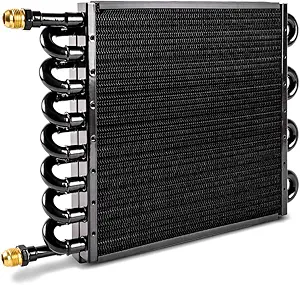 |
1. A-Premium Transmission Oil Cooler for Ford Explorer and Mercury Mountaineer (2002–2005)

| Material | Aluminum |
|---|---|
| Vehicle fitment | Ford Explorer / Mercury Mountaineer 2002-2005 V6 4.0L V8 4.6L |
| Transmission type | Automatic |
| Manufacturer part number | APOC149 |
This A-Premium transmission oil cooler is a direct-fit replacement intended for 2002–2005 Ford Explorer and Mercury Mountaineer with automatic transmissions. Made from aluminum, it increases heat dissipation compared with stock coolers to help keep transmission fluid temperatures lower under towing or heavy use. Typical installation replaces the original cooler in the front of the vehicle and uses the same reference numbers listed for fit verification. In practice the cooler provides firmer temperature control during highway towing or stop-and-go driving, which helps reduce wear on internal transmission components and maintain shifting performance. The construction looks robust and the included reference compatibility makes confirming fit straightforward, but you should verify hose fittings and mounting points before ordering. There is a one-year unlimited-mileage guarantee from the brand, and buyers comfortable with a straightforward bolt-on swap will find it an effective, budget-friendly option to restore cooling capacity on these model years.
Best for: Buyers who want a practical, factory-style replacement that restores transmission cooling for everyday driving and occasional towing on 2002–2005 Explorers and Mountaineers.
Less Ideal for: Drivers seeking a high-capacity aftermarket cooler for heavy-duty towing or track use should consider purpose-built performance coolers instead.
- Aluminum construction for improved heat dissipation over older units
- Made to match factory fitment for 2002–2005 Explorer and Mountaineer automatic transmissions
- Helps lower transmission fluid temperatures during towing or heavy driving
- Includes multiple OEM reference numbers to simplify fit verification
- Not a universal cooler so fit must be confirmed for your exact vehicle and transmission plumbing
Verdict: A practical, factory-fit aluminum replacement that restores transmission cooling for 2002–2005 Explorer and Mountaineer owners who want reliable, all-around performance.
2. Sunbelt Transmission Oil Cooler for 2002–2005 Ford Explorer / Mercury Mountaineer

| Compatible vehicles | 2002–2005 Ford Explorer, Mercury Mountaineer |
|---|---|
| Position | Front |
| Manufacturer part number | SBTFO4050105 |
| ABPA Partslink Number | FO4050105 |
This Sunbelt transmission oil cooler is a direct-fit replacement built to match factory form and function for 2002–2005 Ford Explorer and Mercury Mountaineer models. It installs in the front position and is used to lower transmission fluid temperature during towing, heavy driving, or daily duty to reduce wear and improve shift consistency. The unit is described as constructed from corrosion-resistant materials with a fin-and-tube core for efficient heat dissipation and is factory-matched to the OE mounting points to simplify installation. Practical benefits include improved transmission protection under load and a plug-and-play fit that cuts install time compared with universal coolers. Limitations are that this is a vehicle-specific replacement rather than a high-capacity add-on cooler for extreme towing, and buyers should confirm the exact engine and model year fitment before ordering. The product is backed by manufacturer inspection and testing for quality control.
Best for: Buyers who want a practical, factory-style replacement that restores transmission cooling performance with minimal fuss and installation time.
Less Ideal for: Drivers planning heavy towing or demanding track use who need a larger, high-capacity auxiliary cooler should consider purpose-built heavy-duty options.
- Designed to match factory fit and mounting points for straightforward installation
- Corrosion-resistant construction and fin-and-tube core for effective heat dissipation
- Manufactured units are inspected and performance-tested before shipping
- Not marketed as a high-capacity or heavy-duty add-on cooler for severe towing demands
Verdict: Choose this if you want a vehicle-specific, factory-fit transmission cooler that restores reliable cooling with an easy install.
3. BARTOO Universal 4-Pass Transmission Oil Cooler Kit (5/16" Thread)

| Thread Size | 5/16 |
|---|---|
| Thread Type | NPT |
| Size | 4 Pass |
| Material Type | Aluminum |
This BARTOO kit is a compact 4-pass tube-and-fin transmission oil cooler that includes hoses, clamps, mounting rods, foam pads and an adapter to create a secondary cooling path for transmission fluid. It is typically used inline with existing 5/16" cooler lines or as an auxiliary cooler where space is limited and airflow is available. The aluminum construction and internal turbulators improve heat transfer compared with a straight-through line, and the kit lists a high burst pressure and wide operating temperature range for durability. Practical benefits are straightforward: easier installation because of the included hardware, measurable fluid temperature reduction when mounted in an airflow location, and a low-cost way to protect transmissions under heavy towing or spirited driving. Limitations are the universal fit approach which requires verifying hose/line size and clearance on the vehicle, and the small core size means it will not match larger, dedicated coolers for extreme towing or continuous heavy-duty use.
Best for: Buyers looking for an affordable, ready-to-install transmission cooler to reduce fluid temps on a used vehicle and extend transmission life under occasional towing or harder driving.
Less Ideal for: Drivers who regularly tow heavy loads, run continuous heavy-duty use, or need maximum cooling capacity should choose a larger, purpose-built cooler instead.
- Complete kit with hoses, clamps, mounting rods and adapter for easier installation
- 4-pass tube-and-fin core with internal turbulators for improved heat transfer
- Aluminum T-6061 construction offering good corrosion resistance and durability
- Designed for 5/16" transmission cooler lines and compact enough for tight engine bays
- Core size is modest so cooling capacity is limited compared with larger dedicated coolers
Verdict: A compact, budget-friendly 4-pass aluminum cooler kit that gives an easy, low-cost temperature reduction for 2002–2005 Ford Explorer owners who want basic added transmission protection.
4. EVIL ENERGY 5/16" 6-Pass Tube-and-Fin Transmission Oil Cooler Kit

| Core type | 6-pass tube-and-fin |
|---|---|
| Hose material | CPE |
| Hose working pressure | 145 PSI |
| Hose bursting pressure | 900 PSI |
| Working temperature range | -40°F to 257°F |
This EVIL ENERGY transmission oil cooler is a compact 6-pass tube-and-fin cooler intended to lower automatic transmission fluid temperatures on vehicles that use 5/16" ID lines. It is made from aluminum alloy with CPE hoses rated for wide temperature and pressure ranges, and the tube-and-fin design increases airflow contact to shed heat. The kit is sold as a universal unit and includes installation instructions and hoses, so a straightforward in-front-of-radiator or A/C-condensor mount with good airflow is the typical use. In practice it provides a noticeable drop in fluid temperature on moderate towing or heavy city driving, helping transmission longevity. Limitations are the universal fit nature and the 5/16" line requirement, so it may need adapters or custom routing on some 2002-2005 Ford Explorer setups, and the compact size means it will not match the cooling capacity of larger stacked-plate coolers for serious heavy towing. Expect an easier DIY install compared with larger kits but check clearances and mounting options before buying.
Best for: Owners who want a cost-effective, easy-to-install transmission cooler to reduce fluid temperatures during regular driving and occasional towing while prioritizing proven real-world results and documented user feedback.
Less Ideal for: Drivers who plan frequent heavy towing or demanding commercial use and need maximum cooling capacity should consider larger, purpose-built coolers instead.
- 6-pass tube-and-fin design increases air contact for better ATF heat dissipation
- Aluminum alloy construction resists corrosion and conducts heat efficiently
- Includes CPE hoses rated to 145 PSI working pressure and wide temperature range
- Compact footprint that is easier to fit in tight frontal locations
- Comes with installation instructions for DIY mounting
- Universal kit requires confirming 5/16" line compatibility and may need adapters for some vehicles
- Smaller tube-and-fin core provides less cooling than larger stacked-plate coolers for heavy towing
Verdict: A compact, proven universal 6-pass aluminum cooler that delivers noticeable ATF temperature reduction for everyday driving and light towing when fitted correctly to a 2002–2005 Ford Explorer.
5. BARTOO 1/2" Universal Transmission Oil Cooler, Aluminum Tube-and-Fin

| Core type | Tube and fin |
|---|---|
| Inlet/outlet size | 1/2" ID lines |
| Material | T-6061 aluminum |
| Working pressure | 145 psi |
| Burst pressure | 900 psi |
This BARTOO transmission oil cooler is a compact, universal 1/2" tube-and-fin cooler built from T-6061 aluminum for routine cooling upgrades or replacements. It is meant to be installed in a location with good airflow where the 1/2" ID cooler lines can be connected. The tube-and-fin design increases surface area so air passing over the fins carries heat away from the ATF, lowering operating temperature during towing or heavy driving. The unit is rated for high working and burst pressures and a wide operating temperature range, so it handles everyday driving and moderate duty cycles without special care. Installation is simple for anyone comfortable routing cooler lines and securing a small radiator-style unit, though you should confirm available space before buying. There is no mounting hardware or vehicle-specific fittings included beyond the cooler itself, so expect to source clamps, brackets, or adapters if your Explorer needs them.
Best for: A cautious buyer who wants a straightforward, factory-quality replacement-style cooler to lower transmission fluid temperatures during everyday driving and occasional towing on a 2002–2005 Ford Explorer.
Less Ideal for: Drivers seeking a vehicle-specific plug-and-play kit with included brackets and adapters or those needing extreme-duty cooling for heavy commercial towing should consider purpose-built or matched-fit coolers instead.
- Tube-and-fin construction increases heat dissipation compared with straight-line coolers.
- T-6061 aluminum construction offers corrosion resistance and lighter weight.
- High working and burst pressure ratings provide robust fluid containment.
- Wide operating temperature range suitable for varied climates.
- Universal kit lacks vehicle-specific fittings and mounting hardware, so additional parts may be required.
Verdict: Choose this compact, high-pressure rated aluminum tube-and-fin cooler if you want a reliable, conservative upgrade to lower ATF temperatures on a 2002–2005 Ford Explorer.
Choosing the Right 2002-2005 Ford Explorer Transmission Cooler: Key Factors to Consider
Cooling Capacity and Heat Rejection
Cooling capacity determines how effectively a transmission cooler reduces fluid temperature under different loads. For the 2002-2005 Ford Explorer, capacity matters most when towing, driving in hilly terrain, or operating in heavy traffic where the transmission generates sustained heat. Look for specifications that indicate degrees of temperature drop or heat rejection rate under standardized testing. In practice, a higher-capacity cooler will maintain lower fluid temperatures during long climbs or towing, which reduces clutch wear and extends fluid life.
Core design affects heat rejection too. Multi-pass or stacked-plate designs often move fluid more slowly through additional surface area, improving cooling at low vehicle speeds. Larger single-pass bar-and-plate cores rely on airflow and may be better when the vehicle frequently cruises at highway speeds. Choose capacity based on your typical use: heavier duty demands higher capacity, while light urban driving can often use a modest upgrade over stock.
Fitment and Mounting for the Explorer
Physical fit and mounting options are critical because the 2002-2005 Ford Explorer has limited space in front of the radiator and around the condenser. Check overall cooler dimensions and mounting bracket designs to ensure the unit will clear the radiator, AC condenser, and bumper support. Some coolers are designed to bolt to the radiator support or the front crossmember; others use universal brackets and require trimming or custom mounting.
Consider clearance for road debris and airflow. A cooler mounted too close to other components can restrict airflow or be vulnerable to damage from stones. Also confirm whether the kit includes hardware for the Explorer or if you must fabricate brackets. Good fitment reduces installation time and ensures reliable cooling and protection from impacts.
Connection Type and Hose Compatibility
Transmission cooler connections vary between flare fittings, barb fittings for hose, and quick-disconnect styles. For a 2002-2005 Explorer, matching the cooler to the vehicle's factory transmission cooler lines determines whether you can connect directly or need adapters or replacement hoses. Kits that include adapters or a complete transmission cooler kit with hoses simplify installation and reduce leak risk.
Material quality of hoses and clamps matters. Look for reinforced hose rated for transmission fluid temperatures and pressures, and for fittings that use crush washers or sealed threads rather than relying solely on hose clamps. Secure, compatible connections reduce leak potential and make future service easier.
Core Material and Corrosion Resistance
Core material and coating affect longevity in road salt, moisture, and debris exposure. Brazed-aluminum cores offer good thermal conductivity and are commonly used because they balance weight, strength, and heat transfer. Tin-plated or epoxy-coated finishes add corrosion resistance for explorers used in wet or salted-road climates.
Also inspect the quality of end tanks and solder joints. Poorly finished seams can fail over time, creating leaks. Choosing a cooler with proven corrosion resistance extends service life and reduces the chance of needing early replacement due to pitting or corrosion caused by environmental exposure.
Airflow Placement and Impact on Radiator Performance
Where you place the transmission cooler relative to the radiator and condenser affects overall cooling system performance. Placing a cooler in front of the radiator improves transmission cooling but can reduce radiator airflow if the cooler is too dense or blocks a large area. For the 2002-2005 Ford Explorer, balance is important: situate the cooler to maximize airflow while minimizing impact on engine cooling, especially in hot climates or heavy towing conditions.
Some installers mount the cooler in front of the AC condenser for the best airflow, while others opt to sandwich it directly to the radiator for compactness. Consider the tradeoff between optimal transmission heat rejection and potential increases in engine coolant temperatures. Monitor system temperatures after installation to ensure neither system is compromised.
Installation Complexity and Maintenance Access
Installation complexity ranges from straightforward bolt-on kits to setups requiring line rerouting, cutting, and joining hoses. A transmission cooler that is easy to install on the 2002-2005 Explorer will include clear instructions, Explorer-specific brackets or templates, and proper hose lengths. If the cooler requires removal of fascia or other components, plan for additional time and minor trim work.
Maintenance access is also important. Position the cooler so you can inspect for leaks, clean fins of debris, and replace hoses without major disassembly. Regular visual checks and occasional fin cleaning will prolong cooler efficiency. Choosing a design that balances simple installation with convenient long-term access reduces ownership headaches.
Types of Transmission Coolers and How They Work
Transmission coolers remove heat from automatic transmission fluid by routing the fluid through metal passages where airflow carries away heat. Common designs include tube-and-fin, plate-and-fin, and stacked-plate or multi-pass cores. Each design balances surface area, fluid flow rate, and airflow resistance differently, which affects performance in city driving versus highway use.
For a 2002-2005 Ford Explorer, choose a cooler type based on your driving. Tube-and-fin designs are lightweight and provide good airflow-based cooling, while multi-pass or stacked-plate designs improve cooling at low speeds or in heavy towing by increasing fluid dwell time and surface contact.
- Tube-and-fin: Good airflow efficiency, often lighter
- Plate-and-fin: Compromise between size and heat rejection
- Multi-pass/stacked-plate: Higher cooling at low speeds, better for towing
When an External Cooler Is Necessary for the Explorer
An external transmission cooler is particularly valuable if you tow trailers, carry heavy loads, or regularly drive in hilly terrain with your 2002-2005 Explorer. Those conditions increase transmission operating temperature, accelerating wear on clutches and seals. An added cooler helps keep fluid temperatures in a safer range during extended high-load periods.
If you primarily use the Explorer for light commuting with minimal towing, a modest-capacity cooler or maintaining factory cooling may be adequate. Consider monitoring transmission fluid temperature under typical conditions to decide whether the extra cooling is warranted.
- Recommended when towing trailers or heavy loads
- Useful for frequent stop-and-go traffic and steep grades
- Less critical for light commuting without towing
Install Tips Specific to the 2002-2005 Explorer
Plan your mounting location before starting. The most common spots are in front of the radiator or ahead of the AC condenser, but confirm there is enough clearance for the cooler and mounting hardware. Test-fit the cooler and hose routing to avoid contact with moving parts or hot exhaust components.
When you install hoses or a transmission cooler kit, use quality clamps and check torque on fittings. If the kit includes adapters for the Explorer's transmission cooler lines, verify seals and test for leaks at ambient pressure before a road test. After installation, monitor transmission fluid temperature and inspect for leaks after a short drive and again after a few hundred miles.
- Test-fit for clearance with radiator and condenser
- Use reinforced transmission-rated hoses and secure clamps
- Check for leaks and monitor fluid temps after installation
Maintaining Your Transmission Cooler and Lines
Regular inspection helps catch issues early. Look for dents, fins clogged with debris, crushed lines, or corrosion at fittings. Road debris is the most common cause of physical damage; clean the cooler fins gently with low-pressure water to remove buildup without bending fins.
Also inspect transmission cooler lines for soft spots, cracks, or fluid seepage. Replace any hose showing age or damage and tighten clamps if necessary. Periodic fluid checks are helpful: sudden drops in fluid level or burnt-smelling fluid can indicate leaks or overheating and should prompt a system inspection.
- Clean fins with low-pressure water, avoid fin damage
- Inspect hoses and fittings for wear and seepage
- Monitor fluid level and smell for signs of overheating
How Cooler Placement Affects Towing Performance
When towing heavy loads with a 2002-2005 Explorer, cooler placement makes a measurable difference. A front-mounted external cooler maximizes airflow and reduces transmission fluid temperature during sustained climbs. For heavier towing, a larger capacity cooler or a dual-pass configuration often keeps temperatures lower than a small unit tucked behind the bumper.
However, aggressive placement in front of the radiator can reduce engine cooling efficiency if the cooler is dense or oversized. Balance tow cooling needs against engine operating temperature and consider adding a temperature monitor if you tow frequently to ensure neither system suffers.
- Front-mounted: Best airflow for towing
- Behind radiator: Lower impact on engine cooling but less effective
- Use temperature monitoring for heavy towing
Still looking for the perfect fit?
Select your Ford Explorer configuration to see the most relevant Transmission Coolers recommendations
How We Chose the Best 2002-2005 Ford Explorer Transmission Cooler
We focused on selection criteria that directly affect cooling performance and day-to-day ownership of a 2002-2005 Ford Explorer. Core evaluation factors included measured or specified cooling capacity in degrees reduction under load, physical fit and mounting options compatible with the Explorer's front-end and radiator area, and connection types that match stock transmission cooler lines or common aftermarket hose fittings.We also prioritized durability: materials and construction such as brazed-aluminum cores, corrosion-resistant fittings, and reinforced cooler lines that hold up to road debris and temperature cycling. Installation simplicity was assessed by whether a kit includes mounting brackets, hose adapters, and clear instructions for the Explorer chassis and whether it allows reuse of stock lines or requires line splicing.Thermal management details like fin density and core thickness were considered when available because they influence airflow and heat rejection. Finally, we screened out units lacking clear fitment guidance for the 2002-2005 Explorer and products without basic durability features such as sealed fittings or corrosion-resistant finishes. The resulting list contains units that balance performance, compatibility, and long-term reliability for this vehicle.
Our full evaluation process is outlined in our review methodology.
FAQ
How do I tell if my Explorer needs an auxiliary transmission cooler?
Often signs include higher-than-normal shift temperatures during towing, frequent transmission overheating warnings if equipped, or burnt-smelling fluid. If you tow regularly or drive in hot climates and notice heat-related shifting issues, adding a cooler is commonly recommended.
Can I install a transmission cooler myself on a 2002-2005 Explorer?
Many owners can install a cooler using a transmission cooler kit that includes hoses and adapters, especially if no major disassembly is required. Basic mechanical skill, the right tools, and attention to leak-free connections are needed. Plan for test drives and fluid checks after installation.
Will adding an external cooler affect my radiator or engine temperatures?
It can if the cooler is placed where it blocks radiator airflow. Proper placement and selecting a cooler with appropriate fin density helps avoid negatively impacting engine cooling. After installation, monitor engine coolant temperatures to confirm there is no adverse effect.
What is the typical maintenance interval for transmission cooler lines?
There is no fixed interval, but inspect cooler lines during regular service intervals or at least twice a year. Replace hoses showing cracks, soft spots, or persistent seepage. Proactive replacement is advisable if the vehicle operates in harsh climates or where road salt is common.
Are universal transmission coolers suitable for the Explorer?
Universal coolers can work but require careful selection of dimensions and the correct fittings for the Explorer. Choose a universal unit only if you confirm fitment, mounting options, and compatible line adapters, and be prepared to perform minor custom mounting or hose routing.
What should I do if I notice transmission fluid cooler failure symptoms after installation?
If you see overheating, fluid leaks, or abnormal shifting after installation, stop driving and inspect the cooler and lines for leaks or obstructions. Correct any loose fittings, damaged hoses, or crushed fins before returning the vehicle to service. Persistent issues warrant professional inspection.
Final Verdict
When choosing a transmission cooler for a 2002-2005 Ford Explorer, prioritize cooling capacity and fitment that align with how you use the vehicle. Towing or frequent heavy loads justify a higher-capacity or multi-pass cooler, while light commuting typically needs only modest additional cooling. Also weigh installation complexity, hose compatibility, and potential impacts on radiator airflow when deciding where to mount the cooler.Overall, select a cooler that balances proven heat rejection, durable construction, and straightforward installation for the Explorer. That approach minimizes downtime, reduces transmission wear, and gives you the best chance of long-term reliability under the driving conditions you face.
Explore More:
- Check out all Ford Explorer parts & accessories
- Explore Transmission Coolers Maintenance & Repair Guides
- Explore Transmission & Drivetrain
- Browse all Auto Parts
