

Note: This article contains affiliate links. If you click on these links and make a purchase, I may earn a small commission at no extra cost to you. This helps support my research and content. Read my full affiliate disclosure here.
If you drive a Sienna, the condition of the transmission cooler line plays a direct role in transmission temperature and long-term reliability. Choosing the right cooler line can reduce the chance of leaks, prevent overheating, and make routine maintenance easier.This guide highlights seven shortlisted options that meet common fit and durability needs. We focused on items that address connection security, material quality, and ease of installation, so you can pick a solution that matches how you use the vehicle. Read on for the factors we checked and what to watch for when replacing or repairing a cooler line.
Looking for other parts? See all Toyota Sienna parts & accessories.
Top Picks at a Glance
| Best Quality Built to a higher standard if you want something more solid | Dorman Automatic Transmission Oil Cooler Hose Assembly for Select Lexus/Toyota Models |  |
| Best Value The sweet spot between price and what you get | A-Premium Transmission Oil Cooler Line Hose Assembly for Toyota Sienna V6 3.5L (2007–2010) |  |
| Best budget The cheapest option that still gets the job done reliably | Byredio 3/8" (10mm) Fuel/Transmission Hose with 304 Stainless Clamps — 20 ft |  |
| Highest Rated A top-rated pick with lots of positive feedback | Byredio AN6 20ft High-Pressure Braided Fuel/Transmission Hose |  |
| Most Popular A crowd favorite that many people choose with confidence | Four Seasons Transmission Cooler Hose, 4.5 ft (53015) |  |
| Best Seller A high-volume bestseller chosen again and again | EVIL ENERGY 3/8" Transmission Oil Cooler Hose, 10 ft, SAE J1532 |  |
1. Dorman Automatic Transmission Oil Cooler Hose Assembly for Select Lexus/Toyota Models

| Material Type | Metal, Rubber |
|---|---|
| Maximum Pressure | 100 Pound per Square Inch |
| Included Components | 1 Transmission Line |
This Dorman transmission oil cooler hose assembly replaces a leaking or damaged factory line to restore proper transmission cooling. It is supplied as a single pre-shaped line made from metal and rubber components and is intended to match the fit and function of the original assembly on specified Toyota and Lexus vehicles. Typical use is a like-for-like repair when the factory cooler line has failed or is leaking; installers will find the part ready to install without needing to splice or fabricate new fittings. Notable features include durable construction and a maximum pressure rating listed at 100 psi, which suits normal transmission cooling system pressures. The practical benefits are straightforward: it stops leaks, returns cooling capacity, and avoids the cost and delay of dealer parts. Limitations are that fitment must be confirmed for the specific Toyota model and year before purchase and that the assembly is a direct replacement rather than an upgraded high-performance cooler line for extreme towing or track use.
Best for: Performance-oriented Toyota owners who prioritize restoring reliable transmission cooling with a factory-style replacement that gets the vehicle back to normal operation quickly.
Less Ideal for: Drivers seeking an upgraded high-capacity or aftermarket performance cooler line for heavy towing or sustained high-load use should consider specialized cooler kits instead.
- Direct replacement designed to match factory fit and function for specified Toyota/Lexus models
- Durable metal and rubber construction for reliable, long service life
- Supplied as a complete assembly so no fabrication or hose splicing is required
- Manufacturer lists a maximum pressure rating of 100 psi suitable for typical transmission systems
- Not an upgraded performance cooler line for heavy towing or high-heat applications
- Requires vehicle-specific fitment verification before ordering
Verdict: A durable, factory-style replacement cooler hose assembly that reliably stops leaks and restores transmission cooling on specified Toyota vehicles.
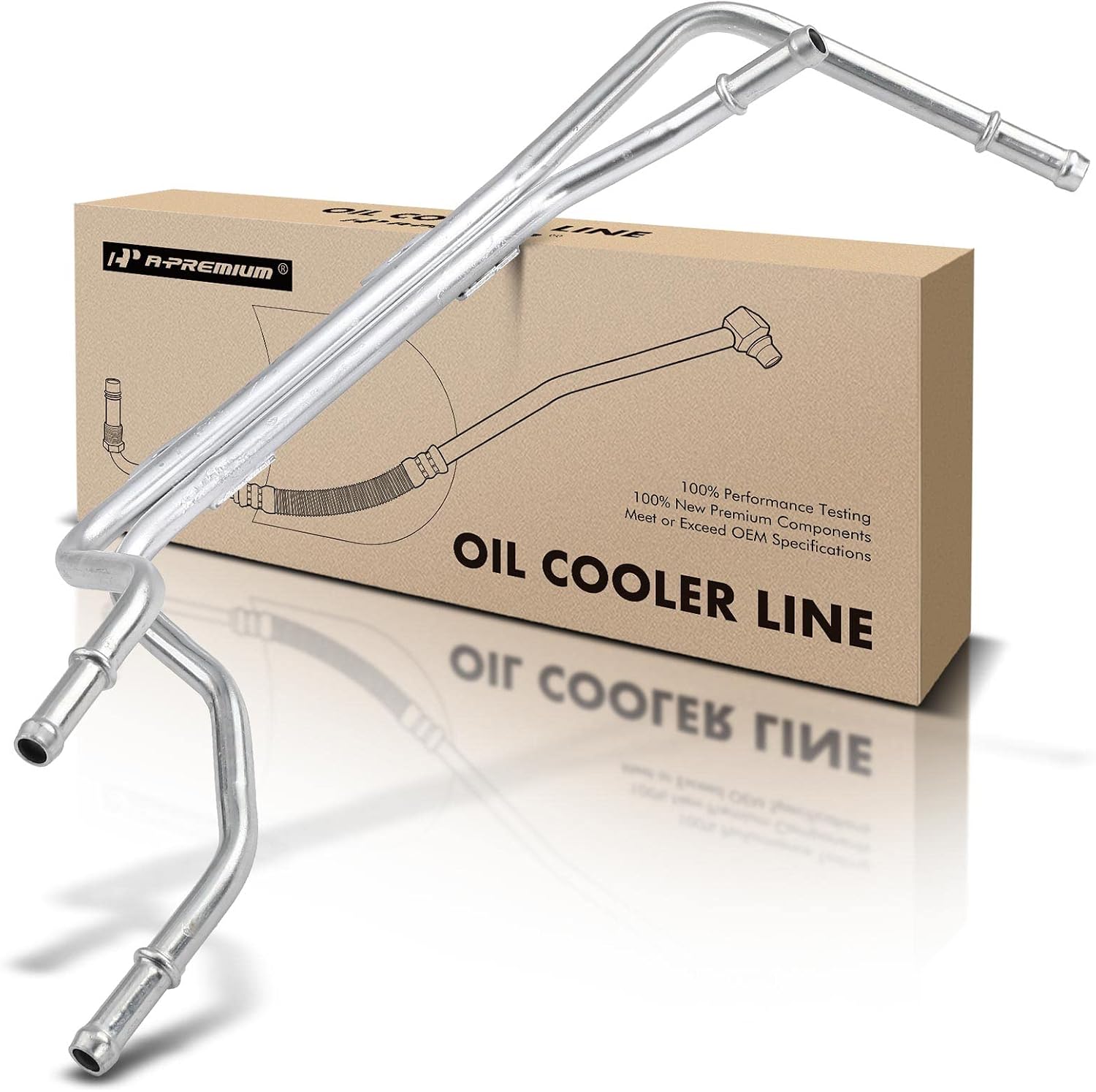
2. A-Premium Transmission Oil Cooler Line Hose Assembly for Toyota Sienna V6 3.5L (2007–2010)
| Fitment | Toyota Sienna 2007-2010 V6 3.5L |
|---|---|
| Material | Steel/Rubber |
| Manufacturer Part Number | APOCL279 |
| OEM Part Number | 624-534, 5801563, 3290708020, 624534 |
This A-Premium transmission oil cooler line is a direct-replacement assembly intended to restore the cooling connection between the transmission and the radiator/oil cooler on 2007–2010 Toyota Sienna V6 3.5L models. It is built from steel and rubber sections to resist corrosion and flex where required, and it ships as a single outlet line with factory-style fittings so it can be used during routine transmission service or to replace a leaking line. The practical benefit is straightforward: you get a ready-to-install hose that avoids fabrication and reduces downtime compared with repairing a corroded original. Limitations to note are that the kit does not include gaskets or seals and installer should confirm fitment using the reference numbers before ordering. This part is best for DIYers or independent shops that need a budget-friendly, vehicle-specific replacement to stop leaks and restore proper transmission cooling without upgrading the system.
Best for: Practical optimizers who prioritize getting a reliable, cost-effective factory-style replacement that restores function quickly without extra features or upgrades.
Less Ideal for: Buyers looking for performance upgrades, braided stainless lines, or a complete kit with new seals and fittings should consider other options.
- Direct-replacement fit for Toyota Sienna 2007–2010 V6 3.5L which simplifies installation
- Steel and rubber construction intended to resist corrosion and provide necessary flexibility
- Ships as a complete hose assembly so no fabrication or hose-splicing is required
- Does not include gaskets or sealing hardware which may need to be purchased separately
- No manufacturer-specified torque or installation hardware provided in the listing
Verdict: A budget-conscious direct-replacement oil cooler line that restores transmission cooling on 2007–2010 Toyota Sienna V6s without fabrication.
3. Byredio 3/8" (10mm) Fuel/Transmission Hose with 304 Stainless Clamps — 20 ft

| Inner diameter | 3/8 inch (10 mm) |
|---|---|
| Length | 20 ft |
| Working pressure | 300 PSI |
| Burst pressure | 1200 PSI |
| Temperature range | -95°F to 257°F (-35°C to 125°C) |
This Byredio 3/8" hose is a multi-purpose replacement line sold as a 20-foot roll with 304 stainless clamps, intended for fuel, oil, coolant and transmission cooler routing on vehicles like the Toyota Sienna. The tube uses NBR rubber inner and outer layers with a polyester braid mid-layer, giving it flexibility that makes it easier to route through tight engine bays and around multiple bends. It is rated to 300 psi working pressure and a 1200 psi burst pressure and covers a wide temperature range, so it handles hot transmission fluid and typical engine bay conditions. The included stainless clamps resist corrosion, though several users report the supplied clamps feel thin and some replace them with heavier OEM-style bands. Installation requires careful cutting and proper clamping; professional installation is recommended for transmission cooler service. While the hose offers strong value for budget repairs and custom routing, occasional reports of premature failure and marginal clamp quality mean it is best for secondary cooler lines or low-risk installs rather than critical high-pressure factory replacements.
Best for: Budget-conscious DIYers and mechanics who want an affordable, flexible aftermarket hose for routing or replacing secondary transmission cooler lines on a Toyota Sienna.
Less Ideal for: Do not use this hose where factory-spec, high-duty transmission cooler lines are required or for primary high-pressure oil circuits; choose a verified heavy-duty factory-replacement hose for critical applications.
- Flexible three-layer construction eases routing through tight spaces and multiple bends.
- Wide temperature range and 300 psi working pressure suitable for transmission cooler lines under typical conditions.
- 304 stainless steel clamps included for basic corrosion resistance.
- Compatible with many fluids including fuel, oil, coolant and E85, giving installation versatility.
- Included clamps are thin and may be less durable than heavier OEM-style clamps.
- Manufacturer recommends professional installation and does not include detailed instructions.
- Some users reported isolated failures under very high-pressure or prolonged heavy-duty use.
Verdict: A very affordable, flexible 3/8" hose that works well for secondary transmission cooler routing on a Toyota Sienna but swap the supplied clamps or use a heavier factory-grade line for critical, high-pressure applications.
4. Byredio AN6 20ft High-Pressure Braided Fuel/Transmission Hose

| Maximum Pressure | 500 Pound per Square Inch |
|---|---|
| Material | Nylon, Stainless Steel |
| Nominal Wall Thickness | 0.014 inches |
| Temperature Range | -40ºF to 248ºF |
This Byredio AN6 hose is a long, flexible transmission and fuel line intended for use where a durable, high-pressure connection is required. It pairs a nylon outer braid with 304 stainless braid and a CPE synthetic rubber inner tube to resist oil, fuel, transmission fluid, and many other automotive fluids while remaining pliable for routing. Typical use is cutting the 20-foot length to size, routing the hose through the engine bay or frame rails, and attaching AN6 fittings or clamps for a transmission cooler feed/return or aftermarket cooler installation on a Toyota Sienna. The 500 PSI working pressure and -40 to 248 F temperature range make it suitable for higher-temperature areas, and the supple construction simplifies bends compared with rigid hard lines. Limitations to note are that it is not rated for E85 and the woven nylon outer braid can fray at cut ends so you should finish or tape the outer sleeve before clamping. For a reliability-focused Sienna cooling upgrade it offers a practical, serviceable alternative to rigid lines when used with proper fittings and secure clamps.
Best for: A reliability-focused buyer looking to replace or extend Toyota Sienna transmission cooler lines with a flexible, high-pressure hose that is easy to route and service.
Less Ideal for: Buyers who need guaranteed ethanol/E85 compatibility or prefer pre-formed factory-quality hard lines for a completely OEM-style installation should consider alternatives.
- 500 PSI working pressure suitable for most transmission cooler circuits
- Nylon plus 304 stainless braid construction resists abrasion and improves durability
- Wide temperature range (-40 to 248 F) for hot engine-bay routing
- 20-foot length can be cut to size for custom routing and multiple runs
- Not compatible with E85 fuel
- Outer nylon braid can fray at cut ends and may need finishing before clamping
Verdict: A flexible, high-pressure AN6 braided hose that makes routing and repairing Toyota Sienna transmission cooler lines easier, provided you do not need E85 compatibility or factory-formed hard lines.
5. Four Seasons Transmission Cooler Hose, 4.5 ft (53015)

| Material Type | Nitrile, Synthetic |
|---|---|
| Item Length | 4.5 Feet |
| Item Type Name | Transmission Cooler hose |
| Included Components | Funnel |
This Four Seasons transmission cooler hose is a straightforward replacement line packaged with a funnel and sold as a 4.5-foot length for ATF cooling circuits. Made from nitrile synthetic material, it matches typical outside diameter and wall thickness used on many factory lines and is intended to be cut to fit or routed as a direct replacement. In use it provides a flexible, durable path for transmission fluid between the radiator cooler and transmission and is convenient for DIY or shop repairs thanks to its length and included funnel. Several buyers noted the inner diameter can be snug on fittings, so expect some effort when sliding it onto metal tubes and use lubrication and proper clamps during installation. Fitment reports on Toyotas are generally positive, but size variations have been reported between batches so confirm inner diameter before final assembly. The hose is a practical, budget-friendly option for replacing a leaking cooler line when you need a quick, serviceable fix.
Best for: Convenience-driven buyers who want a ready-to-use replacement hose they can install quickly at home or have fitted by a shop with minimal fuss.
Less Ideal for: Drivers seeking a vehicle-specific OEM line with guaranteed exact fitment or those who prefer pre-bent hard lines and quick-disconnect fittings should consider alternate solutions.
- Nitrile synthetic construction provides good resistance to ATF and typical underhood conditions
- 4.5 foot length covers common routing needs and can be trimmed to fit
- Includes a funnel for easier refilling during installation
- Consistent outside diameter and wall thickness suitable for factory-style clamps
- Inner diameter may run tight on fittings making installation difficult without lubrication
- Some units have reported size variations between batches requiring verification before final fit
Verdict: A long, nitrile replacement transmission cooler hose that offers a practical, easy-to-install option for repairing leaks and restoring transmission cooling function.
6. EVIL ENERGY 3/8" Transmission Oil Cooler Hose, 10 ft, SAE J1532

| Material Type | Chlorinated Polyethylene (CPE) |
|---|---|
| Item Length | 10 Feet |
| Inner Diameter | 3/8 inch (9.5mm) |
| Working Pressure | 250 psi |
| Burst Pressure | 1000 psi |
This EVIL ENERGY 3/8" transmission oil cooler hose is a flexible replacement line intended for connecting an oil cooler to a transmission. Made from chlorinated polyethylene (CPE) and produced to SAE J1532 guidance, it is rated for 250 psi working pressure and a 1000 psi burst pressure, which suits normal transmission cooling circuits. The 10-foot length and 3/8" internal diameter make it practical for routing and trimming during installation; its temperature range (-40°F to 257°F) and oil and heat resistance mean it will withstand underhood conditions. Installers will appreciate the nominal wall thickness and minimum bend radius information for avoiding kinks when routing. The hose is a simple, service-friendly replacement but lacks built-in fittings or pre-installed ends, so buyers must supply clamps or connectors and be comfortable cutting and flaring as needed. It is intended as a direct flexible line rather than a complete kit, so professional installation or solid DIY skills are recommended for a leak-free result.
Best for: Risk-averse mainstream buyers seeking a reliable, factory-quality replacement hose for routine transmission cooler repairs who prioritize documented specifications and service durability.
Less Ideal for: Buyers wanting a ready-to-install kit with fittings and clamps or those who prefer a pre-formed, vehicle-specific hose should consider alternatives that include end connectors or vehicle-specific assemblies.
- Constructed from CPE for oil and heat resistance suitable for transmission cooling circuits
- SAE J1532 specification with 250 psi working and 1000 psi burst pressure for typical service conditions
- Long 10 ft length allows flexible routing and trimming to fit different installations
- Wide temperature range (-40°F to 257°F) supports cold starts and high underhood temperatures
- Ships as hose only with no pre-attached fittings or clamps included
- Minimum bend radius requires care when routing to avoid kinks
Verdict: A long, SAE-grade CPE transmission hose built for reliable, serviceable oil cooler connections.
Choosing the Right Toyota Sienna Transmission Cooler Line: Key Factors to Consider
Fitment and Factory Routing
Accurate fitment ensures the cooler line follows the original routing without stressing connections or nearby components. A line that matches factory bends and attachment points reduces the risk of chafing against chassis parts and helps maintain secure clamps and clips.
When routing mimics the original path you avoid excessive heat exposure and maintain clearance from moving suspension elements. Fitment also affects installation time and whether you need special tools or to remove additional panels.
Material and Corrosion Resistance
Material choice affects how well the line withstands heat, pressure, and road chemicals. Hard lines made of steel or aluminum resist pressure and abrasion, while rubber or braided hoses provide flexibility but may wear faster near heat sources.
Look for corrosion-resistant treatments or coatings on metal lines, and for hoses check that the inner lining is compatible with automatic transmission fluid. Corrosion resistance extends service life, especially in climates with road salt or frequent moisture exposure.
Fittings and Connection Security
The type and quality of fittings determine how well the system resists leaks at joints. Crimped fittings, flared connections, or threaded adapters each have different sealing characteristics and serviceability.
Secure, well-designed fittings reduce the chance of slow leaks that can lead to poor cooling or low fluid levels. Consider how easy it is to tighten or replace fittings during maintenance, and whether replacement fittings are readily available.
Leak Resistance and Inspection Access
Even small leaks can lead to fluid loss and overheating, so leak resistance is a key criterion. Components designed to minimize stress at bends and connection points will usually show fewer leaks over time.
Also consider how accessible the line is for inspection and repair. Lines routed behind other components or with hard-to-reach fittings increase labor time for leak diagnosis and repairs.
Flexibility Versus Rigidity
Hard lines provide consistent routing and structural protection but can be more susceptible to vibration transfer if not properly mounted. Flexible hoses absorb movement and simplify installation, but they can sag or be more prone to abrasion where they contact other parts.
Choose an option that balances rigidity for secure routing with enough flexibility to accommodate engine and chassis movement without stressing connections.
Serviceability and Parts Availability
Consider how easy it will be to service the line in the future. Modular assemblies, or kits that include replacement fittings and hose sections, simplify repairs and reduce downtime.
Good parts availability also matters if you need to replace a single fitting or section after incidental damage. Ease of service can reduce long-term maintenance costs and keep the transmission operating reliably.
How We Chose the Best Toyota Sienna Transmission Cooler Line
We evaluated candidate cooler lines using criteria that matter for Toyota Sienna owners who need reliable fitment and durable cooling performance. Primary filters included exact fitment to the Sienna transmission and factory routing compatibility, resistance to common leak points at fittings and crimps, and material construction suited to long-term heat and fluid exposure. We also weighed ease of installation, including whether the line can be routed without major modifications and the accessibility of fittings, plus corrosion resistance for vehicles in wet or salted-road climates. Additional factors were compatibility with standard transmission fluid types and the availability of replacement fittings or kits for future repairs.Excluded from consideration were universal or heavily modified assemblies that require custom fabrication, components with unclear fitment documentation, and parts that lacked basic corrosion-protection features. The final shortlist reflects parts that met our practical fit, durability, and installation standards for this vehicle category.
Our full evaluation process is outlined in our review methodology.
FAQ
How do I spot transmission fluid cooler line symptoms early?
Common early signs include visible fluid drips under the vehicle, a sweet or oily smell near the engine bay, and fluctuating transmission temperature. You might also notice low transmission fluid levels during routine checks. Inspect lines and connections for wetness, crusted fluid, or damaged clamps when you see these signs.
Can I replace a cooler line myself on a Toyota Sienna?
Many owners can replace a cooler line with basic mechanical skills and common hand tools, provided they follow proper safety steps. You will need to drain or contain fluid, relieve pressure safely, and ensure clean connections during reassembly. If routing or fitting access is restricted, professional help may reduce the risk of leaks.
What should I do if I find a trans cooler line leak?
Address leaks promptly to prevent fluid loss and overheating. Small leaks at fittings can sometimes be tightened or have seals replaced, while larger leaks or damaged sections usually require replacement of the affected hose or hard line. Always clean the area before tightening to confirm the leak source.
Are hard lines better than hoses for transmission cooling?
Hard lines and hoses each have advantages depending on use. Hard lines resist abrasion and maintain shape under pressure, which is helpful for fixed routing. Hoses offer flexibility and can be easier to install in tight spaces. The best choice balances durability with the need for flexibility where the vehicle moves.
How often should transmission cooler lines be inspected?
Inspect cooler lines during regular service intervals or whenever you notice transmission performance changes. Visual checks every oil change or at least twice a year are reasonable for spotting corrosion, chafing, or early leaks. More frequent inspections are wise in harsh climates or after off-road use.
Conclusion
Prioritize fitment, leak resistance, and corrosion protection when selecting a transmission cooler line for a Toyota Sienna. Those factors directly influence reliability, service life, and how easy it is to perform future maintenance.Balance the need for rigidity versus flexibility based on your vehicle use, and consider parts availability and serviceability so repairs are straightforward. Focusing on these tradeoffs will help you choose a solution that keeps transmission temperatures in check and reduces the chance of unexpected issues.
Explore More:
- Check out all Toyota Sienna parts & accessories
- Explore Transmission Cooler Lines Maintenance & Repair Guides
- Explore Transmission & Drivetrain
- Browse all Auto Parts
