

Note: This article contains affiliate links. If you click on these links and make a purchase, I may earn a small commission at no extra cost to you. This helps support my research and content. Read my full affiliate disclosure here.
If you tow heavy loads or drive in hot conditions, the condition of your GMC Sierra 3500 HD transmission cooler line can directly affect transmission temperature and longevity. Faulty or degraded cooler lines cause leaks, loss of fluid pressure, and faster wear during extended towing runs. Choosing the right replacement or upgrade helps prevent overheating and reduces the chance of roadside breakdowns.This guide spotlights the top shortlisted transmission cooler lines for the Sierra 3500 HD, selected for fit, materials, pressure ratings, and ease of installation. Below we summarize how each option performs against common failure modes and installation realities so you can pick a reliable line for towing, hauling, and daily driving.
Top Picks at a Glance
| Best Overall The best all-around choice for most situations | WIKIBB Transmission Cooler Lines Kit for 2015-2016 Silverado/Sierra 2500HD 3500HD 6.6L LML (Allison) |  |
| Best Quality Built to a higher standard if you want something more solid | Mishimoto Transmission Cooler Line Kit for 6.6L Duramax (2006–2010) |  |
| Best Value The sweet spot between price and what you get | GELUOXI Transmission Cooler Hose Line Fitting Kit for 6.6L Duramax 2006–2010 |  |
| Best Budget The cheapest option that still gets the job done reliably | Dorman Automatic Transmission Oil Cooler Hose Assembly |  |
| Highest Rated A top-rated pick with lots of positive feedback | GM Genuine Parts 15267484 Automatic Transmission Fluid Cooler Upper Line |  |
| Most Popular A crowd favorite that many people choose with confidence | Generic 52" Stainless Steel Braided PTFE AN6 Transmission Cooler Line Kit |  |
| Best Seller A high-volume bestseller chosen again and again | Generic 6AN 70" Stainless Steel Braided PTFE Transmission Cooler Hose Line Kit |  |
1. WIKIBB Transmission Cooler Lines Kit for 2015-2016 Silverado/Sierra 2500HD 3500HD 6.6L LML (Allison)

| Fitment | 2015-2016 Silverado/Sierra 2500HD 3500HD 6.6L LML Duramax with Allison |
|---|---|
| Hose type | R16 double steel braided |
| Fittings | AN-style connectors |
| Included components | hose |
This WIKIBB transmission cooler line kit replaces the factory hard lines on 2015–2016 Silverado and Sierra 2500HD/3500HD 6.6L LML Duramax trucks with Allison transmissions to restore reliable fluid flow and stop common leaks. The kit uses R16 double steel braided hose with an abrasion-resistant outer cover, so it is noticeably more flexible and resistant to chafing or debris damage than cheap rubber lines. AN-style fittings provide a mechanical lock intended to reduce fitting leaks versus clamped connections, which is helpful for towing and heavy-duty use. Expect a direct-fit replacement that targets the coolant plumbing and is aimed at owners who tow, haul, or run their truck hard and want a longer-lasting solution. The main trade-offs are that this is a direct replacement hose kit rather than a full hard-line assembly, and installation requires moderate mechanical skill and basic tools to ensure leak-free connections. For balanced owners who want durability without major system changes, this is a practical upgrade.
Best for: A balanced buyer who needs a durable, leak-resistant replacement for transmission cooler lines on 2015–2016 Sierra 2500/3500 trucks and values long-term reliability during towing and heavy use.
Less Ideal for: Drivers seeking an exact factory rigid hard-line restoration or those who prefer a dealer installation-only solution.
- R16 double steel braided hose for higher pressure resistance and improved durability
- Abrasion-resistant outer cover protects against road debris and rubbing
- AN-style fittings create a mechanical lock to reduce the chance of leaks
- Designed specifically to fit 2015–2016 6.6L LML Duramax with Allison transmission for direct replacement
- Requires moderate mechanical skill and tools for correct installation
- Replaces hose lines rather than restoring original hard-line routing for those preferring factory rigid lines
Verdict: Choose this kit if you want a heavy-duty, leak-resistant hose replacement that stands up to towing and heavy-duty use on 2015–2016 6.6L Sierra trucks.
2. Mishimoto Transmission Cooler Line Kit for 6.6L Duramax (2006–2010)

| Material Type | Nylon, PTFE |
|---|---|
| Maximum Pressure | 6000 psi |
| Included Components | Three -10AN lines with 90°/45° fittings and adapters |
| Fits | Chevrolet/GMC 6.6L Duramax LLY/LBZ/LMM 2006-2010 |
This Mishimoto transmission cooler line kit replaces the factory cooler lines on 2006–2010 6.6L Duramax trucks and is built for higher-flow and higher-pressure applications. The kit uses a PTFE inner core for excellent oil and heat resistance wrapped in a high-strength nylon braid to resist expansion and abrasion under increased line pressure. It includes three pre-formed -10AN lines with a mix of 90° and 45° fittings plus adapters for common ports, so installation is a direct replacement for the factory routing and yields a more robust connection. For performance trucks that run upgraded coolers or higher transmission pressures, these lines reduce the chance of swelling or leaks and keep fluid moving efficiently. The main compromises are that this is a dedicated Duramax fitment for model years listed and requires compatible -10AN fittings and adapters at the cooler and trans; buyers planning a universal or multi-vehicle solution will need different parts. Overall the kit is a practical upgrade for owners pushing cooling and reliability on heavy-duty Duramax trucks.
Best for: Truck owners who upgrade cooling or run higher transmission pressures and want a durable, direct-fit line kit that reduces swelling and leaks under load.
Less Ideal for: Drivers looking for a universal or multi-vehicle cooler line solution or those who need OEM-style soft lines for low-pressure stock use.
- PTFE inner core offers strong resistance to heat and transmission fluid degradation
- Braided nylon outer layer prevents expansion and protects against abrasion under high pressure
- Includes multiple pre-bent lines and fittings for direct-fit installation on the specified Duramax models
- -10AN fittings and included adapters provide secure, leak-resistant connections
- Backed by the manufacturer lifetime warranty
- Fitment limited to 2006–2010 Duramax LLY/LBZ/LMM applications and not universal
Verdict: Choose this kit when you need a durable, high-flow direct-fit transmission line upgrade for a 2006–2010 6.6L Duramax to improve cooling reliability under performance use.
3. GELUOXI Transmission Cooler Hose Line Fitting Kit for 6.6L Duramax 2006–2010

| Included Components | Transmission Cooler Hose Line Fitting Kit |
|---|---|
| Reference OEM Number | DP0152 |
| Compatible Engines | 6.6L LBZ/LMM Duramax Diesel |
| Compatible Years | 2006-2010 |
This GELUOXI transmission cooler hose line fitting kit replaces the factory transmission cooler lines on 6.6L LBZ/LMM Duramax Silverado and Sierra 2500/3500 HD trucks from 2006 to 2010. It is used when a cracked line or leaking fitting needs a direct replacement to restore proper fluid routing between the transmission and external cooler. The kit includes the hose lines and fittings needed for a like-for-like swap and references OEM number DP0152 for fit guidance. For routine roadside repairs or a garage replacement, the parts appear to match the original connection styles so installation is straightforward with basic hand tools. Benefits include restoring transmission cooling function and preventing fluid loss that can damage the transmission. Limitations are typical for aftermarket lines: fit and finish can vary from factory parts and buyers should verify routing and clamp locations during install to avoid chafing or interference with nearby components.
Best for: Buyers who want a practical, vehicle-specific replacement to restore transmission cooling on a 2006–2010 6.6L Duramax Silverado or Sierra without sourcing dealer parts, and who prefer a straightforward install approach.
Less Ideal for: Drivers looking for an upgraded performance cooler line or a universal kit that fits multiple engines and model years should consider other options.
- Built to replace factory transmission cooler lines for 6.6L LBZ/LMM Duramax 2006–2010 applications
- Includes fittings for a direct swap to the original connection points
- Restores transmission cooling circulation to prevent overheating and fluid loss
- References OEM part number DP0152 to help confirm fitment
- Aftermarket fit and finish may differ from factory lines requiring minor adjustments during installation
- Not a universal part; strictly for the specified 6.6L Duramax 2006–2010 trucks
Verdict: A practical, direct-fit replacement kit to restore transmission cooler lines on 2006–2010 6.6L Duramax Silverado and Sierra HD trucks.
4. Dorman Automatic Transmission Oil Cooler Hose Assembly

| Material Type | Metal, Rubber |
|---|---|
| Maximum Pressure | 100 psi |
| Included Components | 1 Transmission Line |
This Dorman transmission oil cooler hose assembly replaces a leaking or damaged factory line to restore proper transmission cooling. It is intended as a direct-fit replacement for specified GM trucks and SUVs and is constructed from metal and rubber components rated to 100 psi for normal service. Installation is typical for a replacement line: remove the failed hose, swap in the assembly, and secure fittings and clamps to stop leaks. The practical benefits are straightforward — it helps prevent transmission overheating, uses durable materials for longer service life, and arrives as a single assembled line to simplify installation compared with piecing together hoses and fittings. Limitations are that fitment is vehicle-specific so you must confirm your Sierra 3500 HD year and trim before buying, and this is a factory-style replacement rather than an upgraded high-performance cooler line for heavy towing beyond stock usage.
Best for: Budget-minded owners needing a straightforward, factory-quality replacement line to stop leaks and restore cooling on the specified GMC Sierra 3500 HD model years.
Less Ideal for: Drivers who routinely tow beyond factory capacity or want an upgraded heavy-duty cooling solution should consider aftermarket upgraded lines or an auxiliary transmission cooler.
- Direct replacement designed to match factory fit and function for specified vehicles
- Durable metal and rubber construction intended to resist leaks and last longer than a damaged original
- Arrives as a complete assembly to simplify installation and reduce labor time
- Rated to 100 psi, adequate for normal transmission cooling system pressures
- Compatibility limited to the vehicle list provided so it is not a universal fit
Verdict: A cost-conscious, factory-style replacement that quickly restores transmission cooling for the specified Sierra 3500 HD model years without unnecessary extras.
5. GM Genuine Parts 15267484 Automatic Transmission Fluid Cooler Upper Line

| Manufacturer | ACDelco |
|---|---|
| Brand | GM GENUINE PARTS |
| Model | Transmission Fluid Cooler Line |
| Item model number | 15267484 |
| Manufacturer Part Number | 15267484 |
This GM Genuine Parts transmission fluid cooler upper line is a direct replacement line engineered and validated by General Motors for use in compatible GM vehicles. It replaces the factory upper cooler hose and connects the transmission to the external cooler to circulate and cool transmission fluid during towing, heavy loads, or daily driving. Built to factory standards, the painted finish and OE part number ensure fitment and routing match the original line, which simplifies installation and reduces the need for bracket or adapter changes. The main benefits are stable fitment, reliable fluid containment, and the peace of mind that comes from a GM-validated component that meets the same engineering criteria as the original. Limitations are typical of single-piece replacement lines: you must confirm exact part number fit for your model year and configuration, and installation still requires basic mechanical access and appropriate clamps or seals. For owners replacing a worn or leaking upper cooler line, this part offers a like-for-like, proven solution.
Best for: Buyers who prioritize a reliable, factory-quality replacement for a worn or leaking transmission cooler upper line and want the reassurance of GM-validated fit and performance for heavy-duty use.
Less Ideal for: People looking for an upgraded high-performance aftermarket cooler line or universal fit options should consider performance-oriented or adjustable alternatives.
- Factory-validated design matches original fit and routing for straightforward replacement
- Painted exterior finish resists corrosion and weather exposure
- Manufactured to GM part-number specifications for reliable fluid containment
- Backed by the GM Genuine Parts/ACDelco supply chain for consistent quality
- Requires verifying exact fitment for specific model years and configurations before purchase
Verdict: Choose this GM-validated replacement when you want a direct-fit, factory-quality transmission cooler upper line you can trust for reliable service under heavy-duty use.
6. Generic 52" Stainless Steel Braided PTFE AN6 Transmission Cooler Line Kit
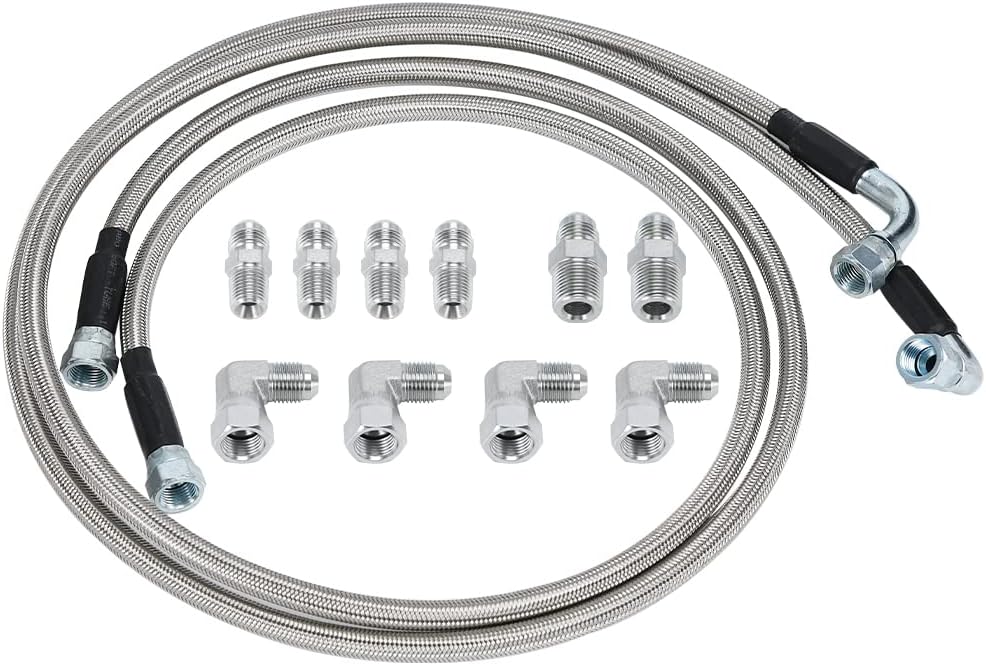
| Material | Stainless Steel and PTFE |
|---|---|
| Item Length | 52 Inches |
| Nominal Wall Thickness | 0.0625 inches |
| Outside Diameter | 0.38 Inches |
This stainless steel braided PTFE hose kit supplies a durable, flexible AN6 transmission cooler line that suits many popular automatic transmissions. It is typically used to route transmission fluid from the pan or cooler to an auxiliary cooler when towing or upgrading factory cooling, and the 52-inch length gives extra reach for larger trucks. The PTFE core resists fluid swelling and the stainless braid adds abrasion and corrosion resistance, which helps prevent leaks and extends service life compared with rubber lines. It lists fitment for a wide range of transmissions including Turbo 350, Turbo 400, 700R4 and later 4L6x families and common Ford automatics, so it can be used as a direct replacement where AN6 fittings and 1/4" NPT ports apply. Installation requires basic fittings and careful routing to avoid heat and abrasion points; users may need adapters for some factory ports and should verify thread type before assembly. This is a straightforward, long-reach line for owners wanting a rugged aftermarket cooling hose rather than an OEM-style factory line.
Best for: Drivers who prioritize proven, durable cooling upgrades and want a long, flexible aftermarket hose that reduces risk of leaks when adding an external cooler for towing or heavy use.
Less Ideal for: People looking for a direct factory-style replacement line with original connectors and factory routing should consider OEM or vehicle-specific assemblies instead.
- Stainless steel braid with PTFE core for corrosion and abrasion resistance
- 52-inch length offers extra reach for large trucks or custom routing
- AN6-compatible fittings allow use with common aftermarket coolers and adapters
- Listed fitment includes many common automatic transmission models
- May require additional adapters or fittings for some factory ports and connections
Verdict: Choose this stainless braided PTFE AN6 hose when you need a long, rugged aftermarket transmission cooler line to reliably add or upgrade cooling for heavy towing.
7. Generic 6AN 70" Stainless Steel Braided PTFE Transmission Cooler Hose Line Kit

| Material | Stainless Steel braided over PTFE |
|---|---|
| Length | 70 Inches |
| Fitting size | AN6 |
| Item model number | H-OFK19-70-SS |
This hose kit provides a long, flexible transmission cooler line built from stainless steel braid over PTFE for corrosion resistance and high-temperature durability. It is meant to connect an external transmission cooler using AN6 adapter fittings and is commonly used when upgrading or replacing factory cooler lines to improve fluid cooling for towing or heavy loads. The stainless braid and PTFE core give a tighter seam and low leakage potential compared with rubber lines, and the 70" length accommodates routing to an aftermarket cooler in many chassis layouts. Installation requires proper AN6 fittings and basic hand tools; users should ensure correct flare/adaptor types at the transmission and cooler ends to avoid leaks. The kit is a universal AN6 solution rather than a vehicle-specific factory replacement, so expect some trimming or additional adapters for direct fit on a GMC Sierra 3500 HD. For drivers who prioritize longer service life and better heat management while towing, this kit delivers a durable upgrade, but it is not a plug-and-play OEM exact match for every stock connection point.
Best for: GMC Sierra 3500 HD owners who want a durable aftermarket cooler line to improve transmission cooling for towing and heavy hauling and who prefer a longer-lasting, serviceable hose over stock rubber lines.
Less Ideal for: Buyers seeking a direct factory-style replacement with exact stock fittings and plug-and-play routing should look for vehicle-specific lines or OEM-style assemblies instead.
- Stainless steel braid with PTFE core resists corrosion and heat for longer service life
- 70 inch length provides generous reach for routing to an external cooler
- AN6 fittings offer a common aftermarket standard for secure connections
- Construction reduces risk of permeation and fluid leaks compared with aged rubber lines
- Universal AN6 design may require additional adapters, fittings, or trimming for direct fit to factory transmission ports
Verdict: Choose this stainless steel braided AN6 hose kit when you need a durable, heat-resistant transmission cooler line upgrade for improved towing reliability on a GMC Sierra 3500 HD.
Choosing the Right GMC Sierra 3500 HD Transmission Cooler Line: Key Factors to Consider
Fitment and Port Compatibility
Correct fitment is essential for leak-free connections and straightforward installation on the Sierra 3500 HD. A line that matches the transmission and radiator port sizes and threads avoids the need for adapters that can introduce failure points. When a replacement line follows factory routing and bracket locations, it reduces the risk of chafing and vibration-related wear during heavy towing.
Always verify whether the line is specified for the Sierra 3500 HD model year and whether any cab or chassis configuration affects routing. Even minor differences in port orientation or bracket spacing can make a direct-fit unit much easier and faster to install than a universal or generic hose.
Material and Corrosion Resistance
Materials determine longevity in salty, wet, and rough driving conditions. Steel hard lines resist pressure and abrasion but need protective coatings or treatments to prevent rust over time. Braided stainless hose assemblies combine flexibility with abrasion resistance and often include corrosion-resistant fittings, which is useful where routes cross hot or vibrating components.
Consider whether fittings use plated steel, stainless steel, or brass. Higher-grade fittings and crimped assemblies reduce the chance of joint failures. For vehicles that operate in areas with road salt or frequent moisture exposure, corrosion-resistant options are worth the up-front consideration.
Pressure and Temperature Ratings
Transmission fluid circulates under pressure and can reach elevated temperatures during towing. Lines and hoses must list maximum operating pressure and temperature to ensure safety and reliability. A component rated for higher pressure offers more margin against pressure spikes that occur during heavy towing or when the cooling system is under load.
Temperature ratings matter for fluid viscosity and hose material aging. Hoses that tolerate higher temperatures retain flexibility and sealing performance longer. When pressure and temperature specs are not published, assume the part may be intended for light-duty use rather than heavy towing.
Routing, Length, and Flexibility
Routing determines whether a replacement line will clear suspension and drivetrain components and whether it will fit existing clamps and brackets. Hard lines are less forgiving when exact length and bend geometry are required, while hose assemblies offer flexibility but need secure mounting to prevent vibration and abrasion.
Length must be sufficient to follow the factory path without stretching or creating sharp bends. Flexible hoses ease installation in tight spaces, but you should ensure they are rated and secured to avoid rubbing against heat sources or moving parts during articulation.
Fittings, Clamps, and Seal Type
Connection hardware impacts leak resistance and serviceability. Common fittings include flare, threaded, and quick-disconnect types; each has specific sealing needs and torque requirements. Using the correct clamp style and seal type prevents leaks at the mating surfaces and helps maintain pressure.
Inspect whether replacement lines include new seals, crush washers, or O-rings. Reusing old seals often leads to seepage. For long-term reliability, choose assemblies that supply matching fittings and high-quality clamps sized for the Sierra 3500 HD's factory connections.
Serviceability and Repairability
Consider how easy it will be to replace or repair the line in the future. Kits that include spare fittings or permit in-place hose replacement reduce downtime during roadside repairs. Lines that allow section replacement instead of full assemblies can save effort and waste during minor damage repairs.
Also evaluate how accessible the connections are on the Sierra 3500 HD. If a line requires removing other components to reach fittings, prioritize options that minimize disassembly or that come with extended fittings to ease maintenance.
Hard Line Versus Hose Assemblies
Hard steel lines and flexible hose assemblies each have strengths on the Sierra 3500 HD. Hard lines resist abrasion and are less likely to balloon under pressure, making them a durable choice when routing is predictable and chassis geometry matches the line bends. They work well when protected by coatings or routing channels.
Flexible hoses simplify installation and tolerate slight misalignments between connection points. Modern high-pressure hose assemblies with braided reinforcement can match or exceed the working pressures of hard lines while offering corrosion-resistant fittings. For repair situations where routing clearance is tight, a hose assembly is often the practical choice.
- Hard lines: rigid, abrasion-resistant, typically lower maintenance when properly coated
- Hose assemblies: flexible, easier to fit in tight areas, often include corrosion-resistant fittings
Common Symptoms of Cooler Line Problems
Leaking transmission fluid under the vehicle, visible wet spots near the radiator or along the chassis, and a drop in fluid level are primary signs of cooler line issues. Other symptoms include transmission slipping, elevated operating temperature, or the transmission running reluctantly under heavy load.
Aging hoses may bulge or crack while hard lines can corrode through at low spots or where road debris strikes. Pay attention to fluid color and smell as well; burnt fluid often indicates prolonged high-temperature exposure that could be tied to cooling failure.
- Puddles or wetness near the front or along the frame rails
- Higher than normal transmission temperature readings during towing
- Visible cracks, bulges, or corroded sections on lines
Installation Tips for the Sierra 3500 HD
Plan the job by comparing the replacement line routing to the factory path. Identify any clips or brackets that must be transferred and inspect them for wear. Use new seals and properly torque fittings to factory specifications to avoid leaks.
When installing flexible hoses, route them away from exhaust components and sharp edges, and secure them with clamps or straps at the same spacing as the original lines. If you replace only a section, make sure coupling fittings are compatible and rated for transmission fluid and system pressure.
- Always replace seals and crush washers when making connections
- Bleed or cycle the fluid as recommended to remove air pockets after installation
- Check for leaks at operating temperature after a controlled test drive
Repair Kits and When to Use Them
Repair kits that include hoses, fittings, and seals simplify restoring a leaking cooler line without replacing entire assemblies. They are especially useful for common failure points such as fitting threads, hose ends, or small localized corrosion spots.
Use a full replacement when multiple sections show wear, when bends or hardline geometry are compromised, or when the line has been damaged by impact. Repair kits are best for localized issues and when the remaining line is in good condition.
- Kits save time by supplying compatible fittings and seals
- Consider full replacement if corrosion or damage is widespread
- Verify kit compatibility with Sierra 3500 HD connection types before purchase
Maintaining Cooler Lines During Heavy Use
Regular inspections are crucial if you regularly tow or operate in hot climates. Look for early signs of abrasion where lines contact brackets or where they pass near heat sources. Keep mounting hardware tight and replace worn clips promptly.
Scheduled transmission fluid checks help identify slow leaks before they cause overheating or internal damage. If you notice increasing temperatures while towing, inspect cooler lines as part of a system-wide check that includes the cooler, fittings, and radiator connections.
- Inspect lines at least twice a year or more frequently if towing often
- Clean connectors and check for corrosion at fittings
- Monitor transmission temperature and fluid level during long hauls
How We Chose the Best GMC Sierra 3500 HD Transmission Cooler Line
We focused on selection criteria that matter most for GMC Sierra 3500 HD owners who tow or haul regularly. Core evaluation factors included fitment accuracy to Sierra 3500 HD transmission and radiator ports, material construction and corrosion resistance, maximum working pressure and temperature rating, and hose or hard-line routing compatibility with factory brackets. We also weighed installation complexity, whether fittings and clamps match factory sizes, and the availability of complete repair kits that include hoses, fittings, and seals.Excluded items included universal lines without clear Sierra 3500 HD fit notes, products lacking published pressure or temperature specs, and options that required significant chassis modification. We prioritized lines and kits that minimize downtime by using factory-style fittings or direct-fit adapters. Final consideration was longevity under load: materials and protective coatings were used as proxies for long-term corrosion and abrasion resistance specific to heavy-duty towing conditions.
Our full evaluation process is outlined in our review methodology.
FAQ
How do I know if I need a transmission cooler line replacement on my Sierra 3500 HD?
Look for visible leaks, wet spots along the chassis, or a drop in transmission fluid level. Also watch for higher operating temperatures or transmission slipping during towing, which can indicate cooler line failure.
Can I repair a leaking trans cooler line or do I need to replace it?
Minor leaks at fittings or short hose-end failures can often be fixed with a repair kit that includes seals and compatible fittings. Widespread corrosion, crushed hard lines, or multiple damaged sections usually merit a full replacement.
Is a hard line better than a hose for the Sierra 3500 HD?
Hard lines are durable and resist abrasion, while braided hose assemblies offer flexibility and simpler installation. The best choice depends on routing accuracy, accessibility, and whether you need corrosion resistance or easier fitment for towing setups.
What are common transmission fluid cooler line symptoms I should watch for?
Common symptoms include fluid puddles, visible wetness near the cooler connections, elevated transmission temperatures during heavy loads, and visible deterioration like cracks or corrosion on hoses and lines.
Do replacement cooler lines require special fittings or tools?
Some replacements use flare or threaded fittings that need proper torque and sometimes speciality wrenches. Hose assemblies typically require clamps and may need crimping tools if not pre-assembled. Using the correct tools and new seals prevents leaks.
How should I test for leaks after replacing a transmission cooler line?
After installation, refill fluid to the correct level and run the engine to operating temperature while observing connections. Cycle the transmission through gears under no-load conditions and then perform a short controlled drive while checking for seepage at fittings and along the route.
Final Verdict
Prioritize fitment, material quality, and pressure ratings when choosing a transmission cooler line for your GMC Sierra 3500 HD. For frequent towing, pick assemblies with higher temperature and pressure margins and corrosion-resistant fittings. If routing or space is tight, a braided hose assembly that matches factory connections will simplify installation and reduce stress at joints.Weigh the tradeoff between the rigidity of hard lines and the flexibility of hose assemblies based on your vehicle's routing and service access. Focus on secure fittings, fresh seals, and proper routing to maintain cooling performance and avoid costly transmission damage.
