

Note: This article contains affiliate links. If you click on these links and make a purchase, I may earn a small commission at no extra cost to you. This helps support my research and content. Read my full affiliate disclosure here.
Towing with a Ford Maverick calls for a reliable trailer brake controller that gives you predictable stopping power and smooth trailer control. Whether you haul a small utility trailer or a light camper, the right controller affects stability at speed, emergency stopping behavior, and how much driver input you need during deceleration. This guide shortlists seven top options that suit the Maverick's towing envelope and typical setups.Each pick was evaluated for braking performance, installation and wiring demands, and driver-facing controls so you can match features to your trailer type and wiring readiness. Read on to see which controllers made the list and which criteria we used to evaluate them.
Looking for other parts? See all Ford Maverick parts & accessories.
Top Picks at a Glance
| Best Overall Trailer Brake Controller The all-around best controller balancing performance, features, and reliability | Tekonsha Brake-EVN Proportional Trailer Brake Controller (8508220) |  |
| Best Budget Trailer Brake Controller A low-cost controller that delivers basic, reliable braking control | Gihdfer Brakeman IV Time-Delayed Digital Trailer Brake Controller |  |
| Best Premium Trailer Brake Controller A higher-end controller with advanced features and superior build quality | REDARC Tow-Pro Link Electric Trailer Brake Controller with USB Remote |  |
| Best Proportional Trailer Brake Controller A controller that applies braking power proportional to tow vehicle deceleration | CURT Spectrum Proportional Trailer Brake Controller (Model 51170) |  |
| Best Time-Delayed Trailer Brake Controller A simple controller with adjustable delay and gain settings | Tekonsha Brakeman IV Time-Delay Trailer Brake Controller |  |
| Best Compact Trailer Brake Controller A small, space-saving controller ideal for tight dash areas | CURT Venturer NEXT Time-Delay Trailer Brake Controller (Low-Profile) |  |
| Best Plug-In Trailer Brake Controller A controller designed for easy plug-and-play installation without hardwiring | CURT Echo Mobile Bluetooth Trailer Brake Controller (Proportional) |  |
1. Tekonsha Brake-EVN Proportional Trailer Brake Controller (8508220)
Best Overall Trailer Brake Controller

| Compatible trailer axles | 1-4 axles (2,4,6,8 brakes) |
|---|---|
| Control type | Proportional with manual override |
| Display | Digital LED |
| Boost levels | Three levels of additional braking power |
| Warranty | Five-year limited warranty |
The Tekonsha Brake-EVN is a proportional electric brake controller designed to deliver predictable trailer braking by sensing vehicle deceleration and applying trailer brakes accordingly. It is typically mounted within easy reach of the driver and is used for everyday towing tasks like hauling utility trailers, boats, and light campers. Notable features include a digital LED display for monitoring settings and diagnostics, arrow buttons for adjusting power output, a boost function with three extra braking levels for heavier loads, and a manual lever for immediate brake application. Plug-and-play capability and removable electrical connectors simplify installation when you use a vehicle-specific harness. Practical benefits include smooth, automatic brake modulation that reduces trailer sway and a compact design that keeps controls accessible without cluttering the dash. Limitations are that a vehicle-specific wiring harness is sold separately and heavier commercial towing beyond the controller's design may call for a more heavy-duty setup.
Best for: Drivers who want a dependable, easy-to-install proportional controller for everyday towing on a Ford Maverick and prioritize smooth, automatic trailer braking with simple controls.
Less Ideal for: Those who tow very heavy commercial loads frequently or need multi-vehicle/multi-configuration fleet solutions should consider a heavier-duty or more configurable controller.
- Proportional braking for smooth, responsive trailer control based on vehicle deceleration
- Digital LED display with real-time diagnostics and easy-to-use controls
- Boost feature adds up to three levels of extra braking power for heavier loads
- Manual override lever for immediate trailer braking when needed
- Compact design with removable connector and plug-and-play fitment for quicker installation
- Vehicle-specific plug-in wiring harness is not included so additional purchase may be required
Verdict: The best all-around trailer brake controller that balances dependable braking performance, easy setup, and practical features for most DIY towing needs.
2. Gihdfer Brakeman IV Time-Delayed Digital Trailer Brake Controller
Best Budget Trailer Brake Controller

| Axle support | 1 to 4 axles |
|---|---|
| Activation type | Time-delayed |
| Display | LED display |
| Package contents | Controller, mounting bracket, 6 screws, instruction |
The Brakeman IV is a straightforward time-delayed brake controller aimed at buyers who want dependable trailer braking without complicated features. It mounts compactly in the cab and uses a user-adjustable time-delayed output to apply braking force smoothly across trailers with 1 to 4 axles. The bright LED display shows current braking level so you can dial in the force while towing. Installation is deliberately simple: the unit comes with a mounting bracket and screws and can be fitted with basic wiring in most vehicles. For practical towing on a Ford Maverick, this controller gives consistent stop assistance and reduces sudden jerks during deceleration. The trade-off is that it is not a proportional controller and will not modulate braking based on vehicle deceleration, so towing heavier loads or trailers that need finer control may benefit from a proportional unit. Still, for routine towing where ease of install and predictable, adjustable stopping power matter, this delivers a reliable, budget-friendly option.
Best for: Buyers who want a dependable, no-frills controller for everyday towing on a Ford Maverick and prioritize easy installation and predictable braking over advanced modulation.
Less Ideal for: Drivers who regularly tow heavy trailers, high-performance trailers, or need the smoothest possible brake matching should consider a proportional controller instead.
- Simple time-delayed braking that smooths out trailer stops
- LED display for clear, real-time braking level feedback
- Compact, easy-to-mount design with included bracket and hardware
- Compatible with 1 to 4 axle trailer brake systems
- Not a proportional controller so it cannot match braking to vehicle deceleration for very smooth modulation
Verdict: The best budget trailer brake controller for buyers who need dependable, no-frills braking control and simple installation without paying for advanced features.
3. REDARC Tow-Pro Link Electric Trailer Brake Controller with USB Remote
Best Premium Trailer Brake Controller

| Model | Tow-Pro Link |
|---|---|
| Manufacturer | REDARC |
| Control options | USB remote, mobile app, CarPlay/Android Auto |
| Sensor | 6-axis motion sensor |
| Braking modes | Proportional Everyday and Manual Off-Road |
The REDARC Tow-Pro Link is a premium, under-vehicle electric brake controller designed to simplify towing while adding advanced control features. It installs between the vehicle 7-way and factory harness for a mostly plug-and-play setup and active calibration that gets you towing quickly. In everyday driving it provides proportional braking driven by a 6-axis motion sensor, and a Manual Off-Road Mode gives direct user control for steep descents or loose surfaces. The included pre-paired USB-A remote offers an LED readout and on-the-fly gain adjustment, while the Tow-Pro app and compatible CarPlay/Android Auto integration let you view status, adjust settings, and receive firmware updates. SwayStop Plus lets you apply trailer brakes to help correct sway events without leaving the wheel. Build quality is rugged and intended for long-term use. Note that the unit is not suitable for vehicles with certain automatic emergency braking implementations, so confirm compatibility before fitting to a Ford Maverick with AEB features.
Best for: Buyers who prioritize refined braking behavior, durable construction, and extra tuning options for confident, long-term towing with their Ford Maverick.
Less Ideal for: Drivers who need a simple, budget-oriented controller or who cannot confirm that their Maverick is free of incompatible automatic emergency braking systems.
- Plug-and-play 7-pin installation with active calibration for quick setup
- Proportional and manual braking modes to handle both road towing and off-road descents
- Pre-paired USB-A remote with LED display for easy, in-cabin control
- App and CarPlay/Android Auto integration plus firmware updates for long-term tuning
- 6-axis sensor plus SwayStop Plus feature to detect and correct trailer sway
- Not compatible with some vehicles that have certain automatic emergency braking systems
Verdict: The best premium trailer brake controller for users willing to pay more for refined braking algorithms, durable construction, extra tuning options, and long-term reliability.
4. CURT Spectrum Proportional Trailer Brake Controller (Model 51170)
Best Proportional Trailer Brake Controller

| Brand | CURT |
|---|---|
| Model | Spectrum (51170) |
| Control type | Proportional (triple-axis accelerometer) |
| User interface | Rotary knob with push-button and tri-color LEDs |
The CURT Spectrum is a proportional brake controller that pairs a discreet dash knob with a hidden control module to deliver automatic, smooth trailer braking that tracks vehicle deceleration. Installation uses a vehicle-specific quick plug harness and the main module mounts out of sight behind the dash while the rotary knob and push-button provide on-dash control and manual override. Its triple-axis accelerometer senses motion in three planes so braking adjusts for downhill and uphill stops, and the multicolor LED ring gives a clear visual of power and activity. Automated leveling and calibration simplify setup, and the ability to fine-tune gain via the knob makes it adaptable to different trailer weights. Limitations include the need for a vehicle-specific wiring harness for a clean install and that the separate module requires space behind the dash for mounting. For Maverick drivers seeking factory-style integration, the Spectrum offers hands-off proportional braking with a low-profile interface that keeps the dash tidy.
Best for: Drivers who prioritize smooth, automatic brake modulation and a factory-style dash install on a Ford Maverick and want a mostly hands-off solution for controlled trailer stops.
Less Ideal for: Drivers who prefer a single-box, portable controller or who cannot accommodate a behind-dash module due to limited space or wiring access.
- Proportional braking via triple-axis accelerometer for smooth, responsive stops
- Separable hidden module keeps dash uncluttered while allowing flexible mounting
- Simple rotary knob with push-button for intuitive adjustment and manual override
- Automated leveling and calibration speed up setup and reduce tuning time
- Requires vehicle-specific quick plug harness for proper installation and clean integration
- Hidden main module needs mounting space behind the dash which may be limited on some vehicles
Verdict: The best proportional trailer brake controller for drivers who want smooth, automatic brake modulation that matches trailer braking to vehicle braking for more controlled stops.
5. Tekonsha Brakeman IV Time-Delay Trailer Brake Controller
Best Time-Delayed Trailer Brake Controller

| Model | 8507120 |
|---|---|
| Compatible axles | 1-4 axles |
| Brake types | Electric or electric-over-hydraulic |
| Installation | Plug & Play port (harness sold separately) |
The Tekonsha Brakeman IV is a time-delay digital trailer brake controller designed for straightforward, light-duty towing. It senses when you apply the vehicle brakes and sends an output that ramps up at a fixed rate, with front-panel buttons to set overall power, sync aggressiveness, and a manual override lever for instant trailer braking. The unit supports electric and electric-over-hydraulic setups and handles trailers with one to four axles. Installation is simplified by a Plug & Play port for vehicle-specific harnesses and a compact housing that can be mounted above or below the dash. The bright digital indicators provide real-time diagnostics and short-circuit protection so you can confirm a secure connection and spot wiring faults quickly. Because it is time-based rather than proportional, braking behavior is predictable and easy to tune, but it will not match the automatic modulation of proportional controllers on uneven terrain or during dynamic towing. For Maverick owners seeking a simple, dependable controller with manual tuning and clear status feedback, the Brakeman IV is a practical choice.
Best for: Drivers who want a simple, manually tuned brake controller that delivers consistent, predictable braking for light-duty towing and who value easy installation and clear diagnostic feedback.
Less Ideal for: Towing situations that demand the most refined, automatically modulated brake feel or heavy-duty commercial towing where proportional control and advanced modulation are preferred.
- Time-delay ramping provides predictable, manually adjustable brake application
- Plug & Play port simplifies installation with vehicle-specific wiring harnesses
- Compact design allows flexible mounting positions above or below the dash
- Digital indicators and real-time diagnostics make connection and faults easy to verify
- Time-based operation cannot match the automatic modulation of proportional controllers in variable towing conditions
Verdict: The best time-delayed trailer brake controller for users who prefer a straightforward, manually tuned brake application with adjustable delay and gain for predictable performance.
6. CURT Venturer NEXT Time-Delay Trailer Brake Controller (Low-Profile)
Best Compact Trailer Brake Controller

| Controls | Up to 6 brakes (1-3 axles) |
|---|---|
| System compatibility | 12-volt vehicle systems |
| Controller type | Time-delay |
| Display | LED ramp indicators with adjustable brightness |
The CURT Venturer NEXT is a slim, time-based trailer brake controller designed to sit unobtrusively on a small dashboard while still letting you tune trailer braking from the cab. It controls up to six brakes (1 to 3 axles) and offers fully adjustable power and ramp settings so you can match braking intensity and response to different trailer loads. LED indicators show ramp progress and brightness is adjustable for day or night visibility. Its low-profile bracket gives extra clearance and the controller can be mounted at almost any angle, which makes it practical for the compact dash and limited mounting space of a Ford Maverick. Installation is straightforward with a CURT plug-and-play wiring harness (sold separately), though this product is time-delay based rather than inertia-based, so it does not automatically modulate based on vehicle deceleration. For Maverick owners who prioritize a small footprint and simple, reliable adjustability, the Venturer NEXT is an easy-to-use option; drivers who want adaptive, inertia-style modulation may prefer a different controller type.
Best for: Ford Maverick owners who need a compact, unobtrusive brake controller that still offers clear, adjustable control of trailer brakes and fits limited dash space.
Less Ideal for: Drivers who prefer automatic, inertia-based modulation or advanced proportional controllers for highly dynamic towing conditions should consider other controller types.
- Very low-profile design fits small dashboards and tight mounting locations
- Fully adjustable power and ramp time to tune braking for different trailer loads
- LED ramp and power indicators with brightness control for day or night visibility
- Mounts at any angle and includes a clearance-friendly bracket for compact installations
- Time-delay operation does not self-adjust based on vehicle deceleration like inertia controllers
Verdict: The best compact trailer brake controller for owners needing a low-profile unit that fits small dashboards or limited mounting space while still providing effective control.
7. CURT Echo Mobile Bluetooth Trailer Brake Controller (Proportional)
Best Plug-In Trailer Brake Controller
| Connection type | 7-way RV blade plug |
|---|---|
| Control method | Bluetooth smartphone app |
| Brake type supported | Electric trailer brakes (1–2 axles) |
| Motion sensing | Triple-axis accelerometer |
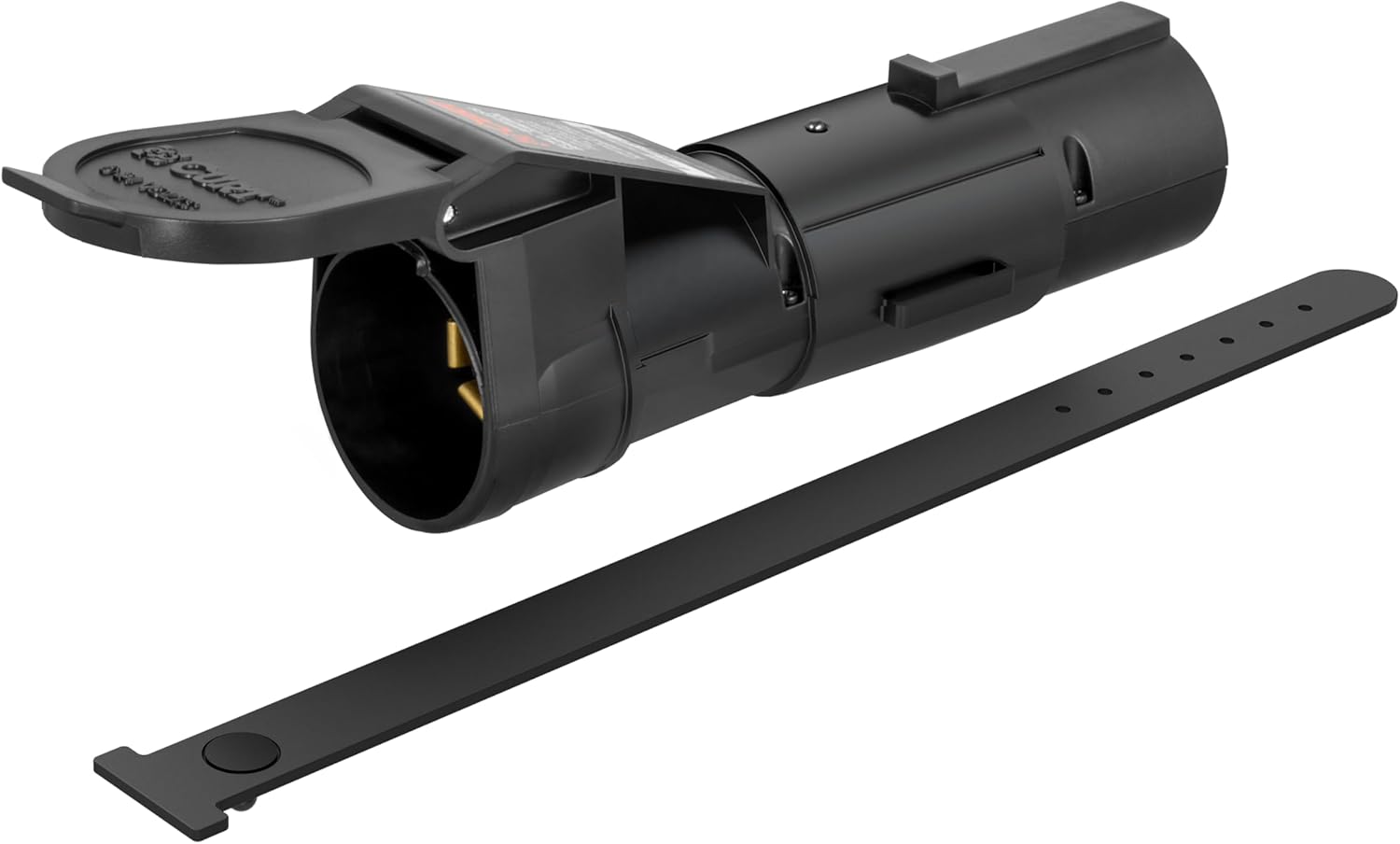
The CURT Echo Mobile is a portable, plug-and-play trailer brake controller that connects to your phone over Bluetooth and inserts directly into a vehicle 7-way RV blade socket for a tool-free install. For Ford Maverick owners who need a no-fuss setup, the Echo lets you skip under-dash wiring and instead manage brake output, sensitivity, and manual braking from the OneControl Auto app on iOS or Android. Its triple-axis accelerometer provides proportional braking for smoother stops on grades and the unit supports one to two axles (two to four brakes). The Echo is potted for weather resistance, includes a retention strap and locking tab for a secure 7-way connection, and works with cruise control and ABS systems. Limitations are that it requires a compatible 7-way receptacle on the towing vehicle and relies on a smartphone for advanced configuration and manual activation rather than an in-cab controller interface.
Best for: A DIY buyer who prioritizes quick, tool-free installation and wants to control trailer brakes via their smartphone while avoiding permanent wiring changes.
Less Ideal for: Drivers who prefer a dedicated in-cab-mounted controller, do not use a smartphone for towing, or need a permanently installed factory-style unit.
- Truly plug-and-play design uses the vehicle 7-way for fast, tool-free installation
- Bluetooth app control lets you set max output, sensitivity, and save profiles without hardwiring
- Triple-axis accelerometer delivers proportional braking for smoother, more responsive stops
- Potted enclosure and locking tab improve durability and secure connection in harsh conditions
- Portable form factor allows easy transfer between vehicles or fleet use
- Requires a working 7-way RV blade socket on the vehicle so adapters or rewiring may be needed on some Mavericks
Verdict: The best plug-in trailer brake controller for DIYers who want quick, tool-free installation using factory tow plugs or simple adapters for minimal wiring work.
Choosing the Right Ford Maverick Trailer Brake Controller: Key Factors to Consider
Braking Performance and Modulation
How the controller applies force to the trailer brakes directly affects on-road stability. Good modulation prevents trailer wheels from locking while delivering sufficient stopping force; this reduces push from the trailer into the vehicle under hard braking and lowers the chance of trailer sway. For the Ford Maverick, which is a compact pickup, you want a controller that provides consistent, proportional application so small changes in pedal pressure translate to smooth braking at the trailer.
Controllers that offer true proportional control usually track vehicle deceleration and apply trailer brakes in direct response to the truck's motion. This approach yields more predictable behavior during merges, lane changes, and sudden deceleration. For Maverick owners who tow light campers or loaded utility trailers, precise modulation improves driver confidence and reduces the need for aggressive corrective steering inputs.
Installation and Wiring Requirements
Installation complexity ranges from simple plug-and-play into an existing tow connector to running a dedicated power feed, grounding, and a heavy-gauge brake output wire to the trailer connector. Before buying, check whether your Maverick has a factory brake controller port or if you will need to access the vehicle's fuse box, battery, and frame ground. Some installations are doable with basic tools and a wiring kit; others may require drilling, routing wire under the vehicle, or removing interior trim.
Consider also the effort to integrate with the Maverick's tow package features and any electronic stability systems. A neat, secure wiring job reduces noise and prevents intermittent faults. If you prefer minimal work, prioritize controllers designed for easy in-cab mounting and with clear wiring diagrams that match the Maverick's electrical layout.
Control Type and Driver Interface
Controller interface affects how easily you can dial in trailer braking while driving. Simple time-delayed units use a user-set output level but can feel abrupt since they do not vary with vehicle deceleration. In-cab proportional controllers sense deceleration and modulate output automatically, giving a more natural braking feel. Some controllers provide clearly labeled knobs, digital displays, or auto-leveling features that simplify setup.
For Maverick drivers who frequently tow varying loads, an intuitive interface reduces the need to stop and reconfigure settings. Manual overrides are valuable for troubleshooting or short-term adjustments, and a bright, easily reachable mount enhances safety by letting you adjust without searching for controls while on the move.
Compatibility With Trailer Brake Types
Most Maverick-compatible controllers are made for electric drum-style trailer brakes, but you should confirm the controller supports the number of brake circuits and combined trailer weight you expect to tow. Some controllers can handle higher current and multiple axles, while others are intended for single-axle or lighter trailers. Matching capacity prevents overheating, reduces fade risk, and ensures each axle receives proportional force.
Also verify whether the controller supports surge-to-electric conversions, integrated breakaway circuits, or additional safety features. Ensuring electrical compatibility avoids under-braking or overloading the controller when towing heavier loads within the Maverick's rated capacity.
Mounting and In-Cab Placement
Where and how the controller mounts inside the Maverick impacts usability and safety. The ideal mounting location keeps the controller within easy reach, allows you to see any status lights or readouts, and does not obstruct vehicle controls. Many controllers attach to the dash, under the steering column, or to an A-pillar bracket. Consider the available space in the Maverick's cab and any aftermarket dash panels or accessories you may have installed.
A secure mount minimizes vibration-induced wear and prevents connectors from loosening. Also plan for routing the wiring from the controller to the firewall and underbody; generous cable length and strain relief at entry points make a cleaner install and reduce the risk of chafing over time.
Features and Safety Add-Ons
Extra features can improve convenience and safety. Look for units with built-in breakaway circuit monitoring, clear diagnostics for wiring faults, and indicators for power and output status. Some controllers offer automatic leveling or self-calibration modes that simplify initial setup and reduce guesswork for braking gain.
While tempting, prioritize features that translate into safer towing for the Maverick's operating profile. Advanced electronics that are poorly documented or difficult to troubleshoot can complicate repairs. Choose controllers with accessible controls, straightforward wiring diagrams, and safety features that address real towing scenarios such as sudden trailer disconnect or loss of signal.
Proportional Vs Time-Delayed Controllers
Proportional controllers measure the truck's deceleration and apply trailer brakes in direct proportion, yielding a more seamless feel between the vehicle and trailer. This tends to reduce trailer bucking and makes highway braking feel natural, especially important for a compact truck like the Maverick where small weight shifts matter.
Time-delayed controllers provide a preset output when you press the manual override and apply a timed pulse during automatic mode. They can be simpler and less expensive but may require more driver tuning to avoid abrupt trailer reactions. For occasional towing of light loads, a time-delayed model can be adequate if set conservatively.
- Proportional: smoother modulation, better for varied loads
- Time-delayed: simpler setup, potentially lower cost
- Consider driving style and trailer weight when choosing
Preparing the Maverick for Installation
Before starting any installation work, verify the Maverick's tow package status and locate the vehicle's available connector points. Gather necessary tools including wire strippers, crimpers, multimeter, and mounting hardware. Identify a secure path for wiring from the cabin through the firewall to the rear of the truck, avoiding heat sources and moving parts.
Label any existing wires and consult the vehicle's owner manual for fuse assignments and ground locations. If you are not comfortable working with vehicle wiring, consider having a qualified installer perform the hookup to ensure proper brake output and safety circuits are intact.
- Check for factory brake controller port or harness
- Plan a wiring route that avoids hot or moving components
- Securely ground the controller to the vehicle frame
Common Installation Pitfalls and Fixes
A frequent issue is inadequate grounding which causes intermittent brake output or poor controller performance. Ensuring a clean, paint-free ground at a factory chassis bolt resolves most electrical noise problems. Another common pitfall is undersized wire between the controller and trailer connector; use the recommended gauge to prevent voltage drop and overheating.
Incorrect fuse placement or relying on accessory circuits that switch off during certain drive modes can cause the controller to lose power unexpectedly. Place the controller power feed on a fused, constant 12V source or follow the vehicle-specific wiring guidance for switched circuits if appropriate.
- Use manufacturer-recommended wire gauge for brake output
- Verify continuous power source and proper fuse protection
- Test the system with trailer attached before real towing
Tuning Brake Gain for Different Trailer Loads
Effective gain tuning matches the trailer braking force to the Maverick's deceleration. Start with a conservative setting and perform low-speed stops with the trailer loaded as you normally would. If the trailer pushes the truck, incrementally increase gain; if the trailer locks or jerks, reduce gain. Repeat testing under realistic conditions to confirm stability.
Keep in mind that different trailers and cargo distributions will require retuning. When switching from an empty trailer to a fully loaded one, the optimal setting can change significantly. Use short test runs in a safe area to dial in the controller after any major loading change.
- Begin with lower gain and increase gradually
- Test with actual trailer load and repeat adjustments
- Document settings for common load configurations
Maintenance and Troubleshooting Tips
Regularly inspect wiring connections, mounting brackets, and the trailer connector for corrosion or wear. Clean and secure any loose terminals and replace frayed wires promptly. Check controller mounting screws and cabling for signs of chafing or abrasion, especially where wires pass through the firewall.
If you experience inconsistent braking, isolate the problem by checking voltage at the controller, verifying ground continuity, and testing the trailer brakes directly. Many issues trace back to poor wiring or a weak electrical connection rather than the controller electronics themselves.
- Inspect connectors for corrosion before each towing season
- Verify voltage at controller with trailer brakes engaged
- Keep a basic wiring kit and spare fuses in the vehicle
How We Chose the Best Ford Maverick Trailer Brake Controller
We focused on features and characteristics that matter specifically for Ford Maverick owners and the kinds of trailers commonly towed behind this vehicle. Primary evaluation criteria included braking performance under load, which considers modulation accuracy and how well the controller prevents trailer swing or lock-up during routine braking and emergency stops. We also assessed installation complexity, covering both vehicles with factory tow packages and those requiring add-on wiring or a brake controller connector.Driver interface was another key criterion, including the clarity of in-cab controls, adjustability of gain or proportional response, and whether the unit provides easy manual override. Durability and build quality were judged based on expected longevity in a truck environment, focusing on robust mounting options and resistance to vibration. Compatibility with electric trailer brakes and the ability to support common trailer axle counts and combined trailer weights were also used to determine suitability.We excluded controllers that require extensive vehicle modifications beyond typical Maverick wiring upgrades or those that are solely designed for heavy commercial trucks. Units with unclear wiring documentation, lack of proportional control for typical Maverick towing, or poor user serviceability were not considered. The result is a set of options that balance real-world braking performance, reasonable installation effort, and driver-friendly controls for Maverick owners.
Our full evaluation process is outlined in our review methodology.
FAQ
Do I need a trailer brake controller to tow with a Ford Maverick?
It depends on the trailer weight and local regulations; many jurisdictions require a trailer brake system once a trailer exceeds a certain gross weight. Even when not legally required, a controller improves braking performance and safety for heavier or two-axle trailers.
Can I install a brake controller in the Maverick myself?
Many Maverick owners can perform the installation if they are comfortable with basic wiring tasks and have the right tools. However, installations that require routing heavy-gauge wires under the vehicle or modifying factory harnesses may be best handled by a professional installer.
How often should I re-tune the controller settings?
You should re-tune whenever trailer load, cargo distribution, or towing conditions change significantly. It is also wise to check settings at the start of each towing trip and after any maintenance that affects trailer weight or braking performance.
Will a proportional controller drain the Maverick battery when parked?
Most controllers draw minimal current when idle, but any device connected to a constant power feed can contribute to battery drain over extended periods. If you store the vehicle for long times while the controller remains connected, consider disconnecting the power or using a switched power source.
What should I do if the trailer brakes lock up after installing the controller?
First check the controller gain and reduce it to a lower setting, then test again. Inspect wiring for shorts or reversed polarity and confirm the ground is solid. If the issue persists, consult a technician to verify the controller and trailer brake hardware are functioning correctly.
Final Verdict
Selecting the right trailer brake controller for a Ford Maverick means balancing braking performance, installation complexity, and the controls you will actually use on the road. Prioritize proportional modulation if you want the smoothest, most predictable trailer behavior, and factor in wiring and mounting constraints before buying. Remember that safe towing depends as much on proper setup and tuning as on the controller itself. Choose a unit that matches your trailer type, offers straightforward installation for the Maverick, and provides an intuitive interface so you can maintain stable, confident control under a variety of loads.
Explore More:
- Check out all Ford Maverick parts & accessories
- Explore Electronics
- Browse all Accessories
