

Note: This article contains affiliate links. If you click on these links and make a purchase, I may earn a small commission at no extra cost to you. This helps support my research and content. Read my full affiliate disclosure here.
If you plan to tow with a Dodge Charger, choosing the right tow hitch receiver affects safety, handling, and fit. The wrong receiver can lead to poor alignment, reduced ground clearance, and stress on the vehicle frame. This guide presents our shortlist of the top seven tow hitch receivers selected for Dodge Charger owners.We evaluated options based on precise fitment, structural towing capacity, and ease of installation to help you pick a receiver that meets your towing needs. Read on to see the key factors we considered and how each shortlisted option addresses those concerns.
Looking for other parts? See all Dodge Charger parts & accessories.
Top Picks at a Glance
| Best Overall The best all-around choice for most situations | Armordillo Class 3 Trailer Hitch 2-Inch Receiver (Fits Dodge Charger, Chrysler 300, Dodge Challenger) |  |
| Best Quality Built to a higher standard if you want something more solid | CURT Class 3 Trailer Hitch Receiver (Model 13465) |  |
| Best Value The sweet spot between price and what you get | TLAPS Class III 2" Receiver Trailer Hitch for Dodge Charger/Challenger/Chrysler 300 |  |
| Best Budget The cheapest option that still gets the job done reliably | ALMULOO 2-inch Class 3 Trailer Tow Hitch Receiver for Dodge Charger/Challenger/Chrysler 300 |  |
| Highest Rated A top-rated pick with lots of positive feedback | Draw-Tite 36548 Class II Trailer Hitch, 1-1/4-Inch Receiver |  |
| Most Popular A crowd favorite that many people choose with confidence | PARTREE 2" Class III Trailer Hitch Receiver for Dodge Charger (2006–2020) |  |
| Best Seller A high-volume bestseller chosen again and again | Gelacie Class 3 2" Rear Trailer Hitch Receiver for Dodge Charger/Challenger and Chrysler 300 |  |
1. Armordillo Class 3 Trailer Hitch 2-Inch Receiver (Fits Dodge Charger, Chrysler 300, Dodge Challenger)

| Automotive Fit Type | Vehicle Specific Fit |
|---|---|
| Maximum Towing Capacity | 3500 Pounds |
| Material Type | Alloy Steel |
| Finish Type | Painted |
This Armordillo Class 3 trailer hitch is a vehicle-specific 2-inch receiver designed to add towing capability to compatible Chargers, 300s, and Challengers. It bolts to factory mounting points and comes with the installation hardware required for a straightforward garage or DIY install with common tools. Made from alloy steel with a painted finish, the hitch provides a 3,500-pound maximum towing capacity and a 350-pound tongue weight, which covers light trailers, small campers, bike racks, and most cargo carriers used by everyday drivers. The vehicle-specific fit reduces trimming or modification during installation and the painted finish helps resist corrosion in normal road conditions. It does not include the ball mount, wiring, hitch pin, or electrical connectors, so you will need those separately to tow. Also the one-year limited warranty is modest compared with longer factory-style coverage from some competitors.
Best for: Balanced buyers who want a dependable, factory-style tow hitch that restores practical towing capability to their Dodge Charger while keeping installation simple.
Less Ideal for: Drivers who plan heavy towing, need advanced corrosion protection, or want a hitch with an extended warranty should consider higher-capacity or premium options.
- Vehicle-specific design for direct fit to listed Dodge Charger, Chrysler 300, and Dodge Challenger model years
- Class 3 2-inch receiver with 3,500 lb capacity suitable for common light towing tasks
- Alloy steel construction and painted finish for strength and basic corrosion resistance
- Includes required installation hardware and an installation guide for DIY fitting
- Does not include ball mount, wiring, hitch pin, or electrical connectors needed to tow
- Warranty coverage is limited to one year
Verdict: Adds reliable Class 3 towing capability to compatible Dodge Chargers with a direct-fit steel 2-inch receiver ready for typical light towing needs.
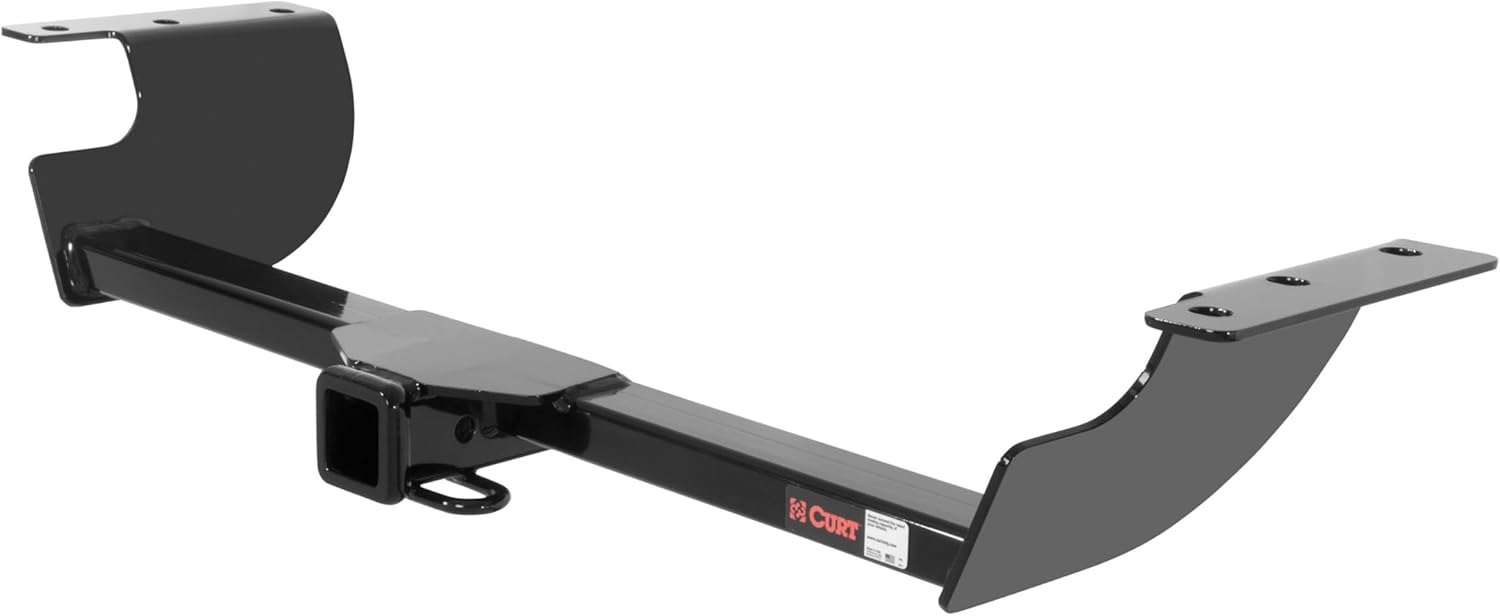
2. CURT Class 3 Trailer Hitch Receiver (Model 13465)
| Included Components | Class 3 Hitch |
|---|---|
| Compatible with Vehicle Type | Car |
| Material Type | Carbon Steel |
| Finish Type | Gloss, Powder-Coated |
The CURT 13465 is a vehicle-specific Class 3 hitch designed to mount to select Dodge Charger, Chrysler 300, Dodge Challenger and Magnum frames and provide a solid, factory-quality towing connection. It installs using the vehicle's existing threaded holes and a supplied fishing tool, and when fitted it tucks close to the bumper for a low-profile look. Built from carbon steel with precise welds and a co-cured plus powder-coat finish, the hitch resists rust and road wear while offering a tested 3,500 lb gross trailer weight and 350 lb tongue weight. That makes it suitable for boats, small campers, utility trailers and carrier racks that match the vehicle's towing limits. Installation can require lowering or shifting the exhaust and cleaning/chasing factory threads on older cars, so some mechanical skill and basic tools are usually needed. The hitch provides a robust, performance-minded mounting point for Charger owners who need dependable mid-range towing without modifying the vehicle's rear appearance.
Best for: Performance-oriented owners who prioritize a strong, factory-quality towing solution for Dodge Charger use and want a custom-fit hitch that preserves the car's appearance while enabling regular mid-range towing.
Less Ideal for: Buyers who plan heavy towing beyond the vehicle's or hitch's 3,500 lb rating or who need a no-fuss, drop-in bolt-on install without working around exhaust or frame threads should consider other options.
- Vehicle-specific design for a precise fit and clean integration
- 3,500 lb GTW and 350 lb tongue weight capacity suitable for typical mid-range towing
- Carbon steel construction with co-cured and powder-coat finish for corrosion resistance
- Precisely welded manufacturing for consistent strength and fit
- Installation can require dropping or moving the exhaust and cleaning factory threads, adding time and tools
Verdict: A sturdy, vehicle-specific Class 3 hitch that delivers factory-quality fit and tested 3,500 lb towing capacity for Dodge Charger owners seeking reliable mid-range towing.
3. TLAPS Class III 2" Receiver Trailer Hitch for Dodge Charger/Challenger/Chrysler 300

| Maximum Towing Capacity | 3500 Pounds |
|---|---|
| Pull Force | 3500 Pounds |
| Automotive Fit Type | Vehicle Specific Fit |
| Material Type | Alloy Steel |
| Finish Type | Powder Coated |
This TLAPS trailer hitch is a vehicle-specific Class III 2" receiver built to restore factory-style towing capability to compatible Dodge Charger, Challenger, and Chrysler 300 models. It bolts to the frame with a powder-coated alloy steel construction that resists corrosion and handles up to 3,500 pounds gross trailer weight and a 350 pound tongue load. Typical use is occasional towing of small trailers, motorcycles, or cargo carriers where a discreet, factory-like receiver is preferred. The hitch’s powder-coated finish and alloy-steel build mean it should hold up to road salt and outdoor storage better than unfinished parts. Installation notes indicate drilling may be required on some model years, so a bit of mechanical skill and basic tools are needed for a secure bolt-on fit. The unit is focused on towing capacity rather than weight-distribution towing, so it suits light to moderate towing tasks rather than heavy travel trailers that require distribution systems. For Charger owners who need a reliable, budget-conscious receiver that matches factory lines, this unit delivers clear practical value.
Best for: Practical optimizers who want a dependable, factory-style hitch on a Dodge Charger for occasional towing and cargo hauling without spending on high-end branded units.
Less Ideal for: Drivers planning frequent heavy towing, long travel trailers, or setups that require weight-distribution systems should consider a higher-capacity or distribution-compatible hitch.
- Vehicle-specific fit for Dodge Charger, Dodge Challenger, and Chrysler 300 which eases alignment during installation
- Class III 2" receiver rated for 3,500 lb towing and 350 lb tongue weight suitable for cars and light trailers
- Alloy steel construction with powder-coated finish offers corrosion resistance for road-use longevity
- Bolt-on design provides a secure attachment to the frame when installed correctly
- May require drilling for some model years which increases installation time and complexity
- Not specified for use with weight-distribution systems, limiting heavier trailer setups
Verdict: A budget-friendly, vehicle-specific Class III 2" receiver that restores reliable 3,500 lb towing capability to compatible Dodge Charger models.
4. ALMULOO 2-inch Class 3 Trailer Tow Hitch Receiver for Dodge Charger/Challenger/Chrysler 300

| Compatible vehicles | 2011–2023 Dodge Charger/Challenger; 2015–2023 Chrysler 300 |
|---|---|
| Receiver size | 2 inches |
| Class | Class 3 |
| Maximum towing capacity | 3500 Pounds |
| Finish type | Powder Coated |
This ALMULOO 2-inch Class 3 trailer hitch is a vehicle-specific receiver designed for Dodge Charger and Challenger (2011–2023) and Chrysler 300 (2015–2023). It installs at the rear of the car to add towing capability for bike racks, small utility trailers, and compact campers. Notable features include a 3500 pound towing capacity with 350 pound tongue weight, a powder-coated steel construction for rust protection, and included mounting hardware and instructions. For budget-focused buyers it delivers the main capabilities you need for light-duty towing without paying for heavy-duty truck components. Expect a functional, factory-replacement style look that integrates with the rear bumper area. Limitations are typical of compact-car hitches: it is intended for light towing loads only and professional installation is recommended if you are not experienced with underbody hardware and torque specs.
Best for: Budget-conscious drivers who need a reliable, vehicle-specific hitch to enable occasional light towing and accessory use without buying a truck-grade receiver.
Less Ideal for: Owners who plan regular heavy towing, long-distance trailer hauling, or need a hitch for commercial loads should choose a heavier-duty or truck-specific receiver instead.
- Vehicle-specific fit for Dodge Charger, Challenger, and Chrysler 300 for a cleaner install.
- Class 3 2-inch receiver supports a wide range of common accessories like bike racks and cargo carriers.
- 3500 lb tow and 350 lb tongue weight rating suitable for light trailers and utility loads.
- Powder-coated steel finish improves corrosion resistance and durability.
- Includes mounting hardware and installation manual for faster fitment.
- Designed for light-duty towing only and not suitable for heavy trailers or commercial towing.
- Fitment requires correct vehicle years and may need trimming or removal of fascia during install.
Verdict: A cost-conscious, vehicle-specific 2-inch Class 3 hitch that adds practical light-duty towing capability to Dodge Chargers, Challengers, and Chrysler 300s.
5. Draw-Tite 36548 Class II Trailer Hitch, 1-1/4-Inch Receiver

| Pull Force | 3500 Pounds |
|---|---|
| Maximum Towing Capacity | 3500 Pounds |
| Material Type | Alloy Steel |
| Finish Type | Powder Coated |
The Draw-Tite 36548 is a custom-fit trailer hitch designed for passenger cars like the Dodge Charger, providing a 1-1/4-inch receiver for light towing tasks. It bolts to the vehicle frame with included hardware and uses an all-welded alloy steel construction with a black powder-coat finish intended to resist corrosion. Typical uses are towing small trailers, carrying bike racks, or hauling lightweight cargo where the 3,500 lb gross towing weight and 300 lb tongue weight are sufficient. Buyers will appreciate the vehicle-specific fit, factory-style appearance, and generally straightforward bolt-on installation that avoids drilling or welding. Some installs can be heavy and awkward without a second person and may require lowering or moving exhaust components on certain Charger trims. A few buyers reported quality-control issues such as missing hardware or a misaligned receiver, so inspect components before installation. This hitch is a practical, reliability-minded choice for owners who need dependable light towing capability and a clean, understated look on their Charger.
Best for: Reliability-focused Charger owners who prioritize a durable, vehicle-specific hitch for occasional light towing and a clean, factory-like installation.
Less Ideal for: Drivers who regularly tow heavy trailers beyond the hitch rating or need a 2-inch receiver should choose a higher-capacity or different receiver size.
- Vehicle-specific design for a near-factory fit and appearance
- All-welded alloy steel construction with powder-coat finish for corrosion resistance
- Rated for up to 3,500 lb gross trailer weight and 300 lb tongue weight suitable for light towing
- Bolt-on installation that does not require drilling or welding
- Heavy unit that can be difficult to position alone during installation
- Some reported quality-control problems such as missing hardware or a twisted receiver
Verdict: A reliable, vehicle-specific bolt-on hitch for Dodge Charger owners who need dependable light-duty towing with a clean factory-style look.
6. PARTREE 2" Class III Trailer Hitch Receiver for Dodge Charger (2006–2020)

| Compatible with Vehicle Type | Trailer |
|---|---|
| Pull Force | 7000 Pounds |
| Maximum Towing Capacity | 7000 Pounds |
| Material Type | Carbon Steel |
| Finish Type | Powder Coated |
This PARTREE hitch receiver bolts to the Charger’s factory mounting points to add a standard 2×2 inch Class III receiver for towing and cargo accessories. It is intended for convenience: install without drilling using the supplied hardware and instructions, then use common ball mounts, bike racks, or cargo carriers. The hitch is made from carbon steel with a black powder coat to resist corrosion and has welded chain loops for safety; the manufacturer rates it for up to 7,000 pounds gross towing weight and 900 pounds tongue weight. Real-world benefits include a factory-style appearance, compatibility with widely available 2-inch accessories, and straightforward bolt-on installation that can be completed at home with basic tools. Limitations to note are that fitment is vehicle-specific to the Charger model years listed and installation can be tight under the bumper, sometimes requiring a lift or second person to align and torque hardware properly.
Best for: Buyers who prioritize convenience and a bolt-on, vehicle-specific towing solution for occasional or regular towing without the complexity of custom fabrication.
Less Ideal for: Drivers who need a hitch for vehicles outside the specified Dodge Charger years or who require a higher-capacity or modular receiver system for specialized towing setups.
- Vehicle-specific fit for Dodge Charger 2006–2020 simplifies installation and alignment
- Standard 2×2 inch receiver accommodates common ball mounts, bike racks, and carriers
- 7,000 lb gross towing capacity and 900 lb tongue rating support heavy trailers and weight-distribution setups
- Carbon steel construction with powder-coated finish provides strength and corrosion resistance
- May be a tight fit under the bumper and can require a lift or an extra person to install comfortably
Verdict: A straightforward, vehicle-specific Class III 2-inch hitch that adds ready-to-use towing capability to Dodge Charger models from 2006–2020.
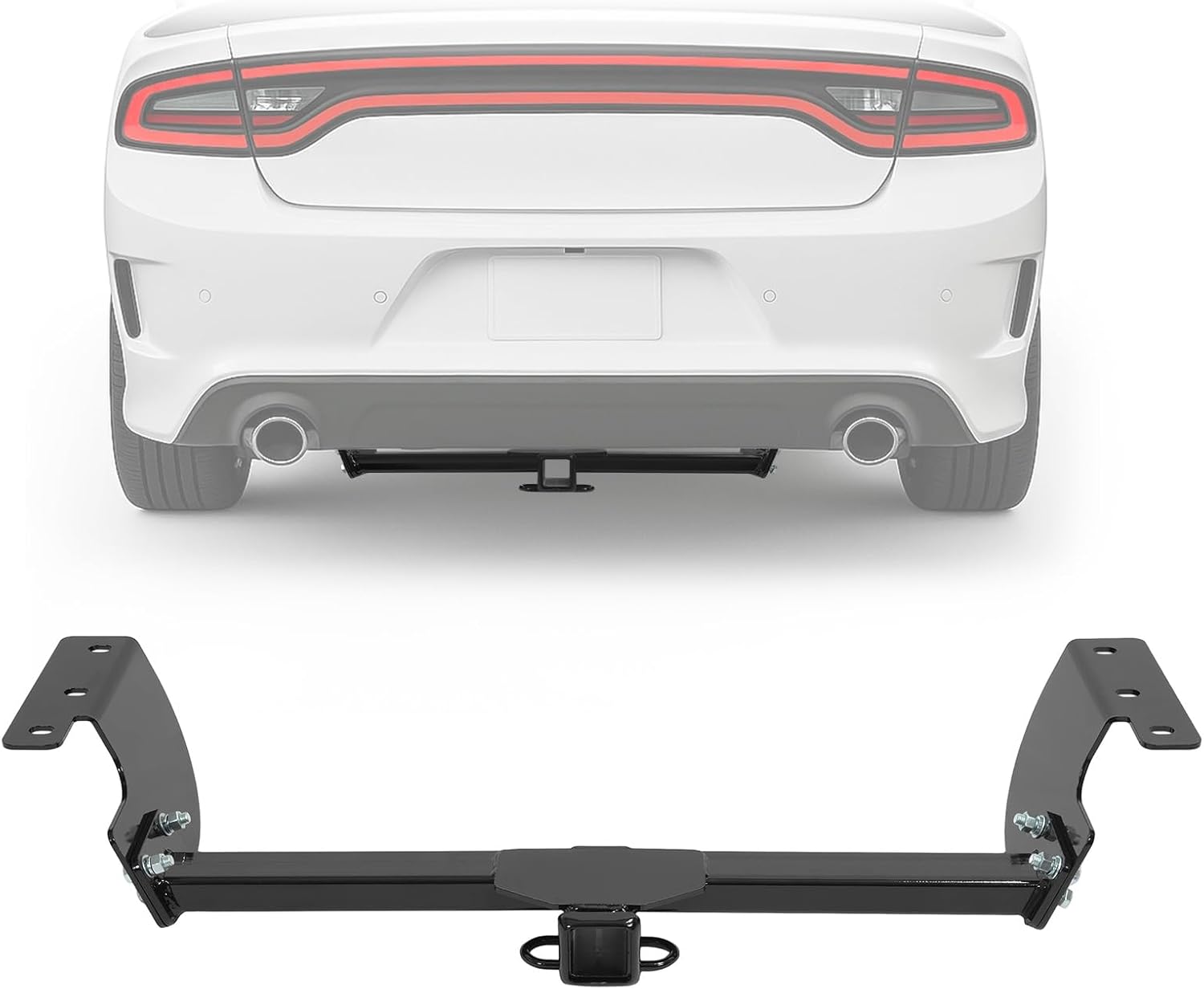
7. Gelacie Class 3 2" Rear Trailer Hitch Receiver for Dodge Charger/Challenger and Chrysler 300
| Compatible with Vehicle Type | Car |
|---|---|
| Automotive Fit Type | Vehicle Specific Fit |
| Maximum Towing Capacity | 3500 Pounds |
| Material Type | Stainless Steel |
| Finish Type | Powder Coated |
This Gelacie Class 3 rear trailer hitch adds a 2-inch receiver to compatible Dodge Charger, Dodge Challenger, and Chrysler 300 models so owners can tow trailers or carry hitch-mounted cargo. It is a bolt-on, vehicle-specific fit that comes with installation hardware and a manual; the powder-coated stainless steel construction aims to resist rust and abrasion for regular road use. The listed towing capacity is 3,500 pounds, which covers light trailers, cargo carriers, and many small boats or campers. Installation is designed for straightforward mounting, though the seller recommends professional installation for proper torque and alignment. Practical benefits include a factory-like appearance when installed and a standard 2-inch receiver that works with common hitch accessories. Limitations to note are mixed user reports about fitment and the need to verify model-year compatibility before ordering, and the product description contains inconsistent towing figures that warrant confirming the exact rated capacity with the seller or installer.
Best for: Risk-averse mainstream buyers who prioritize a factory-style, vehicle-specific tow solution for occasional towing and hitch cargo use and who prefer a straightforward bolt-on installation with available professional support.
Less Ideal for: Those who plan heavy towing, demand exact OEM-certified ratings, or who need multi-vehicle compatibility should look for a higher-capacity or manufacturer-backed hitch option.
- Vehicle-specific bolt-on design for a cleaner fit and easier installation
- Powder-coated stainless steel construction improves corrosion resistance
- Standard 2-inch Class 3 receiver works with widely available hitch accessories
- Includes installation hardware and an assembly manual for DIY-friendly mounting
- Some reviews report fitment problems on certain model years, so fit should be double-checked before purchase
- Towing capacity listed in different places is inconsistent and may require verification with a professional
Verdict: Provides a vehicle-specific, powder-coated Class 3 2-inch receiver that brings standard towing and hitch-cargo capability to supported Charger, Challenger, and Chrysler 300 models.
Choosing the Right Dodge Charger Tow Hitch Receiver: Key Factors to Consider
Vehicle-Specific Fitment
Exact fitment to the Dodge Charger matters because mounting points, bumper shape, and frame clearances vary by model year and trim. A receiver designed for the Charger will align with factory holes or documented attachment points, reducing the need for modifications.
Poor fitment can compromise structural support or require trimming of bumper components, which affects resale and corrosion protection. Confirming Charger-specific fit reduces installation time and the risk of interfering with sensors, exhaust routing, or spare tire access.
Towing Capacity And Tongue Weight
Rated towing capacity and tongue weight determine what trailers and loads you can safely haul. Pick a receiver whose rated capacities meet or exceed the combined weight of the trailer and cargo you expect to tow, and check tongue weight ratings for control and rear suspension load.
Under-rated or marginally rated receivers force conservative loading and can increase heat and wear. Ensure the receiver rating aligns with the Charger
manufacturer
vehicle towing limits and the load calculations you plan to use.
Mounting Method And Installation Complexity
Installation methods range from bolt-on designs that use existing holes to units requiring drilling or welding. Bolt-on receivers typically allow faster installation and easier removal, while drilled or welded options may provide a tighter structural fit but require more labor and tools.
Consider whether you will install the receiver yourself or use a shop, and how much trimming or underbody access will be necessary. Installation complexity affects time, potential for installation errors, and overall cost.
Build Quality And Corrosion Protection
Material choice and protective finishes affect long-term durability, especially if you drive in wet or salted-road conditions. Look for heavy-gauge steel construction and high-quality powder-coat or multi-stage finishes that resist rust and chipping.
Weld quality, gussets, and plate thickness influence how well the receiver distributes loads to the vehicle frame. Corrosion can reduce structural integrity over time, so durable protective treatments matter for longevity.
Receiver Size And Accessory Compatibility
Common receiver sizes determine which hitch accessories you can use, such as ball mounts, cargo carriers, and bike racks. Confirm the receiver size matches the accessories you plan to attach and consider whether adapters will be needed.
Also evaluate whether the receiver blocks rear sensors, interferes with trunk access, or reduces ground clearance when loaded. The chosen size and orientation should balance accessory options with day-to-day usability.
Aesthetics And Rear Clearance
How the receiver integrates with the Charger
rear bumper affects both looks and function. A well-fitted receiver sits flush or hides behind the bumper, preserving the vehicle
line while maintaining adequate ground clearance.
Consider whether the design requires bumper trimming or leaves a visible crossbar. A neat installation preserves appearance and reduces the chance of snagging obstacles or scraping on steep driveways.
How We Chose the Best Dodge Charger Tow Hitch Receiver
We focused on products that were specifically designed or listed for the Dodge Charger and that meet common towing and installation expectations for this vehicle. Primary evaluation criteria included exact vehicle fit and mounting points, rated towing and tongue weight capacity, construction and material quality, and compatibility with wiring and accessories. We also considered installation complexity, whether the unit required drilling or was bolt-on, and how the receiver affected ground clearance and rear aesthetics. Durability factors such as corrosion-resistant finishes and welded versus bolted assemblies were included as well.Exclusions: we excluded universal-fit receivers that lack documented Charger-specific fitment, any units without clear towing ratings, and adapters that alter factory mounting without engineering validation. The final picks focus on products that balance safety, clean integration with the Charger, and reasonable installation effort.
Our full evaluation process is outlined in our review methodology.
FAQ
Can I install a Dodge Charger tow hitch receiver myself?
Many receivers fit with basic hand tools and hardware and can be installed at home if you have mechanical experience. Some units are bolt-on and straightforward, while others require drilling, jacking the vehicle, or professional tools. If you are unsure about alignment, torque specs, or interference with sensors, a professional installation is usually safer.
How do I confirm the hitch receiver will fit my Charger model year?
Check the receiverproviderspecified fitment list or the vehicle compatibility notes provided with the product. Look for explicit confirmation of your Charger model year and trim. If documentation is unclear, contact the manufacturer with your VIN or model details to verify fit before purchase.
What is the difference between receiver size and class ratings?
Receiver size refers to the physical opening dimensions, which determine accessory fit. Class ratings group receivers by typical capacity ranges and intended uses. Both matter because size affects the available accessories while the class and rated capacities indicate safe towing and tongue weight limits for heavier loads.
Will adding a hitch affect my Chargerhandling or ground clearance?
A properly rated and correctly installed receiver should have minimal effect on handling while unloaded, but towing heavier loads shifts weight and can alter braking and steering feel. Some receivers change rear ground clearance slightly depending on design. Factor in load distribution and consider a weight distribution system for heavier trailers.
Do I need to worry about sensors or exhaust when installing a receiver?
Yes. Modern Chargers may route sensors, wiring, and exhaust near the rear frame. A Charger-specific receiver accounts for these components, but during installation you should verify that sensors, wiring harnesses, and exhaust clearances are maintained. Avoid forcing routing changes that could impair sensors or exhaust flow.
How often should I inspect a tow hitch receiver?
Inspect the receiver regularly for loose hardware, rust, and signs of fatigue, especially after heavy use or exposure to corrosive conditions. Check mounting bolts for proper torque and look for cracks or deformations. Address corrosion and replace compromised components before towing again.
Conclusion
Choosing the right Dodge Charger tow hitch receiver comes down to fitment, rated towing capacity, and installation method. Prioritize a receiver that explicitly matches your Chargermodel year and mounting points, meets the towing and tongue weight needs you expect, and offers durable construction with corrosion protection.Balance installation complexity against long-term durability and aesthetics. If you plan to tow frequently or carry heavy loads, favor higher capacity ratings and robust mounting even if installation is more involved. For occasional use, a cleaner bolt-on solution may be more convenient.
Explore More:
- Check out all Dodge Charger parts & accessories
- Explore Exterior Accessories
- Browse all Accessories
