

Note: This article contains affiliate links. If you click on these links and make a purchase, I may earn a small commission at no extra cost to you. This helps support my research and content. Read my full affiliate disclosure here.
If you own a Subaru Outback XT, the timing belt is a small component that has a big impact on engine reliability and repair costs. Choosing the right Subaru Outback XT timing belt matters because a failure can lead to extensive engine damage and an unexpected tow. You want a belt that balances long service life, resistance to oil and heat exposure, and compatibility with the engine's accessory layout.This guide highlights the shortlisted timing belts for the Outback XT and explains the evaluation criteria used, such as material construction, expected maintenance interval, and installation complexity. Read on to see which options match your priorities and why these belts made our list.
Looking for other parts? See all Subaru Outback parts & accessories.
Top Picks at a Glance
| Best Overall The best all-around choice for most situations | Subaru Genuine Timing Belt 13028AA240 |  |
| Best Quality Built to a higher standard if you want something more solid | AISIN Timing Belt Kit with Water Pump (TKF-004) |  |
| Best Value The sweet spot between price and what you get | AxleyHub Timing Belt Kit with Water Pump, TKF-004 Fit for Subaru 2.0L/2.5L Turbo |  |
| Best Budget The cheapest option that still gets the job done reliably | Cloyes Timing Belt B307 for 2.5L Subaru H4 Engines |  |
| Highest Rated A top-rated pick with lots of positive feedback | Subaru Genuine Timing Belt 13028AA240 |  |
| Most Popular A crowd favorite that many people choose with confidence | Gates TCKWP328 PowerGrip Timing Belt Kit with Water Pump |  |
1. Subaru Genuine Timing Belt 13028AA240

| Brand Name | Subaru |
|---|---|
| Part Number | 13028AA240 |
| Belt Style | Timing Belt |
| Compatible Devices | Car |
This is Subaru's genuine replacement timing belt specified for turbocharged EJ-series engines used in models like the Outback XT, WRX, Forester XT and STI. As a factory part it installs like a direct fit and matches the original belt profile and material intended by the manufacturer. Typical use is scheduled timing-belt maintenance or during an engine rebuild where maintaining factory timing geometry is important. The main benefits are exact fitment, predictable wear characteristics, and compatibility with Subaru timing systems so you avoid fitment problems common with some aftermarket belts. Because it is a genuine OEM part it does not come with aftermarket performance claims such as reinforced cords or extended life ratings, so if you need a heavy-duty or high-mileage upgrade you may want a reinforced aftermarket option. Expect the same replacement interval and service procedure as the original equipment belt.
Best for: Someone seeking a factory-spec replacement for scheduled maintenance or an engine rebuild who prioritizes exact fit and predictable factory performance.
Less Ideal for: Drivers looking for reinforced, high-mileage, or performance timing belts intended for high-boost tuning or motorsport use should consider specialty aftermarket options instead.
- Genuine Subaru part for exact factory fit and compatibility
- Manufactured to Subaru standards for consistent wear and reliable timing control
- Direct replacement that simplifies installation during scheduled service
- No advertised performance upgrades or extended-life construction compared with specialty aftermarket belts
Verdict: Buy this genuine Subaru timing belt when you want a direct-fit, factory-standard replacement for turbocharged Subaru engines like the Outback XT.
2. AISIN Timing Belt Kit with Water Pump (TKF-004)

| Brand | AISIN |
|---|---|
| Material | Aluminum |
| Model | Timing Belt Kit with Water Pump |
| Manufacturer Part Number | TKF-004 |
This AISIN timing belt kit is a full-service replacement package intended to handle a timing belt and water pump refresh in one job. It pairs an AISIN water pump with an OE-matched timing belt, tensioner, idler pulleys, and gaskets so you replace all wear items together instead of doing piecemeal repairs. For a performance-minded Subaru owner, the kit’s OEM-quality components and carbon ceramic seals in the pump mean durable operation and consistent cooling under heavier use. The included installation instructions and matched parts help avoid fitment surprises and reduce install time compared with sourcing parts separately. The main limitation is that this is a vehicle-specific kit and fitment depends on engine variant, so you must confirm it matches your Outback XT’s engine before buying. Also the kit focuses on factory-equivalent parts rather than upgraded performance components, so builders seeking higher rev or motorsport-spec strength may want aftermarket performance tensioners or belts instead.
Best for: Drivers who prioritize reliable, factory-quality refreshes and want to replace the timing belt and water pump in a single service to maintain dependable performance in an Outback XT.
Less Ideal for: Enthusiasts planning high-power modifications, track use, or higher RPM operation who need strengthened belts or performance tensioners should choose aftermarket upgrade kits instead.
- Complete kit includes water pump, timing belt, tensioner, idler pulleys, gaskets, and instructions
- OE-matched components from reputable brands for factory-quality fit and compatibility
- Water pump uses diecast aluminum housing and carbon ceramic seals for improved durability
- Not a performance-upgrade kit; parts are factory-equivalent rather than reinforced or high‑temp rated
Verdict: Buy this kit if you want a factory-quality, all-in-one timing belt and water pump service package that restores reliable, stock-level performance for your Subaru Outback XT.
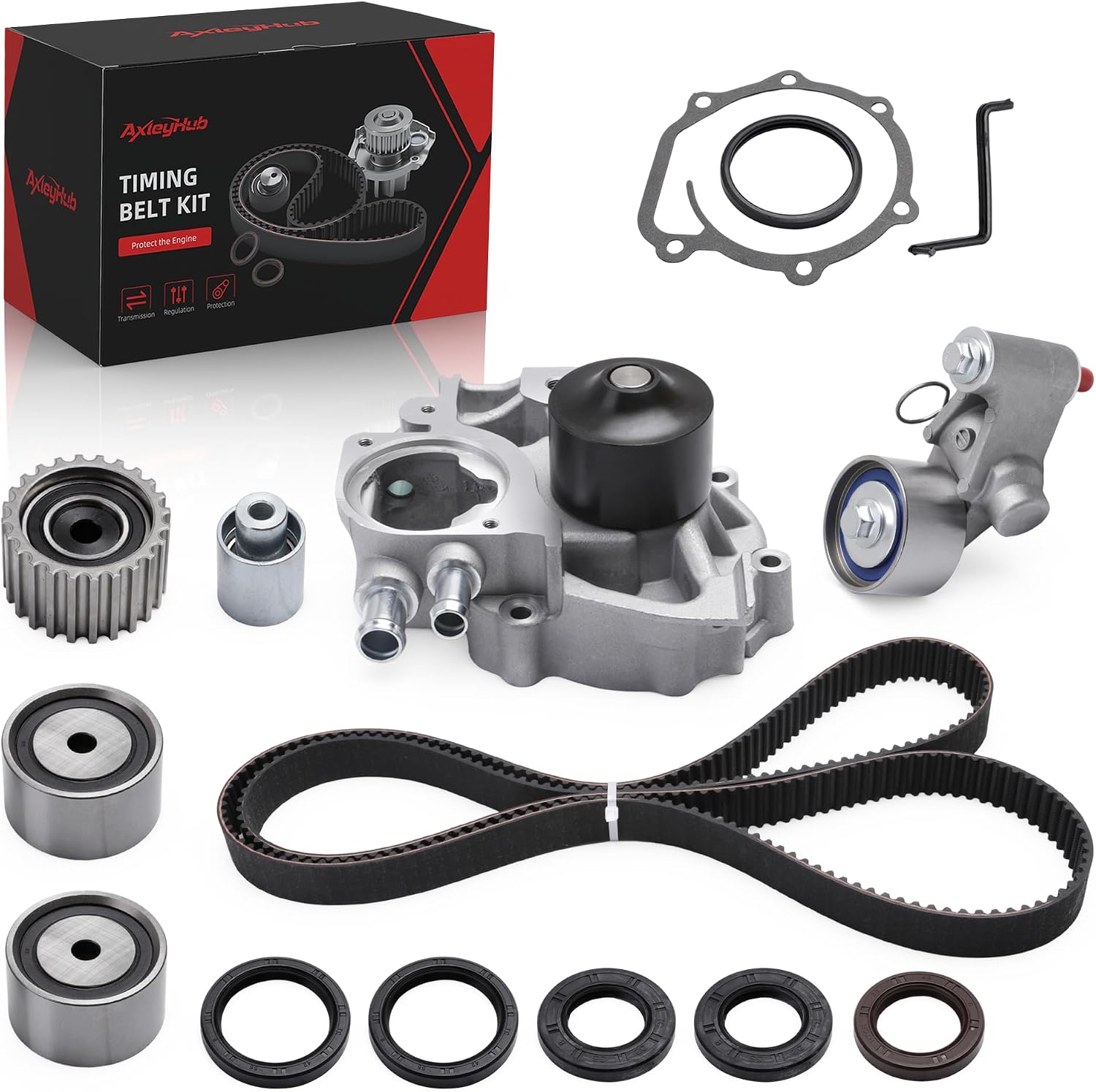
3. AxleyHub Timing Belt Kit with Water Pump, TKF-004 Fit for Subaru 2.0L/2.5L Turbo
| Brand | AxleyHub |
|---|---|
| Model | TKF-004 |
| Compatible Engines | Subaru 2.0L and 2.5L Turbo H4 DOHC |
| Includes | Timing belt kit with water pump |
This AxleyHub timing belt kit is a comprehensive replacement package that bundles a reinforced timing belt, tensioning components, and a water pump to restore proper valve timing and cooling system reliability on compatible Subaru turbo engines. It is intended for professional or experienced DIY installation where the engine timing and coolant pathways are serviced together. Notable features include a factory-style belt profile for accurate crank-to-cam synchronization and pre-machined components that simplify alignment during installation. Including the water pump in the kit reduces the chance of a second teardown if the pump fails later and makes the service more cost effective. The kit does not come with installation instructions, so plan to use a repair manual or rely on shop labor. Buyers should also confirm exact year and engine fitment before ordering since this product targets specific Subaru 2.0L and 2.5L turbo applications and is not a universal solution.
Best for: Buyers who prioritize cost-effective, preventive maintenance and want a single kit that addresses both timing belt and water pump service on compatible Subaru turbo engines.
Less Ideal for: Those who need a universal timing solution or who plan to perform the repair without reference materials or professional guidance should consider other options.
- Includes water pump and timing components for a single service event
- Designed to match factory timing belt profile for accurate synchronization
- Pre-machined parts simplify alignment during installation
- Reduces likelihood of repeat labor by replacing pump and belt together
- No installation guide included, so professional installation or a service manual is needed
- Fitment limited to specific Subaru 2.0L and 2.5L turbo models and years
Verdict: A cost-conscious, all-in-one timing belt and water pump kit that simplifies preventive servicing on compatible Subaru turbo engines.
4. Cloyes Timing Belt B307 for 2.5L Subaru H4 Engines

| Compatible Devices | Car |
|---|---|
| Item Type Name | Timing Belt |
| Unit Count | 1 Count |
| Part Number | B307 |
The Cloyes B307 is a direct-fit replacement timing belt intended for Subaru 2.5L H4 engines used in certain 1999–2009 models. It is CAD-designed and manufactured from materials Cloyes says are tested for function and durability, so it aims to match factory-quality timing performance while keeping operating noise low. Typical use is a scheduled timing belt service where the belt is swapped alongside tensioners and idlers to restore correct valve timing. The listing highlights compatibility with multiple Subaru models and recommends replacing tensioners and idlers with the belt, which helps avoid premature wear and timing issues. As a budget-conscious replacement part, it offers a practical alternative to dealer belts without complicated installation differences. Limitations are that specific hardware like tensioners and idlers are not included and buyers must verify exact engine year and fitment before purchase; longevity and fit depend on proper installation and complementary components being replaced at the same service interval.
Best for: Buyers looking to replace a worn timing belt on a Subaru 2.5L H4 who prioritize a cost-effective, factory-style replacement from a specialist aftermarket brand.
Less Ideal for: Drivers seeking a complete overhaul kit including tensioners and idlers or those who prefer dealer-sourced parts and full-service warranty coverage.
- Designed and CAD engineered to match factory timing profiles
- Manufactured from tested materials for durability and quiet operation
- Direct vehicle-specific fit for Subaru 2.5L H4 applications listed
- Backed by a long-established timing drive specialist with aftermarket focus
- Tensioners and idlers are sold separately so full-service cost is higher than belt alone
Verdict: A practical, budget-friendly timing belt replacement that delivers factory-style fit and quiet operation for Subaru 2.5L H4 engines when paired with fresh tensioners and idlers.
5. Subaru Genuine Timing Belt 13028AA240
| Manufacturer | SUBARU |
|---|---|
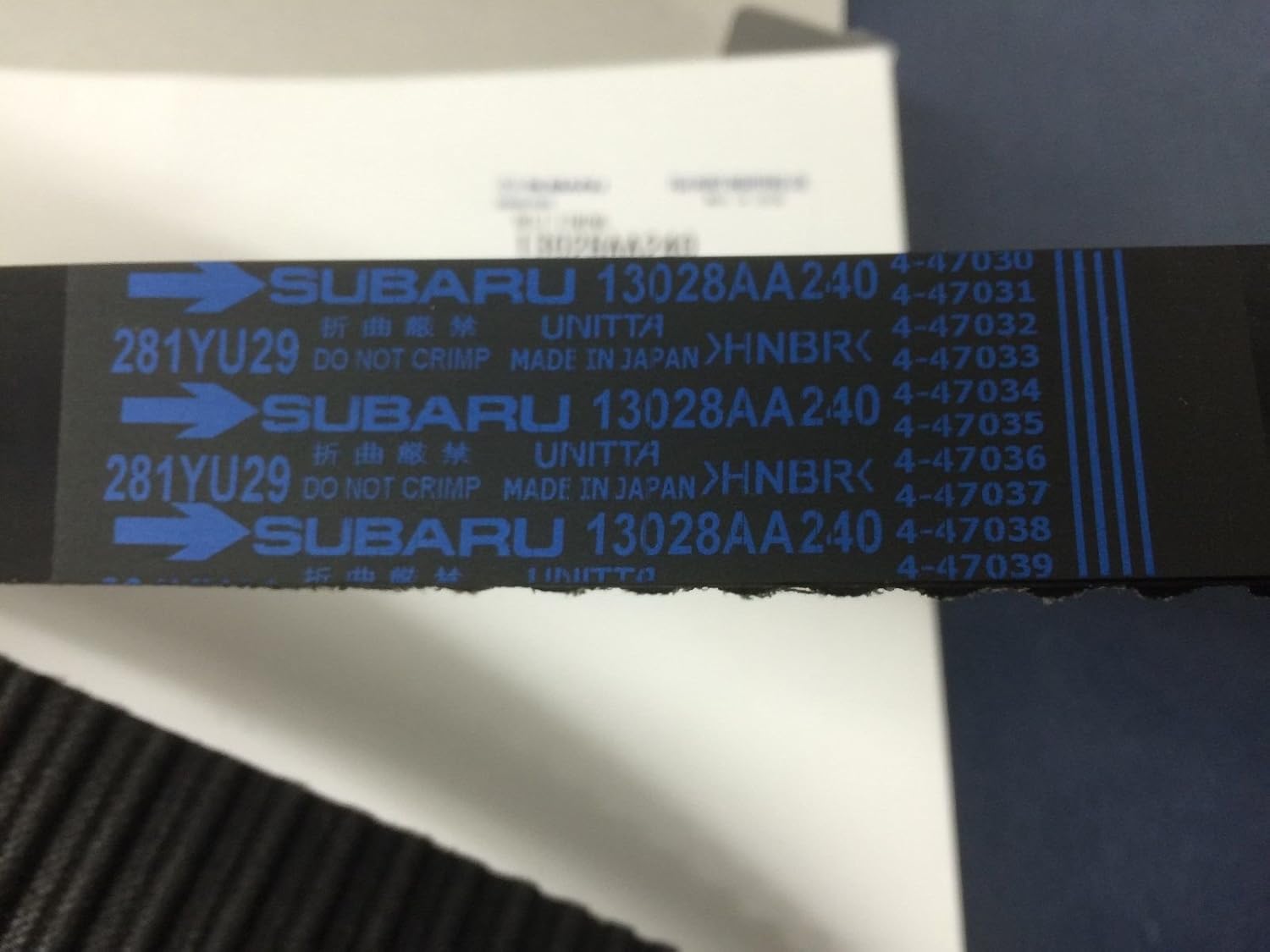
| Part Number | 13028AA240 |
| Compatible Engines | EJ205 EJ257 EJ255 |
| Compatible Models | Forester XT, Outback Turbo, Legacy Turbo, Impreza WRX/STI, Baja |
This is a genuine Subaru timing belt sold as a sealed OEM replacement for turbocharged Subaru engines using part number 13028AA240. It is designed to restore factory timing drive performance and is typically used during scheduled belt service or when performing a head or water pump job. As an OEM part, it matches the original design, tooth profile, and materials the engine was built with, which simplifies installation and reduces the risk of fitment or compatibility issues. The primary benefit is long-term reliability because it is produced to factory specification rather than aftermarket tolerances. The package is single-item and straightforward for professional mechanics or experienced DIYers who follow Subaru service intervals. Limitations are that it comes only as the belt itself, so you will need to source a tensioner, idlers, and water pump separately if those components are due, and it does not include multi-year service accessories that some aftermarket kits bundle.
Best for: Buyers who prioritize long-term dependability and want a factory-match timing belt for scheduled maintenance on turbo Subaru models; suitable for owners who will maintain OEM service intervals or have a mechanic performing the work.
Less Ideal for: Buyers looking for a complete timing service kit with all wear items included or those seeking the lowest upfront cost should consider aftermarket kits or multi-part bundles instead.
- Factory-quality fit and materials matched to Subaru turbo engines
- Sealed OEM part reduces risk of unexpected fitment issues
- Covers a broad range of turbo Subaru models making it suitable for many common service applications
- Simple single-item packaging is convenient for replacement when other components are already new
- Sold as the belt only with no tensioner, idlers, or water pump included
- Higher cost compared with some aftermarket timing belt options
Verdict: Choose this genuine Subaru timing belt when you want a factory-matched replacement that maximizes reliability for turbo Subaru scheduled maintenance.
6. Gates TCKWP328 PowerGrip Timing Belt Kit with Water Pump

| Included Components | Timing belt, stretch fit belt, hydraulic tensioner, 4 idlers, water pump |
|---|---|
| Material Type | Rubber |
| Unit Count | 1 Count |
| Manufacturer | Gates |
This Gates TCKWP328 kit supplies the core components needed when replacing a timing belt and the driven water pump in one service. It includes a PowerGrip timing belt, stretch fit belt, hydraulic tensioner, four idler pulleys and a matching water pump plus installation items such as a gasket and threadlocker. For a Subaru Outback XT with a timing-belt-driven water pump, the convenience of replacing all critical parts at once reduces the chance of early failure from a worn secondary component and saves a second labor event. The kit’s factory-style components and bundled hardware make it suitable for a professional or competent DIY tech who can follow service procedures. Limitations are that fitment must match your engine application and some shops may prefer OEM-sourced pumps for long-term peace of mind; the kit does not list vehicle-specific instructions so reference the factory service manual for torque and timing procedures.
Best for: Buyers who want a complete, one-stop replacement kit to reduce the risk of follow-up failures and prefer a factory-style aftermarket solution backed by user experience.
Less Ideal for: If you need vehicle-specific guidance in the box or insist on a particular pump brand for warranty reasons, look at dealer-sourced replacements or kits that advertise exact vehicle instructions.
- Comprehensive kit includes timing belt, tensioner, idlers and water pump to replace all wear items together.
- PowerGrip timing belt and included pulleys mirror factory-style components for reliable belt tracking.
- Includes installation items like gasket and threadlocker to simplify reassembly and reduce missing-part risk.
- Replacing pump with the belt lowers the chance of follow-up failures and avoids a second labor cycle.
- No vehicle-specific instructions included so installers must consult the service manual for proper timing and torque values.
- Some installers may prefer an alternative pump brand for long-term warranty preferences.
Verdict: Choose this Gates complete kit when you want a single, factory-style replacement that swaps the timing belt and water pump together to minimize the chance of future failures.
Choosing the Right Subaru Outback XT Timing Belt: Key Factors to Consider
Material Construction and Reinforcement
The belt compound and internal reinforcement determine how well it resists stretching, cracking, and heat degradation. For the Subaru Outback XT, which uses a turbocharged engine layout, higher thermal loads and potential oil exposure are common, so belts with reinforced tensile members and heat-resistant rubber compounds tend to last longer.
A belt with strong reinforcement maintains proper cam and crank timing under load, reducing the risk of slippage or tooth jump. Look for belts that state their tensile cord material and include features like aramid or high-tensile fiber cords. These construction details translate into longer service intervals and lower likelihood of catastrophic failures.
Fitment and Compatibility
Correct fitment avoids installation delays and prevents undue stress on the belt and associated components. The Outback XT has specific routing, tensioner placement, and accessory clearances; a belt that matches OEM geometry minimizes the chance of rubbing or misalignment.
Compatibility also covers whether the belt is sold alone or as part of a kit with tensioners, idlers, and seals. Because tensioners and idlers often reach the end of their service life with the belt, choosing a compatible kit simplifies servicing and reduces the risk of installing a new belt onto worn hardware.
Expected Maintenance Interval
Knowing the recommended service life helps you plan preventive maintenance and avoid failures. For turbocharged Outback XT engines, operating conditions such as higher RPMs and temperature swings can shorten belt life compared with naturally aspirated variants. Select belts with published service intervals that align with Subaru's recommended schedules or provide a clear longevity estimate.
Longer intervals can reduce lifetime maintenance cost, but you should weigh interval claims against environmental factors like frequent short trips or heavy towing, which can accelerate wear. If a belt offers an extended interval, verify that the rest of the replacement hardware is rated for the same service life.
Resistance to Oil and Environmental Contaminants
Oil leaks, coolant exposure, and road grime accelerate belt degradation. The Subaru Outback XT's engine bay can expose the timing belt to these contaminants, especially near seals and gaskets that may age. Choose belts formulated to resist oil swelling and degradation to maintain tooth integrity and flexibility.
A belt that resists contaminants reduces the likelihood of softening, cracking, or glazing, which can lead to lost timing and engine damage. Maintenance routines that address nearby seal condition are also part of managing this risk.
Installation Complexity and Required Tools
Some timing belt replacements are straightforward; others require special tools, precise tensioner settings, or removal of accessories. The labor time and difficulty affect total ownership cost and may influence whether you perform the work yourself or seek professional help. For the Outback XT, confirm whether the belt change requires special locking tools or alignment pins.
Kits that include tensioners and idlers can simplify installation but may still need torque-specified fasteners and calibrated tension. If you plan to DIY, prioritize belts with extensive fitment documentation and clear alignment marks to reduce the risk of timing errors.
Noise, Vibration, and Ride Impact
Belt construction and tensioning influence NVH characteristics. A poorly matched belt or worn tensioner can introduce belt squeal, chirp, or vibration that is noticeable during acceleration or at idle in the Outback XT. While noise does not always indicate imminent failure, persistent unusual sounds can point to misalignment or component wear.
Consider belts and kits that specify reduced-noise design features and follow proper tensioning procedures during install to keep NVH minimal. Addressing related components like pulleys and bearings at the time of replacement reduces the chance of recurring noise.
When To Replace the Timing Belt on a Subaru Outback XT
Timing belt replacement intervals depend on mileage, calendar age, and driving conditions. For the Outback XT, monitor both service mileage and signs of wear rather than relying solely on time. Owners who frequently tow, drive in hilly terrain, or run the engine at higher RPMs should consider earlier replacement.
Common maintenance schedules set a mileage target, but environmental stressors can accelerate wear. If visual inspection shows cracking, fraying, or glazing on the belt surface, plan for replacement even if the interval has not been reached.
- Check belt condition during regular maintenance intervals
- Replace earlier if you see cracking, missing teeth, or rubber degradation
- Consider professional inspection if the vehicle has experienced oil leaks near the timing area
Signs and Symptoms of a Failing Timing Belt
Early detection of timing belt symptoms helps prevent engine damage. Warning signs include abnormal engine noises near the front of the engine, difficulty starting, or a rough idle. Some symptoms overlap with accessory drive issues, so inspect pulleys, tensioners, and belts together.
Complete belt failure is often sudden and can cause the engine to stop running or to sustain internal damage. Watch for intermittent misfires or loss of power under load which could point to timing drift.
- High-pitched squeal or chirping under start or acceleration
- Intermittent misfires or reduced power
- Visible wear such as cracks, fraying, or missing teeth
Timing Belt Replacement: What A Professional Technician Will Do
A qualified technician will remove accessory components to access the timing cover, verify timing marks, and replace the belt while checking tensioners and idlers. They will rotate the engine through several cycles to confirm timing stability and recheck tension after settling.
Technicians typically recommend replacing related seals and water pump if they are accessible during the job, since those components often share labor and are convenient to change while the belt is out.
- Verify timing alignment with engine at top dead center
- Replace tensioner, idler bearings, and seals as needed
- Perform a controlled run-in and re-torque fasteners per specification
DIY Considerations and Estimated Install Time
If you are experienced with engine work, replacing a timing belt on the Outback XT can be a feasible DIY project, but it requires careful attention to timing marks, proper tensioning, and sometimes special tools. Prepare by reviewing detailed vehicle-specific procedures and service manuals.
Install time varies with experience and available tools. Expect several hours for a careful job, longer if you are replacing pulleys, water pump, or seals at the same time.
- Allow time for careful mark alignment and multiple checks
- Plan for extra time if replacing pumps, seals, or tensioners
- Use the correct torque values and recheck tension after initial run-in
What Comes in a Timing Belt Kit and Why It Matters
Kits may include the main belt, tensioners, idlers, and sometimes water pump and seals. Choosing a kit that bundles these parts helps ensure parts compatibility and reduces the chance of rework shortly after a belt change. For turbocharged Outback XT engines, confirm that tensioners and idlers are rated for the same service life as the belt.
A comprehensive kit reduces sourcing complexity and helps maintain correct clearances and tensioning geometry, which contributes to long-term reliability.
- Belt plus tensioner and idler is the minimum recommended kit
- Consider a kit including water pump and seals if they share labor access
- Verify fitment documentation for Outback XT engine layout
Maintaining the Timing System Between Replacements
Regular inspections during oil changes or tune-ups help catch early signs of trouble. Look for oil leaks from the crank or cam seals, check belt condition visually, and listen for unusual noises. Keeping the surrounding components in good condition helps extend belt life.
Addressing small leaks and replacing worn pulleys promptly prevents contaminant-related belt failure and keeps the timing system functioning correctly between scheduled replacements.
- Inspect belt surface for cracking or glazing at least yearly
- Repair nearby oil leaks immediately to protect the belt
- Monitor tensioner behavior and pulleys for smooth rotation
Still looking for the perfect fit?
Select your Subaru Outback configuration to see the most relevant Timing Belts recommendations
How We Chose the Best Subaru Outback XT Timing Belt
Our selection focused on criteria that matter specifically for Subaru Outback XT owners. We prioritized material durability and tensile strength because the XT engine operates under boost and often higher thermal stress. Heat and oil resistance were essential filters to reduce premature wear in turbocharged conditions. Compatibility with Outback XT accessory routing and tensioner geometry was checked to avoid fitment surprises. We also weighed expected maintenance intervals and manufacturer stated service life to match typical Subaru schedules.Installation complexity and the need for additional components were considered. Where belts required a kit, we noted whether the kit included tensioners, idlers, and seals because those items commonly fail alongside the belt. Noise and vibration characteristics under load were evaluated, as these affect daily driving comfort.We excluded any belts that did not specify fitment for the Outback XT engine, lacked clear material data, or had no documented maintenance interval. Cost was considered but was secondary to durability and fitment. The result is a focused list of belts that meet the mechanical and service demands of the Subaru Outback XT.
Our full evaluation process is outlined in our review methodology.
FAQ
How often should I replace the timing belt on a Subaru Outback XT?
Replacement intervals depend on mileage and age and also on driving conditions. Many owners follow manufacturer guidance or opt for earlier replacement if the vehicle sees heavy use, towing, or high RPM operation.
Can I replace just the belt, or should I change tensioners and idlers too?
It is usually wise to replace tensioners and idlers alongside the belt because they share service life and their failure can cause rapid belt wear. Kits that include these components simplify the job and lower the chance of repeat work.
What are the common symptoms that indicate imminent belt failure?
Listen for squealing, chirping, or other unusual noises near the front of the engine. You might also notice intermittent misfires, loss of power, or visible deterioration such as cracks and missing teeth on the belt.
Is timing belt replacement a DIY job for an experienced home mechanic?
Experienced DIYers can perform the replacement, but the process requires precise timing alignment, correct tensioning, and sometimes special tools. If you are unsure about timing marks or torque specs, professional service is recommended.
Should I replace the water pump when changing the timing belt on an Outback XT?
If the water pump is driven by the same front cover or is accessible during the belt job, replacing it at the same time is often recommended. Doing so uses the same labor and prevents needing the same access work again if the pump later fails.
What affects the overall cost of a timing belt replacement?
Cost is driven by parts included in the kit, the need to replace tensioners, idlers, and seals, and labor time. More comprehensive kits and additional component replacements increase initial expense but can reduce long-term service needs.
Final Verdict
When choosing a timing belt for your Subaru Outback XT, prioritize belts and kits that specify robust material construction, oil and heat resistance, and confirmed fitment for the XT engine layout. Replacing tensioners and idlers at the same time reduces the risk of early failures and saves labor in the long run.Balance planned maintenance intervals with your driving habits and environmental stresses. If you are unsure about installation complexity, seek professional service to ensure correct timing and tension. Focus on compatibility and durability to keep the Outback XT running reliably between service intervals.
Explore More:
- Check out all Subaru Outback parts & accessories
- Explore Timing Belts Maintenance & Repair Guides
- Explore Engine
- Browse all Auto Parts
