

Note: This article contains affiliate links. If you click on these links and make a purchase, I may earn a small commission at no extra cost to you. This helps support my research and content. Read my full affiliate disclosure here.
If you own a Subaru Forester XT, the timing belt is a critical maintenance item that keeps the engine running smoothly and prevents catastrophic failure. Choosing the right timing belt and associated components matters because an incorrect or worn belt can lead to expensive engine damage and unexpected breakdowns. This guide walks you through the top timing belt options and kits shortlisted for the Forester XT, with attention to correct fitment, durability, and the parts installers typically replace together.You will find evaluations that focus on compatibility, expected service life, and ease of installation so you can plan maintenance with confidence. The list covers the primary options owners consider and explains the practical factors that affect replacement decisions and scheduling.
Looking for other parts? See all Subaru Forester parts & accessories.
Top Picks at a Glance
| Best Overall The best all-around choice for most situations | AISIN TKF-005 Timing Belt and Water Pump Service Kit |  |
| Best Quality Built to a higher standard if you want something more solid | IAG Performance Red Racing Timing Belt Kit with Billet Guide, Idlers & Tensioner |  |
| Best Budget The cheapest option that still gets the job done reliably | Wusquvy Engine Timing Belt (T328) for Select Subaru Models |  |
| Highest Rated A top-rated pick with lots of positive feedback | Subaru Genuine Timing Belt 13028AA240 (Turbo fitment) |  |
| Most Popular A crowd favorite that many people choose with confidence | AISIN TKF-006 Timing Belt Kit with Water Pump |  |
| Best Seller A high-volume bestseller chosen again and again | AISIN TKF-004 Timing Belt Kit with Water Pump |  |
1. AISIN TKF-005 Timing Belt and Water Pump Service Kit

| Brand | AISIN |
|---|---|
| Material | Aluminum, Ceramic |
| Part Number | TKF-005 |
| Included Components | Water Pump, Timing Belt, Tensioner, Idler Pulleys, Gaskets |
This AISIN service kit combines a timing belt and matching water pump with the related tensioner and idler pulleys so you can replace the whole front-end timing system in one job. It is intended for routine maintenance on compatible Subaru engines where replacing the belt and pump together saves labor and reduces the chance of a premature failure after a partial repair. The kit uses factory-quality matched parts from established suppliers and the water pump features a diecast aluminum housing and carbon ceramic seal designed for durability. Practical benefits include the convenience of a single box with all required gaskets and installation instructions and parts sized to match factory fit and function. The main limitation is that fitment is vehicle- and engine-specific, so you must verify compatibility for your Forester XT before buying; the kit does not cover unrelated engine components or hardware beyond the listed items.
Best for: Buyers looking for a balanced, long-term maintenance solution who want a single, factory-quality kit to replace the timing belt and water pump together and avoid repeat labor.
Less Ideal for: People who need only a single component replaced, are repairing non-timing front-end parts, or who have an incompatible engine variant should look for a different part or a single-component option.
- Includes matching timing belt, water pump, tensioner, idler pulleys, gaskets, and instructions for a complete service
- Factory-quality components from recognized suppliers for reliable fit and function
- Water pump with diecast aluminum housing and carbon ceramic seal for improved durability
- Saves time and labor by replacing all front-end timing components at once
- Fitment is specific to certain Subaru models and engines so it may not fit every Forester XT without verification
- Does not include additional engine hardware beyond the timing components listed
Verdict: Choose this AISIN kit if you want a factory-quality, all-in-one timing belt and water pump replacement to minimize future labor and ensure matched components for your Subaru.
2. IAG Performance Red Racing Timing Belt Kit with Billet Guide, Idlers & Tensioner

| Compatible engines | EJ20 and EJ25 |
|---|---|
| Included components | Red racing timing belt, billet timing belt guide, OEM idler pulleys, OEM tensioner |
| Guide material | 6061 billet aluminum |
This IAG timing belt kit replaces the factory belt on EJ-series Subaru engines and is built for enthusiasts who push their Forester XT beyond stock driving. The kit includes a Kevlar-reinforced red racing belt, OEM-quality idler pulleys and tensioner, and an adjustable billet 6061 aluminum timing belt guide. In practice the Kevlar belt delivers higher tensile strength and improved heat resistance compared with standard belts, while the OEM pulleys and tensioner reduce the risk of premature bearing failure that can doom the timing system. The billet guide offers a more robust, adjustable stop to prevent belt jump during aggressive driving or when using modified valvetrain components. This is intended as a direct, vehicle-specific replacement, so installation follows the factory procedure but gives added durability for spirited street driving and occasional track use. The main compromise is cost versus a basic replacement belt, since the performance materials and billet guide increase price, but they also reduce the chance of timing-related failures under higher loads.
Best for: Forester XT owners focused on performance and reliability who want a stronger, more heat-resistant timing system for spirited driving or occasional track use.
Less Ideal for: Buyers seeking the cheapest routine maintenance option or those who only need a basic OEM-equivalent belt for low-stress daily driving.
- Kevlar-reinforced belt construction offers much higher tensile strength and improved heat resistance over standard belts
- Includes OEM-quality idler pulleys and timing belt tensioner to lower risk of premature bearing or tensioner failure
- Billet 6061 aluminum timing belt guide is adjustable and more durable than the factory plastic guide
- Kit is a complete vehicle-specific replacement including necessary pulleys, tensioner, and guide for straightforward installation
- Higher price than a basic replacement belt due to performance materials and billet components
Verdict: Choose this kit if you want a complete, stronger-than-stock timing system for a Forester XT that reduces timing-related risk during aggressive driving.
3. Wusquvy Engine Timing Belt (T328) for Select Subaru Models

| Material Type | HNBR |
|---|---|
| Belt Style | ToothedBelt |
| Included Components | Engine Timing Belt |
| Part Number | T328 |
This Wusquvy T328 timing belt is a direct replacement designed for a range of Subaru models including Forester and WRX variants; it restores proper cam-crank synchronization and drives the water pump. In typical use you remove the old belt and install this unit to regain precise timing and reduce noise from a worn belt. The belt is built from HNBR with fiberglass cords and is described as having 281 teeth, a 0.31-inch pitch, and an 88.5-inch circumference, which supports stable power transfer and resistance to heat and stretch. That construction should give longer life than basic rubber belts and help prevent slippage that can cause engine damage when neglected. Practical benefits include quieter operation and predictable fitment to the listed replacement part numbers. Limitations are that this is an aftermarket single belt sold without installation hardware, and buyers should verify exact engine fitment and follow torque and timing procedures since improper installation risks serious engine problems.
Best for: Buyers looking for an affordable, durable replacement timing belt for routine scheduled service who prioritize reliable material construction over premium brand name assurance.
Less Ideal for: Drivers who want a full timing kit including tensioners, idlers, and seals or those unwilling to verify exact engine part numbers before installation.
- HNBR compound with fiberglass reinforcement for improved heat and wear resistance
- 281-tooth toothed profile and specified pitch for accurate synchronization
- Quiet operation that reduces noise and vibration compared with a worn belt
- Sold as a single belt without tensioners or installation hardware
Verdict: A budget-friendly, heat-resistant replacement timing belt that restores quiet, reliable timing for the specified Subaru engines.
4. Subaru Genuine Timing Belt 13028AA240 (Turbo fitment)
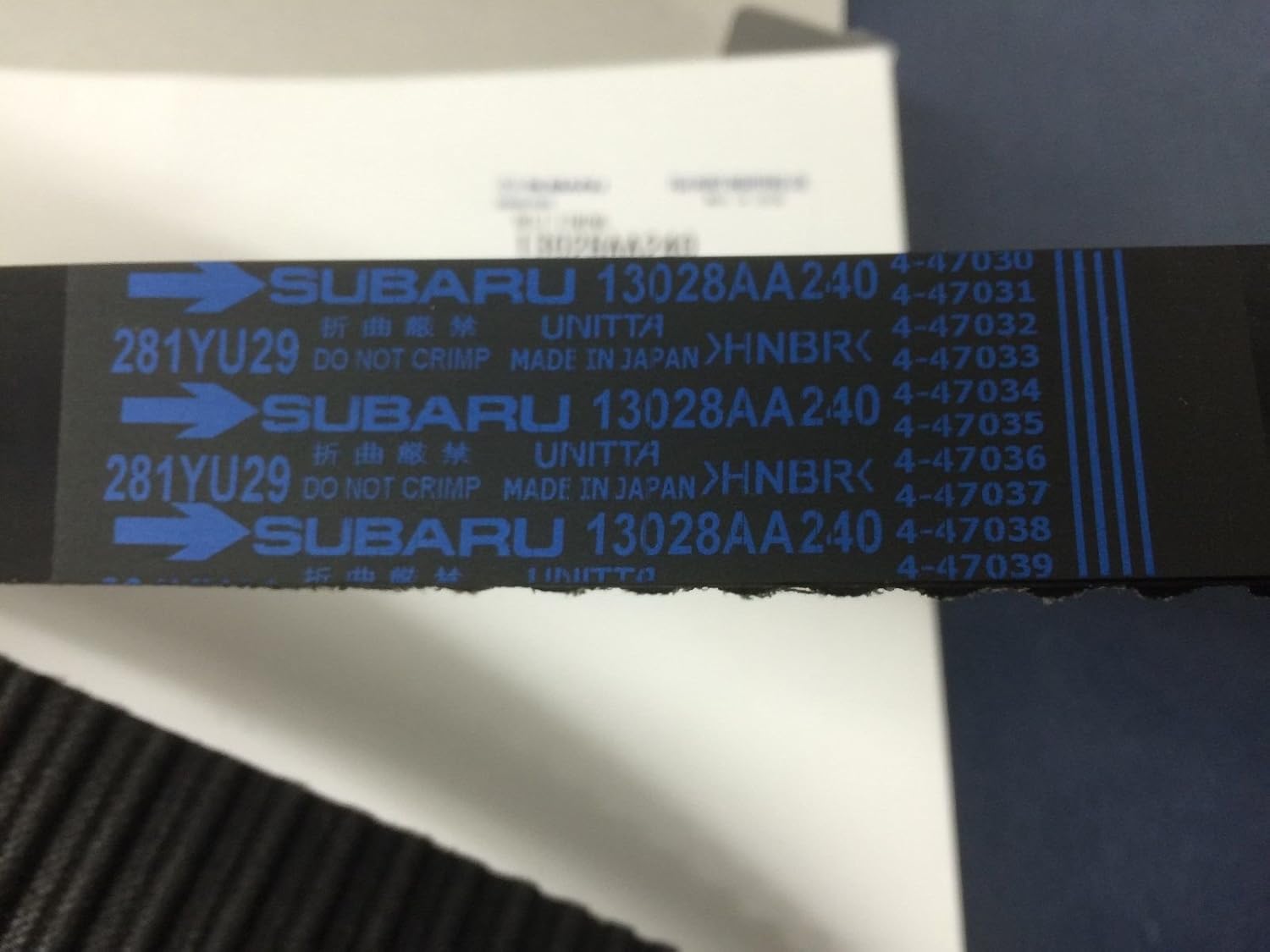
| Part number | 13028AA240 |
|---|---|
| Compatible engines | EJ205, EJ255, EJ257 |
| Fitment | Turbo Subaru models (Forester XT, WRX/STI, Outback, Legacy) |
This is a factory-quality Subaru timing belt intended as a direct replacement for turbocharged Subaru engines that use part 13028AA240. It installs like a standard timing belt and is typically used during scheduled timing service or when replacing other front-end components. As a genuine Subaru part it matches factory fit, tooth profile, and material specification so you avoid compatibility issues that can arise with low-cost aftermarket belts. The listing covers turbo applications including Forester XT, WRX/STI, Legacy and Outback turbo variants with EJ205, EJ255 and EJ257 engines. The practical benefit is confidence in durability and correct tensioning geometry when paired with factory pulleys and tensioners. The main limitation is that this is a single belt only and does not include related wear items such as tensioners, idlers, or a water pump, so a full timing-service kit will require separate purchases.
Best for: Buyers prioritizing long-term reliability and exact factory fit for turbo Subaru timing systems who want a direct genuine replacement to maintain factory performance.
Less Ideal for: Anyone looking for a complete timing-service kit or a budget aftermarket alternative; do not buy this if you need accompanying tensioners or pump included.
- Factory replacement part designed for turbo Subaru engines for proper fit and tooth profile
- Matches original material and specifications for predictable service life
- Covers a wide range of turbo applications including Forester XT and common EJ engines
- Sold as the belt only and does not include tensioners, idlers, or water pump
Verdict: Choose this genuine Subaru timing belt when you want factory-fit reliability for turbo Subaru engines during timing belt replacement.
5. AISIN TKF-006 Timing Belt Kit with Water Pump

| Brand | AISIN |
|---|---|
| Material | Aluminum, Ceramic |
| Automotive Fit Type | Vehicle Specific Fit |
| Model | Timing Belt Kit with Water Pump |
This AISIN timing belt kit bundles everything needed for a timing system service, including a matched water pump, timing belt, tensioner, idler pulleys, gaskets, and instructions so you can replace all components at once. It is typically used during a scheduled timing belt interval or when the water pump shows wear; replacing the whole system together cuts labor redundancy and reduces the chance of premature failures. Notable features include factory-quality matched components from known suppliers and a diecast aluminum water pump with carbon ceramic seals for improved durability. In practice the kit simplifies sourcing and fitment for compatible Subaru engines and reduces the risk of mixing lower-quality parts. The main limitations are that fitment is vehicle- and engine-specific so you must confirm compatibility for your Forester XT, and the kit increases upfront parts cost compared with replacing a single component. For buyers focused on reliability and minimizing repeat labor, this kit is a practical choice that prioritizes long-term value.
Best for: A buyer who values minimizing future labor and prefers proven, factory-quality replacement parts to protect engine health during a timing service.
Less Ideal for: Someone who only needs a single part replaced to save immediate cash or who has an uncommon engine variant not covered by the kit.
- Complete kit includes water pump, timing belt, tensioner, idler pulleys, and gaskets so all related wear items are replaced together
- Uses factory-matched components and reputable suppliers for better fit and durability
- Water pump features diecast aluminum housing and carbon ceramic seals for improved longevity
- Includes installation instructions which helps professional mechanics and experienced DIYers confirm proper assembly
- Fitment depends on engine variant so you must verify exact compatibility before purchase
Verdict: Choose this AISIN kit when you want a complete, factory-quality timing system refresh that reduces the chance of repeat labor on your Subaru.
6. AISIN TKF-004 Timing Belt Kit with Water Pump

| Brand | AISIN |
|---|---|
| Model | Timing Belt Kit with Water Pump |
| Material | Aluminum |
| Manufacturer Part Number | TKF-004 |
This AISIN timing belt kit bundles a timing belt, water pump, tensioner, idler pulleys, gaskets, and installation instructions in one box to simplify a full timing service. It is designed so you can replace all related components at once, which saves labor compared with doing items separately. The kit uses OE-matched parts from recognizable suppliers and an AISIN water pump with a diecast aluminum housing and carbon ceramic seal for durable operation. For routine maintenance on compatible Subaru engines it provides the key parts you need without sourcing multiple vendors, and the included instructions help guide less experienced installers or DIYers following a shop procedure. The main trade-off is that fitment depends on engine and year, so you must confirm this exact kit matches your Forester XT engine before buying; also it's a parts kit rather than a drop-in assembled unit, so correct installation and torque procedures still matter. For risk-averse owners wanting factory-quality replacements in one purchase, this kit reduces the chance of mixing inferior components during a timing service.
Best for: Subaru owners who prefer a conservative, maintenance-first approach and want factory-quality components bundled for a full timing and water pump service on compatible Forester engines.
Less Ideal for: Buyers who need a generic universal repair solution or who prefer piecing together aftermarket performance parts for modified engines.
- Complete kit includes timing belt, water pump, tensioner, idlers, gaskets and instructions so all related components are replaced together
- OE-matched components from known suppliers for factory-quality fit and performance
- AISIN water pump with diecast aluminum housing and carbon ceramic seal for improved durability
- Reduces total labor and coordination compared with buying parts separately
- Requires verifying exact engine fitment for Forester XT before purchase
- Installation still requires correct procedures and mechanical skill; not a plug-and-play assembled unit
Verdict: If you want a factory-matched, all-in-one timing belt and water pump service kit for a Subaru timing overhaul, this AISIN kit is a dependable, maintenance-focused choice.
Choosing the Right Subaru Forester XT Timing Belt: Key Factors to Consider
Fitment and Engine Compatibility
Correct fitment is the single most important factor for Forester XT timing belts because the engine timing components must match the engine geometry exactly. Using a belt that does not match the XT engine profile can cause improper tooth engagement or tensioner loading, which raises the risk of premature wear or failure.
Always confirm that the part or kit lists the Subaru Forester XT explicitly and that the supplier provides engine code or model-year fitment guidance. Fitment documentation reduces the chance of returns and ensures the belt meshes properly with the cam and crank sprockets.
Material Quality and Construction
Timing belts vary by cord material, rubber compound, and tooth profile. Higher-grade materials and reinforced cords resist stretching and heat-related degradation, which helps maintain timing accuracy over tens of thousands of miles. For turbocharged XT engines, resistance to higher under-hood temperatures is particularly relevant.
Check for belts that specify cord type and rubber formulation, and prefer parts designed for a high-mileage life. Durable construction reduces the frequency of replacements and lowers the risk of a sudden belt failure between service intervals.
Kits Versus Single Components
Replacing a timing belt often involves more than the belt itself. Tensioners, idler pulleys, and sometimes the water pump wear on the same schedule and can fail if not replaced alongside the belt. Kits that include these components provide a more comprehensive service and reduce the chance of a secondary failure shortly after a belt change.
Consider whether the kit includes all recommended hardware and seals. While single-component purchases may be cheaper up front, they can increase labor costs if other worn components require additional disassembly later.
Installation Complexity and Time
Labor time and installation complexity affect whether you tackle the job yourself or book professional service. Forester XT timing belt replacement requires engine timing knowledge, correct torque sequencing, and often partial engine disassembly. The ease of following installation instructions or availability of clear alignment marks can reduce installation errors.
If you plan to DIY, look for parts with clear documentation and consider the estimated install time. For shop installs, factor in the typical labor hours required for the full kit replacement when scheduling maintenance.
Maintenance Interval and Service Life
Different belts and kits carry differing recommended service intervals. Aligning the belt's expected service life with Subaru's recommended maintenance interval for the Forester XT ensures you do not replace components too early or too late. Longer-rated belts can reduce replacement frequency but verify that the manufacturer backs those claims with clear mileage limits.
Plan replacements based on both calendar age and mileage because rubber degrades over time even if miles are low. Confirm the recommended interval for the specific belt or kit and compare it to Subaru's maintenance guidance for the XT model.
Warranty and Technical Support
A solid warranty and accessible technical support offer reassurance if fitment or early failure issues arise. Warranty terms indicate the manufacturer's confidence in materials and workmanship, and readily available technical support can help resolve fitment or installation questions.
Check warranty duration and what it covers, and favor vendors or manufacturers who provide clear contact channels and technical documentation for Forester XT owners.
When to Replace the Timing Belt on a Forester XT
Subaru Forester XT owners should schedule replacement based on both mileage and time because belts degrade with age even if miles are low. Typical maintenance intervals for turbocharged engines like the XT are often conservative; follow the recommended interval listed for your specific model year and engine configuration.
In practice, many owners plan belt replacement as part of broader service that includes tensioners, idlers, and the water pump to minimize future labor. Keeping a dated record of the last replacement and noting the mileage helps avoid missing the window when replacement is most cost-effective.
- Replace based on the manufacturer-recommended interval for your model year and engine.
- Consider time-based replacement if the vehicle is low mileage but older.
- Combine belt replacement with adjacent component service to reduce repeat labor.
Common Symptoms of a Failing Timing Belt
Certain symptoms can indicate timing belt wear or imminent failure. Owners should watch for unusual engine noises, rough idling, or difficulty starting, as these can point to timing degradation. A sudden loss of engine power or misfiring may indicate severe timing irregularity and requires immediate inspection.
Other warning signs include visible cracking or fraying if the belt is inspected during routine maintenance. While some symptoms can overlap with other engine issues, erring on the side of early replacement is wise for the XT because of engine sensitivity to timing errors.
- Squealing or chirping noises from the timing cover area.
- Rough idle, misfires, or difficulty starting.
- Visible wear such as cracks, glazing, or missing teeth during inspection.
Typical Installation Steps and Estimated Time
Timing belt replacement on a Forester XT is a multi-step job that involves draining accessory systems, removing engine covers, aligning timing marks, and setting correct tension. Reassembly requires torqueing fasteners to spec and verifying timing alignment before initial start-up.
Estimated install time varies with experience and whether a full kit is used. For a professional technician familiar with Subaru engines, a full belt-and-component job typically occupies several hours. DIYers should add extra time for careful measurement and double-checking alignment marks.
- Drain and remove obstructing components, such as belts and covers.
- Align cam and crank timing marks precisely before removing the old belt.
- Install new belt and tensioner, verify tension, and rotate the engine by hand to confirm correct timing.
Is a Timing Belt Kit Worth It for the Forester XT?
A timing belt kit that includes tensioners, idlers, and seals is often the most pragmatic choice for the Forester XT. These engines place continuous load on timing components under boost, so replacing only the belt can leave older supporting parts susceptible to failure shortly after service.
Kits reduce the chance of return visits and often simplify parts sourcing for the technician or DIYer. When budgeting for a belt change, factor in the incremental cost of a kit against the potential labor to replace additional components later.
- Kits help ensure all wear-related parts are fresh at reassembly.
- They reduce the risk of secondary failures that require additional teardown.
- Consider kits that include water pump provisions when the pump shares the service interval.
Maintenance Tips to Extend Belt Life
Proper belt tension, avoiding oil contamination, and keeping the timing cover sealed are practical ways to extend belt life. Oil leaks can rapidly degrade rubber compounds, so address any oil seepage from adjacent seals when performing service.
Store replacement belts away from heat and ozone sources prior to installation. After replacement, recheck tension after a short break-in period and monitor for any unusual noises or signs of looseness.
- Correctly tension the belt according to factory specifications.
- Repair oil leaks and replace adjacent seals during service.
- Inspect pulleys and idlers for smooth rotation before installation.
Still looking for the perfect fit?
Select your Subaru Forester configuration to see the most relevant Timing Belts recommendations
How We Chose the Best Subaru Forester XT Timing Belt
We prioritized products and kits that address the real-world needs of Subaru Forester XT owners. Our editorial filters focused on fitment accuracy for the Forester XT engine, the inclusion of complementary components like tensioners and idlers when relevant, and documented durability or expected service life. We also considered the availability of replacement components in common maintenance intervals, how well the parts align with OEM specifications, and whether the kit simplifies installation by including seals or water pump provisions when typically replaced at the same interval.Excluded from consideration were partial replacement options that do not match Forester XT fitment, one-off aftermarket items lacking technical spec sheets, and products that fail to disclose material construction or recommended service life. Evaluation dimensions included material and construction quality, fitment/compatibility documentation, inclusion of necessary hardware in kits, and the clarity of installation guidance. Practical maintenance concerns such as expected replacement interval, potential failure symptoms, and service time requirements also influenced the selections.
Our full evaluation process is outlined in our review methodology.
FAQ
How often should I replace the timing belt on my Forester XT?
Replacement frequency depends on the model year and driving conditions, but you should follow Subaru's recommended interval for the XT engine. Many owners also replace belts based on calendar age if the vehicle has low mileage, because rubber degrades over time.
Can I replace just the timing belt and leave the tensioner?
You can, but it is usually not advisable. Tensioners and idlers experience the same wear cycle as the belt, and leaving them in place increases the risk of a secondary failure that requires repeating the labor-intensive service.
What are the signs a timing belt is about to fail?
Common signs include unusual noises near the timing cover, rough idling, misfires, or visible cracking and fraying on the belt during inspection. Sudden loss of power or severe misfiring can indicate a critical timing issue and requires immediate attention.
How long does a timing belt install take on a Forester XT?
Install time varies with experience and whether you replace related components. A professional familiar with Subaru engines typically needs several hours for a full belt-and-component replacement; DIYers should allow significantly more time for careful alignment and checks.
Should I replace the water pump when changing the timing belt?
Often yes. The water pump commonly shares the same service interval and is accessible during belt replacement. Replacing it concurrently reduces the chance of later coolant-related failures and avoids repeating the labor.
Does it matter if I use OEM-spec components for the timing belt job?
Using components that meet OEM specifications ensures proper fitment and performance. Whether OEM parts are necessary depends on your priorities, but confirming that aftermarket parts match OEM dimensions and material specs helps maintain reliability.
Final Verdict
For Subaru Forester XT owners, prioritize correct fitment, robust material construction, and a comprehensive kit that includes tensioners and idlers. Balancing service life expectations against installation complexity will help you choose an option that minimizes repeat labor and reduces risk of engine damage.If you are unsure about undertaking replacement yourself, plan for a full kit replacement during scheduled maintenance to address the most common failure points and achieve the greatest long-term value.
Explore More:
- Check out all Subaru Forester parts & accessories
- Explore Timing Belts Maintenance & Repair Guides
- Explore Engine
- Browse all Auto Parts
