

Note: This article contains affiliate links. If you click on these links and make a purchase, I may earn a small commission at no extra cost to you. This helps support my research and content. Read my full affiliate disclosure here.
If your 1999-2007 Ford F-350 is showing loose steering or uneven tire wear, replacing the tie rod ends can restore predictable handling and improve safety. The right tie rod ends matter because they connect the steering linkage to the wheels and directly influence steering response, alignment stability, and tire life. In this guide we shortlist seven top options that fit the 1999-2007 F-350 and evaluate them on fitment, durability, and steering performance. Read on to understand the practical tradeoffs so you can pick the correct replacement for your truck and driving needs.
Top Picks at a Glance
| Best Overall The best all-around choice for most situations | TRQ Front Steering & Suspension 10-Piece Kit (Front Upper, Driver Side) |  |
| Best Quality Built to a higher standard if you want something more solid | METRIX Premium Inner & Outer Tie Rod End Kit (4 PC) for Ford F-250/F-350/Excursion Front |  |
| Best Value The sweet spot between price and what you get | MOOG ES3423 Outer Steering Tie Rod End |  |
| Best Budget The cheapest option that still gets the job done reliably | TRQ Front Left Outer Tie Rod End (PSA68507) for 1999-2007 Ford F-350/F-250/2000-2005 Excursion |  |
| Highest Rated A top-rated pick with lots of positive feedback | MOOG ES3417T Outer Steering Tie Rod End |  |
| Most Popular A crowd favorite that many people choose with confidence | Detroit Axle Front Outer Tie Rod Ends (2-pack) for 1999-2007 Ford F-250/F-350 & 2000-2005 Excursion (2WD) |  |
| Best Seller A high-volume bestseller chosen again and again | Metrix Premium Chassis Parts Front Inner Tie Rod End Kit (Left & Right) |  |
1. TRQ Front Steering & Suspension 10-Piece Kit (Front Upper, Driver Side)

| Brand Name | TRQ |
|---|---|
| Manufacturer Part Number | PSA58754 |
| Included Components | 10 Piece Steering & Suspension Kit |
| Material Type | Alloy Steel |
| Fit Type | Vehicle Specific Fit |
This TRQ 10-piece front steering and suspension kit is designed as a direct-fit replacement to restore steering feel and alignment on compatible Ford Super Duty trucks. It bundles front inner and outer tie rods, upper and lower ball joints, and the adjusting sleeves you need for a coordinated front-end refresh. Parts come pre-greased and feature an anti-corrosion coating, which reduces initial break-in and helps resist rust in wet or salted conditions. The vehicle-specific fit and pre-assembled elements simplify installation for a competent DIYer or an independent shop, saving time compared with sourcing individual parts. Because it is a complete kit, you get matched components that help reestablish correct steering geometry rather than mixing brands. The kit focuses on front upper, driver-side components only, so it does not address rear or passenger-side steering items and you may still need alignment after installation. For owners seeking a practical, ready-to-install steering refresh, this kit covers the common wear items in one package.
Best for: Buyers who want a practical, all-in-one front steering refresh for a 1999–2007 Ford F-350 and value matched components and easier installation over sourcing individual parts.
Less Ideal for: People who need passenger-side or rear suspension components, or those who prefer to replace individual parts separately rather than a matched kit.
- Complete 10-piece kit covers inner and outer tie rods plus ball joints for coordinated replacement
- Pre-greased components reduce initial maintenance and simplify installation
- Anti-corrosion coating extends surface life in harsh conditions
- Vehicle-specific fit and pre-assembled parts speed up DIY or shop installation
- Kit addresses front upper driver-side components only and does not include passenger-side or rear steering parts
Verdict: If you want a single, vehicle-specific kit to replace the common front steering wear items on a 1999–2007 Ford F-350 and speed up installation, this TRQ 10-piece kit is a convenient, ready-to-install solution.
2. METRIX Premium Inner & Outer Tie Rod End Kit (4 PC) for Ford F-250/F-350/Excursion Front

| Position | Front |
|---|---|
| Manufacturer | METRIX PREMIUM CHASSIS PARTS |
| Model | 98176MT |
| Warranty | 3-Year / 36,000-Mile |
| OEM Part Number | DS1434, DS1433T, ES3418, ES3417T |
This METRIX four-piece tie rod end kit replaces both inner and outer front tie rods to restore steering precision on the specified Ford Super Duty and Excursion models. The parts are engineered to a factory-style fit and include greaseable fittings on key pieces to allow routine maintenance and extended service life. Built from high-grade steel with cataphoresis corrosion plating and machined finishes, the kit is aimed at drivers who want durable steering components that resist salt and road grime. Installation is typical for front-end steering work and should be done with the vehicle safely supported and followed by a wheel alignment. Benefits include OEM-like fit, greaseable joints for longevity, and a comprehensive kit that replaces both sides so handling feels consistent after the service. Limitations are that this kit is vehicle-specific so fitment must be confirmed for 1999 to 2005 Excursion and 1999 to 2004/2000-2004 F-250/F-350 configurations listed, and replacement still requires proper alignment and basic tools or a shop visit.
Best for: Drivers who prioritize steering feel and durability on 1999–2005 Excursion or 1999–2004/2000–2004 F-250/F-350 front-end setups and want parts that accept routine greasing to prolong service life.
Less Ideal for: If you need a universal or cross-model part or want a quick one-piece repair without alignment work, this vehicle-specific kit is not the best choice.
- Complete front kit includes both inner and outer tie rod ends for left and right so both sides are renewed at once
- Greaseable design on key joints allows periodic maintenance to extend service life
- Cataphoresis plating and machined exterior provide enhanced corrosion resistance for road salt and moisture
- Built to certifications and manufacturing standards that aim for precision fit and durability
- Fitment limited to specific Ford Super Duty and Excursion model years and configurations so it is not universal
- Installation requires front-end disassembly and a post-install alignment which may need a shop if you lack tools
Verdict: Choose this METRIX four-piece tie rod kit when you want a complete, greaseable front-end replacement that restores precise steering and resists corrosion on the specified Ford Super Duty and Excursion models.
3. MOOG ES3423 Outer Steering Tie Rod End

| Brand | MOOG |
|---|---|
| Model Number | ES3423 |
| Material Type | Rubber Bushings |
| Finish Types | Powder Coated |
| Number of Pieces | 1 |
The MOOG ES3423 is an outer tie rod end engineered to replace the worn steering linkage on compatible Ford Super Duty trucks. It connects the steering knuckle to the steering gear and is used to restore alignment, reduce tire wear, and return a firmer steering feel. MOOG builds in problem-solving features such as heat-treated ball studs, a pressed cover plate to keep out debris, and a greasable socket or gusher bearing where applicable to improve longevity and reduce friction. Those design choices make installation straightforward and help the part hold up on rough roads and under heavy use. The main limitations are that this is a single outer tie rod end intended for specific model years and it does not include inner tie rod components or alignment service, so buyers should plan for a post-install alignment and, if needed, purchase matching inner parts separately.
Best for: Drivers who want a durable, factory-quality steering replacement to restore steering feel and alignment on the specified Ford Super Duty trucks while maximizing service life between replacements.
Less Ideal for: Anyone seeking a complete steering rebuild kit or who wants parts and alignment handled together by a service center should consider buying additional components or professional installation instead.
- Heat-treated ball stud for improved fatigue strength and longer life
- Sealed cover plate design that helps keep out dirt and reduce looseness
- Greasable socket or gusher bearing option to allow lubrication and reduce wear
- Engineered for direct fit and straightforward installation on specified Ford Super Duty models
- Sold as a single outer tie rod end and does not include inner tie rod or alignment service
Verdict: Choose this MOOG outer tie rod end when you need a durable, serviceable factory-quality replacement to restore steering control on compatible Ford Super Duty trucks.
4. TRQ Front Left Outer Tie Rod End (PSA68507) for 1999-2007 Ford F-350/F-250/2000-2005 Excursion

| Position | Front Left Outer |
|---|---|
| Material | Steel |
| Pre-Greased | Yes |
| Grease Fitting Included | No |
This TRQ front left outer tie rod end is a pre-greased, machined steel replacement made to fit 1999-2007 Ford F-250/F-350 and 2000-2005 Excursion front driver side outer positions. It installs as a direct replacement for the factory part, so technicians and DIYers can swap it in without modifications and save time on alignment prep. The unit ships pre-greased with a dust boot and a coated finish to resist corrosion in day-to-day driving. TRQ emphasizes a factory-style fit and provides installation videos, which is helpful if you plan a do-it-yourself repair. The part does not include a grease fitting, so long-term maintenance relies on the sealed pre-greased joint rather than user greasing. For drivers looking to restore steering feel on an older Super Duty without paying for an OE part, this offers solid value, but those wanting a rebuildable or permanently serviceable tie rod end should consider alternatives that include zerk fittings.
Best for: Cost-conscious owners doing DIY steering repairs on 1999-2007 Ford Super Duty trucks who want a ready-to-install, factory-quality replacement that reduces shop time.
Less Ideal for: Drivers who plan to regularly service and re-grease suspension joints or who want a rebuildable tie rod end for heavy-duty or off-road use should look for serviceable alternatives.
- Direct-fit design for 1999-2007 Ford F-250/F-350 and 2000-2005 Excursion front left outer position
- Pre-greased, machined steel construction with coated finish for corrosion resistance
- Includes dust boot to protect the joint from dirt and moisture
- Pre-assembled to simplify DIY installation and reduce labor time
- No grease fitting provided, so the joint cannot be re-greased after installation
Verdict: A budget-friendly, direct-fit pre-greased replacement that gets a 1999-2007 Ford Super Duty back to factory steering feel with minimal installation hassle.
5. MOOG ES3417T Outer Steering Tie Rod End

| Part Number | ES3417T |
|---|---|
| Material Type | Metal |
| Compatible Lubricant | Grease |
| Included Components | Funnel |
The MOOG ES3417T is an outer tie rod end made to replace worn steering linkage on 1999–2007 Ford F-250 and F-350 Super Duty trucks and the 2000–2005 Excursion. It connects the steering knuckle to the steering gear and is built to return steering feel and alignment closer to factory performance. MOOG highlights heat-treated studs for improved fatigue strength, a pressed-in cover plate to keep out debris, and a greasable socket or gusher bearing design where applicable to allow fresh lubricant to flush contaminants. In practice that means easier installation, reduced looseness over time, and longer service life compared with basic aftermarket parts. Expect steady steering response and fewer alignment issues after replacement, though benefits depend on correct installation and related front-end components being in good condition. This is a focused repair part rather than an upgrade for heavy off-road abuse, so drivers seeking extreme-duty modifications should consider heavy-duty steering kits instead.
Best for: Buyers who prioritize long-lasting, factory-quality steering repairs for a Ford Super Duty and want a reliable replacement that restores original handling and reduces the need for frequent adjustments.
Less Ideal for: Drivers planning heavy off-road use or projects that require strengthened or upgraded steering components beyond factory-spec replacements should look at reinforced or performance steering kits.
- Heat-treated ball stud improves fatigue strength and resists premature failure
- Pressed-in cover plate seals out debris to reduce bearing wear
- Greasable design or gusher bearing allows fresh lubricant to flush contaminants
- Engineered for easy installation and factory-fit replacement
- Designed as a direct replacement and not intended for heavy-duty performance upgrades
Verdict: Choose the MOOG ES3417T when you want a dependable, factory-style outer tie rod end that restores steering control and resists wear for 1999–2007 Ford Super Duty trucks.
6. Detroit Axle Front Outer Tie Rod Ends (2-pack) for 1999-2007 Ford F-250/F-350 & 2000-2005 Excursion (2WD)

| Kit includes | 2x front outer tie rod ends |
|---|---|
| Fitment | 1999-2007 F-250/F-350 (2WD), 2000-2005 Excursion (2WD) |
| Manufacturer | Detroit Axle |
| Manufacturer Part Number | ES3417_ES3418 |
This Detroit Axle kit supplies two front outer tie rod ends intended as direct-fit replacements for 2WD 1999–2007 Ford F-250 and F-350 Super Duty trucks and 2000–2005 Excursions. Installation is typical for outer tie rod replacement: remove the worn ends, torque the new units to the factory-style taper, and recheck alignment after installation. The parts are described as premium alloy with enhanced structural strength and corrosion resistance, which should hold up under normal driving and light-duty truck use. Because they are built to meet factory-quality fit and form, the tie rods simplify repair for DIY mechanics or shops and restore steering feel and toe stability. Important limitations are that this kit is for 2WD models only and covers only the outer tie rod ends, so vehicles with 4WD or inner-end wear will need different parts; an alignment is required after replacement. For buyers focused on proven reliability, these units offer familiar construction and broad positive feedback from other owners.
Best for: Buyers who value established, well-reviewed replacement parts and want a straightforward, factory-quality fix for worn outer tie rod ends on the specified 2WD Ford Super Duty and Excursion models.
Less Ideal for: People with 4WD trucks, cars that need inner tie rods or full steering overhaul, or those seeking performance-oriented aftermarket steering components.
- Direct-fit replacement designed for listed Ford 2WD Super Duty and Excursion models, simplifying installation.
- Constructed from premium alloy and reinforced structure for improved wear resistance and corrosion protection.
- Sold as a two-piece kit so both front outer tie rod ends can be replaced at once for balanced steering response.
- Made to match factory-style fit, reducing the need for part modification during installation.
- Compatible only with 2WD applications and not suitable for 4WD trucks or models requiring inner tie rod replacement.
Verdict: A reliable, factory-style two-piece outer tie rod kit that restores steering stability for 2WD Super Duty trucks and Excursions with a proven track record.
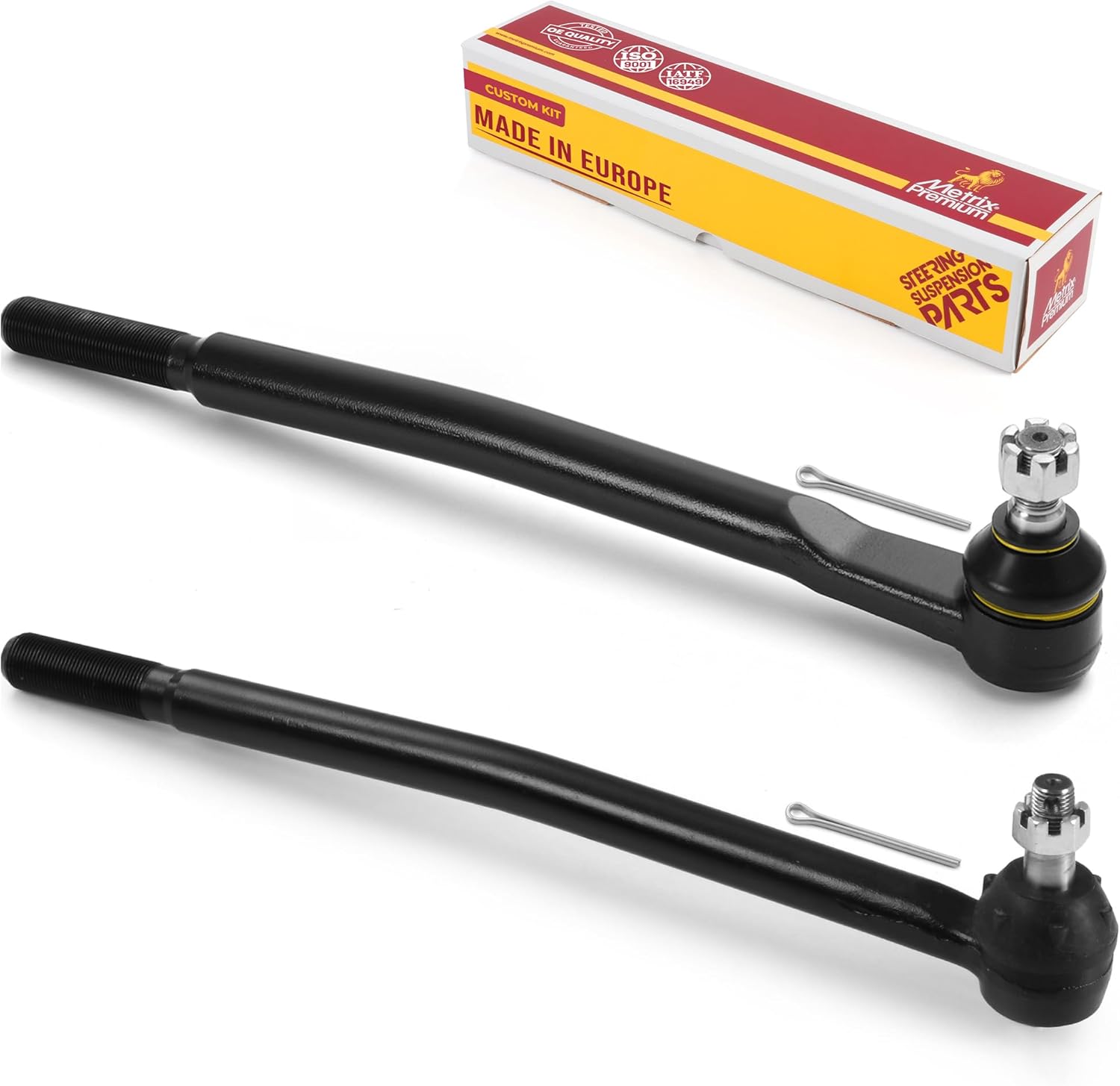
7. Metrix Premium Chassis Parts Front Inner Tie Rod End Kit (Left & Right)
| Compatible vehicles | 1999-2005 Ford Excursion RWD; 1999-2004 Ford F-250/F-350 Super Duty RWD (Mexico variants listed) |
|---|---|
| Position | Front Inner |
| Material | Steel |
| Grease fitting | Included |
| Warranty | 3 Year / 36,000 miles Limited Warranty |
This Metrix inner tie rod end kit replaces the front inner tie rods on compatible Ford Super Duty and Excursion RWD models and is sold as a left-and-right pair. Built from steel with a machined exterior and grease fittings, the parts are intended for routine steering repairs and alignment restorations. The greasable design lets mechanics or DIYers top up lubrication to reduce wear, and included cotter pins simplify securing the studs during installation. Metrix states the parts are manufactured to exceed factory standards and carries industry certifications that suggest consistent fit and material quality. Practical benefits include corrosion protection from cataphoresis coating and a three-year/36,000-mile limited warranty for added confidence. The kit is focused on inner tie rod replacement only, so an alignment after installation is necessary and any worn outer tie rods or related front-suspension components should be inspected and replaced separately. Buyers should also be prepared for basic steering service tools and follow alignment specs when finishing the job.
Best for: Buyers who want a factory-quality replacement that prioritizes fit, corrosion resistance, and maintainability for routine steering repairs on covered Ford Super Duty models.
Less Ideal for: Not a fit for shoppers seeking a full suspension overhaul kit or those who need upgraded heavy‑duty performance parts for extreme off-road use.
- Greasable design for on‑vehicle lubrication and longer service life
- Machined steel construction aimed at strength and reliable steering feel
- Coating to resist corrosion for improved longevity in road conditions
- Includes necessary hardware such as cotter pins and grease fittings for installation
- 3 year / 36,000 mile limited warranty provides extra assurance
- Kit covers inner tie rods only so additional parts or alignment may be required after replacement
Verdict: A durable, greasable steel inner tie rod kit that delivers factory-style fit and corrosion protection for peace-of-mind steering repairs on covered Ford Super Duty models.
Choosing the Right 1999-2007 Ford F-350 Tie Rod End: Key Factors to Consider
Fitment and Thread/Taper Compatibility
Correct fitment is the foundational concern when selecting tie rod ends for the 1999-2007 Ford F-350. Mismatched thread pitch, length, or taper can prevent proper installation or force compromises to the steering geometry. A tie rod end that matches factory threads and taper ensures the steering linkage secures tightly and the steering wheel return-to-center behavior remains predictable.
Verify whether the tie rod end is for inner or outer steering application and whether it is right- or left-side oriented where applicable. Some replacement parts replicate factory dimensions exactly, while others use service‑replacement tolerances; choose based on whether you plan a direct swap or a partial steering overhaul. Fitment also affects whether additional components such as castle nuts, cotter pins, or alignment shims are needed during installation.
Ball Joint Construction and Sealing
The ball joint inside the tie rod end is the wear point that most determines steering feel and longevity. Higher-quality ball joints use hardened steel balls and precision-machined sockets for tight tolerances, which reduce play and maintain steering responsiveness. A well-designed seal keeps contaminants out and lubricant in, slowing wear and preventing premature failure.
Consider whether the part is greaseable via a zerk fitting or uses a sealed-for-life design. Greaseable joints allow periodic servicing, which can extend life in harsh environments. Sealed joints remove the maintenance task but can fail sooner if contaminants breach the seal. For an F-350 often used for towing or off-road, a strong seal or greaseability is especially valuable.
Material Quality and Corrosion Protection
Tie rod ends are exposed to road grime, salt, and moisture, so material choice and coatings matter for longevity. Components made from higher-grade steel with robust surface treatments resist corrosion and maintain structural integrity longer. Zinc plating, electrocoating, or specialty finishes reduce surface oxidation and help threads remain serviceable during removal and installation.
Pay attention to the quality of the stud and housing as well as any protective boots. A torn or thin boot accelerates wear regardless of internal material quality. Corrosion-resistant finishes also make future servicing easier and reduce the chance of seized parts during a later replacement.
Adjustability and Alignment Friendliness
Tie rod ends directly affect toe settings, so choosing parts that support straightforward alignment is important. Some replacement options are direct-exchange parts that preserve adjustment range and use the original linkage length; others may change the effective length or require an alignment shim. Parts with clear adjustment marks or lockable collars make post-install alignment faster and more reliable.
If the tie rod end requires removal of the sleeve or uses a fixed length, plan for a full alignment after installation. Selecting parts that allow on-vehicle adjustment can reduce labor and the number of trips to a shop. For trucks that tow or carry heavy loads, maintaining correct toe is essential to avoid accelerated tire wear.
Serviceability and Installation Practicality
Consider how easily the tie rod end can be installed on the 1999-2007 F-350. Factors include whether standard puller tools or a pickle fork are sufficient, whether the stud uses a common nut and cotter pin arrangement, and whether the replacement allows greasing after installation. Designs that require specialized presses or cutting threads can add time and complexity to a routine replacement.
Also look at the availability of replacement boots or grease fittings for future maintenance. Parts designed for straightforward field service reduce downtime and repair cost over the vehicle lifetime. If you plan to have a shop install the part, confirm whether they will need additional hardware or sleeves to complete the job.
Durability Under Load and Driving Conditions
The F-350 is often used for towing, hauling, and heavy-duty applications, so tie rod ends should withstand higher loads and potential abuse. Durable internal components, thicker housings, and stronger studs resist deformation and wear when the truck is under heavy loads or driven on rough roads. Look for parts rated for higher load cycles or those constructed with reinforced materials.
Durability also ties back to sealing and corrosion resistance. A robust part will maintain alignment and steering characteristics longer, meaning fewer replacements and more consistent handling when towing. Evaluate parts based on the expected operating environment and choose accordingly to match service intervals and usage patterns.
Outer Versus Inner Tie Rod Considerations
On the 1999-2007 Ford F-350, outer and inner tie rod ends serve different roles in the steering system and present different service considerations. Outer tie rod ends connect directly to the steering knuckle and usually experience higher lateral forces, so they tend to wear faster and are often replaced more frequently. Inner tie rod components interface with the steering rack and can affect overall steering smoothness if worn.
When planning repairs, identify which side is failing and whether you should replace paired components. Replacing only the visibly worn outer end can restore function short term, but if the inner end shows play, replacing both can restore proper steering geometry and reduce repeat labor.
- Outer tie rod ends usually show more play under load and are more exposed to road debris.
- Inner tie rod wear often manifests as free play at the steering wheel rather than wheel wobble.
- Pair replacements reduce the need for repeat alignments and help maintain long-term toe settings.
Common Symptoms of Tie Rod End Wear
Recognizing symptoms early helps avoid unsafe steering behavior. Typical signs include uneven tire wear, a wandering steering wheel, noise when turning, or excessive free play in the steering wheel. Visual inspection may reveal torn boots, grease leakage, or visible play when the wheel is rocked while the vehicle is raised.
Not all symptoms mean the tie rod end is the only problem, but they are a clear prompt to inspect the steering linkage. If you notice progressive changes in steering feel, address the issue promptly to prevent accelerated tire wear or sudden failures.
- Uneven or rapid tire wear at the inner or outer edges.
- Clunking or knocking noises during turning or over bumps.
- Loose or imprecise steering feel, especially at highway speeds.
Installation Tips for the 1999-2007 F-350
Prepare the truck by safely supporting the front end and removing the front wheels. Before separating the tie rod end, measure or mark the turnbuckle or sleeve to preserve adjustment and make alignment easier. Use appropriate puller tools to avoid damaging the stud or knuckle, and replace any worn nuts, cotter pins, or crush sleeves as needed.
After installing the new tie rod end, torque fasteners to factory specifications and install new cotter pins where required. Even if you preserve adjustment marks, schedule a professional alignment to verify toe and steering axis angles. If the replacement part is greaseable, apply the recommended grease and check for leaks after a short test drive.
- Mark the adjustment position to keep toe close to factory during swap.
- Use a ball-joint puller to separate the stud from the knuckle to avoid damage.
- Always re-torque and install new safety hardware like cotter pins.
Maintenance Practices to Extend Tie Rod Life
Regular inspection and timely maintenance can extend tie rod end life on a working F-350. Check boots for tears during routine oil changes and inspect for play by lifting the front end and feeling for movement at the joint. For greaseable components, follow a service schedule that reflects the vehicle's duty cycle; heavier use warrants more frequent greasing.
Keep wheel alignment within specification, especially after heavy towing or hitting significant potholes. Correct alignment reduces uneven load on tie rod ends and tires, slowing wear. Replacing torn boots promptly can prevent dirt ingress and protect the internal joint surfaces.
- Inspect boots and joints every oil change or at least twice yearly.
- Grease service components according to load and usage patterns.
- Address alignment issues promptly after impacts or heavy towing.
When to Replace Instead of Repair
On the 1999-2007 F-350, minor boot damage with an otherwise solid joint might be serviceable if replacement boots and grease are practical. However, if there is measurable play, roughness in the joint, or corrosion on the stud, full replacement is usually the safer option. Attempting to patch a severely degraded joint risks sudden failure under load.
Consider replacement over repair when the truck is used for heavy-duty tasks or when the cost and labor to rebuild approach the cost of a new unit. Full replacement returns factory geometry and eliminates uncertainties about hidden damage inside the joint.
- Replace if there is any measurable axial or radial play at the stud.
- Replace if boots are severely torn and contaminants have entered the joint.
- Repair only when the joint shows no play and the boot damage is minimal and easily corrected.
Still looking for the perfect fit?
Select your Ford F-350 configuration to see the most relevant Tie Rod Ends recommendations
How We Chose the Best 1999-2007 Ford F-350 Tie Rod End
Our selection focused on parts that meet the mechanical and service needs of the 1999-2007 Ford F-350. We prioritized correct fitment to the specified year range and factory-style mounting points, along with materials and design features that affect longevity and steering precision. Key evaluation criteria were thread and taper compatibility, ball joint construction and sealing, housing and stud material, and whether the part allowed for alignment adjustment or required additional components during installation.We also considered corrosion protection, greaseability or sealed-lubricant approaches, and expected service life under typical hauling and towing conditions. Ease of installation and whether standard steering tools are sufficient were included to reflect the owner/service practicalities. We excluded any parts that did not list explicit fitment for the 1999-2007 F-350 or that used nonstandard mounting hardware requiring modification. The final list balances durability, repairability, and alignment friendliness to help owners make an informed replacement choice.
Our full evaluation process is outlined in our review methodology.
FAQ
How do I tell if my 1999-2007 F-350 needs a tie rod end replacement?
Common signs include uneven tire wear, a wandering steering wheel, clunking noises when turning, or visible play when you grasp the wheel and rock it. A raised inspection letting you move the wheel by hand will reveal excessive play at the tie rod stud.
Can I drive my F-350 with a worn tie rod end?
Driving with a worn tie rod end is risky because steering response can become unpredictable and failure could lead to loss of control. It is usually best to limit driving and address the issue promptly, especially if you tow or carry heavy loads.
Should I replace both tie rod ends at the same time?
Replacing both ends at once is often recommended when one shows significant wear, because the other side may be near failure as well. Pair replacement helps preserve steering geometry and can reduce the need for repeat alignments.
Does replacing a tie rod end require a wheel alignment?
Yes. Because tie rod ends affect toe settings, you should have a professional alignment after replacement. Preserving adjustment marks helps reduce alignment time, but a full check ensures proper tire wear and handling.
Are greaseable tie rod ends better than sealed ones for the F-350?
It depends on use. Greaseable joints allow periodic servicing and can last longer under heavy or dirty conditions, while sealed joints remove maintenance tasks but may fail sooner if the seal is compromised. For heavy-duty F-350 use, greaseable options offer a maintenance advantage.
What tools will I need to replace a tie rod end on this truck?
Typical tools include a jack and stands, a ball-joint or tie-rod puller, wrenches for the specific nut sizes, torque wrench, and possibly a pickle fork. Having replacement castle nuts and cotter pins on hand is also advisable.
Final Verdict
When replacing tie rod ends on a 1999-2007 Ford F-350, prioritize correct fitment, durable ball joint construction, and corrosion protection to ensure reliable steering under load. Balance the benefit of greaseable versus sealed joints based on how you use the truck, and plan for a professional alignment after installation. Choosing a serviceable, correctly sized part and addressing worn components promptly will restore steering precision and reduce the chance of repeat repairs.
