

Note: This article contains affiliate links. If you click on these links and make a purchase, I may earn a small commission at no extra cost to you. This helps support my research and content. Read my full affiliate disclosure here.
If you own a 2000-2004 Subaru Outback, fresh spark plugs are one of the simplest maintenance items that directly affect starting, fuel economy, and throttle response. Worn or incorrect plugs can cause rough idle, harder cold starts, and intermittent misfires that feel like poor engine performance. This guide covers six top options suited to the Outback's engine needs and driving habits.The shortlist focuses on plugs that balance long life, consistent spark, and the correct heat range and gap for this model. We evaluated options across durability, ignition consistency, and ease of installation so you can pick a plug that matches your maintenance routine and driving conditions. Read on to see why each option made the list and what to check before you install them.
Looking for other parts? See all Subaru Outback parts & accessories.
Top Picks at a Glance
| Best Quality Built to a higher standard if you want something more solid | Genuine Subaru Spark Plugs Kit 22401AA310 — Set of 4 |  |
| Best Value The sweet spot between price and what you get | DENSO Iridium Power Spark Plugs, 4-Pack (fits Subaru Outback 2.5L H4 2000–2004) |  |
| Best Budget The cheapest option that still gets the job done reliably | Tavaski 22401AA310 Replacement Spark Plugs — Set of 4 |  |
| Highest Rated A top-rated pick with lots of positive feedback | NGK BKR6EIX-11 Iridium IX Spark Plug (4 Pack) |  |
| Most Popular A crowd favorite that many people choose with confidence | NGK G-Power BKR5EGP Nickel Spark Plug, Pack of 4 |  |
| Best Seller A high-volume bestseller chosen again and again | NGK BKR5E-11 Copper Spark Plug — Set of 4 |  |
1. Genuine Subaru Spark Plugs Kit 22401AA310 — Set of 4

| Manufacturer Part Number | 22401AA310 |
|---|---|
| Unit Count | 4.0 Count |
| Core Material | Copper |
| Thread Size | 14mm |
These Genuine Subaru spark plugs are a direct factory replacement set of four intended for non-turbo Subaru boxer engines from the early 2000s. They use a copper core and the manufacturer part 22401AA310 to match factory heat range and firing characteristics, making installation straightforward for routine tune-ups. In real-world use they restore original ignition performance and smooth idle and are best suited to owners who want factory-caliber operation rather than upgraded iridium or platinum electrodes. Notable benefits are exact fitment for the covered model years and the assurance of OEM-sealed parts. The main limitation is the copper construction, which wears faster than long-life iridium or platinum plugs, so interval times will be shorter if you drive aggressively or want maximum longevity. For keep-it-stock performance and easy replacement on 2000 to 2004 Outbacks, these deliver predictable, factory-quality ignition; they are less ideal if your priority is extended service life or peak high-performance gains.
Best for: Owners seeking an exact factory replacement to restore stock ignition behavior and maintain original engine drivability on early 2000s Subaru non-turbo models.
Less Ideal for: Drivers who prioritize maximum service life or performance tuning should choose long-life iridium or performance-focused spark plugs instead.
- Factory-matched fit and part number for compatible Subaru non-turbo engines
- Copper core provides reliable spark and original engine characteristics
- Sold as an OEM-sealed set of four for complete cylinder coverage
- Copper electrodes wear faster than iridium or platinum alternatives
Verdict: Choose these if you want a guaranteed factory-fit replacement that restores original ignition behavior on 2000–2004 Subaru Outbacks.
2. DENSO Iridium Power Spark Plugs, 4-Pack (fits Subaru Outback 2.5L H4 2000–2004)

| Compatible vehicle | Subaru Outback 2000–2004 2.5L H4 |
|---|---|
| Core material | Iridium |
| Tip diameter | 0.4 mm |
| Fit type | Vehicle specific fit |
These DENSO Iridium Power plugs replace the factory spark plugs on 2000–2004 Subaru Outback 2.5L H4 engines and are built for stronger, more consistent ignition. They use a 0.4 mm iridium center tip, a tapered cut with a U-groove ground electrode, and laser-welded construction to concentrate spark energy and resist wear under high temperatures. In everyday use that means easier starts, crisper throttle response and potential small gains in fuel economy compared with worn conventional plugs. The design is aimed at performance and durability, so they suit drivers who keep their cars well maintained and want reliable mid-term service life from a high-quality replacement. On the downside these are performance-oriented plugs so benefits over good new platinum or standard replacements are modest for lightly driven cars, and proper gapping and torque at installation remain important to avoid misfires or thread damage. They come as a four-pack sized for the four-cylinder Outback for a straightforward swap during routine tune-up maintenance.
Best for: A practical buyer who wants a durable, performance-minded factory-quality replacement for routine tune-ups on a 2000–2004 Outback 2.5L rather than a cheap short-term fix.
Less Ideal for: Drivers who never push the engine and prioritize lowest upfront cost over longevity should consider standard replacement plugs instead.
- 0.4 mm iridium tip concentrates spark for stronger ignition and longer electrode life
- Tapered cut and U-groove electrode promote a larger, more stable spark
- Laser-welded construction improves durability at high combustion temperatures
- Sold as a four-pack to replace all plugs on the 4-cylinder Outback in one service
- Performance edge over fresh standard plugs can be modest for low-mileage, everyday driving
Verdict: Choose these DENSO Iridium Power plugs if you want a durable, factory-quality performance replacement that sharpens throttle response and lasts longer than standard plugs for your 2000–2004 Outback 2.5L.
3. Tavaski 22401AA310 Replacement Spark Plugs — Set of 4

| Brand Name | Tavaski |
|---|---|
| Manufacturer Part Number | Replace 22401AA310 |
| Unit Count | 4 Count |
| Manufacturer | GT-AutoParts |
These Tavaski spark plugs are a budget-oriented set of four engineered to replace part 22401AA310 on compatible Subaru vehicles from the early 2000s. They are meant to restore consistent ignition and reduce stalling and rough idling by using a high-quality electrode design that supports quick spark response, which helps with cold starts and everyday commuting. The plugs are advertised as heat- and vibration-resistant, so they should hold up under typical engine temperatures and normal driving conditions. Installation is straightforward and can be done with basic hand tools, making them a convenient DIY option for owners doing routine maintenance. Expect a cost-effective way to refresh worn plugs and improve drivability, though the listing does not provide detailed material or longevity data compared with higher-end iridium or platinum options, so replacement intervals may be shorter under heavy use.
Best for: Cost-conscious Subaru owners seeking an affordable, do-it-yourself replacement to restore smooth starting and day-to-day drivability on a 2000–2004 Outback.
Less Ideal for: Drivers seeking maximum durability or peak performance under heavy use should consider higher-end iridium or platinum spark plugs instead.
- Compatible direct-replacement fit for the listed Subaru models and part number 22401AA310
- Set of four provides all plugs needed for a typical 4-cylinder service
- Designed for quick ignition to aid cold starts and reduce starting difficulty
- Advertised heat and vibration resistance for stable performance in normal driving
- No specification of electrode material or lifespan compared with premium iridium/platinum plugs
Verdict: A wallet-friendly four-pack replacement that restores reliable starting and ignition for early-2000s Subaru Outback owners who want a simple DIY fix.
4. NGK BKR6EIX-11 Iridium IX Spark Plug (4 Pack)

| Thread Size | M14 |
|---|---|
| Gap Size | 0.04 Inches |
| Core Material | Iridium |
| Plug Model | BKR6EIX-11 |
These NGK Iridium IX spark plugs are built for longevity and consistent ignition in the 2000-2004 Subaru Outback. They use a 0.6 mm iridium fine-wire center electrode and a tapered nickel ground electrode to provide a focused spark and steady combustion, which helps with smoother idle, better throttle response, and more reliable starts over time. Typical use is as a direct replacement during routine tuneups; the gasket-seat design and 19 mm reach match the factory-style installation for the Outback when it calls for M14 threaded plugs. The iridium center resists erosion, so spark intensity stays stable between service intervals, and the preset 0.044" gap reduces initial adjustment work. Limitations are that these are a vehicle-specific replacement so you must confirm the Outback engine variant requires this exact heat range and thread size, and iridium plugs can be more expensive than basic nickel alternatives despite longer life.
Best for: A Subaru Outback owner prioritizing long-term ignition reliability and fewer tuneups who wants a direct-fit, factory-quality replacement for routine maintenance.
Less Ideal for: Drivers seeking the lowest upfront cost or those running heavily modified engines that require nonstandard plug specs should consider other options.
- Iridium fine-wire 0.6 mm center electrode for extended life and stable spark
- Preset 0.044" gap reduces adjustment at installation
- M14 thread and 19 mm reach match factory replacement fit for the Outback
- Projected center electrode and tapered ground electrode improve ignition consistency
- Higher cost compared with basic nickel spark plugs
- Must confirm correct heat range and thread spec for your specific Outback engine
Verdict: Choose these NGK Iridium IX plugs for the 2000-2004 Subaru Outback if you want a durable, factory-style replacement that keeps ignition strong and reduces service frequency.
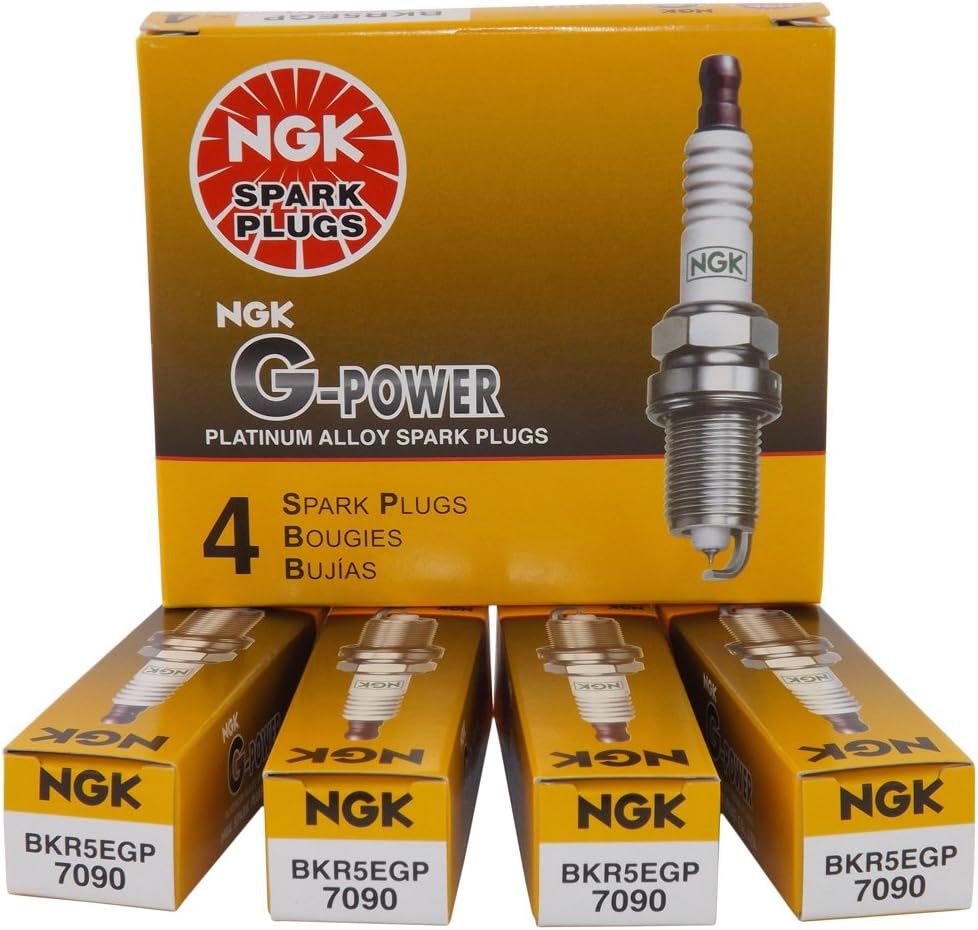
5. NGK G-Power BKR5EGP Nickel Spark Plug, Pack of 4
| Core Material | Platinum |
|---|---|
| Thread Size | 14 millimeters |
| Top Material Type | Nickel |
| Automotive Fit Type | Vehicle Specific Fit |
These NGK G-Power BKR5EGP spark plugs are nickel-centered replacement plugs built for reliable starts and steady combustion in compatible engines. They use a v-groove center electrode and a copper core to improve ignitability and heat dissipation, while trivalent plating removes the need for anti-seize during installation. Typical use is straightforward: replace worn plugs with these to restore cranking response and smoother idle on the specified vehicle. The 0.6 mm platinum tip noted in the product description helps maintain gap consistency over time, which supports steady performance and longer service intervals compared with basic copper-only plugs. Practical benefits include easier installation thanks to cold-rolled threads and reduced misthread risk, plus broad coverage for common import and domestic engines. Limitations are that these are nickel-type plugs rather than iridium or ruthenium high-end options, so they do not offer the absolute longest lifespan or peak performance gains a premium iridium plug would provide.
Best for: A buyer who values proven, widely used replacement parts and wants spark plugs that restore reliable starting and smooth idle with minimal fuss and documented user approval.
Less Ideal for: Drivers seeking maximum longevity or marginal performance gains from premium iridium or ruthenium plugs should consider higher-end options instead.
- V-groove center electrode and copper core improve ignitability and heat dissipation
- Trivalent plating eliminates need for anti-seize, simplifying installation
- Cold-rolled threads reduce risk of cross-threading damage to cylinder heads
- Platinum alloy tip helps maintain gap consistency for longer service life
- Nickel-type design is not as long-lived or performance-oriented as iridium or ruthenium plugs
Verdict: A reliable, easy-to-install nickel-type replacement that restores dependable starts and smooth running for 2000–2004 Subaru Outback owners who prefer a proven spark plug design.
6. NGK BKR5E-11 Copper Spark Plug — Set of 4

| Thread Size | 14mm |
|---|---|
| Compatible with Vehicle Type | Car |
| Automotive Fit Type | Vehicle Specific Fit |
| Core Material | Copper |
These NGK BKR5E-11 copper spark plugs are a straightforward, factory-quality replacement designed for vehicle-specific applications. They are typically used during routine tuneups to restore reliable ignition, maintain fuel economy, and prevent misfires on compatible engines. The copper core and metal top reflect a traditional design favored for consistent spark performance on older engines. Supplied as a set of four, they suit four-cylinder tuneups without needing to buy multiple singles. Practical benefits include OEM-level fit and a simple drop-in installation when the BKR5E-11 is specified for the engine, plus NGK's wide OEM heritage that reassures buyers seeking low risk. Limitations are that copper plugs wear faster than iridium or platinum options, so they will require replacement more often on high-mileage engines, and buyers must verify the BKR5E-11 is the correct plug for their Outback engine before purchase.
Best for: Buyers who want a low-risk, factory-style replacement for routine maintenance on a compatible 2000–2004 Subaru Outback engine and prioritize reliable fit and familiar performance.
Less Ideal for: Owners seeking maximum longevity or high-mileage upgrades should consider iridium or platinum plugs instead.
- Factory-quality design with copper core for reliable spark delivery
- Sold as a set of four suitable for four-cylinder tuneups
- Vehicle-specific fit reduces installation guesswork when matched to application
- Backed by a long-standing OEM supplier reputation
- Copper construction has shorter service life compared with iridium or platinum plugs
Verdict: Choose these NGK copper plugs if you want a dependable, factory-style replacement that restores original ignition performance on a correctly matched 2000–2004 Subaru Outback engine.
Choosing the Right 2000-2004 Subaru Outback Spark Plug: Key Factors to Consider
Electrode Material and Longevity
Electrode composition affects how long a spark plug maintains a sharp firing point and consistent spark energy. Iridium and platinum alloys resist wear better than plain copper, so they tend to keep the correct gap longer and deliver steady ignition over more miles. For a 2000-2004 Subaru Outback, choosing a longer-lasting electrode can extend service intervals and reduce the frequency of spark plug replacement.
However, longer life alloys usually cost more up front. The tradeoff is less frequent replacement and more stable combustion timing over time. For owners who keep their Outback for many years or who drive high annual miles, a more durable electrode material can improve long-term value by maintaining throttle response and lowering the chance of age-related misfires.
Heat Range Compatibility
Heat range determines how quickly the plug dissipates combustion heat. A plug that runs too hot can cause pre-ignition or detonation, while one that runs too cold will foul from deposits. Selecting the correct heat range for the Outback's engine and typical driving conditions is critical to avoid both fouling and overheating.
Consider your driving style and climate when evaluating heat range. Short trips and cold climates tend to favor slightly hotter plugs to burn off deposits, while heavy loads, towing, or sustained high-speed driving can warrant a cooler-running plug. Always match the plug heat range to what the engine requires rather than choosing extremes that could harm performance.
Correct Reach and Thread Size
Spark plug reach is the length of the threaded portion that extends into the combustion chamber. Using a plug with incorrect reach can damage the piston or combustion chamber components or lead to poor sealing and compression loss. Thread size and hex dimensions must match the factory specifications so the plug seats properly and torque values are accurate.
When selecting plugs for the 2000-2004 Outback, verify the thread pitch, reach, and seat type. Using a plug with the wrong mechanical fit can create engine damage or persistent misfires, so this mechanical compatibility is as important as material and heat range.
Factory Gap and Gap Retention
The spark plug gap affects the voltage needed to produce a spark and the quality of combustion. Many aftermarket plugs come pre-gapped to a factory-recommended specification, but handling and transport can alter the gap. A plug that retains its gap through heat cycles and service intervals delivers consistent combustion and reduces the chance of ignition-related faults.
Before installation, double-check the gap and adjust if necessary following the Outback's service manual. Plugs with more durable electrode materials typically maintain their gap better, which reduces maintenance effort and helps avoid misfire symptoms caused by increased gap or electrode wear.
Resistance to Fouling
Fouling occurs when carbon, oil, or fuel deposits accumulate on the electrode, inhibiting spark formation. Fouling frequencies depend on engine condition, driving patterns, and fuel/air mixture. For the Outback, owners who do many short trips or use lower-quality fuels should favor plugs with designs that resist deposit build-up.
Certain electrode shapes and materials aid in shedding deposits, and a proper heat range helps burn off residue. Choosing a plug that resists fouling improves cold start behavior and reduces intermittent misfires that can mimic more serious engine problems.
Installation Accessibility and Service Considerations
Some plug designs require longer sockets, swivel extensions, or specialized boots to reach the plug in tight engine bays. Ease of installation affects whether you can perform spark plug replacement yourself and whether you will properly torque and seat the plug. For DIY Outback owners, pick a plug form factor that is compatible with common tools and the engine layout.
Also consider recommended service intervals and whether you want a plug that aligns with other maintenance tasks. Choosing plugs with longer service lives can reduce labor frequency and overall downtime for routine upkeep.
Signs Your Outback Needs New Spark Plugs
Several common symptoms indicate it is time to inspect or replace the spark plugs in a 2000-2004 Outback. Engine misfire, rough idle, reduced fuel economy, and weak acceleration are typical signs. Cold start hesitation and a noticeable stumble under light throttle also point to deteriorated ignition performance.
Watch for increased exhaust odor or a check engine lamp that logs misfire codes. While these symptoms can stem from multiple systems, spark plug wear and improper gap are frequent and inexpensive issues to diagnose and correct.
- Rough idle or inconsistent RPM
- Hesitation or stumble on acceleration
- Increased fuel consumption
- Difficulty starting in cold weather
- Check engine light with misfire-related codes
How To Check and Set Spark Plug Gap
Accurate gap setting is essential for reliable ignition. Use a feeler gauge or gap tool recommended in the factory service manual to measure the gap before installation. If adjustment is needed, bend the ground electrode carefully, not the center electrode, to avoid damaging the firing tip.
After gapping, recheck the measurement and hand-start the plug to avoid cross-threading. Final torque should follow factory specifications to ensure proper sealing and heat transfer.
- Measure gap with a precise feeler gauge
- Adjust by moving the ground electrode only
- Hand-thread plug before tightening to torque spec
- Re-check gap after any handling or adjustment
Tools And Tips For Changing Spark Plugs On The Outback
Basic tools for a plug service include a torque wrench, the correct deep socket, an extension, and a gap tool. Use anti-seize only if the service manual recommends it; many modern plugs have coatings that negate the need for anti-seize and overuse can affect torque accuracy. Clean the plug wells and use compressed air to remove debris before removing old plugs to avoid dropping material into the combustion chamber.
When reinstalling, apply the correct torque and consider using a torque-angle method if specified. Replace ignition boots or rod seals as needed when they show wear, since degraded boots can mask plug-related symptoms by causing weak spark delivery.
- Torque wrench with correct torque spec
- Deep socket sized for the plug hex
- Gap tool and compressed air for cleaning wells
- Inspect and replace ignition boots or seals as needed
Heat Range And Climate Considerations
Climate and typical trip length influence the optimal plug heat range. Colder climates and many short trips benefit from plugs that run slightly hotter to burn off deposits. Conversely, if you frequently carry heavy loads or drive at sustained high speeds, a cooler plug may prevent overheating of the firing tip.
Stick to heat ranges recommended for the Outback engine unless you have a specific reason to deviate, such as a known tuning change or persistent fouling under normal heat range plugs.
- Short trips: consider slightly hotter-running plugs
- Sustained heavy loads: consider cooler-running plugs
- Always confirm with factory heat range guidance
Common Misfire Diagnostics Versus Plug Replacement
Not all misfires are caused by spark plugs. When diagnosing engine misfire on a 2000-2004 Outback, check ignition coils, wiring, fuel injectors, and compression as part of a systematic approach. Replace spark plugs when they show clear wear, fouling, or improper gap, or when plug-related codes point to ignition degradation.
If misfires persist after new plugs are installed, pursue further diagnostics such as coil testing and fuel system checks. Corrective action should follow the simplest, most likely cause first, which is often the spark plugs for engines with high mileage.
- Check coils and wiring if misfires persist
- Inspect for fuel delivery or compression issues
- Replace plugs if visibly worn, fouled, or out of spec
Still looking for the perfect fit?
Select your Subaru Outback configuration to see the most relevant Spark Plugs recommendations
How We Chose the Best 2000-2004 Subaru Outback Spark Plug
We prioritized selection criteria that matter for the 2000-2004 Subaru Outback engine and real-world ownership. Core evaluation points included ignition consistency under load, which affects drivability and misfire rates; electrode material and expected service life, since material influences both longevity and maintenance intervals; correct heat range suitability for the Outback engines to avoid pre-ignition or fouling; and required spark plug gap and how easily that gap holds up over typical service intervals.We also considered corrosion resistance and thread finish for reliable removal and installation during routine spark plug replacement, along with compatibility with common Outback engine configurations for that year range. Ease of installation and whether the plug design requires special boot or socket access were noted because many owners perform this maintenance themselves.Excluded items included any plugs that did not match the vehicle's thread size, reach, or recommended heat range, as well as specialty race-only parts that compromise drivability or longevity for marginal performance gains. The final list reflects a balance of durability, ignition performance, and practical fitment for typical Outback ownership.
Our full evaluation process is outlined in our review methodology.
FAQ
How often should I replace spark plugs on a 2000-2004 Subaru Outback?
It depends on the plug type and driving habits. Standard copper plugs may need replacement more frequently, while iridium or platinum plugs often last longer. Check the service manual intervals and inspect plugs regularly if you do many short trips or notice symptoms.
Can I gap the spark plugs myself when doing a replacement?
Yes, you can gap plugs yourself with a proper feeler gauge and a steady hand. Adjust the ground electrode only, recheck the measurement, and follow the Outback torque specifications during installation to ensure correct seating.
Will upgrading to iridium or platinum plugs improve fuel economy?
Upgrading can provide more consistent spark over a longer period, which may help maintain optimal combustion and fuel economy compared with worn plugs. The benefit is usually gradual and most noticeable as the original plugs approach the end of their service life.
What causes cold start misfires and could plugs be the culprit?
Cold start misfires often stem from weak spark, fouled plugs, or incorrect gap, as well as fuel delivery or ignition coil issues. If plugs are old, visibly fouled, or the gap has widened, replacing them is a reasonable first step in troubleshooting.
Do I need special tools to replace Outback spark plugs?
Basic hand tools, a deep socket for the plug hex, an extension, and a torque wrench are usually sufficient. A gap tool and compressed air to clean wells are helpful. No specialized shop-only tools are typically required for routine replacement.
How do I know if a spark plug is fouled or damaged?
A fouled plug often shows heavy black carbon deposits, oil contamination, or melted electrode tips. Visual inspection after removal will reveal these signs. If a plug shows damage or severe deposits, replacing it and investigating underlying causes is recommended.
Final Verdict
When selecting spark plugs for a 2000-2004 Subaru Outback, prioritize correct mechanical fit, the right heat range for your climate and driving style, and an electrode material that balances longevity with ignition reliability. Properly gapped and installed plugs improve cold starts, reduce misfires, and maintain throttle response.If you drive mostly short trips or in colder weather, choose a plug that resists fouling and holds its gap. For higher-mileage or frequently driven vehicles, favor durable electrode materials to extend service intervals. Use the evaluation factors above to pick the best option for your routine, and perform basic diagnostics if symptoms persist after replacement.
Explore More:
- Check out all Subaru Outback parts & accessories
- Explore Spark Plugs Maintenance & Repair Guides
- Explore Engine
- Browse all Auto Parts
