

Note: This article contains affiliate links. If you click on these links and make a purchase, I may earn a small commission at no extra cost to you. This helps support my research and content. Read my full affiliate disclosure here.
If you own a 2007-2011 Honda CR-V, a healthy serpentine belt keeps the alternator, power steering, and A/C running smoothly. Choosing the right replacement matters because the wrong belt or a poorly fitting part can cause noise, reduced accessory performance, or unexpected failure at an inconvenient time.This guide covers our top seven serpentine belt options for the 2007-2011 CR-V, shortlisted for fit accuracy, material quality, and expected service life. We also outline common symptoms of belt wear, what to inspect during a DIY replacement, and the installation considerations specific to this generation of CR-V. Read on for the practical factors we used to evaluate candidates and what to prioritize for reliable operation.
Looking for other parts? See all Honda CR-V parts & accessories.
Top Picks at a Glance
| Best Overall The best all-around choice for most situations | AISIN Serpentine Belt AVBH-00278 (7-Rib) |  |
| Best Quality Built to a higher standard if you want something more solid | Gates Micro-V Serpentine Belt for Honda CR-V 2.4L (2007–2009) |  |
| Best Value The sweet spot between price and what you get | Jaxivo 7PK1750 Serpentine V-Ribbed Drive Belt (68.9 inch) |  |
| Best Budget The cheapest option that still gets the job done reliably | Wusquvy 7PK1753 Serpentine Drive Belt (Replace K070690) for Honda CR-V 2.4L 2007–2009 / Acura TSX 2.4L 2004–2008 |  |
| Highest Rated A top-rated pick with lots of positive feedback | MOCA EPDM Serpentine Belt 7PK1755 (fits 2004–2008 Acura TSX 2.4L; 2007–2009 Honda CR-V 2.4L) |  |
| Most Popular A crowd favorite that many people choose with confidence | Bando USA 7PK1755 Serpentine Belt (OEM Quality) |  |
| Best Seller A high-volume bestseller chosen again and again | A-Premium 69.01 in Serpentine Drive Belt for Honda CR-V / Acura TSX (2.4L) |  |
1. AISIN Serpentine Belt AVBH-00278 (7-Rib)

| Brand | AISIN |
|---|---|
| Manufacturer Part Number | AVBH-00278 |
| Special Features | 0.95 inches Top Width, 69.02 inches Effective Length, 7-Rib |
| Belt Material | EPDM |
| Compatibility | Honda CR-V 2007-2009; Acura TSX 2004-2008 – L4 2.4L |
This Aisin serpentine belt is a direct replacement designed for 2.4L L4 applications and is commonly used when swapping a worn or cracked belt during routine maintenance. Constructed from EPDM with seven ribs, it matches factory routing and tensioner geometry for a plug‑and‑play installation. The belt's specified top width and effective length mean it fits the routing for select Honda CR‑V and Acura TSX models without modification, and the included installation manual helps guide DIYers or techs through the swap. In use it delivers the expected smooth drive of accessory components like the alternator, power steering pump, and A/C compressor when tension and pulleys are in good condition. Downsides to note are that fitment is limited to the listed engine and years, and a belt alone will not fix issues caused by failing pulleys or tensioners. Buyers should inspect the rest of the drive system when replacing the belt to avoid repeat service.
Best for: Buyers who want a factory‑style, reliable replacement belt for scheduled maintenance on the 2.4L Honda/Acura engine and prefer a product engineered by an established parts supplier.
Less Ideal for: Not a fit for owners who need belts for other engine sizes, years, or nonlisted vehicles or for those who expect a complete pulley/tensioner overhaul included with the belt.
- Engineered from EPDM for durability and heat resistance typical of modern belts
- Seven‑rib profile matches factory pulley grooves for reliable accessory drive
- Designed for direct replacement on the specified 2.4L applications to simplify installation
- Compatibility limited to the listed Honda CR‑V 2007–2009 and Acura TSX 2004–2008 2.4L engines
Verdict: Pick this Aisin belt if you want a factory‑style, direct‑fit 7‑rib replacement for the 2.4L Honda/Acura engine that simplifies maintenance and restores accessory drive function.
2. Gates Micro-V Serpentine Belt for Honda CR-V 2.4L (2007–2009)

| Compatible vehicles | Honda CR-V 2007-2009 2.4L L4 |
|---|---|
| Brand | Gates |
| Part type | Micro-V serpentine belt |
This Gates Micro-V serpentine belt is a direct-replacement belt specified for the 2.4L Honda CR-V model years 2007 through 2009. It installs in place of the factory belt to drive accessories such as the alternator, power steering pump, and air conditioning compressor. The Micro-V construction uses multiple ribs to maintain grip and reduce slip under load, which helps preserve accessory drive performance during spirited driving or towing. As a genuine Gates-design belt it comes packaged as a ready-to-fit unit and is sized to match factory routing, making DIY swaps straightforward for someone with basic mechanical skills. The belt offers dependable, quiet operation and is widely used as a factory-quality replacement, though it does not change pulley ratios or improve engine output; drivers seeking performance gains will need upgraded pulleys or a different accessory setup. Confirm fitment for your exact model year and engine variant before purchasing to ensure correct application.
Best for: Buyers who want a reliable, factory-quality replacement belt that restores original accessory drive performance and fits the 2007–2009 2.4L CR-V without modification.
Less Ideal for: Drivers seeking measurable performance upgrades to accessory drive efficiency or power delivery should consider pulley or system-level modifications instead of a stock replacement belt.
- Factory-quality Micro-V rib profile for consistent grip and reduced slip
- Direct-fit replacement sized for 2007–2009 Honda CR-V 2.4L for straightforward installation
- Quiet operation and durable construction suitable for everyday and heavier use
- Only a like-for-like replacement so it does not provide performance gains in power or throttle response
Verdict: Choose this Gates Micro-V belt when you need a reliable, factory-quality direct replacement for a 2007–2009 Honda CR-V 2.4L to restore proper accessory drive function.
3. Jaxivo 7PK1750 Serpentine V-Ribbed Drive Belt (68.9 inch)

| Part Number | 7PK1750 |
|---|---|
| Belt Style | V-Belt |
| Compatible Devices | Acura TSX, Honda CR-V |
| Material Type | Rubber |
The Jaxivo 7PK1750 is a straightforward replacement serpentine belt for 2.4L K24-series engines used in certain 2007–2009 Honda CR-V and 2004–2008 Acura TSX applications. It is a 7-rib rubber V-ribbed belt with an effective length of 68.9 inches and is sold as a single belt for routine service or to replace a worn factory belt. Typical use is simple: remove the old belt, route the new belt following the engine diagram, and tension per the vehicle procedure. Its stated construction meets OEM specifications and the seller emphasizes durability for long-term stability. The practical benefits are clear for someone maintaining an older CR-V: it is a budget-friendly, plug-and-play replacement that avoids unnecessary upgrades. Limitations are that this is an aftermarket belt from a third-party brand so fitment should be confirmed against the vehicle part number before installation, and it does not include installation hardware or a tensioner, so expect to reuse or separately replace those parts if needed.
Best for: A practical buyer keeping a 2007–2009 Honda CR-V or compatible Acura TSX running reliably who prioritizes a cost-effective, direct replacement that fits factory routing and service routines.
Less Ideal for: Drivers who want an upgraded high-performance or heavy-duty belt solution or those who prefer parts bundled with new tensioners and pulleys should look elsewhere.
- Made to match factory replacement length and rib count for compatible 2.4L engines
- Rubber construction intended for long-term stability and resistance to wear
- Sold as a single direct-fit replacement so installation is straightforward
- Aftermarket brand so buyers should verify exact part numbers to ensure correct fitment
Verdict: Choose this belt if you want a budget-friendly, factory-style 68.9-inch replacement that fits the 2.4L K24 engines in specified CR-V and TSX models.
4. Wusquvy 7PK1753 Serpentine Drive Belt (Replace K070690) for Honda CR-V 2.4L 2007–2009 / Acura TSX 2.4L 2004–2008

| Manufacturer | Nitrodynamics |
|---|---|
| Brand | Wusquvy |
| Manufacturer Part Number | Replace K070690 |
| Compatibility | Honda CR-V L4 2.4L 2007-2009; Acura TSX L4 2.4L 2004-2008 |
This Wusquvy 7PK1753 serpentine drive belt is a budget-friendly replacement designed to fit specified 2.4L Honda CR-V and Acura TSX engines. It uses EPDM rubber with reinforced fiber layers for high-temperature wear resistance and multi-rib grooves for improved grip and quieter operation. The belt is a self-tensioning stretch design intended to maintain proper tension without reusing the factory tensioner, which simplifies installation and can be done without special tools. In practice it should restore alternator, power steering, and A/C accessory drive when the original belt is worn, and the abrasion-resistant construction aims to extend service life compared with generic smooth belts. The main limitation is that stretch-style belts depend on correct fit and elasticity; they can be less serviceable if you prefer reusable, routed belts that allow tensioner adjustment. For cost-conscious maintenance this belt offers a straightforward, direct-replacement option that balances durability and ease of fitment for the covered model years.
Best for: Buyers replacing a worn or slipping serpentine belt on a 2.4L Honda CR-V (2007–2009) who prioritize low cost and an easy, tool-free installation to get accessory systems back to normal quickly.
Less Ideal for: Owners who prefer adjustable routed belts or who plan to reuse a tensioner for long-term serviceability should consider alternative factory-style belts.
- EPDM rubber with reinforced fiber layers improves heat and abrasion resistance for longer service life
- Multi-rib precision grooves reduce slip and operating noise for smoother accessory drive
- Self-tensioning stretch design simplifies installation and eliminates the need to reset a tensioner
- Accurately engineered length for direct replacement on listed 2.4L Honda and Acura engines
- Stretch-style design means the belt is not reusable and requires correct elasticity for proper tension over time
Verdict: A low-cost, easy-to-install stretch serpentine belt that restores accessory drive function on the specified 2.4L CR-V and TSX models without special tools.
5. MOCA EPDM Serpentine Belt 7PK1755 (fits 2004–2008 Acura TSX 2.4L; 2007–2009 Honda CR-V 2.4L)

| Material Type | Ethylene Propylene Diene Monomer (EPDM) |
|---|---|
| Part Number | 7PK1755 |
| Compatible Devices | Car |
This MOCA serpentine belt is a straightforward replacement for the 7PK1755 accessory-drive routing on 2.4L Honda/Acura engines. Made from EPDM compound, it is intended for routine engine accessory drive tasks such as turning the alternator, power steering pump, and A/C compressor. Installation is the same as other replacement belts and fits without modification when matched to the listed fitment; a helper or proper tensioner tool makes routing easier when access is tight. The material choice and consistent customer feedback point to quiet starts and reliable grip under normal driving conditions. This belt does not include tensioners or pulleys so those components must be inspected separately during service. Buyers replacing a worn or failing belt will get a factory-style fit and typical aftermarket longevity, while anyone needing a full accessory-drive overhaul should budget for additional components and tools.
Best for: Buyers who prioritize a reliable, factory-style belt replacement for routine maintenance on the specified 2.4L Honda/Acura accessory drive and want a straightforward swap to restore normal accessory operation.
Less Ideal for: People planning a full accessory-drive rebuild or who need a kit that includes tensioners and pulleys should choose a more complete service package.
- EPDM construction resists cracking and performs well across temperature swings
- Listed to match factory accessory-drive fitment for the specified 2.4L engines
- Widely reported quiet operation and correct fit by multiple buyers
- Simple direct-replacement design requires no trimming or modification
- Does not include tensioner, idler, or hardware so additional parts may be needed for a complete service
Verdict: A dependable EPDM direct-replacement serpentine belt for restoring normal accessory-drive function on the specified 2.4L Honda/Acura engines.
6. Bando USA 7PK1755 Serpentine Belt (OEM Quality)

| Compatible Devices | Fits: Acura TSX 2008-2004, Honda CR-V 2009-2007 |
|---|---|
| Belt Style | Serpentine Belt |
| Material Type | Rubber |
This Bando 7PK1755 is a direct-fit serpentine belt made to match factory specifications for Honda CR-V (2007 to 2009) and select Acura TSX models. It is constructed from EPDM rubber with reinforced tensile cords so it resists heat and stretching during normal driving, which helps maintain proper accessory drive performance for components like the alternator, power steering, and A/C. Installation is the same as a factory replacement so it works well for routine maintenance or during a belt replacement after wear. The belt’s OEM-grade manufacturing and double-ground rib profile mean better contact with pulleys and a lower chance of slippage compared with cheaper molded belts. Limitations are that it is a single replacement part with no added features such as pre-installed tensioners or stretch indicators, so correct tensioning at installation remains important. For drivers who want replacement reliability close to factory quality, this belt is a practical, no-frills choice.
Best for: Buyers who value replacement parts with factory-grade construction and want a straightforward, reliable belt for scheduled maintenance on the specified CR-V model years.
Less Ideal for: Drivers looking for a full accessory drive kit with tensioner or pulley replacements or those who need belts for other vehicle makes or model years.
- OEM-quality construction matching factory rib profile for reliable pulley contact
- EPDM rubber compound and strong tensile cords for heat resistance and reduced stretching
- Direct-fit compatibility with listed Honda CR-V and Acura TSX model years for straightforward replacement
- Sold as the belt only with no tensioner or hardware included
Verdict: Choose this Bando belt if you want a factory-quality, direct-fit serpentine replacement for your 2007–2009 CR-V that prioritizes durability and proper pulley engagement.
7. A-Premium 69.01 in Serpentine Drive Belt for Honda CR-V / Acura TSX (2.4L)
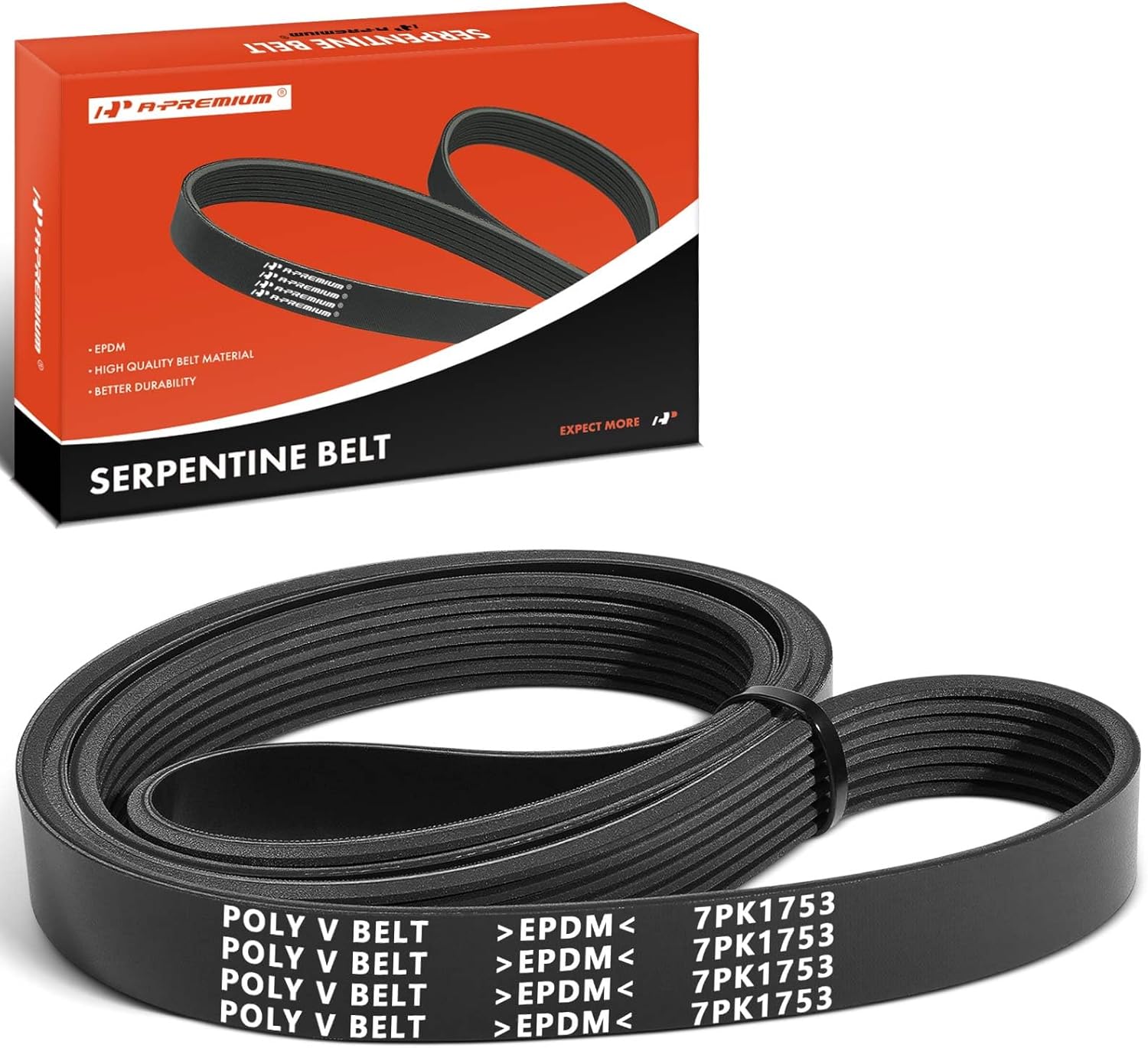
| Effective Length | 69.01 in |
|---|---|
| Rib Quantity | 7 |
| Belt Material | EPDM |
| Cord Material | Polyester |
| Cross Section | K |
This A-Premium serpentine belt is a direct replacement intended for 2.4L gas Honda CR-V (2007–2009) and Acura TSX (2004–2008). It uses EPDM rubber and a polyester cord with a K-section 7-rib profile, so it functions like a factory-style belt to drive alternator, power steering, and accessory pulleys. Install is straightforward for a DIYer or technician when the tensioner is inspected first, and the belt's construction advertises improved resistance to cracking, oils, and high temperatures for longer service life. Users report consistent fit and quiet operation on matching vehicles, though a minority noted early noise—proper tensioner condition and installation technique are important. The belt comes with a one-year unlimited-mileage guarantee from the brand. If you need a simple, factory-replacement style belt for the specified CR-V model years, this offers a balance of durability and value, but verify fitment and tensioner condition before installation to avoid noise or premature wear.
Best for: Buyers who want a factory-style, low-risk replacement belt for the specified 2.4L Honda CR-V and similar Acura engines and who prioritize correct fit and predictable reliability.
Less Ideal for: Drivers looking for a universal or multi-vehicle belt solution or those who want a heavy-duty performance upgrade beyond factory-spec components.
- Made from EPDM with polyester cord for improved resistance to cracks, oils, and heat
- Exact 7-rib K-section profile and 69.01 inch effective length for correct routing on listed engines
- Reported to fit and run quietly on compatible CR-V/TSX examples when installed correctly
- Simple replacement process when tensioner is checked, suitable for DIY installation
- Limited to specified 2.4L gas engine fitment and not a universal belt
- Some user reports of squeak or early noise if tensioner or pulleys are worn
Verdict: A straightforward factory-replacement serpentine belt for the listed 2.4L Honda CR-V/Acura TSX applications that prioritizes correct fit and durable EPDM construction.
Choosing the Right 2007-2011 Honda CR-V Serpentine Belt: Key Factors to Consider
Correct Belt Size and Rib Count
Getting the exact belt length and rib profile for the 2007-2011 CR-V is the foundational requirement. A belt that is even slightly the wrong length can cause poor tension, leading to squeal, slipping under load, or accelerated wear.
Verify the part matches the CR-V's factory rib count and measured length. When cross-referencing part numbers, confirm the reference applies specifically to the 2007-2011 CR-V engine and accessories layout. If you are replacing the belt yourself, use the removed belt to confirm measurements before ordering a replacement.
Material Compound and Reinforcement
The belt compound determines resistance to cracking, heat aging, and oil/grease contamination. Modern belts commonly use EPDM compounds that resist heat and retain flexibility longer than older rubber formulations.
Reinforcement cords embedded in the belt affect tensile strength and elongation behavior. A higher-quality tensile cord reduces stretch over time, keeping tension consistent. For CR-V owners, pick belts with documented compound types and reinforcement details when available to reduce the frequency of replacements.
Tensioner Condition and Compatibility
A new belt will not perform well if the tensioner or idler pulleys are worn. Worn bearings increase drag and can cause misalignment or noise that people often blame on the belt alone.
Inspect the tensioner for smooth movement, absence of wobble, and solid spring action before installing a new belt. If the tensioner shows signs of stickiness, excessive play, or leakage at the bearing, plan to replace it at the same time to avoid premature belt wear on the 2007-2011 CR-V.
Resistance to Contaminants and Heat
Engine oil, coolant, and road grime can degrade belt material over time, especially if there are leaks. Choose a belt with good resistance to chemical exposure and heat to maintain grip and flexibility under the CR-V's typical operating conditions.
Consider belts with protective topcoats or improved compound formulations when your vehicle has a history of minor leaks or is subject to higher ambient temperatures. Such resistance helps preserve rib integrity and reduces the chance of glazing or hardening that causes squeal.
Noise and Vibration Characteristics
Squeal and chirping are common complaints when a belt is not seating correctly or has become glazed. Material finish, rib profile precision, and how the belt interfaces with pulleys all influence noise.
Look for belts that specify low-noise design or those with consistent molding tolerances. Also consider having a pulley inspection included in your installation checklist; sometimes correcting a misaligned pulley or replacing a worn idler solves noise issues better than swapping belts repeatedly.
Durability and Expected Service Life
Service life expectations affect maintenance scheduling and total ownership effort. Higher-grade compounds and better reinforcement typically translate to longer intervals between changes.
Balance expected longevity with cost and availability. For CR-V owners who prefer fewer maintenance visits, prioritize belts with documented longer life and good resistance to environmental factors commonly encountered in your driving conditions.
Common Serpentine Belt Symptoms on the 2007-2011 CR-V
Recognizing early symptoms helps you address belt issues before failure. Typical signs include a high-pitched squeal on cold start or under load, visible cracking or fraying along the ribbed side, and intermittent accessory loss such as A/C failure or dimming lights when at idle.
Another common symptom is visible glazing on the belt surface, which appears shiny and smooth where the ribs contact pulleys. Glazing reduces friction and leads to slippage. Also pay attention to abnormal vibration or pulleys that wobble, since these mechanical issues accelerate belt degradation.
- High-pitched squeal at startup or acceleration
- Visible cracks, frays, or missing ribs
- Shiny glazed areas on the belt surface
- Accessory performance issues like weak A/C or charging irregularities
- Wobbling idler or tensioner bearings
How To Inspect the Belt and Pulleys
Perform a visual inspection with the engine off and cool. Look for fine cracks across the ribs that indicate age-related degradation and check the backside for oil contamination. Run your finger along the ribs to feel for glazing or hardening.
Rotate the engine by hand if possible to observe how the belt tracks on pulleys. Inspect each pulley for play and listen for bearing noise. A misaligned pulley will show lateral belt wear and can be the primary cause of premature belt failure.
- Measure belt length against OEM specification if possible
- Check for lateral movement or wobble in pulleys
- Look for grease or oil that may have leaked onto the belt
- Confirm rib edges are not rounded off or torn
Basic Steps to Replace the Serpentine Belt
Replacing the belt on a 2007-2011 CR-V typically involves relieving tension with the tensioner, routing the new belt following the routing path, and verifying proper seating on all pulley grooves. Having a belt routing diagram for the vehicle is helpful to avoid misrouting.
Always check the tensioner and idler pulleys during replacement and consider replacing the tensioner if it shows signs of wear. After installation, run the engine and observe belt tracking and listen for noise to confirm correct installation.
- Locate and relieve tension using the appropriate tool on the tensioner
- Follow the belt routing diagram to position the new belt
- Release tensioner slowly to apply proper tension
- Verify rib seating and run the engine briefly to check for noise
When to Replace the Tensioner or Idler Pulleys
Replace tensioner or idler pulleys when you detect bearing noise, excessive free play, visible rust on the bearing area, or when the tensioner spring action is weak. Replacing these components at the same time as the belt reduces the chance of having to remove the belt again shortly after service.
On the 2007-2011 CR-V, a compromised tensioner accelerates belt wear and increases the risk of squeal. A smooth, correctly tensioned belt is as dependent on pulley condition as on belt quality, so factor these components into any replacement plan.
- Listen for bearing growl or chirp during engine idle
- Check for lateral play by trying to wiggle each pulley
- Inspect pulley surface for grooves or sharp edges that can cut the belt
Tools and Prep Tips for a DIY Replacement
Prepare the correct tensioner tool or breaker bar and a belt routing diagram before starting. Clean the pulley grooves and remove any debris so the new belt can seat properly. Work on a cool engine and disconnect the battery if you will be working near electrical components.
Keep a flashlight and a mirror handy to inspect hard-to-see pulleys and routing. Mark the old belt orientation before removal if you want a direct size confirmation, and have a torque wrench available for any pulley bolts you remove during the job.
- Tensioner tool or appropriately sized breaker bar
- Belt routing diagram and measuring tape
- Flashlight, mirror, and basic socket set
- Torque wrench for pulley fasteners
Documenting Belt Size and Reference Numbers
Record the belt length, rib count, and any OEM reference noted on the removed belt. This helps ensure accurate replacement when ordering a new belt or verifying fitment charts. Keep a photo of the belt routing and any part markings for future maintenance.
If you must find sizing without the old belt, use a tape measure to trace the pulley path and calculate approximate length, then confirm rib count by inspecting pulley grooves. Accurate documentation minimizes ordering errors and returns.
- Note any part numbers stamped on the old belt
- Photograph the belt routing before removal
- Measure full belt path if the old belt is missing
Still looking for the perfect fit?
Select your Honda CR-V configuration to see the most relevant Serpentine Belts recommendations
How We Chose the Best 2007-2011 Honda CR-V Serpentine Belt
We focused on criteria that directly affect reliability and fitment on 2007-2011 Honda CR-V models. Primary evaluation criteria included belt dimension and rib profile accuracy to ensure correct engagement with pulleys and prevent slippage; material compound and reinforcement (for example EPDM and tensile cord quality) to estimate resistance to cracking and glazing; and manufacturer quality control indicators such as consistent molding and clear sizing marks to reduce the chance of receiving an out-of-spec part.We also weighted real-world durability signals including expected service life based on material claims and user reports, plus resistance to heat and oil contamination since engine bays on this CR-V generation can expose belts to both. Fitment ease and compatibility were evaluated by checking OE-equivalent part references and ensuring the belt matches the year range pulley layout. Finally, we considered whether the belt required a matching tensioner inspection or replacement to avoid installing a new belt onto a worn tensioner.Excluded from the selection were belts lacking verifiable dimension data, aftermarket parts with inconsistent sizing reports, and options that required nonstandard installation steps. The goal was to surface belts that minimize installation surprises and deliver predictable service on the 2007-2011 Honda CR-V.
Our full evaluation process is outlined in our review methodology.
FAQ
How often should I replace the serpentine belt on a 2007-2011 CR-V?
Replacement intervals depend on belt material and driving conditions but often range from 60,000 to 100,000 miles. Inspect the belt annually for cracks, glazing, and wear and replace sooner if symptoms are present.
Can I install a new belt without replacing the tensioner?
You can install a new belt onto an existing tensioner, but if the tensioner shows stiffness, excessive movement, or bearing noise, replacing it at the same time is advisable to avoid premature belt failure.
What does a slipping serpentine belt sound like on this CR-V?
A slipping belt usually produces a high-pitched squeal at startup or under increased engine load. The noise may clear as the belt warms up but will typically return if the underlying cause is not addressed.
Is there a recommended way to check belt alignment?
Visually inspect the belt tracking within pulley grooves and check for lateral wear on the belt edges. Rotating the engine slowly and watching the belt run will reveal misalignment or pulleys that are not concentric.
Will oil on the belt ruin it immediately?
Oil exposure degrades belt material over time by softening and promoting slippage. Minor contamination may not cause immediate failure, but repeated exposure accelerates wear and shortens service life.
How do I find the correct belt size if I lost the old belt?
Measure the full pulley path with a flexible tape or string and count the pulley ribs to estimate the correct size and rib profile. Cross-check your measurements with the vehicle-specific routing diagram or parts reference for the 2007-2011 CR-V.
Final Verdict
When choosing a serpentine belt for a 2007-2011 Honda CR-V, prioritize exact size and rib profile, material durability, and the condition of the tensioner and idler pulleys. Addressing pulley health at the same time as the belt reduces the chance of recurring noise or premature wear.Balance longevity and noise characteristics against availability and fitment confidence. If you inspect pulleys, confirm measurements, and replace worn tensioning components when needed, you will minimize surprises and keep accessories operating reliably on your CR-V.
Explore More:
- Check out all Honda CR-V parts & accessories
- Explore Serpentine Belts Maintenance & Repair Guides
- Explore Engine
- Browse all Auto Parts
