

Note: This article contains affiliate links. If you click on these links and make a purchase, I may earn a small commission at no extra cost to you. This helps support my research and content. Read my full affiliate disclosure here.
If you drive a Subaru Crosstrek, the condition of your rear brake pads directly affects braking performance, pedal feel, and safety. Replacing worn rear pads restores consistent stopping power and can reduce noise, dust, and rotor wear. This guide gathers the top rear brake pads shortlisted for the Crosstrek and walks through the practical differences that matter when you pick replacements.We evaluated candidates on braking performance, durability, NVH characteristics, and fitment simplicity so you can choose pads suited to daily commuting, occasional spirited driving, or carrying cargo. Read on to compare the strengths of each option and what to check before you replace your Crosstrek's rear pads.
Looking for other parts? See all Subaru Crosstrek parts & accessories.
Top Picks at a Glance
| Best Overall The best all-around choice for most situations | Max Advanced Brakes SelectMAX Rear Carbon Ceramic Brake Pads (Rear) |  |
| Best Quality Built to a higher standard if you want something more solid | Bendix Priority1 CFC1114 Rear Ceramic Brake Pad Set |  |
| Best Value The sweet spot between price and what you get | PowerStop Z17 Rear Ceramic Brake Pads with Hardware (17-1114) |  |
| Best Budget The cheapest option that still gets the job done reliably | OETEX Rear Ceramic Brake Pads for Subaru — D1114 | 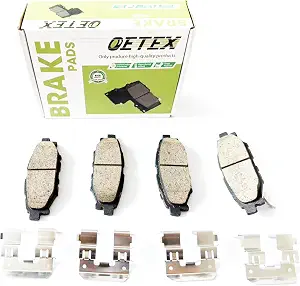 |
| Highest Rated A top-rated pick with lots of positive feedback | PHILTOP D1114 Rear Ceramic Brake Pads (Rear Axle) |  |
| Most Popular A crowd favorite that many people choose with confidence | HUSCH Rear Ceramic Brake Pads Kit (4 pcs) |  |
| Best Seller A high-volume bestseller chosen again and again | Bendix Premium SBC1114 Ceramic Rear Brake Pads |  |
1. Max Advanced Brakes SelectMAX Rear Carbon Ceramic Brake Pads (Rear)

| Auto Part Position | Rear |
|---|---|
| Compatible with Vehicle Type | Car, Truck |
| Material Type | Carbon Ceramic |
| Specification Met | Low Copper |
These Max Advanced Brakes SelectMAX rear pads are a vehicle-specific replacement designed for everyday street use on Subaru Crosstrek models. The carbon ceramic compound is tuned to provide steady stopping power and reduced brake dust, which keeps wheels cleaner and lowers maintenance between services. Chamfers, slots, and a dual-layer rubber backing help reduce low-speed squeal and make braking quieter in stop-and-go traffic. The kit ships with stainless-steel hardware and break-in guidance to simplify installation and help the pads seat properly. Expect even wear that helps limit rotor damage compared with more aggressive compounds. Limitations: these pads are focused on comfort and longevity rather than track-level bite, so drivers seeking maximum high-temperature performance will want a performance-oriented material. Also the warranty periods differ by component type and are shorter for individual pads than for combined kits. Overall, this is a sensible, low-dust rear pad choice for daily-driven Crosstreks that prioritizes quiet braking and reduced rotor wear.
Best for: Drivers who want a quiet, low-dust rear brake pad that delivers consistent, comfortable stopping for daily commuting and light duty use on a Crosstrek.
Less Ideal for: Enthusiasts who frequently track or tow and need maximum high-temperature friction and aggressive bite should choose a performance-oriented pad instead.
- Carbon ceramic formulation reduces brake dust and keeps wheels cleaner.
- Chamfered and slotted faces with dual-layer backing to limit low-speed noise.
- Includes stainless-steel hardware and break-in instructions for easier installation.
- Engineered for stable, consistent braking in everyday driving and commuting.
- Not intended for high-temperature track or aggressive driving where extreme friction is required.
- Warranty for individual pads is shorter than combined rotor-and-pad kits.
Verdict: A quiet, low-dust rear pad set tailored for daily-driven Crosstreks that delivers consistent, long-lasting braking and easier upkeep.
2. Bendix Priority1 CFC1114 Rear Ceramic Brake Pad Set

| Auto Part Position | Rear |
|---|---|
| Compatible with Vehicle Type | CAR |
| Material Type | Ceramic |
| Included Components | Pad set with installation hardware |
These Bendix Priority1 rear ceramic pads are a direct-fit replacement engineered to the factory specification for select Subaru and Scion models, including Crosstrek. They are supplied as a single rear pad set with installation hardware and use a ceramic friction material that aims to reduce dust and noise compared with semi-metallic pads. In everyday use they deliver predictable, linear braking suitable for commuting and light spirited driving; the ceramic compound helps resist fade during repeated stops and keeps calipers cleaner by producing less visible residue. The pack includes hardware for straightforward bolt-on installation for those comfortable with basic brake work. Limitations to note are that ceramic pads tend to offer slightly less initial bite than high‑performance semi-metallic compounds, so they are not the top choice for aggressive track use or heavy towing. For Crosstrek drivers who want a quiet, low-dust factory-style replacement that improves pedal feel over worn pads, these are a practical option.
Best for: Drivers who prioritize quiet, low-dust, factory-quality rear brake replacement for regular street and light spirited driving on a Crosstrek.
Less Ideal for: Drivers who frequently do track days, aggressive driving, or heavy towing and need maximum initial bite and high-temperature fade resistance.
- Factory-fit vehicle-specific design for direct replacement installation
- Ceramic friction material reduces dust and typically lowers brake noise
- Includes installation hardware for a complete rear pad swap
- Formulated to resist brake fade for consistent daily driving performance
- Ceramic formulation can deliver less initial bite than aggressive semi-metallic pads under hard driving
Verdict: A quiet, low-dust ceramic rear pad that provides reliable, factory-quality braking for Crosstrek owners seeking a straightforward street-oriented replacement.
3. PowerStop Z17 Rear Ceramic Brake Pads with Hardware (17-1114)

| Material | Ceramic |
|---|---|
| Auto Part Position | Rear |
| Specification Met | OEM |
| Automotive Fit Type | Vehicle Specific Fit |
The PowerStop Z17 rear ceramic pads are built for everyday driving and aim to be a quiet, low-dust replacement for factory rear pads on applicable Subaru Crosstrek and other Subaru models. These pads come pre-chamfered, slotted, and thermally scorched to speed break-in and reduce squeal, and the included stainless steel hardware and brake lube make the swap a straightforward bolt-on job for a competent DIYer or mechanic. In normal commuting, the Z17s deliver consistent stopping power without harshness and keep wheels cleaner than semi-metallic options thanks to a low-dust ceramic formula. They prioritize comfort and cleanliness over track-level bite, so you should not expect aggressive fade resistance under repeated high-speed stops. The package is aimed at drivers who want an upgrade in NVH and cleanliness while keeping installation simple, but those needing heavy-duty towing or performance braking should look at more aggressive compounds.
Best for: Buyers who want a quiet, low-dust, factory-quality rear pad replacement for daily driving and value an easy installation and clean wheels.
Less Ideal for: Drivers who frequently tow, carry heavy loads, or do spirited driving and need high-temperature, performance-focused braking should consider more aggressive compounds.
- Designed for quiet, OEM-plus braking with chamfered and slotted faces to reduce noise
- Low-dust ceramic formula helps keep wheels cleaner than metallic pads
- Includes stainless steel installation hardware and brake lube for a simpler bolt-on install
- Not intended for repeated high-heat or track use where stronger fade resistance is required
Verdict: Choose the PowerStop Z17 rear ceramic pads if you want a quiet, low-dust, factory-quality rear replacement for everyday Subaru Crosstrek driving with easy bolt-on installation.
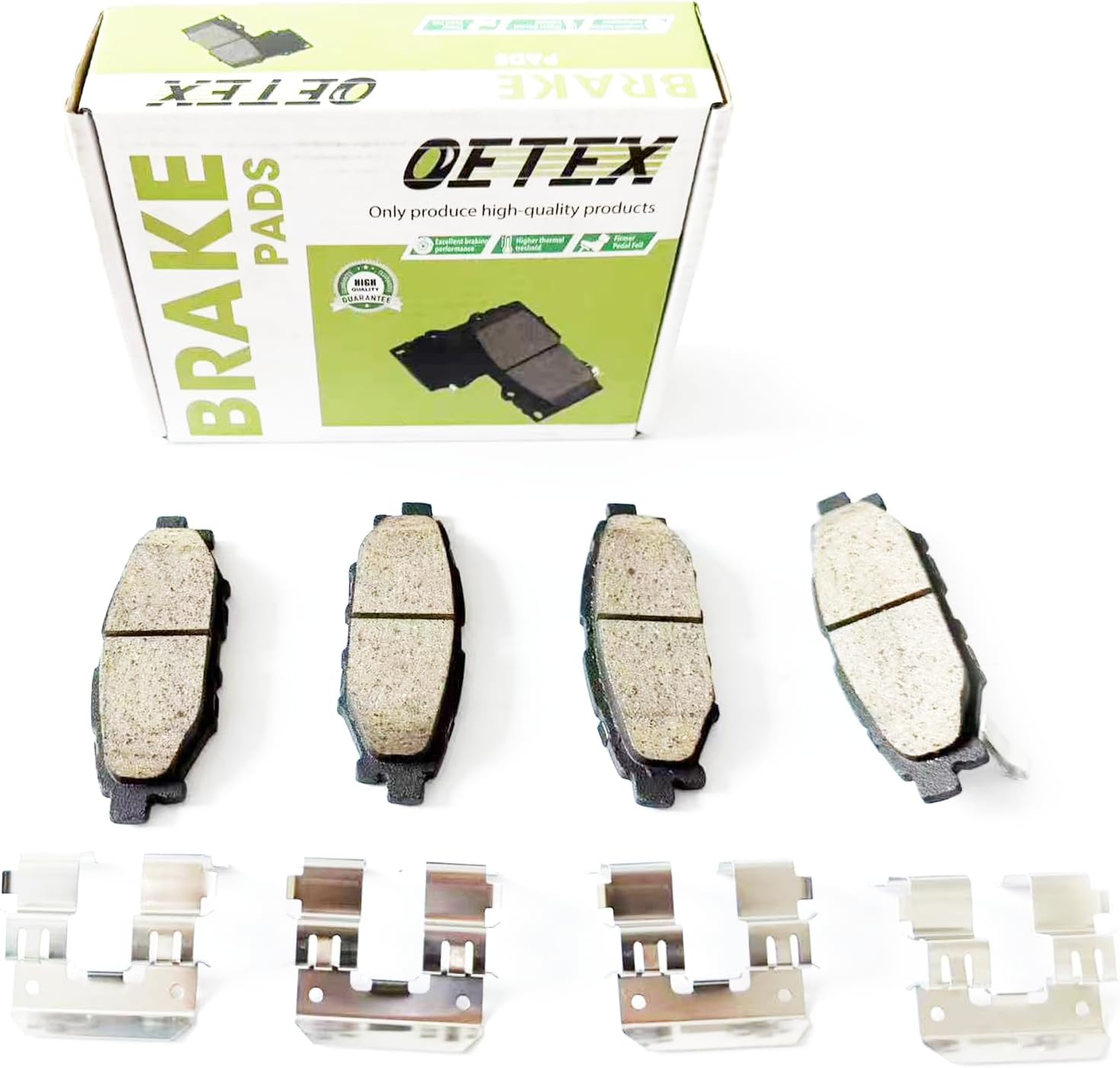
4. OETEX Rear Ceramic Brake Pads for Subaru — D1114
| Auto Part Position | Rear |
|---|---|
| Material Type | Ceramic |
| Unit Count | 4 Count |
| Compatible with Vehicle Type | All of the above |
These OETEX rear ceramic brake pads are a vehicle-specific replacement set built to match factory fit for many Subaru rear applications. They use a ceramic friction compound, rubberized shims, and chamfered edges to reduce noise while producing less brake dust than semi-metallic pads, so wheels stay cleaner between washes. The set includes metal retaining clips to keep pads stable and help prevent vibration and uneven wear. Performance is aimed at everyday street and light off-road driving, giving consistent stopping power in wet, dry, and snowy conditions rather than track-level bite. Installation is straightforward for a DIY job because the pads are shaped to replace the factory D1114 fitment. The main compromise is that ceramic pads tend to wear differently and can run a touch hotter under extreme repeated heavy braking compared with aggressive semi-metallic compounds, so they are best for normal commuting and light duty rather than towing or performance uses.
Best for: Cost-conscious Subaru drivers who want quiet, low-dust rear pads for daily commuting and occasional light off-road use and prefer an easy, direct replacement.
Less Ideal for: Drivers who frequently tow heavy loads, do aggressive driving, or need pads tuned for track performance should choose a heavy-duty or performance compound instead.
- Ceramic compound produces significantly less wheel dust for cleaner wheels
- Multi-layer rubberized shims and chamfered edges reduce vibration and squeal
- Includes metal retaining clips for secure, stable pad fitment
- Designed for consistent all-weather stopping in wet, dry, and snowy conditions
- Ceramic formulation is not optimized for heavy-duty towing or track use where semi-metallics hold up better
Verdict: A wallet-friendly ceramic rear pad set that keeps Subaru wheels cleaner and delivers quiet, reliable everyday braking for commuting and light off-road use.
5. PHILTOP D1114 Rear Ceramic Brake Pads (Rear Axle)

| Material Type | Ceramic |
|---|---|
| Auto Part Position | Rear |
| Included Components | 4x Rear brake pads – D1114 |
| Automotive Fit Type | Vehicle Specific Fit |
These PHILTOP D1114 rear ceramic pads replace the rear axle pads on compatible Subaru and Scion models and aim to restore quiet, dust-reduced braking. They are a vehicle-specific fit sold as a four-piece kit for a complete rear-axle replacement and use a ceramic compound that tends to produce less wheel dust and operate with lower noise than many semi-metallic pads. In everyday use they deliver predictable, linear pedal feel suited to city commuting, highway driving, and light off-road conditions common to Crosstrek owners. Installation is straightforward for anyone comfortable with a basic rear brake job, and the set lists numerous OEM-equivalent part numbers so it matches factory fitment points. Limitations are typical of ceramic pads: they prioritize low dust and quietness over maximum fade resistance during sustained heavy-track use, and they may not generate as much initial bite as some high-friction compounds. The package includes just the four pads and not hardware or rotors, so plan accordingly if your vehicle needs shims, clips, or rotor service.
Best for: Drivers who prioritize dependable, low-dust, and quiet everyday braking for a Subaru Crosstrek and want a direct-fit rear pad replacement that restores factory-like feel.
Less Ideal for: Drivers who frequently perform heavy track sessions or need maximum high-temperature fade resistance should choose a high-performance metallic or track-focused compound instead.
- Ceramic compound reduces wheel dust compared with semi-metallic pads
- Designed as a vehicle-specific rear axle replacement for direct fitment
- Generally quieter operation for more comfortable daily driving
- Includes four pads to complete the rear axle service
- Not optimized for extreme track or heavy repeated high-heat braking where metallic compounds perform better
Verdict: Choose these PHILTOP ceramic rear pads if you want a quiet, low-dust, vehicle-specific replacement to restore reliable everyday braking on a Subaru Crosstrek.
6. HUSCH Rear Ceramic Brake Pads Kit (4 pcs)

| Auto Part Position | Rear |
|---|---|
| Material Type | Ceramic |
| Number of Items | 4 |
| Manufacturer Warranty Description | 2 Year Manufacturer |
These HUSCH rear ceramic brake pads are a vehicle-specific replacement set intended for Subaru models such as the Crosstrek, Forester, Impreza, Legacy, Outback, BRZ, and WRX. They use a ceramic friction material that the listing notes contains no metal, which reduces brake dust and keeps wheels cleaner compared with semi-metallic pads. The maker claims a high friction coefficient for shorter stopping distances and says the parts meet OEM specification. Typical use is direct swap-in at the rear axle when your pads are worn; installers should verify fitment for year and trim. Practical benefits include quieter operation, reduced wheel soiling, and predictable stopping feel for everyday driving. Limitations are that ceramic pads can produce less initial bite than some performance-oriented metallic compounds under heavy track or towing use, and longevity and performance depend on correct bedding and rotor condition. Buyers should also confirm compatibility with their model year and consult a trusted mechanic for installation if unsure.
Best for: A cautious Crosstrek buyer who values quieter, low-dust daily braking and wants pads that match factory fitment and have strong user feedback.
Less Ideal for: Drivers who frequently tow, carry heavy loads, or do spirited track driving should consider a high-performance metallic compound instead.
- Ceramic material minimizes brake dust so wheels stay cleaner.
- Designed as vehicle-specific rear fitment for the listed Subaru models.
- Manufactured to meet OEM specification for a direct replacement fit.
- Promoted for low noise with a fit intended to reduce vibration and squeal.
- Ceramic compound may offer less initial bite and heat tolerance than heavy-duty metallic pads under track or towing conditions.
Verdict: If you want quiet, low-dust rear pads that are built to factory-fit for the Crosstrek and similar Subarus, this HUSCH ceramic kit is a practical, buyer-trusted choice.
7. Bendix Premium SBC1114 Ceramic Rear Brake Pads

| Auto Part Position | Rear |
|---|---|
| Compatible with Vehicle Type | Cars, SUV, Truck |
| Material Type | Ceramic |
| Included Components | (1) Bendix Premium Ceramic Brake Pad Set with Installation Hardware |
| Automotive Fit Type | Universal Fit |
These Bendix Premium SBC1114 ceramic rear brake pads are a factory-quality replacement aimed at everyday drivers who want quiet, predictable braking. Installed on the rear axle, the ceramic compound reduces dust and noise compared with basic semi-metallic pads, so wheels stay cleaner and cabin noise is lower during normal commuting. The kit ships with installation hardware and is engineered to match factory fit and braking feel, which makes it straightforward for a DIY swap or a quick shop install. Bendix highlights resistance to wear and corrosion and claims consistent performance to limit brake fade under typical driving. Limitations include that ceramic pads can heat up differently under aggressive driving, so they are best for street use rather than track work, and the listing covers rear pads only so front replacements must be purchased separately. For risk-averse buyers focused on reliable, low-noise stopping on a Crosstrek used for daily driving, these offer a sensible balance of comfort and longevity.
Best for: Buyers who prioritize a quiet, low-dust, factory-like replacement for daily-driven Crosstreks and want a predictable, low-maintenance braking upgrade.
Less Ideal for: Drivers who regularly push their vehicle hard, tow heavy loads, or need track-capable braking should consider performance-oriented pads instead.
- Ceramic material reduces brake dust and cabin noise during normal driving
- Engineered to match factory fit, form, and function for straightforward installation
- Includes installation hardware for a complete rear pad swap
- Designed for wear and corrosion resistance to improve service life
- Optimized for street use and may not perform as well as performance pads under track or aggressive driving
Verdict: A quiet, low-dust, factory-style rear pad set that gives Crosstrek daily drivers reliable, confidence-inspiring stopping for regular street use.
Choosing the Right Subaru Crosstrek Rear Brake Pads: Key Factors to Consider
Material and Friction Compound
The pad material determines braking feel, longevity, and rotor wear. Ceramic compounds tend to offer quieter operation, lower dust, and predictable pedal feel for everyday driving. Semi-metallic and blended compounds can produce stronger initial bite and better heat handling but usually create more dust and may be noisier.
For a Subaru Crosstrek, choose a compound that matches how you use the vehicle. If most driving is city commuting and highway cruising with occasional light off-road use, ceramic or mid-range organic blends often strike the best balance. If you frequently carry heavy loads, drive steep mountain roads, or favor spirited braking, prioritize compounds with higher thermal stability and fade resistance even if they trade off slightly higher dust levels.
Fitment and Hardware Compatibility
Correct fitment to the rear caliper and rotor is essential. Pads that do not seat properly can cause uneven wear, noise, or compromised braking. Look for pads explicitly listed for the Subaru Crosstrek rear application and check whether rear pad kits include shims, clips, or hardware needed for installation.
If the kit omits hardware, plan to reuse existing backing plates and springs only if they are in good condition. Mis-matched backing geometry or missing anti-rattle components can introduce vibration and squeal. For owners doing their own replacement, clear instructions and included hardware reduce installation time and the risk of fitting errors.
Noise, Vibration, and Harshness (NVH)
Noise and vibration are common reasons owners replace rear pads. Some pads are formulated with damping shims or bedding layers to reduce squeal, especially under light braking typical of city driving. Pay attention to pad designs that advertise anti-squeal features or include stainless-steel shims.
While no pad can eliminate all noise in every condition, choosing pads with proven NVH control improves daily comfort and reduces the likelihood of false-positive brake issues. Proper installation torque and clean hardware also play a big role, so NVH performance depends on both pad design and how the job is done.
Wear Life and Rotor Impact
Pad longevity affects maintenance intervals and cost of ownership. Some compounds are softer and wear faster but are gentler on rotors, while harder compounds may last longer but accelerate rotor wear. For the Crosstrek, consider expected mileage between replacements and whether you prefer longer pad life or preserving rotor surface.
Also check pad thickness specifications and recommended minimum thickness. Thicker initial pad material usually translates to longer service life, but real-world durability depends on driving style. If rotors are nearing service limits, replacing pads with rotor-friendly compounds helps avoid needing rotor replacement at the same time.
Heat Management and Fade Resistance
Heat management matters when braking frequently or carrying extra weight. Pads with better thermal properties resist brake fade, maintaining consistent stopping performance during repeated stops or long descents. Some Crosstrek owners who tow light loads or drive mountainous routes should prioritize fade resistance.
Thermal stability is typically more important for front pads, but rear pads contribute to overall system balance. Select pads whose rated operating temperature suits the demands you place on your Crosstrek to avoid reduced effectiveness under sustained braking.
Installation Ease and Maintenance
How easy pads are to install affects labor time and the chance of installation errors. Kits that include necessary hardware, clear instructions, and protective shims reduce hassle. For DIY owners, look for pads that match the Crosstrek's rear mounting method and allow reuse of caliper hardware when appropriate.
Also consider maintenance details such as bedding procedures and whether the pads require a break-in cycle. Proper bedding improves initial performance and longevity. Finally, factor in serviceability—how often you will need inspections and whether the pads make rotor measurements and checks straightforward.
When to Replace Rear Brake Pads on a Crosstrek
Brake pad wear rates vary with driving style, load, and road conditions. Typical signs that rear pads need replacement include decreased pad thickness near or below the manufacturer recommended minimum, persistent squeal, reduced braking responsiveness, or a grinding noise that indicates metal-on-metal contact.
Routine visual inspections every 6,000 to 12,000 miles help catch wear early. If you notice increased stopping distance, pedal pulsation, or uneven wear across the pad surface, address the issue promptly to prevent rotor damage and maintain safe braking balance.
- Check pad thickness through the caliper opening or by removing the wheel
- Listen for consistent squeal on light braking that does not clear after cleaning
- Monitor braking performance during normal stops and when descending hills
Ceramic Vs Semi-Metallic: How the Choice Affects Everyday Driving
Ceramic rear pads tend to produce less dust and lower noise, which suits Crosstrek owners who want a cleaner wheel and a quieter cabin. They also provide stable pedal feel under typical commuting loads.
Semi-metallic compounds usually offer stronger bite and improved heat tolerance at the expense of more dust and possibly more noise. For drivers who frequently encounter steep grades or tow light loads, semi-metallics can deliver better fade resistance.
- Ceramic: quieter, less dust, good for city/highway mix
- Semi-metallic: stronger bite, more durable under heat, may increase dust
Preparing for a Rear Pad Replacement Job
Before starting a rear pad replacement on your Crosstrek, gather clean mounting hardware, the correct pad kit, a torque wrench, and brake cleaner. Inspect caliper pistons and guide pins for corrosion or binding. Replace or lubricate guide pins with the recommended high-temperature brake grease to ensure smooth movement.
Also inspect the rotor surface and measure rotor thickness against the service limit. If rotors are scored or below the minimum thickness, plan to resurface or replace them during the pad job to ensure even bedding and long service life.
- Always work on a level surface and use jack stands
- Clean mating surfaces and remove rust or deposits
- Follow vehicle torque specs for caliper bolts and wheel lug nuts
Breaking In New Rear Pads
Proper bedding of new rear pads conditions the pad and rotor surfaces for optimal contact and consistent performance. A typical bedding procedure includes a series of gradual stops from moderate speed to transfer a thin layer of pad material onto the rotor evenly.
Avoid repeated hard stops during the bedding period and allow a cool-down interval between successive stops. Proper bedding reduces initial noise and improves life and performance for the Crosstrek's rear braking components.
- Perform multiple moderate decelerations rather than a few hard stops
- Allow brakes to cool after bedding runs before parking or heavy use
- Avoid heavy towing or steep descents immediately after installation
Common Rear Brake Problems and How to Diagnose Them
Grinding noises typically mean the pad material is gone and metal is contacting the rotor. Squealing on light braking often indicates high-frequency vibration from the pad-to-caliper interface, which can sometimes be resolved with proper shims or anti-squeal compounds.
Uneven pad wear points to caliper guide issues or seized hardware. If one pad is significantly thinner than the other, inspect the caliper pistons and guide pins, along with the rotor runout, to identify and correct the root cause.
- Grinding: inspect pad thickness immediately and check rotor condition
- Squeal: verify presence of shims and clean mating surfaces
- Uneven wear: check caliper mobility and rotor alignment
Still looking for the perfect fit?
Select your Subaru Crosstrek configuration to see the most relevant Brake Pads recommendations
How We Chose the Best Subaru Crosstrek Rear Brake Pads
We prioritized criteria that directly affect how rear brake pads perform on a Subaru Crosstrek. Key evaluation dimensions included stopping performance across typical Crosstrek duty cycles, measured through braking consistency and initial bite; material composition and expected wear rates that influence pad life and rotor compatibility; noise and vibration characteristics, since NVH is a common owner concern; and fitment accuracy and ease of installation specific to Crosstrek rear calipers and hardware.We also considered dust generation and rotor friendliness to reduce downstream maintenance, plus heat tolerance for drivers who tow or frequently descend long grades. Durability expectations came from manufacturer-stated pad compound properties and typical mileage claims. Exclusions applied to pads that lacked clear fitment information for Subaru Crosstrek rear assemblies or whose specifications omitted friction coefficient or thickness data. The result is a shortlist of pads that meet Crosstrek-specific fitment standards and offer transparent, relevant performance characteristics.
Our full evaluation process is outlined in our review methodology.
FAQ
How often should I inspect my Crosstrek's rear brake pads?
Inspect rear pads during every tire rotation or every 6,000 to 12,000 miles. Driving habits and local conditions can shorten intervals, so check sooner if you hear noise or notice reduced braking performance.
Can I replace only the rear pads and leave the rotors?
Often you can replace rear pads without changing rotors if the rotor surface is smooth and thickness exceeds the minimum specification. Measure rotor thickness and check for scoring; if rotors are worn or warped, resurfacing or replacement is recommended.
Will swapping to ceramic rear pads reduce dust on my Crosstrek's wheels?
Ceramic compounds generally produce less brake dust than semi-metallic pads, resulting in cleaner wheels over time. Dust levels also depend on driving style and environmental conditions.
What does a grinding noise from the rear brakes usually mean?
Grinding typically indicates the pad material is worn down to the backing plate and metal is contacting the rotor. Stop driving and inspect pads and rotors promptly to prevent further damage.
Do rear pads require a bedding-in process on a Crosstrek?
Yes, new rear pads benefit from a bedding procedure of controlled stops to transfer an even layer of pad material to the rotor. Proper bedding improves initial performance and reduces noise.
Are aftermarket rear pads safe to use on a Subaru Crosstrek?
Aftermarket pads are safe when they are specifically listed for the Crosstrek rear application and meet quality standards for fitment and friction specifications. Ensure the kit provides clear fitment data and matches the vehicle's mounting hardware.
Final Verdict
When choosing rear brake pads for a Subaru Crosstrek, focus on matching compound characteristics to your driving habits and on confirming precise fitment and required hardware. Prioritize pads that offer the right balance of stopping power, NVH control, and rotor friendliness for the way you use the vehicle. Consider heat tolerance and expected wear life if you frequently tow or drive in hilly terrain.Ultimately, the best rear pads for your Crosstrek are the ones that deliver consistent braking behavior, acceptable maintenance intervals, and a low incidence of noise. Use the decision factors above to weigh tradeoffs and choose pads that meet your driving priorities with confidence.
Explore More:
- Check out all Subaru Crosstrek parts & accessories
- Explore Brake Pads Maintenance & Repair Guides
- Explore Brake System
- Browse all Auto Parts
