

Note: This article contains affiliate links. If you click on these links and make a purchase, I may earn a small commission at no extra cost to you. This helps support my research and content. Read my full affiliate disclosure here.
When your Toyota Tacoma PreRunner runs hot or shows signs of a failing cooling system, a proper radiator replacement makes the most impact on reliability and engine longevity. You need a radiator that matches the Tacoma PreRunner's mounting and hose layout, dissipates heat effectively under load, and resists corrosion and leaks over many seasons. This guide presents the six top radiators shortlisted for fit and performance for the Tacoma PreRunner and explains the evaluation criteria used to narrow the list. Read on to understand the tradeoffs between cooling capacity, construction, and installation complexity before you pick a replacement.
Looking for other parts? See all Toyota Tacoma parts & accessories.
Top Picks at a Glance
| Best Overall The best all-around choice for most situations | AlpaSpare CU1778 Direct-Fit Radiator for Toyota Tacoma 1995–2004 |  |
| Best Quality Built to a higher standard if you want something more solid | Go-Parts Radiator Assembly for 1995–2004 Toyota Tacoma (OEM-fit) |  |
| Best Value The sweet spot between price and what you get | Readair Engine Coolant Radiator Assembly for Toyota Tacoma 1995–2004 |  |
| Best Budget The cheapest option that still gets the job done reliably | Nilight Radiator for Toyota Tacoma 2.7L/3.4L (1995–2004) |  |
| Highest Rated A top-rated pick with lots of positive feedback | AUTOSAVER88 Radiator Compatible with 1995-2004 Toyota Tacoma 2.7L/3.4L |  |
| Most Popular A crowd favorite that many people choose with confidence | DWVO Complete Radiator Compatible with 1995–2004 Tacoma 2.7L/3.4L |  |
AlpaSpare CU1778 Direct-Fit Radiator for Toyota Tacoma 1995–2004

| Model | CU1778 Cooling Radiator |
|---|---|
| Vehicle fit | Toyota Tacoma 1995-2004 2.4L/2.7L/3.4L |
| Manufacturer | Alpaspare |
| Manufacturer Part Number | RADIATOR1778ALPA |
This AlpaSpare CU1778 is a direct replacement radiator built to drop into Toyota Tacoma models from 1995 through 2004 with 2.4L, 2.7L, and 3.4L engines. Constructed from aluminum, it is designed to meet factory fitment so the mounting points, hose connections, and hardware align without modification, making it suitable for DIY installs or shop replacements. The listing notes pressure and leak testing plus thermal cycle checks, which translate to a radiator that should handle daily driving, highway use, and occasional towing without excessive coolant temperature rise. Practical advantages include corrosion resistance from the aluminum construction and compatibility with several OEM part numbers. Limitations observed in some user reports include occasional fitment or accessory mismatch on non-Tacoma vehicles and minor missing plastic trim pieces; buyers should verify cap and sensor compatibility before installation. For routine maintenance or to replace a failing core, this unit offers a straightforward, factory-style solution that balances performance and value.
Best for: Buyers who want a reliable, factory-style replacement that drops in without modifications and value a balance of durability, cooling performance, and straightforward installation.
Less Ideal for: People seeking a high-performance aftermarket upgrade for increased cooling capacity or custom-fit radiators for non-Tacoma applications should consider specialty options instead.
- Direct-fit design that aligns with factory mounting points and hose locations for 1995–2004 Tacoma engines
- Aluminum construction provides good corrosion resistance and efficient heat dissipation
- Unit is pressure and leak tested and thermally cycled according to the product description
- Compatible with multiple OEM part numbers for easier cross-referencing
- Some buyers reported minor accessory or trim pieces may not fit perfectly and may need swapping from the old unit
- Occasional reports of cap or sensor incompatibility requiring verification or reuse of original parts
Verdict: A practical, factory-style aluminum replacement radiator for 1995–2004 Toyota Tacoma owners who want a straightforward drop-in swap with reliable cooling performance.
Go-Parts Radiator Assembly for 1995–2004 Toyota Tacoma (OEM-fit)

| Manufacturer Part Number | ARN003-1511955-0955532-AMZN |
|---|---|
| OEM Part Number | 16410-0C042 |
| Fits Engines | 2.7L and 3.4L gasoline |
| Fit Years | 1995-2004 |
This Go-Parts radiator is a direct replacement meant to match factory fit and function for 1995–2004 Toyota Tacoma PreRunner and similar configurations. It installs like a stock unit and is used to restore cooling performance when the original radiator is damaged or leaking. The listing emphasizes OEM compatibility for 2.7L and 3.4L engines and multiple cab and drivetrain configurations, so it should bolt in without modification on matched models. Practical benefits include a guaranteed fitment range, aftermarket build that claims to meet or exceed factory quality, and CAPA-related quality positioning from the brand. Limitations to consider are that this is an aftermarket replacement rather than a performance-upgrade radiator, so it does not advertise improved cooling capacity, aluminum core enhancements, or motorsport-oriented features. Buyers aiming to extract extra cooling for towing, heavy-duty use, or engine swaps may need a high-capacity performance radiator instead. Overall it is a solid factory-style replacement for restoring reliable cooling on covered Tacoma model years.
Best for: Buyers who need a straightforward, reliable factory-style replacement to restore cooling on covered Tacoma PreRunner models and prioritize correct fitment and ease of installation.
Less Ideal for: Drivers who want increased cooling for heavy towing, track use, or engine swaps should consider a dedicated high-capacity performance radiator instead.
- Direct-fit replacement that matches factory mounting and OEM part number 16410-0C042
- Covers a wide range of 1995–2004 Tacoma configurations including PreRunner models
- Marketed to meet or exceed factory quality and safety standards
- Suitable for restoring original cooling performance after damage or leakage
- Not marketed as a performance radiator and does not claim increased cooling capacity or upgraded core design
Verdict: Choose this radiator when you want a dependable, factory-fit replacement to restore stock cooling performance on 1995–2004 Tacoma PreRunner models.
Readair Engine Coolant Radiator Assembly for Toyota Tacoma 1995–2004
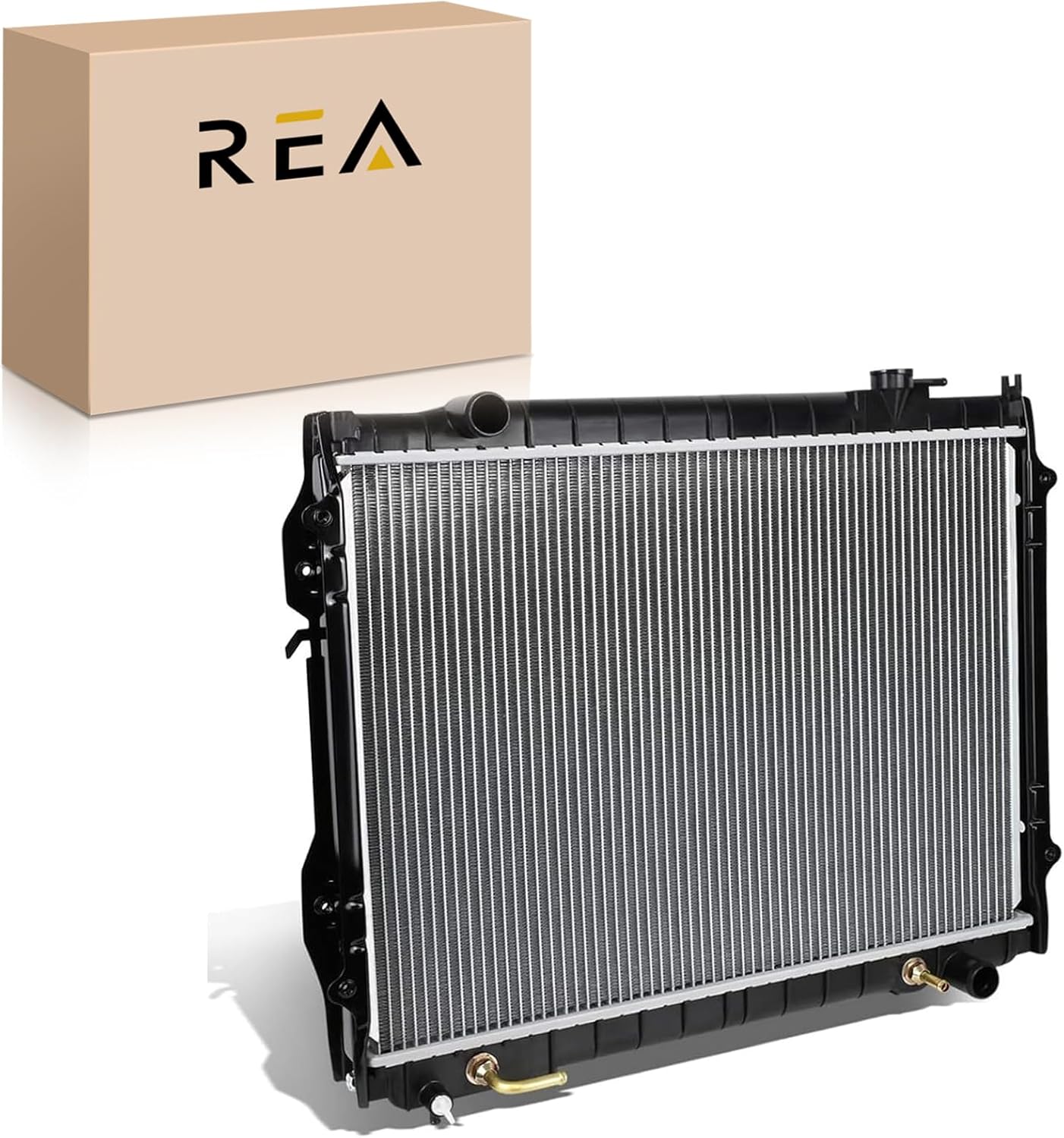
| Compatible vehicles | Toyota Tacoma 1995–2004 L4 2.4L, L4 2.7L, V6 3.4L |
|---|---|
| Transmission fit | Manual transmission only, not for 4WD |
| Core height | 18-11/16 inch |
| Transmission oil cooler | Included |
| Core material | Aluminum core with plastic tanks |
This Readair radiator is a factory-style replacement built to fit 1995–2004 Toyota Tacoma models with manual transmission and non-4WD drivetrains. It uses an aluminum core and plastic tanks and includes a transmission oil cooler, so it handles cooling and ATF cooling duties without additional parts. Installation is intended as a direct swap for matching Tacomas and reviewers report straightforward fit and solid packaging. The 1-row core and stated core height indicate it restores stock cooling capacity for everyday driving and towing at light to moderate loads, but it is not a performance or heavy-duty upgrade. Materials are leak-tested at the factory and the unit comes with a two-year unlimited-mileage guarantee from the brand. Important limitations are the manual-transmission and no-4WD restriction and the single-row core design, which may run warmer than multi-row or high-capacity radiators under sustained heavy loads. Confirm vehicle compatibility carefully before ordering to avoid fitment issues with hose diameters or 4WD models.
Best for: Buyers who want a practical, budget-focused replacement that restores factory cooling performance on a pre-runner Tacoma and prefer a direct-swap part they can install or have installed without modifications.
Less Ideal for: Owners who run heavy towing, frequent high-load driving, or who need a 4WD-compatible radiator should look at higher-capacity or specifically 4WD-fit radiators.
- Direct-fit design for 1995–2004 Toyota Tacoma manual-transmission, non-4WD models
- Aluminum core with plastic tanks and factory leak testing for reasonable durability
- Integrated transmission oil cooler included for applications that require ATF cooling
- Multiple customer reports of good fitment and straightforward installation
- Two-year unlimited-mileage guarantee from the manufacturer
- Fits only manual-transmission, non-4WD Tacomas so not suitable for 4WD variants
- Single-row core may provide less cooling capacity than multi-row or high-performance radiators
Verdict: A dependable, factory-style replacement radiator that restores stock cooling for manual-transmission 1995–2004 Tacoma pre-runners without 4WD.
Nilight Radiator for Toyota Tacoma 2.7L/3.4L (1995–2004)

| Vehicle fitment | Tacoma 2.7L L4, 3.4L V6 1995–2004 |
|---|---|
| Core material | Aluminum tubes and aluminum fins |
| Leak testing | 100% leak tested |
| Package contents | 1x complete radiator (cap not included) |
This Nilight radiator is a budget-friendly replacement for 1995–2004 Toyota Tacoma PreRunner and similar Tacoma models with the 2.7L or 3.4L engines. Built with aluminum tubes and folded louvered fins and an ABS-aluminum core, it aims to match factory cooling performance while resisting leaks; the listing states each unit is 100% leak tested. Installation is typical of a factory-style radiator: remove the old core, transfer any support brackets or mounts as needed, hook up the hoses and connections, and pressure-test the system. Buyers report it fits like the original in many cases and solves overheating and coolant-loss symptoms when the OEM unit is failing. Practical compromises are the lack of a radiator cap in the package and occasional fitment mismatches reported by some users, so confirming exact vehicle compatibility before ordering and planning for professional installation or basic mechanic skills is advisable. This radiator is a sensible choice when you need a cost-effective, functional replacement rather than an upgraded performance unit.
Best for: Buyers seeking an affordable, functional replacement radiator for older Tacoma PreRunner trucks who prioritize restoring reliable cooling over performance upgrades and want a unit that installs like a factory replacement.
Less Ideal for: Those looking for an upgraded high-performance cooling solution or a plug-and-play direct OEM-sourced part with manufacturer-backed warranty support should consider higher-end or dealer options.
- Direct-fit design for Tacoma 1995–2004 2.7L and 3.4L applications
- Aluminum tubes and folded louvered fins for efficient heat transfer
- Each unit is 100% leak tested to reduce coolant loss risk
- Matches factory connections so most installations use existing hoses and mounts
- Radiator cap not included in the package
- Some buyers reported occasional fitment or compatibility issues on certain trucks
Verdict: A cost-conscious, factory-style replacement that restores cooling for 1995–2004 Tacoma 2.7L and 3.4L trucks without the premium price of OEM parts.
AUTOSAVER88 Radiator Compatible with 1995-2004 Toyota Tacoma 2.7L/3.4L

| Compatibility | 1995-2004 Tacoma 2.7L L4 and 3.4L V6 |
|---|---|
| Construction | Aluminum core with plastic tanks |
| Fitment type | Direct fit, complete radiator |
| Includes | 1x complete radiator and user manual |
This AUTOSAVER88 radiator is a direct-fit replacement for 1995–2004 Toyota Tacoma 2.7L and 3.4L engines and is intended to restore cooling performance after a failed or leaking factory unit. It installs like a factory replacement and uses a high-density, multi-louvered aluminum core paired with plastic tanks; the listing notes each unit is leak-tested before shipping. Typical use is straightforward: remove the old radiator, transfer any required fittings, and bolt the new unit into the stock mounts. Buyers report generally good fitment and improved cooling efficiency, though some users note the core has fewer rows and lower fin density than some OEM units, and a few buyers found minor alignment or quality control issues with fittings. The radiator does not include a cap and professional installation is recommended for correct hose/clamp routing and to avoid damage. For routine driving and light towing on a Tacoma PreRunner this radiator provides a cost-effective way to get the cooling system back to working order, but buyers seeking a heavy-duty upgrade or maximum core capacity may prefer higher-end aftermarket cores.
Best for: Buyers who prioritize restoring reliable, factory-like cooling on an older Tacoma PreRunner without paying for premium performance upgrades; suitable for routine driving and occasional towing where a straightforward replacement is needed.
Less Ideal for: Drivers who want a heavy-duty or high-capacity performance radiator for persistent high-load towing, racing, or extreme heat conditions should consider purpose-built aftermarket cores instead.
- Direct-fit design for 1995–2004 Tacoma 2.7L and 3.4L for easier installation
- High-density multi-louvered aluminum core for improved cooling efficiency
- Units are leak-tested before shipping to reduce early failures
- Generally positive buyer reports on fit and basic durability
- Core has fewer rows and lower fin density than some factory units which may reduce peak cooling margin
- Some reviews report inconsistent build quality or poorly formed fittings
- Radiator cap is not included
Verdict: A cost-effective, direct-fit replacement that restores cooling reliability for 1995–2004 Tacoma PreRunners without major modification.
DWVO Complete Radiator Compatible with 1995–2004 Tacoma 2.7L/3.4L

| Compatible engines | 2.7L L4 and 3.4L V6 |
|---|---|
| Fitment years | 1995–2004 Tacoma |
| Core material | Aluminum |
| Manufacturer part number | MADWV0001237MA |
| OEM part numbers | 164100C031, 164100C032, 164100C041, TO3010178, TO3010179 |
This DWVO complete radiator is a direct replacement intended for 1995–2004 Tacoma 2.7L and 3.4L engines and ships as a full unit with an aluminum core, welded connections, and an integrated transmission oil cooler. It is typically used to replace a leaking or failed factory radiator and installs using the vehicle's existing mounting points and hardware. Notable features include a high-density multi-louvered fin core for improved cooling, TIG-welded end tanks for strength, and treated coatings to resist corrosion. Buyers report generally good fitment and cooling performance when installed correctly, with many installations straightforward for experienced DIYers or mechanics. Common limitations are variable plastic tank thickness compared with some factory parts and occasional alignment or oil cooler-line sealing issues that may require attention during installation. The unit does not include a radiator cap or transmission sensors, and professional installation is recommended if you are not comfortable with coolant system bleeding and ATF line connections.
Best for: Buyers who prioritize a cost-effective, factory-style replacement with proven user feedback and who are comfortable verifying fitment and handling coolant system bleeding or having a shop complete the install.
Less Ideal for: If you want an OEM-sourced factory part or need a radiator with upgraded heavy-duty plastic components for extreme duty use, consider a higher-end or dealership replacement.
- Direct-fit design for 1995–2004 Tacoma 2.7L and 3.4L applications
- Aluminum core with high-density multi-louvered fins for effective heat dissipation
- TIG-welded end tanks and integrated transmission cooler for a consolidated replacement
- Packaged with protective foam to reduce shipping damage
- Does not include radiator cap or transmission sensor fittings
- Some users reported plastic tank thickness and oil cooler line seal issues that need careful installation
Verdict: A practical, budget-minded direct-fit replacement for 1995–2004 Tacoma owners who want reliable cooling performance backed by many positive user installs.
Choosing the Right Toyota Tacoma PreRunner Radiator: Key Factors to Consider
Fitment and Mounting
Correct fitment is the single most important factor for the Tacoma PreRunner because mounting points, hose angles, and sensor locations vary across configurations. A radiator that matches the original mounting pattern will reduce installation time and avoid stress on hoses and brackets.
Poorly aligned inlets or outlets can cause rubbing, leaks, or early hose failure. When fitment is wrong you may need adapter hoses, modified brackets, or machine work, so prioritize radiators specified for the PreRunner to minimize additional expense and ensure a clean installation.
Core Design and Cooling Capacity
The radiator core type and thickness determine how much heat it can dissipate. Look at single-pass versus multi-pass cores, tube-and-fin density, and overall core height and thickness to understand cooling capacity. Thicker cores with higher fin density usually move heat better but may require more space and reduce airflow to the engine bay.
If you tow, drive in hot climates, or frequently idle in traffic, prioritize higher-capacity cores that maintain lower coolant temperatures under sustained load. Balance cooling needs with physical constraints in the PreRunner's engine bay to avoid fitment conflicts.
Materials and Construction Quality
Materials like aluminum cores with plastic tanks, all-aluminum cores and tanks, or brass/copper constructions each have different durability and repair profiles. Aluminum cores are common for modern radiators due to light weight and good thermal conductivity, while all-aluminum units typically offer stronger seams and better longevity than mixed-material designs.
Pay attention to brazing quality, seam welding, and corrosion protection. Radiators exposed to road salt, hard water, or extended service intervals benefit from robust construction and protective coatings. Higher build quality reduces the chance of pinhole leaks and seam failures that lead to early replacement.
Transmission Cooler Integration
Many Tacoma PreRunner engines route automatic transmission cooler lines through the radiator. If your vehicle uses the radiator as the transmission oil cooler, ensure the replacement includes correctly sized transmission ports and retains factory line routing to prevent leaks or flow restriction.
Incorrectly sized or placed transmission ports can cause poor transmission cooling, rise in transmission fluid temperature, and premature wear. Confirm the radiator supports the PreRunner's transmission cooler fittings and that line O-rings or seals are compatible to avoid post-installation leaks.
Ease of Installation and Required Parts
Consider whether the radiator is a direct-fit unit or requires extra parts such as mounting brackets, fan shrouds, or hose adapters. Direct-fit radiators shorten install time and reduce the chance of error during replacement.
Also plan for ancillary tasks like replacing thermostat housing gaskets, upper and lower hoses, and clamps. Some radiators reuse factory sensor fittings cleanly, while others require sensor adapters. Factor in the labor and small parts needed to complete a reliable radiator replacement.
Warranty and Aftercare
Warranty length and terms reflect a manufacturer's confidence in their product. Look for radiators with clear coverage on leaks, core failure, and corrosion for a reasonable period. Understand warranty registration steps and what documentation is needed to file a claim.
Also consider the availability of replacement parts and technical support. Good aftercare reduces downtime and provides recourse if a unit exhibits premature failure, which is especially valuable for vehicles used for towing or heavy-duty daily driving.
Common Radiator Symptoms and Diagnostics
Recognizing early signs of radiator trouble prevents overheating and engine damage. Typical symptoms include rising gauge temperatures, visible coolant loss under the vehicle, persistent steam from the engine bay, and coolant discolored with rust or oil contamination.
Quick diagnostics start with a pressure test to identify external leaks and a visual inspection for bent fins, clogged cores, or damaged tanks. Thermostat and fan operation should be verified before replacing the radiator since those components can cause similar overheating symptoms.
- Check for coolant on the ground or a sweet smell indicating active leakage
- Monitor temperature behavior during idle and under load to spot cooling degradation
- Perform a cooling system pressure test to pinpoint external leaks
- Inspect hoses, clamps, and hose ends for cracks or soft spots that suggest failure
Preparing for Radiator Replacement
Preparation reduces surprises during installation. Gather required tools, new coolant, replacement clamps, and any recommended gaskets or O-rings. If your vehicle uses the radiator as a transmission cooler, have proper fittings and replacement fluid ready.
Drain coolant into a suitable container and follow local disposal regulations. Label hoses and electrical connectors as you remove them to ensure correct reassembly. Inspect the fan shroud, accessory belt, and surrounding components while you have access to identify any additional maintenance tasks.
- Have a service manual or fitment diagram on hand for torque specs and hose routing
- Replace upper and lower radiator hoses when they show age or bulging
- Keep replacement clamps and a new radiator cap available
When to Consider Repair Versus Replacement
Minor pinhole leaks in older brass or copper radiators can sometimes be repaired, but repairs are often temporary and can hide underlying corrosion. For the Tacoma PreRunner, replacement is usually the better long-term choice when the core is corroded, tanks are cracked, or seams are failing.
If the radiator damage is limited to a small, accessible area and the rest of the core is in good condition, a professional repair might be acceptable as a stopgap. Consider the vehicle's mileage, future planned usage such as towing, and the likely remaining service life when deciding between repair and full replacement.
- Repair is reasonable for isolated, accessible leaks with otherwise solid core condition
- Replace the radiator if seams, multiple pinholes, plastic tank cracks, or major corrosion exist
- Weigh labor and rework risk against expected remaining lifespan of the repaired radiator
Coolant and Maintenance Best Practices
Maintaining the cooling system extends radiator life. Follow recommended coolant change intervals, use the specified coolant type, and avoid mixing incompatible formulas. Flushing the cooling system when replacing the radiator removes sediment that can clog a new core.
Regularly inspect the coolant color and level, look for oil contamination which indicates head gasket issues, and keep the exterior of the radiator free of debris. Proper maintenance reduces corrosion and supports consistent heat transfer performance.
- Perform a radiator coolant flush when replacing the radiator or after persistent overheating
- Use manufacturer-recommended coolant and maintain correct mixture ratios
- Periodically clean the radiator face with compressed air or water to remove obstructions
Installation Tips to Avoid Common Pitfalls
During installation, ensure all hose clamps are new or in good condition and torque bolts to specified values to prevent vibration-induced leaks. Verify that the radiator is seated squarely in its mounts so that hoses are not strained or twisted.
Bleed trapped air from the cooling system after installation by using the recommended procedure for the Tacoma PreRunner, as air pockets can cause localized overheating. Recheck for leaks after the initial run and again after a short test drive to confirm seals and clamps have seated properly.
- Replace the radiator cap and use the proper pressure-rated cap for the vehicle
- Bleed the cooling system to remove air pockets that cause hot spots
- Retighten hose clamps after a heat cycle to account for clamp and hose settling
Still looking for the perfect fit?
Select your Toyota Tacoma configuration to see the most relevant Radiators recommendations
How We Chose the Best Toyota Tacoma PreRunner Radiator
We prioritized fitment accuracy, thermal performance, and long-term durability when assembling this list of radiators for the Toyota Tacoma PreRunner. Fitment accuracy was verified by checking core dimensions, inlet and outlet placement, and mounting point compatibility to ensure a direct swap with factory hoses and brackets. Thermal performance was evaluated by examining core type and fin density, flow path design, and claimed cooling capacity to prioritize options that handle towing and stop-and-go traffic. Construction quality included core material, tank design, brazing or seam welding methods, and corrosion protection to judge expected service life.We also considered ease of installation, including whether the radiator reuses factory sensors and transmission cooler lines, and how often additional parts such as new hoses or mounting hardware are typically required. Customer-reported durability and common failure modes informed our exclusions: radiators with consistent reports of early leakage, poorly aligned fittings, or required extensive modifications were excluded. Finally, we weighed warranty coverage and replacement support as a proxy for manufacturer confidence. Excluded items included universal-fit cores that need custom trimming or fabrication and units that do not accommodate the PreRunner configuration.
Our full evaluation process is outlined in our review methodology.
FAQ
How do I know if my Tacoma PreRunner radiator is leaking or if it is another component?
Look for coolant puddles under the radiator area, check hoses and clamp joints, and inspect the radiator core and tanks for wet spots. A pressure test helps differentiate radiator leaks from hose or water pump leaks by pressurizing the cooling system and revealing the exact source.
Can I replace the radiator myself on a Tacoma PreRunner?
Many owners can perform a radiator replacement with basic mechanical skills and the right tools, especially when the replacement is a direct-fit unit. Expect tasks like draining coolant, disconnecting hoses and cooling fans, and bleeding the system. If the radiator integrates transmission lines or requires fan removal, some experience is helpful.
Do I need to flush the cooling system when installing a new radiator?
Yes. Flushing removes rust, scale, and contaminants that could shorten the life of a new radiator and impair heat transfer. At minimum, drain until the fluid runs clear and consider a full flush if the system shows heavy contamination.
How long should a replacement radiator last in a Tacoma PreRunner?
Lifespan depends on materials, exposure to corrosive conditions, and maintenance. Many modern radiators last several years to a decade with proper coolant maintenance and care. Vehicles used for towing or driven in harsh conditions may experience shorter service life.
Will a higher-capacity radiator require modifications to install on my PreRunner?
Some higher-capacity cores are thicker or taller and may require checking for clearance with the fan, shroud, and support brackets. Always confirm core dimensions and inlet/outlet placement; many performance or heavy-duty radiators are designed as direct-fit for the specific vehicle to avoid modifications.
What should I check after installing a new radiator?
After installation, verify there are no visible leaks, confirm proper coolant level, and monitor engine temperature during a warm-up and a short drive. Reinspect hose clamps after the engine has reached operating temperature and allow the thermostat and cooling fans to cycle to ensure normal operation.
Final Verdict
When selecting a replacement radiator for your Toyota Tacoma PreRunner, prioritize correct fitment, adequate cooling capacity for your driving and towing needs, and solid construction to resist leaks and corrosion. Factor in whether the radiator accommodates transmission cooler lines and how much additional installation work will be required. By focusing on these tradeoffs you can choose a radiator that balances longevity with practical serviceability, ensuring reliable cooling performance for daily driving and heavier-duty use.
Explore More:
- Check out all Toyota Tacoma parts & accessories
- Explore Radiators Maintenance & Repair Guides
- Explore Cooling System
- Browse all Auto Parts
