

Note: This article contains affiliate links. If you click on these links and make a purchase, I may earn a small commission at no extra cost to you. This helps support my research and content. Read my full affiliate disclosure here.
If you drive a Ford Mustang, the radiator is central to keeping engine temperatures in a safe range and maintaining performance. Choosing the right Ford Mustang radiator matters because an undersized or poorly built unit can lead to overheating, poor heater performance, or premature failure.This guide highlights seven shortlisted radiators selected for their cooling capacity, construction quality, and compatibility with Mustang cooling systems. We evaluated each option on thermal performance and long-term durability to help you pick the right replacement or upgrade. Read on to compare features and find the right fit for your driving needs.
Looking for other parts? See all Ford Mustang parts & accessories.
Top Picks at a Glance
| Best Reviewed A top-rated pick with lots of positive feedback | VibeUp Radiator Compatible with Ford Mustang (2005–2013) |  |
| Most Popular A crowd favorite that many people choose with confidence | AUTOSAVER88 Radiator for 2015–2022 Ford Mustang (3.7L, 5.0L, 2.5L) |  |
| Best Quality Built to a higher standard if you want something more solid | Mishimoto Performance Aluminum Radiator for Ford Mustang (2005–2014) |  |
| Best Budget The cheapest option that still gets the job done reliably | Auto Dynasty Radiator for 1997–2004 Ford Mustang 3.8L/3.9L (Automatic) |  |
| Most Sold A high-volume bestseller chosen again and again | RadBuild 4-Row Aluminum Radiator for 1967–1970 Ford Mustang and Mercury Cougar |  |
| Best Value for Money The sweet spot between price and what you get | Auto Dynasty Full Aluminum 3-Row Radiator for 1996 Ford Mustang GT (Manual Transmission) |  |
| Best Overall The best all-around choice for most situations | AUTOSAVER88 3-Row Full Aluminum Radiator for 1979–1993 Ford Mustang |  |
1. VibeUp Radiator Compatible with Ford Mustang (2005–2013)

| Vehicle fitment | Ford Mustang 2005–2013 |
|---|---|
| Replaces | FO3010270, 4R3Z8005CA, 4R338005CE-SS |
| Manufacturer | VibeUp |
| Item model number | Radiator for Ford |
This VibeUp radiator is a replacement cooling core made to fit 2005–2013 Ford Mustang V6 and V8 engines without modification. It replaces factory part numbers listed and uses a reinforced B-tube fin design intended to stiffen the core and resist deformation under service. Typical use is a straight swap for a failed or damaged radiator during routine maintenance or collision repair; reviewers report straightforward bolt-in installation when transferring mounting studs and careful reattachment of transmission cooler lines where applicable. The practical benefits are improved core stability during operation and heat dissipation comparable to factory units, plus broad fitment across the Mustang model years. Limitations to note are that the unit is physically larger and can make reinstalling the fan and shroud trickier for one person, and some buyers painted the aluminum finish to match surrounding components. Expect a competent, reliability-focused replacement that may require patience on installation but performs like a factory-quality core once in place.
Best for: Reliability-focused Mustang owners who prioritize a factory-like replacement that restores cooling performance and durability after a failure or front-end damage.
Less Ideal for: If you need an exact cosmetic match out of the box or want a lightweight performance aftermarket radiator, consider other options; this is best for dependable, fit-first replacements.
- Direct-fit design matched to factory mounting points for 2005–2013 Mustang models.
- B-tube fin construction for added core rigidity and reduced deformation risk.
- Reports of simple bolt-in installation when transferring original studs and fittings.
- Comparable heat dissipation performance to factory radiators according to manufacturer and user feedback.
- Larger overall profile can complicate fan and shroud reinstallation for a single mechanic.
- Arrives in natural aluminum finish which some buyers chose to paint for aesthetics.
Verdict A reliability-oriented, direct-fit replacement radiator for 2005–2013 Mustangs that trades a larger core profile for solid cooling performance and core stability.
2. AUTOSAVER88 Radiator for 2015–2022 Ford Mustang (3.7L, 5.0L, 2.5L)

| Compatibility | 2015-2022 Ford Mustang V6 3.7L, V8 5.0L, 2.5L |
|---|---|
| Replacement part numbers | FR3Z8005C, FR3Z8005D |
| Core material | Aluminum core with plastic tanks |
| Fitment type | Direct fit |
This AUTOSAVER88 radiator is a direct-fit replacement for 2015–2022 Ford Mustang engines and is intended to restore factory-level cooling without major modifications. It installs in place of the factory unit and is built with a high-density multi-louvered aluminum core and molded plastic tanks to improve heat transfer and meet common factory routing. The product is leak-tested at the factory and ships as a complete radiator ready for professional or experienced DIY installation; note the radiator cap is not included. In real-world use it should return your cooling system to nominal temperatures and handle hot-weather driving thanks to the dense fins, but fitment-sensitive areas such as hose neck diameters and connector locations may require verification before installation. This radiator is a practical option if you want a ready-made swap that balances cooling efficiency and cost, though buyers should budget for professional installation or careful fit checks to avoid rework or sealing issues.
Best for: Buyers who prioritize convenience and want a ready-to-install, factory-style cooling replacement that minimizes custom fitting and gets the Mustang back on the road quickly.
Less Ideal for: If you need a performance-upgrade radiator for track use or a custom cooling solution, this standard replacement may not meet high-capacity or modified-engine requirements.
- Direct-fit design for 2015–2022 Ford Mustang engines for straightforward replacement
- High-density multi-louvered aluminum core for improved cooling efficiency
- Factory leak testing performed and includes a complete radiator unit
- Compatible with both V6 and V8 engine options listed
- Radiator cap is not included
- Some buyers report connector or neck diameter mismatches requiring adjustments or extra parts
Verdict A practical, convenience-focused direct-fit radiator for 2015–2022 Ford Mustangs that restores factory-style cooling but requires fit verification and does not include a radiator cap.
3. Mishimoto Performance Aluminum Radiator for Ford Mustang (2005–2014)

| Fitment | Ford Mustang 2005–2014 (3.7L, 4.6L, 5.0L) |
|---|---|
| Construction | 100% brazed aluminum |
| Core rows | 3 rows |
| Drain plug | Magnetic drain plug |
This Mishimoto performance aluminum radiator replaces the factory unit on 2005–2014 Ford Mustangs and is designed to raise cooling capacity for both street and track use. It installs as a direct factory-quality replacement with no cutting or modification required, so typical use is like-for-like: swap the old radiator for improved heat rejection during spirited driving or heavy loads. Notable features include a multi-row brazed-aluminum core, polished end tanks, a magnetic drain plug, and a mounting layout that accommodates the stock transmission cooler on many cars. In practice that means cooler running temps under sustained load, a firmer fit than many aftermarket alternatives, and straightforward installation for mechanically capable owners. Limitations to consider are that thicker, higher-capacity radiators can be a tighter fit in the core support area and airflow may be slightly more restricted compared with some thin-core designs, so gains over a healthy stock radiator can be modest in mild driving conditions. Some users have reported long-term leaks after several years, so expect typical wear on a high-mileage vehicle.
Best for: Performance-oriented Mustang owners who prioritize cooling reliability during spirited driving, track days, or high-load towing and want a factory-quality, bolt-in upgrade.
Less Ideal for: Buyers focused solely on minimal cost or those who rarely push their car hard may not notice substantial real-world gains over a healthy stock radiator and should consider less expensive replacements.
- Direct-fit for 2005–2014 Ford Mustang for easy installation
- Brazed aluminum multi-row core improves heat rejection compared with many stock units
- Polished end tanks and solid construction for durable, performance-oriented appearance
- Includes magnetic drain plug for easier fluid maintenance
- Thicker core can make installation tighter and may require careful handling to avoid bending fins
- Some owners reported leaks after several years of use
Verdict A rugged, factory-fit aluminum radiator that raises cooling capacity for Mustang owners who push their cars, with straightforward installation but a slightly tighter fit and possible long-term wear.
4. Auto Dynasty Radiator for 1997–2004 Ford Mustang 3.8L/3.9L (Automatic)

| Vehicle fit | 1997–2004 Ford Mustang 3.8L/3.9L AT |
|---|---|
| Core material | T-6061 aluminum |
| Rows | 1 |
| Transmission oil cooler | Yes |
This Auto Dynasty radiator is a direct-fit replacement for 1997–2004 Ford Mustang 3.8L and 3.9L models with automatic transmissions. Constructed with a single-row T-6061 aluminum core and reinforced tanks, it provides a lightweight, straightforward bolt-in swap to restore cooling performance and accept the factory transmission oil cooler port. Typical use is a like-for-like repair when the original radiator leaks or fails; installation is intended to be simple for anyone comfortable with basic front-end work, though a professional installer is recommended. The main benefits are compatibility with factory mounting points and an aluminum core that should cool effectively while lowering weight. Limitations to consider are the single-row design, which offers less cooling capacity than multi-row aftermarket radiators, and the included tanks and fittings may differ slightly from factory pieces so double-check hose and shroud clearance before installing. No installation instructions are supplied so plan for basic tools and some mechanical familiarity.
Best for: Budget-conscious Mustang owners who need a reliable, lower-cost replacement to restore cooling on a daily driver and prefer a straightforward bolt-in solution over performance upgrades.
Less Ideal for: Drivers who regularly tow, track, or push the cooling system and need maximum heat rejection should consider multi-row or performance radiators instead.
- Direct bolt-in fit for 1997–2004 Mustang 3.8L/3.9L automatics, so minimal modification is required
- Full T-6061 aluminum single-row core for improved heat transfer and reduced weight compared with many stock radiators
- Integrated transmission oil cooler port included for automatic-transmission models
- Generally positive user reports of easy installation and correct fitment
- Single-row core provides less cooling headroom than two- or three-row performance radiators
- Aftermarket tanks and thickness differences can affect fan shroud fit on some vehicles
Verdict A budget-friendly, factory-style aluminum replacement that restores cooling for 1997–2004 Mustang 3.8L/3.9L automatics but sacrifices extra cooling capacity compared with multi-row performance units.
5. RadBuild 4-Row Aluminum Radiator for 1967–1970 Ford Mustang and Mercury Cougar

| Fitment | 1967–1970 Ford Mustang/Mercury Cougar V8 |
|---|---|
| Row Count | 4 Row |
| Upper Inlet | 1.5in driver side |
| Lower Outlet | 1.75in passenger side |
| Trans Cooler Port | 1/8-27 NPT |
This RadBuild 4-row aluminum radiator is a direct-fit replacement for 1967–1970 Ford Mustang and Mercury Cougar V8s and is built to handle higher cooling loads than single- or two-row units. It installs in the stock location and includes a CNC-machined filler neck, radiator cap, and an OEM-style brass petcock for easy draining. The four-row core increases coolant capacity and heat rejection, making it useful for restored daily drivers, mild performance upgrades, or towing duties where extra cooling margin matters. It also provides a 1/8-27 NPT transmission cooler port for integrated transmission cooling. The finish is raw aircraft-grade aluminum and the inlet/outlet sizing matches common factory plumbing for those model years. Expect a heavier, bulkier unit than stock and a straightforward mechanical fit when used with the correct hoses and mounting hardware. Buyers should confirm core and overall dimensions against their vehicle and may need to reuse or replace brackets and fan shrouds depending on the restoration details.
Best for: Risk-averse mainstream buyers seeking a robust, factory-quality cooling upgrade for a 1967–1970 Mustang or Mercury Cougar who prioritize reliable, proven replacements over experimental parts.
Less Ideal for: Owners looking for a show-piece finished radiator or those needing a lightweight racing-only core with custom plumbing should consider other options.
- 4-row core improves cooling capacity and heat rejection compared with smaller cores
- Includes CNC-machined filler neck and radiator cap for a proper seal and serviceability
- Built-in 1/8-27 NPT transmission cooler port allows added transmission cooling without modifications
- OEM-style brass petcock simplifies draining during maintenance
- Raw aluminum finish may require polishing or protection to match restored engine bays
- May require checking or swapping brackets, hoses, or shroud fitment on some restorations
Verdict A practical, higher-capacity factory-style aluminum radiator for 1967–1970 Mustangs and Cougars that favors dependable cooling performance over cosmetic finish.
6. Auto Dynasty Full Aluminum 3-Row Radiator for 1996 Ford Mustang GT (Manual Transmission)
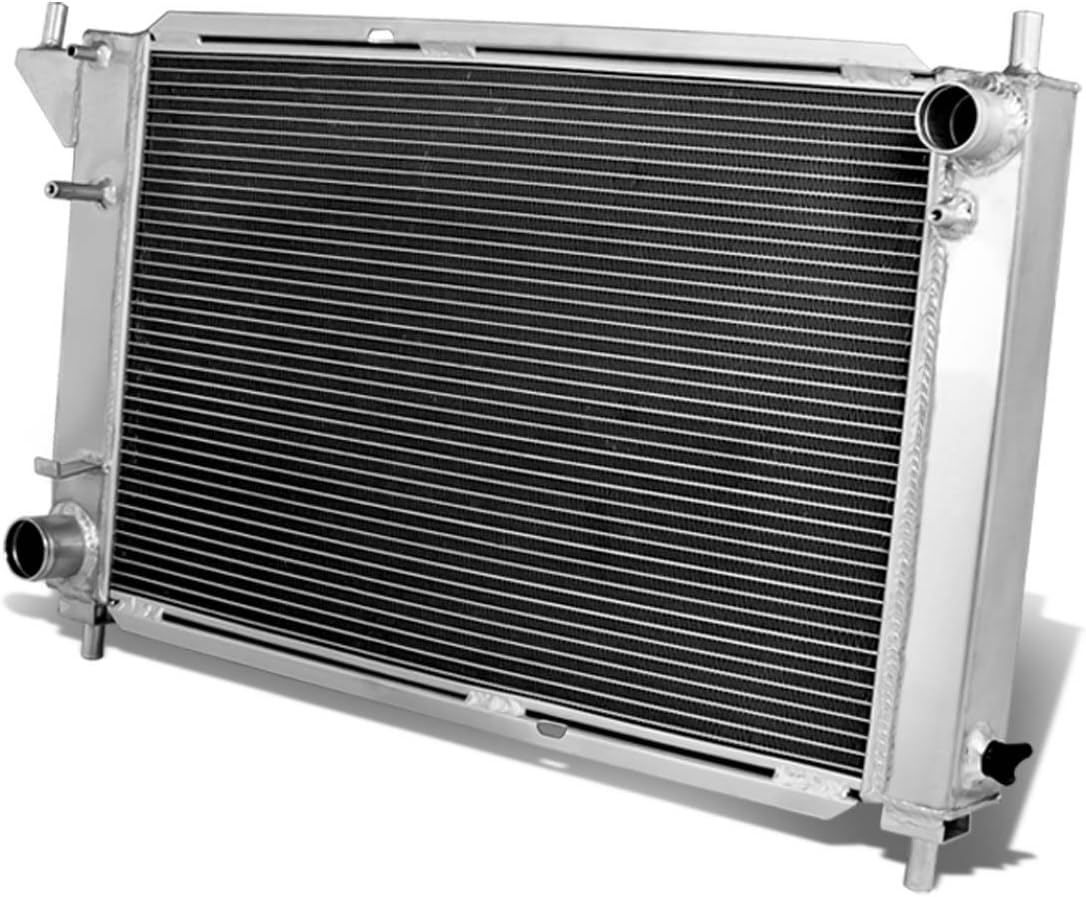
| Vehicle fit | 1996 Ford Mustang GT MT only |
|---|---|
| Construction | Full T-6061 aluminum |
| Rows | 3 |
| Inlet/Outlet | Inlet 1.50" / Outlet 1.75" |
This Auto Dynasty three-row full-aluminum radiator replaces the factory unit on 1996 Ford Mustang GTs with a manual transmission and is intended to boost cooling capacity for street and light performance use. It installs as a direct bolt-in replacement for stock mounting locations so most owners can swap it in without drilling or major modification, and it accepts the factory fan. The T-6061 aluminum construction and racing-style core are claimed to lower operating temperatures substantially compared with the original radiator, which helps during spirited driving or in hot climates. Practical benefits include lighter weight than a stock copper-brass unit and a thicker core for improved heat rejection. Limitations to keep in mind are that instructions are not included and a professional install is recommended, fitment reports are mixed so minor adjustments may be needed, and this is an aftermarket part rather than a factory-made component.
Best for: A practical optimizer looking to improve cooling performance and reduce operating temps on a 1996 Mustang GT without expensive custom fabrication; ideal for enthusiasts who prefer value-minded upgrades and are comfortable arranging a professional or skilled DIY install.
Less Ideal for: Buyers seeking an exact factory-quality replacement with guaranteed OEM fit and finish or those who want a plug-and-play product with full manufacturer installation support should consider other options.
- Full T-6061 aluminum construction for improved corrosion resistance and longevity
- Three-row racing-style core increases cooling capacity compared with many stock radiators
- Direct bolt-on fitment intended for 1996 Mustang GT manual trans models so no major cutting or fabrication required
- Accepts factory fan and mounts, simplifying replacement and reducing accessory changes
- No installation instructions provided so inexperienced DIYers may need professional help
- Aftermarket fitment can require minor adjustments on some cars according to user reports
- Not a factory-quality part so finish and fitment vary compared with OEM units
Verdict A budget-friendly aluminum upgrade that boosts cooling for the 1996 Mustang GT manual-transmission models but may require careful installation and acceptance of aftermarket fit variability.
7. AUTOSAVER88 3-Row Full Aluminum Radiator for 1979–1993 Ford Mustang
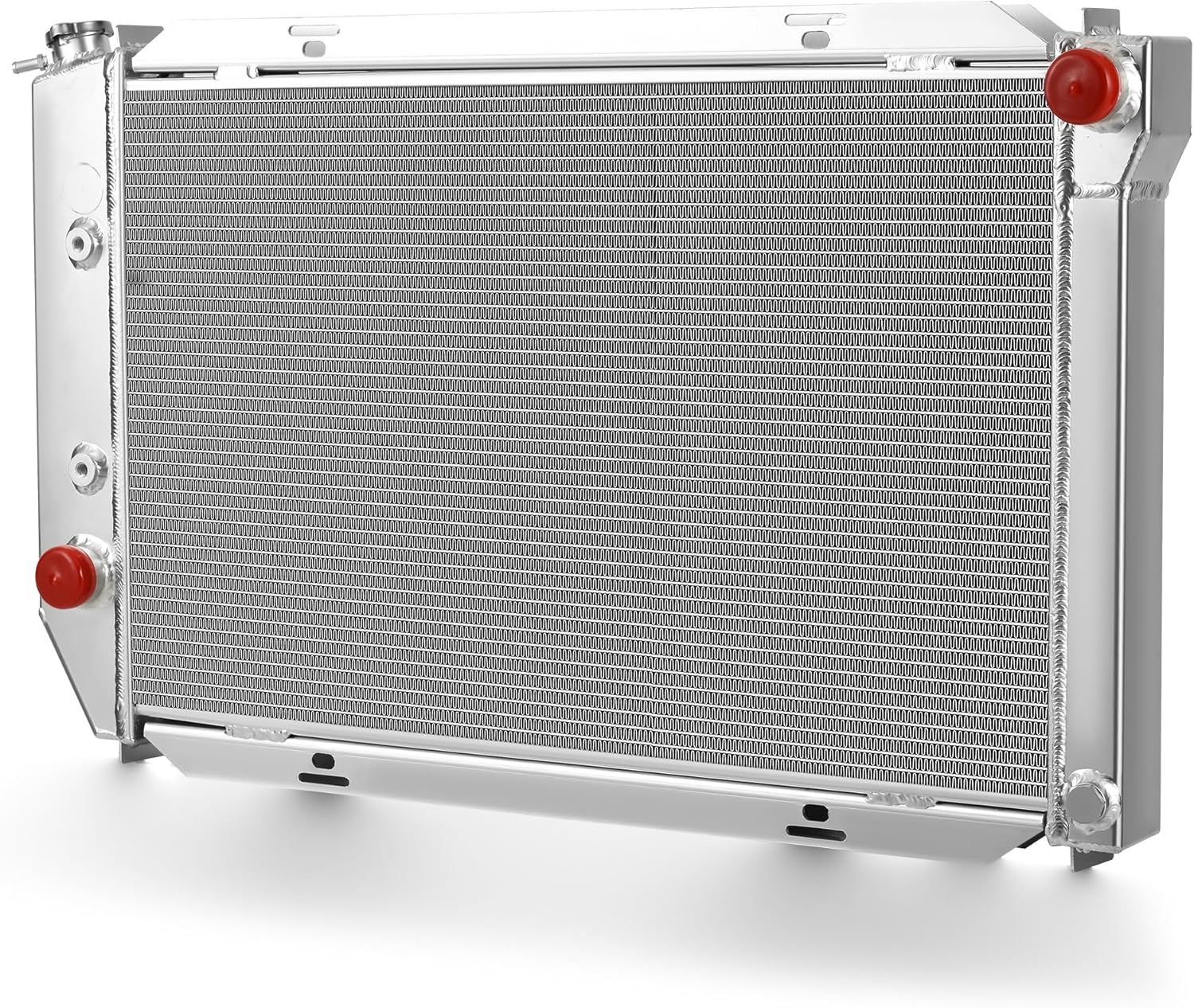
| Compatibility | 1979–1993 Ford Mustang |
|---|---|
| Core Rows | 3-row aluminum |
| Core Size | 16.46 x 25.75 inches |
| Replacement Part Numbers | CU381, 3224787, 433381 |
| Package Includes | 1x Radiator and user manual (cap not included) |
This AUTOSAVER88 radiator replaces the factory unit with a three-row aluminum core intended to improve cooling capacity for classic Mustang engines. It is used as a direct replacement during a cooling-system refresh or when the original radiator shows corrosion or leaks. Notable features include a high-density multi-louvered fin core and an aluminum oil cooler for faster heat dissipation, plus leak-tested construction and upgraded foam-and-cardboard packaging. In practice the thicker core and improved fin design reduce operating temperatures under load and should help when towing or spirited driving. Installation is mostly straightforward for experienced DIYers or shops, but several owners reported fitment quirks: the lower rubber mount pins and some fan or condenser clearance points may need longer bolts, spacers, or minor trimming to fit perfectly. The radiator ships without a cap and professional bleeding and coolant selection are recommended. If you want noticeable cooling gains for a classic Mustang and are prepared for small fitment adjustments, this is a strong option; if you need a guaranteed bolt-in without any modification, consider a different factory-replacement part.
Best for: Balanced buyers who want a reliable cooling upgrade for a 1979–1993 Ford Mustang and are comfortable making small fitment adjustments or having a shop handle installation.
Less Ideal for: Buyers seeking a guaranteed no-modification bolt-in solution or those unwilling to source small fasteners or perform minor trimming should consider other factory-quality replacements.
- Three-row full-aluminum core for improved heat dissipation compared with many stock radiators
- High-density multi-louvered fins to boost cooling efficiency under load
- Includes aluminum oil cooler for additional heat management
- Leak-tested assembly and reinforced packaging reduce risk of shipping damage
- May require minor modifications or extra hardware for lower mounts, fan holes, or condenser clearance
- Radiator cap is not included
- Some units arrived with bent mounts or slight twist requiring inspection on receipt
Verdict A performance-minded, value-oriented aluminum radiator that meaningfully improves cooling for classic Mustangs if you can accept minor fitment work.
Choosing the Right Ford Mustang Radiator: Key Factors to Consider
Cooling Capacity and Core Design
Cooling capacity determines how effectively a radiator removes heat from the engine cooling circuit. A higher capacity unit or one with a denser core typically offers better heat rejection under heavy loads, such as towing, spirited driving, or hot ambient temperatures. Core design, including number of rows, tube density, and fin spacing, affects airflow and thermal transfer efficiency.
When comparing options, consider the balance between cooling performance and airflow restriction. Overly dense cores can impede airflow at low speeds, while cores optimized for maximum heat transfer often require adequate fan support. Match the core design to your typical driving conditions to ensure reliable temperature control.
Core Material and Construction Quality
Material choice and build quality directly impact a radiator’s durability and thermal performance. Aluminum cores with brazed joints are common for their light weight and good conductivity, while some designs use steel or plastic tanks that trade off weight and cost against robustness.
Look for consistent brazing or welding, clean joints, and corrosion-resistant finishes. Tanks should be securely attached and use quality gaskets or O-rings at connections. A well-built unit reduces the chance of leaks, improves long-term corrosion resistance, and generally requires less maintenance.
Fitment and Mounting Compatibility
Proper fitment ensures the radiator aligns with the car’s mounting points, fan shroud, and hose connections without extensive modification. Radiators engineered for the Ford Mustang should match factory mounting locations and inlet/outlet sizes to simplify installation and maintain correct coolant flow paths.
Check details like mounting tab locations, transmission cooler ports if applicable, and clearance for other components. Poor fitment can complicate installation, lead to stress on hoses or fittings, and increase the risk of vibration-related leaks.
Corrosion Resistance and Finish
Radiators are exposed to coolant and external moisture, so corrosion resistance is essential for longevity. Protective coatings, anodizing, or well-applied paint can slow external corrosion, while proper brazing and compatible materials reduce internal galvanic reactions with coolant additives.
Consider units with proven corrosion protection and drainable designs for easier maintenance. A good finish also helps prevent external pitting and preserves heat transfer efficiency over time.
Serviceability and Installation Ease
How easy a radiator is to install and service can affect total ownership effort and repair downtime. Units that retain factory hose connections, use standard hardware, and have accessible bleed or drain points simplify installation and routine maintenance tasks like coolant changes or flushing.
Also consider whether the radiator requires additional parts, such as adapter fittings or aftermarket fan shrouds. A radiator designed for straightforward replacement minimizes the time the car is out of service and reduces the chance of installation errors that could lead to leaks.
Cooling System Integration and Accessories
A radiator does not operate alone; its performance depends on fans, coolant type, and the rest of the cooling system. Ensure the radiator integrates with your vehicle’s electric or mechanical fans and that it includes or accommodates transmission cooler passages if needed.
Verify compatibility with recommended coolant types and check whether additional accessories, like fan spacers or mounting brackets, are required. Proper integration helps maintain stable operating temperatures and reduces the likelihood of related component failures.
FAQ
How do I know if my Ford Mustang radiator is failing?
Common signs include engine overheating, coolant puddles under the car, a low coolant level without visible leaks, or discolored coolant. You might also notice steam from the engine bay or the temperature gauge reading higher than normal. If you observe these symptoms, inspect hoses, clamps, and the radiator for visible damage and consider a pressure test to locate leaks.
Can I replace the radiator myself on a Ford Mustang?
Many owners with basic mechanical skills can replace a radiator using common hand tools. The job typically involves draining coolant, disconnecting hoses and the fan assembly, removing mounting hardware, and installing the new unit with correct hoses and clamps. Take care with electrical connectors and follow proper bleeding procedures to remove air from the cooling system.
Is it better to choose an OEM or aftermarket radiator?
Both OEM and aftermarket radiators can be suitable depending on your priorities. OEM units usually match factory fitment and materials, while aftermarket options may offer improved cooling or lighter construction. Consider build quality, stated specifications, and warranty rather than the label alone when making a decision.
How often should I flush the radiator and coolant system?
Recommended intervals vary with coolant type and driving conditions, but flushing every few years or according to the vehicle maintenance schedule is common. Regular coolant maintenance helps prevent scale buildup and corrosion, which can reduce cooling efficiency and lead to premature radiator issues.
Will a higher-capacity radiator prevent all overheating issues?
A higher-capacity radiator improves heat rejection but does not guarantee elimination of overheating. Other factors like coolant flow, thermostat operation, water pump condition, fan function, and coolant quality also matter. Addressing the entire cooling system provides the best chance of resolving persistent temperature problems.
How We Chose the Best Ford Mustang Radiator
We focused on radiators designed specifically for Ford Mustang applications and prioritized items that meet common buyer priorities for cooling system maintenance and upgrades. Key evaluation criteria included cooling capacity under load, core material and construction quality, compatibility with factory mounting points and hose connections, corrosion resistance and finish, and ease of installation. We also considered warranty coverage and reported durability to reflect long-term ownership concerns.We excluded universal-fit units that require major modification, components intended only for racing without street compatibility, and products lacking clear technical specifications. Our selection favored radiators that balance efficient heat rejection with straightforward installation for typical street and light performance use. Where technical differences were subtle, we gave weight to proven construction and corrosion protection to reduce the likelihood of premature leaks or failures.
Our full evaluation process is outlined in our review methodology.
Conclusion
When choosing a Ford Mustang radiator, prioritize cooling capacity, material and construction quality, and correct fitment with your vehicle’s mounting points. Think about corrosion protection and how the unit will integrate with fans and other cooling components.Balance thermal performance against ease of installation and long-term durability. Focusing on these factors will help you select a radiator that maintains stable engine temperatures and reduces the risk of future leaks or failures.
Explore More:
- Check out all Ford Mustang parts & accessories
- Explore Radiators Maintenance & Repair Guides
- Explore Cooling System
- Browse all Auto Parts
