

Note: This article contains affiliate links. If you click on these links and make a purchase, I may earn a small commission at no extra cost to you. This helps support my research and content. Read my full affiliate disclosure here.
Replacing a failed radiator can stop recurring overheating and help your Saturn Ion run reliably under varied driving conditions. Choosing the right radiator matters because fitment, cooling capacity, and material quality affect how quickly the engine sheds heat and how long the part lasts.This guide highlights the top six radiators we shortlisted for the Saturn Ion, explaining the evaluation criteria you should consider such as cooling performance and durability. Read on for the factors that matter and practical guidance before you decide.
Looking for other parts? See all Saturn Ion parts & accessories.
Top Picks at a Glance
| Best overall The best all-around choice for most situations | AUTOSAVER88 Radiator for 2003–2007 Saturn Ion |  |
| Best Quality Built to a higher standard if you want something more solid | Spectra Premium Complete Radiator for Saturn Ion |  |
| Best Value The sweet spot between price and what you get | AutoShack Radiator for Saturn Ion / Chevy Cobalt / Pontiac G5 (fits 2003–2010 L4) |  |
| Best Budget The cheapest option that still gets the job done reliably | ZSYXGTAL Radiator Assembly for Saturn Ion / Chevy Cobalt (Front) – Plastic/Aluminum |  |
| Highest Rated A top-rated pick with lots of positive feedback | TRQ Aluminum Cross-Flow Radiator, direct fit for Saturn Ion (2003–2007) |  |
| Best Seller A high-volume bestseller chosen again and again | Evan Fischer Radiator for 2003–2007 Saturn Ion / 2005–2006 Pontiac Pursuit |  |
1. AUTOSAVER88 Radiator for 2003–2007 Saturn Ion

| Compatible engines | L4 2.2L, 2.4L |
|---|---|
| Vehicle fit | 2003-2007 Saturn Ion |
| Material | Aluminum core with plastic tanks |
| OEM part number | 52482167 |
This AUTOSAVER88 radiator is a direct-fit replacement intended for the 2003–2007 Saturn Ion with L4 2.2L or 2.4L engines. It installs like a factory-style unit and is typically used to replace a leaking or damaged core to restore normal engine temperature control. The unit uses a high-density aluminum core with multi-louvered fins and molded plastic tanks, and the listing notes that each radiator is leak-tested before shipping. In practice that construction delivers good cooling efficiency and straightforward bolt-in installation for owners doing a DIY swap or for professional shops. Some buyers report long service life and an easy fit while others mention occasional packaging damage or premature failures on isolated units, so careful inspection at receipt and professional installation are recommended. The radiator cap is not included and the item may require reuse of some fittings or clamps from the removed unit. For Saturn Ion owners needing a balanced, cost-effective replacement, this radiator offers a practical path back on the road with factory-like performance but keep in mind aftermarket longevity can vary between batches.
Best for: Balanced all-round buyers who want a cost-conscious, close-to-factory replacement that restores cooling performance without expensive dealer parts or elaborate upgrades.
Less Ideal for: Drivers who need a heavy-duty performance radiator for high-power modifications or those who prioritize factory-backed warranty support should consider alternatives.
- Direct-fit design made to match factory mounting and hose locations for easy installation.
- High-density aluminum core with multi-louvered fins for improved cooling efficiency.
- Leak-tested units and inclusion of a user manual simplify replacement and initial setup.
- Radiator cap is not included so you must supply or reuse the existing cap.
- Some units have arrived with shipping damage or reported premature failures in a minority of reviews.
Verdict: A practical, budget-friendly direct-fit radiator for the Saturn Ion that restores factory-style cooling but may show variable long-term durability on some units.
2. Spectra Premium Complete Radiator for Saturn Ion

| Compatible vehicle | Saturn Ion |
|---|---|
| Product type | Complete radiator |
| Cooling focus | Engine and transmission cooling |
This Spectra Premium complete radiator replaces the factory cooling unit for Saturn Ion models and is built to meet or exceed the original equipment performance. It ships as a full assembly sized to fit without modifications, so installation is straightforward for a professional shop or a competent DIYer following service procedures. Notable features include engineered core design for maximum cooling efficiency and quality control measures intended to ensure long-term durability. The radiator supports engine and transmission cooling duties and is intended as a direct replacement to restore proper temperature regulation after a failed or leaking radiator. Limitations are typical of direct-replacement radiators: material and long-term corrosion resistance depend on usage and coolant maintenance, and specialized performance tuning or upgraded cooling capacity beyond factory-spec would require an aftermarket performance radiator instead.
Best for: Performance-oriented buyers who want a reliable, factory-spec replacement to restore proper cooling and maintain engine performance under normal and spirited driving.
Less Ideal for: Drivers seeking a higher-capacity performance radiator for track use or heavy towing should consider purpose-built performance radiators instead.
- Complete assembly requires no additional parts for direct replacement
- Engineered core design aimed at maximum cooling efficiency
- Designed to fit the factory mounting points without modifications
- Manufactured under quality control to match original performance
- Not marketed as a high-performance or heavy-duty upgrade beyond factory cooling capacity
- Long-term corrosion resistance depends on regular coolant maintenance
Verdict: A factory-quality complete replacement radiator built to restore proper cooling and fitment for Saturn Ion vehicles.
3. AutoShack Radiator for Saturn Ion / Chevy Cobalt / Pontiac G5 (fits 2003–2010 L4)

| Fitment | Chevrolet Cobalt 2005-2010; Ion 2003-2007; G5 2007-2010; Pursuit 2005-2006 |
|---|---|
| Engine | L4 2.0L 2.2L 2.4L |
| Core Rows | 1 |
| Transmission Oil Cooler | Yes |
This AutoShack radiator is a direct-fit replacement intended for Saturn Ion (and compatible Chevrolet/Pontiac four-cylinder models) to restore proper engine cooling. It installs in place of the factory radiator and is used the same way: remove the old unit, transfer any fittings, and mount this radiator with the vehicle's cooling hoses and fan assembly. Notable features include an aluminum core with plastic end tanks, a single-row core designed for automatic or manual transmissions, and built-in transmission oil cooling but no engine oil cooler. In practice it provides reliable heat dissipation for daily driving and many buyers report correct fitment and resolved overheating after installation. Limitations are occasional quality-control defects on some units and radiator cap not included, so inspect for shipping damage and plan to reuse or purchase a cap separately. Professional installation is recommended if you are not comfortable with coolant and transmission oil line handling.
Best for: Practical optimizers looking for a low-cost, direct replacement radiator that restores reliable cooling without spending on premium performance upgrades.
Less Ideal for: Drivers seeking a heavy-duty performance or race-grade radiator, or those who prefer a complete plug-and-play kit that includes all caps and fittings, should consider upgraded or OEM-priced alternatives.
- Exact-fit design for Saturn Ion, Chevrolet Cobalt and Pontiac G5 four-cylinder applications
- Aluminum core with plastic tanks for good heat dissipation in everyday driving
- Includes transmission oil cooler passages for vehicles with AT or MT transmission configurations
- Many buyers report straightforward installation and restored cooling performance
- Radiator cap is not included so you must reuse the original or buy a replacement
- Some customers have reported occasional manufacturing or shipping damage requiring replacement
Verdict: A budget-friendly, direct-fit aluminum radiator that returns cooling reliability for Saturn Ion and related four-cylinder models.
4. ZSYXGTAL Radiator Assembly for Saturn Ion / Chevy Cobalt (Front) – Plastic/Aluminum

| Position | Front |
|---|---|
| Manufactured Material | Plastic/Aluminum |
| Product Type | Radiator |
| Components included | Transmission oil cooler |
| OEM Part Number | 22731217 |
This ZSYXGTAL radiator assembly is a budget-focused replacement designed for Saturn Ion and compatible Chevy Cobalt 2.2L/2.4L engines. It replaces the factory front radiator and comes with an integrated transmission oil cooler, making it a one-piece swap for cars that require that feature. The unit uses an aluminum core with plastic headers, a common construction that keeps cost and weight down while providing adequate cooling for everyday driving and light towing. Core and header dimensions are listed by the manufacturer so installers can verify fitment before purchase. Practical benefits include straightforward replacement fitment for the specified model years and the included cooler which removes the need to source a separate component. Expect typical budget-item trade-offs such as plastic end tanks rather than full-metal construction and limited listed brand support. For drivers focused on restoring cooling function on a tight budget this radiator delivers usable performance, but those seeking long-term durability under heavy loads may prefer a higher-end all-aluminum option.
Best for: Budget-conscious owners looking for an affordable, direct-fit radiator replacement to restore cooling performance on a Saturn Ion or similar Cobalt application.
Less Ideal for: Drivers who routinely tow heavy loads, run track sessions, or need maximum long-term durability should consider an all-aluminum performance radiator instead.
- Designed to fit specified Saturn Ion and Chevy Cobalt 2.2L/2.4L model years for straightforward replacement
- Integrated transmission oil cooler eliminates need for a separate component
- Aluminum core provides effective heat dissipation for normal driving
- Budget-oriented construction lowers purchase cost while restoring cooling function
- Plastic end tanks instead of full-metal construction may reduce long-term durability
- Limited brand support and warranty details listed
Verdict: A cost-effective, direct-fit radiator assembly with an integrated transmission oil cooler for Saturn Ion and compatible Chevy Cobalt models.
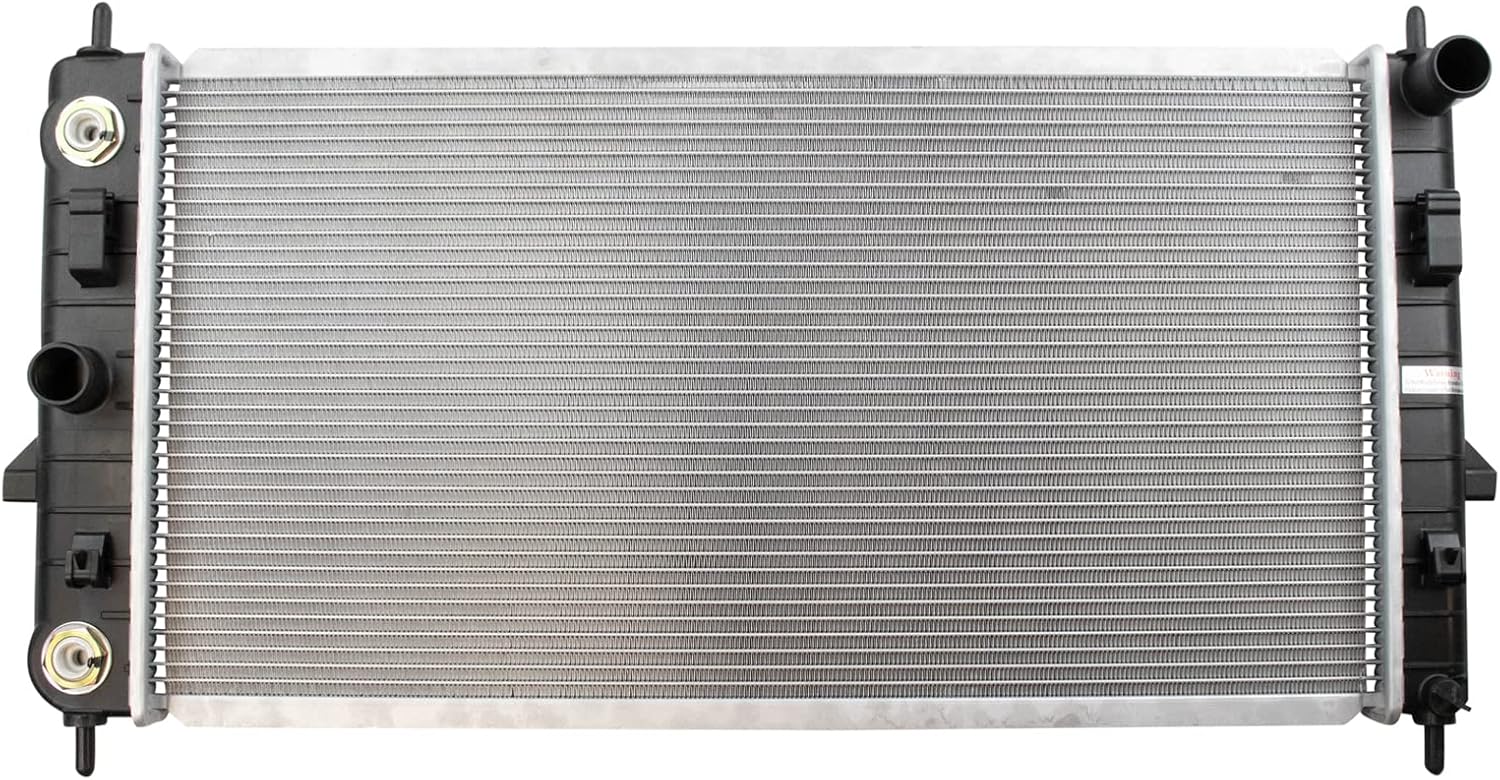
5. TRQ Aluminum Cross-Flow Radiator, direct fit for Saturn Ion (2003–2007)
| Fitment | Saturn Ion 2003–2007 |
|---|---|
| Core Thickness | 0.63 in |
| Core Row Quantity | 1 |
| Core Material | Aluminum |
| Transmission Oil Cooler | Integrated concentric |
This TRQ radiator is a direct-replacement cooling unit for the 2003–2007 Saturn Ion, built with an aluminum cross-flow core and integrated transmission oil cooler. It is typically used to replace a leaking or damaged factory radiator and restore normal engine cooling and transmission cooling performance. Notable features include a single-row 0.63-inch core thickness, plastic tanks, and pre-assembled mounting points intended to match the factory locations so installation is straightforward for a DIYer or professional. Practical benefits include aluminum core heat transfer for effective cooling and a concentric transmission cooler to avoid a separate cooler installation. Limitations to consider are the plastic tank construction that can be less durable than all-metal designs and reports from some buyers about occasional shipping damage or cracked tanks on arrival. You may need to transfer rubber isolation pads and the radiator cap from the original unit during installation. For owners prioritizing a reliable, factory-style replacement at a reasonable value this unit covers the essentials, but those wanting the highest long-term durability may prefer a different tank material.
Best for: Reliability-focused buyers who want a straightforward, factory-style replacement radiator for routine cooling and transmission cooling without extensive modification; ideal for owners who prefer a direct-fit part they can install or have installed quickly.
Less Ideal for: Drivers seeking a heavy-duty or all-metal long-life radiator for extreme duty or performance applications should consider alternative radiators with metal tanks and reinforced construction.
- Direct-fit design for easy installation on compatible Saturn Ion model years
- Aluminum cross-flow core for efficient heat transfer
- Integrated transmission oil cooler eliminates need for a separate cooler
- Pre-assembled mounting points match factory locations to reduce installation time
- Plastic end tanks can be more prone to cracking than metal tanks
- Some customers reported shipping damage or lower-quality units on arrival
Verdict: A practical, direct-fit aluminum radiator with an integrated transmission cooler that restores factory-style cooling for the Saturn Ion but uses plastic tanks that may not match the longevity of metal alternatives.
6. Evan Fischer Radiator for 2003–2007 Saturn Ion / 2005–2006 Pontiac Pursuit

| Brand | Evan Fischer |
|---|---|
| Manufacturer Part Number | EVA27672031993 |
This Evan Fischer radiator is a factory-replacement style cooling unit intended as a direct-fit swap for the Saturn Ion (2003–2007) and the closely related 2005–2006 Pontiac Pursuit. It replaces a damaged or leaking core and is installed in the vehicle’s cooling circuit to maintain engine temperature under normal driving. The listing’s materials and manufacturing claims indicate parts produced to industry production standards, and customer feedback shows it seals and fits like a factory part when installed correctly. Expect typical installation from beneath the car on this platform and standard hose and bracket alignment. Limitations include a lack of detailed material or core-type specification and minimal weight and dimension data on the listing, so installers should verify hose locations and mounting points before purchase. Shipping lead time noted by some buyers can be longer than retail channels, but the unit performs as a straightforward, budget-conscious factory-style replacement when fitment is confirmed.
Best for: A risk-averse mainstream buyer seeking a straightforward, factory-style replacement radiator to restore reliable cooling with minimal fuss and a focus on fitment and proven results.
Less Ideal for: Enthusiasts wanting a high-performance or upgraded cooling solution or buyers who require comprehensive material and dimensional specifications before purchase.
- Direct-fit design for 2003–2007 Saturn Ion and 2005–2006 Pontiac Pursuit for easier installation
- Customer reports of good sealing and restored cooling performance after replacement
- Manufactured to common industry production standards intended for reliable operation
- Listing lacks explicit core type and construction details which matter for long-term durability
- Limited specification data provided for installers to confirm exact mounting and hose clearances
Verdict: A practical, factory-replacement radiator for Saturn Ion owners who want a straightforward fit and restored cooling without performance upgrades.
Choosing the Right Saturn Ion Radiator: Key Factors to Consider
Fitment And Mounting
Correct fitment is essential because even minor differences in mounting points, hose outlet locations, or transmission cooler connections can make an otherwise capable radiator unusable. Ensure the replacement matches the Saturn Ion's mounting tabs, inlet and outlet positions, and any factory provisions for sensors or brackets.
Poor fitment can require modification that compromises sealing or structural integrity, so prioritize options that explicitly list vehicle fitment to avoid extra labor or ill-fitting parts.
Core Design And Cooling Capacity
Core design, including the number of rows, fin density, and overall surface area, directly affects how quickly heat is transferred from coolant to airflow. A larger or more efficient core can reduce operating temperature under load, which is important if you tow, drive in hot climates, or frequently run at highway speeds.
Balance increased cooling capacity against the physical size constraints of the engine bay; oversized cores may improve cooling but can complicate installation or airflow balance across the condenser and intercooler areas.
Material And Corrosion Resistance
Radiators are commonly made from aluminum, plastic tanks, or all-metal constructions. Material choice affects heat conduction, longevity, and susceptibility to corrosion. Aluminum cores with corrosion-resistant coatings tend to offer good thermal performance and a favorable weight-to-strength ratio.
Consider how different coolant chemistries and local climate (road salt, humidity) will interact with materials. Longer warranties and plated or treated surfaces can indicate better resistance to leaks and degradation over time.
Connections And Transmission Cooler Integration
Some Saturn Ion radiators include integrated transmission coolers or provisions for accessory fittings. Confirm whether the radiator supports the same number and type of cooler lines and sensor ports your vehicle uses.
Mismatched connections may require adapters or additional fittings that increase installation complexity and potential leak points. Make sure hose diameters and quick-connect types match the factory setup to maintain reliable coolant and transmission fluid flow.
Ease Of Installation And Serviceability
A design that aligns with factory mounting and uses common fasteners can reduce labor time and the chance of installation errors. Consider whether the radiator allows access to surrounding components and whether it requires removal of ancillary parts for replacement.
Serviceability also covers the availability of replacement parts such as caps, hoses, or plastic tank assemblies. Simpler, modular designs can make future repairs or coolant system maintenance less expensive and faster.
Warranty And Manufacturer Support
Warranty terms signal the manufacturer's confidence in their product. Longer or more comprehensive warranties can offset higher upfront costs because they reduce long-term risk of failure and subsequent repair expenses.
Also evaluate the clarity of support documentation and whether the manufacturer provides installation guidance, parts diagrams, or customer service for fitment questions. Good support can be especially valuable if unexpected issues arise during installation or early use.
How We Chose the Best Saturn Ion Radiator
We selected radiators for this list by focusing on fit and performance specific to the Saturn Ion. Key evaluation criteria included core construction and material, cooling capacity and core surface area, compatibility with OEM mounting points and hose connections, corrosion resistance and warranty coverage, and ease of installation for typical DIY and shop installs. We also considered serviceability factors like availability of replacement parts and how the design affects coolant flow and airflow through the grille.We excluded products that did not clearly document fitment for the Saturn Ion or that lacked verified materials or cooling specifications. We did not include entries that were clearly generic universal cores without Saturn Ion-specific mounting provisions. The result is a focused shortlist that balances durability, thermal performance, and installation practicality for this vehicle.
Our full evaluation process is outlined in our review methodology.
FAQ
How do I know if my Saturn Ion radiator is leaking?
Common signs of a leaking radiator include visible coolant puddles under the car, a consistently low coolant level, and a sweet or chemical odor from the engine bay. You may also see white or colored residue where coolant has dried on the radiator or nearby components.If you suspect a leak, inspect hoses, clamps, and the radiator core for wet spots and consider a pressure test to pinpoint the source reliably.
Can I replace a Saturn Ion radiator myself?
Many home mechanics can replace a radiator with basic tools and a clear installation guide, but difficulty varies depending on the vehicle layout and whether additional components need removal. You should be comfortable draining and refilling coolant, handling hose clamps, and reattaching any sensor or transmission cooler lines.If you are unsure about fitment, leaks, or proper bleeding of the cooling system, professional installation reduces the risk of errors that could lead to overheating.
Should I choose OEM or aftermarket radiator for a Saturn Ion?
OEM radiators match factory specifications and fit without modification, which can simplify installation and preserve factory sealing points. Aftermarket radiators can offer comparable or improved cooling and different warranty options, but quality and fit vary by manufacturer.Compare documented materials, core specifications, and warranty terms rather than assuming one category is always better.
How often should I flush the radiator and coolant system?
Recommended coolant service intervals depend on the coolant type and vehicle usage, but flushing the system every few years or according to the vehicle maintenance schedule helps prevent corrosion and deposits that reduce cooling efficiency. A flush also removes contaminants that can accelerate radiator wear.If you notice rust, sludge, or boiling/overheating symptoms, flush the system sooner and inspect the radiator for internal damage.
What causes a radiator to overheat even after replacement?
Persistent overheating can result from issues beyond the radiator itself, such as a failing thermostat, weak water pump, clogged heater core, air pockets in the cooling system, or restricted airflow from a damaged fan or obstructed grille area. Incorrect coolant mixture or trapped air after installation can also impair heat transfer.Diagnosing persistent overheating usually requires checking coolant flow, thermostat operation, and the entire cooling circuit rather than assuming the new radiator is at fault.
Conclusion
When replacing the radiator on a Saturn Ion, prioritize correct fitment, core design that meets your cooling demands, and durable materials with good corrosion resistance. Think about connection compatibility and whether the part integrates transmission cooling or other factory provisions.Balance long-term reliability and warranty protection against installation complexity. Addressing symptoms like leaks or overheating quickly and choosing a radiator that matches the vehicle's specifications will reduce the chance of repeat repairs and keep engine temperatures stable.
Explore More:
- Check out all Saturn Ion parts & accessories
- Explore Radiators Maintenance & Repair Guides
- Explore Cooling System
- Browse all Auto Parts
