

Note: This article contains affiliate links. If you click on these links and make a purchase, I may earn a small commission at no extra cost to you. This helps support my research and content. Read my full affiliate disclosure here.
If your 2014-2020 Nissan Rogue is showing overheating, low heater output, or coolant puddles, replacing the radiator is often the right fix. The right radiator restores proper cooling efficiency, reduces leak risk, and helps the engine maintain correct operating temperature under daily driving or towing. This guide narrows the field to seven top options chosen for fitment, cooling capacity, and durability specifically for the 2014-2020 Rogue. We also walk through the practical criteria used to evaluate each unit, common failure signs, and install considerations so you can pick the best replacement for your driving needs. Read on for shortlisting details and what matters most when replacing your Rogue radiator.
Looking for other parts? See all Nissan Rogue parts & accessories.
Top Picks at a Glance
| Best Overall The best all-around choice for most situations | Readair Radiator Assembly with Transmission Oil Cooler for Nissan Rogue (2014–2020) |  |
| Best Quality Built to a higher standard if you want something more solid | PHILTOP Complete Radiator with Transmission Oil Cooler for 2014–2020 Rogue |  |
| Best Value The sweet spot between price and what you get | Torchbeam Aluminum Radiator Replacement (CU13431) with Transmission Oil Cooler |  |
| Best Budget The cheapest option that still gets the job done reliably | SCITOO Radiator for 2014-2020 Nissan Rogue 2.5L |  |
| Highest Rated A top-rated pick with lots of positive feedback | AParts Aluminum Engine Cooling Radiator for Nissan Rogue (2014–2020) |  |
| Most Popular A crowd favorite that many people choose with confidence | DWVO Complete Radiator for 2014-2020 Rogue 2.0L/2.5L |  |
| Best Seller A high-volume bestseller chosen again and again | TRQ Radiator Assembly with Transmission Oil Cooler for 2014-2020 Nissan Rogue 2.5L |  |
1. Readair Radiator Assembly with Transmission Oil Cooler for Nissan Rogue (2014–2020)

| Compatibility | Nissan Rogue 2.0L 2017-2019; Rogue 2.5L 2014-2020 |
|---|---|
| Transmission cooler | Included (brass) |
| Core material | Aluminum |
| Inlet/outlet material | PA66 GF30 plastic |
| Manufacturer | Readair |
This Readair radiator assembly replaces the factory unit on Nissan Rogue models with 2.0L or 2.5L engines and automatic transmission and includes a built-in transmission oil cooler. It installs like a stock replacement and is built around an aluminum core with TIG-welded end tanks and PA66 GF30 plastic inlet/outlet sections for corrosion resistance and strength. The integrated brass transmission cooler removes the need for a separate unit and helps simplify plumbing during installation. In real-world use the radiator should restore cooling performance for overheating or leaking factory units, and the supplier reports leak testing and a treated coating for durability. Expect standard replacement-level fit and finish rather than performance gains; buyers should plan for a professional or experienced DIY install because alignment and hose connections must match factory locations. The product comes with a two-year unlimited-mileage guarantee and customer support for fitment questions.
Best for: Drivers seeking a reliable, factory-style replacement to fix cooling or transmission cooling issues on a Nissan Rogue without modifying the vehicle and who value straightforward fitment and a backed warranty.
Less Ideal for: People looking for a high-performance or heavy-duty aftermarket upgrade for towing or motorsport use should consider purpose-built performance radiators instead.
- Direct-fit design for 2014–2020 Nissan Rogue automatic transmission models
- Integrated brass transmission oil cooler eliminates need for a separate cooler
- Aluminum core with TIG-welded end tanks for improved strength and corrosion resistance
- Leak-tested components and treated coating intended to extend service life
- Uses plastic inlet/outlet tanks which can be less durable than full-metal designs
Verdict: A ready-to-install, factory-style replacement radiator with an integrated transmission cooler that restores cooling reliability on 2014–2020 Nissan Rogue automatics.
2. PHILTOP Complete Radiator with Transmission Oil Cooler for 2014–2020 Rogue
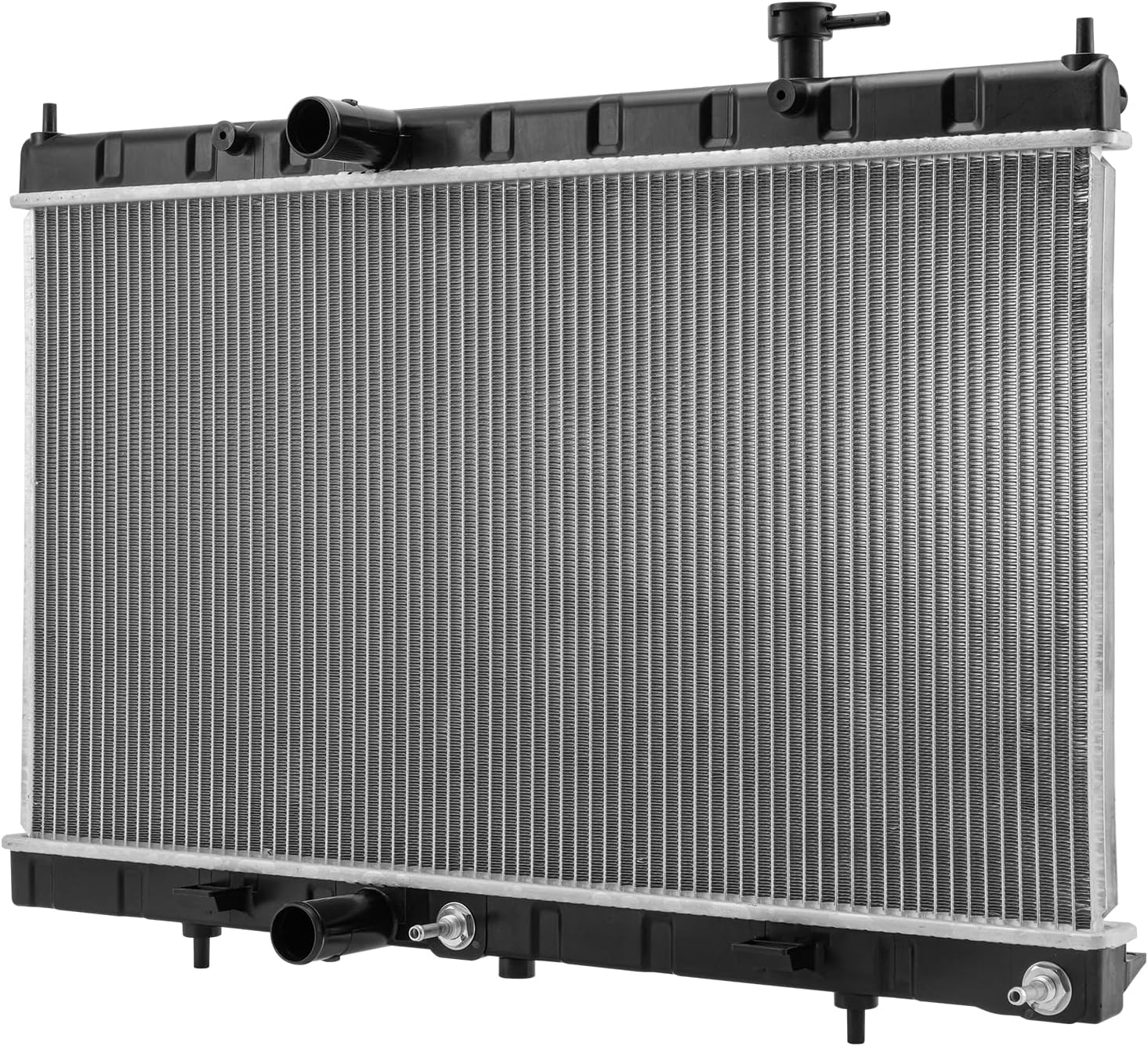
| Vehicle fitment | 2014–2020 Nissan Rogue (specified 2.0L and 2.5L years) |
|---|---|
| Core material | High-density aluminum core |
| Includes | Transmission oil cooler |
| Certifications | IATF16949 |
This PHILTOP radiator replaces the factory unit for 2014–2020 Nissan Rogue models and includes a built-in transmission oil cooler, making it a one-piece swap for cooling system repairs. It uses a high-density aluminum core with multi-layer fins intended to boost heat dissipation versus older or clogged cores, and the package includes foam corner supports to help protect the unit during installation. For a performance-minded driver the improved core density can help the engine hold lower temperatures under sustained highway loads or towing, while the integrated transmission cooler keeps fluid temperatures in check. Installation is typical for a direct-fit radiator but expect to transfer factory mounting brackets and hoses if not provided. The radiator is a practical upgrade for restoring cooling capacity and managing temperatures without modifying the vehicle, though buyers should verify exact trim and model year fitment before ordering and be prepared to reuse some factory fittings during install.
Best for: Buyers who prioritize maintaining lower engine and transmission temperatures under sustained driving and want a direct replacement that improves cooling performance without custom work.
Less Ideal for: Owners seeking a plug-and-play drop-in with every accessory included or those wanting a custom high-performance race radiator should consider other aftermarket options.
- Vehicle-specific fitment for 2014–2020 Nissan Rogue makes replacement straightforward
- High-density aluminum core and multi-layer cooling fins improve heat dissipation
- Includes integrated transmission oil cooler for combined engine and trans cooling
- Protective foam in corners reduces risk of shipping damage to the core
- May require transfer of some factory brackets or hoses during installation if not included
Verdict: A straightforward vehicle-specific upgrade that restores and improves cooling for 2014–2020 Nissan Rogue drivers who want better temperature control under load.
3. Torchbeam Aluminum Radiator Replacement (CU13431) with Transmission Oil Cooler

| Model | CU13431 |
|---|---|
| Manufacturer | Torchbeam |
| Manufacturer Part Number | 3975RAD055AUS |
| Included component | Transmission oil cooler |
| Tested | 100% leak tested |
This Torchbeam aluminum radiator replaces the factory unit for Nissan Rogue fitments across select 2014–2020 model years and includes an integrated transmission oil cooler. It uses a high-density aluminum core and multi-layer cooling fins to improve heat dissipation, and the unit is 100% leak tested to reduce the chance of coolant loss. Installation is typical for a radiator swap: remove the old radiator, transfer any brackets or sensors as needed, and bolt the replacement into the factory locations using the supplied corner foam to protect the core during shipping. For daily-driven Rogues the improved thermal stability helps keep engine and transmission temperatures under control during stop-and-go traffic or light towing. Expect compatibility with the listed OEM reference numbers but allow for routine tasks like hose, clamp, and coolant replacement during install. The main limitations are that this is an aftermarket replacement so finish and exact fit may differ slightly from factory parts and no detailed hardware or step-by-step instructions are provided in the listing, which can add time for DIY installers who need to source small fittings or tools.
Best for: Buyers who want a cost-effective, performance-minded replacement to restore cooling performance on a 2014–2020 Rogue and who prefer a durable, leak-tested radiator they can install themselves or have fitted by a shop.
Less Ideal for: If you require a factory-branded, exact-match appearance or a plug-and-play part with detailed installation hardware and instructions included, this may not be the best choice.
- High-density aluminum core and multi-layer fins for improved heat dissipation
- Includes transmission oil cooler for integrated cooling of transmission fluid
- 100% factory leak tested to reduce coolant loss risk
- Designed to match multiple OEM reference part numbers for straightforward fitment
- Aftermarket finish and mounting details may differ slightly from factory assemblies requiring minor adjustments
Verdict: A practical, leak-tested aluminum replacement radiator with an integrated transmission cooler that restores reliable cooling for the 2014–2020 Nissan Rogue.
4. SCITOO Radiator for 2014-2020 Nissan Rogue 2.5L

| Fitment | 2014-2020 Nissan Rogue 2.5L |
|---|---|
| Transmission oil cooler | Included |
| Engine oil cooler | Not included |
| Brand | SCITOO |
| Model | 164573 |
This SCITOO radiator is a budget-focused replacement built to fit 2014–2020 Nissan Rogue 2.5L vehicles and is intended as a drop-in substitute for a failed factory unit. It uses a high-density fin core and a pressurized design to improve heat dissipation and help maintain coolant boiling point under load, while the integrated transmission oil cooler supports automatic transmission cooling. Installation is straightforward because the part is made to match factory dimensions and mounting points, so it typically swaps in without modifications. Practical benefits include improved cooling efficiency over a degraded original radiator and the convenience of a single-piece replacement that includes the transmission cooler. Limitations to note are that the engine oil cooler is not included, and long-term durability can vary with aftermarket radiators compared with higher-end replacements, so inspect fittings and pressure-test after installation.
Best for: Drivers looking for an affordable, ready-to-install replacement radiator for a 2014–2020 Rogue 2.5L who prioritize getting the cooling system returned to service quickly and cheaply.
Less Ideal for: Those who want a premium long-life or heavy-duty cooling upgrade, or who need an integrated engine oil cooler, should consider higher-end or specialized radiators instead.
- Made to factory-style fit and mounting for straightforward, no-modification installation
- High-density fin core and pressurized design to boost cooling performance
- Includes transmission oil cooler useful for automatic transmissions
- Lower-cost aftermarket option compared with dealer replacement radiators
- Does not include an engine oil cooler
- Aftermarket build quality and long-term durability may vary versus higher-end or dealer units
Verdict: A cost-conscious, direct-fit radiator replacement for 2014–2020 Nissan Rogue 2.5L owners who need a fast, budget-friendly cooling fix.
5. AParts Aluminum Engine Cooling Radiator for Nissan Rogue (2014–2020)

| Vehicle fitment | Nissan Rogue 2.0L 2017-2019; 2.5L 2014-2020 |
|---|---|
| Core material | Aluminum |
| Construction | TIG-welded core with PA66 GF30 tanks |
| Function | Integrated transmission oil cooler |
This AParts radiator is a direct-replacement aluminum unit for Nissan Rogue 2.0L (2017–2019) and 2.5L (2014–2020) models, intended to restore proper engine cooling and transmission oil cooling. It installs as a bolt-on replacement and uses a TIG-welded aluminum core with multi-louvered fins to improve airflow and heat dissipation. Integrated transmission oil cooler passages and reinforced inlet/outlet tanks aim to reduce leak risk and extend service life. In practice this means it is a straightforward swap for owners addressing overheating, leaks, or a damaged factory radiator, and it should perform like a factory-quality replacement when fitted correctly. The construction focuses on durability and sealing, but buyers should confirm exact fitment for their engine and inspect hoses, mounts, and sensors during replacement since ancillary parts are not included. The unit comes with a stated two-year quality assurance and is best used by owners or technicians wanting a durable, factory-style fix rather than a performance upgrade.
Best for: Buyers who prioritize a dependable, factory-style replacement to fix overheating or leaking radiators on covered Nissan Rogue model years and want a durable part that installs with minimal modification.
Less Ideal for: Drivers seeking performance cooling upgrades, universal radiators for multiple vehicle types, or a complete refresh that includes hoses and mounting accessories should look elsewhere.
- Direct bolt-on design matched to specified Nissan Rogue 2.0L and 2.5L applications for straightforward installation.
- Aluminum core with high-density multi-louvered fins improves heat dissipation and airflow compared with damaged or corroded originals.
- TIG-welded construction and reinforced inlet/outlet tanks reduce leak risk and increase long-term durability.
- Integrated transmission oil cooler eliminates the need for separate aftermarket cooler for compatible models.
- Does not include hoses, clamps, or mounting hardware so additional parts may be required for a complete repair.
- Fitment limited to the listed Rogue engine years and displacements so verification is necessary before purchase.
Verdict: A practical, factory-style aluminum replacement radiator that restores reliable cooling for the specified 2014–2020 Nissan Rogue engines.
6. DWVO Complete Radiator for 2014-2020 Rogue 2.0L/2.5L

| Compatible engines | 2.0L and 2.5L L4 |
|---|---|
| Manufacturer Part Number | MADWVoCFLu |
| OEM Part Numbers | 214604BA0A, 214605HA0A |
| Core description | High-density multi-louvered aluminum core |
This DWVO complete radiator is a direct-fit cooling replacement for 2014–2020 Rogue with 2.0L or 2.5L four-cylinder engines. It installs in place of the listed factory part numbers and includes a high-density multi-louvered aluminum core intended to improve heat dissipation and resist leaks. The unit uses TIG-welded construction with PA66 GF30 inlet and outlet tanks and comes with foam padding in the package to reduce shipping damage. Typical use is as a full radiator swap when the original is leaking, clogged, or damaged; professional installation is recommended because the radiator does not include a cap and the fitment should be confirmed before purchase. Practical benefits are improved cooling efficiency from the multi-louvered fins and a build aimed at durability in cold conditions. Limitations are that the listing omits a radiator cap and installation parts you might expect, and buyers should verify exact fitment for their model and engine before ordering.
Best for: Buyers who prioritize a like-for-like replacement backed by many positive reviews and want a radiator built for reliable cooling and long-term durability in a Rogue 2014–2020 application.
Less Ideal for: People looking for a plug-and-play kit that includes all hoses, caps, and installation hardware or those who prefer to avoid professional installation.
- Direct-fit design matched to listed factory part numbers for straightforward replacement
- High-density multi-louvered aluminum core for improved heat dissipation
- TIG-welded construction and reinforced inlet/outlet tanks for durability
- Protective foam packaging reduces risk of shipping damage
- No radiator cap or coolant hoses included, so related parts may need to be purchased separately
Verdict: A practical, direct-fit replacement radiator built for improved cooling and durability for 2014–2020 Rogue 2.0L/2.5L owners who want a reliable factory-style swap.
7. TRQ Radiator Assembly with Transmission Oil Cooler for 2014-2020 Nissan Rogue 2.5L

| Fitment | 2014-2020 Nissan Rogue 2.5L CVT |
|---|---|
| Core Material | Aluminum |
| Core Thickness | 0.63 in |
| Transmission Oil Cooler | Internal, plated (5 plates) |
| Tank Material | Plastic |
This TRQ radiator is a direct-fit replacement for the 2014–2020 Nissan Rogue 2.5L CVT and combines an aluminum core with plastic tanks and an internal plated transmission oil cooler. It installs using the factory upper and lower mounts and is offered pre-assembled to simplify DIY or shop replacement. The single-row core and 0.63-inch thickness are aimed at restoring cooling performance and reclaiming transmission cooling capability for CVT-equipped Rogues. Practical benefits include straightforward installation guided by available step-by-step videos, a factory-style inlet and outlet layout that matches factory plumbing, and an included internal transmission cooler that avoids fitting a separate unit. Limitations to note are the single-row core design, which is adequate for standard driving but not targeted at heavy towing, high-performance driving, or vehicles that run consistently under extreme heat. Buyers seeking a like-for-like factory-quality replacement or a hassle-minimized swap will find this radiator a sensible choice.
Best for: Buyers who want a reliable, factory-style replacement radiator for routine driving and easy installation without custom work; ideal for owners focused on minimizing installation risk and restoring stock cooling performance.
Less Ideal for: Drivers who frequently tow, run heavy loads, or modify the engine for higher performance should consider higher-capacity or purpose-built cooling upgrades instead.
- Direct-fit design using factory upper and lower mounts for straightforward installation
- Aluminum core with integrated plated transmission oil cooler restores cooling for engine and CVT
- Pre-assembled unit reduces install time and eliminates need for modifications
- Manufacturer provides step-by-step installation videos to assist DIYers
- Single-row 0.63-inch core may not provide extra cooling capacity for heavy-duty or high-heat use
Verdict: A hassle-minimizing, factory-style replacement radiator for 2014–2020 Nissan Rogue owners who want reliable cooling and an integrated transmission cooler with minimal installation risk.
Choosing the Right 2014-2020 Nissan Rogue Radiator: Key Factors to Consider
Fitment and Compatibility
Correct fitment is critical because the 2014-2020 Nissan Rogue has specific inlet and outlet locations, mounting tabs, and, on some trims, transmission cooler ports. A radiator that matches factory mounting points reduces installation time and avoids bracket or bumper trimming. When fitment is right, hose lengths and routing stay factory-correct which prevents strain on connections and reduces the chance of leaks.
Check vehicle-specific fitment notes, whether the radiator supports automatic-transmission cooling lines if your Rogue has an automatic, and whether any trim-specific brackets are required. Choosing a radiator designed for this year range minimizes surprises during installation and ensures sensors and shrouds align properly.
Cooling Capacity and Core Design
Cooling capacity determines how effectively the radiator keeps engine temperature in check under load. Core design—such as tube-and-fin density, core thickness, and the type of fins—affects heat transfer. A denser core or thicker core can dissipate more heat but may be heavier and can restrict airflow slightly if not matched to the vehicle's fan setup.
Consider your typical driving: frequent towing, long idling, or hot-climate driving benefits from a higher-capacity core. For daily commuting, a factory-equivalent core often provides adequate performance while maintaining proper fit and airflow balance with the Rogue's cooling fans and shroud.
Material and Construction Quality
Radiators are commonly built with plastic end tanks and aluminum cores or with full-aluminum construction. Plastic tanks are lightweight and cost-effective but can become brittle over many thermal cycles. Full-aluminum units often offer better durability and repairability but can cost more. Pay attention to seam joining methods, brazing quality on cores, and whether end tanks are crimped or welded.
Durable construction reduces the risk of leakage and improves service life, especially on vehicles that see a mix of highway miles and stop-and-go traffic. Also consider the quality of included gaskets, hose fittings, and any transmission cooler fittings, as these small parts strongly influence long-term reliability.
Corrosion Resistance and Coolant Compatibility
The Rogue's cooling system relies on compatible coolant chemistry and corrosion protection to prevent internal and external degradation. Radiators with protective coatings, quality alloys, and proper brazing resist electrochemical corrosion and extend service life. Metals and sealants should be compatible with the OEM coolant formulation to avoid accelerated wear or deposits.
If your vehicle has had mixed coolant types historically, flushing and using the correct coolant before fitting a new radiator will improve longevity. Consider radiators that specify corrosion-resistant features or protective finishes for climates with road salt or high humidity.
Installation Ease and Serviceability
Installation complexity affects total cost and downtime. A radiator that includes sealed fittings, clear mounting brackets, and pre-installed bushings simplifies DIY replacement or shop time. Units that require minimal trimming or adapter fittings reduce the chance of installation errors.
Serviceability also matters. Radiators that allow easy access to drain points, sensor ports, and transmission cooler fittings make future maintenance tasks such as coolant flush or hose replacement less time-consuming. Consider whether replacement will require removal of additional components like the front bumper or fan assembly and plan accordingly.
Warranty and Expected Longevity
Warranty length and coverage terms indicate manufacturer confidence and provide protection against early failure. A radiator with a longer warranty often implies higher expected longevity or better construction standards. Be aware of what the warranty covers, such as leaks, core failures, or fitting defects, and whether it is pro-rated.
Balance warranty against other factors; an extended warranty is valuable, but it should not be the only reason to choose a unit if fitment or cooling capacity is marginal for your driving conditions.
Common Radiator Symptoms and Troubleshooting for the Rogue
Recognizing radiator issues early can prevent engine damage. Common symptoms include persistent overheating, coolant puddles under the vehicle, a sweet smell from the engine bay, reduced heater output, or visible corrosion and external leaks. Intermittent overheating during stop-and-go traffic often points to reduced core efficiency or partial clogging.
Basic troubleshooting steps start with inspecting the radiator visually for external leaks, checking coolant level with a cold engine, and observing temperature gauge behavior during a short drive. A pressure test can identify small leaks and a coolant system scan can reveal head gasket concerns that mimic radiator failure. If the radiator shows bent fins, heavy corrosion, or coolant contamination with oil, replacement is often the safest course.
- Overheating only at idle may indicate fan, shroud, or core airflow restriction.
- Coolant puddles or visible drips usually mean a localized leak in the core, tank, or hose connection.
- Sweet odor or white residue suggests coolant leakage onto hot surfaces.
- Low heater output with correct coolant level can mean an internal restriction or air trapped in the cooling system.
Preparing Your Rogue for Radiator Replacement
Before starting work, gather the correct coolant, replacement hoses or clamps if needed, and any gaskets or seals specified for the 2014-2020 Rogue. Park on level ground, allow the engine to cool completely, and relieve pressure from the cooling system by removing the radiator cap only when cold. Have a drain pan ready and dispose of used coolant according to local regulations.
Document hose routing and clip positions with photos to simplify reassembly. Inspect fan shroud, electric fan connectors, and transmission cooler lines for wear while the radiator is out. Replacing worn hoses and clamps at the same time reduces the chance of a second shop visit.
- Use a factory coolant spec or equivalent to avoid corrosion or deposit issues.
- Have basic hand tools, hose pliers, and possibly a trim tool for bumper clips.
- Label electrical connectors and take reference photos before disassembly.
Coolant Maintenance and When to Flush
A proper coolant flush can prevent radiator clogging and corrosion. For the 2014-2020 Nissan Rogue, follow the manufacturer's recommended interval for coolant changes, but consider flushing if you encounter discolored fluid, frequent overheating, or if the vehicle's maintenance history is unknown. A complete flush removes rust, scale, and old inhibitor additives that reduce effectiveness.
Performing a flush when installing a new radiator avoids introducing contaminants into the new core. Use the recommended coolant type and refill to the correct level, then bleed trapped air from the system according to the Rogue's bleeding procedure to restore heater performance and accurate temperature regulation.
- Flush when coolant is brown, cloudy, or contains particulates.
- Always bleed air from the system after refill to prevent hot spots.
- Check coolant concentration with a tester to ensure proper freeze and boil protection.
Deciding Between OEM-Style and Enhanced Capacity Radiators
OEM-style radiators match factory dimensions and cooling capacity, making installation straightforward and preserving original driving characteristics. They are a good choice if you want a like-for-like replacement and your Rogue has not been subjected to heavy loads or extreme heat conditions. Enhanced capacity radiators offer thicker cores or higher fin density and can lower operating temperatures under heavy use, but may require additional clearance or fan compatibility checks.
If you tow, frequently carry heavy loads, or live in very hot climates, an enhanced-capacity unit can provide a real benefit by reducing temperature spikes. For everyday commuting and normal use, a quality OEM-equivalent radiator usually balances performance and fit without modification.
- Choose OEM-style for guaranteed fit and factory cooling balance.
- Consider enhanced capacity for towing, heavy loads, or extreme ambient temperatures.
- Confirm fan and shroud compatibility before selecting a thicker core unit.
Installation Tips to Avoid Leaks and Air Locks
To prevent leaks, replace or reuse only high-quality hose clamps and ensure mating surfaces are clean and flat. Torque any bracket bolts to manufacturer spec where available and confirm that all hose collars fully seat on barb fittings. When installing transmission cooler fittings, double-check line seals and test for seepage before final assembly.
Air locks cause poor heater performance and overheating. Follow the proper bleed procedure for the 2014-2020 Rogue by using the bleed valves or run the engine with the radiator cap off until thermostat operation and stable coolant circulation are observed. Recheck coolant after a short test drive and top off as necessary.
- Tighten clamps evenly and avoid over-crushing hoses which can create weak points.
- Start with system cold when filling and bleed air progressively as the engine reaches operating temperature.
- Inspect for leaks during a short road test and re-torque fittings after cooling.
Still looking for the perfect fit?
Select your Nissan Rogue configuration to see the most relevant Radiators recommendations
How We Chose the Best 2014-2020 Nissan Rogue Radiator
We focused our selection on parts that match the mechanical and thermal demands of the 2014-2020 Nissan Rogue. Evaluation prioritized fitment accuracy, cooling performance, build quality, and installation friendliness. Fitment accuracy: units had to align with the Rogue's hose locations, mounting points, and transmission cooling provisions where applicable. Cooling performance: we assessed core design, tube-and-fin density, and expected heat rejection for typical city and highway driving. Build quality: materials, end tank design, and joint sealing methods were considered to gauge long-term leak resistance. Installation friendliness: included factory-style mounting brackets, included seals or gaskets, and straightforward hose and sensor access. Corrosion resistance and warranty terms were used as proxies for longevity. We excluded units without documented fitment for the 2014-2020 Rogue, products that required extensive modification, and parts with lacking specification data. The result is a short list that balances durability, thermal capability, and realistic installability for Rogue owners.
Our full evaluation process is outlined in our review methodology.
FAQ
How long does a radiator last on a 2014-2020 Nissan Rogue?
Radiator lifespan depends on climate, coolant maintenance, and driving conditions. Often radiators last many years if coolant is changed on schedule and the system is free of contamination, but corrosion, road debris, or repeated overheating can shorten service life.
Can I replace the Rogue radiator myself?
Many owners can perform a radiator replacement with basic tools and automotive experience. Expect to remove front-end trim or fan shrouds on some trims, and follow safe coolant draining and bleeding procedures. If you are uncomfortable with draining and bleeding steps or transmission line handling, consider professional assistance.
Should I flush the cooling system when installing a new radiator?
Yes. Flushing removes rust and contaminants that could clog the new radiator and reduces the chance of premature failure. Refill with the correct coolant type and bleed the system to remove air pockets.
What are common signs the radiator is leaking on my Rogue?
Look for coolant puddles under the vehicle, wet or crusty buildup around hose connections, visible drips from the radiator core, and a sweet smell from the engine bay. Overheating or low coolant level without visible external leaks can indicate an internal leak or head gasket issue.
Do I need a radiator with a transmission cooler for my Rogue?
If your Rogue has an automatic transmission and the original radiator included transmission cooler lines, replacement radiators with compatible transmission ports are necessary. Confirm your vehicle's transmission cooling needs and choose a radiator that preserves those fittings.
Will an upgraded radiator change my Rogue's heater performance?
A properly sized and installed radiator should not negatively affect heater performance and may improve it by maintaining correct engine temperature. However, if the replacement changes coolant flow or traps air in the system, heater output can be temporarily affected until the system is bled correctly.
Final Verdict
Pick a radiator that balances proper fitment with cooling capacity for how you use the 2014-2020 Rogue. Prioritize units that match mounting points and hose locations, offer adequate core design for your climate and loads, and include corrosion-resistant construction. Factor in installation ease and warranty when weighing tradeoffs between OEM-equivalent and higher-capacity options. With the right choice and correct coolant service, you can restore reliable temperature control and reduce the risk of repeat leaks or overheating.
Explore More:
- Check out all Nissan Rogue parts & accessories
- Explore Radiators Maintenance & Repair Guides
- Explore Cooling System
- Browse all Auto Parts
