

Note: This article contains affiliate links. If you click on these links and make a purchase, I may earn a small commission at no extra cost to you. This helps support my research and content. Read my full affiliate disclosure here.
If you own a 2006-2014 Honda Ridgeline, the radiator is one of the most critical components for engine health and day-to-day reliability. A failing radiator can cause overheating, coolant loss, and engine damage, while a properly matched replacement restores cooling efficiency and peace of mind. This guide covers our top shortlisted radiator options that fit the 2006-2014 Ridgeline and explains the practical tradeoffs involved.We evaluated candidates based on cooling performance, fitment accuracy, leak resistance, and ease of installation. Below you will find the short list of recommended radiators and the factors that should guide your choice, plus installation and maintenance considerations to keep your Ridgeline running cool.
Looking for other parts? See all Honda Ridgeline parts & accessories.
Top Picks at a Glance


1. SCITOO Aluminum Radiator Assembly for 2006–2008 Honda Ridgeline 3.5L (With Transmission Oil Cooler)

| Compatible vehicle | 2006-2008 Honda Ridgeline 3.5L |
|---|---|
| Core type | Downflow |
| Transmission oil cooler | Included |
| Engine oil cooler | Not included |
This SCITOO radiator is a direct-replacement aluminum unit built for the 2006–2008 Honda Ridgeline 3.5L and includes an integrated transmission oil cooler. It uses a single-row downflow core with a dense fin design to improve heat dissipation compared with older or damaged cores, so it helps maintain stable engine temperatures during towing or highway driving. Fitment is intended to match factory mounting points and OE numbers listed for the vehicle, which simplifies installation for someone swapping a failed factory radiator. The unit omits an engine oil cooler and does not include a radiator cap, so plan to reuse those parts or source them separately. Maintenance is typical for radiators: monitor fins for debris and refresh coolant at recommended intervals. Expect solid cooling performance at a budget-friendly replacement price, though the product is not a performance upgrade and may require careful comparison to your Ridgeline's OE part numbers to confirm exact compatibility.
Best for: Buyers who want a reliable, vehicle-specific replacement that restores factory cooling performance with straightforward fitment and few surprises.
Less Ideal for: Drivers seeking a high-capacity or performance-oriented radiator for heavy towing, racing, or modified engines should consider upgraded cooling options.
- Full-aluminum core and dense fins for improved heat dissipation
- Built as a direct replacement to match factory mounting and OE numbers for easier install
- Includes transmission oil cooler for automatic transmission models
- Compatible with the Ridgeline 3.5L 2006–2008 fitment scope
- Does not include an engine oil cooler or radiator cap, which may need to be reused or purchased separately
- Single-row core is a stock-style design and not intended for higher-performance cooling needs
Verdict: A practical, factory-style aluminum replacement that restores proper cooling for 2006–2008 Ridgeline 3.5L owners who value fitment and reliability.
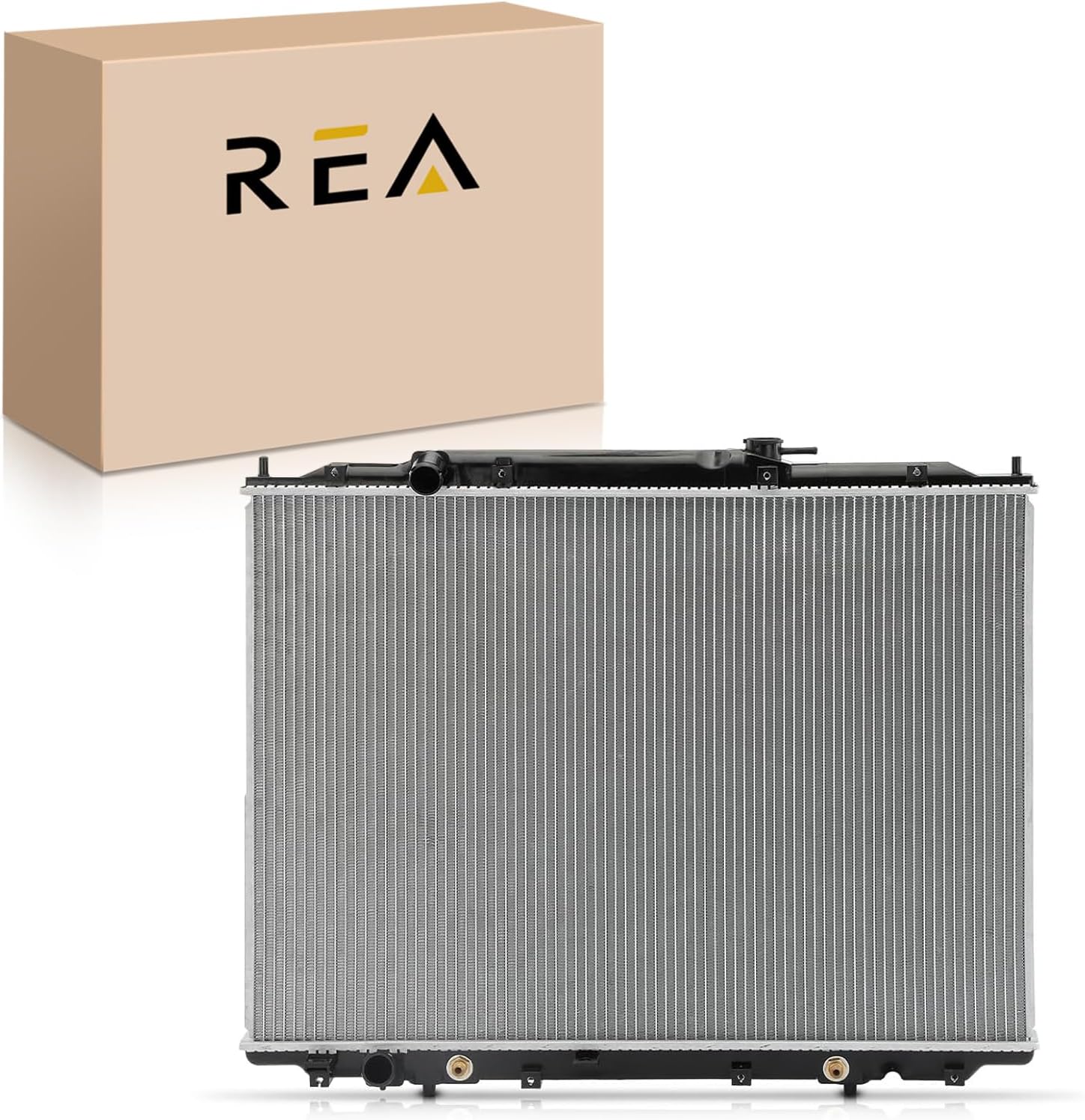
2. Readair Engine Coolant Radiator with Transmission Oil Cooler for Honda Ridgeline 2006–2008
| Model | Engine Coolant Radiator with Transmission Oil Cooler Compatible with Honda Ridgeline 2006-2008 V6 3.5L |
|---|---|
| Manufacturer Part Number | Radiator2830 |
| OEM Part Number | 2830, 19010RJEA51 |
| Exterior | Polished |
This Readair radiator replaces the factory unit on 2006–2008 Ridgeline 3.5L trucks and includes a built-in transmission oil cooler for a one-piece installation. It uses a high-density multi-louvered aluminum core and TIG-welded connections with reinforced PA66 GF30 inlet and outlet tanks to improve heat transfer and resistance to cracking. In practice that means better cooling capacity during towing or spirited driving and a reduced risk of leaks compared with lower-quality aftermarket cores. Installation follows the stock mounting points so it fits without major modifications, and the brass transmission cooler is helpful if you haul or tow regularly. The unit is heavier-duty than economy radiators, but buyers should note the description focuses on materials and fit rather than dyno-tested flow improvements, and professional installation is recommended to ensure proper bleed and transmission line connections. A two-year unlimited-mileage guarantee and leak testing are useful extras for peace of mind.
Best for: Buyers who want a robust, direct-fit radiator that improves cooling reliability for towing, highway work, or spirited driving without modifying the cooling system.
Less Ideal for: Drivers seeking a race-spec or heavily modified cooling solution with verified dyno performance numbers should look at dedicated performance radiators instead.
- Direct-fit replacement for 2006–2008 Ridgeline V6 3.5L automatic, simplifying installation
- High-density multi-louvered aluminum core for improved cooling efficiency
- Integrated brass transmission oil cooler eliminates need for a separate unit
- TIG-welded joints and reinforced inlet/outlet tanks for greater durability
- Leak-tested before sale and backed by a two-year unlimited-mileage guarantee
- No published performance numbers for flow rate or thermal capacity to compare against high-end performance radiators
Verdict: A durable, direct-fit radiator with an integrated transmission cooler that strengthens cooling and reliability for daily driving, towing, and performance-minded Ridgeline owners.
3. DNA Motoring CU13065 1-Row Aluminum Core Radiator for 3.5L Honda Pilot/Ridgeline

| Fitment | Compatible with 09-15 Honda Pilot and 09-14 Honda Ridgeline, 3.5L V6, automatic |
|---|---|
| Core material | T-6061 aluminum |
| Transmission oil cooler | Yes (TOC included) |
| Part numbers | CU13065, 2213254, 8013065; interchange 19010RN0A51/19010RN0A52 |
This DNA Motoring radiator is a direct-fit replacement for 3.5L V6 Honda Pilot and Ridgeline automatic models and is intended to restore cooling performance after a failed factory unit. It uses a full T-6061 aluminum core with a one-row design and a plastic tank assembly to provide corrosion resistance and lighter weight compared with older heavy units. The radiator includes a transmission oil cooler connection so it integrates with automatic transmission cooling lines without modification. Installation follows OEM bolt-on locations but professional installation is recommended because it replaces the front radiator assembly and requires proper bleed and hose connections. Practical benefits are improved heat dissipation over a worn radiator and an aftermarket option that matches factory fitment and part numbers listed for these models. Limitations are the single-row core, which favors simplicity and cost but may not cool as aggressively as multi-row performance radiators under sustained heavy loads, and the plastic end tanks that are common on replacements and may be less durable than full-aluminum tanks in high-abuse environments.
Best for: Buyers who want a cost-conscious, factory-compatible replacement that restores cooling and integrates with the transmission cooling system without major modifications.
Less Ideal for: Drivers who frequently tow heavy loads, run the vehicle at sustained high temperatures, or want a high-capacity performance radiator should consider higher-capacity multi-row or full-aluminum units instead.
- Direct-fit for 3.5L V6 Honda Pilot (2009–2015) and Ridgeline (2009–2014) automatic models based on listed part numbers
- Full T-6061 aluminum core for efficient heat transfer and corrosion resistance
- Includes transmission oil cooler connection so no separate cooler plumbing is required
- OEM-style bolt-on mounting for straightforward replacement
- One-row core may be less effective than multi-row radiators under sustained heavy towing or extreme heat
- Plastic end tanks rather than full-aluminum construction
Verdict: A practical, factory-compatible aluminum-core replacement radiator that restores cooling and includes a transmission cooler hookup for 3.5L Honda Pilot and Ridgeline owners seeking a straightforward, cost-effective swap.
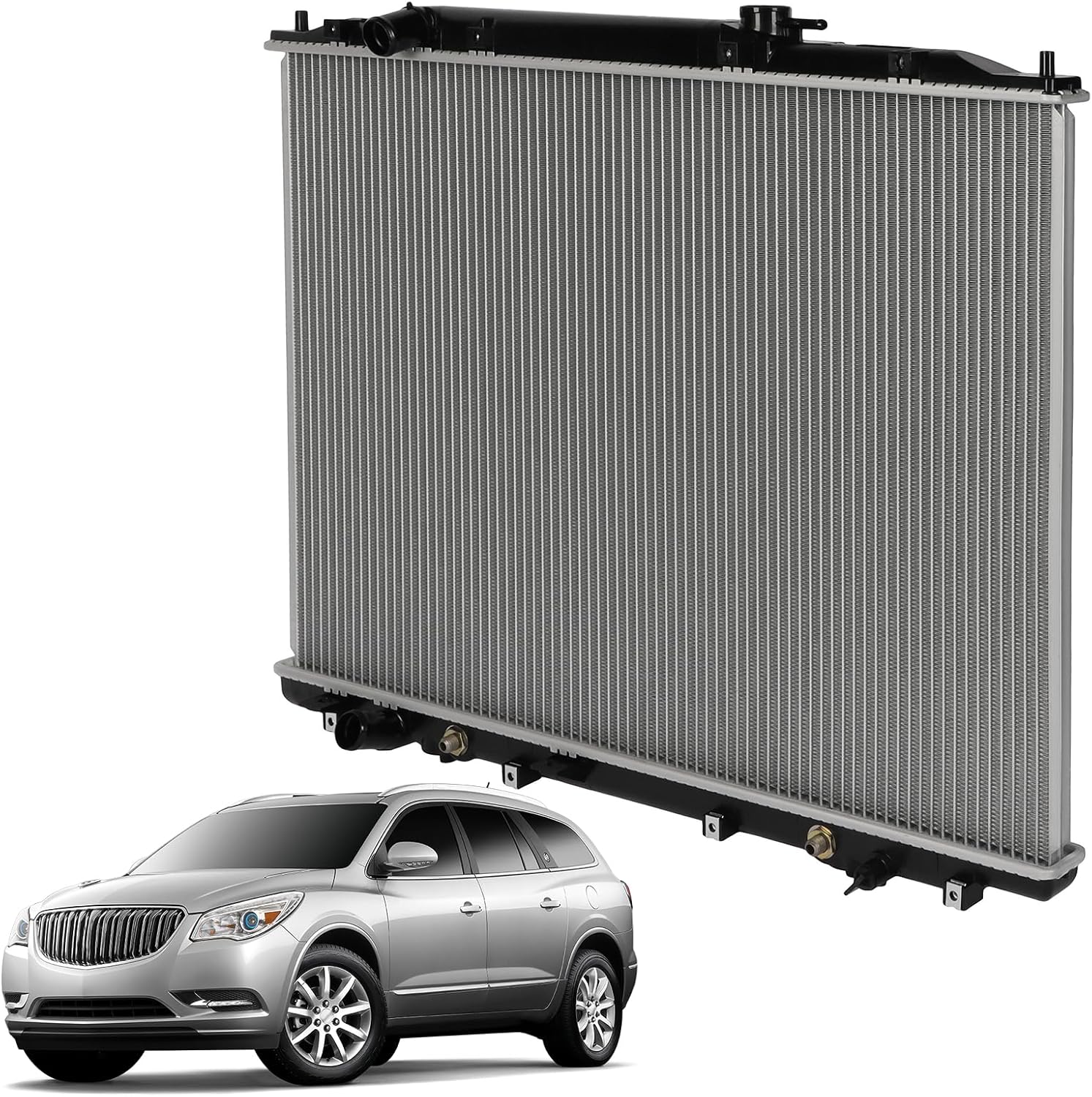
4. OCPTY Radiator Replacement for 2006-2008 Honda Ridgeline 3.5L
| Fitment | 2006–2008 Honda Ridgeline 3.5L |
|---|---|
| OEM Part Number | 2830, CU2830, 19010RJEA51 |
| Core Material | Aluminum |
| Item Weight | 13.71 pounds |
This OCPTY radiator is a budget-friendly replacement built to restore cooling performance for 2006–2008 Ridgeline 3.5L trucks. It uses an aluminum core with high-density fins and factory-style plastic tanks to offer improved heat dissipation over a failing original. Installation is intended as a drop-in swap using the listed OEM part numbers so it is suitable for DIY mechanics or independent shops looking to replace a leaking or clogged radiator without modifying mounting points or hoses. The listing highlights leak inspection and thermal-treated gaskets and rings to resist temperature cycling, but buyers should expect aftermarket fit and finish to vary compared with factory parts. It does not include extra accessories such as hoses or mounting hardware, so verify and reuse or replace those items during installation. For owners prioritizing a low-cost repair that returns reliable cooling, this radiator balances straightforward fitment and performance, though those seeking an exact factory match or upgraded heavy-duty cooling may want a different option.
Best for: A Ridgeline owner who needs an affordable, ready-to-install radiator replacement and prefers a practical DIY or independent-shop repair that restores cooling without upgrades.
Less Ideal for: Not a great choice for buyers seeking a heavy-duty upgraded cooling solution or an exact factory-manufactured replacement for warranty-grade fit and finish.
- Direct-fit design referencing factory part numbers for straightforward drop-in installation
- Aluminum core with high-density fins for effective heat dissipation
- Leak-tested units and thermal-treated gaskets intended to improve durability in temperature changes
- Does not include hoses, mounting hardware, or additional installation accessories
Verdict: A cost-conscious direct-fit aluminum radiator that restores cooling for 2006–2008 Ridgeline 3.5L trucks without complicated installation.
5. UIU Engine Coolant Radiator with Transmission Oil Cooler for Honda Ridgeline 2006–2008 V6 3.5L

| Compatible vehicles | Honda Ridgeline 2006-2008 V6 3.5L |
|---|---|
| Transmission oil cooler | Included |
| Core thickness | 1 inch |
| Inlet diameter | 1-3/10 inch |
| Outlet diameter | 1-3/10 inch |
This radiator replaces the factory cooling assembly for 2006–2008 Ridgeline V6 3.5L models and includes a built-in transmission oil cooler, so you swap in a single unit rather than fitting separate components. It uses an aluminum core with TIG-welded end tanks and a PA66 GF30 inlet/outlet arrangement intended to resist cracking and leaks. High-density multi-louvered fins and a treated coating aim to improve heat dissipation and corrosion resistance in real-world driving. Typical installation is a radiator-for-radiator swap; the integrated transmission cooler simplifies plumbing but means the whole assembly must be replaced if either circuit fails. The package targets owners who want a long-lasting, manufacturer-style replacement and helps maintain cooling and transmission temperatures during towing or sustained highway use. Customers should expect to match mounting points and hose connections exactly during install and allow for professional fitment if they are not comfortable with coolant and transmission lines.
Best for: Buyers who prioritize a durable, factory-style replacement to restore cooling and transmission performance and want a long-term, reliability-focused fix for a 2006–2008 Ridgeline.
Less Ideal for: Owners looking for a universal or multi-vehicle upgrade, or those who prefer to replace only the transmission cooler separately, should consider other options.
- Direct-fit designed specifically for 2006–2008 Ridgeline V6 3.5L automatic transmissions
- Integrated transmission oil cooler removes need for a separate cooler unit
- Aluminum core with TIG-welded end tanks for improved durability and leak resistance
- High-density multi-louvered fins and protective coating for better heat dissipation and corrosion resistance
- If either the engine coolant or transmission cooler fails you must replace the entire assembly
- May require professional installation to correctly connect coolant and transmission lines
Verdict: A purpose-built, durable replacement radiator with an integrated transmission cooler for Ridgeline owners who need a reliable, long-lasting factory-style swap.
6. TRQ Radiator with Aluminum Core, 1-Row — Direct Fit for 2006–2008 Honda Ridgeline 3.5L

| Core Row Quantity | 1 |
|---|---|
| Core Thickness | 1 in |
| Core Material | Aluminum |
| Transmission Oil Cooler | Included (concentric) |
| Outlet Diameter | 1.38 in |
This TRQ radiator is a direct-fit replacement for 2006–2008 Honda Ridgeline 3.5L automatic vehicles, offering a one-row aluminum core and an integrated transmission oil cooler. It installs using the vehicle's upper and lower mounts and retains the factory inlet and outlet locations, which helps simplify a DIY swap or a shop installation. The aluminum core and machined exterior are intended to improve heat transfer compared with older cores while the plastic tanks keep weight down. Notable practical benefits include preassembled components for faster installation and included resources such as step-by-step videos from the manufacturer. Limitations to consider are the single-row, 1-inch core thickness which may provide less cooling margin than multi-row performance radiators under heavy towing or high-load conditions, and the radiator cap and engine oil cooler are not included. For shoppers who value confirmed fitment and a product backed by many customer reviews, this radiator is a sensible factory-replacement option for keeping cooling and transmission cooling functions working like the original.
Best for: Buyers who want a reliable, OEM-style replacement that fits without modification and who value wide user adoption and installation resources to reduce installation risk.
Less Ideal for: Drivers planning heavy towing, serious performance upgrades, or prolonged high-load use who need greater cooling reserve should consider multi-row or performance radiators instead.
- Direct-fit design with upper and lower mounting for straightforward replacement
- One-row aluminum core for improved heat transfer over older cores
- Integrated transmission oil cooler included
- Preassembled components and manufacturer installation videos streamline DIY installation
- Single-row 1-inch core offers less cooling capacity than multi-row performance radiators
- Radiator cap and engine oil cooler are not included
Verdict: A straightforward, well-documented direct-fit replacement radiator that restores cooling and transmission cooling for 2006–2008 Ridgeline owners who want a low-risk swap backed by broad user approval.
7. SCITOO Aluminum Radiator Replacement for Honda Pilot / Ridgeline (Direct Fit)

| Fitment | Honda Pilot 2009-2015; Ridgeline 2009-2014 V6 3.5L |
|---|---|
| Core Rows | 1 Row |
| Engine Oil Cooler | Included |
| Inlet Diameter | 1.31 in |
| Outlet Diameter | 1.31 in |
This SCITOO radiator is a direct-fit replacement for the V6 3.5L Honda Pilot (2009–2015) and Ridgeline (2009–2014). It uses an aluminum core with a single row design and includes an engine oil cooler but does not include a transmission oil cooler. Typical installation replaces the factory radiator without major modifications and the unit is sized to match the stock cooling connections. The one-row aluminum core helps heat dissipation while keeping the assembly relatively compact and lightweight for easier handling during installation. Practical benefits include straightforward vehicle-specific fitment, a factory-style inlet and outlet diameter that match stock hoses, and the availability of vendor support for installation questions. The main limitations are the single-row core which offers less cooling surface than multi-row performance radiators and the lack of a transmission cooler passage, so it is not suitable if your vehicle requires integrated transmission cooling or heavy-duty towing applications.
Best for: Buyers who want a straightforward, vehicle-specific replacement that restores factory cooling performance with minimal installation hassle and who prioritize a reliable, manufacturer-backed fit.
Less Ideal for: Drivers who regularly tow heavy loads, run high-temperature workloads, or need an integrated transmission cooler should consider a higher-capacity or multi-row radiator instead.
- Direct-fit design for Honda Pilot (2009–2015) and Ridgeline (2009–2014) V6 3.5L for simpler installation
- Aluminum one-row core that provides effective heat transfer and resists corrosion
- Includes engine oil cooler functionality built into the unit
- Factory-matching inlet and outlet diameters for straightforward hose connections
- Single-row core offers less cooling capacity than multi-row or high-performance radiators
- Does not include a transmission oil cooler, so not suitable where integrated transmission cooling is required
Verdict: A reliable, direct-fit aluminum replacement for Pilots and Ridgelines that restores factory cooling with an easy install for risk-averse buyers.
Choosing the Right 2006-2014 Honda Ridgeline Radiator: Key Factors to Consider
Fitment and Mounting
Accurate fitment is essential for the 2006-2014 Honda Ridgeline because mounting points, hose locations, and fan shroud alignment must match the truck's chassis. A radiator that sits slightly off can stress hoses, create clearance issues with the fan or AC condenser, and complicate installation.
When evaluating fitment, check inlet and outlet positions, bracket hole spacing, and whether the radiator accepts the factory fan shroud. A properly fitting radiator minimizes installation time and reduces the risk of vibration-related leaks. For trucks that tow or carry heavy loads, correct mounting ensures the unit maintains alignment under load and temperature cycling.
Cooling Capacity and Core Design
Cooling capacity determines how well the radiator handles heat generated during normal driving, towing, or heavy traffic. Core design—number of rows, fin density, and tube size—affects heat transfer. A larger core area or an extra row can improve cooling, but may add weight or change fitment dimensions.
For the Ridgeline, prioritize radiators that provide adequate heat rejection for the factory engine and occasional towing without sacrificing airflow. Consider the balance between fin density and ease of cleaning; dense fins cool well but can clog with debris, reducing effectiveness over time.
Material and Construction Quality
Radiator longevity depends heavily on material choices and manufacturing methods. Common constructions include aluminum cores with plastic tanks or full-aluminum welded tanks. Aluminum cores dissipate heat efficiently, while tank materials and brazing quality affect durability and resistance to vibration and corrosion.
Inspect construction details such as seam brazing, tank reinforcement at mounting points, and corrosion-resistant coatings. For a Ridgeline that sees seasonal humidity or road salt, materials and finishes that resist corrosion will extend service life and reduce the likelihood of leakage.
Leak Resistance and Seals
Leaks are a primary failure mode for radiators and are often caused by seam failure, corroded tubes, or damaged hose connections. A radiator designed with robust seals, quality crimping or welding, and accessible replacement fittings reduces the chance of early leakage.
When choosing a radiator, consider how the unit handles hose clamps and whether the inlet and outlet diameters match factory hoses. Also review whether replacement parts such as caps or fittings are readily available so a minor failure does not require a full replacement.
Compatibility With Cooling System Maintenance
Routine maintenance tasks like coolant flushes and thermostat replacement should be straightforward with your new radiator. Compatibility with standard coolant types and ease of draining and refilling affect service time and risk of introducing air pockets into the system.
Choose a radiator that provides easy access to drain plugs and uses common cap and hose sizes, so routine coolant exchanges and bleeding procedures are not complicated. That reduces maintenance labor and helps maintain optimal cooling performance for the Ridgeline.
Installation Complexity and Support
Some radiators are drop-in replacements that use the factory brackets and fittings, while others may require minor trimming of shrouds or adapter hoses. Installation complexity affects whether you can complete the job in a home garage or need professional help.
Evaluate the availability of installation guides, clear instructions, and customer support from the vendor or manufacturer. Also consider whether the radiator comes with the necessary mounting hardware and whether fan shroud or sensor ports align with the Ridgeline's factory components.
Common Radiator Symptoms and Diagnosis
Recognizing early symptoms of radiator problems can prevent costly engine damage. Typical signs include frequent low coolant levels without visible external leaks, overheating during idle or slow traffic, and visible coolant residue or crusting around seams and hose connections. A sudden drop in coolant or consistent temperature gauge creep under load are also important warning signs.
Diagnosing the root cause often starts with a pressure test to locate leaks, a visual inspection for corrosion or damaged fins, and checking for internal blockages that reduce coolant flow. In some cases, engine cooling issues stem from a clogged core or failing thermostat rather than the radiator itself, so a systematic diagnostic approach is important before purchasing a replacement.
- Low coolant level with no visible puddle can indicate internal leaks or head gasket issues
- White or green crust around fittings typically points to slow external leakage
- Overheating only at idle may indicate fan or shroud problems rather than the radiator core
- A pressure test helps identify small seam leaks that are not visible during a cold inspection
When to Repair Vs Replace the Radiator
Minor issues such as a single small leak at a hose connection or a damaged fitting can sometimes be repaired. However, repairs are less reliable when the core is corroded, multiple seams show stress, or the tank material is brittle. For the 2006-2014 Ridgeline, consider replacement if the radiator shows signs of widespread corrosion, repeated leaks, or internal blockages that cannot be flushed.
Replacement is generally the better long-term choice when durability and fitment are priorities. A new radiator that matches factory mounting and hose sizes reduces the chance of recurring problems and simplifies future maintenance.
- Repair is reasonable for localized damage and when replacement parts for fittings are available
- Replace if corrosion is extensive, multiple leaks exist, or cooling performance is compromised
- Consider the truck's age and mileage; an older Ridgeline with a failing radiator often benefits more from replacement
Preparing for Installation on a Ridgeline
Before starting installation, gather basic tools, fresh coolant compatible with Honda specifications, new hose clamps, and any replacement hoses if existing ones are worn. Make sure the engine is cool and that you can access the radiator drain and upper and lower hose connections. Having a service manual or installation guide that covers the 2006-2014 Ridgeline will speed the process and prevent mistakes.
Disconnect the battery and remove any plastic covers or trim that block access to the radiator. Keep track of mounting hardware and note the orientation of the fan shroud, sensors, and transmission cooler lines if equipped. Proper preparation reduces the chance of missing steps that can lead to air pockets or coolant leaks after installation.
- Use a quality coolant and follow Honda-recommended coolant type and mixture
- Have a torque wrench for bracket bolts to avoid over-tightening plastic tanks
- Inspect and replace worn hoses and clamps during radiator replacement
Maintenance Tips to Extend Radiator Life
Regular maintenance will prolong the life of your Ridgeline's radiator. Periodic coolant flushes prevent sediment buildup and corrosive deposits that can clog the core. Inspect hoses, clamps, and the radiator cap during routine oil changes and look for signs of external corrosion or leaks.
Keep the front of the radiator free of debris, leaves, and insect buildup to maintain airflow. If you use the truck for light towing or in dusty environments, check the cooling fins more frequently and consider a lower fin density option if clogging is a recurring problem.
- Flush coolant according to Honda recommendations or when coolant shows discoloration
- Clean fins gently with low-pressure water to avoid bending
- Replace the radiator cap if pressure-holding ability is suspect
Understanding OEM Vs Aftermarket Options
OEM-style radiators typically aim to match the original fit and function exactly, which simplifies installation and ensures compatibility with factory hoses, fans, and sensors. Aftermarket radiators offer a range of design choices, from direct-fit replacements to upgraded cores with improved cooling capacity or different tank materials.
When choosing between OEM-style and aftermarket units for the Ridgeline, weigh the importance of perfect factory fit against potential performance gains and material upgrades. Confirm that any aftermarket option provides clear fitment documentation for the 2006-2014 Ridgeline and a warranty that reflects confidence in manufacturing quality.
- OEM-style: predictable fit and straightforward installation
- Aftermarket: potential cooling improvements or different construction materials
- Verify fitment documentation and warranty before selecting an aftermarket unit
Still looking for the perfect fit?
Select your Honda Ridgeline configuration to see the most relevant Radiators recommendations
How We Chose the Best 2006-2014 Honda Ridgeline Radiator
We focused on attributes that matter specifically for the 2006-2014 Honda Ridgeline rather than broad industry claims. Our selection filtered for radiators with confirmed fitment for the Ridgeline model years in scope, proven cooling capacity sufficient for the factory engine and typical towing loads, and materials and construction that reduce common failure modes like corrosion and seam leaks. Key evaluation criteria included core design and cooling surface area, tank material and brazing quality, inlet/outlet alignment and hose compatibility, and manufacturer or vendor documentation for fitment and warranty.We also considered practical ownership concerns: ease of installation with Ridgeline mounting points and brackets, availability of replacement parts or support, and the radiator's compatibility with standard coolant and factory fans. We excluded any radiator options without verifiable fitment information for the 2006-2014 Ridgeline, items with unclear warranty coverage, and units that required significant modification to factory mounting or plumbing. The result is a concise set of radiators that balance cooling performance, durability, and straightforward installation for this specific truck.
Our full evaluation process is outlined in our review methodology.
FAQ
How do I know if my Ridgeline radiator is leaking internally or externally?
External leaks usually leave visible coolant residue or puddles under the truck. Internal leaks may show as unexplained low coolant levels or white smoke from the exhaust. A pressure test and cooling system inspection will help determine whether the leak is external, internal, or related to another component.
Can I perform a radiator coolant flush myself on a Ridgeline?
Yes, many owners can perform a coolant flush if they follow the correct procedures and use compatible coolant. Be sure the engine is cool, use the proper drain points, and bleed the system thoroughly to remove air pockets. If you are unsure, a professional technician can ensure the job is done correctly.
Will a higher-capacity radiator fit the 2006-2014 Ridgeline without modification?
It depends on the unit's dimensions and mounting points. Some higher-capacity cores are designed as direct-fit replacements, while others require minor adjustments to shrouds or brackets. Confirm that inlet and outlet locations match factory hoses and that the fan shroud still clears the assembly before purchasing.
How often should I inspect the radiator on my Ridgeline?
Inspect the radiator and cooling system at least twice a year or more frequently if you tow or drive in harsh conditions. Look for signs of corrosion, fin damage, loose clamps, and coolant condition. Early detection of wear or leaks reduces the chance of roadside failures.
Is it worth replacing radiator hoses when I install a new radiator?
Often yes. Worn hoses and old clamps are common sources of leaks and can compromise a new radiator. Replacing hoses and clamps during radiator installation is a relatively low-cost step that helps ensure the new system functions reliably.
What should I check if my Ridgeline still overheats after installing a new radiator?
If overheating persists, check for proper fan operation, a stuck thermostat, air trapped in the cooling system, or restricted flow from a clogged heater core or water pump issue. A thorough diagnostic approach will isolate whether the radiator or another component is causing the problem.
Final Verdict
For the 2006-2014 Honda Ridgeline, prioritize a radiator that delivers consistent cooling performance, accurate fitment, and durable construction. Balance core size and fin density against the need for straightforward installation and routine maintenance access. Pay attention to tank materials, seam quality, and inlet/outlet compatibility so you avoid repeat service.Choosing a replacement radiator that matches the Ridgeline's mounting and hose layout while offering solid leak resistance will provide the most reliable outcome. When in doubt, favor units with clear fitment documentation and supportive warranties so you can get back on the road with confidence.
Explore More:
- Check out all Honda Ridgeline parts & accessories
- Explore Radiators Maintenance & Repair Guides
- Explore Cooling System
- Browse all Auto Parts
