

Note: This article contains affiliate links. If you click on these links and make a purchase, I may earn a small commission at no extra cost to you. This helps support my research and content. Read my full affiliate disclosure here.
If you own a 1999-2006 GMC Sierra 1500, a failing radiator can quickly turn routine driving into a breakdown. The right radiator restores consistent cooling, prevents overheating, and reduces the chance of engine damage. This guide shortlists seven top radiators selected for fitment and durability specific to the 1999-2006 Sierra 1500 and explains the factors that matter for this generation.You will find options that prioritize corrosion resistance, cooling capacity, and straightforward installation. We evaluated each candidate against practical criteria like core design and hose compatibility so you can choose the best solution for your truck. Read on for application notes, maintenance tips, and what to expect during installation.
Looking for other parts? See all GMC Sierra 1500 parts & accessories.
Top Picks at a Glance
| Best Overall The best all-around choice for most situations | Autoexact 2370 Aluminum Engine Radiator with TOC & EOC |  |
| Best Quality Built to a higher standard if you want something more solid | Spectra Premium CU2423 Radiator — 34-1/16" Core, With TOC Without EOC |  |
| Best Value The sweet spot between price and what you get | DWVO 34" Replacement Radiator for 1999–2006 GMC Sierra 1500 (34" Core) |  |
| Best Budget The cheapest option that still gets the job done reliably | ASAPE Aluminum Radiator for 1999–2006 GMC Sierra 1500 / Chevy Tahoe 4.3–5.3L |  |
| Highest Rated A top-rated pick with lots of positive feedback | Zynrako 34" Engine Coolant Radiator with Oil Cooler, Direct Fit for 1999–2014 Chevy/GMC Trucks and SUVs |  |
| Most Popular A crowd favorite that many people choose with confidence | DWVO 28" Complete Radiator Compatible with 1999–2006 Chevy/GMC Trucks (28" Core) |  |
| Best Seller A high-volume bestseller chosen again and again | A-Premium 34" Engine Coolant Radiator with Transmission Oil Cooler (2 Ports) |  |
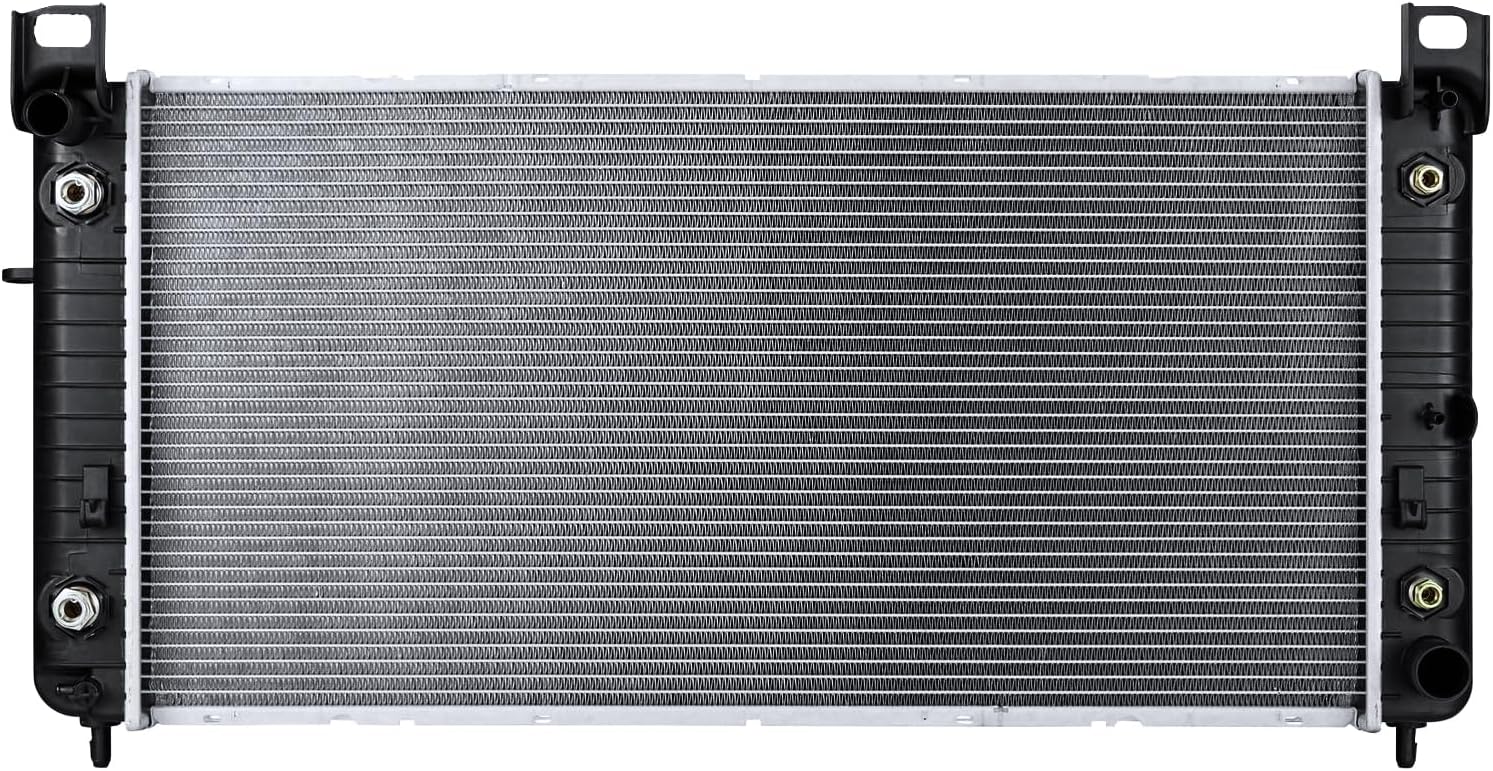
1. Autoexact 2370 Aluminum Engine Radiator with TOC & EOC
| Position | Front |
|---|---|
| Material | Aluminum |
| Compatibility note | Fits many Chevrolet/GMC/Cadillac/Hummer models listed (see fitment) |
| Manufacturer | Autoexact |
| Item model number | ALQ-11645-0742-AE |
This Autoexact all-aluminum radiator is a direct-fit replacement meant to restore cooling performance on compatible GM trucks and SUVs. It installs in the front of the engine bay and is designed to connect to existing hoses, fan shroud, and cooler lines without modification. Notable design elements include multi-louvered fins, flat-flow B-type tubes, thermal expansion cuts, and anti-corrosion coating to speed heat dissipation and resist long-term corrosion. Construction uses deep extrusion header tanks, precision welding, and factory-style seals, and the unit is pressure/leak tested at the factory. In practice this yields an efficient, lightweight replacement that should keep engine temperatures in check under towing or daily driving. A few buyers reported loose cooler-line fittings in the box, so expect to check and tighten fittings before installation. The radiator comes with a one-year warranty and customer support from the seller.
Best for: Buyers who want a reliable, factory-style replacement radiator that restores cooling performance on older GM 1500-series trucks while balancing cost and durability.
Less Ideal for: Owners seeking a high-performance racing or heavy-duty upgrade beyond stock cooling capacity should consider purpose-built performance radiators instead.
- All-aluminum core with multi-louvered fins for improved heat dissipation
- Factory-style fitment designed to drop into place with existing hoses and shroud
- Pressure and leak testing reported at the factory to reduce early failures
- Corrosion-resistant coating and reinforced construction for long-term durability
- Several reviewers noted cooler-line fittings arrive loose and need to be tightened before installation
Verdict: A cost-conscious, factory-fit aluminum radiator that reliably restores stock cooling for compatible GM 1500 trucks.
2. Spectra Premium CU2423 Radiator — 34-1/16" Core, With TOC Without EOC

| Item model number | CU2423 |
|---|---|
| Core length | 34-1/16" |
| Includes | Transmission oil cooler (TOC), without external oil cooler (EOC) |
The Spectra Premium CU2423 is a complete direct-replacement radiator built to match factory fit and function while offering improved cooling through a high-density, multi-louvered fin core. It installs as a drop-in unit and includes an accessory pack and a preinstalled drain valve on some units, which simplifies swapping the old radiator for a like-for-like repair on compatible GM trucks. In everyday use it keeps engine temperatures in a safe range during normal driving and longer trips; several owners report solid leak-free performance and straightforward installation. The radiator is engineered and tested for durability, but results vary with shipping and handling since isolated reports describe cracked tanks out of the box and occasional missing fittings. Also note that with only a transmission oil cooler option this specific build can run transmission temps a bit higher than some radiators with integrated coolers, so monitor transmission temperature if you tow frequently. For a performance-minded Sierra owner seeking reliable cooling close to factory behavior, this model is a practical, cost-effective choice.
Best for: Sierra owners who prioritize dependable, factory-style cooling performance and an easy direct-replacement installation when addressing overheating or a failed radiator.
Less Ideal for: Drivers who frequently tow heavy loads or need maximum transmission cooling should consider radiators with integrated transmission coolers or upgraded performance cores designed for heavy-duty use.
- Direct replacement design for factory fit and easy drop-in installation
- High-density multi-louvered fins for improved heat transfer and cooling efficiency
- Includes accessory pack and may include a preinstalled drain valve to simplify installation
- Engineered and tested for durability across a range of conditions
- Some customers report damaged or cracked tanks on arrival due to packaging or transit
- This variant lacks an integrated external oil cooler option so transmission temps may run higher under heavy load
Verdict: A practical, factory-fit replacement that improves engine heat rejection while keeping installation simple for performance-minded Sierra owners seeking reliable cooling.
3. DWVO 34" Replacement Radiator for 1999–2006 GMC Sierra 1500 (34" Core)

| Core size | 34 in |
|---|---|
| Compatible engines | 4.3L/4.8L/5.3L/6.0L/6.2L V8 |
| Construction | Aluminum core with PA66 GF30 tanks |
| Includes | Complete radiator with aluminum trans cooler (no cap or sensors) |
This DWVO 34-inch core radiator is a complete direct-fit replacement intended to restore cooling performance on 1999–2006 GMC Sierra 1500 V8 trucks. It installs like a factory replacement and uses a high-density multi-louvered aluminum core plus an aluminum transmission oil cooler to help keep engine and trans temperatures in check under normal driving. DWVO supplies TIG-welded inlet and outlet tanks molded from PA66 GF30 and applies a protective coating to resist corrosion. The unit ships without a radiator cap or sensors so you reuse those from the original or purchase replacements separately. Buyers report generally simple bolt-in installs and OEM-like fit, but there are mixed reports about plastic tank durability and occasional leaks at seams or oil cooler fittings, so careful pre-install inspection and proper torque on fittings are advised. This radiator is a practical, lower-cost option to get a Sierra back on the road with solid cooling performance when matched to routine maintenance and correct installation procedures.
Best for: Buyers who want a cost-effective, bolt-in replacement to restore proper cooling on a 1999–2006 GMC Sierra 1500 V8 and who prioritize straightforward DIY installation or quick shop replacement.
Less Ideal for: Drivers seeking a heavy-duty or lifetime upgraded radiator for towing, extreme duty cycles, or long-term high-heat environments should consider performance-grade or OEM-upgrade options instead.
- Direct-fit design for 1999–2006 GMC Sierra 1500 V8 for easier installation
- High-density multi-louvered aluminum core for improved cooling efficiency
- TIG-welded construction and aluminum trans cooler provide integrated cooling for engine and transmission
- Protective coating applied to core to help resist corrosion during service life
- Does not include radiator cap or temperature sensors so you must reuse or buy them separately
- Some users report plastic tank seam weaknesses and occasional leaks at fittings
Verdict: A budget-friendly, direct-fit replacement that restores factory-style cooling for 1999–2006 GMC Sierra 1500 V8 trucks with easy installation.
4. ASAPE Aluminum Radiator for 1999–2006 GMC Sierra 1500 / Chevy Tahoe 4.3–5.3L

| Applicable models | 1999–2006 GM 4.3L–5.3L trucks and SUVs (listed years/models) |
|---|---|
| Core type | High-density multi-layer aluminum |
| Engine oil cooler | Not compatible with vehicles that have factory engine oil coolers |
| OE references | 2334, CU2334, 15124632 |
This ASAPE aluminum radiator is a budget-focused replacement intended to restore cooling performance on compatible 1999–2006 GM 4.3L–5.3L trucks and SUVs. It installs in place of the factory unit on models with a 28-inch core and no engine oil cooler and uses a multi-layer aluminum core plus brass transmission oil coolers to move heat away from the engine and transmission. In practice it serves as a like-for-like refresh: it replaces leaking or corroded radiators and helps maintain normal operating temperature under typical driving and towing loads. The construction promises durability in hot or cold climates, and the larger fin area aims to improve heat dissipation over a worn OEM core. Limitations are that fitment is specific to listed models and core width, and vehicles with factory oil coolers will need a different unit; buyers should verify exact year and engine configuration before purchasing. Expect a cost-effective, no-frills swap that gets cooling back to spec without premium materials or performance tuning.
Best for: Buyers looking to replace a failing radiator on a 1999–2006 GM 4.3L–5.3L truck or SUV on a tight budget who prioritize a direct-fit, serviceable replacement over premium performance parts.
Less Ideal for: Drivers who need upgraded cooling for heavy towing, motorsport use, or who have models equipped with factory engine oil coolers should consider higher-capacity or specific-fit alternatives.
- Aluminum multi-layer core for improved heat dissipation compared with worn radiators
- Includes brass transmission oil coolers to help manage transmission temperatures
- Direct-replacement fit for many 1999–2006 GM 4.3L–5.3L models with 28-inch core simplifying installation
- Economical option for restoring cooling without a major overhaul
- Fitment limited to vehicles without factory engine oil coolers and requires confirming core width and exact model compatibility
Verdict: A cost-conscious, direct-fit aluminum radiator that restores cooling on compatible 1999–2006 GM 4.3L–5.3L trucks and SUVs without an engine oil cooler.
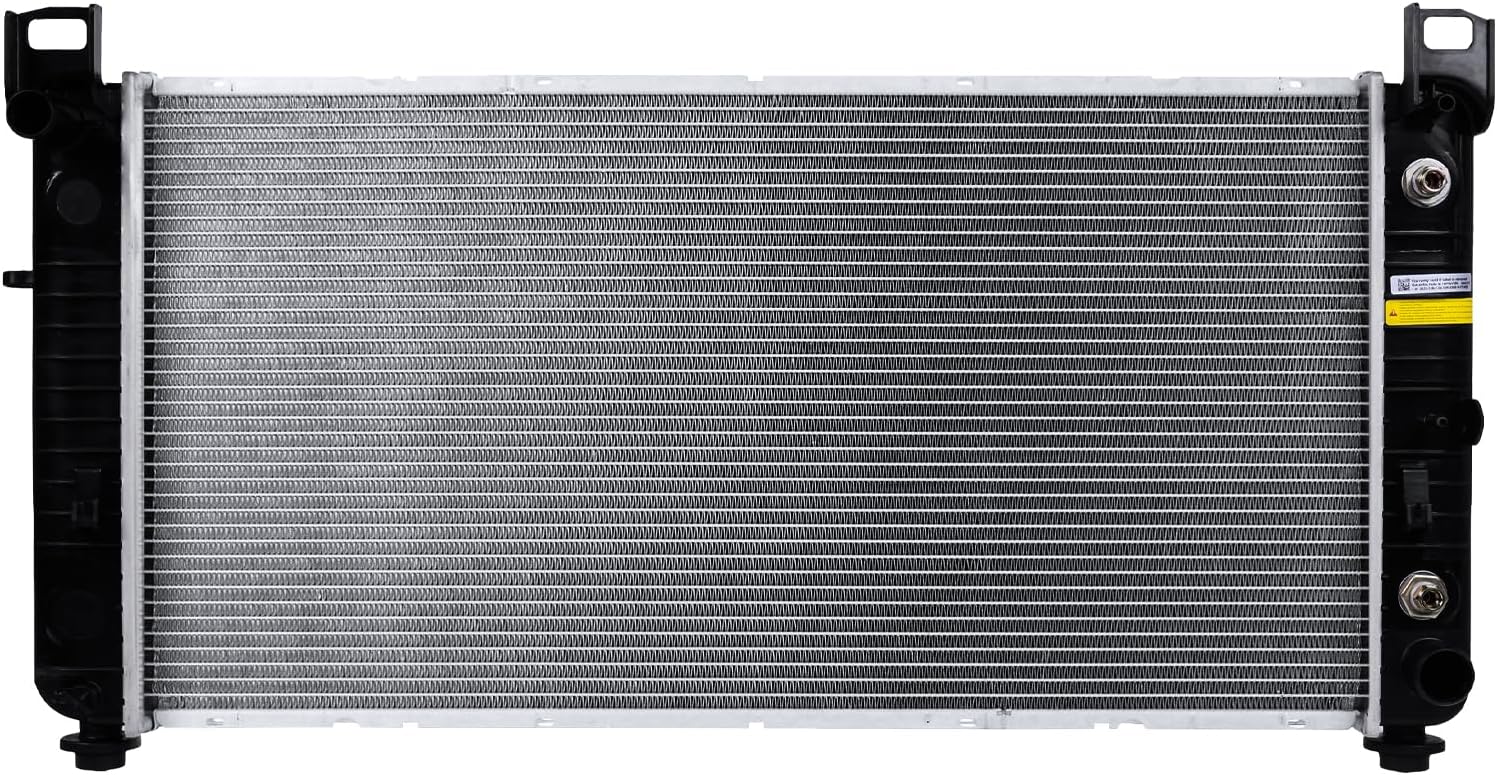
5. Zynrako 34" Engine Coolant Radiator with Oil Cooler, Direct Fit for 1999–2014 Chevy/GMC Trucks and SUVs
| Brand | Zynrako |
|---|---|
| Model | Aluminum Radiators |
| Manufacturer Part Number | ALQ-11645-0770-4 |
| OEM Part Number | 15124630, 15124632, 15124633, 15189401, GM3010519 |
This Zynrako 34-inch aluminum radiator is a direct-fit replacement intended for later-model Chevy and GMC full-size trucks and SUVs and includes an integrated oil cooler provision for applications that need it. It is typically used to replace a leaking or damaged core and restores the vehicle cooling system to factory-like function. Notable engineering features include a deep extrusion header, B-type reinforced tubes, folded fin edges, and thermal expansion cuts that help resist leaks and improve heat dissipation under heavy duty use. Buyers report the unit arrives with installation hardware and ports for both manual and automatic transmission setups, which simplifies DIY swaps. The practical benefit is a robust, relatively low-cost radiator that aims to match factory fit and cooling performance while reducing vibration-related failures. Limitations are that longevity versus OE parts can only be judged over time and the listing advises verifying confirmed-fitment for exact model years and configurations before ordering.
Best for: Buyers prioritizing a reliable, factory-compatible replacement radiator for heavy-duty use and DIY installation on late 1990s to 2010s full-size Chevy/GMC trucks who want reinforced construction to reduce leak risk.
Less Ideal for: People seeking a long-term OE dealer replacement with extended manufacturer warranty or those who need confirmed fitment for vehicles outside the specified model years and configurations.
- Direct-replacement design with listed factory part numbers for straightforward fitment
- Reinforced deep extrusion headers and B-type tubes reduce leak risk from vibration and thermal stress
- Thermal expansion cuts and folded fin edges improve durability and heat dissipation
- Includes provisions and hardware for oil cooler and different transmission hookups to ease installation
- Manufacturer-backed warranty is limited to one year which may be shorter than dealer parts coverage
Verdict: A cost-conscious, reinforced aluminum radiator built to restore factory-style cooling and resist vibration-related leaks for late 1990s–2000s Chevy and GMC full-size trucks.
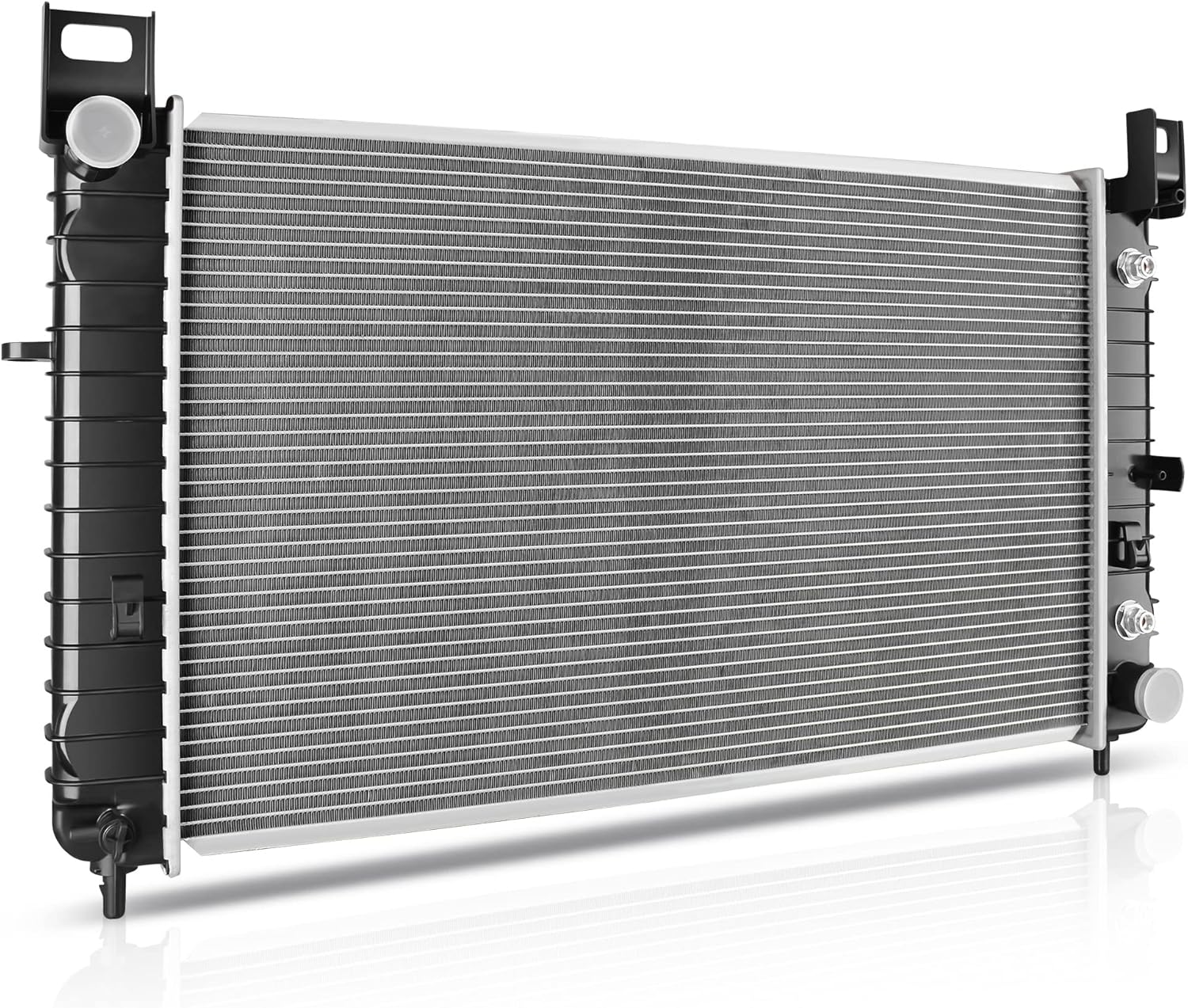
6. DWVO 28" Complete Radiator Compatible with 1999–2006 Chevy/GMC Trucks (28" Core)
| Compatible vehicles | 1999–2006 Chevrolet/GMC full-size trucks (per listing) |
|---|---|
| Core size | 28 inches |
| Material | Aluminum core with PA66 GF30 tanks |
| Included parts | Complete radiator with transmission cooler and drain plug |
This DWVO complete radiator is a direct-fit replacement intended for 1999–2006 Chevy and GMC full-size trucks with the listed 4.3L–6.0L engines. It replaces the factory unit with a TIG-welded aluminum core and molded inlet/outlet tanks and includes an integrated transmission oil cooler and high-density multi-louvered fins to improve heat dissipation. Buyers report the unit fits well and installs easily for DIY mechanics, with protective corner foam in the package to prevent shipping damage. Typical use is straightforward: remove the old radiator, transfer sensors and mounting hardware as needed, connect the AT cooler lines, and refill and bleed the cooling system. Expect practical benefits like improved cooling efficiency over a degraded radiator and generally lower cost than dealer parts. There are mixed long-term durability reports: many users praise fit and cooling performance while some have reported leaks from cooler fittings or welds, so careful preinstallation inspection and correct torque on the AT fittings are advisable. The radiator ships without a cap or temperature sensor, so reuse or separately source those components for a complete installation.
Best for: Buyers who want an affordable, direct-fit replacement radiator that restores cooling performance quickly and prefer a product with many positive user reports and straightforward DIY installation.
Less Ideal for: Drivers who need a long-term factory-quality rebuild with guaranteed lifetime durability or those unwilling to inspect fittings and retorque connections after installation should consider higher-end or dealer replacements.
- Direct-fit design for 1999–2006 Chevy/GMC full-size trucks simplifying installation
- Aluminum core with multi-louvered fins for efficient heat dissipation
- TIG-welded construction and molded tanks aimed at durability
- Integrated transmission oil cooler and included drain plug
- Secure packaging reduces risk of shipping damage to fins and frame
- Does not include radiator cap or temperature sensor so additional parts may be needed
- Some users report occasional leaks at cooler fittings or weld joints indicating variable long-term quality
Verdict: A budget-friendly, direct-fit radiator that restores cooling for 1999–2006 Chevy/GMC trucks and is a practical choice when you prioritize fit and value backed by many user installs.
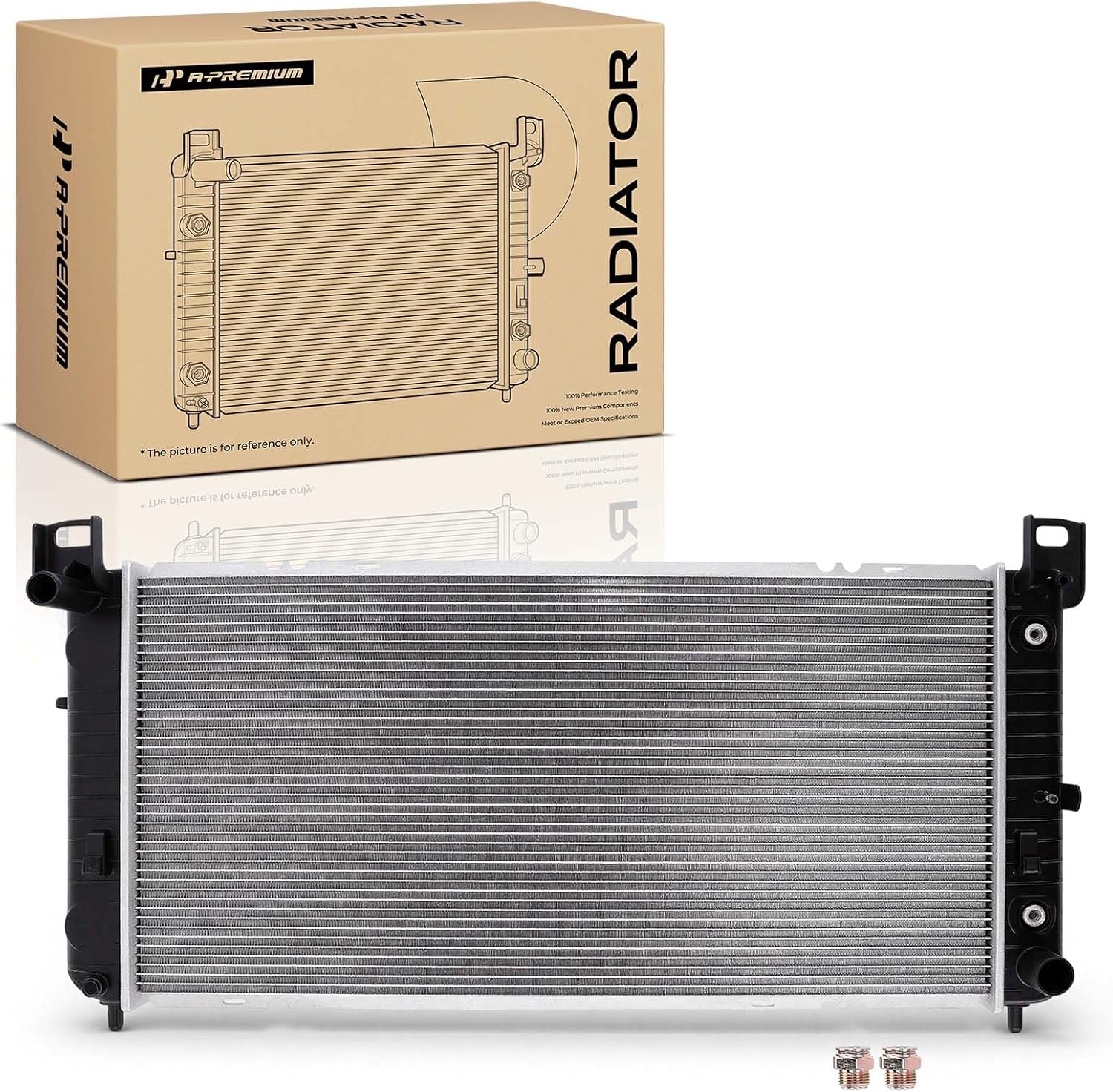
7. A-Premium 34" Engine Coolant Radiator with Transmission Oil Cooler (2 Ports)
| Core Height | 34 inch |
|---|---|
| Core Thickness | 1.25 inch |
| Inlet Diameter | 1.31 inch |
| Outlet Diameter | 1.56 inch |
| Transmission Cooler | With 2 brass oil cooler ports |
This A-Premium radiator is a direct-fit replacement intended for 1999–2013 GM full-size trucks and SUVs with automatic transmissions that use a two-port transmission cooler configuration. It replaces the factory unit with a 34-inch aluminum core and includes two brass transmission cooler ports so you can reuse existing transmission lines without modification. Typical use is a like-for-like swap when a cracked or leaking radiator needs replacing; most buyers report straightforward installation using basic hand tools and removal of the cooling fan assembly. Practical benefits are solid cooling capacity for street and light towing duty, included transmission fittings and clips, and a built-in drain plug that some factory radiators lack. Limitations to consider are variation in build quality across units and reports of occasional leaking transmission fittings out of the box, so inspect fittings and pressure-test before final assembly. For buyers who prefer lower risk, plan to bench-test connections and have replacement clamps or fittings handy.
Best for: Buyers who want a budget-friendly, direct replacement radiator that closely matches factory fitment and prefer a straightforward swap with minimal modification.
Less Ideal for: Drivers who need a heavy-duty performance radiator for sustained heavy towing, racing, or who prefer premium-name-brand longevity without inspecting parts before install.
- Direct-fit design for compatible GM trucks and SUVs with automatic transmission, simplifying installation
- Includes two brass transmission oil cooler ports and supplied fittings and clips for reuse of transmission lines
- 34-inch aluminum core provides substantial cooling capacity for everyday driving and light towing
- Built-in drain plug for easier coolant changes during service
- Some buyers report inconsistent quality control with occasional leaking transmission fittings
- Plastic end tanks and mid-range materials may not match heavy-duty premium radiators for long-term durability
Verdict: A practical, budget-focused direct-fit radiator for GM 1999–2006 Sierra 1500 owners who want factory-style cooling and an easy, low-complication replacement.
Choosing the Right 1999-2006 GMC Sierra 1500 Radiator: Key Factors to Consider
Core Construction and Material
Core construction determines heat transfer efficiency and how the radiator responds to road vibration and thermal cycling. Aluminum cores with welded tubes often offer better conductivity and lighter weight, while multi-row cores increase cooling capacity at the cost of added thickness. For the Sierra 1500, choose a core that fits the stock spacing and provides enough surface area to handle towing or heavy-load driving.
Material choices also affect long-term durability. Aluminum cores resist rust better than older copper-brass designs when exposed to modern coolant formulations. Tank-to-core attachment method matters for repairs; welded cores are robust but more difficult to service, while mechanical joint designs may allow easier part replacement.
Cooling Capacity and Core Rows
Cooling capacity is driven by core thickness, number of rows, and fin density. A thicker or multi-row core can lower operating temperatures under sustained loads, which is important if you tow, haul heavy payloads, or drive in hot climates. However, a denser core can restrict airflow if not matched to the fan and shroud arrangement on the 1999-2006 Sierra 1500.
Balance capacity with airflow. For everyday driving, a single- to double-row high-efficiency core is often sufficient and preserves compatibility with the factory fan. If you frequently tow or operate in extreme heat, favor cores designed for higher heat rejection but verify that they fit without modifying mounts or the cooling fan.
Fitment and Mounting Compatibility
Accurate fitment prevents installation delays and avoids unintended stress on hoses and mounts. Confirm that the replacement radiator aligns with the Sierra 1500's original mounting points, fan shroud location, and transmission cooler lines if applicable. Differences in inlet and outlet placement or neck height can require hose changes or bracket fabrication.
Good fitment also reduces the risk of vibration-related leaks and ensures the fan engages correctly. For a 1999-2006 Sierra 1500, pay attention to support tabs, mounting bolt locations, and clearance for the grille and core support to make sure the radiator will seat properly.
Pressure Cap and Tank Design
The pressure cap setting and tank design influence boiling point and coolant circulation. A radiator with a compatible filler neck and cap seating for the Sierra 1500 preserves the system's designed pressure rating. Tank shapes and attachment methods affect heat distribution and how the radiator handles thermal expansion.
Look for radiators that accommodate the factory pressure cap size and fit securely with original hoses. Poorly designed tanks or nonstandard necks can complicate bleeding the cooling system and raise the chance of premature failure around fittings.
Corrosion Resistance and Finish
Road salt, humidity, and coolant chemistry all play roles in long-term corrosion. Radiators with corrosion-resistant finishes, quality welds, and protective coatings last longer and reduce the likelihood of small leaks turning into major failures. Blemishes in plating or thin paint layers can accelerate deterioration, especially on trucks that see winter driving.
Choose radiators that specify corrosion protection and have consistent finish quality. That matters for longevity and reduces the total cost of ownership by postponing repairs related to leakage or degraded cooling efficiency.
Serviceability and Replacement Parts
Serviceability covers how easy it is to clean, repair, or replace components like fins, tanks, and fittings. Radiators that use common hose sizes, standard cap fittings, and accessible drain plugs simplify routine maintenance such as coolant changes and radiator coolant flush procedures. Some designs allow for separate transmission cooler servicing without removing the entire radiator.
Availability of replacement tanks, caps, and mounting hardware is important because it reduces downtime if a minor component fails. For owners who prefer DIY work, pick radiators with clear access to mounting bolts and conventional fasteners so the radiator installation guide procedure remains straightforward.
Signs Your Sierra 1500 Radiator Needs Attention
Early detection prevents engine damage. Common symptoms include persistent coolant loss without visible external leaks, a temperature gauge that climbs under load, or visible coolant residue around hose connections and the radiator core. Steam from the engine bay or an illuminated temperature warning are more urgent signs that immediate attention is required.
Pay attention to heater performance as well. Reduced cabin heat during normal operation can indicate restricted coolant flow or internal radiator blockage. Regular visual checks for bent fins, crushed tubes, or corrosion at seams help identify problems before they lead to overheating.
- Coolant puddles or drips beneath the front of the truck
- Rising temperature gauge during idling or heavy traffic
- Sweet smell in the engine bay indicating coolant vapor
- Discolored or crusty deposits near hose clamps and seams
Preparing for Radiator Replacement on a 1999-2006 Sierra 1500
Plan the job with the right tools and parts. Drain the coolant into a suitable container and relieve system pressure before disconnecting hoses. Confirm replacement radiator fitment and collect any required gaskets, new hose clamps, and a compatible pressure cap if the replacement does not include one.
Take time to inspect related components while the system is open. Check the condition of upper and lower radiator hoses, the thermostat, and the cooling fan clutch or electric fan connections. Replacing worn hoses or a failing thermostat at the same time reduces the chance of follow-up work shortly after the radiator replacement.
- Have a replacement drain plug or gasket available if the old one is corroded
- Label hoses and electrical connectors to avoid confusion at reassembly
- Use the correct coolant type and observe proper mixing ratios when refilling
Maintaining Cooling Performance After Installation
After fitting a new radiator, perform a complete coolant system bleed to remove air pockets that can impede circulation. Follow a radiator coolant flush schedule that suits your coolant type and driving conditions to preserve cooling efficiency. Monitor operating temperatures during the first few drives and recheck hose clamps and fittings for leaks.
Regular maintenance extends radiator life. Flushing the system at manufacturer-recommended intervals and using corrosion inhibitor additives when appropriate reduces sediment buildup and internal corrosion. Inspect the radiator surface for debris and gently clean fins with low-pressure water to restore airflow.
- Recheck coolant level after the first drive and top off if needed
- Inspect fan operation and shroud alignment to ensure adequate airflow
- Keep the front grille and core support free of debris for optimal cooling
Transmission Cooler Considerations on Equipped Models
Many Sierra 1500s in the 1999-2006 range use an integrated transmission cooler in or on the radiator. If your truck has transmission cooler lines routed through the radiator, ensure the replacement provides compatible ports and correct internal passageing to protect transmission temperatures under load. Improperly matched cooler fittings can cause leaks or reduced transmission cooling.
When servicing a radiator with transmission cooler passages, take extra care to isolate and catch any ATF that drains from the lines and avoid mixing fluids. Verify line sealing and pressure-test connections before returning the truck to normal service.
- Confirm line thread type and port placement before starting work
- Use new sealing washers or O-rings if the replacement requires them
- Check transmission fluid level after completing radiator and cooler work
DIY Vs Professional Installation: What's Right for You
A competent DIYer with basic hand tools can successfully replace a radiator on the 1999-2006 Sierra 1500 if they follow a clear radiator installation guide and take safety precautions. The task involves coolant handling, lifting the radiator into position, and ensuring proper hose and fan engagement. Time, workspace, and disposal of old coolant are practical factors to consider.
Professional installation may be preferable if the job requires radiator support removal, fan replacement, or if transmission cooler lines are corroded. Professionals can also pressure-test the cooling system and verify proper bleed procedures under workshop conditions, which reduces the risk of air pockets and improper sealing.
- DIY is suitable when the replacement is a direct-fit unit and hoses are in good condition
- Choose professional help for complex work involving the core support or rusty fasteners
- Keep safety gear and coolant spill kits on hand regardless of who performs the work
Extending Radiator Life in Harsh Conditions
If you use the Sierra 1500 for towing, off-road driving, or in regions with heavy winter salting, take preventive steps to extend radiator life. Regularly rinse the underside and front of the core to remove salt and mud that accelerate corrosion. Consider a protective screen if you encounter frequent rock impacts that can bend fins and puncture tubes.
Using the correct coolant with corrosion inhibitors and maintaining proper mixture ratios reduces electrochemical wear inside the radiator. Periodic inspections and a conservative replacement schedule for hoses and clamps reduce the likelihood of sudden leaks that can strand you on the road.
- Flush the cooling system more often in salty or dusty environments
- Inspect and repair bent fins promptly to keep airflow efficient
- Replace clamps and hoses at the first sign of cracking or swelling
Still looking for the perfect fit?
Select your GMC Sierra 1500 configuration to see the most relevant Radiators recommendations
How We Chose the Best 1999-2006 GMC Sierra 1500 Radiator
We focused on attributes that directly affect long-term cooling performance and fitment for the 1999-2006 GMC Sierra 1500. Primary evaluation criteria included core construction and material, corrosion resistance and finish, cooling capacity and tube/fin density, and compatibility with stock mounting points and hose connections. We also assessed build details such as tank attachment method, pressure cap compatibility, and whether the radiator supports the truck's factory fan and shroud locations.Additional filters covered manufacturing consistency, warranty coverage, and the availability of replacement parts for common failure points. We excluded units that required extensive fabrication or nonstandard modifications to fit the chassis or that lacked clear vehicle-specific fitment documentation. Finally, we prioritized radiators that balance cooling performance with serviceability, meaning they can be installed and maintained using standard tools and procedures common to Sierra 1500 owners.
Our full evaluation process is outlined in our review methodology.
FAQ
How do I tell if my Sierra 1500 radiator is leaking or another component is at fault?
Look for external signs like coolant puddles, crusty deposits around seams, or wetness on the core and hose connections. If coolant loss occurs without visible external leaks, an internal blockage or head gasket issue may be involved. Pressure-testing the cooling system helps isolate the source of a leak.
Can I replace the radiator myself on a 1999-2006 Sierra 1500?
Yes, many owners can perform the swap with basic tools and a radiator installation guide. The job requires draining coolant, disconnecting hoses and any transmission cooler lines, and ensuring proper alignment with the fan and shroud. Seek professional help if corrosion has seized fasteners or if the job requires removing the core support.
Should I replace hoses and the thermostat when installing a new radiator?
It often makes sense to replace worn hoses and the thermostat at the same time to avoid repeat labor. Hoses are inexpensive relative to the job and a new thermostat ensures accurate temperature control, which helps the new radiator perform optimally.
How soon will I notice a difference after installing a new radiator?
You should see more consistent temperature readings and reduced spike events during towing or heavy traffic immediately. Full benefits depend on a proper bleed and correct coolant mixture. If temperatures remain high, check for air pockets, fan operation, and thermostat function.
Does the radiator affect transmission cooling on models with integrated coolers?
Yes, if your Sierra 1500 uses radiator-mounted transmission cooler passages, the radiator directly influences transmission operating temperature. A radiator with properly designed cooler passages and secure fittings helps maintain transmission temperature under load.
How often should I flush the cooling system in a Sierra 1500?
Flush interval depends on coolant type and conditions, but a common guideline is every 2 to 4 years. Severe service such as towing or exposure to road salt may call for more frequent radiator coolant flushes to prevent buildup and corrosion.
Final Verdict
For the 1999-2006 GMC Sierra 1500, prioritize a radiator that fits the factory mounts, matches inlet and outlet placement, and provides sufficient cooling capacity for your driving conditions. Balance core construction and corrosion protection against ease of installation and long-term serviceability. If you tow or operate the truck in hot environments, choose higher-capacity cores but confirm clearance for the fan and shroud.Ultimately, replacing degraded hoses and bleeding the system correctly are as important as the radiator choice itself. Focus on fitment, cooling performance, and durability to make a confident selection that keeps your Sierra 1500 running cool for years.
Explore More:
- Check out all GMC Sierra 1500 parts & accessories
- Explore Radiators Maintenance & Repair Guides
- Explore Cooling System
- Browse all Auto Parts
