

Note: This article contains affiliate links. If you click on these links and make a purchase, I may earn a small commission at no extra cost to you. This helps support my research and content. Read my full affiliate disclosure here.
If you own a 1994-2002 Ram 3500, the radiator is one of the most important components for reliable operation under towing, hauling, and daily driving. A properly functioning radiator keeps engine temperatures in check, prevents head gasket or engine damage, and reduces the chance of an unexpected roadside breakdown. This guide shortlists the top radiators suitable for the 1994-2002 Ram 3500 and explains the practical tradeoffs you should consider when replacing the cooling core.We evaluated candidates based on cooling capacity, durability, and fitment accuracy to present six strong options. Below you will find clear decision criteria, hands-on installation considerations, and answers to common symptoms and repair questions to help you pick the right radiator for your truck.
Looking for other parts? See all Ram 3500 parts & accessories.
Top Picks at a Glance
| Best Quality Built to a higher standard if you want something more solid | Mishimoto Performance Aluminum Radiator for 1994–2002 Dodge 5.9L Cummins |  |
| Best Value The sweet spot between price and what you get | VibeUp 1555 Radiator with Transmission Oil Cooler, 36" Core — Fits Dodge Ram 2500/3500 (1994–2002) |  |
| Best Budget The cheapest option that still gets the job done reliably | Auto Dynasty 1-Row Aluminum Radiator for 1994–2002 Dodge Ram 3.9L/5.2L/5.9L (AT) |  |
| Highest Rated A top-rated pick with lots of positive feedback | UIU Engine Coolant Radiator with Transmission Oil Cooler for Dodge Ram 2500/3500 8.0L (1994–2002) |  |
| Most Popular A crowd favorite that many people choose with confidence | AUTOSAVER88 Radiator for 1994–2002 Dodge Ram 2500/3500 5.9L I6 |  |
| Best Seller A high-volume bestseller chosen again and again | SCITOO 1552 Radiator Replacement for 1994–1997 Dodge Ram (1-Row, Transmission Cooler Included) |  |
1. Mishimoto Performance Aluminum Radiator for 1994–2002 Dodge 5.9L Cummins

| Fitment | 1994–2002 Dodge 5.9L Cummins |
|---|---|
| Core | Brazed aluminum core |
| End tanks | TIG-welded aluminum |
| Included hardware | High-pressure rad cap and magnetic drain plug |
| Warranty | Lifetime warranty |
This Mishimoto radiator replaces the factory unit with a brazed aluminum core and TIG-welded end tanks to boost cooling capacity for heavy-duty use. It is a direct-fit design for 1994–2002 5.9L Cummins trucks, so installation typically requires no cutting or modification and uses the stock mounting points. Notable features include a high-pressure radiator cap to raise coolant boiling point, a magnetic drain plug to catch metal particles, and a serial plate for product authentication. In real-world use the larger, multi-row core helps lower operating temperatures during towing, hauling, or spirited driving, reducing thermal stress on the engine and improving reliability under load. The radiator is heavier than stock and sized for trucks, so plan for handling and space during installation. It carries Mishimoto’s lifetime warranty and is positioned as an upgrade for owners who push cooling systems beyond factory limits.
Best for: Enthusiasts and owners who regularly tow, haul, or drive hard and want a factory-fit cooling upgrade that lowers operating temps and increases durability.
Less Ideal for: Drivers who rarely stress their cooling system or who prefer a lighter, cheaper replacement for basic street use should consider simpler stock-style radiators.
- Direct-fit design for 1994–2002 5.9L Cummins simplifies installation with no modifications
- Brazed aluminum core and TIG-welded end tanks for improved durability and reduced distortion
- High-pressure radiator cap increases coolant boiling point for better thermal performance
- Magnetic drain plug helps protect the engine by capturing metal particles
- Includes a serial plate and lifetime warranty for product authenticity and support
- Larger, heavier assembly than stock which can make handling and installation more cumbersome
Verdict: If you push a 1994–2002 5.9L Cummins with towing or performance driving, this Mishimoto direct-fit radiator gives a durable, factory-quality cooling upgrade that lowers temps under load.
2. VibeUp 1555 Radiator with Transmission Oil Cooler, 36" Core — Fits Dodge Ram 2500/3500 (1994–2002)

| Core Height | 36 inch |
|---|---|
| Transmission Oil Cooler Included | YES |
| Inlet Diameter | 1-4/5 inch |
| Outlet Diameter | 2 inch |
| Interchange | 52029176AB, 52028057AF, 52006478 |
This VibeUp radiator is a full replacement designed to drop into 1994–2002 Dodge Ram 2500 and 3500 trucks and includes a built-in transmission oil cooler for automatic transmissions. It uses a 36-inch core with a reinforced B-tube fin design intended to resist bending and improve core stability under vibration. Typical installation is straightforward for a radiator swap and the unit is engineered to match factory heat dissipation targets, so expect similar or better cooling performance compared with a worn original. The integrated transmission cooler reduces plumbing and simplifies replacing both components at once. Practical buyers will appreciate the polished exterior and stated OEM-fit approach, but installers should confirm hose and fitting compatibility during fitment since aftermarket parts can vary slightly. This radiator is heavier and larger than condenser-only units, so plan for a helper when lifting and allow time to bleed the cooling system and check the transmission cooler lines when completing the job.
Best for: A practical truck owner who wants a single, vehicle-specific replacement that restores cooling and replaces the transmission oil cooler in one job to minimize repeat labor and downtime.
Less Ideal for: Not the best choice for someone retrofitting a different transmission or fabricating custom plumbing where a modular separate cooler would be easier to adapt.
- Direct replacement fitment for 1994–2002 Dodge Ram 2500 and 3500 for straightforward swap-in.
- Integrated transmission oil cooler removes need for a separate unit when working on automatic transmission trucks.
- Reinforced B-tube fin core improves structural stability and helps resist deformation from vibration.
- Engineered to meet or exceed factory heat dissipation for reliable cooling under load.
- Large, heavy assembly that may require two people to install and careful handling to avoid damage.
Verdict: If you want a practical, direct-fit replacement that handles both engine cooling and transmission cooling in one install for 1994–2002 Ram 2500/3500 trucks, this radiator is a solid choice.
3. Auto Dynasty 1-Row Aluminum Radiator for 1994–2002 Dodge Ram 3.9L/5.2L/5.9L (AT)

| Compatible engines | 3.9L, 5.2L, 5.9L |
|---|---|
| Transmission | Automatic transmission models |
| Rows | 1-Row |
| Core material | T-6061 Aluminum |
This Auto Dynasty radiator replaces the factory unit with a single-row T-6061 aluminum core and ABS plastic tanks intended for 3.9L, 5.2L, and 5.9L Dodge Ram trucks with automatic transmissions from the mid 1990s to early 2000s. It is built as a direct bolt-in replacement, so installation is straightforward for anyone with basic mechanical experience or a professional installer. The aluminum core and cooling fins improve heat transfer compared with older, corroded radiators, and the integrated transmission oil cooler keeps AT temperatures in check during towing or heavy use. As a budget-focused aftermarket option this unit balances cost and performance, offering lighter weight and claimed higher coolant capacity than the original. Limitations include the single-row core, which may not match the cooling capacity of multi-row or heavy-duty performance radiators under extreme towing or high ambient temperature conditions, and instructions are not included so you should plan for a shop manual or tech support if needed.
Best for: Buyers who need an affordable, direct-fit replacement radiator for a mid-90s to early-2000s Dodge Ram and prioritize a straightforward swap and improved cooling over high-end heavy-duty capacity.
Less Ideal for: Those who regularly tow very heavy loads in hot climates or want a high-capacity multi-row performance radiator should consider heavy-duty or multi-core alternatives.
- Direct bolt-on fit for specified 1994–2002 Dodge Ram automatic models so no drilling or modification is required.
- Aluminum T-6061 core improves heat transfer compared with aged stock radiators.
- Includes an integrated transmission oil cooler to help regulate automatic transmission temperatures while towing.
- Lightweight design and cooling fins that claim higher coolant capacity than older units.
- Single-row core may be less effective than multi-row radiators under sustained heavy towing or extreme heat.
- No installation instructions included, which could complicate DIY installs for less experienced users.
Verdict: A wallet-friendly, direct-fit aluminum replacement radiator that upgrades cooling for 1994–2002 Dodge Ram automatics without requiring modifications.
4. UIU Engine Coolant Radiator with Transmission Oil Cooler for Dodge Ram 2500/3500 8.0L (1994–2002)

| Fitment | Dodge Ram 2500/3500 8.0L 1994-2002 |
|---|---|
| Core material | Aluminum multi-louvered core |
| Transmission cooler | Integrated brass cooler |
| Tanks | PA66 GF30 inlet/outlet tanks |
| Manufacturer | UIU |
This radiator is a direct-fit replacement built for cooling-heavy duty 8.0L Dodge Ram 2500 and 3500 trucks from 1994 to 2002. It pairs a high-density, multi-louvered aluminum core with a TIG-welded construction and a brass transmission oil cooler to improve heat transfer and durability under towing and sustained-load conditions. The inlet and outlet tanks use reinforced PA66 GF30 material and the assembly is treated to resist corrosion; the manufacturer also reports leak testing and offers a two-year unlimited-mileage guarantee. Installation is typical for a factory-style replacement and should be straightforward for a shop or experienced DIYer. Expect better cooling efficiency than many old or damaged factory radiators, especially when towing, but keep in mind that fitment is limited to the specified 8.0L models and you should verify the part numbers match your truck. The unit’s heavier build and integrated cooler make it a practical choice for owners seeking a long-lasting, serviceable replacement.
Best for: Buyers who prioritize a reliable, long-lasting replacement radiator for high-load use and towing on 1994–2002 Ram 2500/3500 8.0L trucks, and who want a factory-style unit with an integrated transmission oil cooler.
Less Ideal for: Drivers with different engine sizes, different model years, or those who need a lightweight performance-focused aftermarket radiator for racing applications should look elsewhere.
- Direct-fit design for 1994–2002 Dodge Ram 2500 and 3500 8.0L for straightforward replacement
- Aluminum core with multi-louvered fins and TIG-welded construction for improved cooling and durability
- Integrated brass transmission oil cooler increases cooling capacity when towing or under load
- Leak-tested assembly with treated coating to resist corrosion and extend service life
- Compatibility limited to the listed 8.0L 1994–2002 Ram models so it is not a universal fit
- Heavier, full-assembly replacement may require shop assistance for removal and installation
Verdict: Choose this radiator if you need a durable, direct-fit replacement with an integrated transmission oil cooler to keep a 1994–2002 Ram 2500/3500 8.0L running reliably under heavy loads.
5. AUTOSAVER88 Radiator for 1994–2002 Dodge Ram 2500/3500 5.9L I6

| Compatible vehicles | 1994–2002 Dodge Ram 2500/3500 5.9L L6 |
|---|---|
| Core type | Aluminum core with multi-louvered fins |
| Tanks | High-grade plastic tanks |
| Manufacturer part number | ATRD1052 |
| OEM part numbers referenced | 52030191AC, 52030191 |
This AUTOSAVER88 radiator is a full replacement designed as a direct fit for 1994–2002 Dodge Ram 2500 and 3500 trucks with the 5.9L inline-six. It uses a high-density, multi-louvered aluminum core with plastic tanks and is pressure-tested for leaks before shipping. Installation is intended to match factory mounting points so most owners or a professional shop can swap it in without modifying the cooling system. The dense fin design improves heat dissipation in heavy-duty use, which helps the engine run cooler under towing or hauling loads. The unit ships as a complete radiator but does not include a radiator cap so plan to reuse the original or buy a replacement cap separately. Buyers should expect a heavier aftermarket feel compared with some OEM units and follow recommended coolant and installation procedures; professional installation is recommended if you are not comfortable with cooling-system work.
Best for: Buyers who prioritize a proven, vehicle-specific replacement and want a radiator that restores reliable cooling for towing, hauling, and daily driving while minimizing fitment risk.
Less Ideal for: If you want a performance-upgrade radiator with larger capacity or aftermarket features like internal transmission oil cooling, look for specialty performance radiators instead.
- Direct-fit design that follows factory mounting points for straightforward installation
- High-density multi-louvered aluminum core for improved cooling efficiency under load
- Leak-tested construction to reduce the chance of arrival defects or early failures
- Radiator cap is not included so you must reuse the old cap or buy a new one separately
Verdict: A straightforward, leak-tested direct-fit replacement that restores reliable cooling for 1994–2002 Ram 2500/3500 5.9L trucks and reduces fitment uncertainty.
6. SCITOO 1552 Radiator Replacement for 1994–1997 Dodge Ram (1-Row, Transmission Cooler Included)
| Model | 125817 |
|---|---|
| OEM Part Number | 1552 |
| Core Rows | 1 Row |
| Transmission Oil Cooler Included | Yes |
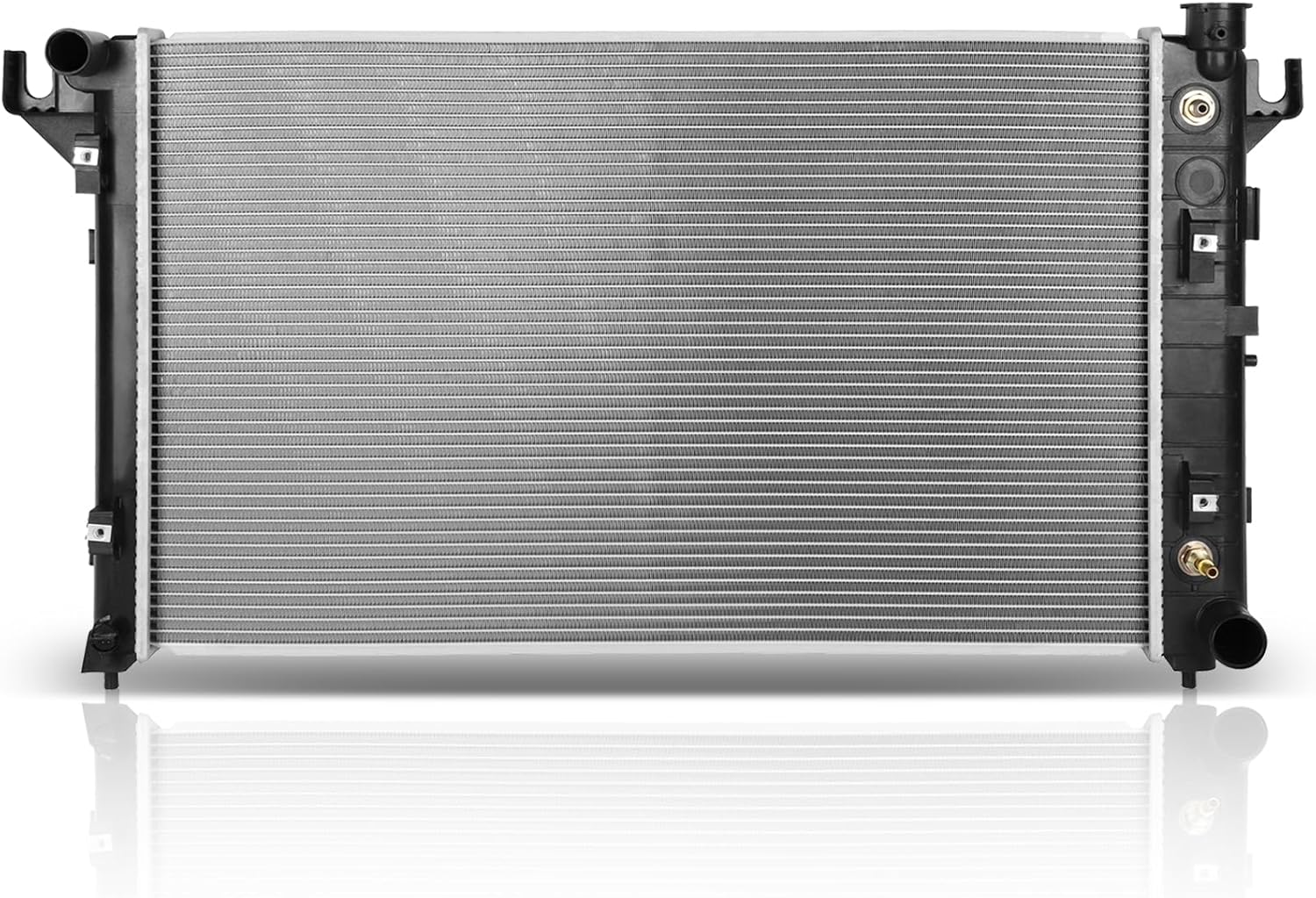
This SCITOO 1552 radiator is a direct-replacement cooling unit designed for older Dodge Ram trucks. It replaces the factory radiator with a single-row core and an integrated transmission oil cooler, so it performs both engine cooling and transmission cooling without extra plumbing. Typical use is a like-for-like swap for trucks with the listed engines when the original radiator has failed or is leaking. Notable features include a high-density multi-layer core aimed at efficient heat transfer and factory-style mounting points for an easier fit. Practical benefits are straightforward installation for anyone familiar with radiator swaps, restored cooling capacity, and avoided expense of separate transmission cooler installation. Limitations are its single-row core, which provides adequate but not high-performance cooling under severe heavy towing or extended high-load duty, and it does not include a radiator cap or engine oil cooler. Buyers should verify exact vehicle fit before ordering because correct fitment is critical for leak-free installation.
Best for: Buyers who want a reliable, like-for-like replacement that restores factory cooling and minimizes installation hassle for older Dodge Ram trucks.
Less Ideal for: Drivers who do heavy towing, frequent high-load operation, or want upgraded cooling performance should consider multi-row or high-capacity aftermarket radiators instead.
- Direct-fit replacement for specified 1994–1997 Dodge Ram applications simplifies installation.
- Integrated transmission oil cooler eliminates need for a separate unit on compatible trucks.
- High-density multi-layer core design improves heat transfer compared with basic cores.
- Manufactured to match factory mounting and connections for easier alignment and reduced modification.
- Single-row core offers limited cooling margin for heavy towing or extreme-duty use.
- Radiator cap is not included, so you may need to reuse the original cap or source a replacement.
Verdict: Choose this radiator if you need a straightforward, factory-style replacement with a built-in transmission cooler to get a 1994–1997 Dodge Ram back on the road quickly.
Choosing the Right 1994-2002 Ram 3500 Radiator: Key Factors to Consider
Fitment And Mounting
Correct fitment is the first practical requirement for a radiator on a 1994-2002 Ram 3500. The radiator must align with original hose connections, fan shroud locations, and mounting brackets so installation is straightforward and no modifications are needed.
Poor fitment can lead to stressed hoses, misaligned fans that rub the shroud, or difficulty seating the transmission cooler lines. Ensuring the replacement uses the same inlet/outlet orientation and mounting points reduces installation time and prevents issues like leaks or fan interference that can emerge after a partial or rushed fitment job.
Cooling Capacity And Core Design
Cooling capacity determines how well the radiator manages heat under load. For a heavy-duty truck like the Ram 3500, consider core thickness, number of rows, and fin density because these attributes affect heat rejection and airflow resistance.
A thicker, multi-row core will typically improve cooling during towing or sustained highway climbs, but it can add weight and may require matching fan specifications. Evaluate whether the radiator provides extra thermal margin beyond stock to prevent overheating in demanding conditions without creating undue airflow restriction.
Material And Corrosion Resistance
Radiator longevity is strongly influenced by construction materials and corrosion protection. Aluminum cores with stamped or brazed joints resist rust better than older mixed-metal designs, and quality tank materials resist cracking when exposed to thermal cycling and vibration.
For a truck that may sit outdoors or see salty roads, coatings and corrosion inhibitors inside and out help extend service life. Choosing components with robust seals and quality brazing reduces the likelihood of premature leakage or failure.
Transmission Cooler Integration
Many 1994-2002 Ram 3500 trucks route transmission cooler lines through the radiator or a dedicated cooler plate. Verify whether the replacement radiator incorporates a transmission cooler and that its port locations and flow rates match the truck's requirements.
An inadequate transmission cooler can raise fluid temperatures during towing and shorten transmission life. Conversely, an integrated cooler must be accessible and serviceable; mismatched routing can complicate installation or compromise cooling performance for both engine and transmission.
Ease Of Installation And Serviceability
Installation complexity affects cost and downtime. A radiator that installs with factory brackets, uses standard hose diameters, and provides clear access to drain and fill points reduces labor time. Consider whether mounting hardware, new hoses, or additional clamps are needed.
Serviceability also matters for routine maintenance like coolant flushes or repairs. Radiators that allow easy access to petcock drains, have replaceable fan shrouds, and avoid obstructing other components simplify future work and lower total ownership effort.
Repairability And Long-Term Maintenance
Even durable radiators may suffer small leaks or damage; choosing a design that is repair-friendly can extend service life. Look for core constructions that tolerate minor brazing or patch repairs and for tanks that can be replaced without entire radiator disposal.
Consider how easy it is to flush the cooling system and access sensors or temperature switches. Designs that facilitate a full coolant drain and allow straightforward replacement of related components reduce maintenance time and total repair cost over the vehicle's life.
Common Radiator Symptoms And What They Mean
Understanding early warning signs lets you address cooling issues before they become serious. Common symptoms include steam from the hood, a rising temperature gauge during idle or climb, coolant puddles under the truck, and visible corrosion or wet spots on the core or tanks.
A slow but steady climb in operating temperature often signals reduced cooling efficiency from clogged fins or internal scaling, while sudden overheating can indicate a significant leak, failed thermostat, or water pump issue. Identifying the symptom pattern helps determine whether a radiator replacement is necessary or if another cooling system component is the root cause.
- Steady temperature rise at idle: possible clogged core or failing electric fan.
- Coolant leaks underneath vehicle: check hose clamps, inlet/outlet connections, and core seams.
- White or rusty residue near seams: indicates corrosion and potential future leak.
- Intermittent overheating during towing: may point to insufficient core capacity or transmission cooler issues.
Preparing The Truck For Radiator Replacement
Prepare safely by allowing the engine to cool fully, disconnecting the battery, and collecting fresh coolant for refill. Drain coolant into an appropriate container and observe local disposal regulations. Inspect hoses and clamps and plan to replace any brittle or swollen lines during the job.
Gather the correct tools, new gaskets or O-rings if required, and verify the replacement radiator includes necessary fittings. If the truck has an external transmission cooler or auxiliary oil cooler, label and route lines carefully to avoid confusion during reassembly.
- Always work on a cool engine and relieve radiator cap pressure before opening.
- Replace worn hoses and clamps while the system is open.
- Have the correct coolant type and volume ready for refill and bleeding.
Cooling System Maintenance Tips For Longevity
Routine maintenance preserves radiator performance and prevents premature failures. Regular coolant changes using the correct mixture help reduce internal corrosion and scale buildup. Flushing the system at recommended intervals clears deposits that reduce heat transfer efficiency.
Inspect the radiator visually each service interval and clear debris from fins to maintain airflow. Also monitor thermostat operation and fan engagement because these components influence operating temperature as much as the radiator itself.
- Perform a coolant flush on recommended intervals or if the fluid appears discolored.
- Check and clean radiator fins from road debris and insects.
- Test fan operation at idle and when under load to ensure proper engagement.
DIY Versus Professional Installation Considerations
Replacing a radiator on the 1994-2002 Ram 3500 can be a DIY job for mechanically inclined owners, but it requires the right tools and some experience with cooling systems. Expect tasks like draining and refilling coolant, routing transmission cooler lines, and ensuring the fan shroud and fan engage properly without interference.
Professional installation offers the advantage of experience, correct torqueing of fittings, and pressure testing the finished system to verify there are no leaks. If the job requires radiator relocation, cutting, or modifications to accommodate aftermarket accessories, a shop with fabrication capacity may be the safer choice.
- DIY pros should have a pressure tester to confirm leak-free installation.
- Allow extra time to bleed trapped air from the cooling system after installation.
- Consider replacing thermostat and hoses while performing the radiator job to save on future labor.
How Transmission Cooling Interacts With Engine Cooling
On many heavy-duty Ram 3500 trucks, transmission fluid is cooled via an internal cooler integrated into the radiator or an external unit. When both systems share airflow and core area, a poorly performing radiator can increase both engine and transmission temperatures during towing.
Ensuring the replacement radiator supports the vehicle's transmission cooling needs is key. Confirm transmission cooler port locations and flow capacity, and ensure lines are routed without sharp bends or pinch points that could restrict flow and reduce cooler effectiveness.
- Verify integrated cooler ports and their positions before installation.
- Avoid kinking or routing transmission lines near heat sources.
- Monitor transmission fluid temperature during initial post-installation drives.
Still looking for the perfect fit?
Select your Ram 3500 configuration to see the most relevant Radiators recommendations
How We Chose the Best 1994-2002 Ram 3500 Radiator
We applied a focused set of practical filters to identify radiators appropriate for the 1994-2002 Ram 3500. First, fitment accuracy was mandatory: cores and mounting points had to match the truck's factory dimensions and hose locations for the specified model years. Cooling performance was a top criterion, including core thickness, tube count, and whether the design supports heavy-load and towing thermal demands. Durability followed, with attention to materials, corrosion resistance, and reinforced tanks for trucks that see commercial or severe use.We also assessed compatibility with standard fan assemblies and transmission cooler routing commonly used in these trucks, plus ease of installation for physically constrained engine bays. Noise, vibration, and long-term maintenance factors such as serviceability and repairability were considered. Exclusions included units that required significant custom fabrication or altered mounting points, radiators intended only for different model years, and any products lacking clear technical specifications. These filters ensure the shortlisted radiators are practical, durable, and well suited to the thermal demands of the 1994-2002 Ram 3500.
Our full evaluation process is outlined in our review methodology.
FAQ
What are the first signs my Ram 3500 radiator is failing?
Early signs include a persistent rise in engine temperature, visible coolant pooling under the truck, steam from the engine bay, or wet spots and white residue on the core. Intermittent overheating under load is also a common indication.
Can I replace the radiator myself on a 1994-2002 Ram 3500?
Yes, a competent DIYer can replace the radiator, provided they have the right tools and follow safe procedures. The work involves draining and refilling coolant, routing transmission cooler lines correctly, and bleeding trapped air. Consider professional installation if fabrication or complex routing is needed.
How important is an integrated transmission cooler in the replacement radiator?
It is important when your truck relies on a radiator-mounted cooler. An integrated cooler that matches port locations and flow capacity helps maintain transmission temperatures during towing. If the replacement lacks appropriate cooling, you may need an external solution.
How often should I flush the cooling system on this truck?
Frequency depends on coolant type and service conditions, but flushing every few years or at intervals recommended by maintenance guidelines helps prevent scaling and internal corrosion. Heavy-use trucks or those exposed to contaminants may require more frequent flushing.
What causes a radiator to leak on older Ram 3500 trucks?
Leaks often result from corrosion of the core or tank seams, mechanical damage from road debris, failed hose connections, or thermal fatigue of plastic tanks. Regular inspections and timely coolant changes reduce the likelihood of corrosion-related leaks.
Will a higher-capacity radiator fix all overheating issues?
Not always. While added capacity helps under sustained loads, overheating can also be caused by clogged passages, failing water pumps, bad thermostats, air trapped in the system, or cooling fan failures. Diagnose the full cooling system before assuming the radiator is the sole culprit.
Final Verdict
When replacing the radiator on a 1994-2002 Ram 3500, prioritize a unit that matches factory fitment, supports the truck's cooling demands, and integrates transmission cooling if required. Balance cooling capacity with installation practicality and material durability to avoid repeat jobs.Choose a radiator that provides extra thermal margin for towing and heavy use if you regularly haul or tow, but ensure it installs cleanly without extensive modification. That approach minimizes downtime and delivers reliable temperature control for long-term service.
Explore More:
- Check out all Ram 3500 parts & accessories
- Explore Radiators Maintenance & Repair Guides
- Explore Cooling System
- Browse all Auto Parts
