

Note: This article contains affiliate links. If you click on these links and make a purchase, I may earn a small commission at no extra cost to you. This helps support my research and content. Read my full affiliate disclosure here.
If you drive a 1994-2002 Ram 2500, a reliable radiator is central to preventing overheating, protecting the engine, and keeping towing or hauling tasks on schedule. Radiators on these trucks face heavy-duty demands from higher payloads, older cooling-system plumbing, and long service life. Choosing the right 1994-2002 Ram 2500 radiator restores full cooling capacity, reduces the chance of leaks, and can extend the life of related components like the water pump and thermostat.This guide covers the top shortlisted radiators for the 1994-2002 Ram 2500 and explains the criteria we used to evaluate them, including core design, materials, and fitment reliability. Read on to compare the strengths and tradeoffs so you can pick the best option for your truck and driving needs.
Looking for other parts? See all Ram 2500 parts & accessories.
Top Picks at a Glance
| Best Overall The best all-around choice for most situations | Cooling Care Aluminum Radiator for 1994–2002 Dodge Ram 2500/3500 5.9L Diesel, 3-Row |  |
| Best Quality Built to a higher standard if you want something more solid | Mishimoto Performance Aluminum Radiator for 1994–2002 Dodge 5.9L Cummins |  |
| Best Value The sweet spot between price and what you get | DWVO Complete Radiator for 1994-2002 Dodge Ram 2500/3500 5.9L L6 |  |
| Best Budget The cheapest option that still gets the job done reliably | SCITOO Radiator Replacement (Model 125817) for 1994–1997 Dodge Ram 1500/2500/3500 |  |
| Highest Rated A top-rated pick with lots of positive feedback | UIU Engine Coolant Radiator with Transmission Oil Cooler for Dodge Ram 2500/3500 8.0L (1994–2002) |  |
| Most Popular A crowd favorite that many people choose with confidence | AUTOSAVER88 Radiator for 1994–2002 Dodge Ram 2500/3500 5.9L I6 |  |
| Best Seller A high-volume bestseller chosen again and again | TRQ Radiator Assembly, Aluminum Core, Cross Flow (Direct Fit) |  |
1. Cooling Care Aluminum Radiator for 1994–2002 Dodge Ram 2500/3500 5.9L Diesel, 3-Row

| Vehicle application | 1994-2002 Dodge Ram 2500/3500 5.9L L6 Turbo Diesel |
|---|---|
| Core rows | 3 row |
| Construction | All aluminum assembly |
| Inlet/Outlet positions | Driver / passenger side |
| Warranty | 12 months |
This Cooling Care radiator is a direct-fit style replacement for 1994–2002 Dodge Ram 2500 and 3500 5.9L turbo diesel pickups. It is a three-row, all-aluminum assembly with factory-style mounting brackets and an OEM-style brass petcock, so installation follows the original mounting points with no drilling or modifications when core and inlet/outlet locations match. The higher-capacity, high-density serpentine fin core is intended to improve heat dissipation compared with many stock radiators, which helps heavy-duty towing or extended idling. Because the unit uses all aluminum end tanks rather than plastic, it should resist typical plastic tank failure modes. The listing warns that the radiator can be damaged in shipping and recommends professional installation; the seller offers a 12-month warranty and returns for damaged or leaking units. Buyers should confirm core dimensions and inlet/outlet positions before ordering since fit depends on matching the vehicle's original radiator geometry.
Best for: Buyers who want a durable, higher-capacity replacement radiator to reduce operating temperatures during towing or heavy use while keeping factory-style mounting and service points.
Less Ideal for: If you prefer a radiator that comes with step-by-step installation instructions for DIY fitment or need a multi-vehicle universal unit, this vehicle-specific replacement is not the best choice.
- All-aluminum three-row core offers higher coolant capacity and improved cooling compared with many stock radiators
- Factory-style mounting brackets and OEM-style brass petcock simplify installation when fitment matches
- No plastic end tanks which reduces risk of tank cracking and extends service life compared with plastic-bodied replacements
- Fitment depends on matching core size and inlet/outlet locations so buyer must verify measurements before purchase
Verdict: A rugged, higher-capacity all-aluminum replacement for 1994–2002 5.9L Ram trucks that improves cooling while keeping factory-style fit and service points.
2. Mishimoto Performance Aluminum Radiator for 1994–2002 Dodge 5.9L Cummins

| Compatible engine | 5.9L Cummins (1994–2002) |
|---|---|
| Core type | Brazed aluminum core |
| End tanks | TIG-welded aluminum |
| Includes | High-pressure radiator cap; magnetic drain plug |
| Rows | 3 |
This Mishimoto radiator is a direct-fit replacement for the 1994–2002 Dodge 5.9L Cummins that swaps the factory unit for a brazed aluminum core with TIG-welded end tanks. It is designed for high-load use—towing, heavy hauling, and spirited driving—where lower operating temperatures help protect the engine. Installation is intended to be drop-in with no cutting or modification, and the unit ships with a high-pressure radiator cap and a magnetic drain plug to capture metal debris. The brazed core and TIG welds give the assembly greater strength and resistance to distortion compared with many stamped or plastic-tank radiators, which should lengthen service life under stress. On the downside the radiator is a large aftermarket performance piece that may require careful handling during installation and it is heavier than stock, so expect two-person handling. Also some buyers may find the price premium over basic replacements significant, but that reflects the construction and performance focus.
Best for: Drivers who run their 1994–2002 Cummins trucks hard—towing, hauling, or pushing performance—and want a durable, higher-capacity cooling upgrade that installs without cutting or fabrication.
Less Ideal for: If you only need a budget refresh for everyday commuting with no added load or performance demands, a basic factory-style replacement is a more economical choice.
- Direct-fit design for 1994–2002 5.9L Cummins simplifies installation with no modification
- Brazed aluminum core and TIG-welded end tanks increase durability and reduce distortion
- Includes high-pressure radiator cap to raise coolant boiling point and improve cooling efficiency
- Magnetic drain plug helps trap metal particles and protect the engine
- Heavier and bulkier than a basic replacement radiator, making handling and installation more cumbersome
- Higher-priced than entry-level radiators due to performance construction
Verdict: For 1994–2002 5.9L Cummins owners who push their trucks with towing or performance driving, this Mishimoto radiator delivers stronger, higher-capacity cooling in a direct-fit package.
3. DWVO Complete Radiator for 1994-2002 Dodge Ram 2500/3500 5.9L L6
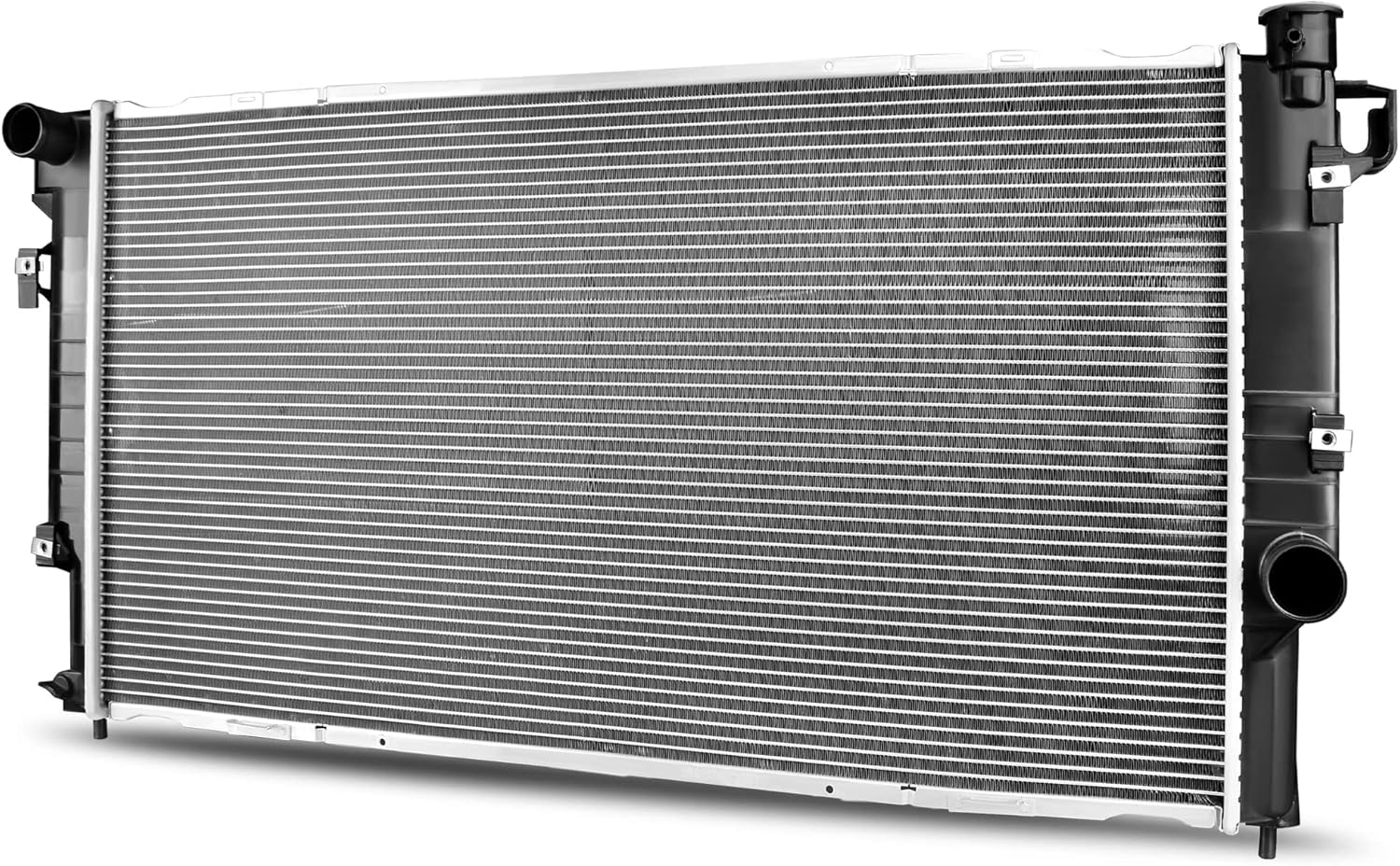
| Fitment | 1994-2002 Dodge Ram 2500/3500 5.9L L6 |
|---|---|
| Core material | 100% Aluminum core |
| End tanks | TIG-welded plastic (PA66 GF30) |
| Includes | Brass transmission oil cooler |
| Model number | Rdmd550277 |
This DWVO complete radiator is a drop-in replacement for 1994–2002 Dodge Ram 2500 and 3500 trucks with the 5.9L inline-six. It uses a high-density, multi-louvered aluminum core and TIG-welded plastic end tanks to maximize heat rejection and resist leaks under normal driving and towing loads. The unit includes a brass transmission oil cooler and comes packaged with foam supports and a user manual; the radiator cap is not included. Expect straightforward installation when paired with proper hardware and a recommended professional for those who prefer not to DIY. The radiator is pressure-tested and the manufacturer highlights compatibility with the listed OEM part numbers, which helps ensure a correct fit and cooling performance comparable to factory replacements. Keep in mind it does not include a radiator cap and routine cooling-system maintenance such as thermostat checks and correct coolant mix remain necessary for reliable operation.
Best for: Buyers who want a cost-conscious, factory-style replacement that restores cooling capacity and is suitable for regular driving and light towing on older Ram trucks.
Less Ideal for: This is not the best choice for someone building a heavy-duty high-performance cooling system or who needs upgraded aftermarket cooling beyond factory-equivalent capacity.
- Direct-fit design matching listed OEM part numbers for easier installation
- High-density multi-louvered aluminum core for improved heat dissipation
- TIG-welded end tanks and pressure testing to reduce leak risk
- Includes integrated brass transmission oil cooler for vehicles with automatic transmission
- Radiator cap is not included so a compatible cap must be sourced separately
Verdict: A budget-friendly, factory-style replacement radiator that restores reliable cooling for 1994–2002 Ram 2500/3500 5.9L trucks.
4. SCITOO Radiator Replacement (Model 125817) for 1994–1997 Dodge Ram 1500/2500/3500
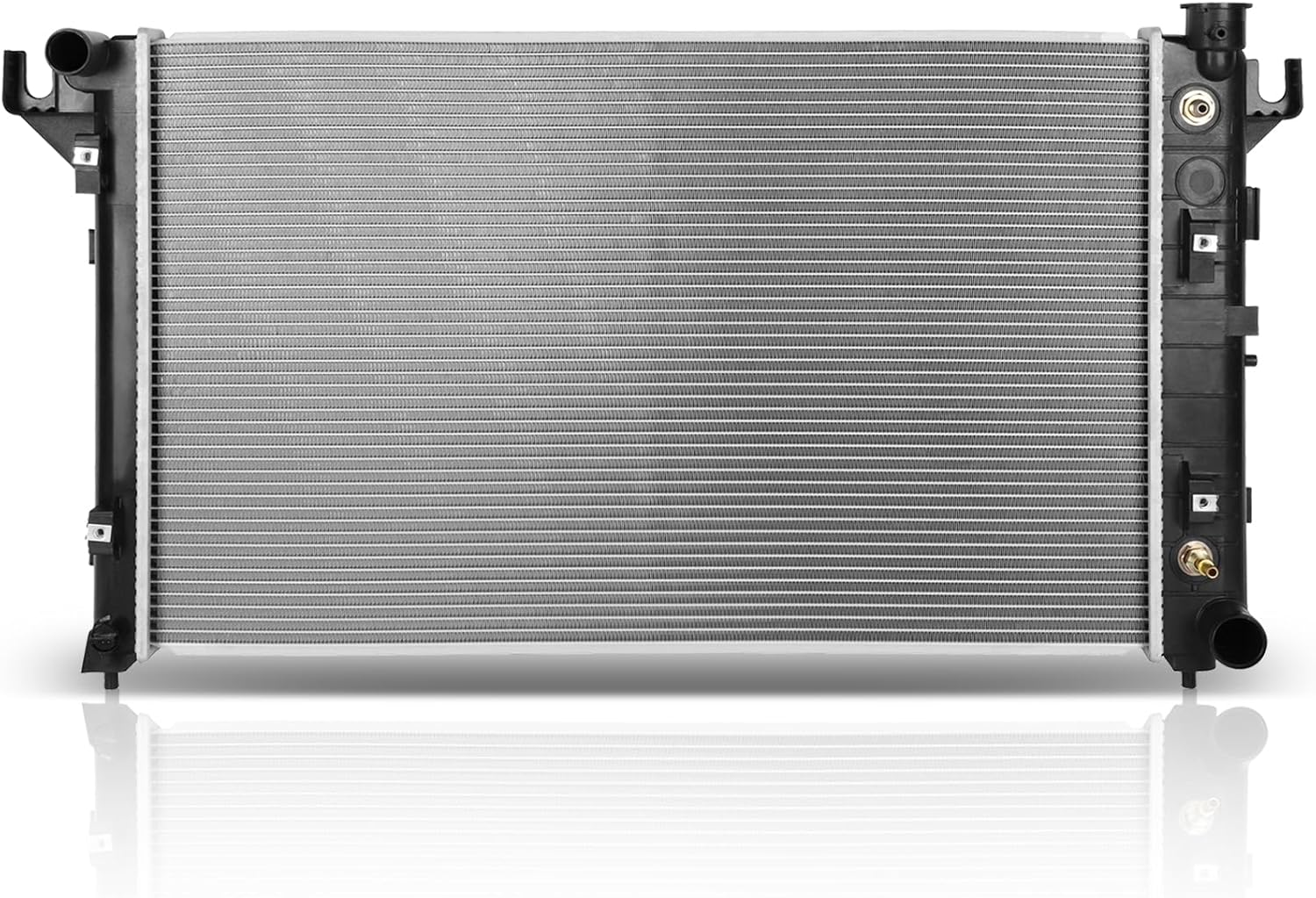
| Model | 125817 |
|---|---|
| OEM Part Number | 1552 |
| Core Rows | 1 Row |
| Transmission Oil Cooler Included | Yes |
This SCITOO replacement radiator is built as a one-row core radiator that fits mid-1990s Dodge Ram trucks and includes a transmission oil cooler connection. It is intended as a budget-friendly, direct-replacement unit for owners needing to restore cooling function without upgrading to a multi-core performance unit. Typical installation replaces the stock radiator in the same mounting points and uses the factory hoses and fittings; because it does not include an engine oil cooler, vehicles that require that feature will need a separate solution. Notable practical benefits are its straightforward fitment for the listed Ram model years and the included transmission cooler passage which keeps automatic transmission fluids from overheating. The single-row core keeps weight and cost down, but it will offer less heat rejection than two- or three-row radiators, so it is best for standard driving and towing within normal limits rather than heavy-duty high-load use. Buyers should verify fitment to their exact year and engine before purchase.
Best for: Practical owners on a tight budget who need a reliable, straightforward replacement radiator that restores normal cooling and transmission cooling without extra features or performance upgrades.
Less Ideal for: Drivers who frequently tow heavy loads, run in hot climates, or want increased cooling performance should choose a multi-row or heavy-duty radiator instead.
- Direct-fit design for 1994–1997 Ram models simplifies installation
- Includes transmission oil cooler passage for automatic transmissions
- Single-row core keeps cost and weight low
- Manufactured to match factory mounting points for straightforward replacement
- One-row core offers less cooling capacity than multi-row radiators
Verdict: A cost-conscious, direct-fit replacement that restores factory-style cooling and transmission cooling for mid-1990s Dodge Ram trucks without added performance features.
5. UIU Engine Coolant Radiator with Transmission Oil Cooler for Dodge Ram 2500/3500 8.0L (1994–2002)

| Fitment | 1994–2002 Dodge Ram 2500/3500 8.0L |
|---|---|
| Core material | Aluminum |
| Transmission cooler | Brass, integrated |
| Construction | TIG-welded |
| Tested for leaks | Yes |
This radiator replaces the factory unit and combines an aluminum core with a brass transmission oil cooler to manage both engine and transmission temperatures on 8.0L Ram 2500/3500 trucks. It is built with high-density multi-louvered fins and TIG-welded joints intended to boost cooling efficiency and durability in heavy-duty use. The molded inlet/outlet tanks are reinforced and the assembly is tested for leaks, which helps when running towing or hauling loads that push cooling capacity. Installation is straightforward for a direct-fit replacement, so most mechanically competent owners or shops can swap it without major modification. The practical benefits are stronger cooling under load and an integrated transmission cooler that avoids routing to a separate aftermarket unit. Limitations are typical of aftermarket radiators: you should verify mounting brackets, hose connections, and sensor ports match your truck before installation, and long-term corrosion resistance depends on maintenance and coolant quality.
Best for: Buyers who prioritize a durable, factory-style replacement that restores cooling capacity for heavy towing and high-load driving on older Ram 2500/3500 trucks.
Less Ideal for: People wanting a lightweight performance upgrade or a universal cooler setup that fits multiple vehicle makes should consider specialized performance radiators instead.
- Direct-fit design for 1994–2002 Ram 2500 and 3500 8.0L for simplified replacement
- Aluminum core with high-density multi-louvered fins for improved cooling efficiency under load
- Integrated brass transmission oil cooler removes need for a separate cooler and simplifies plumbing
- TIG-welded construction and leak testing reduce the chance of early failure
- Aftermarket fit can require verification of bracket, port, and sensor compatibility before installation
Verdict: A rugged, direct-fit replacement radiator with an integrated transmission oil cooler built to restore reliable cooling for 1994–2002 Ram 2500/3500 8.0L trucks.
6. AUTOSAVER88 Radiator for 1994–2002 Dodge Ram 2500/3500 5.9L I6

| Compatible vehicles | 1994-2002 Dodge Ram 2500/3500 5.9L L6 |
|---|---|
| Manufacturer part number | ATRD1052 |
| OEM part numbers | 52030191AC, 52030191 |
| Core material | Aluminum core |
| Exterior | Machined |
This AUTOSAVER88 radiator is a full replacement unit intended as a direct-fit swap for 1994–2002 Dodge Ram 2500 and 3500 trucks with the 5.9L inline-six. It pairs an aluminum core with machined high-density multi-louvered fins and a high-grade plastic tank to improve heat dissipation and resist leaks compared with older, worn cores. Installation follows factory mounting points and is intended for professional or experienced DIY installation; the radiator cap is not included so you will need to reuse the factory cap or source a new one. The unit is leak-tested at the factory and ships with a user manual, and its construction aims to hold up in heavy-duty use and extreme temperatures typical of towing and hauling. Expect straightforward fitment when matched to the listed model years and OEM part numbers, but plan for radiator cap and possible hose or hardware transfer if your truck needs them. This is a practical, budget-conscious replacement that balances cooling efficiency and longevity for older Ram trucks.
Best for: Buyers who want a proven, replacement radiator that restores reliable cooling performance to an older Ram 2500/3500 and prefer parts with documented fitment and customer feedback.
Less Ideal for: If you need an upgraded high-performance cooling solution for larger aftermarket engines or significant towing upgrades, consider purpose-built performance radiators instead.
- Direct-fit design that matches factory mounting and OEM part numbers for simplified installation.
- Aluminum core with multi-louvered fins for improved cooling efficiency under heavy loads.
- Leak-tested assembly with high-grade plastic tank to reduce early failure from leaks.
- Ships as a complete radiator unit with user manual for easier replacement planning.
- Radiator cap is not included so buyers must reuse or purchase a compatible cap separately.
Verdict: A practical, factory-style replacement radiator that restores cooling reliability for 1994–2002 Ram 2500/3500 5.9L trucks with solid customer feedback.
7. TRQ Radiator Assembly, Aluminum Core, Cross Flow (Direct Fit)

| Core Material | Aluminum |
|---|---|
| Core Thickness | 1.25 in |
| Core Row Quantity | 1 |
| Transmission Oil Cooler | Internal, 5 plates |
| Flow Type | Cross Flow |
This TRQ radiator is a direct-fit replacement intended for 1998–2002 Dodge Ram 2500/3500 and 1998–2001 Ram 1500 trucks with the 5.9L V8. It uses an aluminum crossflow core with a single-row, 1.25-inch thickness and includes an internal transmission oil cooler with five cooler plates, so it handles engine and transmission cooling without added external components. The unit is pre-assembled with plastic tanks and factory-style inlet and outlet locations for straightforward installation and minimal fuss for DIYers or independent shops. Practical benefits include improved cooling capacity over older or corroded units, integrated transmission cooling to simplify plumbing, and compatibility claims that match common factory part numbers. Limitations are that the tanks are plastic rather than metal and the radiator cap and engine oil cooler are not included, so expect to transfer or source those separately and inspect hose fittings for corrosion or fitment differences before final installation.
Best for: Buyers who want a reliable, straightforward replacement that restores cooling performance with minimal modification and prefer a part that matches factory fit and plumbing for a hassle-free install.
Less Ideal for: If you need a fully welded all-metal radiator for heavy-duty towing or extreme off-road use, or you plan significant engine/transmission upgrades, look at heavy-duty performance or aftermarket custom radiators instead.
- Direct-fit design engineered to match original mounting and inlet/outlet locations for easier installation
- Aluminum core with crossflow design improves heat transfer versus aged or damaged radiators
- Integrated transmission oil cooler with five plates eliminates the need for a separate cooler in many installations
- Pre-assembled unit reduces prep work and speeds up replacement for DIY installers
- Plastic end tanks instead of metal may be less durable over the very long term
Verdict: A direct-fit aluminum-core replacement that restores factory-style cooling and simplifies installation for risk-averse owners who want a near‑stock swap.
Choosing the Right 1994-2002 Ram 2500 Radiator: Key Factors to Consider
Core Design and Heat Rejection
Core thickness, the number of rows, and fin density directly determine how much heat the radiator can dissipate. For a 1994-2002 Ram 2500 that often tows or carries heavy loads, a thicker core or a multi-row design improves heat transfer and reduces the chance of overheating under sustained stress.
A denser fin pattern helps cooling airflow efficiency but can be more susceptible to clogging from road debris. Balance core size with clearance in the engine bay and the capacity of the truck's fan system to ensure effective cooling without interfering with other components.
Material and Corrosion Resistance
Radiators come in various materials such as all-aluminum cores and tanks, or combinations of aluminum and plastic. All-metal designs typically offer improved durability and better thermal conductivity, which is useful for an older Ram 2500 where long-term corrosion can be a concern.
Look for corrosion-resistant coatings, quality brazing, and compatible coolant recommendations. Older cooling systems may have residual contaminants or mixed-metal exposure, so a radiator with good corrosion protection reduces the chance of premature leaks or internal degradation.
Fitment and Mounting Accuracy
Correct inlet and outlet positions, mounting bracket alignment, and proper dimensions matter because the 1994-2002 Ram 2500 has limited room and factory routing for hoses and fan shrouds. A radiator that matches factory mounting points minimizes the need for modifications and reduces installation time.
Pay attention to whether the radiator is designed for automatic or manual transmission coolant routing if applicable. Precise fitment also ensures the cooling fan and shroud work as intended, which is vital for preventing hotspots.
Tank Construction and Seal Quality
Tanks can be welded metal, brazed metal, or molded plastic. Welded or brazed metal tanks generally provide a more durable seal and higher tolerance for thermal cycling and vibration, which benefits trucks used in towing and off-highway work.
Plastic tanks can be lighter and less expensive but may age and crack, especially on older platforms. Check for reinforced tank designs, quality crimping or welding at the core-to-tank joints, and robust seals around fittings to reduce potential leakage over time.
Compatibility With Cooling System Components
Consider whether the radiator works with the existing fan, fan shroud, thermostat, and transmission cooler routing. Some radiators integrate a transmission oil cooler or reuse the factory cooler ports; compatibility prevents extra plumbing and simplifies installation.
Also verify hose diameters and thermostat housing interfaces. Ensuring compatibility avoids additional adapters or hose modifications that could introduce leak points.
Serviceability and Maintenance
How easy it is to maintain the radiator affects long-term ownership. Features like accessible drain plugs, replaceable fittings, and straightforward clearance for a coolant flush make routine service simpler. For the 1994-2002 Ram 2500, regular coolant maintenance and flushes help protect the new radiator from contamination that can reduce efficiency.
Also consider the availability of replacement parts, such as caps and sensors, and whether the radiator layout allows for quick inspection of core condition without major disassembly.
When To Replace Your Radiator
Recognizing the signs that a radiator needs replacement helps prevent engine damage. Common indicators on the 1994-2002 Ram 2500 include persistent coolant loss without obvious external leaks, repeated overheating episodes under load, and visible corrosion or swelling at tank seams.
Minor issues like external dents or bent fins can sometimes be repaired, but long-term problems such as internal clogging, extensive corrosion, or cracked tanks usually require a full replacement to restore reliable cooling performance.
- Frequent temperature gauge spikes while towing or in traffic
- Discolored coolant or sludge indicating internal corrosion
- Visible coolant pooling under the vehicle after driving
- Steam from the engine bay or coolant odor after shutdown
Preparing for Installation
Plan the job to reduce downtime. Gather the correct replacement hoses, clamps, coolant, and any transmission cooler lines if applicable. Park on a level surface and allow the engine to cool completely before draining the system.
Label hoses and take reference photos of the factory routing to ensure correct reassembly. Replace the thermostat and pressure cap if they are old, as reusing worn components can mask radiator performance issues and lead to repeat service.
- Have proper tools like hose pliers and a torque wrench
- Use a clean catch basin for old coolant and dispose of it responsibly
- Inspect surrounding items like fan shroud, belts, and hoses while the radiator is out
Cooling System Maintenance Best Practices
To maximize radiator life in a 1994-2002 Ram 2500, follow scheduled coolant replacement and periodic system flushes to remove scale and deposits. Old coolant with rust or debris accelerates corrosion and reduces heat transfer efficiency.
Inspect hose condition and clamp tightness regularly. Address small leaks promptly and monitor the cooling system pressure when possible. Routine checks reduce the likelihood of sudden failures during heavy use.
- Perform a coolant flush according to the truck's service interval or sooner if contaminate is present
- Use the coolant type recommended for the truck and avoid mixing incompatible formulations
- Check for signs of oil in the coolant that indicate internal leaks
Transmission Cooler Considerations
Some radiators integrate a transmission cooler or reuse the factory cooler ports. If your Ram 2500 is used for towing, an integrated cooler can help maintain transmission operating temperature and extend service life.
If the replacement radiator does not include a cooler, you may need to transfer or install a separate external cooler. Ensure fittings and line routes are compatible to avoid creating stress points that could leak under pressure.
- Confirm if the radiator supports transmission cooling lines before installation
- Inspect O-rings and fittings when reconnecting transmission lines
- Monitor transmission fluid temperature after installation during the first towing cycle
Selecting Fluids and Fill Procedures
Use the coolant specification that matches the truck's requirements and the new radiator's recommendations. Correct mixture ratio improves corrosion protection and boiling point. When refilling, bleed trapped air from the system to prevent hotspots and inaccurate temperature readings.
After installation, run the engine with the heater on high to circulate coolant fully and watch for leaks. Recheck coolant level after a short test drive and again after a few days of normal operation to top off any trapped air that has worked its way out.
- Follow a controlled fill and bleed procedure to remove air pockets
- Check cap pressure ratings and replace with an appropriate unit if needed
- Record installation date and mileage for future maintenance
Still looking for the perfect fit?
Select your Ram 2500 configuration to see the most relevant Radiators recommendations
How We Chose the Best 1994-2002 Ram 2500 Radiator
We prioritized radiators that provide reliable cooling and durable construction suited to the heavier-duty demands of the 1994-2002 Ram 2500. Our evaluation included thermal performance indicators such as core thickness and fin density, construction materials like all-aluminum versus multi-piece assemblies, and corrosion resistance treatments relevant to older truck cooling systems.We also considered fitment and installation clarity for the factory cooling layout, including inlet/outlet locations and mounting points that affect installation time. Durability factors included reinforced tanks, quality brazing or welding, and compatibility with common coolant types. Ease of maintenance and serviceability, such as accessibility for hose connections and compatibility with standard cooling fans, were also assessed.Excluded from consideration were radiators designed for other model years or configurations outside 1994-2002 Ram 2500, units that clearly required extensive modification to fit, and products lacking verifiable construction details. Our shortlist reflects items that balance heat rejection, corrosion resistance, and straightforward fitment for this truck.
Our full evaluation process is outlined in our review methodology.
FAQ
How can I tell if my 1994-2002 Ram 2500 radiator is leaking?
Look for coolant puddles under the truck, persistent low coolant level, or visible wetness around tank seams and hose connections. You may also notice a sweet smell, white steam, or the temperature gauge running higher under load.
Is it necessary to flush the cooling system when installing a new radiator?
Usually yes. A flush removes rust and deposits that could contaminate the new radiator and reduce its efficiency. Flushing also helps ensure the coolant chemistry is correct for corrosion protection.
Can I reuse the factory fan and shroud with a replacement radiator?
Often you can, but fitment depends on the replacement radiator's dimensions and mounting points. Verify clearance and alignment before final installation to ensure the fan and shroud operate without interference.
Will a higher-capacity core cause fitment issues in the engine bay?
A thicker or larger core may reduce available clearance for the fan and shroud. Check physical dimensions and consider whether minor trimming or bracket adjustments are needed. Avoid modifications that compromise structural mounting points.
How long should a replacement radiator last on this truck?
Lifespan varies based on material, environment, and maintenance, but a well-made radiator with proper coolant care can last many years. Frequent towing, poor coolant maintenance, or corrosive environments shorten service life.
Do I need a different radiator if my truck tows frequently?
If you tow often, a radiator with greater heat rejection capacity or an integrated transmission cooler can help manage higher thermal loads. Prioritize core design and durability for sustained towing performance.
Final Verdict
When replacing the radiator on a 1994-2002 Ram 2500, prioritize heat rejection capacity, durable construction, and accurate fitment. Consider whether you need an integrated transmission cooler and choose materials and corrosion protection that match the truck's operating environment.Weigh the tradeoffs between thicker cores for improved cooling and the physical constraints of the engine bay. With attention to fitment and proper coolant maintenance after installation, you can restore reliable cooling and reduce the chance of repeat service.
Explore More:
- Check out all Ram 2500 parts & accessories
- Explore Radiators Maintenance & Repair Guides
- Explore Cooling System
- Browse all Auto Parts
