

Note: This article contains affiliate links. If you click on these links and make a purchase, I may earn a small commission at no extra cost to you. This helps support my research and content. Read my full affiliate disclosure here.
If you own a 1994-2001 Ram 1500, a healthy radiator is essential to prevent overheating and keep the engine running reliably. A failing radiator commonly causes coolant loss, temperature spikes, and occasional steam under the hood, any of which can lead to more extensive engine damage if left unaddressed.This guide covers the top shortlisted radiators chosen specifically for the 1994-2001 Ram 1500. We focus on direct-fit units, cooling performance, corrosion resistance, and ease of installation so you can pick a replacement that restores proper cooling and minimizes downtime. Read on for the evaluation criteria and practical installation and maintenance advice before selecting the right radiator for your truck.
Looking for other parts? See all Ram 1500 parts & accessories.
Top Picks at a Glance
| Best Overall The best all-around choice for most situations | SCITOO Engine Cooling Radiator Compatible with 1994–2001 Ram 1500 |  |
| Best Quality Built to a higher standard if you want something more solid | ALLOYWORKS 4-Row All-Aluminum Radiator for 1994–2002 Dodge Ram 1500/2500/3500 |  |
| Best Value The sweet spot between price and what you get | KAX CU1552 Engine Cooling Radiator Replacement |  |
| Best Budget The cheapest option that still gets the job done reliably | ITOPUP Aluminum Radiator Compatible with 1994–2001 Dodge Ram 1500/2500/3500 |  |
| Highest Rated A top-rated pick with lots of positive feedback | Auto Dynasty 1-Row Aluminum Radiator for 1994-2002 Dodge Ram (3.9L/5.2L/5.9L AT) |  |
| Most Popular A crowd favorite that many people choose with confidence | SCITOO Radiator Replacement (Model 125817) for 1994–2001 Ram 1500 / 1994–1997 Ram 2500/3500 |  |
SCITOO Engine Cooling Radiator Compatible with 1994–2001 Ram 1500

| Fitment | 1994–2001 Ram 1500 (3.9L, 5.2L, 5.9L) |
|---|---|
| Transmission oil cooler | Included |
| Row count | 1-Row |
| Radiator cap | Not included |
This SCITOO radiator is a one-row direct-replacement built to fit 1994–2001 Ram 1500 trucks with specified 3.9L, 5.2L, and 5.9L engines. It is sold as a painted assembly with the transmission oil cooler integrated so you can swap the core into the truck without sourcing a separate cooler. Typical use is a straightforward repair for an overheated or leaking original radiator; many buyers reported the unit bolts in and matches mounting points, though a few noted minor clip alignment adjustments were required. The single-row core keeps the unit lightweight and simpler to install, but that also means less cooling surface compared with thicker multi-row radiators, so it suits everyday driving and towing within normal limits rather than heavy-duty high-heat use. SCITOO provides installation resources and the product includes common replacement reference numbers for the Ram 1500 fitment. Expect solid value and good fit for routine replacement, while owners in very hot climates or heavy continuous towing should consider higher-capacity cores instead.
Best for: Buyers who want a reliable, budget-friendly factory-style replacement radiator for routine driving and occasional towing and prioritize correct fit and easy installation.
Less Ideal for: Drivers who regularly tow heavy loads, operate in extreme heat, or need maximum cooling should choose a thicker multi-row or performance radiator instead.
- Direct-fit for 1994–2001 Ram 1500 applications matching factory mounting points
- Integrated transmission oil cooler included so no separate cooler needed
- Painted finish and complete assembly simplify installation and appearance
- Numerous buyer reports of straightforward installation and correct fit
- One-row core provides less cooling capacity than multi-row or performance radiators
Verdict: A straightforward, factory-style replacement radiator that delivers correct fit and integrated transmission cooling for most 1994–2001 Ram 1500 owners looking for value and ease of installation.
ALLOYWORKS 4-Row All-Aluminum Radiator for 1994–2002 Dodge Ram 1500/2500/3500

| Vehicle fitment | Dodge Ram 1500 3.9L/5.2L/5.9L 1994-2002; 2500/3500 1994-1997 |
|---|---|
| Rows | 4 Row |
| Material | Aluminum |
| Inlet/Outlet | 1.50" / 1.75" |
| Trans cooler | Included |
This ALLOYWORKS radiator replaces the factory unit with a full‑aluminum, 4‑row core that is aimed at performance and heavy‑use applications. It installs like a direct replacement for the listed 1994–2002 Ram fitments and includes a built‑in transmission cooler. The thicker multirow design and TIG‑welded construction deliver noticeably higher cooling capacity and durable welds that reviewers say hold pressure well. Practical benefits include lower operating temperatures under tow or spirited driving and a larger coolant volume, which helps stabilize temps on long runs. The unit is finished in polished aluminum and arrives as a full set ready for professional installation; some users report swapping fasteners for the fan shroud during fitment. Limitations are that no fitting instructions are supplied and installation can require basic modifications or different fasteners for certain stock hardware. For owners focused on improved cooling performance this radiator is a straightforward upgrade, but expect to have tools and mechanical know‑how or a shop install to ensure a clean fit.
Best for: Buyers wanting a performance-oriented cooling upgrade for a 1994–2002 Ram who prioritize lower engine temperatures under towing or spirited driving and are comfortable arranging professional installation or DIY with mechanical skill.
Less Ideal for: Drivers looking for a drop‑in, no‑touch replacement with step‑by‑step instructions or those unwilling to address minor fitment adjustments should consider a factory-quality direct replacement instead.
- 4‑row all‑aluminum core increases cooling capacity over standard radiators
- TIG‑welded construction and pressure tested for leaks and durability
- Includes integrated transmission cooler for automatic transmissions
- Polished finish and larger coolant capacity improve heat soak resistance
- No fitting instructions included, so professional installation is recommended
- May require alternate fasteners or minor adjustments for fan shroud fitment
Verdict: Choose this high-capacity 4‑row aluminum radiator when you need noticeably better cooling for a 1994–2002 Ram during towing or performance driving.
KAX CU1552 Engine Cooling Radiator Replacement

| Compatible vehicles | 1994-2001 Ram 1500; 1994-1997 Ram 2500/3500 (V8) |
|---|---|
| Core thickness | 1 inch |
| Transmission oil cooler | Included |
| Mount type | Top flange / Bottom pin |
| Flow type | Cross Flow |
This KAX CU1552 radiator is a factory-style replacement built for older Ram trucks with V8 engines and is intended to restore cooling performance after a failed core. It installs in the stock mounts and includes a transmission oil cooler, so it covers the common cooling and trans-cooling needs when replacing a worn radiator. The unit uses a high-density aluminum core with multi-louvered fins and precision TIG welding; the listing notes PA66 GF30 plastic tanks and testing to industry quality standards for leak resistance. Buyers can expect typical repair use where the radiator is swapped into the stock location and connected to existing hoses and transmission lines. Practical benefits are straightforward fitment for the specified years, integrated trans cooler, and reinforced packaging to reduce shipping damage. Limitations to consider are that some buyers reported bolt hole alignment or mounting differences on certain vehicles, so verify exact fit and be prepared to modify mounting holes or confirm fitment before installation. Professional installation is recommended for a clean, leak-free result.
Best for: Buyers who want a practical, budget-conscious replacement to restore cooling and transmission cooling on older Ram trucks and prefer a unit that aims for factory-style fit and function.
Less Ideal for: If you need an exact OEM-certified part or prefer a radiator with extended aftermarket warranty coverage or custom performance features, look at dealer or high-end performance options instead.
- Designed as a direct-fit replacement for 1994–2001 Ram 1500 and 1994–1997 Ram 2500/3500 V8 applications
- Aluminum core with multi-louvered fins for improved heat dissipation
- Includes transmission oil cooler so no separate trans-cooler plumbing is needed
- Precision TIG welding and claimed leak testing for durability
- Reinforced shockproof packaging to reduce risk of transit damage
- Some users report mounting hole or alignment differences that may require minor drilling or adjustment
Verdict: A cost-effective, direct-fit replacement radiator that restores engine and transmission cooling on specified 1994–2001 Ram trucks without extra parts.
ITOPUP Aluminum Radiator Compatible with 1994–2001 Dodge Ram 1500/2500/3500

| Compatibility | 1994–2001 Dodge Ram 1500/2500/3500 (3.9L, 5.2L, 5.9L) |
|---|---|
| Construction | Aluminum core with precision fins |
| Manufacturer | ITOPUP |
| Manufacturer Part Number | 125817-5430-1755315031 |
| OEM Part Number | RAD:1552 |
This ITOPUP radiator is a direct replacement-style unit built with an all-aluminum core and precision fins to improve heat transfer compared with older or corroded stock radiators. It is intended for 1994–2001 Dodge Ram 1500, 2500 and 3500 applications across listed 3.9L, 5.2L and 5.9L engines and installs in the factory location using existing mounting points. Buyers report straightforward installation and good cooling performance out of the box, and the aluminum construction helps reduce corrosion and supports higher cooling capacity. Build quality is generally solid for the price, though a minority of buyers experienced fitment or leak issues, so take care when aligning mounting holes and torqueing plumbing. The radiator ships well packed and includes the single unit only, so you will reuse your existing cap, hoses, and sensors. For someone replacing an old, leaking, or clogged radiator on a budget, this offers a cost-effective way to restore cooling without paying dealer prices, but professional installation or careful checks are recommended to avoid installation-related leaks.
Best for: Practical truck owners looking to replace a failing radiator without spending on dealer parts who prioritize restoring reliable cooling at a low cost and are comfortable arranging a simple install or paying a mechanic.
Less Ideal for: Buyers seeking a premium performance or lifetime-guaranteed racing radiator should look at higher-end aftermarket brands with full accessory kits and extended warranties.
- Full-aluminum core and precision fin design for improved heat transfer and corrosion resistance
- Listed fitment specifically for 1994–2001 Dodge Ram 1500/2500/3500 engines, simplifying compatibility checks
- Compact packaging and included single-unit delivery make installation preparation straightforward
- Multiple customer reports of exact fit and easy installation compared with dealer replacements
- Some buyers reported leaking or incomplete bracket hole alignment on a minority of units
- Does not include cap, hoses, or hardware so additional parts may be needed for a full service
Verdict: If you need an affordable, factory-style radiator replacement for a 1994–2001 Ram that restores cooling without the dealer markup, this aluminum ITOPUP unit is a solid value choice.
Auto Dynasty 1-Row Aluminum Radiator for 1994-2002 Dodge Ram (3.9L/5.2L/5.9L AT)

| Fits engines | 3.9L, 5.2L, 5.9L (AT) |
|---|---|
| Rows | 1 |
| Core material | T-6061 Aluminum |
| Transmission cooler | Yes (TOC) |
This Auto Dynasty radiator is a one-row aluminum core replacement intended to match factory fitment for 1994–2002 Dodge Ram trucks with 3.9L, 5.2L, or 5.9L engines and automatic transmissions. It installs as a direct bolt-on replacement and includes a transmission oil cooler port, so it covers both engine cooling and AT cooling without modifications. The T-6061 aluminum core paired with heavy-duty plastic tanks aims to improve heat transfer and cooling capacity versus some older stock units, while keeping weight down. Real-world reports show straightforward installs and generally exact fitment, although a professional installer is recommended and the unit does not include installation hardware. Limitations to note are its single-row core, which may be less capable than multi-row performance radiators under extreme towing or heavy-duty use, and a few customers reported minor plastic fittings breaking during handling. For owners after a reliable, factory-style replacement that improves cooling over aged originals, this is a practical option; those needing maximum cooling capacity for heavy towing should consider multi-row alternatives.
Best for: Buyers who prioritize a reliable, factory-style replacement to restore cooling performance on older Dodge Ram trucks and value straightforward installation and fitment.
Less Ideal for: Drivers who frequently tow heavy loads, use their truck for sustained high-temperature work, or want a high-capacity performance cooling upgrade should look at multi-row or heavy-duty radiators.
- Direct bolt-on fit for specified Dodge Ram years and engine options
- Aluminum T-6061 core provides improved heat transfer over many old stock radiators
- Includes transmission oil cooler port to handle automatic transmission cooling
- Lightweight single-row design simplifies installation and reduces strain during handling
- Single-row core offers less peak cooling capacity than multi-row radiators under heavy towing or high-load conditions
- Some plastic fittings and mounts have been reported to break if handled roughly during installation
Verdict: A durable, direct-fit aluminum replacement that restores and improves cooling for older Dodge Ram trucks without requiring modifications.
SCITOO Radiator Replacement (Model 125817) for 1994–2001 Ram 1500 / 1994–1997 Ram 2500/3500
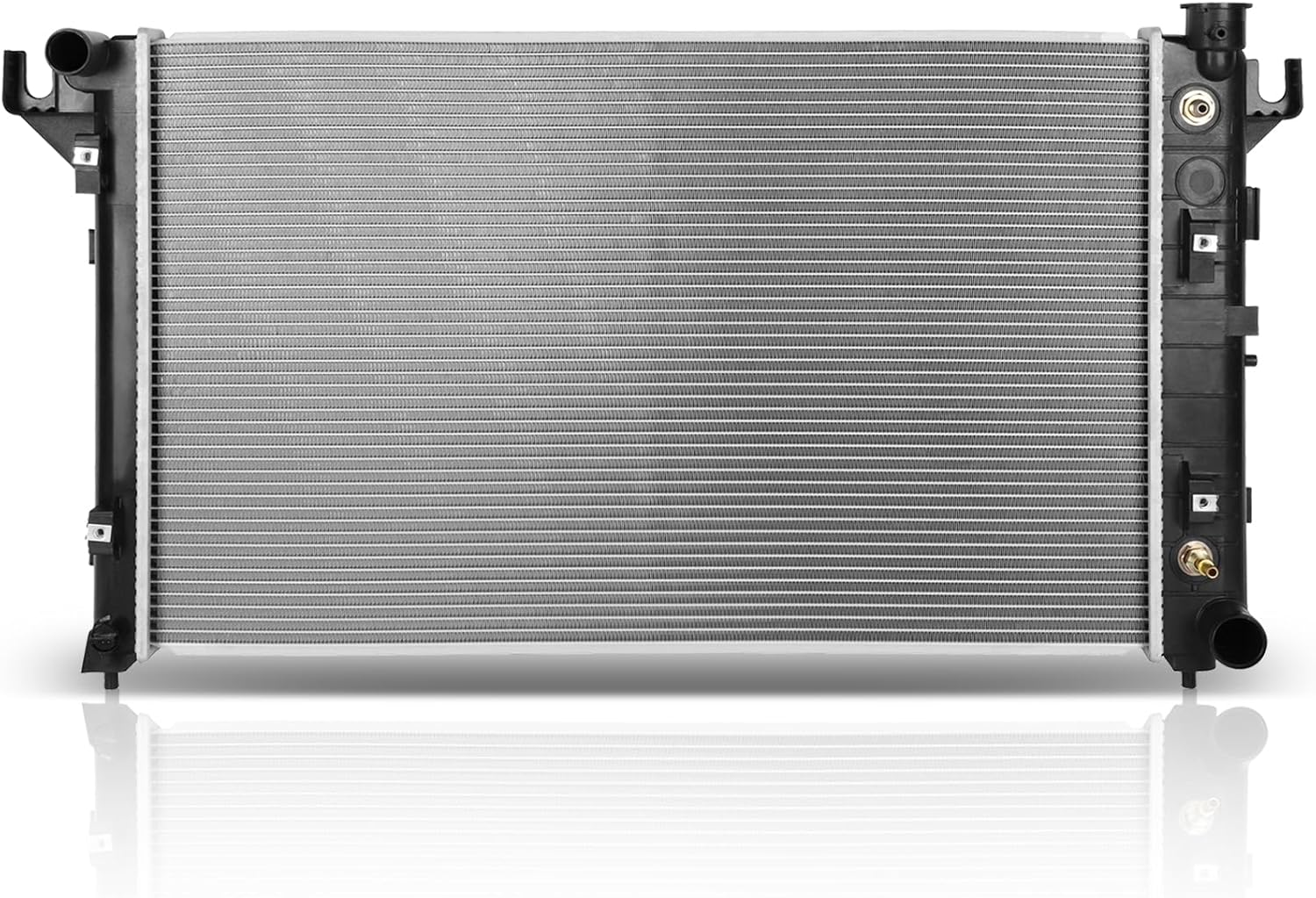
| Manufacturer | SCITOO |
|---|---|
| Model | 125817 |
| OEM Part Number | 1552 |
| Core Rows | 1 Row |
| Transmission Oil Cooler Included | Yes |
This SCITOO radiator is an aftermarket direct-replacement intended for 1994–2001 Ram 1500 trucks and certain 1994–1997 Ram 2500/3500 applications. It uses a single-row core and includes a built-in transmission oil cooler, so it handles cooling and ATF cooling without add-on components. Install is typical of bolt-in radiator swaps and reviewers report good fit and straightforward installation when the correct part number is chosen. The seller states the unit is manufactured to factory-style dimensions and the high-density multi-layer core aims to improve cooling efficiency while preventing leaks. Practical benefits are a lower-cost replacement option and an integrated transmission cooler that keeps plumbing simple. Important limitations are the single-row core, which offers less cooling margin than multi-row performance radiators, and the radiator cap is not included so you may need to reuse the factory cap. Also confirm exact fitment before buying since fit depends on engine and model year variations.
Best for: Buyers who prioritize a reliable, budget-friendly factory-style replacement and want a unit that installs like the original with an integrated transmission cooler.
Less Ideal for: Owners who need extra cooling capacity for heavy towing, high-performance engines, or extreme climates should opt for multi-row or performance radiators instead.
- Built as a direct replacement for specified 1994–2001 Ram 1500 and 1994–1997 Ram 2500/3500 models
- Integrated transmission oil cooler reduces installation complexity
- High-density multi-layer core design aimed at efficient heat transfer
- Many customer reports of correct fit and simple installation
- Single-row core provides less cooling capacity than two- or three-row radiators
- Radiator cap is not included
Verdict: A cost-effective, factory-style replacement radiator for mid-1990s Ram trucks that includes a transmission cooler and fits like the original.
Choosing the Right 1994-2001 Ram 1500 Radiator: Key Factors to Consider
Fitment and Mounting Accuracy
Correct fitment is the foundation of a successful radiator replacement on a 1994-2001 Ram 1500. A direct-fit radiator saves time and prevents issues such as misaligned hose connections, radiator support interference, or the need to alter brackets. Verify that mounting tabs, inlet and outlet positions, and transmission cooler connections (if applicable) match the truck's original layout.
Even small differences in neck height or tab placement can create stress on hoses and clamps, leading to leaks down the road. Accurate fitment also reduces the likelihood of needing additional parts, such as custom hoses or adapter fittings, which increases complexity and labor time.
Core Design and Cooling Capacity
Core size, tube count, and fin density determine how efficiently the radiator rejects heat. For the 1994-2001 Ram 1500, consider radiators that match or exceed the original core area to maintain operating temperatures under highway loads and occasional towing. A thicker or multi-row core typically improves heat transfer but can require more fan power and may affect airflow at low speeds.
Look for cores designed to balance airflow and coolant flow to avoid hotspots. Improved cooling capacity is particularly important if you use the truck for light towing or frequent heavy-load driving, where the engine produces more heat than in normal commuting.
Materials and Corrosion Resistance
Radiators are commonly constructed from aluminum cores with either plastic or aluminum tanks. For older trucks like the 1994-2001 Ram 1500, corrosion resistance matters because years of coolant chemistry and environmental exposure can accelerate deterioration. Aluminum cores with full-metal tanks offer better longevity in many cases, while quality plastic tanks can be acceptable if the assembly uses robust seals and reinforced necks.
Pay attention to brazing quality at tube-to-header joints and whether the radiator has protective coatings or treated fins. A radiator that resists electrochemical corrosion will reduce the chance of internal leaks and premature failure, which is especially relevant if the truck will see extended service life.
Transmission Cooler Integration
Some radiators designed for the 1994-2001 Ram 1500 include a built-in transmission cooler or provisions for one. If your truck has an automatic transmission and the factory setup routed transmission fluid through the radiator, choose a radiator that maintains those connections and capacity. A dedicated transmission cooler or integrated plate cooler should match the original fluid line fittings and flow capacity.
Incorrect or undersized transmission cooling can lead to higher fluid temperatures and reduced transmission life. Confirming the presence and compatibility of transmission cooler ports prevents additional plumbing work and ensures the transmission stays within safe operating temperatures.
Leak Prevention and Repairability
Leak prevention starts with robust materials, quality seals, and solid manufacturing processes. For a 1994-2001 Ram 1500, common failure points include necks, seam joints, and soldered or brazed areas. Choosing a radiator with reinforced necks and well-executed seam joints reduces the likelihood of external leaks.
Repairability is also worth considering. Some radiators are easier to patch or have replaceable components, while others require full replacement if compromised. Evaluate how accessible the radiator is in the engine bay and whether standard repair techniques apply should a minor leak occur.
Ease of Installation and Service
Ease of installation impacts total downtime and labor costs. A radiator that uses factory mounting points, standard hose connections, and clear instructions will be quicker to install on a 1994-2001 Ram 1500. Consider whether necessary accessories—mounting bolts, grommets, drain petcock, or hose clamps—are included or must be sourced separately.
Serviceability also covers how easy it is to flush, inspect, and replace hoses once the new radiator is installed. A design that allows straightforward access to the drain and fill points simplifies future coolant maintenance and reduces the chance of trapped air after a coolant change.
Common Radiator Symptoms and What They Mean
Recognizing early symptoms can save you time and prevent more serious engine damage. Typical signs on a 1994-2001 Ram 1500 include a rising temperature gauge, visible coolant puddles under the truck, steam from the engine bay, or reduced heater performance. Each symptom points to different root causes that should be diagnosed before replacing the radiator.
Intermittent overheating may indicate a clogged core or restricted coolant flow, while steady coolant loss often signals an external leak at a hose, clamp, or tank seam. A thorough inspection should include checking hose condition, clamp tightness, and looking for corrosion at joint areas. Documenting the specific symptom pattern helps you choose the right replacement radiator and any supplementary repairs.
- Rising temperature gauge under load: possible reduced core efficiency or clogged passages
- Visible leaks or dried coolant residue: external leak at necks, seams, or hoses
- Steam or sudden temperature spikes: rapid coolant loss or failed pressure cap
- Poor heater output: air trapped in the cooling system or low coolant level
Preparing the Truck for Radiator Replacement
Preparation streamlines the swap and prevents common installation delays. Start by allowing the engine to cool completely, then drain the coolant into a suitable container. Note whether your truck uses a transmission cooler through the radiator and plan to capture or cap fluid lines to avoid spills.
Gather tools and replacement parts such as new hose clamps, a pressure cap if needed, and a fresh coolant supply compatible with your truck's recommendation. Loosen connections and inspect surrounding components, including the fan shroud and A/C condenser, so you can remove them cleanly if they obstruct access to the radiator.
- Cool engine and safe coolant disposal
- Inspect and prepare replacement hoses and clamps
- Have drip pans and shop towels ready
- Confirm transmission cooler line handling if applicable
Cooling System Maintenance After Installation
After installing a new radiator, proper system fill and bleed procedures are essential to avoid trapped air and poor heating performance. Follow a step-by-step coolant fill routine and run the engine to operating temperature while monitoring for leaks and observing heater performance. Verify that the thermostat and water pump are functioning correctly during this process.
Regular maintenance extends radiator life. Schedule periodic coolant flushes at manufacturer-recommended intervals or sooner if coolant appears discolored or contaminated. Keep an eye on hose condition and clamp tightness during routine oil changes to catch early signs of deterioration.
- Bleed the cooling system to remove air pockets
- Monitor engine temperature and heater output after first drive
- Inspect for leaks at fittings and seams after thermal cycling
- Perform coolant chemistry checks and scheduled flushes
When to Repair Versus Replace a Radiator
Deciding between repair and replacement depends on the location and severity of damage. Small, localized leaks at an accessible seam or a chipped fin can sometimes be repaired temporarily, but long-term reliability depends on material and construction. For older radiators with multiple weak points or signs of internal corrosion, replacement is usually the more reliable option.
Consider repair when the issue is confined and the radiator's overall condition is otherwise good. Replacement becomes the better choice if the core shows extensive corrosion, multiple leak sites, or if the radiator has failed at a structurally critical location such as the neck or a brazed header.
- Minor external leaks: potential temporary repairs
- Multiple leak sites or internal corrosion: favor replacement
- Structural failures at necks or mounting tabs: replace for reliability
- Factor in labor time and ease of future maintenance when deciding
Cost Factors to Expect for Radiator Work
Total cost for radiator work on a 1994-2001 Ram 1500 varies with parts chosen and whether additional components like hoses, clamps, or the thermostat are replaced. Material quality and whether the radiator includes integrated transmission cooling also change the parts cost. Labor time is influenced by whether ancillary components need removal to access the radiator.
Budget for incidental items such as fresh coolant, a new pressure cap, and replacement hose clamps. If the water pump or thermostat shows wear during inspection, addressing them at the same time can save labor costs later and reduce the chance of early failure of the new radiator.
- Integrated transmission cooler radiators may cost more but simplify fluid management
- Replacing worn hoses and clamps during the job reduces future leaks
- Consider the long-term value of higher-quality cores versus short-term savings
Still looking for the perfect fit?
Select your Ram 1500 configuration to see the most relevant Radiators recommendations
How We Chose the Best 1994-2001 Ram 1500 Radiator
We prioritized radiators that meet the specific fitment requirements for 1994-2001 Ram 1500 trucks and that address common failure modes for this generation. Key evaluation criteria included cooling capacity under typical loads and towing conditions, core construction and materials for corrosion resistance, and the accuracy of factory-style mounting points and hose connections to ensure straightforward installation.We also considered build quality factors such as brazed joints, tank material, and fin density because these affect long-term reliability. Ease of installation and availability of replacement parts or mounting hardware were assessed to reduce installation time and unexpected modifications. Thermal performance was judged by published core dimensions and design features that improve coolant flow and heat dissipation.Excluded from consideration were generic universal-fit radiators that require substantial modification, units with unclear fitment documentation, and products lacking clear material specifications. Our list emphasizes direct-fit, truck-specific radiators that balance durability and serviceability for 1994-2001 Ram 1500 owners.
Our full evaluation process is outlined in our review methodology.
FAQ
How do I know if the radiator is the cause of overheating on my 1994-2001 Ram 1500?
Overheating linked to the radiator often shows as gradual temperature rise, visible coolant leaks, or a clogged-looking core. Check for external leaks, feel for uneven temperature across the core with the engine warm and the fan off, and inspect hoses and the cap before concluding the radiator is at fault.
Can I use a universal radiator instead of a direct-fit unit for my truck?
A universal radiator can be used with modifications, but it often requires additional hoses, mounting work, and potential transmission cooler plumbing changes. For the 1994-2001 Ram 1500, a direct-fit unit minimizes labor and fitment risk and is usually the preferred choice.
Should I replace hoses and the thermostat when installing a new radiator?
It is often wise to replace worn hoses, clamps, and the thermostat during a radiator replacement because these parts are inexpensive relative to labor and can prevent early failures or leaks after the job is completed.
How often should I perform a radiator coolant flush on this generation of Ram 1500?
A coolant flush interval depends on coolant type and service history, but flushing every 3 to 5 years is common for older trucks. If the coolant appears rusty or contains debris, a sooner flush is advisable to protect the new radiator and the rest of the cooling system.
What are the signs of a failing integrated transmission cooler in the radiator?
Signs include transmission fluid contamination with coolant, reduced transmission performance, or external leaks at the cooler ports. If you suspect the integrated cooler is compromised, inspect fluid condition and the cooler connections and consider a dedicated external cooler if necessary.
Can small radiator leaks be temporarily fixed until I replace the radiator?
Some small external leaks can be temporarily sealed with appropriate repair methods, but these are usually short-term solutions. Temporary fixes may buy time, but a full replacement is recommended if the radiator shows multiple issues or internal corrosion.
Final Verdict
For a 1994-2001 Ram 1500, prioritize a direct-fit radiator with adequate core capacity and corrosion-resistant construction to restore reliable cooling and minimize future maintenance. Confirm that transmission cooler ports, inlet/outlet locations, and mounting points match your truck to avoid extra modifications. Balance material quality against ease of installation and serviceability, and address worn hoses, clamps, and thermostat at the same time to maximize the life of the replacement.Choose the option that best matches your typical driving and load conditions: heavier use and towing justify more robust cores and integrated cooling features, while routine street use can often be served well by a durable, properly fitting direct replacement.
Explore More:
- Check out all Ram 1500 parts & accessories
- Explore Radiators Maintenance & Repair Guides
- Explore Cooling System
- Browse all Auto Parts
