

Note: This article contains affiliate links. If you click on these links and make a purchase, I may earn a small commission at no extra cost to you. This helps support my research and content. Read my full affiliate disclosure here.
If you drive a Subaru Impreza, a failing oxygen sensor can cause rough idle, reduced fuel economy, and illuminated engine fault lights. Choosing the right oxygen sensor matters because fit and response characteristics directly affect engine management and emissions performance. This guide covers our seven shortlisted picks for Subaru Impreza oxygen sensor replacements and explains why each made the list based on fitment, response time, and durability. Read on to understand the evaluation criteria and what to expect when you replace the sensor.
Looking for other parts? See all Subaru Impreza parts & accessories.
Top Picks at a Glance
| Best Reviewed A top-rated pick with lots of positive feedback | Likala Oxygen Sensor (Upstream and Downstream) for Subaru 2.5L 2006–2011 |  |
| Most Popular A crowd favorite that many people choose with confidence | NECATUO 234-9015 Heated Upstream Oxygen (O2) Sensor |  |
| Best Quality Built to a higher standard if you want something more solid | Denso Oxygen (O2) Sensor 234-4988 — Replacement Rear O2 Sensor |  |
| Best Budget The cheapest option that still gets the job done reliably | BLPextrm Upstream Oxygen Sensor (replaces 22641-AA011) |  |
| Most Sold A high-volume bestseller chosen again and again | DrCax Upstream Heated Oxygen Sensor for Subaru Impreza/Forester/Crosstrek |  |
| Best Value for Money The sweet spot between price and what you get | Bosch 17018 Premium Oxygen Sensor |  |
| Best Overall The best all-around choice for most situations | Bosch 18075 Premium Fitment Oxygen Sensor |  |
1. Likala Oxygen Sensor (Upstream and Downstream) for Subaru 2.5L 2006–2011

| Compatible vehicle engines | Subaru 2.5L 2006–2011 |
|---|---|
| Mounting type | Plug Mount |
| Output type | electrical signal |
| Upper temperature rating | 932 Degrees Fahrenheit |
This Likala kit supplies both upstream and downstream oxygen sensors that plug into the factory harness and are listed to fit Subaru 2.5L models from 2006 through 2011. They are built with a stainless steel, laser‑welded housing and a high temperature rating so they tolerate exhaust heat and resist corrosion. Installation is intended to be straightforward with pre‑coated threads and a plug‑and‑play connector, making them suitable for a DIY replacement when a check engine light points to a faulty O2 sensor. In use the sensors provide the expected electrical signal for the engine control module to manage fuel trim, so you can recover fuel economy and stable idle compared with a degraded sensor. Caveats: correct thread engagement and occasional use of a proper tap may be required on older exhaust ports, and this is an aftermarket part rather than a factory brand so long‑term durability vs factory units can vary by vehicle and driving conditions.
Best for: A reliability‑focused buyer who wants a straightforward, complete O2 sensor replacement to restore proper engine fueling and avoid repeat trips to a shop.
Less Ideal for: Drivers seeking an exact factory brand replacement or guaranteed OEM longevity should consider factory‑brand sensors instead.
- Includes both upstream and downstream sensors for complete replacement
- Stainless steel, double laser welded body improves heat and corrosion resistance
- Plug‑and‑play connector and pre‑coated threads simplify installation
- Designed for fast response to help restore fuel trim and engine stability
- Aftermarket construction may not match long‑term durability of factory parts
- Older exhaust threads may require chasing or a tap for proper installation
Verdict A cost‑effective pair of plug‑in oxygen sensors aimed at restoring engine performance on Subaru 2.5L models, with easy installation but typical aftermarket durability tradeoffs.
2. NECATUO 234-9015 Heated Upstream Oxygen (O2) Sensor

| Vehicle fitment | 2003–2004 Subaru Impreza (compatible list includes other Subaru models) |
|---|---|
| Position | Upstream (Sensor 1) |
| Material | Ceramic, stainless steel, titanium |
| Output Type | Push-Pull |
This NECATUO 234-9015 is a heated upstream oxygen sensor sold as a direct-fit replacement for compatible Subaru engines. It installs in the upstream position to monitor the air/fuel ratio before the catalytic converter and feeds that signal to the engine management system to help correct fueling and emissions. The sensor is offered as a single unit manufactured to match factory fit and includes anti-seize on the threads in many packages for easier installation. Users report it clears check-engine lights and restores expected sensor readings when the original has failed. Build materials listed and a heated element mean the sensor reaches operating temperature quickly for reliable closed-loop operation at idle and short trips. Variability in aftermarket quality shows in a mix of reviews, with some buyers needing OEM or alternative brands if their vehicle developed richer running after installation, so expect to verify part compatibility and clear codes after fitting. For a convenience-focused repair, this provides a practical, easy-to-install option when the correct Subaru fitment is confirmed.
Best for: A convenience-driven buyer who wants a direct-fit, no-frills replacement to quickly restore proper sensor readings and clear a check-engine light on a compatible Subaru Impreza.
Less Ideal for: Drivers who prioritize guaranteed OEM-brand performance or who prefer to replace multiple exhaust sensors at once should consider OEM or matched-brand options instead.
- Factory-replacement fit for compatible Subaru models simplifies installation.
- Heated element allows the sensor to reach operating temperature quickly for accurate closed-loop control.
- Constructed from durable materials intended to match OEM longevity.
- Includes anti-seize on threads in many listings to prevent damage during removal.
- Aftermarket quality can be inconsistent across vehicles, occasional reports of incorrect fueling behavior.
- Sold as a single sensor rather than a pair when some repairs benefit from replacing both upstream and downstream sensors.
Verdict A convenient, direct-fit heated upstream O2 sensor for compatible 2003–2004 Subaru Impreza owners, but confirm compatibility and monitor fueling after install.
3. Denso Oxygen (O2) Sensor 234-4988 — Replacement Rear O2 Sensor

| Application | 2014–2018 Forester, 2015–2021 WRX |
|---|---|
| Mounting Type | Thread-In |
| Output Type | Electrical signal |
| Material | Stainless Steel, Zirconium |
| Upper Temperature Rating | 1200 Degrees Celsius |
This Denso 234-4988 is a direct-fit narrow-band rear oxygen sensor intended to replace a failed downstream O2 sensor on compatible Subaru vehicles. It installs like a standard thread-in sensor and connects via a four-wire harness, so it is used when a check engine code or poor fuel economy indicates a bad downstream sensor. Notable features include a corrosion-resistant stainless steel body, a refined zirconia sensing element for faster response, and an internal PTFE filter to block contaminants. Those features translate to reliable, OEM-like readings that clear downstream O2 codes and help the ECU correct fuel trim and emissions. The sensor is built and tested to factory standards and comes with anti-seize pre-applied for easier future removal. Limitations are that this is a narrow-band downstream sensor only and will not substitute for an upstream or wideband unit, and some units may require drilling a grounding hole in rare cases if the vehicle grounding point differs. Expect simple installation for a performance-oriented Subaru owner who wants a like-for-like replacement that restores engine management function without tuning changes.
Best for: Performance-oriented Subaru owners who prioritize restoring precise engine control and emissions behavior with a factory-quality replacement sensor.
Less Ideal for: Drivers who need an upstream wideband sensor for tuning or those seeking a multi-vehicle universal sensor solution.
- Direct-fit replacement built to factory-quality standards for consistent sensor readings
- Stainless steel construction and PTFE filter resist corrosion and contaminants
- Zirconia sensing element provides responsive oxygen measurements
- Pre-applied anti-seize simplifies future removal and reduces thread damage
- Designed specifically as a narrow-band downstream (rear) sensor and not interchangeable with upstream or wideband sensors
- May require minor grounding modification on uncommon vehicle setups
Verdict A factory-quality downstream narrow-band sensor that gives performance-focused Subaru drivers an OEM-like fix to restore fuel trim and clear downstream O2 faults.
4. BLPextrm Upstream Oxygen Sensor (replaces 22641-AA011)

| Application | Upstream oxygen sensor for Subaru Impreza 2.5L (2000-2002) – replace 22641-AA011 |
|---|---|
| Manufacturer | BLPextrm |
| Heater | Integral heater for faster warm-up |
| Operating temp claim | Adapt to high temperatures (up to 650°C) |
This upstream oxygen sensor is a direct-replacement style part aimed at restoring the engine control unit's oxygen readings on compatible Subaru Impreza 2.5L models from the early 2000s. It installs in the upstream position and includes an integral heater to reach operating temperature quickly, which helps the engine computer correct fuel trim soon after startup. In practical use it addresses rough idle, poor acceleration, and check-engine codes linked to a failing upstream sensor, and some buyers report smoother running and modest fuel economy gains after installation. The unit is rated for high-temperature operation and claims a fast response time, so it functions similarly to factory-style sensors without requiring wiring changes. Limitations are typical for economy replacements: long-term durability is less certain than higher-end branded sensors and fitment must be verified against the vehicle part number before purchase. If your Impreza has the matching upstream part number, this offers a cost-effective way to replace a failed sensor and clear emission-related drivability issues.
Best for: Budget-conscious owners looking to restore proper air-fuel control on an early-2000s Subaru Impreza 2.5L who prioritize low cost and straightforward replacement over OEM longevity.
Less Ideal for: Drivers seeking the longest-lasting, highest-precision aftermarket oxygen sensor for performance tuning or extended service intervals should consider premium branded options instead.
- Designed as a direct upstream replacement for compatible Subaru 2.5L engines, simplifying swap-in installation
- Integral heater for faster warm-up and quicker closed-loop fueling corrections
- Claims fast response time and high-temperature tolerance to maintain sensor function under exhaust heat
- Long-term durability and lifespan are not documented to the same level as premium aftermarket or factory sensors
Verdict A low-cost upstream replacement that restores oxygen sensing and drivability on compatible Impreza 2.5L models, but it sacrifices documented long-term durability compared with premium sensors.
5. DrCax Upstream Heated Oxygen Sensor for Subaru Impreza/Forester/Crosstrek
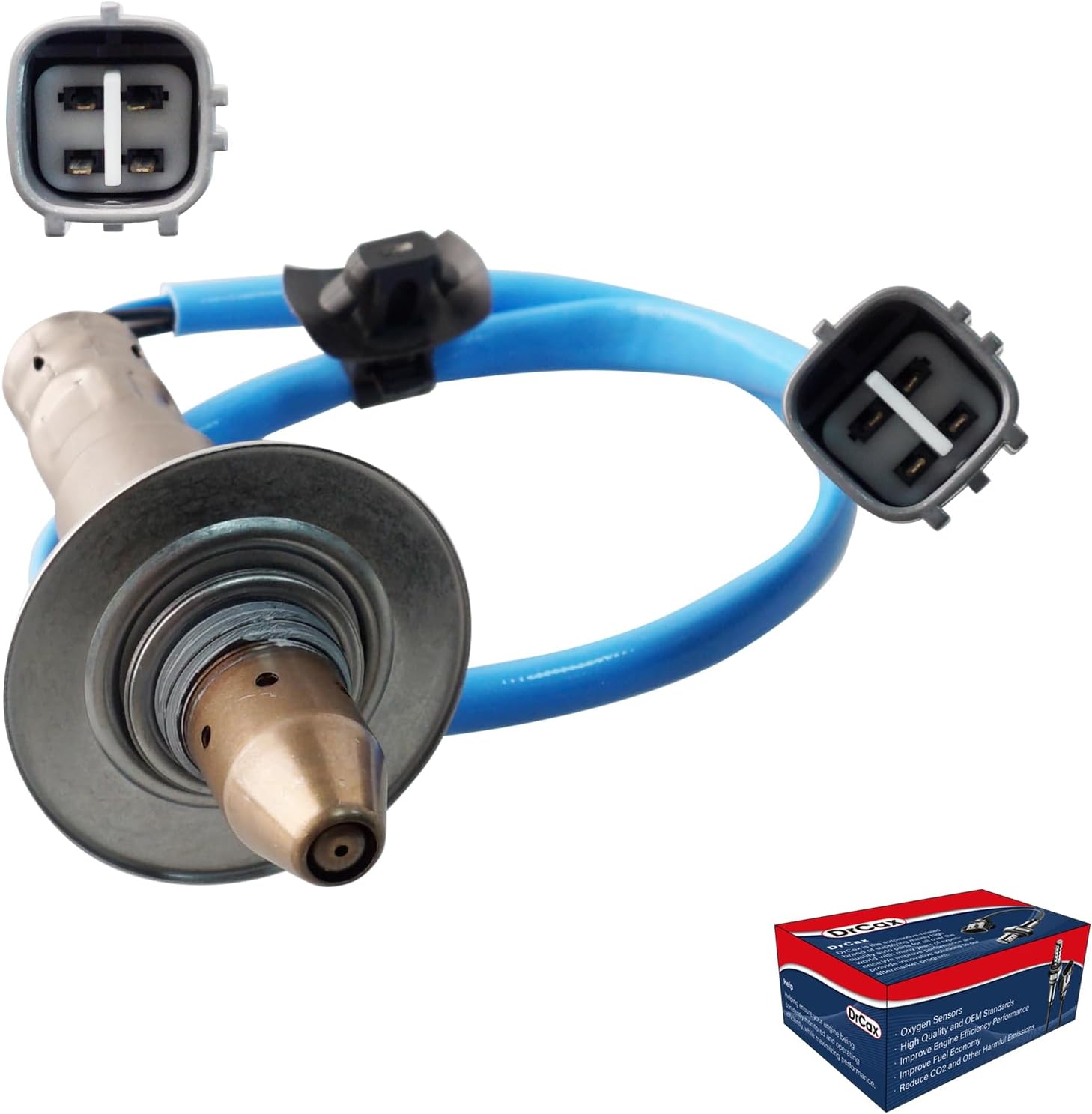
| Installation position | Upstream |
|---|---|
| Sensor type | Heated |
| Compatible vehicles | 2015-2017 Impreza 2.0L; 2014-2017 Forester 2.5L; 2014-2017 Crosstrek 2.0L/Hybrid |
| Manufacturer | DrCax |
This DrCax upstream heated oxygen sensor is a direct-replacement part intended for Subaru models listed by the manufacturer. It installs in the upstream position between the engine and catalytic converter and provides the heated sensing element needed for accurate air-fuel ratio feedback to the engine control module. The listing emphasizes 100% factory testing, OEM-equivalent part numbers, and a plug-and-play fitment approach to simplify installation for DIY mechanics or technicians. In use the sensor should help resolve lean/rich codes, improve fuel trim accuracy, and turn off related check-engine warnings when the original sensor has failed. Common benefits cited by buyers include proper fit, anti-seize on the threads, and consistent voltage readings after replacement. Limitations to note are mixed long-term reliability reports and the usual caveat that vehicle fitment must be verified before purchase; some users recommend replacing both sensors together if there are persistent drivability codes.
Best for: Practical, risk-averse Subaru owners who prioritize a straightforward, factory-style replacement to clear emissions codes and restore normal engine operation.
Less Ideal for: Shoppers seeking a lifetime high-end performance sensor or those unwilling to verify exact vehicle-year and engine compatibility should consider higher-tier OEM or performance-brand options.
- Direct-replacement upstream heated sensor for specified Subaru models, designed for plug-and-play installation
- Factory-tested and sold as OEM-equivalent part numbers for easier fit verification
- Includes anti-seize on threads and protective covers to simplify installation and reduce thread damage
- Aims to restore correct air-fuel sensing which can clear related check-engine codes and improve fuel economy
- Some reports of early failures exist, so long-term durability is not uniformly confirmed
- Fitment must be carefully verified to the exact Subaru year and engine to avoid incorrect part selection
Verdict A cost-effective, factory-style upstream heated oxygen sensor for the specified Subaru models that restores air-fuel sensing but has mixed long-term reliability reports.
6. Bosch 17018 Premium Oxygen Sensor

| Compatible vehicles | Subaru Impreza 2000–2002 (verify engine and position) |
|---|---|
| Material | Stainless Steel |
| Mounting Type | Flange Mount |
| Output Type | Electrical signal |
This Bosch 17018 is a factory-quality direct-fit oxygen sensor that monitors exhaust oxygen to help the engine control module maintain correct air‑fuel ratios. For Subaru Impreza owners it installs in place of the original sensor and connects to the existing harness, so installation is typically a simple bolt-and-plug job. Notable features include a stainless steel, double laser-welded body for corrosion resistance, a fast-acting heater that brings the sensor up to operating temperature quickly, and threads pre-coated with anti-seize to ease fitting. In practice the sensor restores accurate fuel trim, can clear running rich or lean conditions, and helps reduce emissions and fuel waste when replaced at the recommended interval. Limitations to expect are occasional quality variance reported by some users and the need to verify exact position/engine compatibility for 2000–2002 Impreza applications; this part suits routine replacement but not engine modifications or forced-induction tuning where specialized sensors may be required.
Best for: Practical optimizers who want a durable, factory-replacement oxygen sensor that restores fuel economy and drivability on an early‑2000s Subaru Impreza without overspending.
Less Ideal for: Owners doing performance upgrades, engine swaps, or those who need sensors rated for modified fueling strategies should choose a specialized wideband or high‑temperature sensor instead.
- Direct-fit design with OEM-style connector for straightforward installation on compatible Subaru Impreza models
- Stainless steel double laser-welded body for improved corrosion resistance
- Fast-acting heater reduces warm-up time so the sensor reaches operating temperature quickly
- Threads arrive pre-coated with anti-seize to simplify installation and prevent galling
- Some buyers report occasional build-quality differences compared with dealer parts
- Fitment depends on engine and sensor position so verifying correct application for your Impreza is necessary
Verdict A practical, factory‑style replacement that balances durability and price for routine oxygen sensor swaps on 2000–2002 Subaru Impreza models.
7. Bosch 18075 Premium Fitment Oxygen Sensor

| Material | Stainless Steel |
|---|---|
| Mounting Type | Flange Mount |
| Output Type | Push-Pull |
| Response Time | 5 seconds |
| Upper Temperature Rating | 150 Degrees Celsius |
This Bosch 18075 oxygen sensor is a direct-fit replacement intended for use on compatible Subaru engines and restores the vehicle's ability to measure exhaust oxygen for proper fuel trim. It installs like a factory sensor with a threaded flange and OEM-style connector, and the pre-applied anti-seize on the threads simplifies removal later. The sensor's stainless steel body and sealed construction resist exhaust corrosion while the fast-acting heater helps the sensor reach operating temperature in seconds so the engine control module gets accurate readings quickly after startup. In real-world use this means steadier idle, improved fuel control, and reduced emissions compared with a failing sensor. Installation is straightforward for a DIYer with basic tools, but correct fitment position must be confirmed before buying. A practical limitation is that fitment is specific to certain Subaru years and engine positions, so it is not a universal sensor and buyers should verify compatibility for their Impreza model and sensor bank.
Best for: Balanced all-round buyers who want a reliable, factory-style replacement that restores normal fuel control and emissions behavior on their Subaru Impreza without upgrading to aftermarket tuning parts.
Less Ideal for: Shop owners or tuners needing multi-vehicle or wideband performance sensors should choose purpose-built or universal sensors instead.
- Direct-fit connector and flange simplify installation without wiring changes
- Stainless steel, sealed body resists exhaust corrosion for longer service life
- Fast-acting heater brings the sensor to operating temperature within seconds
- Threads arrive pre-coated with anti-seize, reducing risk of thread damage on removal
- Compatibility limited to select Subaru models and specific sensor positions, requiring fitment verification
Verdict A factory-style, corrosion-resistant direct-fit oxygen sensor that reliably restores proper fuel and emissions control on compatible Subaru Impreza models when the original sensor fails.
Choosing the Right Subaru Impreza Oxygen Sensor: Key Factors to Consider
Fitment and Connector Compatibility
Correct fitment is the single most important factor because the sensor must physically thread into the exhaust bung and mate with the vehicle wiring harness. A mismatched thread pitch or an incompatible connector can cause installation issues, false readings, or require splicing that undermines long-term reliability.
Confirming the connector type and thread size helps avoid electrical or sealing problems. Also check the sensor length and harness routing so that heat shielding and mounting points are not strained during installation.
Heater Circuit Performance
Many oxygen sensors include an internal heater that brings the sensing element up to operating temperature quickly. A healthy heater circuit reduces the time the engine runs in open-loop mode after cold start, improving emissions and drivability.
Assess heater resistance and warm-up characteristics because a weak heater can trigger a diagnostic trouble code and prolong rich or lean conditions. Heater reliability also matters in cold climates where faster warm-up prevents rough idle and higher emissions.
Response Time and Accuracy
How quickly and accurately the sensor responds to changes in exhaust oxygen determines how well the engine control unit can adjust fuel trims. Faster response helps stabilize idle and improves transient throttle behavior.
Look for sensors with proven switching speed and stable voltage or current output under varying exhaust conditions. A sensor that drifts or responds slowly can cause persistent fuel-trim corrections and reduced efficiency.
Durability and Contamination Resistance
Exhaust sensors are exposed to high temperatures, soot, oil, and other contaminants that can degrade performance over time. Materials and protective coatings influence how resistant a sensor is to poisoning and corrosion.
Consider sensors designed to resist common contaminants, with robust housings and protective shields. Longer service life reduces the frequency of replacements and lowers the risk of intermittent faults from gradual degradation.
Diagnostic Compatibility
The sensor must provide the right type of signal and respond predictably to support onboard diagnostics. Proper diagnostic behavior helps the vehicle detect faults such as heater failures, circuit opens, or slow switching performance.
Ensure the sensor supports the expected fault detection thresholds and does not produce ambiguous signals that could mask other issues. Clear diagnostic compatibility reduces troubleshooting time when codes like bank or sensor-specific faults appear.
Installation and Maintenance Considerations
Ease of installation affects both DIY and professional replacements. Factors include accessible harness length, whether anti-seize is required on the threads, and whether special tools are needed to reach tight exhaust locations.
Also consider routine maintenance factors such as how to inspect the sensor condition and whether replacement intervals are affected by driving conditions. Choosing a sensor that is straightforward to install and maintain reduces the chance of installation-related damage and future service headaches.
FAQ
How do I know if the Subaru Impreza oxygen sensor is failing?
Common signs often include a rough idle, decreased fuel economy, and an illuminated check engine indicator. You may also notice poor throttle response or unusual exhaust smells. Diagnostic trouble codes and voltage or current traces from the sensor can help confirm a failing unit.
Can I install an oxygen sensor myself on a Subaru Impreza?
Many owners can perform the swap with basic hand tools and a proper oxygen sensor socket, provided the sensor is accessible. Take care with connectors and thread sealing practices. If access is restricted or you are unsure about diagnostics, professional installation avoids potential issues.
Do upstream and downstream oxygen sensors serve different roles?
Yes. The upstream sensor monitors exhaust oxygen content to help the engine control adjust fuel delivery, while the downstream sensor typically monitors catalytic converter efficiency. Both affect diagnostics but the upstream unit usually has a more direct impact on fuel trims.
How long do oxygen sensors usually last in a Subaru Impreza?
Sensor lifespan varies with driving habits and exposure to contaminants, but they often last many tens of thousands of miles under normal conditions. Factors like engine oil leakage, coolant contamination, or repeated short trips can shorten service life.
Will a faulty oxygen sensor cause a check engine light on my Subaru Impreza?
Often yes. The engine control system monitors sensor performance and will set diagnostic trouble codes when it detects heater failures, slow switching, or implausible readings. Those fault codes usually illuminate the check engine indicator and guide further diagnosis.
Is it necessary to test the oxygen sensor before replacing it?
Testing is usually advisable because symptoms can stem from wiring, connectors, or related engine issues. Simple tests include checking heater circuit resistance and monitoring sensor output while the engine runs. Verifying the fault source helps avoid unnecessary replacements.
How We Chose the Best Subaru Impreza Oxygen Sensor
We focused on parts that offer correct fitment for Subaru Impreza models and dependable electrical and thermal performance under real-world driving conditions. Key evaluation criteria included connector and thread compatibility, sensor response time and accuracy for fuel-trim control, build quality and heater reliability for cold-start operation, resistance to contamination and corrosion, and expected service life under normal driving cycles. We also checked available data on thermal cycles and whether the sensor design supports onboard diagnostics and common fault codes.Items were excluded if they lacked confirmed fitment information, used nonstandard connectors that require modification, or had poor reported heater circuit reliability. We prioritized sensors whose specifications align with the vehicle's oxygen sensor locations and the demands of closed-loop fuel control. The result is a curated list of seven options that emphasize proper fit, reliable signal behavior, and durability for Subaru Impreza owners.
Our full evaluation process is outlined in our review methodology.
Conclusion
When choosing a Subaru Impreza oxygen sensor, prioritize proper fitment and reliable response characteristics because those factors most directly affect engine control and emissions behavior. Balance heater reliability and contamination resistance against ease of installation and diagnostic compatibility.Accept that tradeoffs exist between longevity and response speed depending on sensor design. Focus on matching the sensor to the vehicle's connection and diagnostic expectations to minimize installation issues and ensure stable fuel-trim performance.
Explore More:
- Check out all Subaru Impreza parts & accessories
- Explore Oxygen Sensors Maintenance & Repair Guides
- Explore Engine
- Browse all Auto Parts
