

Note: This article contains affiliate links. If you click on these links and make a purchase, I may earn a small commission at no extra cost to you. This helps support my research and content. Read my full affiliate disclosure here.
If your Hyundai Accent is showing rough idle, poor fuel economy, or a check engine light, the oxygen sensor is a common culprit that affects engine performance and emissions. Choosing the right oxygen sensor matters because fitment, response time, and long-term durability all influence drivability and fuel efficiency.This guide covers seven shortlisted options for the Hyundai Accent, selected for reliability, signal accuracy, and installation ease. Read on to understand the criteria we used and what to look for when replacing the oxygen sensor before you start the repair.
Looking for other parts? See all Hyundai Accent parts & accessories.
Top Picks at a Glance


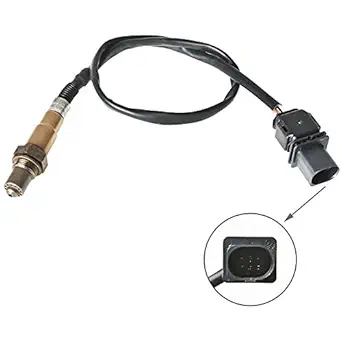

1. DOICOO 234-4404 Oxygen O2 Sensor (Compatible with Hyundai Accent/Elantra/Tucson/Tiburon; Kia Rio/Spectra)

| Current Rating | 0.9 Amps |
|---|---|
| Maximum Supply Voltage | 15 Volts |
| Response Time | 5.6 seconds |
| Measuring Range | λ=0.7- ∞ |
| Mounting Type | Thread Mount |
This DOICOO 234-4404 oxygen sensor is a plug-and-play replacement for affected Hyundai and Kia models that monitors exhaust oxygen to help the engine computer control fuel trim. It is typically used to replace a failing upstream or downstream O2 sensor when you have a check engine light or poor fuel economy. Notable features listed include a fast response time, a built-in heater circuit, anti-seize on the threads, and a factory-style plug for straightforward installation. In practice users report the sensor clears codes and returns normal operation without programming, and the included connector and cable length simplify routing under the vehicle. Limitations are that fitment can be sensitive to model year and exact sensor location so confirm application before buying, and stubborn rusted sensor mounts can make removal difficult which may require special sockets and penetrating oil. For a reliability-focused buyer this unit offers a functional, economical replacement that restores emissions sensing when installed correctly.
Best for: Reliability-focused DIYers or independent shops seeking an economical, factory-style O2 sensor replacement to resolve emissions codes and restore normal fuel control on supported Hyundai Accent models.
Less Ideal for: Drivers who prefer long-term guaranteed parts from OEM dealers or those who need a sensor explicitly certified to a specific factory part number should consider manufacturer-sourced alternatives.
- Designed as a direct replacement with factory-style connector for straightforward plug-and-play installation
- Built-in heater circuit and fast response time to help the ECU correct fuel trim quickly
- Anti-seize applied to threads and adequate cable length for easier installation and routing
- Multiple user reports of clearing check engine codes and restoring normal engine behavior
- Removal of the original sensor can be difficult on rusted exhaust hardware and may require special tools
- Fitment varies by exact model year and upstream/downstream position so mis-ordering is possible
Verdict A cost-effective, plug-and-play oxygen sensor that reliably clears OBD-II codes and restores fuel control for compatible Hyundai Accent applications when installed correctly.
2. BOSCH 13461 Premium Original Equipment Oxygen Sensor

| Mounting Type | Flange Mount |
|---|---|
| Output Type | Physical |
| Specific Uses For Product | Temperature |
| Material Type | Stainless Steel |
The Bosch 13461 is a direct-fit oxygen sensor intended as a factory-quality replacement for affected Hyundai and Kia vehicles. It measures exhaust oxygen content and reports that signal to the engine control unit so the engine can adjust fuel mixture and emissions control. Typical use is straightforward replacement of a faulty upstream or downstream sensor to restore correct air/fuel feedback and clear engine codes. Notable features include a double laser-welded stainless steel body for corrosion resistance, a fast-acting heater that speeds up warm‑up to operating temperature, and pre-coated threads with anti-seize for easier installation. Practical benefits are reliable long-term performance from a proven manufacturer, plug-and-play connectors that reduce installation time, and improved idle and emissions behavior when replacing a degraded unit. Limitations are that fitment is specific to certain model years and engine variants so confirmation for the exact sensor position is required, and packaging concerns reported by a few buyers mean careful inspection before installation is prudent.
Best for: Convenience-driven buyers who want a reliable, ready-to-install factory-quality replacement that minimizes shop time and steps when repairing a Hyundai Accent.
Less Ideal for: Owners who need a universal or multi-vehicle solution, or who prefer to source a sensor matched to non-Hyundai vehicles should look elsewhere.
- Direct-fit connectors and factory-style harness for straightforward installation
- Stainless steel double laser-welded body for corrosion resistance and durability
- Fast-acting heater reduces time to proper operating temperature
- Threads come pre-coated with anti-seize to simplify installation
- Compatibility depends on exact year and engine variant so you must verify fit for the specific vehicle and sensor location
- Some customers reported inadequate packaging on arrival
Verdict A factory-quality, plug-and-play oxygen sensor that saves installation time for Hyundai Accent owners when the original sensor fails.
3. higherbro Oxygen O2 Sensor Pair (Upstream & Downstream) for Hyundai Accent / Veloster 1.6L

| Maximum Supply Voltage | 5 Volts (DC) |
|---|---|
| Mounting Type | Flange Mount |
| Output Type | electrical signal |
| Material Type | Stainless Steel |
| Unit Count | 2.0 Count |
This kit supplies both the upstream and downstream oxygen sensors needed to restore correct air/fuel feedback on 1.6L Hyundai Accent and Veloster engines. Install them in the exhaust stream where each sensor measures oxygen content and sends an electrical signal to the engine control unit to adjust fuel trim and emissions control. The sensors are stainless steel with a flange mount and a 5 V maximum supply rating, which matches typical vehicle electrical systems and helps ensure reliable signal output. Supplying both positions is convenient when codes or emissions failures implicate multiple sensors, and the unit count of two lets you replace both at once without sourcing separate parts. Expect factory-style function for correcting fuel economy and drivability problems, but this is an aftermarket part so fit and long-term durability can vary compared with factory-quality units and you should verify vehicle fitment before purchase.
Best for: Performance-oriented buyers who prioritize restoring precise air/fuel control and emissions performance on a Hyundai Accent or Veloster 1.6L should consider this paired sensor kit.
Less Ideal for: Drivers seeking guaranteed factory-quality longevity or who want a manufacturer-backed sensor should consider OEM replacement options instead.
- Includes both upstream and downstream sensors so you can replace both positions in one service visit.
- Stainless steel construction that resists corrosion in the exhaust environment.
- Flange mount design matches conventional exhaust sensor installation for straightforward swapping.
- Electrical output and 5 V supply rating compatible with standard engine control inputs.
- Aftermarket part so long-term durability and exact fit can differ from factory-quality sensors.
Verdict A convenient two-piece stainless steel sensor kit that restores oxygen sensing for 1.6L Hyundai Accent and Veloster engines, offering good compatibility for performance-focused tune-ups while being an aftermarket alternative to factory parts.
4. NECATUO 234-4568 Downstream Heated Oxygen Sensor (Replacement)

| Measurement Accuracy | ±3% |
|---|---|
| Mounting Type | Flange Mount |
| Output Type | Push-Pull |
This NECATUO 234-4568 is a downstream heated O2 sensor intended as a factory-quality replacement for compatible Hyundai and Kia 1.6L vehicles. It installs in place of the sensor after the catalytic converter to monitor exhaust oxygen and help the engine control unit adjust fuel trim. Typical use is straightforward: unplug the old sensor, thread this unit into the exhaust bung and connect the wiring harness. The listing highlights flange mounting, push-pull output and ±3% measurement accuracy, which implies reasonably precise feedback for fuel control. Buyers report many successful plug-and-play swaps that clear CEL codes and restore drivability, and the sensor includes a heated element for faster warm-up. Important limitations are variable quality control across units and occasional fitment mismatches reported by some users, so confirming vehicle compatibility before installation is essential. For a budget replacement this sensor delivers solid functionality but may not match long-term robustness of premium branded sensors in every case.
Best for: Budget-conscious owners seeking an inexpensive, functional downstream oxygen sensor to clear codes and restore normal fuel control on a Hyundai Accent without paying dealer prices.
Less Ideal for: People who want the longest-lasting, premium-brand sensor for high-mileage or track use should consider higher-end OEM-quality alternatives.
- Designed as direct replacement for downstream position with flange mount for straightforward installation
- Heated element for faster operation after cold starts
- Manufacturer-stated ±3% measurement accuracy for reasonable AFR feedback
- Multiple user reports of clearing check-engine codes and restoring performance
- Some buyers report inconsistent fitment or premature failures on certain vehicles
- Not backed by a listed warranty in the product details
Verdict A low-cost downstream heated oxygen sensor that delivers practical, OEM-style fit and function for Hyundai Accent owners but with some variability in quality.
5. HQPASFY Oxygen O2 Sensor 2-Pack (Upstream & Downstream) for 2012–2014 Hyundai Accent/Veloster and 2012–2015 KIA Rio/Soul 1.6L

| Measuring Range | 0-25% O2 |
|---|---|
| Mounting Type | Flange Mount |
| Output Type | electrical signal |
| Upper Temperature Rating | 1500 Degrees Celsius |
These two oxygen sensors replace the upstream and downstream units on 1.6L Hyundai Accent and Veloster models (2012–2014) and KIA Rio and Soul (2012–2015). They sense oxygen in the exhaust and produce an electrical signal the engine control unit uses to adjust fuel trim and combustion. The sensors use a stainless steel, double laser-welded body and are rated to withstand high exhaust temperatures up to 1500 Celsius, which should help in corrosive, high-heat environments. Buyers get both sensors in one purchase so you can address both pre- and post-catalyst monitoring at once. Installation is typical for O2 sensors and will require basic hand tools or a sensor socket; correct fitment for the listed vehicles is essential to avoid installation headaches. Some users report immediate improvement while others still saw persistent check-engine lights, so results depend on vehicle condition beyond just the sensors. If longevity is critical, factor in mixed user feedback on long-term durability despite the higher temperature rating.
Best for: Risk-averse mainstream buyers seeking a complete, direct-replacement pair to restore proper air/fuel sensing on the specified Hyundai and KIA 1.6L models and avoid repeated trips to the parts store.
Less Ideal for: Drivers looking for an upgraded performance sensor or a long-proven brand-name OEM replacement should consider alternative factory-quality options with broader warranty and track record.
- Sold as an upstream and downstream pair so both sensor positions can be serviced together.
- Stainless steel, double laser-welded construction and high temperature rating for corrosion and heat resistance.
- Direct-fit compatibility listed specifically for Hyundai Accent and Veloster (2012–2014) and KIA Rio and Soul (2012–2015) 1.6L engines.
- Produces standard electrical output for engine management to restore correct air/fuel monitoring.
- Some buyers reported the check-engine light remained after installation, indicating it may not resolve codes caused by other components.
- A few reviews describe premature failures within weeks to months, so durability may vary.
- Fitment must be confirmed before installation to avoid compatibility or connector issues.
Verdict A convenient two-piece replacement for Hyundai/KIA 1.6L models that offers corrosion and heat resistance, but verify fitment and accept some variability in long-term durability.
6. Amrxuts Upstream Oxygen (O2) Sensor, Direct-Fit for Hyundai Accent/Veloster and Kia Rio/Soul

| Measuring Range | 0.065 – 0.072 |
|---|---|
| Mounting Type | Flange Mount |
| Output Type | Analog |
| Wire Quantity | 5 |
This Amrxuts upstream oxygen sensor is a direct-fit replacement for 1.6L Hyundai Accent and Veloster and compatible Kia models; it replaces the factory upstream O2 sensor to restore closed-loop fuel control and clear engine light codes. It installs in the exhaust flange and connects with the vehicle wiring using the five-wire harness supplied, so a mechanic can typically swap it in without modifications. Notable features include a claimed fast light-off and an independently produced sensing chip intended to improve response time, and the part ships with hardware and an O-ring to seal the bung. In use this sensor should help the engine management return to correct air/fuel ratios, often improving idle smoothness, drivability and fuel economy while reducing emissions. Limitations are typical of aftermarket sensors: long-term durability varies across examples and a minority of buyers report early failure, so you may prefer professional installation and to keep the original sensor until you confirm fit and function. This part comes with a one-year replacement guarantee from the seller.
Best for: Practical optimizers who want an affordable, ready-to-install replacement that restores fuel control and emissions without paying OEM prices and who prioritize immediate drivability and economy gains.
Less Ideal for: Drivers seeking the longest possible factory-level durability or extended manufacturer coverage should consider higher-end branded replacements or factory parts instead.
- Direct-fit for specified Hyundai Accent and Veloster 1.6L and Kia Rio/Soul 1.6L applications so no modification is required
- Five-wire connector and included hardware simplify installation and provide a proper electrical interface
- Designed for fast light-off and quicker response which helps engine control correct air/fuel ratio sooner
- Includes sealing O-ring and binding agent to address common leak points and improve initial fit
- Aftermarket longevity is inconsistent across units so some users may see shorter service life compared with higher-cost factory replacements
- Seller-provided guarantee is limited to one year which may be shorter than OEM coverage
Verdict A budget-friendly, direct-fit upstream O2 sensor that restores fuel management and emissions control quickly but may vary in long-term durability compared with pricier factory replacements.
7. HTMXJA Oxygen O2 Sensor Kit (Upstream & Downstream) for 2012–2017 Hyundai Accent

| Measurement Accuracy | ±1% |
|---|---|
| Mounting Type | plug mount |
| Output Type | NPN |
| Material Type | Plastic |
This HTMXJA kit supplies both the upstream (234-5055) and downstream (234-4568) oxygen sensors to replace worn units on compatible Hyundai Accent engines. Installers typically use the upstream sensor to restore accurate air-fuel feedback to the engine computer and the downstream sensor to monitor catalytic converter efficiency. Notable features in the listing include claimed high-precision measurement, high-temperature resistance, and plug-mount connectors with factory-style fitment for straightforward installation without modifications. Practical benefits are immediate: a working oxygen sensor pair can clear check-engine codes, improve combustion control, and help normalize fuel economy and emissions. Limitations visible from user reports and product details are mixed long-term durability and occasional early heater failures on the downstream unit, so expect variable lifespan versus premium OEM parts. Also the kit includes different wire lengths for each sensor which can affect routing during installation.
Best for: A balanced all-round buyer who wants a practical, complete sensor replacement that restores engine control and emissions monitoring without professional part matching hassle.
Less Ideal for: Drivers seeking longest possible service life or heavy-duty reliability should consider higher-end aftermarket or dealer parts instead.
- Includes both upstream and downstream sensors for a full replacement
- Manufactured to match factory-style plug mount for direct installation
- Claims high-precision measurement and high-temperature resistance
- Supplies correct connector genders and wire counts for listed Accent applications
- User reports show inconsistent long-term reliability, particularly heater failures on the downstream sensor
- Limited documented warranty period compared with some aftermarket brands
Verdict A convenient, budget-oriented two-sensor kit that restores function and fit for 2012–2017 Hyundai Accent engines but may not match OEM longevity.
Choosing the Right Hyundai Accent Oxygen Sensor: Key Factors to Consider
Vehicle Fitment and Connector Type
Correct fitment matters because the sensor must thread into the exhaust bung and mate with the vehicles wiring harness without splicing. A sensor that uses the OEM-style connector reduces installation time and risk of wiring faults.
Check that the thread size, length, and heater circuit configuration match the Hyundai Accents requirements. Mismatched fitment can lead to exhaust leaks, inaccurate readings, or additional modifications that increase labor time and complexity.
Signal Response and Accuracy
How quickly and accurately the sensor reports oxygen levels affects the engine control units ability to maintain the correct air-fuel ratio. Faster response sensors help smooth transient conditions like throttle changes and improve overall drivability.
Look for sensors specified with consistent voltage range and predictable switching or a stated response time. Sensors with better signal fidelity reduce the likelihood of long-term fuel trim drift and can help address issues flagged by diagnostic codes.
Heater Circuit and Warm-Up Time
The integrated heater helps the sensor reach operating temperature quickly so it can provide meaningful data during cold-start conditions. A functioning heater shortens the time the engine runs in open-loop mode, which improves emissions and reduces fuel consumption in early operation.
Confirm the heater circuit matches the vehicles electrical design and that expected warm-up characteristics are documented. Sensors with robust heaters are less likely to trigger cold-start related check engine lights or produce erroneous readings when the engine is first turned on.
Durability Against Contaminants and Heat
Oxygen sensors operate in high-temperature, chemically aggressive environments. Materials and protective coatings influence how well a sensor resists soot, oil, and coolant contamination, as well as thermal degradation.
Select sensors designed with protective sheaths and corrosion-resistant materials. Better durability means longer service intervals and reduced risk of premature failure from exhaust exposure or engine issues that introduce contaminants.
Upstream Vs Downstream Placement
Understanding whether a sensor is intended for upstream (pre-catalyst) or downstream (post-catalyst) placement matters because each position has different measurement goals. Upstream sensors inform fuel trim and engine control, while downstream sensors monitor catalytic converter efficiency.
Choose the correct position-specific sensor to ensure the engine control unit receives the appropriate data. Installing the wrong placement type can produce misleading readings and diagnostic trouble codes that complicate troubleshooting.
Testing and Diagnostic Compatibility
Being able to test a sensor with standard diagnostic tools helps confirm whether replacement is necessary and verifies proper operation after installation. Look for sensors and wiring that allow for straightforward voltage or resistance checks.
Sensors compatible with common testing methods make diagnosing O2 sensor symptoms and codes more reliable. Consider how easily you can access the sensor for bench or in-vehicle testing and whether the design supports typical diagnostic procedures.
FAQ
What are common O2 sensor symptoms on a Hyundai Accent?
Common signs include a rough idle, decreased fuel economy, or a persistent check engine light. You may also notice higher emissions or uneven acceleration. These symptoms often prompt a diagnostic scan to confirm whether the oxygen sensor is reporting out-of-range values.
How do I know if I need an oxygen sensor replacement?
Check for diagnostic trouble codes related to oxygen sensors or catalytic efficiency, observe persistent drivability issues, and inspect the sensor for physical damage or heavy contamination. When a sensor shows slow response or erratic voltage during testing, replacement is usually warranted.
Can I install an oxygen sensor myself on a Hyundai Accent?
Many people install sensors themselves if they have the correct socket and basic mechanical skills. Ensure you have the right fitment and connector to avoid wiring splices. If access is tight or diagnostic history is complex, professional installation can prevent installation errors.
How do upstream and downstream oxygen sensors differ in function?
Upstream sensors measure exhaust gases before the catalytic converter and guide the engine control unit to adjust air-fuel mixture. Downstream sensors measure after the converter to monitor its efficiency. Each position provides different diagnostic insight and is not interchangeable without consequence.
What does an oxygen sensor code like P0135 usually indicate?
Codes indicating heater circuit faults, such as P0135, often point to a problem with the sensors heater element, wiring, or connector. It may also result from a failing sensor that no longer reaches operating temperature promptly. Diagnostic testing of the heater circuit and wiring typically clarifies the cause.
How can I test an oxygen sensor on a Hyundai Accent?
You can test a sensor by monitoring its voltage response with a scan tool or multimeter while the engine is at operating temperature. Look for regular switching behavior on narrowband sensors or steady readings on wideband types. Also test the heater circuit resistance and vehicle wiring for continuity.
How We Chose the Best Hyundai Accent Oxygen Sensor
We prioritized parts that directly affect engine management and emissions for the Hyundai Accent. Key evaluation criteria included sensor compatibility and fitment with the vehicles wiring harness and mounting, signal accuracy and response time that influence air-fuel corrections, and long-term durability against heat and contamination. We also assessed ease of installation, including connector design and thread compatibility, plus materials and protective coatings that extend service life under typical driving conditions.Excluded items included universal or generic sensors that require modification, aftermarket parts lacking clear compatibility data, and components intended for commercial or racing applications that do not match typical street use. Our shortlist reflects parts that meet fitment standards, deliver stable sensor signals, and offer reliable thermal and contaminant resistance for everyday Hyundai Accent operation.
Our full evaluation process is outlined in our review methodology.
Conclusion
When replacing an oxygen sensor on a Hyundai Accent, prioritize correct fitment, proper heater function, and reliable signal response. These factors directly affect fuel trims, emissions, and drivability.Balance durability against contaminants with ease of installation and diagnostic accessibility. Choosing a sensor that matches the Accents electrical and mounting specifications will minimize installation issues and help restore normal engine management quickly.
Explore More:
- Check out all Hyundai Accent parts & accessories
- Explore Oxygen Sensors Maintenance & Repair Guides
- Explore Engine
- Browse all Auto Parts
