

Note: This article contains affiliate links. If you click on these links and make a purchase, I may earn a small commission at no extra cost to you. This helps support my research and content. Read my full affiliate disclosure here.
If your BMW X1 is running rough, showing a check engine light, or failing emissions checks, the oxygen sensor is a likely culprit. Choosing the right BMW X1 oxygen sensor matters because the wrong unit can cause poor fuel economy, unstable idle, and inaccurate engine management feedback.This guide covers seven shortlisted oxygen sensors chosen for fitment compatibility and electrical reliability. We evaluated each option on criteria such as sensor fitment, response time, and durability to help you decide which one suits your needs. Read on to see concise guidance before the product list.
Looking for other parts? See all BMW X1 parts & accessories.
Top Picks at a Glance
| Best Reviewed A top-rated pick with lots of positive feedback | Automotive-leader 2-Pack Oxygen O2 Sensor Replacement (11787589121 / 11787589122) |  |
| Most Popular A crowd favorite that many people choose with confidence | Automotive-leader Upstream Oxygen (Air Fuel Ratio) Sensor for BMW |  |
| Best Quality Built to a higher standard if you want something more solid | BOSCH 17272 Premium Original Equipment Oxygen Sensor |  |
| Best Budget The cheapest option that still gets the job done reliably | NECATUO Heated O2 Oxygen Sensor — Compatible with BMW 3/4/6 Series, X1, X2, X4, X5, X6 and Mini |  |
| Most Sold A high-volume bestseller chosen again and again | A-Premium Heated Oxygen (O2) Sensor for BMW and Mini Upstream |  |
| Best Value for Money The sweet spot between price and what you get | A-Premium Downstream Oxygen Sensor for BMW (234-4971) |  |
| Best Overall The best all-around choice for most situations | BOSCH 17008 Premium Original Equipment Oxygen Sensor |  |
1. Automotive-leader 2-Pack Oxygen O2 Sensor Replacement (11787589121 / 11787589122)

| Mounting Type | Flange Mount |
|---|---|
| Output Type | Electrical signal |
| Upper Temperature Rating | 1600 Degrees Fahrenheit |
This two-piece kit provides an upstream and downstream heated oxygen sensor intended as a direct replacement for compatible BMW 2.0L turbo models, sold together as one package. Typical installation replaces the pre-cat (upstream) and post-cat (downstream) sensors to restore proper air-fuel feedback and catalytic converter monitoring. Notable features include heated sensor elements, male connectors, and wire harness lengths matched to typical factory routing, plus a high upper temperature rating that suits exhaust conditions. In practice the kit should return correct voltage signals to the engine control unit and help clear O2-related fault codes when the original sensors have aged. The product aims for an easy swap-in fit and claims to meet factory-quality standards, but as with many aftermarket sensors buyers should confirm part numbers and connector pinouts before ordering to avoid compatibility issues. Expect typical benefits of renewed fuel trim accuracy and emissions performance, while fit and long-term durability will depend on installation care and operating conditions.
Best for: Maintenance-minded BMW owners who prioritize reliability and restoring correct engine emissions and fuel trim behavior on 2.0L turbo models through a full upstream and downstream sensor replacement.
Less Ideal for: Drivers seeking an exact OEM-branded part with long-term manufacturer-backed track record or those unwilling to verify fitment details against their vehicle prior to purchase.
- Includes both upstream and downstream sensors for a complete replacement in one purchase
- Heated sensor design supports faster warm-up and reliable readings in cold conditions
- Wire harness lengths and connector genders supplied to match factory routing and plug-in installation
- High upper temperature rating suitable for exhaust system environments
- Aftermarket fitment can vary by production batch so part numbers and connector pinout should be verified before purchase
- Limited long-term durability data compared with long-established OEM suppliers
Verdict A practical two-piece heated O2 sensor kit intended to restore emissions and fuel-trim control on compatible BMW 2.0L turbo models, provided buyers confirm part numbers and fitment first.
2. Automotive-leader Upstream Oxygen (Air Fuel Ratio) Sensor for BMW

| Measurement Accuracy | ±2% |
|---|---|
| Measuring Range | 0.8 – 1.2 λ |
| Mounting Type | Flange Mount |
| Output Type | Electronic |
| Upper Temperature Rating | 125 Degrees Celsius |
This upstream heated oxygen sensor replaces the factory unit on compatible BMW models and reports exhaust oxygen content to the engine management system to correct air/fuel ratio. It is used at the pre-catalytic converter position to restore proper fuel trims, clear related fault codes, and help resolve rough idle or check-engine light conditions. Notable features from the listing include electronic output, flange mounting, a 5-wire heated design and an upper temperature rating of 125 degrees Celsius, which allow rapid warm-up and reliable signal during normal engine operation. Practical benefits include direct-fit compatibility for many BMW 2.0L and 3.0L engines and a lower cost alternative to dealer parts. Limitations to consider are variable long-term durability reported by some owners and that aftermarket fitment or sensor calibration can vary between production batches, so a thorough check after installation is recommended.
Best for: Buyers who prioritize convenience and a straightforward, lower-cost replacement that gets a BMW back to normal without dealer scheduling or complex programming.
Less Ideal for: Drivers who want guaranteed OEM-level longevity or who prefer dealer-supplied parts with documented long-term durability should consider factory-quality replacements instead.
- Direct-fit design for many BMW 2.0L and 3.0L models, simplifying installation
- Heated 5-wire construction for faster warm-up and stable readings at idle
- Electronic output with stated measurement accuracy of ±2% for consistent signal
- Flange-mount style matches factory mounting for straightforward replacement
- Some user reports indicate limited lifespan compared with factory-quality sensors
- Performance can vary by production batch so results are not uniform across units
Verdict A practical, convenience-focused direct-fit upstream oxygen sensor for BMWs that restores fuel trim affordably but may not match factory longevity.
3. BOSCH 17272 Premium Original Equipment Oxygen Sensor

| Mounting Type | Flange Mount |
|---|---|
| Output Type | Push-Pull |
| Specific Uses For Product | Temperature |
| Material Type | Stainless Steel |
This Bosch 17272 oxygen sensor is a direct-fit replacement intended to restore the upstream air-fuel measurement on compatible BMW engines. It installs in the exhaust stream where it measures oxygen content and reports to the engine control module so fuel trim and emissions systems run correctly. Key features include a double laser-welded stainless steel body for corrosion resistance, a fast-acting integrated heater to reach operating temperature quickly, and pre-coated threads plus factory-style connectors for straightforward installation. In practice the sensor reduces rough idle and misfire symptoms caused by a failing upstream sensor and can clear check-engine codes tied to lambda feedback. The stainless construction and factory testing suggest long service life, but installation can require ramps or a lift and an oxygen-sensor socket for removal on many BMWs. This part focuses on reliable, OEM-like performance rather than low-cost or universal fitment.
Best for: Buyers focused on performance and engine response who want a factory-quality replacement sensor to restore precise air-fuel control on their BMW X1.
Less Ideal for: Drivers seeking a generic universal sensor or the cheapest possible replacement; those who prefer a plug-and-play swap without any underbody access or basic tools should consider professional installation.
- Direct-fit factory-style connector and harness for straightforward installation
- Double laser-welded stainless steel body resists exhaust corrosion for longer service life
- Fast-acting heater brings the sensor to operating temperature quickly for prompt feedback
- Threads pre-coated with anti-seize so the part is ready to install out of the box
- Requires vehicle lifting and an oxygen-sensor socket for removal on many BMWs
- Fitment is limited to specific BMW models and engine variants so verification is necessary
Verdict A performance-oriented, factory-quality direct-fit oxygen sensor built for reliable, long-lasting air-fuel feedback on compatible BMW models.
4. NECATUO Heated O2 Oxygen Sensor — Compatible with BMW 3/4/6 Series, X1, X2, X4, X5, X6 and Mini

| Brand Name | NECATUO |
|---|---|
| Part Reference | 234-4971 |
| Vehicle Fitment | BMW and Mini models including X1 (F48) 2016-2020 |
This NECATUO heated oxygen sensor replaces a failing upstream O2 unit to restore correct air-fuel feedback to the engine management system. It is used when a check engine light flags an O2 sensor code or when poor fuel economy and rough idling indicate a bad sensor. The sensor includes a heated element to reach operating temperature quickly and a factory-style connector for plug-in replacement on the listed BMW and Mini fitments. In practice it provides basic, functional sensor readings that help clear error codes and improve driveability and fuel economy compared with a worn sensor. Buyers report straightforward replacements on compatible models, though fit and plug type vary across vehicles so confirming the exact part number for your BMW X1 is important. Expect a no-frills, budget-focused part that can extend catalytic converter life and get the engine running normally again; it does not offer OEM branding or extended testing documentation, so professional diagnostics are recommended if problems persist after installation.
Best for: Budget-conscious BMW owners who prioritize a low-cost, functional replacement to clear codes and restore normal engine operation on an X1 used for daily driving.
Less Ideal for: Drivers seeking guaranteed factory-quality longevity or extended manufacturer support should consider a factory-quality replacement or dealer part instead.
- Heated element reaches operating temperature faster for reliable early readings.
- Marketed for direct replacement on many BMW and Mini models, simplifying installation.
- Many user reports of clearing error codes and restoring normal engine behavior.
- Low-cost option that can restore fuel economy compared with a failing sensor.
- Not an OEM-branded sensor so long-term durability may vary.
- Fitment and connector differences across models mean it may require verification before purchase.
- Limited manufacturer testing or warranty information provided in the listing.
Verdict A low-cost heated replacement that can fix O2-related drivability and economy issues on compatible BMW X1s if you verify correct fitment first.
5. A-Premium Heated Oxygen (O2) Sensor for BMW and Mini Upstream

| Mounting Type | Threaded |
|---|---|
| Output Type | Digital |
| Upper Temperature Rating | 120 Degrees Celsius |
| Wire Quantity | 5 |
| Sensor Type | Heated |
This A-Premium upstream heated O2 sensor replaces the factory sensor on compatible BMW X1 and other listed BMW/Mini models to provide real-time exhaust oxygen measurements for the engine control unit. It is threaded for direct installation and uses a five-wire heated design and a male connector to match factory harnesses, which helps it reach operating temperature quickly and maintain stable readings during cold starts. Typical use is as a like-for-like replacement when a check-engine light indicates a failing upstream sensor or when restoring proper fuel trim and emissions performance. The practical benefits are straightforward: quicker warm-up from the heater element, digital output compatible with modern engine controllers, and fitment that targets specific BMW/Mini engine variants so installation is usually plug-and-play for those models. Limitations are that it is a third-party replacement rather than a factory part and fitment is limited to the exact years and engine variants listed, so buyers must confirm compatibility before ordering.
Best for: Risk-averse mainstream buyers looking for a practical, direct-replacement oxygen sensor to restore normal engine operation and clear emissions faults on their BMW X1 without experimental or performance upgrades.
Less Ideal for: Drivers seeking an exact factory OEM sensor from the vehicle manufacturer or those who plan to use the sensor across multiple vehicle makes and models.
- Heated five-wire design speeds warm-up and improves sensor response during cold starts.
- Threaded, direct-fit mounting intended to match factory installation for compatible BMW/Mini models.
- Digital output and male connector for straightforward plug-in compatibility with listed engine controllers.
- Aftermarket unit rather than an OEM part, which may differ slightly in long-term durability or calibration.
- Compatibility is restricted to specific model years and engine variants, requiring careful verification before purchase.
Verdict A practical heated upstream O2 sensor aimed at restoring proper engine control and emissions on compatible BMW X1 models, provided you confirm exact year and engine fitment.
6. A-Premium Downstream Oxygen Sensor for BMW (234-4971)

| Mounting Type | Threaded |
|---|---|
| Output Type | electrical signal |
| Specific Uses For Product | automotive |
| Material Type | Stainless Steel |
This A-Premium downstream oxygen sensor replaces the factory downstream O2 sensor on compatible BMWs and restores the exhaust oxygen signal used by the engine control system. It is a heated, threaded sensor with a four‑wire electrical output and a longer-than-stock pigtail that can make routing and installation easier in tight engine bays. Typical use is as a direct replacement when a failed downstream sensor triggers a check engine light or causes poor fuel trim behavior. The stainless steel construction and threaded mount match factory-style installation, and the included one-year unlimited-mileage guarantee provides added peace of mind. Limitations are that fitment must match engine and year exactly and this is an aftermarket part rather than a factory-branded sensor, so buyers who require exact OEM sourcing or dealer-level support may prefer a factory replacement. The sensor is sold individually and requires correct connector and wiring compatibility for trouble-free installation.
Best for: Practical optimizers who want a cost-effective, factory-style downstream O2 sensor for their BMW X1 to fix CELs and restore normal fuel trim without overspending.
Less Ideal for: Buyers seeking exact factory-branded parts with dealer support or those who prefer a full OEM parts path for maintenance and repairs should consider dealer-sourced options instead.
- Heated sensor design for faster warm-up and reliable readings at idle.
- Threaded mount and four-wire connector replicate factory-style installation.
- Longer cable than OEM for easier routing during installation.
- Stainless steel construction resists corrosion in the exhaust environment.
- Aftermarket part so exact fit and long-term durability may vary versus factory-sourced sensors.
- Sold as a single downstream unit so upstream replacements must be purchased separately if needed.
Verdict A budget-conscious, factory-style downstream O2 sensor for BMW X1 owners who need a reliable replacement without paying for dealer-brand parts.
7. BOSCH 17008 Premium Original Equipment Oxygen Sensor
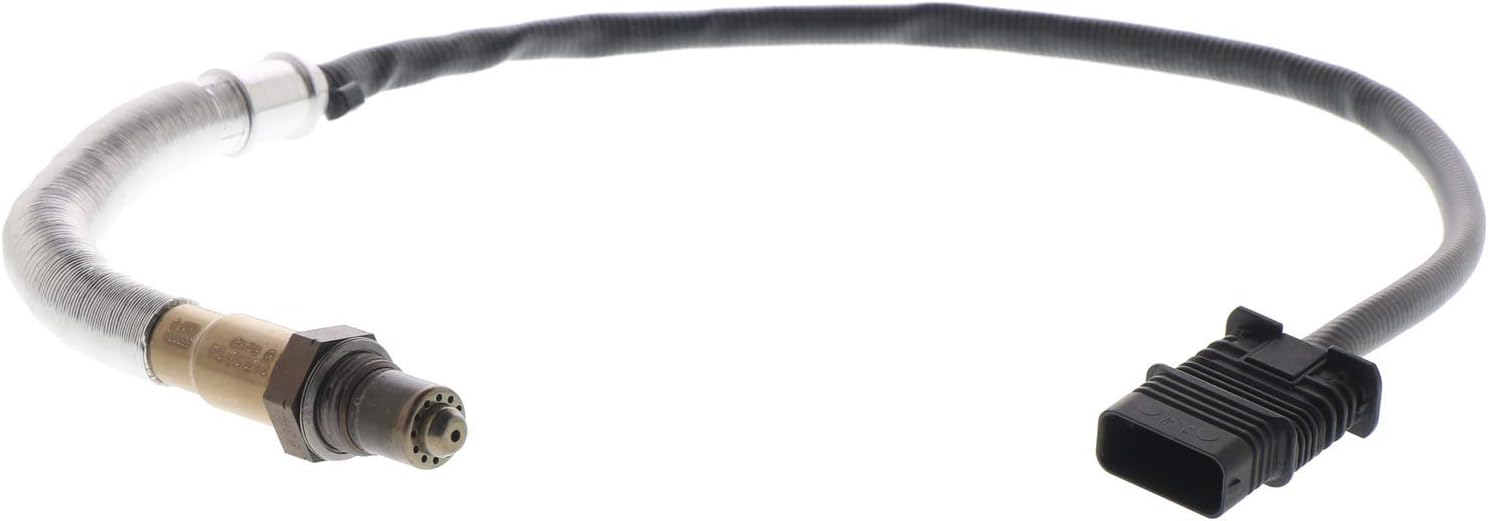
| Mounting Type | Flange Mount |
|---|---|
| Output Type | Push-Pull |
| Response Time | 5 seconds |
| Upper Temperature Rating | 1800 Degrees Fahrenheit |
| Material Type | Stainless Steel |
This Bosch 17008 oxygen sensor is a direct-fit replacement that restores proper air-fuel management and emissions monitoring on compatible BMWs. It installs using factory-style connectors and threads pre-coated with anti-seize, which simplifies fitting in tight engine bays when you can access the mounting location. The sensor uses a fast-acting heater to reach operating temperature within seconds, helping the engine control module get accurate readings sooner during cold starts. Bosch builds the unit with a double laser-welded stainless steel body and fully tests each sensor for functionality, so it is built to resist exhaust corrosion and last longer than many cheap alternatives. Practical benefits include improved fuel trim accuracy, reduced emissions, and elimination of OBD-II fault codes caused by a failing sensor. Limitations are access and installation complexity on some BMW X1 engine layouts where the sensor sits deep in the exhaust, and the product list is specific to certain model years and engine variants so you must confirm fitment before buying.
Best for: A balanced all-round buyer who wants a reliable, factory-quality replacement that restores proper emissions control and fuel management on their BMW X1 without overpaying for specialty performance parts.
Less Ideal for: Drivers seeking universal or multi-vehicle sensors or those who prefer sending repairs to a shop rather than performing a DIY replacement should consider alternatives.
- Direct-fit factory-style connector and pre-coated threads simplify installation
- Fast-acting heater reaches operating temperature quickly for accurate readings after cold starts
- Stainless steel double laser-welded body resists exhaust corrosion for longer service life
- 100% functional testing by manufacturer reduces risk of early failure
- Sensor location on some BMW X1 engines can be difficult to access and may require special tools or removal of components
Verdict A factory-quality, direct-fit oxygen sensor for BMW X1 owners who want reliable emissions and fuel-trim performance restored with a durable Bosch unit.
Choosing the Right BMW X1 Oxygen Sensor: Key Factors to Consider
Fitment And Connector Compatibility
Correct mechanical fit and an exact electrical connector match are essential to simplify installation and ensure reliable signal transmission. A sensor that threads into the wrong bung or uses an incompatible plug can lead to exhaust leaks, poor grounding, or intermittent signals.
When fitment is right, installation time is shorter and the chance of post-installation issues drops. Verify thread pitch, hex size, and wire length so the sensor reaches the harness without undue tension. Also check whether the sensor is designed for the specific bank and location on the BMW X1; upstream and downstream positions have different roles and often different connectors.
Electrical Response And Signal Stability
A fast, stable voltage response lets the engine control unit make accurate fuel trim adjustments. Sensors with sluggish or noisy signals can cause fluctuating idle, rough running, and poor fuel economy.
Look for sensors with documented response characteristics and robust internal circuitry that resists electrical noise. Consistent voltage output across typical operating temperatures helps avoid intermittent diagnostic trouble codes and keeps combustion within the expected oxygen range.
Durability And Contamination Resistance
Oxygen sensors are exposed to high temperatures and combustion byproducts, so materials and protective features matter. Sensors with corrosion-resistant housings, reinforced wiring, and protective shielding last longer in real-world conditions.
Consider how the sensor handles common contaminants such as oil, coolant, or sulfur. Durable construction reduces the likelihood of premature failure and minimizes the need for repeat replacements, making the initial choice more cost-effective over the long term.
Location Specificity: Upstream Versus Downstream
Upstream sensors monitor the air-fuel mixture directly at the exhaust ports and influence fuel trim decisions, while downstream sensors verify catalytic converter performance. Each position has different performance expectations and diagnostic roles.
Selecting a sensor meant for the correct location ensures the vehicle computer receives appropriate data. Using the wrong type may not trigger immediate fitment errors but can cause improper engine management or misleading diagnostic results.
Diagnostic Compatibility And Error Codes
A sensor that reports consistent, expected values helps prevent false or recurring diagnostic trouble codes. Compatibility with the vehicle's diagnostic logic reduces time spent troubleshooting and the chance of misdiagnosing other systems.
Consider whether the sensor has characteristics that match the OEM reference so codes like heater circuit faults or slow response warnings are less likely. Reliable diagnostics also make it easier to test and confirm repairs when resolving codes related to bank or sensor position.
Heater Circuit Reliability
Many oxygen sensors include internal heaters to reach operating temperature quickly, which improves low-temperature performance and reduces warm-up emissions. A dependable heater circuit shortens the time before the sensor provides accurate feedback.
Verify that the heater wiring and connector match the vehicle harness and that the sensor has a history of stable heater performance. Heater failures are a common source of fault codes and can render an otherwise functional sensor ineffective in typical driving cycles.
FAQ
How do I know if my BMW X1 oxygen sensor is failing?
Common signs include a persistent check engine light, rough idle, reduced fuel economy, and failed emissions checks. You may also notice hesitation or surging under acceleration. Diagnostics often reveal codes that point to sensor response or heater circuit issues, but symptoms can vary with driving conditions.
Can I test an oxygen sensor myself?
You can perform basic checks such as inspecting the wiring and connector for damage and measuring heater circuit resistance with a multimeter. More detailed testing of signal response requires a scan tool to view live data or an oscilloscope to observe voltage swings. These tests help distinguish a slow or stuck sensor from wiring or control module issues.
Is it necessary to replace upstream and downstream sensors at the same time?
It is not always necessary to replace both at once. Upstream sensors directly affect fuel control and may need replacement sooner, while downstream sensors monitor emissions function. Replace based on diagnostic evidence and symptoms rather than on a fixed schedule, though replacing a failed sensor promptly helps prevent additional drivability problems.
What role does the heater circuit play in sensor performance?
The heater allows the sensor to reach its operating temperature quickly, ensuring accurate readings during cold starts and short trips. A faulty heater can cause slow response or trigger diagnostic codes even if the sensing element itself is still functional. Checking heater continuity is a common step in diagnosing sensor faults.
Will a bad oxygen sensor trigger the check engine light?
Yes, failing oxygen sensors often trigger the check engine light, especially if the sensor output is out of the expected range or the heater circuit fails. The vehicle may store a diagnostic code indicating sensor slow response, heater fault, or out-of-range readings, which helps guide repairs.
How long do oxygen sensors typically last in a BMW X1?
Service life depends on driving patterns and exposure to contaminants, but sensors often last several years under normal conditions. Factors such as frequent short trips, oil consumption, or exposure to harsh fuels can shorten lifespans. Regular inspection and prompt attention to drivability issues help maintain reliable operation.
How We Chose the Best BMW X1 Oxygen Sensor
We focused on parts specifically compatible with the BMW X1 platform and prioritized correct fitment and connector match to avoid installation issues. Electrical performance factors included sensor response time, voltage stability, and signal consistency under changing engine loads. Durability criteria covered sensor housing materials, protective coatings, and expected resistance to common failure modes like contamination and wiring fatigue. Emissions and diagnostic reliability were considered by looking at how consistently a sensor reports accurate oxygen levels to the vehicle computer and how that affects diagnostic codes.We excluded universal or generic sensors that require extensive modification, as well as products lacking clear fitment documentation for the BMW X1. Final selections balanced mechanical compatibility, proven electrical behavior, and reasonable expected service life for everyday driving conditions.
Our full evaluation process is outlined in our review methodology.
Conclusion
When choosing a BMW X1 oxygen sensor, prioritize correct fitment, reliable electrical response, and a durable construction that resists contamination. Pay attention to whether the sensor is intended for an upstream or downstream position and confirm heater circuit compatibility to avoid common failure modes.Balancing these factors helps you restore fuel economy and drivability while minimizing the chance of repeat repairs. Use diagnostic data to guide replacement decisions and focus on sensors that match the vehicle's connector, thread, and performance expectations.
Explore More:
- Check out all BMW X1 parts & accessories
- Explore Oxygen Sensors Maintenance & Repair Guides
- Explore Engine
- Browse all Auto Parts
