

Note: This article contains affiliate links. If you click on these links and make a purchase, I may earn a small commission at no extra cost to you. This helps support my research and content. Read my full affiliate disclosure here.
If your 2010-2014 Subaru Outback is running rough, showing reduced fuel economy, or has a persistent check engine light, the oxygen sensors are a likely place to inspect. Replacing faulty oxygen sensors can restore correct air-fuel readings, improve throttle response, and help the catalytic converter operate properly. This guide collects the top oxygen sensor options matched to the 2010-2014 Outback, focusing on fitment, sensor type, and response characteristics.Below you will find our shortlisted sensor choices chosen for this vehicle, plus clear guidance on how to pick the right upstream or downstream unit and what to expect during installation and testing.
Looking for other parts? See all Subaru Outback parts & accessories.
Top Picks at a Glance
| Best Overall The best all-around choice for most situations | NTLTPYY Upstream & Downstream O2 Oxygen Sensor Kit for Subaru Legacy/Outback 2.5L (2010–2012) |  |
| Best Quality Built to a higher standard if you want something more solid | DENSO Downstream Oxygen Sensor for Subaru Outback H6 (2005–2014) |  |
| Best Value The sweet spot between price and what you get | BLPextrm Oxygen O2 Sensor Set (Upstream & Downstream) for Subaru Legacy/Outback 2.5L 2010–2012 |  |
| Best Budget The cheapest option that still gets the job done reliably | BLPextrm Upstream Oxygen Sensor for Subaru Outback/Legacy 2.5L 2010–2012 |  |
| Most Popular A crowd favorite that many people choose with confidence | Denso 234-4445 Oxygen (O2) Sensor |  |
| Best Seller A high-volume bestseller chosen again and again | A-Premium Upstream & Downstream O2 Oxygen Sensor 2-Pack |  |
1. NTLTPYY Upstream & Downstream O2 Oxygen Sensor Kit for Subaru Legacy/Outback 2.5L (2010–2012)

| Brand | NTLTPYY |
|---|---|
| Model | 234-9097 234-4445 |
| Manufacturer Part Number | GZLF-US-OS-36 |
| Compatible OEMs | 22641-AA540, 22690-AA810 and listed equivalents |
This NTLTPYY kit supplies both the upstream and downstream oxygen sensors needed to replace the originals on Subaru Legacy and Outback 2.5L models from 2010 to 2012. The sensors use factory-style connectors and match OEM part references listed in the product data, so they are intended for a straightforward plug-and-play swap that returns proper oxygen sensing and helps clear related trouble codes. In real-world use the kit covers the full upstream/downstream replacement scope, which is convenient when diagnosing rough idle, poor fuel economy, or failed emissions tests tied to sensor failure. The listing emphasizes durable construction and installs without vehicle modifications, though longevity will depend on driving conditions and exhaust access during installation can vary by engine layout. The package includes both sensors so you avoid buying parts piecemeal, but this is a component-level fix rather than a performance upgrade, so expect factory-style behavior rather than improved responsiveness or fuel economy beyond restored baseline operation.
Best for: Buyers who want a balanced, no-frills repair that restores factory-level oxygen sensing on a 2010–2012 Subaru 2.5L without chasing performance gains; ideal for routine maintenance and emissions fixes.
Less Ideal for: If you want performance-oriented sensors or long-term race use components, this factory-style replacement is not the right choice; also avoid if you need sensors for models outside the specified years.
- Includes both upstream and downstream sensors for a complete replacement job
- Direct-fit design with factory-style connectors for plug-and-play installation
- Matches multiple OEM part numbers for confident vehicle fitment
- Intended to restore proper emissions monitoring and resolve sensor-related check-engine codes
- Durability may vary with real-world exposure and is not guaranteed to exceed factory service life
Verdict: A practical, full upstream-and-downstream direct-replacement sensor kit that gets a 2010–2012 Subaru 2.5L back to factory-standard emissions and fuel control quickly.
2. DENSO Downstream Oxygen Sensor for Subaru Outback H6 (2005–2014)

| Mounting Type | Flange Mount |
|---|---|
| Manufacturer | DENSO |
| Compatible Vehicles | Subaru Outback 2005–2014 H6 (downstream) |
This DENSO downstream O2 sensor is a direct-fit replacement for the Subaru Outback 3.0L and 3.6L H6 models from the 2005–2014 era and installs where the factory downstream sensor sits after the catalytic converter. It monitors exhaust oxygen content for the vehicle computer to verify catalyst efficiency and to help maintain correct fuel trims. Typical use is a direct swap when a check-engine code for the downstream sensor appears or when post-catalyst monitoring has failed and fuel economy or emissions are affected. The flange-mount design and factory-style connector simplify installation and reduce fitment headaches. Because it is made by a major OEM supplier, it aims to match the factory sensor's response and durability so you should see stable closed-loop behavior after replacement. Limitations are that it is the downstream sensor only and will not correct upstream oxygen sensor faults or issues with the catalytic converter itself, so diagnose codes carefully before buying.
Best for: Buyers who want a performance-minded, factory-style replacement to restore proper emissions monitoring and stable fuel trims on Subaru Outback H6 engines from 2010–2014.
Less Ideal for: People troubleshooting upstream oxygen sensor faults, catalytic converter failures, or those seeking aftermarket sensors tuned for modified engines should look elsewhere.
- Direct-fit downstream sensor made to match factory mounting and connector for straightforward installation
- Constructed by a major supplier aiming for factory-quality response and durability
- Flange-mount design reduces alignment and sealing issues during replacement
- Only replaces the downstream (post-catalyst) sensor and does not address upstream sensors or catalytic converter problems
Verdict: Choose this sensor when you need a reliable factory-style downstream replacement to restore correct emissions monitoring and fuel-trim behavior on a Subaru Outback H6.
3. BLPextrm Oxygen O2 Sensor Set (Upstream & Downstream) for Subaru Legacy/Outback 2.5L 2010–2012

| Compatible vehicles | Subaru Legacy / Outback H4 2.5L 2010-2012 |
|---|---|
| Heater | Integral heated sensor |
| Manufacturer | BLPextrm |
| Manufacturer part number | fbb002830 |
This BLPextrm O2 sensor set provides upstream and downstream heated sensors intended as direct replacements for Subaru 2.5L engines from 2010 to 2012. The sensors include an integral heater for fast activation and a multilayer ceramic element that the manufacturer says supports rapid response and high-temperature durability up to 650 to 1000 C. In practice these features mean the engine computer can reach closed-loop operation sooner during cold starts, which helps stabilize idle and improve fuel trimming. Installation is the same as the factory parts and can be done by a competent DIYer with the right socket, though many owners prefer a shop for access and torque accuracy. The kit maps to several Subaru part numbers so it is straightforward to confirm fitment for the listed model years. Limitations are that long-term durability is harder to guarantee versus factory-brand sensors and troubleshooting a check engine light still requires proper diagnostics because not all CELs indicate a bad sensor.
Best for: Buyers who want a cost-effective, ready-to-install oxygen sensor pair to restore proper air-fuel monitoring on a 2010–2012 Subaru 2.5L without sourcing multiple parts.
Less Ideal for: Shoppers who prioritize OEM-brand parts or need a guaranteed long-term warranty backing from the original equipment manufacturer.
- Includes both upstream and downstream sensors for a complete replacement
- Integral heater for faster activation and improved cold-start performance
- Matches multiple Subaru replacement part numbers for easier fitment confirmation
- Designed to tolerate high exhaust temperatures for improved reliability
- Longevity and real-world durability may vary compared with factory-brand sensors
Verdict: A practical, full upstream and downstream replacement set that restores emissions monitoring and cold-start response on 2010–2012 Subaru 2.5L models without the premium of factory-brand parts.
4. BLPextrm Upstream Oxygen Sensor for Subaru Outback/Legacy 2.5L 2010–2012

| Fitment | Subaru Legacy/Outback 2.5L H4 2010-2012 |
|---|---|
| Manufacturer | BLPextrm |
| Manufacturer Part Number | fbb003165 |
This BLPextrm upstream O2 sensor is a budget-focused replacement for the upstream sensor on 2.5L Subaru Outback and Legacy models from 2010 to 2012. It functions as a direct-fit replacement, with an integrated heater for faster warm-up and a ceramic sensor element intended to withstand high exhaust temperatures. In practice it restores the engine control unit's ability to monitor and correct air-fuel ratio, which helps resolve unstable idle, reduced acceleration, and check-engine codes related to oxygen sensing. The sensor is designed for quick activation after cold start and claims low power draw. Installation is straightforward for a technician and can be done by an experienced DIYer with the right sockets and anti-seize on the threads. Trade-offs are typical for an aftermarket budget part: long-term durability under heavy use is less proven than higher-end name-brand options and you should confirm the part number and fit before buying. For drivers wanting an economical, functional upstream sensor that restores emissions feedback and drivability, this is a practical choice.
Best for: Buyers looking for an affordable, functional upstream oxygen sensor to restore proper air-fuel monitoring and clear related check-engine issues on a 2010–2012 Subaru Outback or Legacy.
Less Ideal for: Drivers who prioritize maximum long-term durability or who prefer to stick with higher-cost OEM-branded sensors for guaranteed factory-equivalent lifespan.
- Direct-fit design for Subaru Outback/Legacy 2.5L 2010–2012 simplifies replacement
- Integrated heater and fast activation time improve cold-start response
- Rated to tolerate high exhaust temperatures for reliable sensing
- Low power consumption reduces electrical load compared with older designs
- Aftermarket longevity and real-world durability are less established compared with premium branded sensors
Verdict: A cost-conscious, direct-fit upstream O2 sensor that restores emissions sensing and drivability for 2010–2012 Subaru Outback and Legacy 2.5L models.
5. Denso 234-4445 Oxygen (O2) Sensor
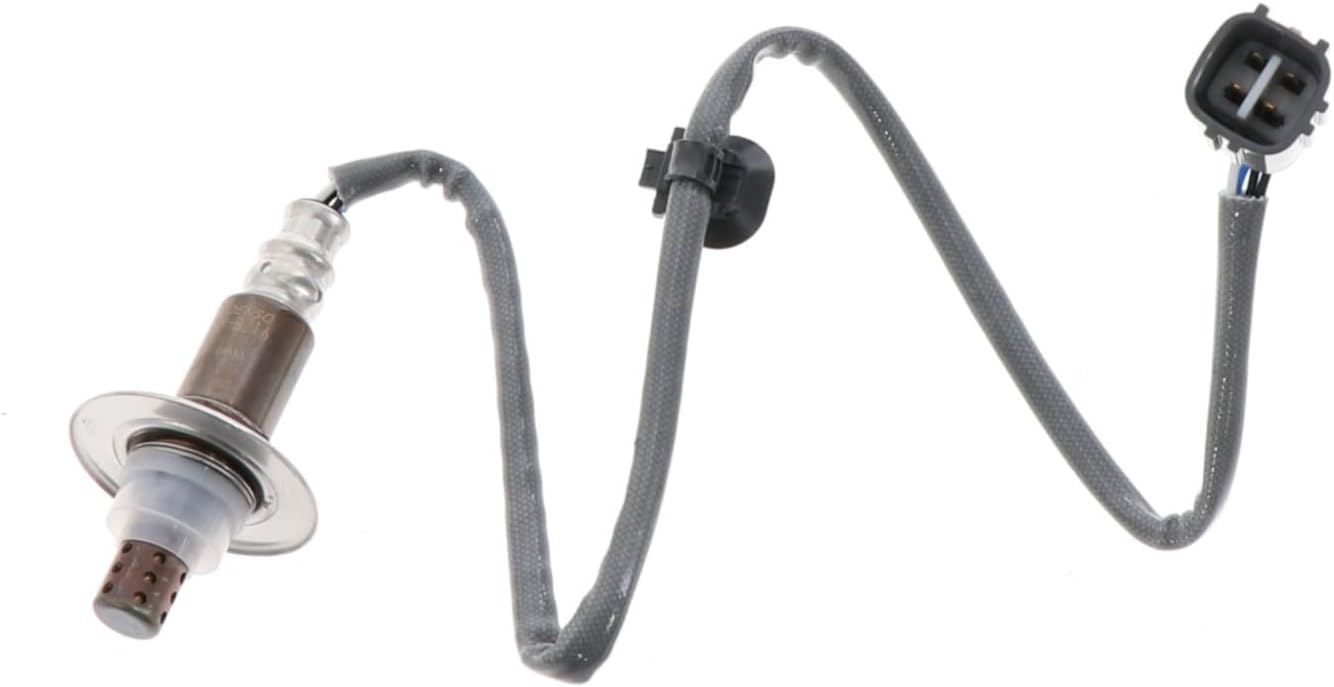
| Mounting Type | Thread-In |
|---|---|
| Output Type | NPN |
| Material | Stainless Steel, Zirconium |
| Upper Temperature Rating | 800 Degrees Celsius |
This Denso 234-4445 is a direct-fit replacement oxygen sensor made for certain Subaru Forester, Impreza, Legacy, Outback and Saab 9-2X model years. It installs in the factory thread-in location and provides the NPN output type expected by the vehicle computer to measure exhaust oxygen and adjust fuel trim. Notable features include a machined stainless steel body and an aluminum oxide trap layer that helps protect the ceramic sensing element from contamination, which should improve longevity and maintain accurate readings over time. In practice this sensor is used to resolve check-engine lights tied to oxygen sensor faults, to restore correct fuel economy and throttle response, and to prevent long-term damage caused by running rich or lean. The part is built to factory-quality standards and aims for first-time fit, so installation is straightforward for DIYers with basic tools or quick for a tech. Limitations are that fitment is vehicle- and year-specific and you must confirm it matches your 2010-2014 Outback configuration before ordering.
Best for: Buyers who prioritize proven, factory-quality replacement parts and want a sensor with a strong track record to clear O2-related check-engine lights and restore fuel trim on an affected 2010–2014 Outback.
Less Ideal for: If you need a universal sensor, a programmable wideband unit, or are modifying the engine management, this vehicle-specific OEM-style sensor is not the right choice.
- Direct-fit replacement engineered to factory-quality standards for straightforward installation
- Aluminum oxide trap layer to protect the ceramic element from contamination and extend sensor life
- Stainless steel construction and machined exterior for durability in exhaust conditions
- Fits specific model years and applications so incorrect selection will not function
Verdict: Choose the Denso 234-4445 when you want a factory-quality, direct-fit oxygen sensor that reliably restores correct air-fuel sensing on a 2010–2014 Subaru Outback.
6. A-Premium Upstream & Downstream O2 Oxygen Sensor 2-Pack

| Mounting Type | Threaded |
|---|---|
| Output Type | Analog |
| Specific Uses For Product | Real-time monitoring of oxygen content for closed-loop air-fuel ratio control |
| Material Type | Stainless Steel |
This two-pack of heated oxygen sensors provides upstream and downstream monitoring for Subaru Outback engines in the specified fitment range. The sensors use a threaded, 4-wire design and an analog output so the engine control unit can maintain closed-loop air-fuel ratio. Constructed from stainless steel, they are sold as a matched pair which simplifies replacing both sensors at once and helps avoid cross-compatibility problems between old and new sensors. Installation is straightforward for a competent DIYer or mechanic because the sensors are threaded and come with a factory-style connector. The notable limits are that these are an aftermarket replacement rather than a direct factory brand and the listing does not include detailed calibration data beyond being "high accuracy," so professional shops may prefer to verify operation after installation. For routine maintenance or to clear oxygen-sensor-related check engine codes on covered Subaru Outback engines, these offer a pragmatic, ready-to-install option.
Best for: A careful Outback owner who prioritizes a reliable, like-for-like replacement to resolve oxygen-sensor faults and restore proper fuel control without experimenting with performance parts.
Less Ideal for: Buyers seeking an OEM-branded sensor or technicians who need detailed calibration specifications for tuning work should consider other options.
- Includes both upstream and downstream sensors so both positions can be replaced together
- Heated, 4-wire design supports fast warm-up and stable closed-loop fueling
- Stainless steel construction for corrosion resistance in exhaust conditions
- Threaded mount and factory-style connector make installation straightforward
- Aftermarket part with limited published calibration data compared with factory-brand sensors
Verdict: A practical two-pack replacement that gets your Outback's oxygen-sensing system back to proper closed-loop fueling with an easy, factory-style swap.
Choosing the Right 2010-2014 Subaru Outback Oxygen Sensor: Key Factors to Consider
Fitment and Connector Type
Correct mechanical and electrical fitment is the most important factor. For the 2010-2014 Subaru Outback, oxygen sensors must match the vehicle's specific mounting threads, wiring harness connector, and the upstream or downstream location. A sensor that physically fits but uses a different connector can lead to unreliable readings or require splicing, which increases failure risk and installation time.
Confirming fitment reduces installation surprises and protects the vehicle's emissions controls. When shopping, check the sensor location and plug type called out for your model year and engine variant to ensure the part mates cleanly with the factory harness.
Heater Circuit Reliability
Most modern O2 sensors include an internal heater to bring the sensing element to operating temperature quickly. Reliable heater circuits matter for cold starts because a warmed sensor achieves accurate readings faster, which reduces rich running and lowers emissions during the critical warm-up phase.
On the Outback, a failed heater can trigger codes such as P0135 and lead to longer open-loop operation. Prefer sensors with proven heater durability and proper electrical ratings to match the factory supply. Durable heater designs also reduce repeat replacements and troubleshooting time.
Sensor Response Time and Accuracy
Response time defines how quickly the sensor changes output when the exhaust oxygen level shifts. Faster, stable response helps the engine control unit correct fuel trims more accurately, improving drivability and fuel economy. Accuracy across a range of exhaust conditions ensures the engine computer receives realistic feedback under load, idle, and transient throttle changes.
For the 2010-2014 Outback, prioritize sensors with documented fast switching or stable voltage characteristics. Lab-grade response data is ideal, but manufacturer specifications and consistent field performance reports are useful indicators.
Upstream Vs Downstream Location Function
Upstream (pre-catalytic converter) sensors primarily guide fuel control by monitoring exhaust oxygen directly from the engine, while downstream sensors monitor catalytic converter efficiency. Choosing the correct sensor for the intended location is critical because each has different performance expectations.
An upstream sensor needs quicker response and tighter accuracy for fuel trims. A downstream sensor must be robust and stable to monitor converter performance without needing rapid switching. Selecting the wrong type for a given bank or position can cause drivability issues or false diagnostic trouble codes.
Durability and Environmental Resistance
Oxygen sensors operate in a hot, corrosive environment with exposure to exhaust contaminants and road salts. Materials and protective coatings affect how long a sensor lasts in real-world Outback service. Durable housings, corrosion-resistant threads, and robust sealing extend service life and reduce the chance of premature failure.
Also consider resistance to thermal cycling and vibration typical of regular driving. Sensors designed with these stressors in mind help avoid intermittent faults and the need for repeat repairs.
Electrical Compatibility and Diagnostic Clarity
Electrical characteristics such as signal type, impedance, and heater resistance need to match the vehicle's control module expectations. A mismatched sensor can produce confusing voltage curves or trigger spurious codes like bank 1 sensor 1 faults. For diagnostic clarity, choose sensors that provide recognizable voltage behavior and reliable heater feedback so you can distinguish between sensor faults and unrelated engine issues.
Good electrical compatibility simplifies bench testing and on-vehicle diagnostics when using multimeters or OBD-II scanners to confirm sensor operation.
Upstream Versus Downstream: Which Sensor Does What on the Outback
On the 2010-2014 Subaru Outback, the upstream sensor(s) sit before the catalytic converter and directly influence fuel control by reporting the engine's exhaust oxygen content. These sensors need to switch quickly between lean and rich voltage levels so the engine computer can adjust injector pulse width in real time.
Downstream sensors are positioned after the converter and are used primarily to verify catalytic efficiency. They generally exhibit steadier readings and are not expected to switch as rapidly as upstream units. When diagnosing codes or drivability problems, understanding each sensor's role helps you focus on the correct bank and position.
- Upstream: primary input for fuel trims and closed-loop control.
- Downstream: monitors catalytic converter performance and emissions.
- Replacing the wrong location can leave symptoms unchanged and trigger persistent codes.
Common Symptoms That Point to a Failing O2 Sensor
Several signs indicate an oxygen sensor may be degrading on your Outback. A rough idle, reduced mileage, hesitation under acceleration, or a persistent check engine light are common symptoms. These occur because the engine computer is receiving inaccurate oxygen readings and cannot maintain the optimal air-fuel ratio.
Electrical issues such as failed heater circuits often present as delayed sensor warm-up, which can be observed as richer running immediately after startup. Intermittent faults may cause fluctuating fuel trims that are visible with a scan tool, while steady but incorrect voltages can suggest sensor contamination.
- Rough or inconsistent idle
- Noticeable drop in fuel economy
- Check engine light with O2-related codes
- Hesitation or poor throttle response
How to Test an Oxygen Sensor on the 2010-2014 Outback
Basic on-car tests can verify both the heater circuit and the sensor signal. Start by checking heater circuit resistance with the sensor disconnected; compare the reading to expected values in repair information. A high-resistance or open heater indicates a failed heater element.
For signal testing, use a multimeter or scan tool to monitor the sensor voltage in closed-loop operation. Upstream sensors should switch regularly between low and high voltage as the engine adjusts fuel trims. If the sensor stays at a constant voltage or switches very slowly, the sensor may be faulty. When testing, ensure exhaust leaks are sealed and engine parameters like coolant temperature are within normal ranges to avoid false results.
- Measure heater resistance for open/short checks
- Monitor live voltage for switching behavior in closed-loop
- Confirm test conditions: warm engine and no exhaust leaks
Installation Tips and Torque Considerations
When installing oxygen sensors, use the correct thread seal and torque to avoid thread damage or exhaust leaks. The sensor's hex size and the threaded bung on the Outback require the appropriate wrench and a torque wrench to achieve proper clamping without over-tightening.
Apply anti-seize only where recommended and avoid contaminating the sensing tip. Route the sensor wiring away from hot exhaust sections and moving suspension components. Reuse OEM mounting points and follow the vehicle's recommended torque values to prevent stripped threads or premature failure.
- Hand-thread first to avoid cross-threading
- Use recommended torque to secure the sensor
- Keep wiring harness clear of heat sources and moving parts
Interpreting OBD-II Codes Related to Oxygen Sensors
Codes like bank 1 sensor 1 or P0135 indicate specific problems such as heater circuit failures or slow switching. When a check engine light references an O2 sensor, use live data to determine whether the fault stems from wiring, connector corrosion, a failed heater, or the sensor element itself.
A comprehensive approach pairs code reading with on-vehicle tests: inspect connectors and wiring for damage, measure heater resistance, and observe sensor voltage behavior during steady-state and transient conditions. This method reduces the chance of replacing a sensor when the root cause is electrical or exhaust leakage.
- Use live data to confirm code relevance
- Inspect wiring and connectors before replacement
- Check for exhaust leaks that can mimic sensor faults
Still looking for the perfect fit?
Select your Subaru Outback configuration to see the most relevant Oxygen Sensors recommendations
How We Chose the Best 2010-2014 Subaru Outback Oxygen Sensor
We shortlisted oxygen sensors for the 2010-2014 Subaru Outback using practical fitment and performance criteria that matter to owners. First, we verified vehicle-specific fitment for each sensor location and connector to ensure straightforward installation on the specified model years. Second, we prioritized sensor response time and accuracy because faster, reliable voltage swings help the engine computer reach closed-loop operation sooner and maintain correct fuel trims.Third, materials and construction were considered, with emphasis on durable housings and proper heater circuits for cold-start operation. Fourth, electrical compatibility and connector type were checked to avoid splicing or adapter requirements. Finally, we looked at warranty and serviceability indicators that reflect long-term reliability. Exclusions: sensors that require extensive modification, non-OEM electrical harnesses, or unclear fitment documentation were not included. Overall, selections reflect a balance of correct fit, dependable heater function, and measured response characteristics relevant to the Outback owners.
Our full evaluation process is outlined in our review methodology.
FAQ
How long do oxygen sensors typically last on a Subaru Outback?
Oxygen sensor life varies, but many operate reliably for several years. Environmental factors like road salt, sensor contamination, and frequent short trips can shorten lifespan, so expect periodic replacement depending on use and exposure.
Can a bad oxygen sensor cause a persistent check engine light?
Yes. Faulty sensors, especially with heater failures or slow switching, commonly trigger OBD-II codes that illuminate the check engine light. Confirm the code with a scanner and verify sensor behavior before replacing parts.
Is it necessary to replace both upstream and downstream sensors at the same time?
Not always. Replace the sensor that is failing or showing out-of-range diagnostics. However, if the downstream unit is contaminated or aged and you are already servicing the exhaust, replacing multiple sensors can reduce future diagnostic work.
Will installing a new oxygen sensor fix poor fuel economy immediately?
Often you can see improved fuel economy once the new sensor allows the engine to return to correct closed-loop fuel control, but the extent and timing depend on the severity of the prior fault and driving conditions.
What should I check before deciding to replace an oxygen sensor?
Inspect the wiring and connector for corrosion or damage, check for exhaust leaks near the sensor, and measure heater resistance and live voltage behavior. These steps help avoid unnecessary parts replacement when the issue is electrical or mechanical.
Can a scan tool help diagnose a failing oxygen sensor?
Yes. A scan tool that displays live O2 sensor voltages and fuel trims is very useful. It lets you observe switching behavior and heater status, which are key indicators when diagnosing O2 sensor-related problems.
Final Verdict
When choosing oxygen sensors for the 2010-2014 Subaru Outback, prioritize correct fitment, reliable heater operation, and proven response characteristics for the intended upstream or downstream location. Addressing electrical issues, exhaust leaks, or connector problems before replacing a sensor prevents unnecessary parts changes and ensures the new unit performs as expected.Balance durability and electrical compatibility against the symptoms you observe. A properly matched sensor will restore accurate air-fuel feedback, improve drivability, and reduce recurring diagnostic time, giving you a confident, long-term solution.
Explore More:
- Check out all Subaru Outback parts & accessories
- Explore Oxygen Sensors Maintenance & Repair Guides
- Explore Engine
- Browse all Auto Parts
