

Note: This article contains affiliate links. If you click on these links and make a purchase, I may earn a small commission at no extra cost to you. This helps support my research and content. Read my full affiliate disclosure here.
If you own a Toyota Tacoma with the 2.7L engine, picking the right oil filter is one of the simplest ways to protect the engine and maintain performance. The oil filter you choose affects how well contaminants are trapped, how long you can safely go between oil changes, and how the filter holds up under heat and pressure during towing or off-road use.This guide presents seven top oil filters shortlisted for the Tacoma 2.7L. We evaluated each option for filtration efficiency, construction quality, and suitability for typical Tacoma driving conditions. Read on to understand the factors we considered and practical advice for installation and maintenance before the product list.
Looking for other parts? See all Toyota Tacoma parts & accessories.
Top Picks at a Glance
| Best Overall The best all-around choice for most situations | PurolatorBOSS PBL25608 Premium Cartridge Oil Filter |  |
| Best Quality Built to a higher standard if you want something more solid | DENSO Engine Oil Filter for Toyota Tacoma (1995-2018) |  |
| Best Value The sweet spot between price and what you get | A-Premium 10K Protection Spin-On Oil Filter |  |
| Best Budget The cheapest option that still gets the job done reliably | R.A. RA-4967 Engine Oil Filter (replacement for select Toyota and Lexus) |  |
| Highest Rated A top-rated pick with lots of positive feedback | K&N Premium Oil Filter HP-1002 with Wrench-Off Nut |  |
| Most Popular A crowd favorite that many people choose with confidence | Bosch Premium Oil Filter 3330 with FILTECH Media |  |
| Best Seller A high-volume bestseller chosen again and again | Toyota Genuine Oil Filter 90915-YZZN1 |  |
PurolatorBOSS PBL25608 Premium Cartridge Oil Filter

| Brand | Purolator |
|---|---|
| Material | Synthetic, Steel |
| Product Grade | Performance Part |
| Automotive Fit Type | Vehicle Specific Fit |
The PurolatorBOSS PBL25608 is a cartridge-style oil filter that uses SmartFUSION full synthetic media and a reinforced polymer mesh backing to trap fine particles and hold more debris between changes. It is intended for long service intervals and heavy-duty driving scenarios, offering features like a silicone anti-drainback valve to reduce dry starts and a PuroSEAL gasket for a leak-tight fit. In typical use it replaces the factory cartridge element during routine oil service and is suited to long commutes, towing, and stop-and-go driving where stronger filtration and higher capacity matter. Practical benefits include better contaminant capture compared with standard cellulose filters and design choices that simplify recycling by omitting metal components where applicable. Expect slightly higher cost versus basic filters and the need to confirm exact fitment for your Tacoma 2.7L application, but if you run full-synthetic oil and prefer longer intervals this filter offers confident protection for the engine.
Best for: Drivers who want a durable, high-efficiency filter that supports longer oil-change intervals and stronger protection during towing, long commutes, or frequent stop-and-go driving.
Less Ideal for: Buyers prioritizing the lowest possible purchase cost or those who perform very frequent short-interval oil changes where extended-capacity filtration is unnecessary.
- SmartFUSION full synthetic media for higher dirt removal efficiency
- Reinforced polymer mesh backing increases debris holding capacity
- Silicone anti-drainback valve helps prevent dry starts
- PuroSEAL gasket designed for a reliable, leak-tight seal
- Higher priced than basic replacement filters
Verdict: Choose the PurolatorBOSS PBL25608 if you want a high-capacity, full-synthetic media filter that supports longer service intervals and stronger engine protection for a Tacoma 2.7L application.
DENSO Engine Oil Filter for Toyota Tacoma (1995-2018)

| Compatible Vehicle Type | Car, Truck |
|---|---|
| Product Grade | Performance Part |
| Automotive Fit Type | Vehicle Specific Fit |
| Material Type | Silicone |
This DENSO-branded engine oil filter is a direct-fit replacement designed for Toyota Tacoma 2.4L, 2.7L and 3.4L engines from 1995 to 2018 and targets buyers who want a performance-grade option. It installs like a standard spin-on filter and is used during routine oil changes to trap contaminants and protect engine wear surfaces. Notable features include vehicle-specific fitment, performance part grading, and factory-style packaging that suggests it mirrors OEM form and function. In practice the filter provides dependable filtration without altering routine maintenance steps, and customer feedback indicates consistent fit and reliable operation on Tacoma trucks. Limitations are that interchange details are not fully documented by the seller and the listing focuses on compatibility with Tacomas rather than presenting extended life or high-mileage filtration claims, so buyers seeking upgraded media efficiency or very long change intervals should verify specifications or consider dedicated high-mileage or synthetic-oil-oriented filters. For users focused on straightforward performance replacement, this unit delivers a simple, reliable upgrade.
Best for: Buyers who prioritize a straightforward, performance-oriented replacement filter for routine oil changes on a Tacoma and want a product that installs and performs like a factory-style option.
Less Ideal for: Drivers seeking filters with documented extended service intervals, specialized high-efficiency media, or filters validated for heavy towing and extreme-duty schedules should consider purpose-built alternatives.
- Vehicle-specific fit for Toyota Tacoma engines from 1995 through 2018
- Sold as a performance-grade replacement designed to match factory installation
- Compact spin-on design that installs with standard tools during regular oil changes
- Positive user reports of consistent fit and reliable filtration on Tacoma trucks
- Seller does not provide detailed interchange or filtration media specifications
- Not marketed with extended life or explicit high-mileage performance claims
Verdict: A dependable, performance-grade direct replacement for Toyota Tacoma owners who want a factory-style filter that fits and functions like the original.
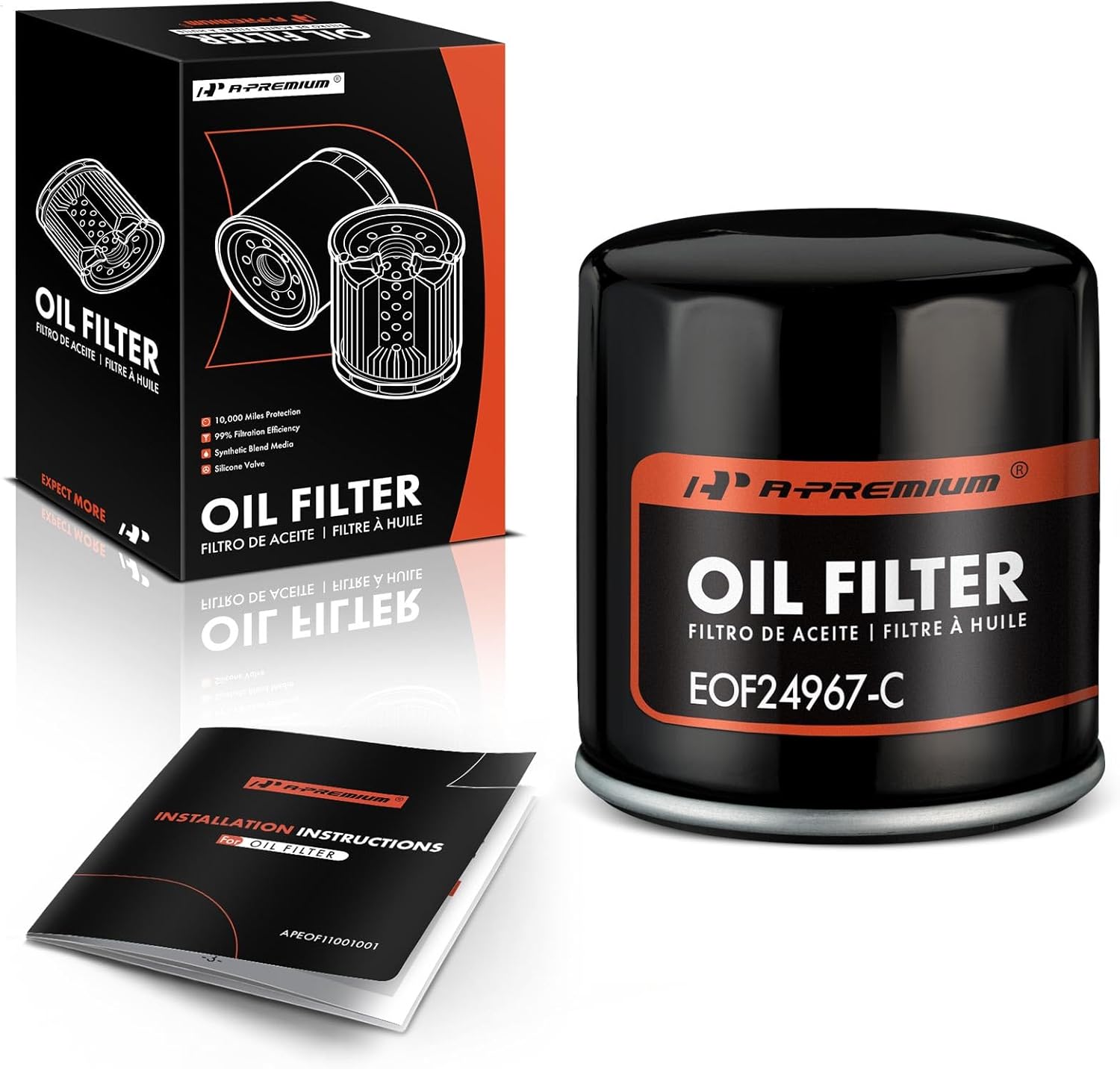
A-Premium 10K Protection Spin-On Oil Filter
| Filter Type | Spin-On Canister |
|---|---|
| Thread Size | 3/4-16 |
| Anti-Drain Back Valve | Yes |
| Bypass Relief Valve | Yes |
| Filtration Efficiency | 99% |
This A-Premium spin-on oil filter is a basic replacement that advertises 99% filtration efficiency, an anti-drain back valve, and a bypass relief valve for consistent oil flow. It is a compact, stainless-steel canister with a 3/4-16 thread and standard gasket dimensions, packaged to stay clean during storage. Typical use is straightforward: screw it onto the engine’s oil filter boss, hand-tighten and torque to spec, then change with each oil service interval. The filter’s semi-synthetic media and pressure-resistant housing mean it should perform acceptably in normal driving and light towing, and the anti-drain back valve helps reduce dry starts. Practical limitations are that the 10,000-mile claim is optimistic for Tacoma 2.7L duty cycles that include frequent short trips, dusty conditions, or heavy towing; shorter oil-change intervals will extend engine protection. Fitment should be checked against the Tacoma 2.7L’s required reference numbers before purchase.
Best for: A practical buyer who wants an affordable, ready-to-install replacement filter that performs well for regular driving and scheduled oil changes on their Tacoma 2.7L.
Less Ideal for: Drivers who routinely tow heavily, drive in extreme dusty or off-road conditions, or prefer filters validated by independent lab testing should consider a heavy-duty or tested alternative.
- High claimed filtration efficiency for particle removal
- Includes anti-drain back valve to reduce dry-start wear
- Sturdy stainless steel canister and sealed packaging to prevent contamination
- Standard 3/4-16 thread and common gasket sizes for easy installation
- 10,000-mile service interval claim may be aggressive for frequent short-trip or towing use
- No manufacturer warranty or lab test data provided to verify filtration claims
Verdict: A budget-friendly spin-on filter that offers high claimed filtration and practical fitment for routine maintenance on a Tacoma 2.7L.
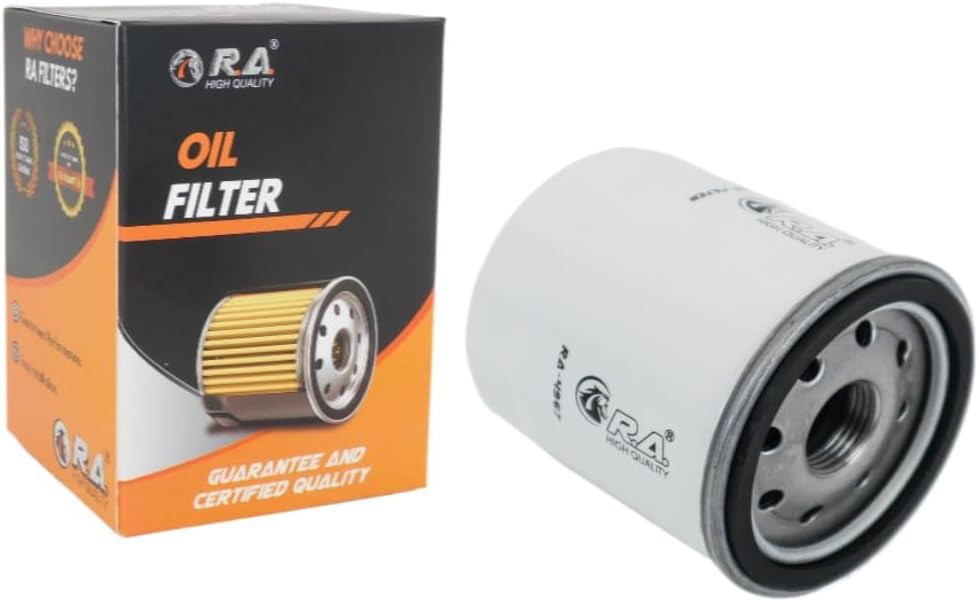
R.A. RA-4967 Engine Oil Filter (replacement for select Toyota and Lexus)
| Thread Size | 3/4-16 |
|---|---|
| Filter Media Material | Cellulose/Synthetic Blend |
| Attachment Type | Spin-On |
| Burst Pressure | 310 |
The R.A. RA-4967 is a spin-on engine oil filter intended as a direct-fit replacement for a range of Toyota and Lexus applications. It installs the same way as factory-style spin-on filters and includes a non-slip surface and gasket for straightforward hand tightening. The filter uses a cellulose/synthetic blend pleated media and claims high filtration efficiency with a silicone anti-drainback valve for better protection at startup and improved heat resistance. The listing highlights up to 15,000-mile capability and a burst pressure rating, which suggests durability for longer service intervals when paired with compatible oil. Practical benefits include easy DIY installation, broad fitment to popular Toyota engines, and reportedly strong contaminant capture. Limitations are that the material is cellulose-based rather than full synthetic in the media composition, and some buyers report occasional fitment mismatches, so double-check part interchange numbers before buying. For budget-oriented maintenance this filter offers solid features, but verify compatibility for your specific 2.7L Tacoma engine and follow your oil change interval recommendations.
Best for: Buyers looking to maintain a Toyota or Lexus on a tight budget who prioritize easy, no-fuss replacements and longer oil change intervals for everyday driving.
Less Ideal for: Do not pick this if you require full-synthetic filter media for severe-duty use or if you prefer filters from a specific OEM-brand supplier for warranty reasons.
- Direct-fit vehicle-specific design for many Toyota and Lexus models makes installation simple
- Non-slip grip and included gasket simplify DIY replacement without special tools
- Cellulose/synthetic pleated media and anti-drainback valve improve contaminant capture and startup protection
- Rated for extended change intervals up to 15,000 miles when used with appropriate oil
- Media is a cellulose/synthetic blend rather than full synthetic media
- A few reviews report occasional fitment issues so checking interchange numbers is necessary
Verdict: A cost-conscious, easy-to-install direct-fit oil filter that delivers strong filtration and startup protection for Toyota/Lexus engines when you need a budget-friendly replacement.
K&N Premium Oil Filter HP-1002 with Wrench-Off Nut

| Thread Size | 3/4 In. – 16 |
|---|---|
| Material | Resin Impregnated Cellulose |
| Product Grade | Performance Part |
| Automotive Fit Type | Vehicle Specific Fit |
The K&N Premium Oil Filter HP-1002 is a spin-on filter built for durability and higher-capacity filtration, intended to support longer service intervals recommended by many modern engines. It uses pleated synthetic-blend media to capture contaminants while maintaining high flow rates and features a welded hex nut on the canister for quick removal with a socket. In practical use this filter is straightforward to install and remove, and its heavy-duty canister helps resist collapse or leaks under demanding conditions. K&N advertises compatibility with synthetic and conventional oils, and the design aims to handle extended miles between changes when paired with proper oil. The main limitation for a Tacoma 2.7L buyer is ensuring correct fit and thread size for the engine application and sticking to recommended change intervals for that engine, since extended-interval claims depend on driving conditions and oil choice. For a reliability-minded owner who wants a sturdier, easier-to-service replacement, this filter delivers clear benefits but you should verify model fitment before purchase.
Best for: A Tacoma owner prioritizing long-term engine protection and easier DIY maintenance who wants a robust replacement filter that simplifies removal and supports extended service intervals when using appropriate oil.
Less Ideal for: Drivers who prefer strictly manufacturer-prescribed short oil change intervals or who need a guaranteed OEM-specified filter for warranty or dealer service should consider factory-replacement options.
- Integrated welded hex nut allows fast removal with a standard socket
- Pleated synthetic-blend media for improved contaminant capture
- Heavy-duty canister construction reduces risk of collapse or leaks
- Designed for high flow rates and compatibility with synthetic and conventional oils
- Extended 20,000-mile interval is conditional and depends on oil type and driving conditions
Verdict: Choose this filter if you want a tougher, easy-to-remove aftermarket unit that supports extended service intervals while helping protect your Tacoma's engine.
Bosch Premium Oil Filter 3330 with FILTECH Media

| Thread Size | M14x1.5 |
|---|---|
| Material | Silicone, Glass |
| Model | 3330 |
| Automotive Fit Type | Vehicle Specific Fit |
The Bosch 3330 is a premium spin-on oil filter designed to trap fine contaminants and provide reliable fitment for compatible vehicles. It uses Bosch FILTECH media that the company says captures and holds up to 14 grams of dirt, a silicone anti-drain back valve to keep oil in the engine at start-up, and a spiral-wound center tube plus steel base plate to resist warpage and leaks. In real-world use this means cleaner circulating oil between changes, a consistent seal that is easy to remove, and robust build quality for routine maintenance intervals. Buyers will appreciate the filter’s strong gasket and factory-quality fit that reduces the chance of leaks after installation. The main limitations are not unique to this part: fitment must be verified for the Tacoma 2.7L application and the filter needs to be replaced at normal oil-change intervals to deliver the stated benefits; it does not change oil or extend intervals by itself.
Best for: Buyers who prioritize proven filtration performance and want a filter with a strong track record and positive user feedback for routine maintenance on their Tacoma 2.7L.
Less Ideal for: Those seeking extended oil-change interval solutions or specialty performance filters tailored for motorsport or heavy-duty use should consider alternatives.
- FILTECH media captures and retains fine dirt to reduce engine wear risk
- Silicone anti-drain back valve maintains oil supply at cold starts
- Reinforced steel base plate and center tube resist warpage and leaks
- High lubricity gasket forms a reliable, leak-resistant seal and allows easy removal
- Compatibility must be confirmed for the Tacoma 2.7L since fit is vehicle specific
Verdict: Choose the Bosch 3330 if you want a factory-quality replacement filter with proven filtration media and sturdy construction for reliable day-to-day protection of a Tacoma 2.7L engine.
Toyota Genuine Oil Filter 90915-YZZN1

| Manufacturer Part Number | 90915-yzzn1 |
|---|---|
| Item model number | 90915YZZN1 |
| Manufacturer | Toyota |
This is a genuine Toyota oil filter (part 90915-YZZN1) intended as a direct factory-quality replacement for compatible Toyota engines. It installs like a standard spin-on filter and is used during routine oil changes to trap dirt and metal particles while maintaining correct oil flow. The filter uses factory filter media and a heavy-duty housing to provide consistent filtration over the service interval, which helps protect engine components and preserves warranty conformity. Because it is a manufacturer part, fitment and seal reliability are generally excellent and users report straightforward installation. The main limitation is that it is a single, model-specific replacement item so you must confirm fitment for a Tacoma 2.7L year and engine variant before buying; it also lacks aftermarket innovations like extended-life media or performance-oriented designs that some third-party filters offer. For buyers who prioritize factory fit and predictable results this filter delivers dependable, no-surprises performance.
Best for: Buyers who prioritize factory-quality replacements and want predictable, warranty-friendly parts for routine maintenance on their Toyota vehicle.
Less Ideal for: Shoppers seeking longer-life, high-performance, or specialty filters should consider aftermarket options with advanced media or extended service intervals.
- Factory genuine Toyota part for reliable fit and compatibility
- Heavy-duty housing and factory-grade filter media for consistent filtration
- Direct replacement with standard threading for easy installation
- Does not offer extended-life or performance media found in some aftermarket filters
Verdict: Choose this genuine Toyota filter when you want a factory-fit, no-surprises replacement to preserve reliability and fitment for your Toyota.
Choosing the Right Toyota Tacoma 2.7L Oil Filter: Key Factors to Consider
Filtration Efficiency and Micron Rating
Filtration efficiency determines how well a filter removes harmful particles from engine oil. For the Tacoma 2.7L, a filter with a reliable micron rating and published beta ratio gives you a measurable expectation of performance. Higher efficiency at finer microns reduces abrasive wear on bearings, camshafts, and lifters, which matters when you regularly commute or haul loads.
However, excessively fine media without sufficient capacity can clog faster. That is why you should balance fine-particle removal with contaminant-holding capacity to avoid premature restriction during normal or extended drain intervals.
Contaminant-Holding Capacity
A filter's ability to hold trapped particles affects how long it performs before restricting oil flow. For owners who use longer oil-change intervals or synthetic oil, greater holding capacity helps maintain flow and protection between services. This is especially relevant if you occasionally drive in dusty conditions or perform light towing, both of which introduce more contaminants into the oil.
Look for clear specifications on dirt-holding capacity and consider media thickness and pleat depth as indicators. Filters designed with higher capacity tend to have larger surface area or denser pleating to retain more debris while keeping pressure drop acceptable.
Construction Quality and Canister Strength
Mechanical robustness prevents collapse, leaks, and failure under thermal stress. The 2.7L engine can experience elevated oil temperatures during heavy use, so the filter's canister material, seam bonding, and internal support must withstand pressure without deforming. A stout canister also reduces the risk of thread damage during installation and removal.
Inspect the build for a reinforced center tube, consistent seam welding, and durable paint or coating to resist corrosion. Even with spin-on designs, proper canister strength contributes to long-term reliability and easier serviceability.
Gasket and Anti-Drainback Design
The gasket material and anti-drainback valve affect seal integrity and oil delivery on startup. A high-quality rubber or silicone gasket reduces the chance of oil filter gasket leak as the engine heats and cools. The anti-drainback valve prevents oil from draining out of the filter when the engine is off, so you get immediate oil pressure at startup which reduces wear.
Check for materials rated for oil and heat exposure and a snug fit for thread engagement. A good anti-drainback design is particularly useful if you frequently park on inclines or in cold climates where oil can migrate away from passages.
Compatibility With Synthetic Oils and Drain Intervals
If you run synthetic oil or plan to extend oil-change intervals, select a filter specified for synthetic use and tested at longer drains. Some media and adhesives perform differently with synthetic formulations or over prolonged time in service. Filters that list compatibility with synthetic oil and show robust contaminant-holding capacity help ensure protection throughout the extended interval.
Be mindful that extending intervals also increases the total contaminant load the filter must hold, so pair longer drains with filters rated for higher capacity and stable media performance under heat.
Ease of Installation and Removal
Practical serviceability matters for vehicle owners who perform routine oil filter replacement themselves. Filter size, thread engagement, and gasket profile determine how easily a filter installs and seals. A filter that tightens smoothly and allows a secure hand-tight plus specified torque without cross-threading is preferable.
Consider whether the filter works with common oil-filter wrenches, how accessible the filter location is on the Tacoma 2.7L, and whether the manufacturer provides clear torque guidance. Installation ease reduces the chance of a poor seal or over-tightening that could cause damage.
Which Oil Filter Type Is Best for the Tacoma 2.7L
Spin-on filters are the most common option for the Tacoma 2.7L and provide a straightforward, sealed canister design that is easy to replace during routine service. Cartridge-style systems are less common on this engine, so most owners find spin-on filters offer the best balance of availability and simplicity.
When selecting a spin-on filter, prioritize media construction and anti-drainback design rather than style alone. The right spin-on filter will deliver clean oil quickly after startup and resist leaks through durable gaskets and consistent canister threading.
- Spin-on filters: simple replacement, integrated canister and gasket.
- Cartridge systems: rare on this engine, may require different housing service.
- Focus on media and sealing quality over filter format.
Oil Filter Maintenance Interval Guidance
Recommended oil-change intervals depend on oil type, driving conditions, and load. For typical driving in a Tacoma 2.7L, many owners follow manufacturer intervals using conventional or synthetic oil. If you use synthetic oil or perform mostly highway driving, you may be able to safely extend intervals—provided you pair longer drains with a filter rated for higher contaminant capacity.
Severe driving such as frequent short trips, dusty roads, or regular towing increases contaminant generation and may warrant shorter intervals. Monitor oil condition and follow service reminders; a filter that lists compatibility with extended drains gives extra assurance for longer intervals.
- Normal driving: follow standard manufacturer intervals as baseline.
- Synthetic oil: consider longer intervals only with filters rated for extended service.
- Severe use: shorten intervals when towing, idling, or driving in extreme dust.
Dealing With Oil Filter Gasket Leak Risks
Gasket leaks can stem from degraded gasket material, improper installation, or damaged sealing surfaces. To minimize risk, inspect the oil filter mounting surface for old gasket residue and clean it prior to installation. Use the correct gasket orientation and tighten the filter to the specified torque or hand-tighten per the filter maker's guidance.
If you notice seepage after installation, recheck torque and gasket seating. Replacing the gasket or the entire filter is often the practical remedy. Choosing a filter with a high-quality gasket material reduces the chance of leaks developing as oil temperatures cycle.
- Always clean the mounting surface before installing a new filter.
- Lubricate the new gasket with a thin film of fresh oil for proper seating.
- Tighten to recommended torque to avoid under- or over-tightening.
Basic Steps to Change an Oil Filter on the Tacoma 2.7L
Changing the oil filter on the Tacoma 2.7L is a routine maintenance task but requires care to avoid spills and ensure a good seal. Park on level ground, warm the engine slightly, and support the vehicle safely if needed. With the engine off, position a drain pan and remove the old filter using an appropriate wrench. Inspect the old gasket to ensure it did not remain on the mounting surface.
Before installing the new filter, apply a thin film of oil to the new gasket, hand-start the filter on the threads to avoid cross-threading, and tighten per the filter's instructions. After refilling oil, run the engine briefly and check for leaks around the gasket and the drain plug.
- Warm engine slightly for easier oil flow but do not work on a hot engine without protection.
- Use proper support when working under the vehicle and wear gloves to avoid contact with used oil.
- After installation, check for leaks and re-torque after a short run if recommended.
Matching Oil Filter Size and Thread Fit
Ensuring the correct size and thread fit is essential to avoid leaks and fitment issues. The Tacoma 2.7L requires a specific spin-on thread pitch and gasket diameter. Confirm compatibility by checking the filter's fitment specs against your vehicle or owner manual before purchase.
A mismatched filter can cause cross-threading, poor sealing, or interference with surrounding components. When in doubt, verify the thread engagement length and gasket seating dimensions to ensure a proper mechanical fit.
- Check thread pitch and diameter before installation.
- Verify gasket outer diameter matches the mounting surface.
- Confirm clearance to nearby components to ensure proper engagement.
How Synthetic Oil Affects Filter Choice
Synthetic oils are chemically stable and often allow longer drain intervals, but they also carry different solvent properties that can affect some filter adhesives and media binders over extended periods. Choose filters that explicitly state synthetic compatibility or that show robust adhesive and media construction for longer service life.
Filters rated for synthetic oil use generally offer better resistance to media degradation and maintain filtration performance over longer cycles. Pairing an appropriately rated filter with synthetic oil helps maintain engine protection without increasing maintenance risk.
- Select filters tested with synthetic oils for longer drains.
- Check media stability and adhesive quality in specifications.
- Monitor condition if you extend intervals beyond typical recommendations.
Still looking for the perfect fit?
Select your Toyota Tacoma configuration to see the most relevant Oil Filters recommendations
How We Chose the Best Toyota Tacoma 2.7L Oil Filter
We focused on criteria that matter specifically for the Toyota Tacoma 2.7L, with the goal of identifying filters that deliver consistent protection under daily driving, light towing, and occasional off-road use. Key evaluation metrics included filtration efficiency expressed as micron and beta ratios, contaminant-holding capacity, and material robustness such as canister or media construction. We also assessed anti-drainback valve design and gasket materials to reduce the chance of leaks and ensure reliable cold-start protection.Flow characteristics and pressure resilience were reviewed to make sure filters do not restrict oil flow or collapse under high-temperature conditions common in stop-and-go traffic or moderate towing. Compatibility with synthetic oils and recommended oil-change intervals was considered so owners using longer-drain synthetic oils could select appropriately rated filters. Ease of installation, including spin-on thread fit and gasket seating, informed our practical selections.Filters that lacked clear specifications for micron rating or construction, or that showed known issues with gasket sealing under heat, were excluded. We prioritized products that provide a documented balance of fine filtration and adequate capacity for the Tacoma 2.7L operating environment.
Our full evaluation process is outlined in our review methodology.
FAQ
How often should I replace the oil filter on my Tacoma 2.7L?
It often depends on oil type and driving conditions. For standard driving, many follow the manufacturer interval for combined oil and filter change. If using synthetic oil and a high-capacity filter you may be able to extend intervals, but severe driving conditions usually call for more frequent changes.
Can I use a high-efficiency filter with longer drain intervals?
Possibly. High-efficiency filters with proven contaminant-holding capacity and compatibility with synthetic oils are better suited for longer drains. Make sure the filter's specifications list extended service use and monitor oil condition between changes.
What causes an oil filter gasket leak and how do I fix it?
Leaks commonly result from old gasket residue left on the mounting surface, improper installation, or degraded gasket material. Fixes include cleaning the mounting surface, replacing the filter, lubricating the new gasket lightly with oil, and ensuring proper torque during installation.
Is a spin-on oil filter the best option for the Tacoma 2.7L?
Spin-on filters are the most common and user-friendly choice for this engine. They provide a sealed canister with integrated gasket and are easy to replace. Focus on media quality and sealing features when choosing among spin-on options.
Will using synthetic oil require a different filter?
Not necessarily a different type, but you should choose a filter that specifies synthetic compatibility. Some filters are designed with media and adhesives that hold up better with synthetic oil and over longer drain intervals.
How can I check if a filter fits my Tacoma 2.7L before buying?
Verify the filter's thread size, gasket diameter, and listed vehicle fitment in the product specifications. Cross-reference those specs with your owner manual or the filter fitment guidance for the Tacoma 2.7L to ensure correct fit.
Final Verdict
When choosing an oil filter for the Toyota Tacoma 2.7L, prioritize measurable filtration efficiency, robust contaminant-holding capacity, and solid construction to prevent leaks and withstand heat. Match the filter to your oil type and intended drain interval, and factor in driving conditions such as towing or dusty roads.Balancing fine filtration with adequate capacity and a reliable gasket design will provide the best protection for the 2.7L engine. Use the decision factors above to select a filter that fits your maintenance habits and operating conditions, and follow proper installation and inspection practices to maintain dependable engine protection.
Explore More:
- Check out all Toyota Tacoma parts & accessories
- Explore Oil Filters Maintenance & Repair Guides
- Explore Engine
- Browse all Auto Parts
