

Note: This article contains affiliate links. If you click on these links and make a purchase, I may earn a small commission at no extra cost to you. This helps support my research and content. Read my full affiliate disclosure here.
If you own a 2013-2017 Subaru Crosstrek, the oil filter you choose can directly affect engine cleanliness, oil life, and long-term reliability. Using the right filter helps trap contaminants and maintain consistent oil pressure during normal driving and towing or light off-road use. This guide shortlists the top options for the Crosstrek and explains the factors that matter for proper fit and filtration.Below you will find our top picks for the vehicle, plus clear buying criteria, maintenance tips, and answers to common Crosstrek-specific questions to help you pick and install the right oil filter with confidence.
Looking for other parts? See all Subaru Crosstrek parts & accessories.
Top Picks at a Glance
| Best Quality Built to a higher standard if you want something more solid | Subaru Engine Oil Filter with Crush Gasket (15208AA20A & 803916010) |  |
| Best Value The sweet spot between price and what you get | Kefly Engine Oil Filter 15208AA160 / 15208AA21A (3-Pack) |  |
| Best Budget The cheapest option that still gets the job done reliably | Kefly Engine Oil Filter for Subaru (replaces 15208AA160 / 15208AA21A) – 1 Pack |  |
| Highest Rated A top-rated pick with lots of positive feedback | Subaru Genuine Engine Oil Filter with Crush Gasket (1 Pack) |  |
| Best Seller A high-volume bestseller chosen again and again | Bosch 3974 Premium Oil Filter with FILTECH Media Technology |  |
1. Subaru Engine Oil Filter with Crush Gasket (15208AA20A & 803916010)

| Thread Size | M16 x 1.5 |
|---|---|
| Material | Steel, Cellulose/Synthetic |
| Manufacturer Part Number | 15208AA20A |
| Automotive Fit Type | Vehicle Specific Fit |
This is a factory Subaru oil filter kit that includes one 15208AA20A filter and the matching 803916010 crush gasket for a direct replacement during routine oil service. It installs like a standard spin-on filter and is intended for use with the specified Subaru engines listed for Crosstrek and related models. The filter uses cellulose/synthetic media and a machined exterior, providing consistent filtration and fitment identical to factory specifications so you do not need to modify the vehicle or engine components. Practical benefits include reliable sealing from the matched gasket and predictable oil flow and bypass behavior under normal driving and spirited use. Limitations are that it is a vehicle-specific, single-filter kit so you must confirm exact model and engine fitment; it does not offer extended-service claims beyond Subaru's standard recommendations and is not a high-mileage or performance aftermarket upgrade.
Best for: Buyers who prioritize maintaining factory specifications and reliable, predictable filtration for regular maintenance and performance-minded driving on a 2013–2017 Crosstrek.
Less Ideal for: Drivers looking for a high-flow performance filter or extended oil change intervals should consider aftermarket options tailored to those goals.
- Factory-matched fit and sealing gasket for hassle-free installation
- Cellulose/synthetic media balances contaminant capture with flow for daily and spirited driving
- Machined exterior and manufacturer part number ensure authentic construction
- Not marketed as an extended-life or high-flow performance filter
Verdict: Choose this genuine Subaru filter kit to preserve factory fit, sealing, and filtration behavior on a 2013–2017 Crosstrek during routine oil service.
2. Kefly Engine Oil Filter 15208AA160 / 15208AA21A (3-Pack)
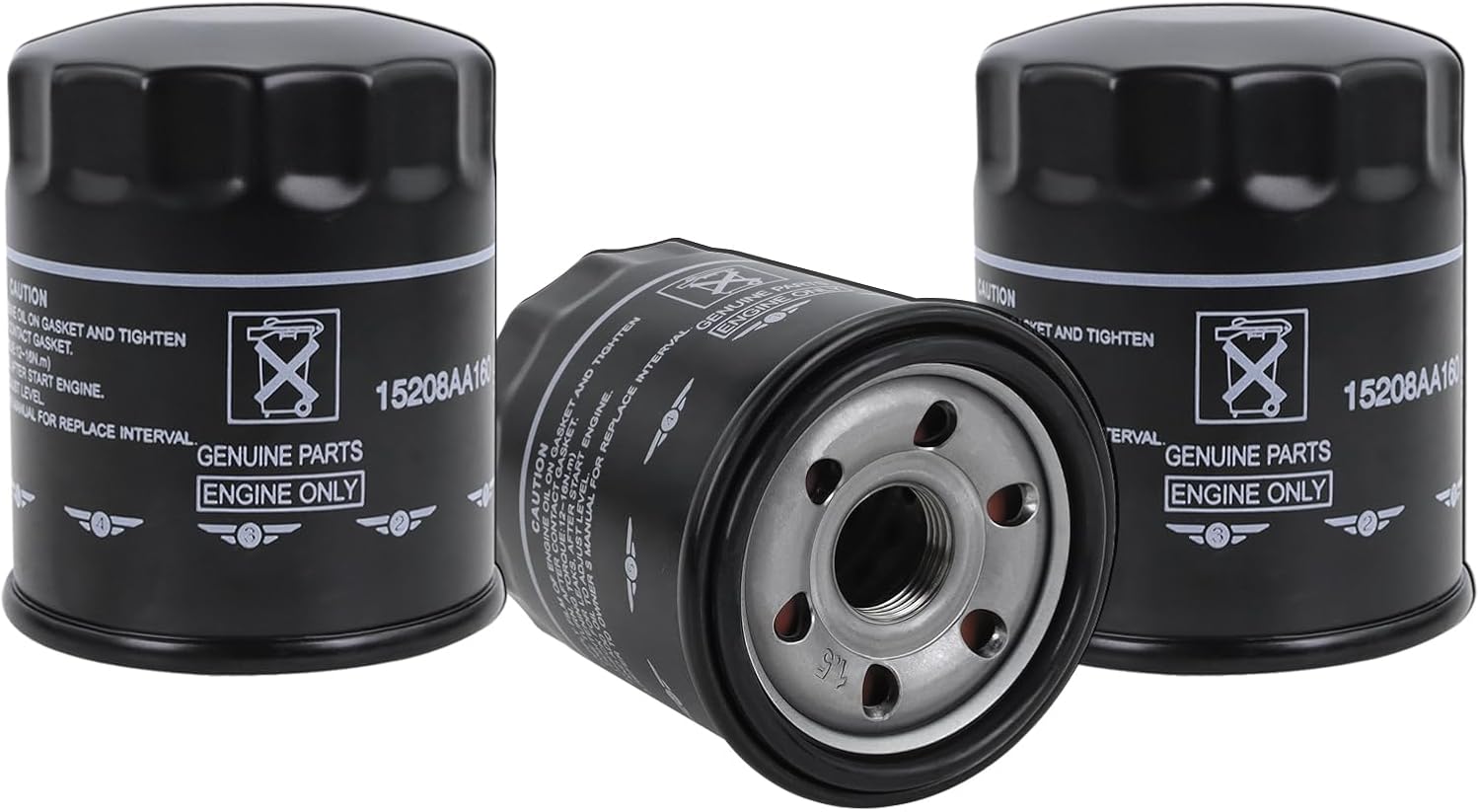
| Replaces part numbers | 15208AA160, 15208AA15A, SOA6351520815, 15208AA20A, 15208AA21A |
|---|---|
| Unit count | 3 |
| Material type | Paper, Steel |
| Product grade | Replacement Part |
| Compatible vehicle type | Car, Sports Utility Vehicle, Truck |
This Kefly oil filter is a straightforward replacement designed to fit a wide range of Subaru 4-cylinder models and engines. Sold as a three-pack, it replaces several factory part numbers so you can keep a spare on hand for routine maintenance. Typical use is standard oil changes where the filter captures contaminants and helps preserve engine life; the filter uses paper media with a steel housing, matching the basic construction buyers expect from aftermarket replacements. The practical benefits are simple: it provides an inexpensive way to maintain clean oil, comes in multiples to cover several service intervals, and lists explicit compatibility with Crosstrek, Outback, Forester, Impreza, Legacy, and Ascent applications. Limitations are that this is a budget replacement part with no detailed filtration efficiency data and a short six-month or 7,500-mile quality guarantee, so those wanting documented high-mileage or performance filtration may prefer premium alternatives with longer warranties or proprietary media.
Best for: Buyers who prioritize cost-effective routine maintenance and want a ready set of replacement filters for scheduled oil changes on Subaru 4-cylinder models.
Less Ideal for: Drivers who need documented high-performance filtration, extended-life filters, or an extended warranty should consider premium branded options instead.
- Three filters in one package for multiple oil changes or a spare on hand
- Direct replacement for several Subaru factory part numbers
- Standard paper filtration media with steel housing matching common aftermarket design
- Clear vehicle compatibility list including Crosstrek and other Subaru 4-cylinder models
- No published filtration efficiency or micron rating provided
- Short six-month or 7,500-mile quality guarantee compared with some premium brands
Verdict: A budget-friendly three-pack replacement that makes routine oil-change maintenance for Subaru 4-cylinder Crosstrek owners simple and convenient.
3. Kefly Engine Oil Filter for Subaru (replaces 15208AA160 / 15208AA21A) – 1 Pack

| Thread Size | M16 x 1.5 |
|---|---|
| Product Grade | Replacement Part |
| Compatible with Vehicle Type | Car, Sports Utility Vehicle, Crossover |
| OEM Equivalent Part Number | 15208AA160, 15208AA15A, SOA6351520815, 15208AA20A, 15208AA21A |
This Kefly replacement oil filter is designed as a direct-fit replacement for several Subaru 4-cylinder applications and is used the same way as a standard spin-on filter during routine oil changes. It matches common Subaru part numbers so installation is straightforward with a compatible wrench and standard drain procedure. The filter uses paper media and a steel canister to trap contaminants and protect the engine between service intervals. For budget-conscious owners it offers a low-cost alternative to branded filters while covering a wide range of Subaru model years listed by the manufacturer. Limitations include fewer published performance details than name-brand filters and no extended-life filtration claims, so stick to the recommended change intervals. The product comes as a single-pack and includes a thread size specification that matches Subaru filter housings for the stated vehicles.
Best for: Value-focused Subaru owners who want a low-cost, direct-replacement oil filter for regular maintenance on covered 4-cylinder Crosstrek years and similar Subaru models.
Less Ideal for: Drivers seeking high-performance, extended-life, or race-grade filtration should choose a premium or specialized filter instead.
- Compatible with multiple Subaru 4-cylinder models and replaces common factory part numbers
- Economical single-pack option suitable for routine oil change budgeting
- Standard spin-on design with M16 x 1.5 thread for straightforward installation
- Paper filter media and steel canister provide basic contaminant capture
- No published long-life or high-mileage filtration ratings compared with premium brands
- Limited manufacturer performance specifications beyond basic interchange and materials
Verdict: An affordable, factory-replacement-style oil filter that fits many Subaru 4-cylinder Crosstrek years and is a practical choice for routine maintenance on a budget.
4. Subaru Genuine Engine Oil Filter with Crush Gasket (1 Pack)

| Manufacturer Part Number | SOA6351520815 |
|---|---|
| Included Components | Oil Filter and Gasket |
| Thread Size | M16 x 1.5 |
| Compatible with Vehicle Type | Car, Sports Utility Vehicle |
This genuine Subaru engine oil filter kit includes the filter and a crush gasket and is intended as a direct factory-quality replacement for specified Subaru models. It captures microscopic contaminants and dust particles to help protect the engine between scheduled oil changes and is sized and threaded to match Subaru service specifications. Typical use is straightforward: drain the oil, remove the old filter, replace the gasket, install the new filter and refill with fresh oil according to the owner’s schedule. Notable features include Subaru part-number continuity and vehicle-specific fitment covering Crosstrek, Outback, Legacy, Forester, Impreza and Ascent applications within the listed years. Practical benefits are peace of mind from using a manufacturer replacement and reduced risk of fitment or filtration compromises that can occur with some aftermarket filters. Limitations are that this is a single-filter kit so you must buy multiples for multiple service intervals and it only fits the listed Subaru 4-cylinder and non-turbo applications, not other engines or makes.
Best for: Buyers who prioritize reliable, factory-grade maintenance for their Subaru and want a direct replacement that matches manufacturer fit and filtration expectations.
Less Ideal for: Drivers seeking bulk multi-pack value or a universal aftermarket filter compatible with many makes should consider alternatives.
- Factory-quality replacement designed to match Subaru service specifications
- Includes crush gasket for proper sealing during installation
- Designed to remove microscopic contaminants for reliable engine protection
- Vehicle-specific fit reduces risk of incorrect threading or leaks
- Sold as a single filter and gasket per pack rather than multi-packs
Verdict: Choose this genuine Subaru filter if you want a direct factory-quality replacement that ensures proper fit and dependable filtration for your Crosstrek.
5. Bosch 3974 Premium Oil Filter with FILTECH Media Technology

| Brand | Bosch |
|---|---|
| Model | 3974 |
| Vehicle Service Type | Car |
| OEM Part Number | F00E164423 |
The Bosch 3974 is a vehicle-specific replacement oil filter designed to capture and hold a large amount of contamination while delivering reliable oil flow at startup and during operation. Its FILTECH media is engineered to screen out and retain up to 14 grams of dirt and particles, which helps reduce abrasive wear inside the engine. The filter includes a silicone anti-drain back valve so oil remains available on startup, a high-lubricity gasket for a secure, leak-resistant seal that is still easy to remove, and a spiral-wound metal center tube for structural durability. Typical use is during routine oil changes on compatible Subaru Crosstrek engines where a dependable factory-quality replacement is preferred. The construction aims to prevent warpage and leaks common to cheaper filters, but buyers should confirm exact fit for 2013-2017 Crosstrek trim and engine before purchase since fitment varies by vehicle configuration.
Best for: Drivers who prioritize dependable, factory-quality filtration and want a drop-in replacement that reduces risk of premature engine wear during normal and extended service intervals.
Less Ideal for: Buyers looking for the cheapest disposable option or universal-fit filters that cover many models should consider other budget or universal choices.
- FILTECH media captures and holds up to 14 grams of dirt for better contaminant retention
- Silicone anti-drain back valve maintains oil supply at startup to reduce dry-wear
- Reinforced spiral-wound center tube and steel base plate resist warpage and improve durability
- High-lubricity gasket provides a leak-resistant seal while allowing easier removal
- Vehicle-specific fit means you must verify compatibility with your Crosstrek trim and engine before buying
Verdict: Choose this Bosch filter if you want a robust, factory-quality replacement that prioritizes contaminant capture and reliable oil supply at startup for your 2013–2017 Crosstrek.
Choosing the Right 2013-2017 Subaru Crosstrek Oil Filter: Key Factors to Consider
Fitment and Threading
Correct fitment is the most important factor for the Crosstrek. The filter must match the vehicle's oil filter housing, thread pitch, and sealing surface so the filter seats evenly and the gasket compresses properly.
Improper fit can cause oil pressure loss, leaks at the gasket, or difficulty during removal. For owners doing oil filter replacement themselves, a filter that threads on smoothly and clears nearby components reduces the chance of cross-threading and makes future service easier. Confirming the fit also avoids the need for aftermarket adapters or modifications that could compromise the oiling system.
Filtration Efficiency and Media Quality
Filtration efficiency determines how well the filter captures soot, combustion byproducts, and metallic debris. A higher-efficiency media with a fine average micron rating removes smaller particles, helping extend engine life and protecting precision components in the Crosstrek's engine.
Media construction matters too. Multi-layer synthetic or blended media typically provides greater particle-holding capacity and more consistent flow than a basic cellulose element. For vehicles that use synthetic oil, pairing it with an oil filter designed to handle the oil's detergency and flow characteristics helps maintain pressure and filtration over the full oil change interval.
Oil Flow and Bypass Valve Behavior
Oil must flow reliably through the filter at cold starts, high RPMs, and during increased engine loads. The bypass valve prevents oil starvation if the element becomes clogged or when the oil is very viscous at low temperatures.
For the Crosstrek, a bypass valve that opens at an appropriate pressure ensures continuous lubrication without allowing large amounts of unfiltered oil under normal conditions. Filters with poorly tuned bypass valves can allow contaminants through too early or restrict flow unnecessarily, affecting oil pressure readings and engine protection.
Seal, Gasket, and Canister Construction
A durable gasket and robust canister reduce the risk of oil filter gasket leak or canister deformation. The gasket material should resist oil and heat exposure without hardening over time, and the canister should withstand installation torque and engine bay heat cycles.
Look for strong sealing designs that maintain a consistent compression profile and for canisters that do not dent or collapse when tightened. This is especially important if you do off-road driving or live in climates with large temperature swings that can accelerate gasket wear.
Serviceability and Removal
Practical considerations for oil filter replacement include how easy the filter is to remove and whether common tools will access it in the Crosstrek's engine bay. Filters with textured or larger outer shells are easier to grip and remove by hand or with a standard strap wrench.
Also consider whether the filter drains when removed or traps oil; a draining filter reduces mess during oil filter replacement. Ease of access affects the time and cleanliness of a DIY oil change and can influence whether you stick to recommended maintenance intervals.
Compatibility with Oil Type and Maintenance Interval
Choose a filter rated for the oil type you use and the interval you plan to run. Synthetic oil can carry different contaminant loads and detergency characteristics compared with conventional oil, and longer service intervals demand higher dirt-holding capacity from the filter.
If you extend intervals beyond standard recommendations, prioritize filters with higher capacity media. Confirm manufacturer guidance on whether a filter is optimized for extended drain intervals so the Crosstrek's engine stays protected between services.
Understanding the Crosstrek Oil Filter Housing
The 2013-2017 Crosstrek uses a threaded spin-on style filter that mounts to the engine block housing. Knowing how the housing sits relative to surrounding components helps you pick a filter that clears the oil pan, suspension parts, and intake plumbing for easy removal and installation.
- Check clearance around the housing before purchasing a deeper or wider filter
- Consider the orientation of the filter canister to avoid contact with nearby hoses
- Confirm thread engagement depth to prevent over-tightening and gasket deformation
Synthetic Oil and Filter Pairing
Synthetic oil behaves differently from conventional oil, especially at temperature extremes and during long drain intervals. Pairing synthetic oil with a filter that is rated to handle higher detergency and holds more contaminants helps maintain oil pressure and filtration effectiveness on the Crosstrek.
- Synthetic-friendly media resists breakdown from aggressive detergents
- Higher surface area media supports longer intervals without flow restriction
- Ensure bypass valve specifications remain appropriate for colder starts
How Filter Design Affects Cold-Start Protection
Cold starts put immediate stress on the oiling system because oil viscosity is higher and contaminants can dislodge from deposits. Filters with a reliable anti-drainback feature or a well-tuned bypass valve help ensure rapid oil delivery to critical engine bearings.
- Anti-drainback reduces dry starts by keeping oil in the filter when the engine is off
- A bypass valve that opens too early can allow unfiltered oil; one that opens too late risks oil starvation
- Materials that remain flexible in cold temperatures preserve gasket sealing and anti-drainback function
DIY Oil Filter Replacement Tips for the Crosstrek
If you perform routine maintenance, prepare the vehicle for a clean and safe oil filter replacement. Use the correct wrench size, drain the oil to a point that minimizes spills when removing the filter, and keep a drip tray handy to catch residual oil from the housing and filter.
Changing the oil filter when warm but not hot reduces viscosity and speeds drainage while minimizing burn risk. Tighten the new filter to the recommended snugness: hand-tight plus a quarter turn unless the filter instructions specify otherwise. Dispose of the old filter and oil responsibly in accordance with local regulations.
- Warm up the engine briefly before draining for better flow
- Support the filter during removal to limit spills
- Lubricate the new gasket with fresh oil before installation to ensure a good seal
Signs of Filter or Seal Failure to Watch For
Monitor oil pressure and look for oil spots under the vehicle after changing the filter. Persistent low pressure, visible leaks at the filter seam, or oil filter gasket leak stains around the housing indicate issues that need immediate attention.
If you notice a sudden increase in oil consumption or engine noise alongside pressure drops, stop driving and address the oiling system. Early detection of gasket or filter failures prevents engine damage and avoids more costly repairs later on.
- Check the filter base and gasket area for fresh oil after the first few miles
- A strong burning oil smell can indicate a leak contacting hot components
- Re-check torque after initial driving to ensure the filter remained properly seated
Still looking for the perfect fit?
Select your Subaru Crosstrek configuration to see the most relevant Oil Filters recommendations
How We Chose the Best 2013-2017 Subaru Crosstrek Oil Filter
We focused on criteria that matter specifically for the 2013-2017 Subaru Crosstrek and its EJ/FB series engines. First, fitment and thread/panel compatibility were mandatory filters: only filters that match the Crosstrek's oil filter housing dimensions, thread pattern, and sealing surface were considered. Second, filtration performance was evaluated using published micron ratings, media surface area, and reported efficiency at capturing soot and metal particles. Third, oil flow and bypass characteristics were reviewed to ensure filters maintain pressure under cold starts and higher RPMs.Durability and seal integrity were included as distinct criteria, with attention to gasket materials, crush ring design, and resistance to leaks during warm-up and shutdown cycles. We also considered compatibility with conventional and synthetic oils and whether the filter design supports the Crosstrek's recommended oil change intervals. Exclusions: filters that require modification, non-threaded adapters, or uncertain fitment for the 2013-2017 Crosstrek were removed. The remaining selections prioritize reliable fit, proven filtration, serviceability, and resistance to gasket leaks.
Our full evaluation process is outlined in our review methodology.
FAQ
How often should I change the oil filter on a 2013-2017 Crosstrek?
It depends on oil type and driving conditions. For conventional oil, follow the vehicle maintenance schedule, typically around every 3,000 to 5,000 miles under severe use. With synthetic oil and normal driving, many owners change oil and filter every 7,500 to 10,000 miles, but always follow the engine manufacturer's recommendations.
Can I switch to a different oil filter type than the factory style?
You can use an aftermarket filter that matches the Crosstrek's fitment and meets similar filtration specifications. Ensure the substitute matches thread pitch, sealing surface, and pressure/bypass characteristics to avoid leaks or oiling issues.
What causes an oil filter gasket leak after installation?
Common causes include improper gasket lubrication, over-tightening or under-tightening the filter, cross-threading, or a damaged gasket. Also verify the filter seats cleanly against the housing and the sealing surface is free of debris.
Is a synthetic oil filter necessary if I use synthetic oil?
Not strictly necessary, but filters designed for synthetic oil often use media and adhesives that better tolerate synthetic detergents and longer drain intervals. Choosing a filter rated for synthetic use provides added assurance for extended services.
How can I tell if the bypass valve is opening too often?
Signs include persistently dirty oil despite recent filter changes or a drop in filtration performance during high-load operation. Frequent bypass operation can be due to a clogged element or a valve calibrated to open at too low a pressure.
Are spin-on filters the only option for the Crosstrek?
Yes. The Crosstrek uses a spin-on style oil filter mounted to the engine block. Cartridge-type filters or adapters that alter the threaded mount were excluded due to fitment and sealing concerns.
Final Verdict
Choose an oil filter for your 2013-2017 Subaru Crosstrek by prioritizing proper fitment, filtration efficiency, and reliable sealing. Think about the type of oil you use and the interval you want to run: synthetic oil and extended drains usually need higher-capacity, synthetic-friendly media. Also consider serviceability and anti-drainback features to simplify DIY oil changes and protect the engine during cold starts.Balancing these tradeoffs helps you pick a filter that maintains oil pressure, reduces contaminants, and minimizes the chance of gasket leaks. Focus on the specific fit and performance characteristics discussed earlier to select the most suitable option for your Crosstrek.
Explore More:
- Check out all Subaru Crosstrek parts & accessories
- Explore Oil Filters Maintenance & Repair Guides
- Explore Engine
- Browse all Auto Parts
