

Note: This article contains affiliate links. If you click on these links and make a purchase, I may earn a small commission at no extra cost to you. This helps support my research and content. Read my full affiliate disclosure here.
If you drive a Mercedes-Benz GLC, the right oil cooler can keep operating temperatures in check during daily driving, spirited runs, or towing. Choosing the correct cooler matters because oil temperature affects engine longevity, oil film strength, and overall performance.This guide covers our shortlist of seven top oil coolers selected for the GLC. We evaluated cooling capacity, fitment accuracy, build quality, and ease of installation to surface options that work reliably in real-world use. Read on to see what factors informed our picks and which attributes matter most when replacing or upgrading an oil cooler.
Looking for other parts? See all Mercedes-Benz GLC parts & accessories.
Top Picks at a Glance
| Best overall The best all-around choice for most situations | MITZONE Aluminum Oil Cooler and Filter Housing Assembly |  |
| Best quality Built to a higher standard if you want something more solid | BLCYANUE Engine Oil Cooler Filter Housing for Mercedes‑Benz (OEM 2701800810) |  |
| Best budget The cheapest option that still gets the job done reliably | X AUTOHAUX Engine Oil Cooler Housing with Gasket for Mercedes-Benz C250 / SLK250 |  |
| Highest Rated A top-rated pick with lots of positive feedback | BLCYANUE Engine Oil Cooler Filter Housing for Mercedes-Benz (2721800510) |  |
| Most popular A crowd favorite that many people choose with confidence | MITZONE Oil Cooler Filter Housing for Mercedes-Benz (replacement) |  |
| Best Seller A high-volume bestseller chosen again and again | TUCKBOLD Engine Oil Cooler and Filter Housing Assembly for Mercedes-Benz |  |
1. MITZONE Aluminum Oil Cooler and Filter Housing Assembly

| Thread Size | M16 x 1.5 |
|---|---|
| Material Type | Aluminum |
| Product Grade | Performance Part |
| Automotive Fit Type | Vehicle Specific Fit |
This aluminum oil cooler and filter housing replaces the factory plastic unit on compatible Mercedes-Benz 2.0L turbo engines and integrates the oil filter housing, oil cooler, gaskets, and cap into one assembly. It's typically installed when the original plastic housing leaks, cracks, or when a more durable upgrade is desired. Notable features include full-aluminum construction for improved heat dissipation and durability, a supplied oil filter and gaskets for one-stop replacement, and vehicle-specific thread sizing and OEM-equivalent part numbers for fit checks. In real-world use the metal housing reduces the risk of future plastic failure and can simplify future oil changes by providing a robust mounting point for the filter and cooler. Limitations to consider are that it is a vehicle-specific replacement so fitment must be confirmed against part numbers, and aluminum parts can require careful torqueing and proper sealing during installation to avoid leaks. This is a practical upgrade for drivers who want a longer-lasting, performance-minded replacement for the factory housing.
Best for: A balanced all-round buyer who wants a durable, longer-lasting factory-replacement upgrade for routine maintenance and to avoid repeat failures.
Less Ideal for: Drivers who need a universal or multi-vehicle solution or those unwilling to confirm part interchangeability and follow proper installation procedures.
- Aluminum construction improves durability and heat dissipation compared with factory plastic housings.
- Includes oil cooler, oil filter, cap, and gaskets for a complete replacement in one kit.
- Lists OEM-equivalent part numbers to help verify fitment for Mercedes 2.0L turbo engines.
- Vehicle-specific design reduces modification or fabrication during installation.
- Compatibility is limited to specific Mercedes 2.0L M260/M270 applications so you must verify interchange numbers before buying.
- Installation requires correct torque and sealing practices to prevent leaks, which may be challenging for novice DIYers.
Verdict: If you want a more durable, performance-minded replacement for the factory plastic oil filter housing on compatible Mercedes 2.0L turbo engines, this aluminum assembly is a solid choice; just confirm part numbers and install carefully.
2. BLCYANUE Engine Oil Cooler Filter Housing for Mercedes‑Benz (OEM 2701800810)

| Thread Size | M16 x 1.5 |
|---|---|
| Product Grade | Performance Part |
| Compatible with Vehicle Type | Mercedes‑Benz A35 AMG, A220, GLB250, GLA45 AMG, CLA250, GLA250 |
| OEM Equivalent Part Number | 2701800810 |
This BLCYANUE oil cooler filter housing is a replacement unit that combines the oil cooler and filter mounting in a single, vehicle-specific assembly for Mercedes‑Benz applications. It installs in place of the factory housing and is used to route engine oil through the cooler and filter media, which helps keep oil temperatures down and removes contaminants. The listing calls out compatibility with Mercedes‑Benz models such as A35 AMG, A220, GLB250, GLA45 AMG, CLA250, and GLA250 and references the OEM equivalent part number 2701800810. Built from enhanced materials with attention to sealing and high temperature resistance, the unit is designed for durability and leak prevention and is tested before shipping. Practical benefits include restoring factory-style oil cooling performance and simplifying replacement by matching factory fitment. Important limitations are that fitment is vehicle specific so you must confirm model and year compatibility before installation and the housing replaces the factory component rather than upgrading core cooling capacity beyond factory specification.
Best for: Performance-oriented Mercedes‑Benz owners who prioritize maintaining factory cooling performance and reliable oil temperature control during spirited driving and track use.
Less Ideal for: Drivers who want an aftermarket upgrade that significantly increases cooling capacity or those seeking a universal or multi-vehicle solution should consider other options.
- Vehicle-specific replacement that matches the factory fit and OEM part number referenced
- Integrated oil cooler and filter housing simplifies service compared with separate components
- Materials specified for high temperature and wear resistance to help prevent leaks and extend service life
- Pre-testing reported, reducing chance of receiving a defective unit on arrival
- Does not advertise increased cooling capacity over the factory housing
- Compatibility limited to specific Mercedes‑Benz models and model years listed
- Requires confirmation of correct part number before ordering to ensure fitment
Verdict: A factory-fit replacement housing built for durability that restores proper oil cooling on specified Mercedes‑Benz models without increasing cooling capacity.
3. X AUTOHAUX Engine Oil Cooler Housing with Gasket for Mercedes-Benz C250 / SLK250

| Fitment | Mercedes-Benz C250 2012-2015, SLK250 2012-2015 |
|---|---|
| OE Number | 2711801410 |
| Material | Metal, Plastic |
This X AUTOHAUX assembly replaces the engine oil cooler housing and includes a gasket for a direct replacement of a failed factory part on compatible Mercedes-Benz models. It is typically used when the original plastic housing has cracked or begun leaking, restoring a sealed path for engine oil to circulate and cool. The unit combines metal and plastic construction intended to resist corrosion and leakage better than a worn factory housing, and it ships with the gasket needed for installation. Practical benefits include straightforward swapping of the failed housing and avoiding extended leaks that can lead to oil contamination or overheating. Limitations are that this is a nonfactory replacement so surface fit and long-term durability may vary compared with a factory-quality part, and vehicle owners should confirm the OE number and model year compatibility before purchase. The part also appears aimed at straightforward repair jobs rather than performance upgrades or heavy-duty use.
Best for: Budget-conscious Mercedes-Benz owners focused on an affordable repair to stop oil leaks and restore normal oil cooling without paying for a dealer part.
Less Ideal for: Drivers seeking a factory-quality replacement with guaranteed long-term durability or those looking for a performance-oriented oil cooler upgrade should consider other options.
- Direct replacement housing and gasket included for one-stop repair.
- Metal and plastic construction marketed to resist leakage and corrosion.
- Fits specified Mercedes-Benz C250 and SLK250 model years when OE number matches.
- Easy swap-in replacement for owners doing routine engine maintenance.
- Aftermarket, nonfactory part so long-term fit and durability may differ from factory-quality units.
- Limited to the specified C250 and SLK250 model years and OE number, not a universal solution.
Verdict: A low-cost, ready-to-install replacement housing and gasket that stops leaks and restores oil cooling for specified Mercedes-Benz models, with the usual durability trade-offs of an aftermarket part.
4. BLCYANUE Engine Oil Cooler Filter Housing for Mercedes-Benz (2721800510)

| OE Number | A6421800165, 2721800510, 2721800410 |
|---|---|
| Fit Car Model | Selected Mercedes-Benz C, CL, CLK, CLS, E, G, GL, GLK, ML, R, S, SL models (years listed in product) |
This BLCYANUE engine oil cooler/filter housing is a direct-replacement style unit intended for Mercedes-Benz V6 and V8 engines that use part numbers 2721800510 / A6421800165. It combines the oil filter housing and integrated cooler to keep engine oil temperature down and help remove contaminants, which supports consistent oil pressure and engine longevity. The unit is made from enhanced materials claimed to resist wear and high temperature and arrives pretested against leaks. Typical use is as a like-for-like repair when the factory housing leaks or the cooler fails; installation follows the factory procedure and is suitable for experienced DIYers or professional shops. Real-world benefits are reduced oil overheating and a cleaner engine bay where original housings have started to weep. Limitations are that fitment must match the specified Mercedes models and years exactly and some buyers may prefer an OEM-branded housing for dealership-level parts tracking.
Best for: Reliability-focused owners who prioritize a long-term repair over temporary fixes and want a tested replacement to restore proper oil cooling and sealing on affected Mercedes-Benz models.
Less Ideal for: Buyers seeking strictly OEM-branded parts for dealer records or those who need a universal cooler for multiple different vehicles should look elsewhere.
- Direct-replacement design compatible with specified Mercedes-Benz part numbers
- Integrated cooler and filter housing simplifies repairs by replacing two components at once
- Manufacturer reports high-temperature and wear-resistant materials tested for leaks before shipping
- Multiple customer reports note straightforward installation and leak-free performance
- Compatibility limited to the Mercedes models and engine families listed, so verification before purchase is required
Verdict: Provides a tested, direct-replacement oil cooler and filter housing to restore proper oil cooling and stop leaks on the specified Mercedes-Benz models.
5. MITZONE Oil Cooler Filter Housing for Mercedes-Benz (replacement)

| Manufacturer Part Number | 2721800410 |
|---|---|
| Material Type | Aluminum |
| Product Grade | Replacement Part |
| Compatible with Vehicle Type | Luxury Cars, SUVs |
| Included Components | Filter Cap, Gaskets, Oil Cooler, Oil Filter, Oil Filter Housing |
This MITZONE oil cooler filter housing replaces the factory housing and integrates the oil filter cap, oil cooler, and necessary gaskets into a single unit for direct installation. It is typically used when a leaking or cracked factory housing allows engine oil and coolant to mix or when the housing threads and seals are damaged. The housing ships with the filter cap, preinstalled seals, and matching ports so you can swap it onto the engine without modifying plumbing. Aluminum construction and listed OEM equivalent numbers mean it is intended to match factory fitment for the specified Mercedes models. Practical benefits include a one-piece replacement that can stop oil leaks and restore proper oil cooling without buying multiple separate parts. Limitations include variability in fit and finish reported by some users and the need to confirm interchangeable part numbers before ordering to ensure exact compatibility with the GLC model year and engine variant.
Best for: Buyers who prioritize convenience and want a single, ready-to-install replacement to stop oil leaks and restore oil cooling with minimal parts swapping.
Less Ideal for: Drivers seeking a long-term factory-quality solution from a dealer or those who prefer OEM-sourced parts for warranty and supply-chain assurance should consider alternatives.
- Integrated assembly includes filter cap, oil cooler and gaskets for faster replacement.
- Aluminum construction intended to match factory thermal behavior and mounting.
- Lists compatible OEM replacement numbers to simplify part matching.
- Some customers reported installation difficulty or early leakage on a minority of units.
- Fit and finish can vary compared with factory-quality parts.
Verdict: A convenient, one-piece replacement housing that simplifies repairs on compatible Mercedes V6/V8 engines but buyers should verify part numbers and accept some variation in fit and finish.
6. TUCKBOLD Engine Oil Cooler and Filter Housing Assembly for Mercedes-Benz
| Material | Aluminum Alloy, Plastic |
|---|---|
| Position | Front |
| Manufacturer | TUCKBOLD |
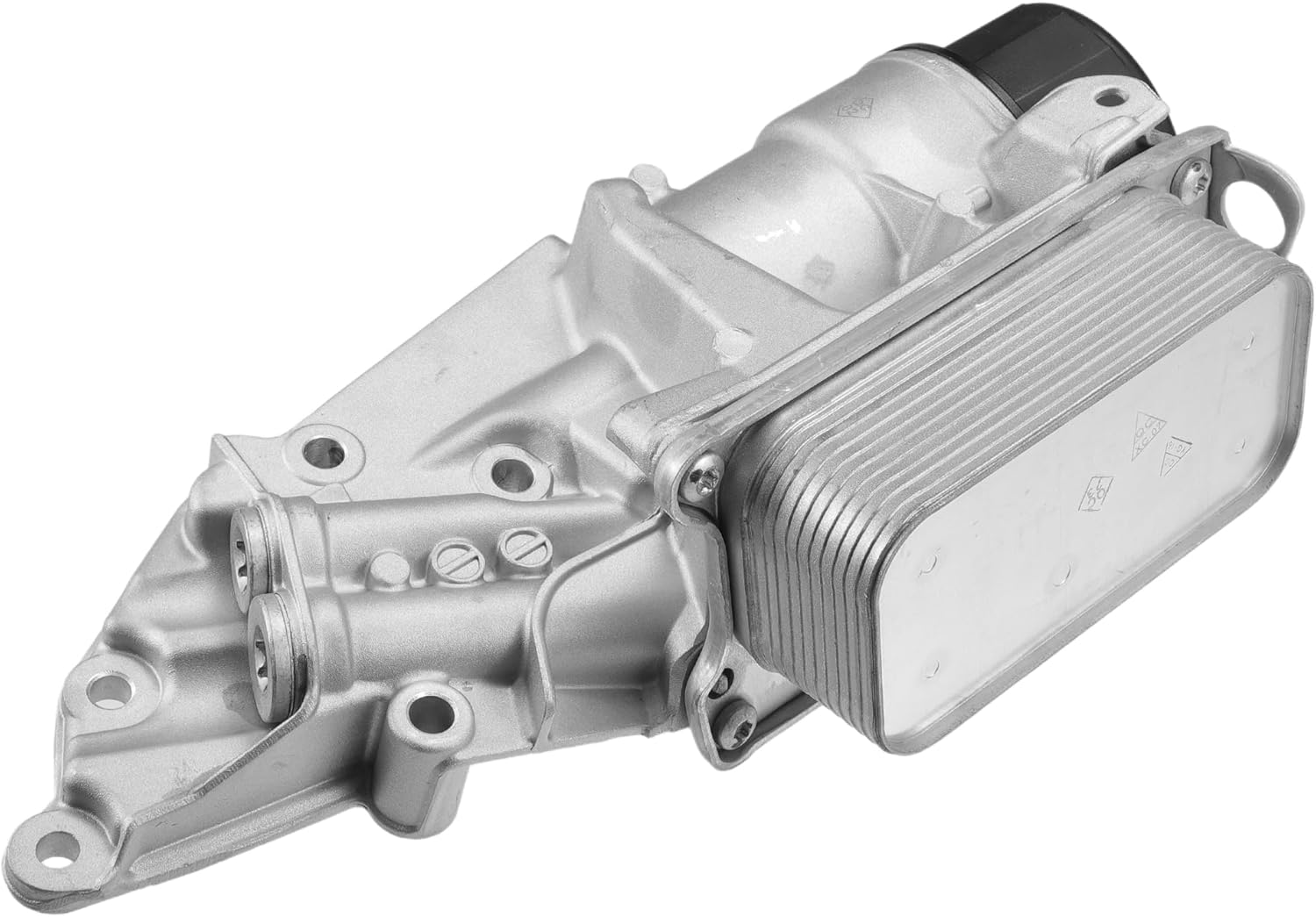
This TUCKBOLD assembly replaces the oil cooler and filter housing with an upgraded aluminum-alloy unit intended for Mercedes-Benz applications. It installs in place of the factory housing and connects to the engine oil and coolant passages to cool oil by oil-to-water exchange, helping reduce oil temperature under load and prolong oil life. The unit ships with O-ring seals and mounting hardware and is offered as a direct-fit replacement for compatible models so you can swap the old plastic housing for a more heat-resistant metal part. In practice this improves cooling and reduces the risk of the plastic housing cracking, but buyers should expect an aftermarket product rather than a factory part. Some customers report missing or damaged fasteners and fitment variation, so verify the kit contents and inspect mounting points before installation. Professional installation or careful DIY work is recommended because oil draining, hose reconnection, and proper torque on bolts are required to prevent leaks.
Best for: Risk-averse mainstream buyers seeking a more durable, factory-replacement style fix for recurring plastic housing failures and who prioritize reduced maintenance hassle over lowest cost.
Less Ideal for: Owners wanting an exact factory-manufactured Mercedes-Benz component or those who prefer sourcing parts directly through a dealer should consider dealer-sourced replacements instead.
- Aluminum-alloy construction adds heat resistance and improved corrosion resistance compared with original plastic housings.
- Includes O-rings and seals so the assembly is ready to install without sourcing additional gaskets.
- Designed as a direct-fit replacement for compatible Mercedes-Benz models to simplify installation.
- Pre-installed components and included bolts reduce preparation time during replacement.
- Aftermarket part so fitment can vary and may require minor adjustments during installation.
- Some buyers reported missing or damaged bolts or mounting holes, indicating inconsistent quality control.
- Not a factory part so long-term durability compared with an original Mercedes-Benz unit is uncertain.
Verdict: A budget-friendly aftermarket aluminum replacement that upgrades fragile plastic housings and simplifies installation, but verify parts and fit before installation.
Choosing the Right Mercedes-Benz GLC Oil Cooler: Key Factors to Consider
Cooling Capacity
Cooling capacity determines how effectively the oil cooler reduces oil temperature under different loads. A cooler with higher capacity will maintain lower oil temperatures during sustained highway towing, extended high-speed driving, or heavy engine loads.
If a unit cannot dissipate enough heat, oil viscosity can drop and lubrication performance may suffer, increasing wear. Consider the cooler's core size, fin density, and overall surface area because these physical attributes directly influence heat transfer. Match capacity to your typical driving profile rather than choosing the largest unit available, since oversize units can complicate fitment and airflow.
Fitment and Compatibility
Exact fitment reduces installation time and the risk of leaks or interference with nearby components. For the GLC, the cooler should align with stock mounting points and accept factory oil lines or specified adapters.
Check mounting hole patterns, inlet and outlet locations, and clearance around cooling fans and intercoolers. A close-fitting replacement minimizes bracket fabrication and lowers the chance of rubbing or vibration that could damage hoses or fittings. Compatibility also affects serviceability, making routine inspections and oil changes simpler.
Materials and Corrosion Resistance
Material selection affects durability, thermal performance, and long-term corrosion resistance. Aluminum is common for cores and end tanks due to its balance of weight and heat conduction, while brazed joints and corrosion-resistant coatings extend service life.
If you drive in corrosive environments or frequently encounter road salt, prioritize units with protective finishes and quality welds or brazing. Higher-grade materials and coatings reduce the chance of pinhole leaks and help the cooler maintain performance over many seasons.
Leak Prevention and Seal Quality
An oil cooler must maintain a reliable seal under pressure and thermal cycling. Quality gaskets, O-rings, and properly torqued fittings reduce the risk of oil cooler leak symptoms such as visible drips, oil contamination, or pressure loss.
Look for units that include replacement seals and that specify compatible torque values. A robust sealing strategy lowers the chance of cross-contamination between oil and coolant passages in integrated heat exchangers and makes long-term operation more reliable.
Installation Complexity and Serviceability
Installation complexity affects total time and labor required to replace or upgrade the cooler. A direct-fit unit that uses existing lines and mounts is generally faster to install and less likely to introduce installation errors.
Consider whether the cooler requires removal of surrounding components, special tools, or supplemental adapters. Also think about access for periodic inspection and potential future repairs. Designs that simplify hose routing and allow easy replacement of the oil cooler core or seals will reduce ownership headaches.
Flow Path and Pressure Drop
The internal flow path influences how oil circulates through the cooler and the pressure drop across the unit. Excessive pressure drop can reduce oil flow to the engine, which may compromise lubrication, especially at idle or low RPM.
Choose a cooler with a balanced flow design that maximizes heat transfer without imposing undue restriction. Manufacturers that publish flow rates and pressure drop at known flow conditions provide useful data to ensure the cooler will not negatively affect the GLC's oiling system.
How We Chose the Best Mercedes-Benz GLC Oil Cooler
We prioritized components that address the specific thermal and fitment demands of the Mercedes-Benz GLC. Key evaluation criteria included measured cooling capacity under load, exactness of OEM-style fitment and mounting locations, materials and corrosion resistance, compatibility with stock oil lines and adapters, and ease of serviceability for routine maintenance or replacement. We also considered heat exchanger design, including fin density and core size, plus the quality of included gaskets and seals to reduce leak risk.We excluded universal or generic coolers that require extensive modification, products lacking clear fitment data for the GLC, and units without documented materials or corrosion protection. Our goal was to highlight options that minimize installation complexity while delivering reliable temperature control and durable operation.
Our full evaluation process is outlined in our review methodology.
FAQ
How do I know if my Mercedes-Benz GLC needs a new oil cooler?
Common signs include persistent high oil temperatures, visible oil leaks near the cooler, or contamination between oil and coolant in integrated units. You may also notice unexplained drops in oil pressure. If you observe any of these symptoms, have the cooler inspected promptly to confirm the cause and avoid potential engine damage.
Can I install an oil cooler myself or should I get professional help?
Installation difficulty depends on whether the cooler is a direct-fit replacement or requires adapter fittings and rerouted lines. If you have mechanical experience, the right tools, and follow service instructions, DIY installation can be feasible. For complex fitments or if access is tight, professional installation reduces risk of leaks and improper torqueing.
Will upgrading the oil cooler affect engine oil pressure?
A properly designed cooler should not cause harmful drops in oil pressure. However, units with restrictive internal passages can increase pressure drop and reduce flow. Check published flow and pressure specifications and ensure lines and fittings match factory sizes to avoid unintended pressure changes.
How often should the oil cooler and lines be inspected?
Inspect the cooler and oil cooler lines during routine service intervals or at least once a year, and more frequently if you drive in severe conditions or tow regularly. Look for signs of leaks, corrosion, or loose fittings. Early detection of wear or damage helps prevent larger failures.
Are there common causes of oil cooler leaks I should watch for?
Leaks often stem from degraded seals, corrosion of the core or end tanks, loose fittings, or physical damage from road debris. Thermal cycling can also weaken joints over time. Regular inspections and using quality replacement seals reduce the likelihood of leaks.
Do I need additional adapters or modified lines for a higher-capacity cooler?
Sometimes a higher-capacity cooler may require adapters or different hoses to achieve correct inlet and outlet orientations. Verify fitment details and whether the manufacturer supplies adapters. Avoid custom hose runs that introduce tight bends or rubbing points to maintain reliable flow and longevity.
Conclusion
When choosing an oil cooler for a Mercedes-Benz GLC, prioritize cooling capacity, accurate fitment, and materials that resist corrosion. Balance thermal performance against installation complexity so the cooler meets your typical driving demands without introducing fitment issues.Remember that reliable seals, manageable pressure drop, and straightforward serviceability are just as important as peak heat rejection. Use the factors above to weigh tradeoffs and choose an option that matches how you drive and maintain the vehicle.
Explore More:
- Check out all Mercedes-Benz GLC parts & accessories
- Explore Oil Coolers Maintenance & Repair Guides
- Explore Cooling System
- Browse all Auto Parts
