

Note: This article contains affiliate links. If you click on these links and make a purchase, I may earn a small commission at no extra cost to you. This helps support my research and content. Read my full affiliate disclosure here.
If you drive a Subaru Outback, managing crankcase vapors can help preserve engine efficiency and limit intake buildup over time. Choosing the right Subaru Outback oil catch can helps trap oil and moisture before they reach the intake tract, which can reduce carbon accumulation and preserve turbo and PCV system performance where applicable.This guide covers seven shortlisted oil catch cans chosen for suitability with the Subaru Outback. We evaluated each option on filtration effectiveness and installation practicality to help you pick the best fit for your goals and mechanical comfort level. Read on to understand the criteria we used and what matters most when selecting a catch can for regular use.
Looking for other parts? See all Subaru Outback parts & accessories.
Top Picks at a Glance
| Best Overall The best all-around choice for most situations | EVIL ENERGY 300ml Baffled Oil Catch Can with 5ft NBR Hose Kit |  |
| Best Quality Built to a higher standard if you want something more solid | POSENG AN10 1.2L Twin-Baffle Dual-Filter Oil Catch Can |  |
| Best Value The sweet spot between price and what you get | muge racing Baffled Universal Oil Catch Can Kit, 400 ml |  |
| Best Budget The cheapest option that still gets the job done reliably | PTNHZ Billet Aluminum 2-Port Baffled Oil Catch Can with Breather Filter |  |
| Highest Rated A top-rated pick with lots of positive feedback | WENJTP 150ml Baffled 3-Port Universal Oil Catch Can with Filter and Drain Valve |  |
| Most Popular A crowd favorite that many people choose with confidence | EVIL ENERGY 300ml Baffled Oil Catch Can Kit with Breather Filter |  |
| Best Seller A high-volume bestseller chosen again and again | EVIL ENERGY Baffled 300ml Universal Oil Catch Can Kit |  |
EVIL ENERGY 300ml Baffled Oil Catch Can with 5ft NBR Hose Kit

| Capacity | 300 Milliliters |
|---|---|
| Hose length | 5 ft (1.5 m) |
| Hose inner diameter | 3/8" |
| Port thread | M16 x 1.5 |
This 300 ml EVIL ENERGY catch can is a compact, baffled aluminum unit sold as a universal kit with a 5 ft NBR hose and fittings that suit most installations. It separates oil particles and moisture from crankcase vapors using a removable baffle and supplied steel wool, so less gunk reaches the intake, valves, and throttle body. Typical use is inline with PCV hoses or as a breather on pre-PCV systems; the kit includes threaded ports and clamps for common hose sizes and a dipstick for quick level checks. Practical benefits include sturdy billet-style construction, effective internal coalescing media, and a size that fits tight engine bays like the Outback’s. Limitations are that the "universal" hoses and fittings may need swapping for a clean Subaru-specific routing or different barb sizes, and in very cold climates the can can collect moisture that risks freezing unless drained or reverted to factory routing. Installation may require additional hose or clamps for the neatest fit and longest-term reliability.
Best for: A balanced all-round buyer who wants a practical, durable catch can to reduce intake contamination on a Subaru Outback without paying for top-tier race hardware.
Less Ideal for: Drivers seeking a plug-and-play Subaru-specific kit with vehicle-matched fittings and brackets or those unwilling to perform minor hose swaps and routing tweaks should consider a model engineered specifically for the Outback.
- Baffled internal design with steel wool improves oil coalescing and reduces intake contamination.
- Solid aluminum construction and threaded cap for a durable, serviceable unit.
- Includes 5 ft NBR hose and basic fittings for a functional out-of-the-box install.
- Compact 300 ml capacity balances mounting space and service interval frequency.
- Universal hoses and supplied fittings may not match Subaru Outback factory barb sizes and can require additional hose or clamps.
- Can accumulate moisture that may freeze in very cold climates unless emptied or bypassed.
- Bracketry and small O-rings may need adjustment or replacement for the cleanest fit and seal.
Verdict: A well-built, value-focused 300 ml baffled catch can that works effectively on a Subaru Outback if you are comfortable making small hose or fitting adjustments.
POSENG AN10 1.2L Twin-Baffle Dual-Filter Oil Catch Can

| Capacity | 1.2 Liters |
|---|---|
| Hose Fitting Size | AN10 |
| Material | Aluminum |
| Includes | Two breather filters and petcock drainer |
This POSENG catch can is a large-capacity, twin-baffle reservoir intended to reduce oil and vapor entering the intake tract. It is typically mounted in the engine bay and plumbed to crankcase or valve cover vents; the dual AN10 fittings let you route two lines and the included breather filters provide open venting where desired. Built from TIG-welded aluminum, the can emphasizes capacity and internal baffling so it captures more condensate during hard driving or prolonged boost than a small single-chamber unit. Practical benefits include less intake carbon build-up and longer intervals between drains thanks to the 1.2L volume and a petcock drain for quick servicing. Downsides are the unit's bulky footprint and relatively large AN10 ports, which may require extra hose adapters or space in tighter engine bays, and some users report thinner sheet thickness around the body. For a performance-focused Subaru Outback build that runs significant boost or wants aggressive PCV control, this catch can offers robust capacity and trapping ability, but plan mounting and hose routing carefully to accommodate its size.
Best for: Performance-oriented owners looking to prevent intake contamination and oil carryover on a modified Subaru Outback who prioritize large capacity and strong oil separation over compact packaging.
Less Ideal for: Drivers seeking a compact, stealthy factory-replacement fit or a plug-and-play unit should consider smaller, vehicle-specific catch cans instead.
- Large 1.2L capacity reduces frequency of draining during spirited driving
- Twin internal baffle design improves oil separation compared with single-chamber cans
- Dual AN10 inlets allow routing from two crankcase or valve cover ports
- TIG-welded aluminum construction offers corrosion resistance and a performance look
- Bulky physical size can make fitment difficult in compact engine bays
- AN10 fittings may require adapters for factory hose sizes
- Some reports of relatively thin body material compared with higher-end cans
Verdict: A high-capacity, twin-baffle catch can built for performance setups on Subaru Outback builds that need aggressive oil separation but requires careful fitment planning.
muge racing Baffled Universal Oil Catch Can Kit, 400 ml
| Capacity | 400 ml |
|---|---|
| Material | Aluminum |
| Hose size included | 3/8" fuel line supplied |
| Installation options | Vent with breather filter or sealed |
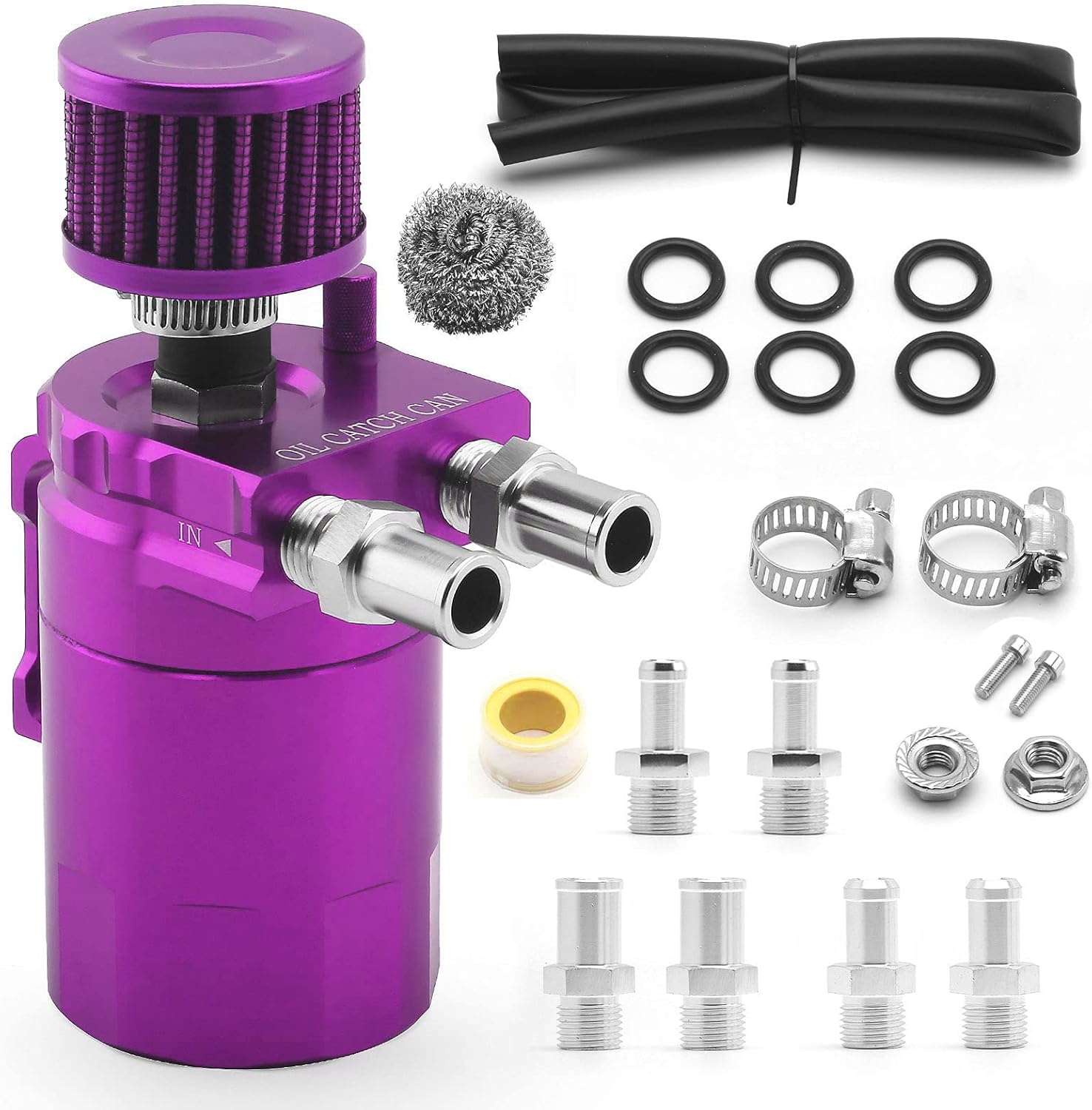
This muge racing catch can is a budget-friendly, universal solution for reducing oil and moisture recirculation in Subaru Outback PCV/CCV systems. It uses an internal baffle and steel wool to condense vapor into liquid that collects in the 400 ml reservoir; a built-in dipstick lets you check level without full disassembly. The kit includes three adapter fittings with O-rings and hose clamps so you can adapt to common vacuum lines, and it can be run sealed or vented to atmosphere using the supplied breather filter. Practical benefits include lighter-weight aluminum construction and an anodized finish that resists corrosion while looking tidy in the engine bay. Expect to replace the thin supply hose with sturdier 3/8" fuel line for reliable long-term use and be ready to fabricate or relocate a mounting bracket for an optimal fit on some Outback layouts. Some users report sealing and fitting issues with the supplied fittings, so allow time for minor adjustments during installation.
Best for: Buyers who prioritize practical upgrades and want a low-cost, effective way to cut intake oil vapor and prolong engine cleanliness on a Subaru Outback.
Less Ideal for: Drivers seeking a direct-fit, vehicle-specific kit with plug-and-play hoses and mounting should consider purpose-built Subaru catch cans instead.
- Baffled reservoir and steel wool trap oil and moisture effectively to reduce intake carbon deposits.
- 400 ml capacity offers several days to weeks of collection before service depending on driving conditions.
- Includes multiple adapter fittings and clamps for adapting to common vacuum hose sizes.
- Aluminum body with anodized finish provides corrosion resistance and a clean engine-bay appearance.
- Supplied hose is thin and prone to kinking so replacement hose is typically needed.
- Mounting bracket and hole placement may not suit all engine bays and can require fabrication.
- Some fittings have leaked for users without additional sealant or careful installation.
Verdict: A cost-conscious, adaptable catch can that works well on a Subaru Outback if you swap the supplied hose and plan for minor mounting or sealing tweaks.
PTNHZ Billet Aluminum 2-Port Baffled Oil Catch Can with Breather Filter

| Fit Type | Universal Fit |
|---|---|
| Product Grade | Performance Part |
| Manufacturer | PTNHZ RACING |
This PTNHZ catch can is a compact, budget-focused solution that separates oil and vapor from crankcase ventilation before the gases return to the intake. Made from 6061 billet aluminum with an anodized finish, it uses internal baffles and a brass filter element to condense and collect oil while offering a breather option. Typical use is inline with the PCV or crankcase hose on a Subaru Outback to reduce intake contamination, carbon buildup, and potential intake-valve deposits. The included mounting bracket and straight-thread fittings make installation possible in tight engine bays, though buyers should expect to adapt hoses or fittings for specific Subaru connections. Practical benefits are sturdy metal construction, a drain port for easy servicing, and a small footprint that fits behind the engine in many Outback layouts. Important limitations: the kit is universal not vehicle-specific, the fittings are straight threads rather than tapered pipe threads, and some buyers report needing to seal threads and tweak the internal baffle for ideal flow, so a little mechanical skill and minor modification may be necessary.
Best for: Budget-conscious Subaru Outback owners who want a low-cost, metal catch can to limit intake contamination and are comfortable making small plumbing or mounting adjustments during install.
Less Ideal for: Drivers who prefer a vehicle-specific, plug-and-play kit or who want a maintenance-free, factory-style solution should consider a model engineered for the Outback instead.
- Billet 6061 aluminum body with anodized finish for durability and corrosion resistance
- Internal baffle and brass filter to separate oil and vapor before gases re-enter the intake
- Compact footprint and adjustable mount make it possible to fit in confined Subaru Outback engine bays
- Drain port allows periodic emptying without full disassembly
- Universal fittings are straight-thread and may require adapters or sealing for Subaru-specific hoses
- Mounting bracket is lightweight and may need reinforcement for long-term durability
- Some units require thread sealant and minor internal modification for optimal performance
Verdict: A rugged, wallet-friendly billet catch can that works for an Outback if you accept minor fitting and mounting tweaks to get a neat, reliable installation.
WENJTP 150ml Baffled 3-Port Universal Oil Catch Can with Filter and Drain Valve

| Capacity | 150 Milliliters |
|---|---|
| Ports | 3 x 3/8-18 NPT |
| Material | 6061 Aluminum |
| Fit Type | Universal |
This 150 ml baffled catch can is a compact solution for keeping crankcase oil and moisture out of the intake on a Subaru Outback. It installs inline with PCV/PCV-related hoses and uses a low-micron bronze filter plus internal baffling to condense and collect oil before it reaches the intake tract. The kit includes multiple adapters, a 360 degree adjustable mounting bracket and a bottom drain valve so you can empty the can without disassembly. Its billet 6061 aluminum body and anodized finish resist corrosion and the removable internals make cleaning straightforward. Expect it to reduce carbon buildup on intake valves and prolong component life when used as part of routine maintenance. Limitations are the small 150 ml capacity, which requires more frequent emptying on higher-mileage or boosted Outbacks, and the tapered-thread adapters may not seat fully without using the included thread tape and careful routing of hoses for a leak-free fit.
Best for: A reliability-focused Subaru Outback owner who wants a compact, maintenance-oriented upgrade to reduce intake oil contamination and extend engine life through regular service.
Less Ideal for: Not the best choice for Outback owners who want large-capacity or heavy-duty catch can setups for sustained high boost or racing use; they should consider larger units.
- Baffled design with low-micron bronze filter for more complete separation of oil and vapor
- Billet 6061 aluminum construction with anodized surface for corrosion and heat resistance
- Includes adjustable 360 degree mounting bracket for flexible placement in the engine bay
- Removable internals and drain valve make periodic emptying and cleaning simple
- Small 150 ml capacity requires frequent draining on cars with heavy blow-by or turbocharged setups
- Adapter threads are tapered and may need thread tape and some fiddling to seal properly
Verdict: A compact, well-made catch can that improves intake protection for a Subaru Outback but needs frequent draining due to its small 150 ml capacity.
EVIL ENERGY 300ml Baffled Oil Catch Can Kit with Breather Filter

| Capacity | 300 Milliliters |
|---|---|
| Fuel Type | Gasoline |
| Fit Type | Universal |
| Manufacturer | Speedwow Tuning |
This EVIL ENERGY kit installs as an inline or vented oil catch can to intercept oil and water vapor from the PCV/CCV system before it reaches the intake. For a Subaru Outback it is typically mounted near the valve cover or a convenient bracket point and plumbed between the valve cover and intake; the kit includes hoses, fittings, dipstick and stainless wool baffle material so you can service and empty the can without removing it. The 300 ml aluminum reservoir and baffled internals promote separation while the optional breather lets you run it as an open vent on pre-PCV setups or capped for sealed systems. Practical benefits include reduced intake valve and intake tract gunk and an easy visual fill check via the dipstick. Limitations for Outback owners: the included hose is 3/8 inch which may be short on some models so you may need to source longer or larger-diameter hose and better hose clamps; a few buyers report occasional missing parts in kits so verify contents before install.
Best for: Convenience-driven owners who want a low-effort way to reduce intake contamination and prefer a kit that is easy to install and service on routine maintenance cycles.
Less Ideal for: Owners seeking a vehicle-specific OEM-style solution or a large-capacity external reservoir should look for purpose-built Subaru fitments or larger professional systems instead.
- Baffled aluminum can with stainless wool increases oil/water separation and is serviceable.
- Includes dipstick and basic mounting bracket for straightforward installation.
- Option to fit a breather filter or run sealed in-line gives installation flexibility for different PCV setups.
- Standard kit hose is 3/8 inch and may be too short or undersized for some Outback routing, requiring additional hose.
- Included hose clamps and some small fittings have inconsistent quality according to user reports.
Verdict: A compact, serviceable catch can kit that gives Subaru Outback owners an easy, flexible way to reduce PCV oil vapor entering the intake.
EVIL ENERGY Baffled 300ml Universal Oil Catch Can Kit
| Capacity | 300 Milliliters |
|---|---|
| Fuel Type | Diesel |
| Fit Type | Universal |
| Hose length | 2.6ft (0.8m) |
| Hose ID | 3/8 inch |
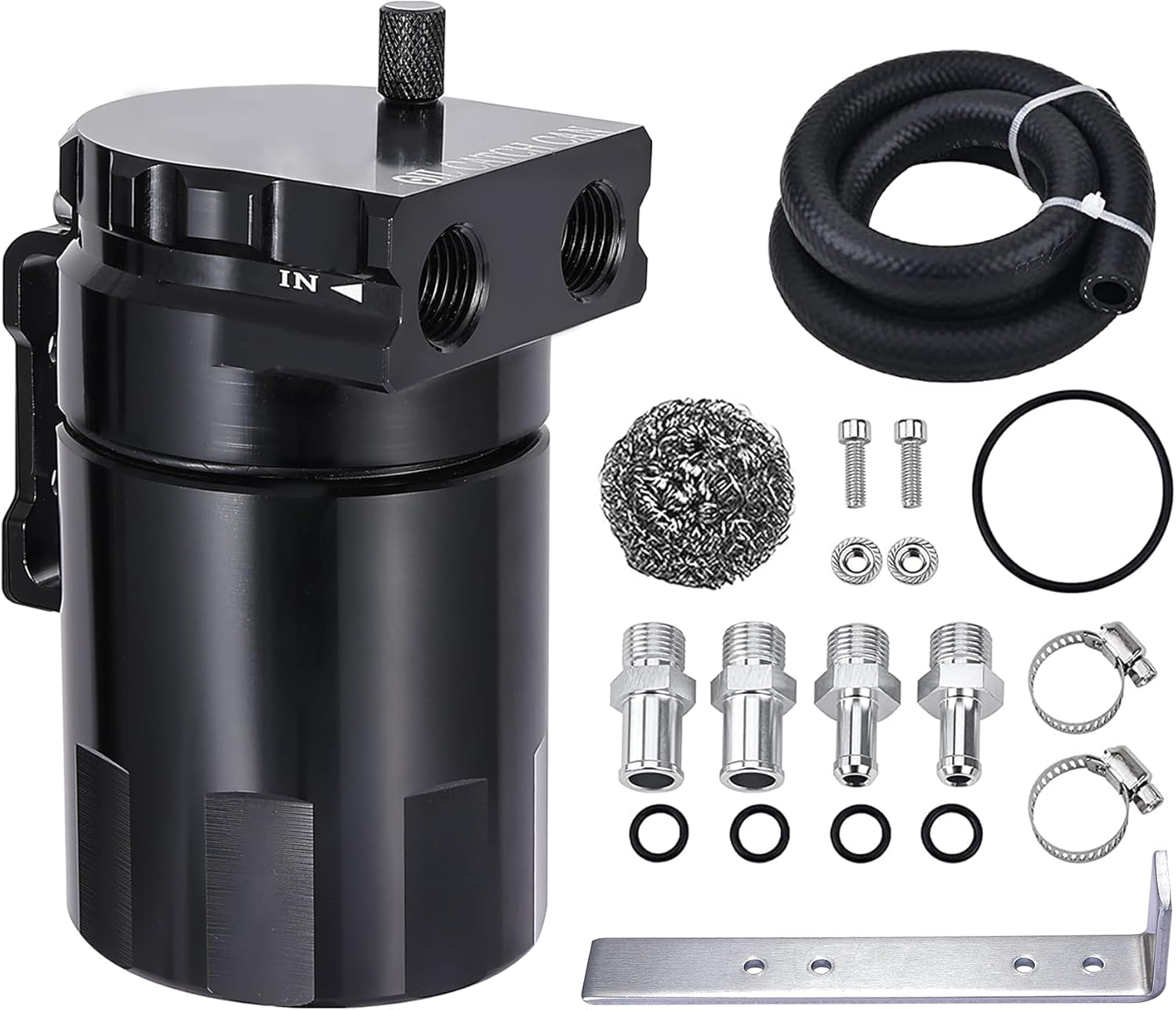
This EVIL ENERGY catch can is a compact, baffled 300ml unit intended to sit inline with a vehicle PCV or as a vent on pre-PCV setups. For an Outback it is typically mounted in the engine bay and plumbed between the crankcase vent and intake using the included NBR hose and fittings. The removable baffle plus supplied stainless steel wool help coalesce oil droplets and moisture so less residue returns to the intake, which supports cleaner intake tracts and valves over time. The kit includes clamps, a dipstick for level checks, and a threaded M16*1.5 inlet/outlet for a secure connection; the aluminum can feels solid and the machining is clean. Practical downsides for an Outback fitment are the universal bracket and hose length which may need modification or additional hose for a tidy install, and the 300ml capacity means more frequent draining compared with larger cans. The seller notes increased moisture risk in freezing weather and recommends more frequent cleaning in cold climates. Overall it is a robust, budget-friendly option for drivers who want a straightforward catch can solution for a Subaru Outback.
Best for: Risk-averse mainstream Subaru Outback owners who prioritize protecting the engine from intake oil contamination without spending on high-end branded systems and prefer a straightforward, serviceable solution.
Less Ideal for: Drivers seeking a no-modification, vehicle-specific plug-and-play kit or those who want a large-capacity catch can to minimize maintenance intervals.
- Baffled internal design with removable baffle and steel wool to improve oil separation.
- Solid aluminum construction with secure M16*1.5 threaded fittings for reliable sealing.
- Includes NBR hose, clamps, dipstick and basic mounting hardware for a mostly complete kit.
- Compact 300ml size fits into tighter engine bays common on Subarus and is easy to position.
- Universal bracket and hose routing may require trimming or buying extra hose for a clean fit on some Outback years.
- 300ml capacity requires more frequent emptying than larger catch cans for high blow-by engines.
Verdict: A compact, well-built baffled catch can that offers effective oil separation and good value for Subaru Outback owners wanting to reduce intake contamination.
Choosing the Right Subaru Outback Oil Catch Can: Key Factors to Consider
Filtration and Separation Efficiency
How well a catch can separates oil and moisture from crankcase vapors determines how much residue reaches the intake. Higher-efficiency designs use baffles, coalescing media, or filter elements to condense and capture droplets, which reduces the rate of carbon buildup on intake valves and intercooler piping.
Consider whether the unit s internal design is serviceable and whether it uses replaceable media. Efficient separation can lengthen the interval between drains and reduce the frequency of deep intake cleaning, but very fine media may require periodic replacement or careful servicing.
Compatibility With PCV and Intake Routing
A catch can must connect to the correct PCV and intake vacuum ports without causing vacuum leaks or altering crankcase ventilation behavior. For the Subaru Outback, pay attention to hose lengths, elbow fittings, and available mounting points so the unit can be installed without stressing factory lines.
Incompatible routing can lead to hose kinks or require long runs that reduce effectiveness. Choose a catch can that offers appropriate inlet and outlet orientations and, if needed, multiple adapter fittings to match the Outback s hose sizes.
Mounting and Installation Complexity
Installation difficulty affects who can fit the catch can and how long it will take. Some units are designed for simple bolt-on mounting using an existing chassis hole or available bracket locations, while others need custom brackets or removal of components to access hoses.
Evaluate whether the catch can includes a universal or vehicle-specific bracket, the type of clamps and fittings provided, and whether basic hand tools suffice. Simpler installations reduce risk of improper routing and make it easier to reverse the modification if desired.
Capacity and Drain Design
Capacity affects how often you need to empty the catch can and how much condensate it can hold before impacting performance. Larger reservoirs mean fewer service intervals, but they can be bulkier and harder to fit in tight engine bays.
Drain design matters as well. A bottom-mounted petcock or quick-drain fitting allows controlled emptying without removing the can. Transparent sight tubes or clear windows help you monitor fluid levels between services and avoid overfill.
Build Quality and Materials
Materials and construction influence durability and corrosion resistance in the engine bay environment. Aluminum and stainless steel bodies resist rust, while anodized or powder-coated finishes add protection. Look for robust welds or threads and quality seals on lids and fittings to prevent leaks.
Threaded or quick-release lids should seal reliably under vacuum and heat cycles. Hose barb quality and included clamps also affect long-term reliability, so inspect the overall fit and finish when choosing a unit.
Serviceability and Maintenance Access
A catch can that is easy to service encourages regular maintenance. Consider how quickly you can access the drain, remove and clean internal baffles or filters, and reassemble the unit. Units that require disassembly in cramped spaces can deter timely upkeep.
Also note whether replacement filters or parts are available and how simple they are to swap. Clear maintenance intervals and visible fill indicators help owners stay on top of servicing, which preserves the catch can s effectiveness over time.
Why Subaru Outback Owners Add an Oil Catch Can
Many Subaru Outback owners fit an oil catch can to reduce the amount of oil and condensate routed back into the intake tract. Over time, the PCV system can carry oil vapors into the intake, which condense and leave deposits on the throttle body, intake runners, and valves. For naturally aspirated and turbocharged Outbacks alike, removing that oil before it reaches the intake helps preserve engine breathing and throttle response between services.
Installing a catch can is a preventative measure rather than a performance cure. Owners who keep their Outbacks for many years or who tow, commute frequently in stop-and-go traffic, or drive in cold climates tend to see the clearest benefits. The catch can also helps protect downstream components that are sensitive to oil contamination, including sensors and intake-actuated components.
- Reduces oil and carbon deposits in the intake tract
- Helps maintain consistent throttle response and idle quality
- Can extend service intervals for intake cleaning by limiting buildup
- Particularly beneficial for Outbacks used for towing or frequent short trips
How a Catch Can Works in Simple Terms
A catch can intercepts crankcase ventilation vapors before they re-enter the intake. The vapors contain fuel, water, and oil mist. As the mixture passes through the catch can, heavier oil droplets condense and separate from the airflow, collecting inside the can while cleaner gas continues to the intake. This reduces the volume of liquid oil that can coat intake surfaces and lead to carbon accumulation.
Most catch cans rely on baffles, coalescing media, or internal chambers to encourage condensation and droplet separation. While designs vary, the basic principle is the same: slow and cool the vapor flow and provide surfaces where oil can collect so it does not enter the intake manifold.
- Intercepts PCV flow before the intake
- Separates oil droplets from ventilation vapors
- Stores condensate for periodic draining
Considerations for Turbocharged Subaru Outback Models
Turbocharged Outback engines push more pressure and heat through the crankcase ventilation system, which increases the volume of oil-laden vapors. That makes an oil catch can particularly useful on turbo variants because it helps prevent oil from reaching the turbocharger and intercooler, where it can coat internals and reduce heat‑exchange efficiency. Preventing oil ingress also lowers the risk of pre-ignition and intake valve deposits that can degrade performance over time.
When planning a catch can for a turbo Outback, prioritize a layout that avoids creating excessive crankcase backpressure and allows for secure routing away from high-heat sources. Choose a can that can handle the higher vapor load and is easy to monitor so it can be drained more frequently if needed.
- Reduces oil entering the turbo and intercooler system
- Helps preserve boost response and intercooler efficiency
- May require more frequent checks on higher-output or hard-driven engines
Maintenance Best Practices for Long-term Reliability
Regular maintenance keeps a catch can effective. Inspect the collection chamber on a schedule that matches your driving habits. Owners who do many short trips or tow should check and drain the can more often. A clear or sight‑glass-equipped canister simplifies inspections without disassembly. When draining, capture and dispose of the oil safely according to local regulations.
Beyond draining, check hoses and fittings periodically for wear, looseness, or oil seepage. Replace any clamps or vacuum-rated hoses that show cracking. If the catch can has a replaceable filter or internal media, follow the manufacturer's recommended service intervals to maintain separation efficiency.
- Inspect the can every few thousand miles or more often for hard use
- Drain before the collection volume reaches critical levels to avoid re-entrainment
- Check hoses, clamps, and fittings for leaks at each service
- Follow disposal rules for collected oil and contaminated materials
Common Signs Your Outback Could Benefit From a Catch Can
Certain symptoms indicate oil and blow-by are reaching the intake in amounts that may warrant a catch can. Black, oily residue on the throttle plate, sticky throttle response, or an intake that looks glazed during routine inspections are good indicators. Frequent misfires or spark plug fouling that cannot be traced to ignition or fuel issues can also point toward oil contamination.
Other signs include excessive smoke from the tailpipe on startup that diminishes once the engine warms, or an unexpectedly high rate of oil consumption without visible external leaks. If you notice these symptoms and they are not due to normal wear or a serviceable fault, a catch can can help limit further buildup while the root cause is addressed.
- Oily deposits on the throttle body or intake runners
- Sticky or inconsistent idle and throttle feel
- Higher than normal oil consumption with no external leaks
- Plug fouling or misfires that are otherwise unexplained
What to Expect From Installation and Working with a Catch Can Kit
Many Outback owners install a catch can using a dedicated catch can kit, which usually includes the can, hoses, clamps, and mounting hardware. Kits are designed to simplify routing and reduce guesswork, but installation still requires basic mechanical skills. Typical steps include locating a secure mounting point in the engine bay, routing hoses to the PCV or crankcase and to the intake, and ensuring all connections are tight and protected from heat and abrasion.
If you prefer a professional installation, a shop familiar with Subaru engines can complete the job quickly and ensure routing avoids hot components and moving parts. Whether DIY or shop‑installed, plan for a brief follow-up check after the first few hundred miles to confirm fittings remain secure and the can is collecting condensate as expected.
- Kits speed up installation by providing matched hoses and fittings
- Allow time for a post-install inspection after initial use
- Consider professional help if you lack tools or experience
- Protect hoses from heat sources and sharp edges during routing
How We Chose the Best Subaru Outback Oil Catch Can
Our selection process focused on criteria that matter for Subaru Outback owners and vehicles with similar engine plumbing. Key evaluation factors included filtration and separation efficiency to ensure the unit captures oil vapor and condensate effectively; path compatibility with the Outback s PCV and intake routing to minimize plumbing modifications; build quality and materials for corrosion resistance and long-term sealing; capacity and drainage design so owners can manage service intervals without frequent emptying; installation complexity, including mounting options and required tools; and maintenance accessibility to make routine checks and draining straightforward.We excluded any units that required extensive engine modification, permanent cutting of factory hoses, or lacked clear instructions for the Outback s layout. We also filtered out catch cans with unclear sealing solutions or non-serviceable filter elements. The final list emphasizes practical fitment, durable construction, and designs that simplify regular maintenance for the Subaru Outback owner.
Our full evaluation process is outlined in our review methodology.
FAQ
Do I need an oil catch can for a Subaru Outback?
It depends on your priorities and engine usage. For drivers who want to reduce intake deposits and manage crankcase vapors, a catch can can help trap oil and moisture before they reach intake components. Daily drivers may notice slower buildup, while performance or turbocharged use often benefits more from added separation.
How often should I drain the catch can?
Drain intervals vary with driving style and engine condition. Many owners inspect the reservoir monthly and drain as needed, but some applications allow longer intervals. Monitor the catch can s level and empty it before it reaches capacity to maintain proper ventilation.
Will installing a catch can affect engine vacuum or check-engine lights?
Properly installed catch cans use the original ventilation pathways and should not trigger engine warnings if hose size and routing preserve the intended vacuum characteristics. Incorrect fittings, leaks, or blocked lines can alter crankcase flow and may cause issues, so follow installation guidance and verify connections.
Can I install an oil catch can myself?
Many catch cans are designed for user installation with basic hand tools and clear instructions. Installation difficulty depends on available space and whether the kit includes a vehicle-specific bracket and fittings. If you are unfamiliar with PCV plumbing, consider professional installation to ensure correct routing and sealing.
Does a catch can require special maintenance for winter or cold climates?
Cold climates can increase condensate formation, so you may see more frequent accumulation during winter months. Check the reservoir more often in cold weather and ensure the drain remains operable if temperatures drop. Materials and seals that withstand cold help avoid brittleness and leaks.
Final Verdict
When choosing a Subaru Outback oil catch can, prioritize separation efficiency, proper fitment with the vehicle s PCV and intake routing, and a practical drain design. Those factors balance long-term protection of the intake tract with ease of ownership.Expect tradeoffs between capacity, installation complexity, and footprint in the engine bay. Focus on a robust, serviceable design that matches how you drive and how often you will perform maintenance to get the most benefit from a catch can.
Explore More:
- Check out all Subaru Outback parts & accessories
- Explore Oil Catch Cans Maintenance & Repair Guides
- Explore Engine
- Browse all Auto Parts
