

Note: This article contains affiliate links. If you click on these links and make a purchase, I may earn a small commission at no extra cost to you. This helps support my research and content. Read my full affiliate disclosure here.
If you drive a Subaru Forester and want to reduce oil and sludge entering the intake, choosing the right oil catch can matters. Proper selection helps keep intake ports, intercoolers, and sensors cleaner, which can preserve performance and reduce maintenance needs over time.This guide covers seven shortlisted options that represent the top picks for Forester owners. We evaluated each choice on filtration effectiveness and installation practicality so you can find a solution that fits your goals and skill level.
Looking for other parts? See all Subaru Forester parts & accessories.
Top Picks at a Glance
| Best Overall The best all-around choice for most situations | EVIL ENERGY 300ml Baffled Oil Catch Can with 5ft NBR Hose Kit |  |
| Best Quality Built to a higher standard if you want something more solid | K&N 81-0813 Air Oil Separator (Catch Can) |  |
| Best Value The sweet spot between price and what you get | muge racing Universal Baffled Oil Catch Can Kit, 400 ml |  |
| Best Budget The cheapest option that still gets the job done reliably | ZNDAW 2-Port Billet Aluminum Oil Catch Can Kit with Breather Filter (150 ml) |  |
| Highest Rated A top-rated pick with lots of positive feedback | RULLINE 350ml Universal Baffled Oil Catch Can with Braided Hose |  |
| Most Popular A crowd favorite that many people choose with confidence | SPEEDWOW 300ml Baffled Oil Catch Can with Hose Kit |  |
| Best Seller A high-volume bestseller chosen again and again | EVIL ENERGY 300ml Baffled Oil Catch Can Kit with Breather Filter |  |
EVIL ENERGY 300ml Baffled Oil Catch Can with 5ft NBR Hose Kit

| Capacity | 300 Milliliters |
|---|---|
| Hose length | 5 ft (1.5 m) |
| Hose ID | 3/8" |
| Inlet/outlet thread | M16×1.5 |
This EVIL ENERGY 300ml baffled catch can is a compact, budget-friendly kit for adding crankcase vapor separation to a Subaru Forester. It captures oil and moisture with a removable baffle and supplied steel wool so fewer contaminants return to the intake, which helps limit carbon buildup on valves and intake components. The kit includes a TIG-welded aluminum can, M16*1.5 threaded inlet/outlet fittings, a 5 ft NBR hose rated for heat and wear, basic mounting hardware, a dipstick for level checks, and a breather option for pre-PCV setups. In practice it mounts neatly in tight engine bays and the 300ml capacity reduces how often you need to empty it, though some installers find the supplied hose or clamps short and swap in longer hose for cleaner routing. The can performs well for everyday driving and higher-mileage Foresters, but cold-weather users should monitor for moisture freeze and may need to reinstall the factory vent in severe conditions. If you want a solid, no-frills catch can that balances cost, build quality, and effectiveness for a Forester, this is a practical choice.
Best for: Balanced owners who want an affordable, well-built catch can to reduce intake contamination and extend engine life on a Subaru Forester without overpaying for higher-end branded units.
Less Ideal for: Drivers seeking a vehicle-specific plug-and-play kit with exact-fit brackets and fittings or those who prefer a professional-fit OEM-style solution should consider purpose-made Forester kits instead.
- Removable baffled core plus steel wool to capture oil and moisture effectively
- Sturdy aluminum construction with TIG-welded cap and O-ring seal for leak resistance
- Includes 5 ft heat- and wear-resistant NBR hose and basic mounting hardware for universal installation
- 300ml capacity is compact yet large enough to limit frequent draining
- Universal kit may need extra hose, clamps, or different fittings for a clean Forester-specific install
- Requires periodic cleaning and monitoring in freezing conditions to avoid moisture-related blockages
Verdict: A well-priced, well-made universal 300ml baffled catch can that strikes a practical balance of performance and value for Subaru Forester owners willing to do light fitment work.
K&N 81-0813 Air Oil Separator (Catch Can)

| Model Number | 81-0813 |
|---|---|
| Brand Name | K&N |
| Included Components | Catch Can |
| Automotive Fit Type | Vehicle Specific Fit |
The K&N 81-0813 Air Oil Separator is a vehicle-specific catch can that captures oil and contaminants from crankcase blowby to help keep the intake tract and combustion chambers cleaner. It installs using factory-style hose connections and can be mounted in a convenient location in the engine bay, with no tools required to check or empty the collector. The unit is built with premium connectors and a machined black finish, and K&N states installation takes about 30 minutes with basic tools. For a performance-oriented Town & Country owner this separator helps reduce intake oil buildup that can lead to power loss and detonation risk when running tuned engines or higher load conditions. The design is straightforward and serviceable, but fitment is vehicle-specific so clearances and existing hose routing in some Town & Country model years may require mock-up or relocation to avoid interference. Note that California emissions restrictions are called out in the description which may affect legality for certain vehicles.
Best for: Performance-oriented owners who prioritize maintaining intake cleanliness and preventing power loss on modified or high-mileage Chrysler Town & Country vehicles.
Less Ideal for: Owners who need a universal or highly compact catch can for cramped engine bays or those seeking equipment compliant with California emissions rules.
- Captures oil and contaminants from PCV/blowby to reduce intake buildup
- Vehicle-specific engineering for direct-fit routing using factory-style hose connections
- Premium connectors and machined finish for a durable, serviceable installation
- No-tools oil reservoir check and straightforward mounting designed for quick installation
- Vehicle-specific fit can conflict with existing hoses or components in some engine bays
- Not legal for sale or use in California on pollution controlled vehicles
Verdict: A performance-focused, vehicle-specific catch can that helps keep a Town & Country's intake cleaner to preserve power and reduce detonation risk.
muge racing Universal Baffled Oil Catch Can Kit, 400 ml
| Capacity | 400 ml |
|---|---|
| Material | Aluminum |
| Hose size | 3/8" fuel line compatibility |
| Installation | Can be vented with breather filter or sealed inline |
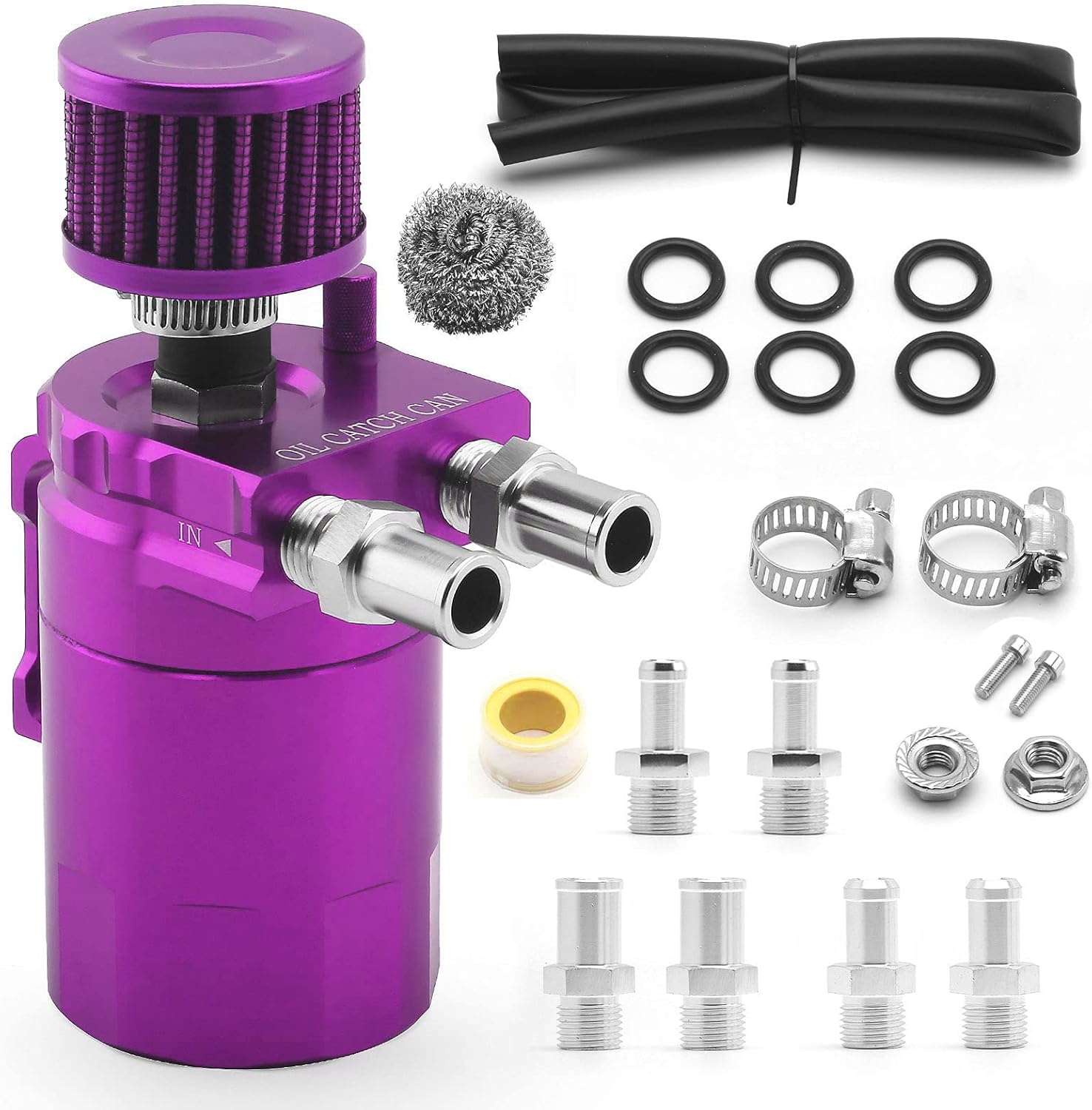
This muge racing baffled oil catch can is a straightforward, budget-friendly unit that captures crankcase oil vapor and moisture before it can coat the intake tract. It installs as an inline PCV/vent alternative or as a vent-to-atmosphere setup using the included breather filter. The 400 ml aluminum reservoir and internal baffle cool vapor into liquid and collect it for periodic draining, while the supplied adapters and O-ring gaskets aim to fit common 3/8" vacuum lines. Practical touches include a built-in dipstick for quick level checks and reinforced hose clamps to reduce detachment risk. Downsides for a Subaru Forester-focused install: the provided hose is thin and often too short so you will likely need to buy quality 3/8" hose and possibly fabricate or reposition the mounting bracket for a tidy firewall fit. Some users report fittings that need thread sealant and the vent can create vacuum issues on certain engines, so expect a little trial and error during plumbing and tuning.
Best for: Practical optimizers who want a low-cost, functional catch can to reduce intake contamination on a Subaru Forester without spending on high-end race hardware.
Less Ideal for: Buyers seeking a plug-and-play, vehicle-specific kit with pre-sized hoses and perfect mounting for a Forester should consider models engineered specifically for that vehicle instead.
- Baffled 400 ml reservoir condenses vapors to reduce oil reach into the intake
- Lightweight aluminum construction with anodized finish for corrosion resistance and appearance
- Includes multiple adapters with O-rings and reinforced hose clamps for a more secure seal
- Built-in dipstick lets you check fluid level without removing the can
- Can be run vented with the breather filter or sealed inline depending on preference
- Supplied hose is thin and short and generally needs replacement for reliable installation
- Mounting bracket location and holes may not line up with a Subaru Forester firewall and can require fabrication
- Some fittings may leak unless sealed or retightened carefully
Verdict: A budget-friendly, adaptable catch can that works for a Forester with some hose upgrades and a bit of fabrication, offering good value for practical owners.
ZNDAW 2-Port Billet Aluminum Oil Catch Can Kit with Breather Filter (150 ml)
| Capacity | 5 Fluid Ounces (150 ml) |
|---|---|
| Material | Aluminum |
| Ports | 2-Port |
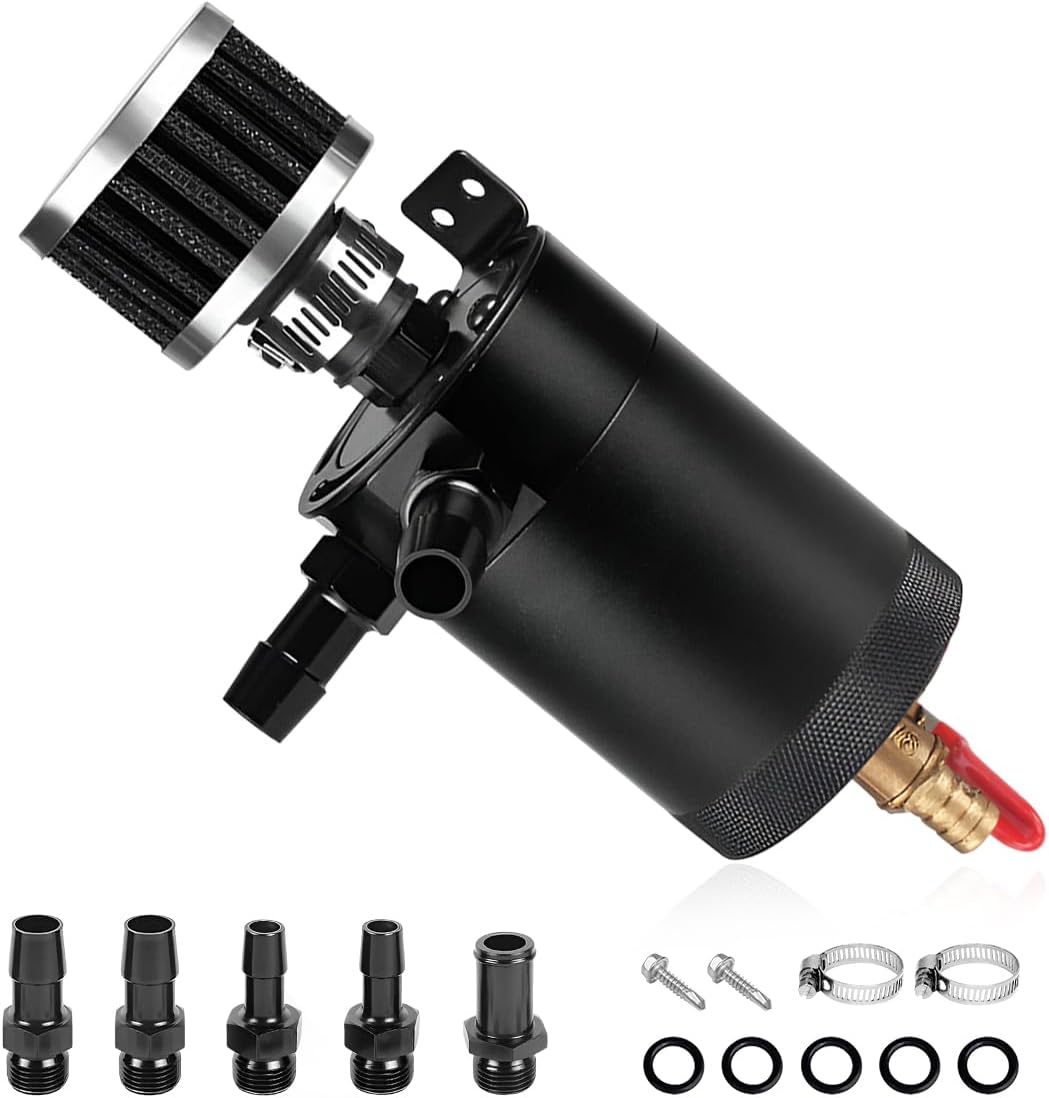
| Includes | Breather filter, drain valve, 5 adapters, O-rings, hose clamp |
This ZNDAW oil catch can collects oil and water vapor from the PCV/valve cover vent before they reach the intake, helping reduce carbon and sludge buildup in the intake tract. It is typically mounted in the Forester’s engine bay inline with the crankcase vent using one of the supplied adapters and secured with the included clamp and screws. Notable features include a 150 ml anodized aluminum reservoir, internal baffling, a removable breather filter, and a bottom drain valve for easy service without removing the can. The kit includes several adapter fittings and O-rings to match common hose sizes, which simplifies installation on Subaru Forester plumbing. Practical benefits are improved intake cleanliness, a reusable catch can that is easy to empty, and corrosion resistance from the aluminum construction. Limitations are its small 150 ml capacity, which means more frequent drains on high-mileage or high-blow-by engines, and the universal design that may require some routing or bracket work for an optimal Forester-specific fit.
Best for: Budget-conscious Forester owners who want a low-cost, durable catch can to reduce intake contamination without spending on a vehicle-specific kit.
Less Ideal for: Drivers who prefer a maintenance-free or large-capacity solution for high-blow-by engines should consider higher-capacity or Forester-specific catch cans instead.
- Billet aluminum body resists corrosion and handles engine-bay heat.
- Includes multiple adapters and O-rings to match common Subaru Forester vent hose sizes.
- Built-in drain valve makes emptying the 150 ml reservoir quick and mess-free.
- Comes with a breather filter and mounting hardware so it is ready to install.
- 150 ml capacity is small for engines with heavy crankcase blow-by, requiring frequent maintenance.
- Universal kit may need custom routing or an aftermarket bracket for neat Forester-specific installation.
Verdict: A low-cost, aluminum 2-port catch can that gives Forester owners basic intake protection but has a small reservoir and may need minor fitment work.
RULLINE 350ml Universal Baffled Oil Catch Can with Braided Hose

| Capacity | 350 Milliliters |
|---|---|
| Fit Type | Universal |
| Fuel Type | Gasoline |
| Product Grade | Performance Part |
This RULLINE 350 ml catch can is a compact, baffled reservoir intended to intercept oil and moisture from PCV/CCV lines before they reach the intake. It is fully TIG welded from aluminum and uses an O-ring sealed screw-on cup and dipstick for quick level checks, which makes routine inspection and cleaning straightforward. The included braided hose and three adapter fittings aim to cover a range of connections so you can route it between the Forester's PCV and intake. In practice the baffled design and sealed construction are useful for limiting oil vapor and carbon build-up on throttle bodies and intake ports, helping reliability for direct-injection Subaru engines prone to oily intake deposits. Expect to fabricate or modify a mounting point and possibly trim or replace hose lengths to fit the Forester's packaging and hose diameters. Also note the small 350 ml capacity means you will need to check and empty it regularly on higher-mileage or high-boost Foresters to avoid overflow or odors.
Best for: Reliability-focused Forester owners who prioritize preventing intake and valve contamination and are willing to do a modest DIY install to add preventative maintenance.
Less Ideal for: Buyers who want a no-modification, vehicle-specific kit with larger capacity and dedicated mounting hardware should consider Forester-specific catch cans instead.
- Baffled aluminum reservoir traps oil and moisture to reduce intake contamination
- TIG welded body and O-ring sealed cup provide a leak-resistant assembly
- Includes dipstick for quick fluid checks without disassembly
- Supplied braided hose and three adapter fittings increase chances of fitment
- Universal fit requires custom mounting and hose trimming for Subaru Forester installations
- 350 ml capacity is relatively small and may require frequent draining under heavy use
Verdict: A compact, well-built universal catch can that helps protect a Subaru Forester's intake but needs custom mounting and regular draining due to its small 350 ml capacity.
SPEEDWOW 300ml Baffled Oil Catch Can with Hose Kit

| Fit Type | Universal Fit |
|---|---|
| Fuel Type | Gasoline |
| Manufacturer | SPEEDWOW |
| Item model number | 1 |
This SPEEDWOW catch can installs inline with the PCV/CCV plumbing to trap oil and moisture before they reach the intake, helping reduce carbon buildup on valves and preventing misfires. It is supplied as a complete kit with NBR 3/8" hose, clamps, an aluminum mounting bracket, a removable baffle and bottom drain plus a dipstick for quick level checks. In practice the small 300ml reservoir is easy to tuck into the Forester engine bay and the included hose and fittings make a straightforward, mostly bolt-on installation for the convenience-focused owner. The removable baffle and bronze micron filter let it separate liquid from vapor effectively, and the bottom unscrews for draining without removing the whole unit. Expect to check and empty it periodically, especially in cold, wet climates where condensation collects. Some buyers have found the supplied clamps and bracket could be upgraded for easier final fitment, so you may want to bring stronger hose clamps and minor fabrication tools to get an optimal placement on a Subaru Forester.
Best for: Convenience-driven buyers who want an easy, mostly complete catch can kit they can fit quickly to their Subaru Forester to reduce intake contamination without a lot of custom parts or fabrication.
Less Ideal for: Owners seeking a large-capacity or fully race-oriented solution that minimizes maintenance intervals should look at higher-capacity or multi-stage units instead.
- Complete kit includes hose, clamps, mounting bracket and Teflon tape for quick installation
- Removable baffle and bottom drain with dipstick make inspection and cleaning simple
- NBR 3/8" hose supplied for good oil and heat resistance
- Compact 300ml reservoir fits easily in tight engine bays like a Forester's
- Well-machined body and bronze micron filter improve separation and durability
- Bracket and included hose clamps are basic and may need stronger replacements for a long-term install
- 300ml capacity requires regular checks in high-condensation or heavy blow-by situations
Verdict: A compact, well-made catch can kit that makes installing oil separation on a Subaru Forester quick and convenient, but you may want better clamps and to monitor fluid level regularly.
EVIL ENERGY 300ml Baffled Oil Catch Can Kit with Breather Filter

| Capacity | 300 Milliliters |
|---|---|
| Fuel Type | Gasoline |
| Fit Type | Universal |
| Manufacturer | Speedwow Tuning |
This EVIL ENERGY catch can is a compact, universal baffled separator meant to intercept oil and blow-by from the crankcase before it reaches the intake tract. It is typically installed in-line with PCV hoses or used as a vent on pre-PCV systems using the included hose and optional breather filter. The 300ml aluminum tank, internal baffle and stainless wool element help trap oil droplets while the dipstick makes level checks straightforward. For a Saturn Vue, the kit is suited to owners who want a simple add-on to help limit intake valve deposits and keep the intake cleaner between services. Installation requires routing the provided hose and securing the can in the engine bay where there is room, and the universal fittings mean shop adjustment or small adapters may be needed for some hose sizes on specific Vue model years. The kit is practical and affordable but small capacity means more frequent inspection and draining than larger catch cans, and universal fitment lacks vehicle-specific brackets or fittings.
Best for: Risk-averse mainstream Saturn Vue owners who prioritize protecting the intake from oil contamination with a straightforward, low-cost add-on and prefer something simple to install and inspect.
Less Ideal for: Owners seeking a vehicle-specific kit with dedicated brackets, larger capacity, or a plug-and-play harness should look for purpose-built options designed specifically for the Saturn Vue.
- Baffled internal design and stainless wool help separate oil from PCV air
- Includes breather filter option for venting on pre-PCV setups
- Compact 300ml aluminum tank is lightweight and corrosion resistant
- Dipstick provided for easy fluid level checks
- 300ml capacity requires more frequent draining compared with larger cans
- Universal mounting and hose sizes may need adapters or custom brackets for clean installation on a Saturn Vue
Verdict: A compact, affordable baffled catch can kit that gives Saturn Vue owners a simple way to reduce oil vapor entering the intake and help keep the engine cleaner between services.
Choosing the Right Subaru Forester Oil Catch Can: Key Factors to Consider
Filtration Method and Media
The way a catch can traps oil and vapor largely determines how effective it will be. Mechanical baffling and coalescing media capture larger droplets, while finer filter media or mesh can trap smaller aerosolized oil. For a turbocharged engine, effective media reduces the amount of oil that reaches the intake and intercooler.
Choose options with clearly described internal separation systems and materials that tolerate oil and heat. Media that can be cleaned or replaced extends usable life and maintains separation efficiency over time.
Mounting and Physical Footprint
Engine bay space in a Subaru Forester can be limited, especially around the strut towers and intake manifold. The catch can needs secure mounting points and a compact shape that allows straightforward hose runs without kinking.
Consider cans with flexible brackets, multiple mounting orientations, or low profiles to fit tight spaces. Ease of access for draining or servicing the can is also important when planning mounting location.
Hose Compatibility and Routing
A catch can must integrate with the Forester's PCV and crankcase ventilation hoses without creating vacuum leaks or excessive restrictions. Hose diameter, connector types, and included fittings affect how easily you can route lines back to the valve cover and intake.
Look for kits that include appropriately sized hoses and fittings or clearly document required hose sizes. Short, gentle hose runs help preserve proper ventilation behavior and reduce the chance of oil pooling in low spots.
Drainage and Serviceability
Regular maintenance is essential to keep a catch can functioning. Drain options include quick-drain valves, removable plugs, or fully removable housings for cleaning. The convenience of draining influences how often you will perform maintenance.
A transparent or sight-windowed reservoir helps you monitor fluid level. Consider whether the design allows for easy access without removing other components, and whether replacement filters or parts are readily available.
Materials and Corrosion Resistance
Catch cans operate in hot, sometimes corrosive environments, so material choice affects longevity. Aluminum, stainless steel, and certain plastics each offer different weight, durability, and corrosion resistance profiles.
Ensure seals, clamps, and fittings use compatible materials to avoid premature failure. Coatings or anodizing can improve resistance to road salt and oil exposure for long-term reliability.
Impact on Engine Behavior
Any catch can alters crankcase ventilation characteristics to some degree. A well-designed system minimizes backpressure and maintains the intended flow of the PCV circuit, avoiding oil starvation or pressure buildup.
Evaluate designs that route vapors back to intake under appropriate conditions and that do not excessively restrict flow. Understanding how the can interacts with your Forester's ventilation is important to avoid unintended engine issues.
Why a Subaru Forester Oil Catch Can Matters
Installing a Subaru Forester oil catch can addresses a specific engine issue that can affect long-term performance and reliability. Crankcase vapors and oil mist circulate through the PCV system and intake tract. Over time those contaminants coat intake runners, intake valves, and intercooler plumbing on turbocharged Foresters. A catch can intercepts liquid oil and heavy vapors before they reach the intake, reducing deposits and helping the engine breathe cleaner air.
For Forester owners who drive in varied conditions or put extra load on the engine, an oil catch can can be a preventative maintenance item. It is not a replacement for routine engine service, but it reduces the rate at which residues accumulate, which can delay intake cleaning intervals and preserve throttle response and fuel economy.
- Traps oil and heavy vapors before they enter the intake tract.
- Helps reduce carbon and sludge buildup on intake components.
- Can be particularly beneficial for higher-mileage engines or turbocharged variants.
Fitment and Routing Specifics for Subaru Forester Engines
Forester engines have specific PCV and crankcase vent layouts depending on year and engine family. Proper fitment means matching hose diameters, choosing routing that maintains positive flow, and keeping hoses away from hot exhaust components and moving suspension parts. When shopping for a modification, verify the inlet and outlet orientations will work with your engine bay layout so you do not create unnecessary bends or kinks.
On turbocharged Forester models the turbo inlet plumbing and intercooler piping are sensitive to restrictions and oil contamination. Routing the catch can to intercept vapors upstream of the turbo compressor prevents oily vapors from condensing in the intercooler and charge piping. For naturally aspirated Foresters, aim to place the can where it intercepts the valve cover vent and returns clean air to the intake tract with a short, direct hose run.
- Measure hose diameters on your Forester before buying a catch can.
- Keep hose runs short and avoid sharp bends to preserve flow.
- Mount the can where it is accessible for draining and inspection.
Installation Tips and Common Mistakes to Avoid
A careful installation ensures the catch can does its job without introducing leaks or vacuum issues. Start by planning hose routes and mock-fitting the can and brackets. Secure the mounting bracket to a solid chassis or factory fender support, avoiding locations that flex or transfer vibration. Use quality hose clamps and, where supplied, vacuum-rated hoses that match the PCV ports.
Common mistakes include over-tightening clamps onto soft hose material, placing the can too low so it collects road grime, or connecting the can in a way that blocks crankcase ventilation. Avoid placing the can where drainage requires removing bodywork or where heat will boil off captured oil. If the kit does not come with clear instructions, document original hose paths and connections before removing anything.
- Mock-fit everything and plan accessibility for regular service.
- Use hose clamps sized to the hose and port to prevent leaks.
- Do not route hoses near hot exhaust components or moving parts.
Maintenance Schedule and What to Expect
A catch can is a service item. Frequency of draining depends on driving style, engine condition, and operating environment. As a starting point, inspect the can every 3,000 to 5,000 miles and drain as needed. Aggressive driving, towing, or lots of short trips will increase the amount of condensed oil collected. Maintain a log of observations for the first few months to establish a baseline for your Forester.
When you drain the can, look at the color and viscosity of the contents. Clear fuel smells indicate more blow-by fuel, while darker, thicker deposits point to oil carryover from the crankcase. Keep fittings tight after each service and replace any degraded hose sections. Periodic visual inspection of hose condition and mounting hardware prevents future failures.
- Inspect every 3,000 to 5,000 miles to start.
- Record drain frequency to fine-tune your maintenance plan.
- Replace hoses or clamps showing wear or hardening.
Realistic Performance and Longevity Impacts
An oil catch can will not increase peak horsepower by itself, but it helps maintain the engine's designed efficiency by slowing the buildup of intake deposits. For a Forester that keeps up with scheduled maintenance, a catch can can reduce the need for periodic intake cleaning and preserve turbocharger and intercooler cleanliness on forced-induction variants. The net effect is steadier performance and potentially fewer intake-related service items over the long term.
For older Foresters with noticeable oil consumption or heavy crankcase blow-by, a catch can can limit how much oil recirculates into the intake, which can help reduce misfires and rough idling caused by fouled intake components. However, if a Forester has an underlying mechanical issue causing excessive blow-by, the catch can is a mitigation measure, not a cure.
- Helps preserve intake and turbo cleanliness, extending service intervals.
- Can reduce intake valve fouling and related drivability symptoms.
- Not a substitute for diagnosing and repairing excessive blow-by.
Selecting Accessories and Placement Ideas for a Tidy Install
A well-executed install looks professional and makes servicing easy. Consider a purpose-made catch can kit that includes mounting brackets, hoses, and fittings sized for the Forester engine bay. Brackets that use existing factory holes are preferable because they minimize drilling and avoid stress points. A vertical-mounted can with a bottom drain plug simplifies fluid removal, while transparent sight tubes or viewing windows let you check fill levels without tools.
Placement is a trade-off between accessibility and protection. Mount the can inboard where it is shielded from road debris but still reachable with basic hand tools. If space is limited, angle-mounted orientations can save room while keeping the drain accessible. For turbo variants, position the can upstream of the compressor inlet but away from heat sources to prevent vapor re-evaporation back into the system.
- Choose kits with dedicated Forester-compatible brackets when available.
- Prefer bottom-drain cans or ones with easy-access drains for routine service.
- Use braided or vacuum-rated hose for durability and longevity.
How We Chose the Best Subaru Forester Oil Catch Can
We focused on products designed specifically to address crankcase ventilation and oil vapor separation on turbocharged Boxer engines similar to those in the Subaru Forester. Key filters included filtration method and media quality, physical footprint and mounting options for tight engine bays, hose routing compatibility with Forester PCV layouts, material durability against oil and heat, and serviceability such as drain or disposable elements.We excluded generic, one-size-fits-all items with unclear fitment or products lacking clear filtration specifications. We also filtered out units with poor documentation for hose routing or those that required extensive modification to factory lines. The resulting selection prioritizes proven separation performance, compact packaging for easier installation, corrosion-resistant construction, and user-friendly maintenance features that matter for real-world Forester ownership.
Our full evaluation process is outlined in our review methodology.
FAQ
Do I need an oil catch can for my Subaru Forester?
It often depends on your driving and service patterns. For Foresters that do frequent short trips, tow, or operate under sustained boost, a catch can can reduce oil contamination in the intake and intercooler. For low-mileage, lightly driven cars, benefits may be smaller but still present over long term.
How does an oil catch can work with the Forester's PCV system?
A catch can sits in the crankcase ventilation path and captures oil and condensate before gases reenter the intake. It uses baffles or filter media to separate liquid droplets from vapor, returning drier gases back to the intake to reduce deposit buildup on intake surfaces.
Will installing a catch can affect engine performance or boost?
Properly designed and installed catch cans typically have minimal impact on performance or boost when matched to factory hose sizes and routed correctly. Excessive restrictions or incorrect hose connections can alter ventilation behavior, so follow installation guidance and avoid sharp bends or undersized tubing.
How often should I service or drain the catch can?
Drain intervals vary with driving conditions and engine condition. Many owners check the reservoir every few thousand miles or during routine oil changes. If you see rapid accumulation or a milky emulsion, you may need to drain more frequently and investigate excessive blow-by.
Can I install a catch can myself?
Many Forester owners can install a catch can with basic hand tools and mechanical aptitude, especially if the kit includes fittings and clear instructions. However, ensure you understand the Forester's hose routing and avoid introducing vacuum leaks. Seek professional help if you are unsure.
Are there downsides to using a catch can?
Potential downsides include additional maintenance, the need to monitor drain levels, and the risk of improper installation causing ventilation issues. Choosing a well-documented solution and following proper routing and service intervals mitigates most concerns.
Final Verdict
Prioritize a catch can that balances effective oil separation with compact packaging and straightforward servicing. Filtration method, hose compatibility, and ease of drainage have the biggest practical impact for Forester owners.Accepting some added maintenance in exchange for cleaner intake components is the main tradeoff. Focus on designs that are documented for compatible routing, use durable materials, and make routine upkeep as simple as possible.
Explore More:
- Check out all Subaru Forester parts & accessories
- Explore Oil Catch Cans Maintenance & Repair Guides
- Explore Engine
- Browse all Auto Parts
