

Note: This article contains affiliate links. If you click on these links and make a purchase, I may earn a small commission at no extra cost to you. This helps support my research and content. Read my full affiliate disclosure here.
If you own a Ford F-450 and use it for towing, hauling, or frequent highway runs, managing crankcase vapors can make a real difference in long-term engine health. An oil catch can redirects oily vapors before they reach the intake tract, reducing carbon buildup on the intake, throttle body, and turbocharger. The right Ford F-450 oil catch can will handle the truck's higher blow-by volumes and fit into the engine bay without obstructing service points.This guide covers the top shortlisted catch can kits for the F-450, explains the attributes that matter for this truck, and outlines installation and maintenance considerations. Read on to compare flow capacity, mounting options, and filtration approaches that influence performance and serviceability.
Top Picks at a Glance
| Best Quality Built to a higher standard if you want something more solid | Mishimoto Baffled Oil Catch Can Kit for Ford 6.4L Powerstroke (2008–2010) |  |
| Best Value The sweet spot between price and what you get | Mishimoto Baffled High-Flow Oil Catch Can Kit for Ford 6.7L Powerstroke (2017+) |  |
| Best Budget The cheapest option that still gets the job done reliably | PQY Universal 2-Port Aluminum Baffled Oil Catch Can with Drain Valve |  |
| Highest Rated A top-rated pick with lots of positive feedback | EVIL ENERGY Baffled 300ml Universal Oil Catch Can Kit |  |
| Most Popular A crowd favorite that many people choose with confidence | EVIL ENERGY Baffled Oil Catch Can Kit, 300ml with Breather Filter |  |
| Best Seller A high-volume bestseller chosen again and again | EVIL ENERGY 750ml 10AN Baffled Oil Catch Can with Breather Filter |  |
1. Mishimoto Baffled Oil Catch Can Kit for Ford 6.4L Powerstroke (2008–2010)

| Fits | 2008-2010 Ford F-250/350/450/550 w/ 6.4L Powerstroke |
|---|---|
| Capacity | 5.3 fl. Oz. |
| Filter | 50-micron bronze |
| Bracket | 3mm-thick steel, powder coated with stainless hardware |
The Mishimoto baffled oil catch can kit is a direct-fit solution for 2008–2010 Ford 6.4L Powerstroke trucks that diverts crankcase blow-by into a serviceable aluminum can instead of back into the intake. Installation uses a vehicle-specific steel bracket that mounts under the truck for easy access and includes direct-fit hoses, stainless hardware, and a CNC-machined oil fill neck and cap to replace the stock air-oil separator. Inside the 5.3 fl. oz. can a CNC-machined baffle and integrated 50-micron bronze filter separate oil, fuel, and water vapors while an internal air diverter increases turbulence for better separation. For performance-minded owners this reduces intake contamination and helps maintain octane stability under heavy loads. The kit is fully serviceable but the relatively small capacity means frequent checks early on to establish how often it needs draining, and installation attention to the specified clamp torque is required to avoid leaks or damaged clamps.
Best for: Ford 6.4L Powerstroke owners who push their trucks and want a reliable, direct-fit way to keep intake and oil systems cleaner to protect performance under load.
Less Ideal for: Drivers who prefer a maintenance-free modification or who want a large-capacity external reservoir without frequent checks should consider different solutions.
- Direct-fit kit with vehicle-specific mounting bracket for quick, clean installation
- CNC-machined baffled can with 50-micron bronze filter and air diverter for effective oil separation
- Includes CNC aluminum fill neck and machined cap to replace the stock air-oil-separator
- Fully serviceable design with accessible under-truck mounting for easy draining and cleaning
- 5.3 fl. oz. capacity is modest and may require frequent monitoring and draining under heavy use
Verdict: A performance-focused, direct-fit catch can that reduces intake contamination on 2008–2010 6.4L Powerstroke trucks while remaining easy to service.
2. Mishimoto Baffled High-Flow Oil Catch Can Kit for Ford 6.7L Powerstroke (2017+)

| Compatible engine | Ford 6.7L Powerstroke (2017+) |
|---|---|
| Can material | 6061 aluminum |
| Filter type | 50-micron bronze filter |
| Mounting bracket | 3mm-thick powder-coated steel |
| Sump capacity | 5.3 fl. oz. |
This Mishimoto kit installs as a direct-fit upgrade for 2017+ Ford 6.7L Powerstroke engines to capture oil, fuel, and water vapors from crankcase ventilation before they reach the intake. The CNC-machined, baffled can uses a 50-micron bronze filter and internal air diverter to improve oil separation while the larger inlet/outlet sizing maintains high flow for high-output engines. The kit includes a sturdy powder-coated steel bracket engineered to mount the can in an accessible location along with direct-fit hoses and adapters that integrate with the factory CCV breather box. Maintenance is straightforward since the can and filter are fully serviceable and the can drains easily. A practical buyer will appreciate the high-capacity 5.3 fl. oz. sump and the lifetime warranty, but expect to spend a bit of time during installation routing hoses cleanly and securing the bracket; it is an engine-bay modification that benefits longevity and intake cleanliness rather than delivering performance horsepower gains.
Best for: A practical F-450 owner focused on protecting the intake and maintaining long-term engine cleanliness who wants a vehicle-specific, serviceable solution that fits cleanly into the engine bay.
Less Ideal for: Drivers seeking immediate power gains or a universal, multi-vehicle catch can solution should look elsewhere; this kit is tailored for the 6.7L Powerstroke application only.
- Direct-fit kit engineered for 2017+ Ford 6.7L Powerstroke for straightforward installation
- CNC-machined baffled can with 50-micron bronze filter and internal air diverter for effective oil separation
- Includes robust powder-coated 3mm steel bracket and direct-fit hoses for secure, accessible mounting
- Fully serviceable can and filter for easy draining and cleaning
- High-flow design with large M27 x 2.0 inlets/outlets suited to high-output engines
- Relatively small 5.3 fl. oz. sump requires periodic checking and draining under heavy blow-by conditions
Verdict: If you want a factory-fit, serviceable catch can that protects the intake on a 2017+ 6.7L Powerstroke, this Mishimoto kit is a durable, high-flow choice.
3. PQY Universal 2-Port Aluminum Baffled Oil Catch Can with Drain Valve

| Fit Type | Universal Fit |
|---|---|
| Fuel Type | Gasoline |
| Material Type | Aluminum |
| Capacity | 1.5 Liters |
| Thread Size | M16 x 1.5 |
This PQY catch can collects oil and vapor before they reach the intake, using a 50-micron bronze filter and internal baffle to condense contaminants into the reservoir. It is a small, space-saving unit made from 6061 aluminum with M16 x 1.5 inlet/outlet threads and comes with CNC-machined fittings and an adjustable mounting bracket. Installation typically involves routing hoses from the PCV or crankcase vent to the two ports and locating the can where there is room in the engine bay; the kit does not include hose so you will need to measure and purchase hose separately. The can has a bottom drain bolt and supports adding a drain valve for easier service, and the internal filter should be cleaned about every 1,000 km. Practical benefits include reduced oil contamination of the intake and intercooler and a compact footprint for tight engine bays, while limitations are the small usable capacity and the need to supply your own hoses and possibly extra brackets for some installations.
Best for: Buyers wanting an affordable, compact catch can to reduce intake oil contamination on a budget and who are willing to source hoses and do a basic DIY installation.
Less Ideal for: Drivers seeking a large-capacity or vehicle-specific direct-fit solution or those who want a fully plug-and-play kit with all hoses and fittings included.
- Compact aluminum body saves engine bay space
- 50-micron bronze filter and baffle improve oil separation
- Adjustable bracket and CNC fittings simplify mounting
- Bottom drain design allows straightforward draining with optional valve
- Very small usable capacity means more frequent emptying
Verdict: A low-cost, compact baffled catch can that lowers intake oil contamination for budget-minded DIY installers.
4. EVIL ENERGY Baffled 300ml Universal Oil Catch Can Kit
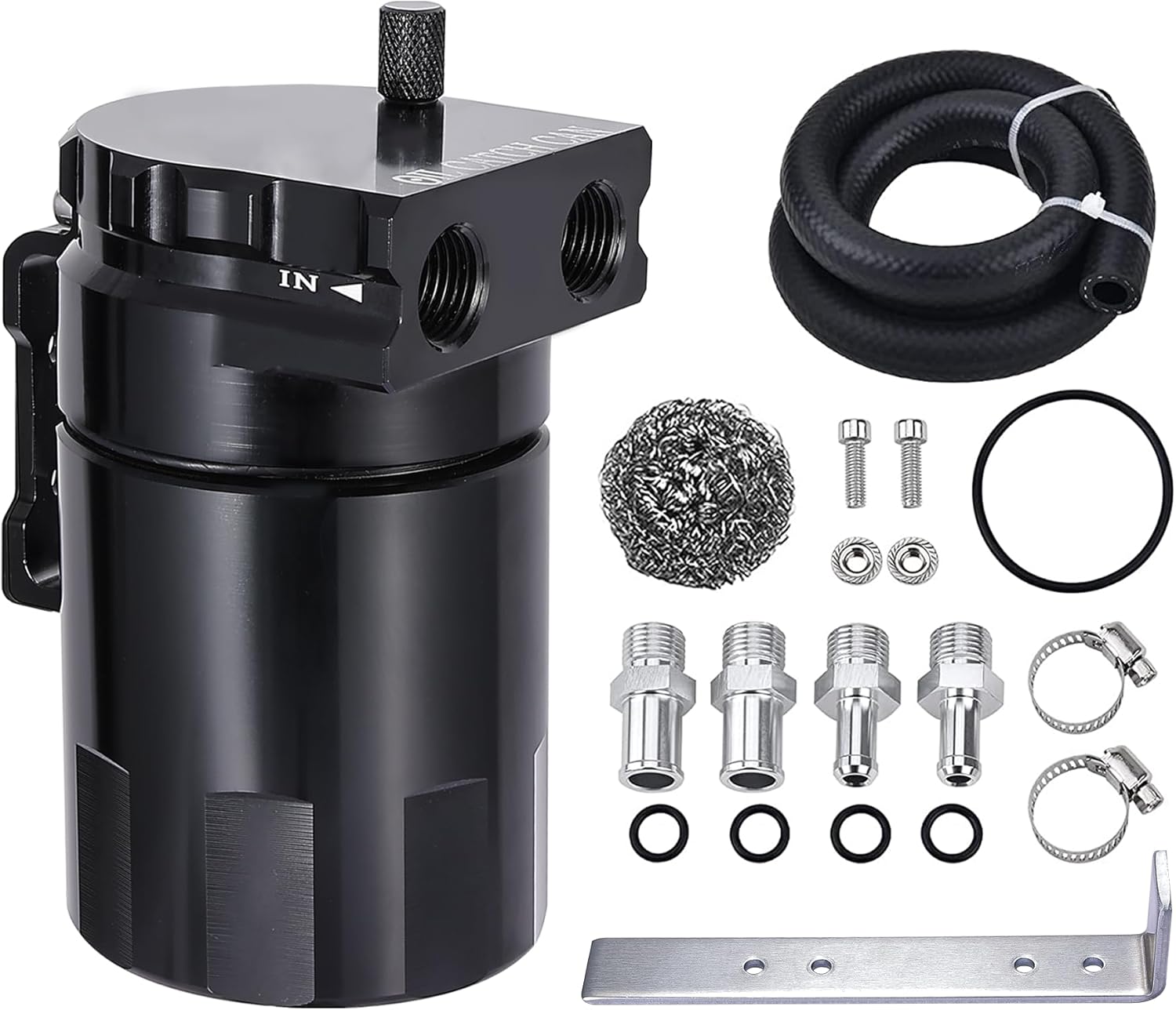
| Capacity | 300 Milliliters |
|---|---|
| Fuel Type | Diesel |
| Fit Type | Universal |
| Hose ID | 3/8 inch |
| Hose Length | 2.6ft (0.8m) |
This EVIL ENERGY catch can captures oil and moisture from crankcase vent vapors before they reach the intake, helping reduce valve and intake deposits on turbocharged and naturally aspirated engines. It installs inline with PCV or as a breather for pre-PCV systems using the included NBR hose and M16 threaded fittings, and the removable baffle plus stainless wool improve filtration of oil droplets in real-world driving. The 300ml tank is compact enough to fit into tight engine bays but will require periodic draining depending on driving and tow loads. The kit is built for durability with heat- and wear-resistant NBR hose and a threaded dipstick for easier level checks. Limitations to note are the modest 300ml capacity that means more frequent maintenance under heavy use and the universal fit approach which may need custom brackets or hose routing for clean installation on a Ford F-450 chassis. Follow the manufacturer guidance about increased moisture and weekly checks in freezing conditions to avoid blockages.
Best for: A Ford F-450 owner focused on long-term engine reliability who wants to reduce intake and valve gunk by adding an inline oil separation step and is willing to perform routine checks and drains.
Less Ideal for: Drivers who want a maintenance-free or large-capacity solution for continuous heavy towing duty should consider a larger, vehicle-specific catch can or a professionally plumbed oil separation system instead.
- Baffled interior and included stainless wool trap oil droplets and moisture effectively.
- Durable NBR hose offers good heat and wear resistance for engine bay use.
- Compact 300ml tank fits into tighter engine compartments and has a threaded dipstick for level checks.
- Universal M16 threaded inlet/outlet and standard hose ID make it adaptable to common PCV lines.
- 300ml capacity is small for heavy-duty use and will need frequent draining under towing or long idling conditions.
- Universal kit may require custom mounting hardware or hose routing on large trucks like the F-450.
Verdict: Choose this compact baffled catch can if you want an affordable, serviceable way to protect a Ford F-450 intake from oil contamination and prioritize long-term engine reliability.
5. EVIL ENERGY Baffled Oil Catch Can Kit, 300ml with Breather Filter

| Capacity | 300 Milliliters |
|---|---|
| Fuel Type | Gasoline |
| Fit Type | Universal |
| Thread Size | M16 x 1.5 |
This EVIL ENERGY baffled oil catch can is a compact 300ml separator intended to trap oil and moisture from crankcase ventilation before they reach the intake. It is typically mounted inline with PCV/CCV hoses or fitted as a breather on pre-PCV setups using the included hoses, dipstick and stainless wool baffle. Installation is straightforward for someone comfortable under the hood: the kit includes hose, fittings and a breather filter that lets you choose between venting to atmosphere or plumbing back into the intake. The internal baffle and stainless wool help condense and retain oil, reducing intake valve and intake tract gunk over time. Because the tank is relatively small you will need to check and drain it frequently on high-mileage or heavy-duty use. The universal fit approach gives flexibility but requires careful hose routing and secure mounting on a large vehicle like an F-450. Overall it is a practical, budget-friendly option for owners wanting a simple oil separation solution without extensive modification.
Best for: A Ford F-450 owner who prioritizes protecting the intake from oil contamination and values social proof and reliable performance from commonly used aftermarket parts.
Less Ideal for: Owners who need a high-capacity or race-focused solution for continuous heavy blow-by should consider larger or purpose-built systems instead.
- Compact 300ml reservoir suitable for routine crankcase vapor capture
- Baffled internals with stainless wool improve oil separation efficiency
- Includes hoses, dipstick and breather filter for flexible installation options
- Universal fit design works with PCV systems or as a vented breather setup
- Small capacity requires frequent inspection and draining under heavy-duty use
Verdict: A compact, proven universal catch can that reduces intake oil contamination on an F-450 while giving flexible install options for owners seeking a straightforward, well-reviewed solution.
6. EVIL ENERGY 750ml 10AN Baffled Oil Catch Can with Breather Filter

| Capacity | 750 Milliliters |
|---|---|
| Fittings | 10AN (7/8-14 UNF) inlet/outlet |
| Drain | 3/8 NPT bottom valve |
| Material | Aluminum |
| Fit Type | Universal |
This EVIL ENERGY catch can captures oil and blow-by from the PCV/CCV system to help prevent intake-valve and intake-track buildup on a Ford F-450 when space and fitting options allow. It is a large-capacity, baffled aluminum tank with 10AN inlet/outlet fittings and a 3/8 NPT bottom drain that simplifies periodic emptying without removing the unit. The included breather filter lets you run it as a vented can on pre-PCV setups or bypass the breather and plumb it inline where a sealed system is required. Its TIG-welded housing and O-ring sealed cap aim to reduce leaks, and the universal fit approach gives flexibility for placement in tight engine bays. Expect straightforward installation for technicians familiar with aftermarket plumbing, but plan mounting and hose routing first since it is a universal part rather than truck-specific. Also note the kit is an aftermarket universal solution so you may need adapter fittings or brackets to match Ford F-450 plumbing and clearances exactly.
Best for: F-450 owners who prioritize reducing intake contamination and want a robust, larger-capacity aftermarket catch can they can have installed by a technician and integrated into their existing vent or PCV plumbing.
Less Ideal for: Owners looking for a vehicle-specific plug-and-play kit or a direct factory-replacement part should consider purpose-built F-450 catch cans instead.
- Large 750ml capacity reduces how often you need to drain it
- Baffled interior helps separate oil from vapors for better capture
- Built-in 3/8 NPT drain valve allows clean, on-vehicle emptying
- Durable aluminum construction with TIG welding and O-ring sealed cap to minimize leaks
- 10AN fittings provide compatibility with common aftermarket hoses and fittings
- Universal fit requires custom mounting or adapters to work on specific F-450 plumbing
Verdict: Choose this large-capacity baffled aluminum catch can if you want a durable aftermarket unit that reduces intake oil contamination and can be tailored into an F-450's PCV or breather plumbing.
Choosing the Right Ford F-450 Oil Catch Can: Key Factors to Consider
Flow Capacity and Port Size
Flow capacity determines whether a catch can can handle the volume of crankcase gases produced by the F-450, especially under heavy load or sustained high RPM. A can with undersized ports or internal passages can create excessive backpressure in the crankcase ventilation system, which may worsen blow-by or cause PCV valve issues.
Evaluate the rated flow or the physical diameter of inlet and outlet fittings. Larger ports and unobstructed internal passages are preferable for trucks with larger engines or turbochargers. If the kit provides flow specifications, match them to the engine's expected blow-by rates and any aftermarket tuning that increases boost or cylinder pressures.
Mounting Location and Hardware
Mounting options matter on the F-450 because the engine bay is densely packaged and service access is important. A catch can should have brackets and fasteners that allow secure attachment without blocking oil filter access, dipsticks, or engine sensors.
Look for kits that include multiple bracket positions or universal mounting plates. Vibration-resistant hardware and rubber isolators help prevent loosening over time. Consider how the chosen location affects hose routing length and bends; excessive routing can create traps that retain oil or introduce kinks.
Filtration Method and Internal Design
Different catch cans use baffles, coalescing media, or cyclone separators to capture oil and moisture. Baffles are simple and durable, while coalescing media can increase capture efficiency for fine aerosols. Cyclone designs separate heavier droplets through centrifugal force but may be larger.
Choose an approach that balances capture efficiency with ease of cleaning. On a working truck, a robust baffle or cyclone that tolerates frequent intervals between service is often preferable to delicate media that can clog.
Serviceability and Drain Access
Routine drainage and inspection are inevitable, so the catch can should make this task quick and clean. Removable drain plugs, accessible petcocks, or twist-off bases simplify maintenance. Sight tubes or clear windows let you monitor oil accumulation without disassembly.
For the F-450, tight engine bay space amplifies the need for easy access; a can that requires removal for every drain will likely be neglected. Consider whether the drain orientation allows gravity-assisted emptying where you mount it.
Material Durability and Corrosion Resistance
Catch cans live in a harsh environment with heat, road salt, and vibration. Materials like anodized aluminum and stainless steel resist corrosion and hold up to thermal cycling better than untreated metals. Coatings and weld quality also influence long-term durability.
Check for robust hose fittings and clamps as well, since failed connections can lead to leaks or vacuum loss. For trucks that see winter use or off-road exposure, prioritize corrosion-resistant finishes and hardware.
Compatibility With PCV and Turbo Systems
On turbocharged or diesel-powered F-450s, the catch can must integrate with the PCV and turbocharger plumbing without creating undue restriction. Some systems require a bypass for high-pressure events or a specific orientation to avoid drawing condensate into the turbo inlet.
Confirm that the kit's recommended plumbing layout matches the truck's PCV ports and that hose lengths and diameters are appropriate. If you have a turbocharged engine, ensure the catch can is designed to handle oil vapor and not interfere with inlet pressure management.
How an Oil Catch Can Works on the F-450
A catch can intercepts crankcase vapors before they enter the intake tract. On the F-450, crankcase gases carry oil mist and moisture that accumulate over time on the intake manifold, EGR ports, throttle body, and turbo compressor wheel. The catch can forces the vapor through a separation mechanism so heavier droplets condense and collect in the canister.
This separation reduces the volume of oil that reaches the intake, lowering the rate of carbon and varnish buildup that leads to reduced efficiency and potential turbo performance issues. For heavy-duty use, it also helps maintain consistent airflow and combustion characteristics by limiting oil contamination in the intake.
- Captures oil and moisture before intake entry
- Reduces carbon buildup and intake deposits
- Helps preserve turbo compressor cleanliness on turbocharged variants
Installation Tips for a Clean, Serviceable Fit
Plan the mounting location before starting: choose a spot that allows easy drain access and avoids interference with routine service items. Common choices are the inner fender, firewall area, or a bracketed position near the PCV ports. Mock up hose routing to confirm there are no tight bends or pinch points.
Use quality hose rated for crankcase ventilation and secure clamps or fittings. Keep hoses as straight and short as practical to prevent oil pooling in low spots. Label or photograph factory hose routing before removal so you can return to the original configuration if needed.
- Avoid long, uphill hose runs that trap oil
- Tighten clamps to manufacturer torque recommendations
- Protect hoses from hot exhaust components and moving parts
Maintenance Schedule and Best Practices
Establish a regular inspection cadence based on your driving habits. For towing, off-road use, or frequent idling, check the can more often. A quick visual check of the sight tube or a weight check after a few thousand miles will indicate how frequently you must drain.
When draining, capture used oil in a container and dispose of it according to local regulations. Clean internal baffles or media per supplier guidance. After service, confirm all hose clamps and fittings are tight and that the can is secure.
- Inspect sight tube every 2,000 to 5,000 miles under heavy use
- Drain before the can reaches two-thirds full to avoid carryover
- Replace or clean media as recommended by the kit instructions
Common Installation Pitfalls to Avoid
Routing hoses incorrectly is the most frequent mistake. Avoid creating low points where oil can pool away from the can. Also avoid routing that allows the can to be below service fluids or exposed to road debris.
Another pitfall is over-tightening fittings that then crack plastic components or deform soft hoses. Use the correct hardware and replace any factory hoses that show wear. Finally, do not omit a visible drain; hard-to-access drains are often skipped and lead to overflowing or reduced effectiveness.
- Do not mount the can where routine service access is blocked
- Ensure hoses clear moving components and heat sources
- Follow recommended torque and clamp practices
When a Catch Can Makes the Most Sense for an F-450
A catch can is particularly beneficial for F-450 owners who tow heavy loads, run frequent long-haul trips, or operate under high ambient temperatures. These conditions increase blow-by and the chance that oil-laden vapors will condense in the intake or on turbo components.
If your truck sees mostly short, stop-and-go trips and mild duty cycles, the benefits still exist but the service intervals may be longer. For owners who plan engine builds, upgrades, or extended turbo service intervals, a catch can offers a preventive step that reduces cleaning frequency and preserves component life.
- High-mile towing and towing in hilly terrain increases benefit
- Frequent idling and short trips raise deposit risk
- Useful preventative maintenance before turbo or intake services
How We Chose the Best Ford F-450 Oil Catch Can
We selected Ford F-450 oil catch cans based on criteria that matter for heavy-duty V8 diesel and gasoline duty cycles typical of this truck. Primary evaluation factors included flow capacity and port sizing to ensure the catch can can handle elevated blow-by rates during towing and sustained wide-open-throttle runs. Build quality and materials were assessed for corrosion resistance and vibration durability in a truck engine bay. Mounting versatility and hose routing options were reviewed to confirm a clean, serviceable installation without interfering with routine maintenance points. Filtration method and baffle design were considered because they affect how effectively oil and moisture are separated from crankcase vapors. Ease of maintenance, including drain access and inspection windows or sight tubes, was part of the selection to minimize service downtime.We excluded designs intended strictly for compact cars or systems with insufficient flow ratings for heavy-duty use. Products that required extensive engine modification or permanent removal of factory PCV components were also not considered. The list focuses on practical, reversible kits and catch cans that balance performance, durability, and straightforward upkeep for Ford F-450 owners.
Our full evaluation process is outlined in our review methodology.
FAQ
Will adding a catch can affect engine vacuum or PCV function?
A properly sized catch can installed per the kit instructions should not harm PCV function. It is important to match port sizes and minimize flow restriction. Excessive restriction can alter crankcase ventilation dynamics, so choose a design appropriate for the F-450's engine capacity.
How often should I drain the catch can on an F-450 used for towing?
Drain frequency depends on duty cycle, but for frequent towing you may need to inspect and drain every 2,000 to 5,000 miles. Monitor the sight tube and empty the can before it becomes more than two-thirds full to avoid carryover.
Can I install a catch can myself or should a shop do it?
Many owners can install a catch can with basic tools, especially if the kit includes vehicle-specific brackets. If routing space is tight, or you are uncertain about hose connections and vacuum routing, a professional installer can ensure correct placement and prevent routing issues.
Does a catch can protect the turbocharger on turbocharged F-450 engines?
A catch can reduces the amount of oil-laden vapor reaching the turbo inlet, which helps keep the compressor and intercooler cleaner over time. It is not a guaranteed replacement for scheduled inspection and cleaning, but it lowers the rate of oil contamination to the turbo.
Are sight tubes or drain petcocks better for maintenance?
Sight tubes let you monitor accumulation without opening the can, which is convenient. Drain petcocks or twist-off bases simplify emptying. The best choice balances visibility and ease of draining given your preferred mounting location and service routine.
Final Verdict
For the Ford F-450, prioritize a catch can that matches the truck's higher blow-by rates with ample flow capacity, durable materials, and easy service access. Good mounting options and appropriate hose diameters reduce installation headaches and long-term maintenance issues. Expect tradeoffs between maximum capture efficiency and the need for routine cleaning; choose a design whose maintenance cadence fits your usage.Focus on systems that provide accessible drains, robust fittings, and a separation method suited to heavy-duty operation. With those priorities in mind, you can confidently select a catch can that helps protect your engine and turbocharger while minimizing added complexity.
