

Note: This article contains affiliate links. If you click on these links and make a purchase, I may earn a small commission at no extra cost to you. This helps support my research and content. Read my full affiliate disclosure here.
If you own a Buick LaCrosse, adding an oil catch can can help reduce oily vapors and carbon buildup in the intake and PCV system. Choosing the right catch can matters because fit, capacity, and venting style affect both performance and serviceability. This guide shortlists the top options that fit the Buick LaCrosse and explains the key features you should consider. We evaluated mounting fit, plumbing compatibility, filtration type, and ease of installation to create a focused set of picks for this vehicle.Read on for concise guidance and practical notes to help you pick the right catch can for your LaCrosse before you start the install process.
Looking for other parts? See all Buick LaCrosse parts & accessories.
Top Picks at a Glance
| Best overall The best all-around choice for most situations | EVIL ENERGY 300ml Baffled Oil Catch Can with 5ft NBR Hose Kit |  |
| Best Quality Built to a higher standard if you want something more solid | Mishimoto MMOCC-RB Black Oil Catch Can |  |
| Best Value The sweet spot between price and what you get | RULLINE 350ml Universal Baffled Aluminum Oil Catch Can |  |
| Best budget The cheapest option that still gets the job done reliably | ZNDAW 2-Port Aluminum Baffled Oil Catch Can Kit with Breather Filter |  |
| Highest Rated A top-rated pick with lots of positive feedback | EVIL ENERGY Baffled 300ml Oil Catch Can Kit with NBR Hose |  |
| Most popular A crowd favorite that many people choose with confidence | TEMSONE Universal 2-Port Aluminum 750ml Baffled Oil Catch Can with Breather Filter and Drain Valve |  |
| Best Seller A high-volume bestseller chosen again and again | EVIL ENERGY 300ml Baffled Oil Catch Can Kit with Breather Filter |  |
1. EVIL ENERGY 300ml Baffled Oil Catch Can with 5ft NBR Hose Kit

| Capacity | 300 Milliliters |
|---|---|
| Hose length | 5ft (1.5m) |
| Hose inner diameter | 3/8" |
| Fittings thread | M16×1.5 |
| Fuel Type | Gasoline |
This EVIL ENERGY catch can is a compact, user-installable solution that separates oil and moisture from PCV/CCV ventilation before those vapors reach the intake. It is typically mounted in the engine bay and plumbed inline with the factory ventilation hoses or used as a breather on pre-PCV setups. The 300ml aluminum can includes a removable baffle and supplied stainless wool for improved coalescing, plus a 5ft NBR hose with 3/8" ID and M16x1.5 threaded fittings for a secure connection. In practice it collects visible oil residue, helps reduce intake gunk, and is small enough to fit in tighter engine bays common on the LaCrosse while still offering usable capacity. Installation is straightforward for someone comfortable routing hoses and mounting a bracket, though some users will want extra hose or clamps for neater routing. In very cold climates the manufacturer warns of moisture freeze risk and recommends more frequent cleaning or reverting to stock routing, so plan maintenance accordingly. For balanced buyers seeking a capable, economical catch can that fits neatly in a Buick LaCrosse engine bay, this performs well.
Best for: A balanced all-round buyer who wants an effective, reasonably priced catch can to reduce intake carbon buildup and extend engine life on a Buick LaCrosse without committing to an oversized or specialist unit.
Less Ideal for: Drivers who expect a completely maintenance-free solution in extreme cold or those wanting a bolt-on vehicle-specific kit with guaranteed stock-fit hardware should consider alternatives.
- Baffled internal design with removable baffle and stainless wool improves oil separation
- 300ml aluminum body is compact for tight engine bays while still holding a useful amount of condensate
- Includes 5ft NBR hose known for heat and wear resistance and M16x1.5 threaded fittings
- Solid aluminum construction and tight fittings give a durable, factory-quality feel
- Supplied hose/clamps may be short for some routing needs, requiring additional hose or clamps
- O rings and some small fittings can be fiddly to install and may require care to avoid damage
- May require more frequent cleaning or temporary reconfiguration in freezing temperatures to avoid blockages
Verdict: A compact, well-made baffled catch can that offers strong value and clean-engine benefits for Buick LaCrosse owners who want a practical, balanced upgrade.
2. Mishimoto MMOCC-RB Black Oil Catch Can

| Liquid Volume | 16 Fluid Ounces |
|---|---|
| Container Type | Can |
| Automotive Fit Type | Vehicle Specific Fit |
| Compatible with Vehicle Type | Car, Truck, SUV, etc. |
The Mishimoto MMOCC-RB is a compact, vehicle-specific oil catch can kit intended to keep oil vapors and blow-by out of the intake tract. It installs inline with the PCV/CCV plumbing and collects condensed oil in a 16-ounce reservoir that is monitored via a clear sight tube. The kit ships complete with bracketry, hoses, clamps, and fittings so you get a ready-to-fit assembly rather than sourcing parts separately. In practical use it reduces oil buildup in the intake, intercooler, and piping which helps maintain combustion efficiency and reduces the risk of oil-soaked couplers under boost. The built-in sight tube and removable can make inspections and draining straightforward, though the 16-ounce capacity means frequent checks on high-mileage or hard-driven Saturn Vue engines. The black finish looks tidy in an engine bay, and Mishimoto’s reputation for performance cooling parts makes this a solid factory-replacement style upgrade for owners prioritizing sustained performance.
Best for: Performance-oriented Saturn Vue owners who prioritize keeping intake and turbo systems clean to preserve power and reliability during spirited driving and tuning.
Less Ideal for: Drivers looking for a zero-maintenance or large-capacity solution should consider catch cans with greater fluid capacity or systems designed for long-interval service.
- Complete kit with bracket, hoses, clamps, and fittings for straightforward installation
- 16 fl oz reservoir with sight tube for easy visual monitoring and draining
- Compact, vehicle-specific design fits cleanly in tight engine bays
- Helps prevent oil contamination of the intake and turbo plumbing, protecting performance parts
- 16-ounce capacity may require frequent draining on heavily used or older engines
- Lifetime warranty claim language on listing conflicts with a 30 day manufacturer warranty noted elsewhere
Verdict: A compact, vehicle-specific catch can kit that keeps oil out of the intake plumbing to protect performance and maintain efficiency.
3. RULLINE 350ml Universal Baffled Aluminum Oil Catch Can

| Capacity | 350 Milliliters |
|---|---|
| Fit Type | Universal |
| Product Grade | Performance Part |
| Fuel Type | Gasoline |
This RULLINE 350ml catch can collects oil and moisture from crankcase ventilation to reduce carbon and sludge buildup in the intake system. It is typically plumbed inline between the PCV/CCV outlet and the intake, where the internal baffle and reservoir separate condensates that would otherwise coat the throttle body and intake ports. The can is fully TIG welded, anodized aluminum and includes a dipstick for quick level checks plus three adapter fittings and a braided hose for installation flexibility. Practical benefits include a sealed design with O-ring fittings to limit leaks and a modest 350ml reservoir that is easy to inspect and drain manually. Limitations to consider are its universal fit approach which may require custom brackets or hose routing for a Buick LaCrosse, and the small included mounting bracket and clamps may not suit every engine bay. Also the 350ml capacity means it will need regular checks on engines that produce heavy blow-by. For a buyer optimizing function and cost, it provides solid construction and basic features without advanced filtration or large capacity.
Best for: Practical optimizers looking for an affordable, effective way to reduce intake contamination on a Buick LaCrosse without spending on high-end specialty units.
Less Ideal for: Drivers who want a large-capacity or factory-specific catch can with dedicated mounting hardware should consider more specialized kits tailored to their vehicle.
- Baffled internal design separates oil and moisture to reduce intake deposits
- TIG welded anodized aluminum construction for corrosion resistance and durability
- Includes dipstick for convenient fluid-level checks without disassembly
- Comes with multiple adapter fittings and braided hose for flexible installation
- Universal fit requires custom mounting and possible additional hoses for proper routing in a Buick LaCrosse
- Small supplied bracket and hose clamps may be inadequate for some engine bays
- 350ml capacity requires more frequent monitoring on high blow-by engines
Verdict: A well-built, budget-friendly catch can that gives Buick LaCrosse owners a practical way to limit intake deposits, but plan for custom mounting and regular checks due to its universal design and modest capacity.
4. ZNDAW 2-Port Aluminum Baffled Oil Catch Can Kit with Breather Filter
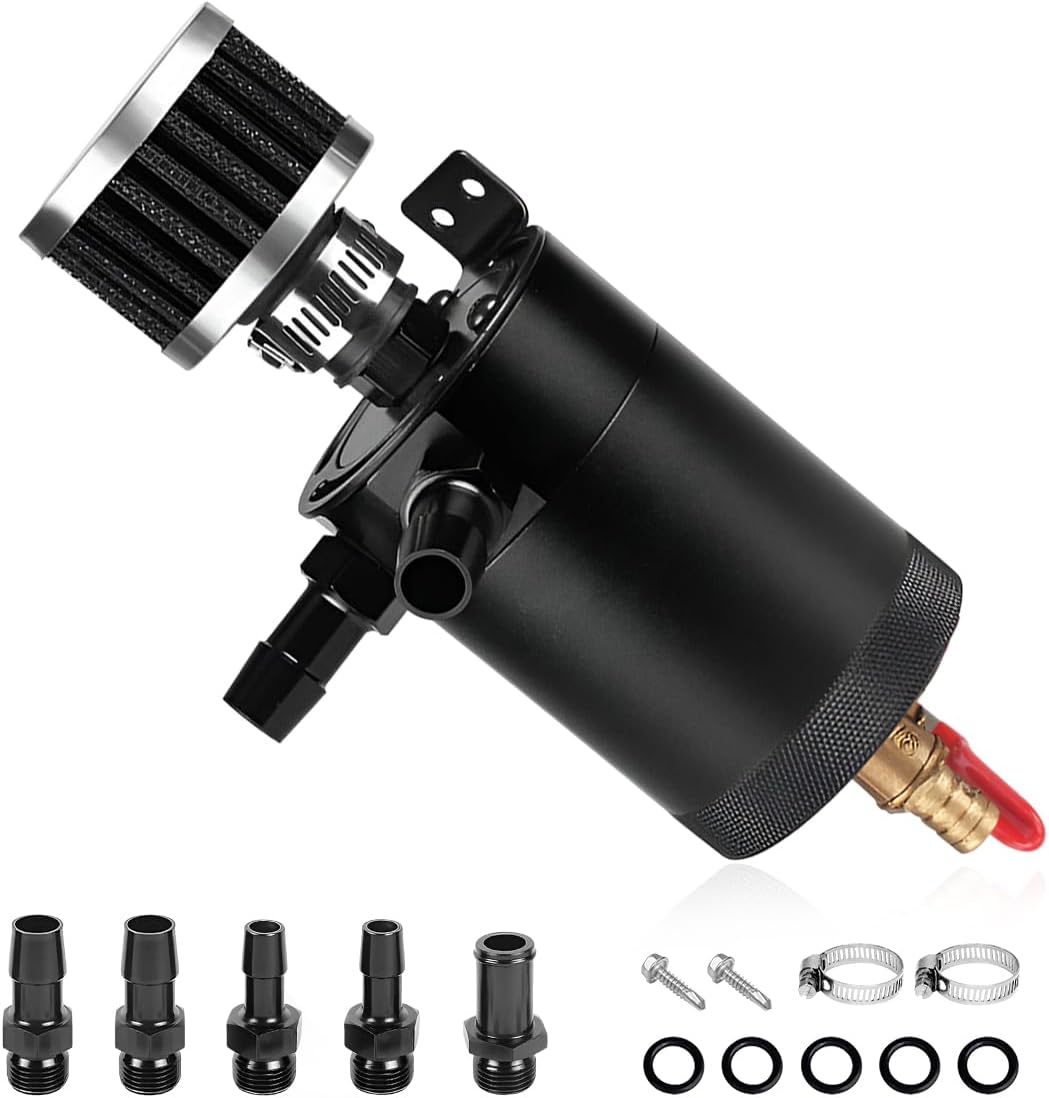
| Capacity | 5 Fluid Ounces |
|---|---|
| Material | Aluminum |
| Fit Type | Universal |
| Includes | Breather filter, drain valve, 5 adapters, O-rings, hose clamp |
This ZNDAW oil catch can captures oil and moisture before they reach the intake, helping reduce carbon and sludge buildup in the LaCrosse's intake tract. It mounts in a small space and uses internal baffling plus a breather filter to separate condensate; when the reservoir fills you can empty it quickly via the included drain valve without removing the unit. The kit includes multiple adapters, O-rings, a hose clamp and mounting hardware to adapt to different PCV or breather hose sizes, and the aluminum body resists corrosion and heat in the engine bay. Practical benefits for a Buick LaCrosse include cleaner intake valves and intake ports over time and easier maintenance thanks to the drain valve. Limitations are the small 150 ml capacity which requires more frequent checks on engines that produce heavier blow-by, and because fitment is universal some trimming or rerouting of hoses and a secure clamp are needed during installation to maintain vacuum and clearances.
Best for: Budget-conscious Buick LaCrosse owners looking for an affordable way to reduce intake contamination and extend engine cleanliness with a simple aftermarket add-on.
Less Ideal for: Drivers who prefer fully vehicle-specific, plug-and-play systems or those wanting a large-capacity can for heavy-duty or high-mileage turbocharged setups should consider more robust, application-specific options.
- Aluminum baffled can resists corrosion and handles engine-bay heat.
- Included drain valve makes emptying the 150 ml reservoir quick and mess-free.
- Multiple adapters and O-rings let you match common PCV and breather hose sizes without extra parts.
- Compact footprint fits into tighter engine bays where space is limited.
- 150 ml capacity is relatively small and may need frequent draining on higher-blow-by engines.
- Universal fit means installation may require hose routing adjustments and careful clamping to maintain vacuum.
Verdict: A low-cost, compact aluminum catch can that cleans intake gases for a Buick LaCrosse but requires regular draining due to its small 150 ml capacity.
5. EVIL ENERGY Baffled 300ml Oil Catch Can Kit with NBR Hose
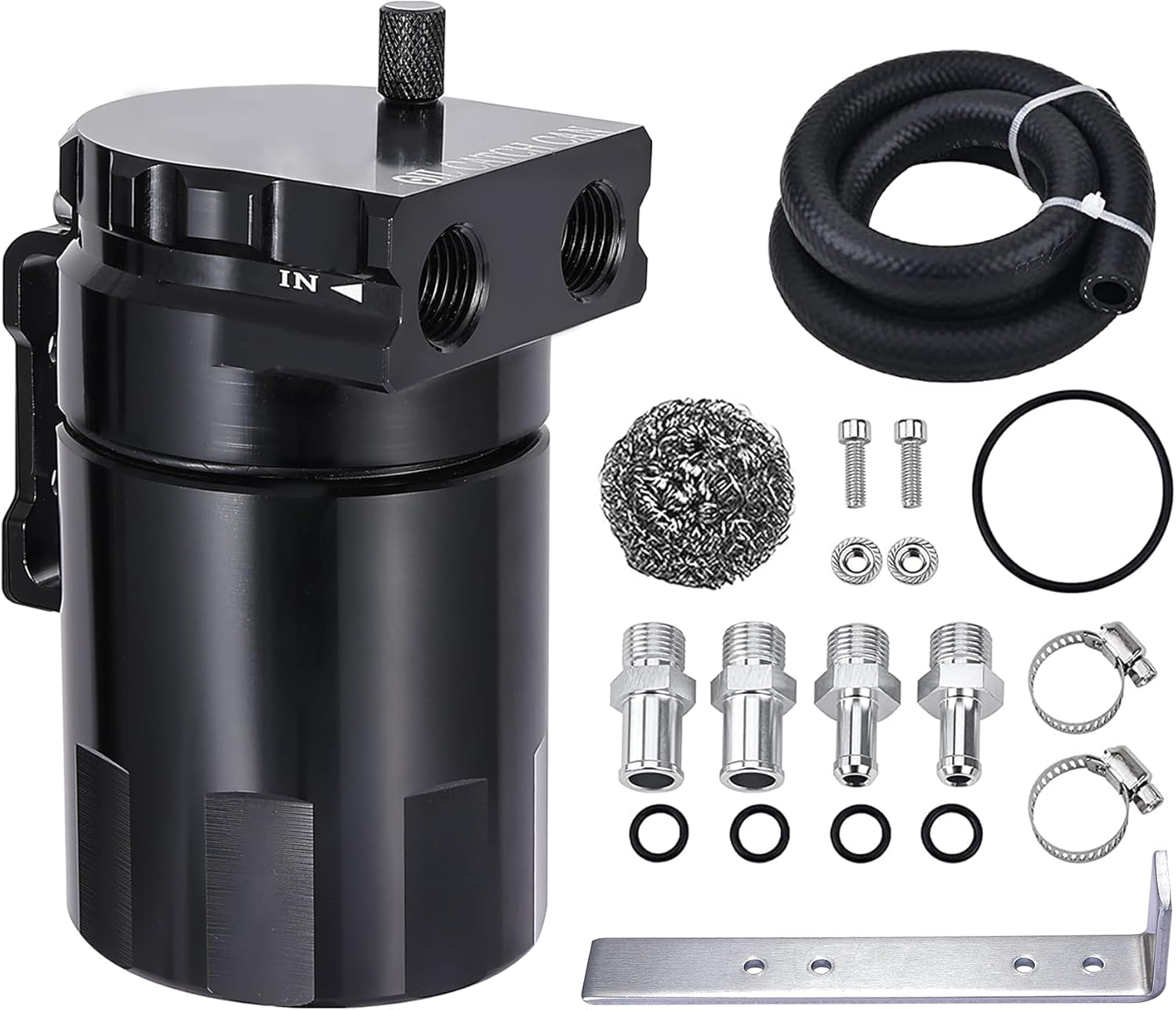
| Capacity | 300 Milliliters |
|---|---|
| Fuel Type | Diesel |
| Fit Type | Universal |
| Hose Length | 2.6ft |
This EVIL ENERGY catch can separates oil and moisture from crankcase ventilation before they reach the intake, using a removable baffle and optional stainless wool to improve condensation and oil capture. It is typically installed inline with PCV hoses or fitted as a vent for pre-PCV setups, and the kit includes a heat- and wear-resistant NBR hose with M16x1.5 threaded ports for a secure connection. The 300ml aluminum tank is compact enough to tuck into tighter engine bays while still providing a visible reservoir via the included dipstick for monitoring. Practical benefits include reduced intake valve and intake tract gunk, easier maintenance thanks to the removable baffle and cleaning access, and a durable hose that tolerates engine heat. Limitations are the modest 300ml capacity which requires periodic draining on engines with heavy blow-by and the recommendation to clean more often in freezing climates to avoid moisture freezing in the vent path.
Best for: Reliability-focused owners who prioritize keeping the intake and valves cleaner over long-term ownership and want a straightforward, serviceable solution to reduce oil vapors entering the intake.
Less Ideal for: Drivers who prefer zero-maintenance parts or who cannot access space in the engine bay for an additional inline component should consider alternatives or professional installation.
- Baffled design with removable baffle and option to add stainless wool for improved oil separation
- Includes NBR fuel/vent hose rated for heat and wear resistance for reliable connections
- Compact 300ml aluminum tank that fits into tight engine bays and includes a dipstick for easy checks
- M16x1.5 threaded inlet/outlet ports for a secure fit to standard PCV hose fittings
- 300ml capacity may require frequent draining on engines with high blow-by
- Manufacturer notes increased maintenance in freezing temperatures to prevent moisture-related blockages
Verdict: A compact, serviceable baffled catch can kit that helps keep intake systems cleaner with durable hose parts for reliable, long-term use.
6. TEMSONE Universal 2-Port Aluminum 750ml Baffled Oil Catch Can with Breather Filter and Drain Valve

| Fit Type | Universal |
|---|---|
| Manufacturer | TEMSONE |
| Fuel Type | Gasoline |
| Item Weight | 1.52 pounds |
This TEMSONE catch can is a compact, convenience-focused solution for keeping PCV vapors and oil mist out of the intake on a Buick LaCrosse. It mounts in the engine bay and routes crankcase ventilation through the baffled 750 ml tank where oil separates from vapor; the included breather filter and drain valve simplify maintenance. The aluminum body feels solid and corrosion resistant, and the larger-than-average capacity means less frequent emptying for daily-driven LaCrosse owners. Installation is straightforward for someone familiar with PCV plumbing, and the can ships with hose connectors and a clamp so you only need replacement hose. Limitations to note are that the unit is universal rather than vehicle-specific so you may need to source the correct hose diameter and fittings for a LaCrosse, and some users report the internal brass screen can be restrictive on certain engines. For owners who want an easy-to-service, durable catch can to reduce intake carbon buildup without frequent trips to the shop, this is a practical option.
Best for: Convenience-driven owners who want a low-maintenance way to reduce oil vapor recirculation and limit intake carbon buildup on a Buick LaCrosse without frequent emptying or complex installs.
Less Ideal for: Drivers who prefer a vehicle-specific, plug-and-play kit or those unwilling to fit and source the proper hoses and adapters should consider a model made for the LaCrosse instead.
- 750 ml baffled reservoir reduces frequency of emptying compared with smaller cans
- Aluminum construction resists rust and looks durable in the engine bay
- Includes breather filter, drain valve, hose connectors and a clamp for easier installation and servicing
- Baffled design improves oil/vapor separation to reduce carbon buildup in the intake
- Universal fit requires sourcing correct hose size and possibly adapters for Buick LaCrosse
- Some units have a restrictive internal brass screen that may affect crankcase ventilation on certain engines
Verdict: A practical, convenience-minded universal catch can with a large 750 ml capacity and easy-to-use drain that suits Buick LaCrosse owners willing to fit hoses and adapters themselves.
7. EVIL ENERGY 300ml Baffled Oil Catch Can Kit with Breather Filter

| Capacity | 300 Milliliters |
|---|---|
| Fuel Type | Gasoline |
| Fit Type | Universal |
| Manufacturer | Speedwow Tuning |
This EVIL ENERGY catch can is a compact, universal baffled separator meant to intercept oil and blow-by from the crankcase before it reaches the intake tract. It is typically installed in-line with PCV hoses or used as a vent on pre-PCV systems using the included hose and optional breather filter. The 300ml aluminum tank, internal baffle and stainless wool element help trap oil droplets while the dipstick makes level checks straightforward. For a Saturn Vue, the kit is suited to owners who want a simple add-on to help limit intake valve deposits and keep the intake cleaner between services. Installation requires routing the provided hose and securing the can in the engine bay where there is room, and the universal fittings mean shop adjustment or small adapters may be needed for some hose sizes on specific Vue model years. The kit is practical and affordable but small capacity means more frequent inspection and draining than larger catch cans, and universal fitment lacks vehicle-specific brackets or fittings.
Best for: Risk-averse mainstream Saturn Vue owners who prioritize protecting the intake from oil contamination with a straightforward, low-cost add-on and prefer something simple to install and inspect.
Less Ideal for: Owners seeking a vehicle-specific kit with dedicated brackets, larger capacity, or a plug-and-play harness should look for purpose-built options designed specifically for the Saturn Vue.
- Baffled internal design and stainless wool help separate oil from PCV air
- Includes breather filter option for venting on pre-PCV setups
- Compact 300ml aluminum tank is lightweight and corrosion resistant
- Dipstick provided for easy fluid level checks
- 300ml capacity requires more frequent draining compared with larger cans
- Universal mounting and hose sizes may need adapters or custom brackets for clean installation on a Saturn Vue
Verdict: A compact, affordable baffled catch can kit that gives Saturn Vue owners a simple way to reduce oil vapor entering the intake and help keep the engine cleaner between services.
Choosing the Right Buick LaCrosse Oil Catch Can: Key Factors to Consider
Fitment and Mounting
Correct physical fit is essential because cramped engine bays leave little room for add-on components. Verify that the catch can's footprint, mounting bracket, and hose connection angles match available space on the vehicle. Consider whether the bracket attaches to an existing bolt or requires drilling, and whether the can clears moving parts, heat sources, and factory sensors.
A can that fits cleanly minimizes stress on hoses and reduces the chance of interference with routine maintenance. Proper mounting also helps ensure the unit stays upright for reliable drainage and prevents line kinking that could reduce catch efficiency.
Reservoir Capacity and Service Interval
Reservoir size affects how often you need to drain the can and how effectively it handles captured oil between services. Larger reservoirs extend service intervals, which can be helpful if you prefer infrequent maintenance, but a bulkier can may be harder to fit. Look for a balance between capacity and physical dimensions appropriate for your driving habits.
Also assess how easy it is to inspect and drain the reservoir. Transparent sight tubes or clear windows simplify monitoring, while accessible drain fittings or quick-release plugs make routine maintenance faster and cleaner.
Separation Method and Filtration
Different catch cans use baffling, mesh filters, or centrifugal action to separate oil from crankcase vapors. The chosen method influences capture efficiency, airflow restriction, and maintenance needs. Baffles are simple and durable but may trap fine aerosolized oil; mesh or filter elements can capture finer droplets but may require periodic cleaning or replacement.
Understand the tradeoffs between high capture efficiency and potential flow restriction. A design that balances effective oil separation with minimal impact on crankcase ventilation will better preserve engine breathing while reducing intake deposits.
Hose Compatibility and Port Sizing
Hose diameter and port orientation must match the vehicle's PCV and intake plumbing to ensure leak-free connections. Mismatched sizes force you to add adapters or replace hoses, increasing installation complexity and potential failure points. Verify both inner diameter and the type of hose fittings used on the can, such as barbed or quick-connect styles.
Also consider hose routing to avoid heat and abrasion. Flexible, heat-resistant hoses with secure clamps reduce the risk of leaks and ensure consistent vacuum conditions for the PCV system.
Venting Options and Emissions Considerations
Catch cans may be vented to atmosphere or recirculated back into the intake. Each approach has implications for emissions, vacuum balance, and odor control. Recirculation captures oil while keeping crankcase flow contained within the intake path; vent-to-atmosphere designs can reduce intake contamination but may release odors and vapors.
Choose the venting method that aligns with local regulations and your tolerance for potential odor. Additionally, ensure venting choices do not disrupt the PCV system's intended vacuum dynamics.
Build Quality and Maintenance Access
Durable construction prolongs service life in the heat and vibration of an engine bay. Look for corrosion-resistant metals or high-grade plastics, robust fittings, and secure fasteners. Threaded connections and reinforced hose nipples reduce the chance of failure over time.
Maintenance access matters because routine draining, cleaning, or replacing internal elements should be quick and safe. Units with clear markings, easy-to-remove drains, and accessible mounting positions make upkeep less of a chore and help maintain capture performance.
How We Chose the Best Buick LaCrosse Oil Catch Can
To assemble this list we applied vehicle-specific fit and function filters to ensure each entry is suitable for the Buick LaCrosse. Primary criteria included physical fitment in the LaCrosse engine bay, inlet/outlet orientation compatible with factory PCV and intake plumbing, and reservoir capacity sufficient for typical driving cycles. We also evaluated materials and construction for corrosion resistance and durability, plus the presence of service-friendly features such as clear drain ports or easy-access baffles.Additional factors were the venting method and filtration approach, whether baffled or centrifuge-style separation, and the kit completeness when additional hoses or mounting hardware were required. We excluded products lacking clear fitment guidance for the LaCrosse, units with questionable build quality, or catch cans that demand major modifications to the engine bay. The final choices balance reliable contamination capture, straightforward installation, and long-term serviceability for Buick LaCrosse owners.
Our full evaluation process is outlined in our review methodology.
FAQ
Do I need an oil catch can for my Buick LaCrosse?
You may benefit from a catch can if you want to reduce oil vapors and carbon buildup in the intake tract. It often depends on factors such as driving style, mileage, and whether you notice oil residue on intake components. Many owners install catch cans as a preventive measure to limit deposit formation.
How often should I drain a catch can on a LaCrosse?
Drain frequency varies with driving conditions and engine health, but checking the reservoir every few thousand miles is a common starting point. Inspect more often if you do frequent short trips or notice accelerated oil accumulation. Using sight indicators makes it easier to pick an interval that fits your usage.
Will installing a catch can affect engine performance?
A well-designed catch can that maintains proper airflow and vacuum balance should not negatively affect engine performance. Poorly sized units or incorrect plumbing can alter crankcase ventilation and potentially impact idling or throttle response. Proper fitment and correct hose routing help avoid these issues.
Can I install a catch can myself on a Buick LaCrosse?
Many owners can complete the installation with basic hand tools and moderate mechanical skill. Typical steps include locating suitable mounting points, disconnecting PCV and intake hoses, and routing hoses to the can. If you are unsure about fitment or how the PCV system is routed, professional installation can ensure correct placement and avoid mistakes.
What maintenance does an engine catch can require?
Regular maintenance generally involves draining the collected oil, inspecting internal baffles or filters, and cleaning or replacing elements as needed. Check hoses and fittings for wear and tighten clamps during service. Keeping up with maintenance preserves capture efficiency and prevents contamination from flowing back into the intake.
Conclusion
Choosing the right catch can for a Buick LaCrosse means balancing fitment, capture efficiency, and ease of maintenance. Prioritize a unit that fits cleanly in the engine bay, has an appropriate reservoir size for your driving habits, and uses a reliable separation method that does not impede crankcase ventilation.Also consider hose compatibility, build quality, and how simple it will be to inspect and drain the can. Thoughtful selection and regular maintenance will maximize the benefits of reduced intake deposits while minimizing any impact on routine vehicle care.
Explore More:
- Check out all Buick LaCrosse parts & accessories
- Explore Oil Catch Cans Maintenance & Repair Guides
- Explore Engine
- Browse all Auto Parts
